Why Checkout Page Optimization is required in default Checkout Extensions?

Checking out from eCommerce sites is something that lets a business owner have an interface for monetary transaction with the customers. The word monetary is enough to tell you how serious a checkout page is in the eCommerce world. For any reason, if a customer does not find your checkout page convenient, an immediate thought comes to his mind is about abandoning the site and find an alternate solution with a better checkout page optimization. Whatever be the cause, the immediate effect is seen in your online business because you are losing a customer here.

E-Commerce platforms like Magento, PrestaShop, OpenCart have a standard set of the checkout process. For example, the standard Magento checkout extension provides all the required accessibility for a complete eCommerce checkout page. However, considering the latest advancement in checkout pages of different eCommerce platforms, a standard checkout process is not expected to have the desired success rate. In fact, most of the standard checkout pages have now been transformed into more convenient processes with the introduction of one-page checkouts or quick checkout extensions on eCommerce sites. Need for an optimized checkout page

To survive the competition from other eCommerce platforms or the rival sites, switching to a custom one-page checkout extension is definitely a wise idea. I am not being biased here. In fact, all the quick one-page checkout extensions are optimized from the standard checkout extensions itself. It is just that these checkouts modules or extensions present the same process in a more compact and more convenient way. The site’s owners can utilize the checkout page optimizations done in these custom checkout extensions to have an upper hand against the rival eCommerce sites or to improve their conversion rates.

Upper hands of checkout page optimization in a one-page checkout process

Removes distractions-

The standard checkout page includes few elements that might distract the users and trigger a bounce back from the checkout page. Moreover, these elements might ask the users to fill some details that customers might not want to share. You might be surprised to know, those information were actually not even required by you.

To eliminate such redundant or unwanted elements, quick one-page checkout modules act by providing the site admin some additional customization access. These accesses for site admin allow him to either mark those fields as optional or to remove them from the process at all. An example of such element could be the fax number which is neither required by the admin nor the most customers have it.

Reducing the number of steps-
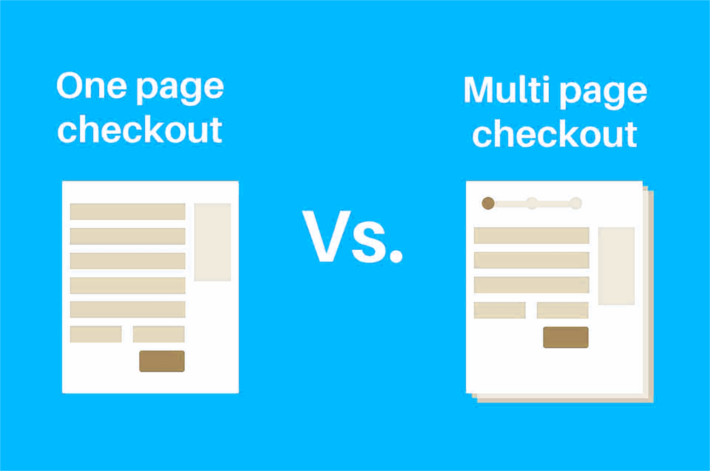
In default checkout modules the checkout page is spread across multiple pages for each kind of entries. For example, the default PrestaShop checkout module is a 5 step process. It includes the customer information, payment information, shipping information and all miscellaneous entries in separate pages. I do not need to tell that how lengthy the whole process becomes like that. Customers do not like that for sure.

To optimize the default checkout module, one-page checkout modules for PrestaShop have been developed which compact the whole process in a single page. So, that the customers do not have to redirect from pages to pages to complete the online shopping.

Pre-populating information-

There are certain cases when a customer is prompted to fill a particular data more than single time. For example, if the customer is already registered on the site, asking for filling the email id and name of custom in checkout page is definitely not a good idea.

The checkout best practices say Pre fill the data in checkout form already if the customer has already provided it with the sign-up. Asking the customer to fill a redundant data, again and again, would definitely encourage him to abandon the site.

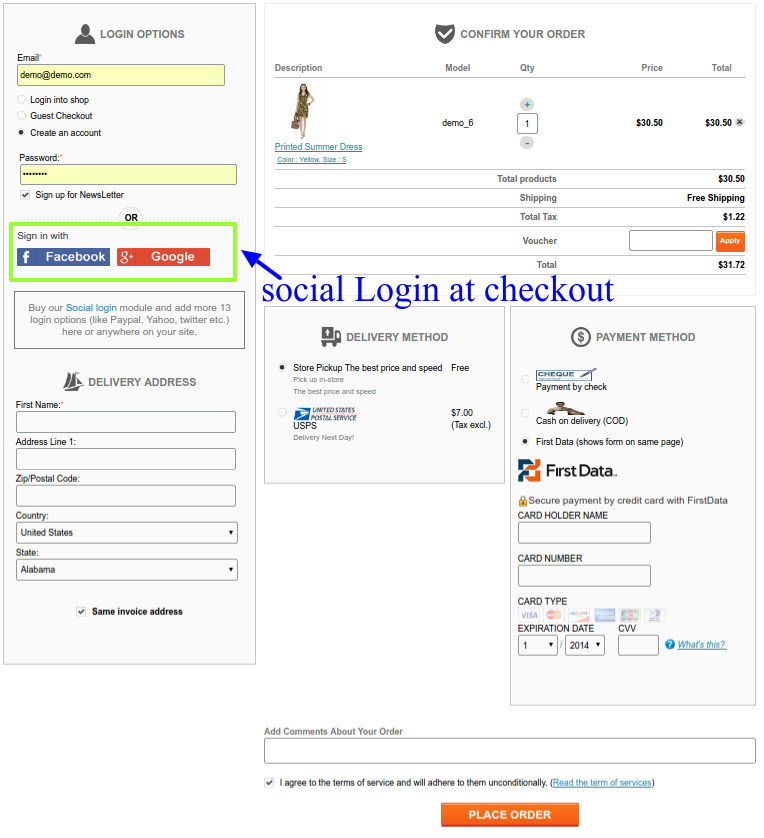
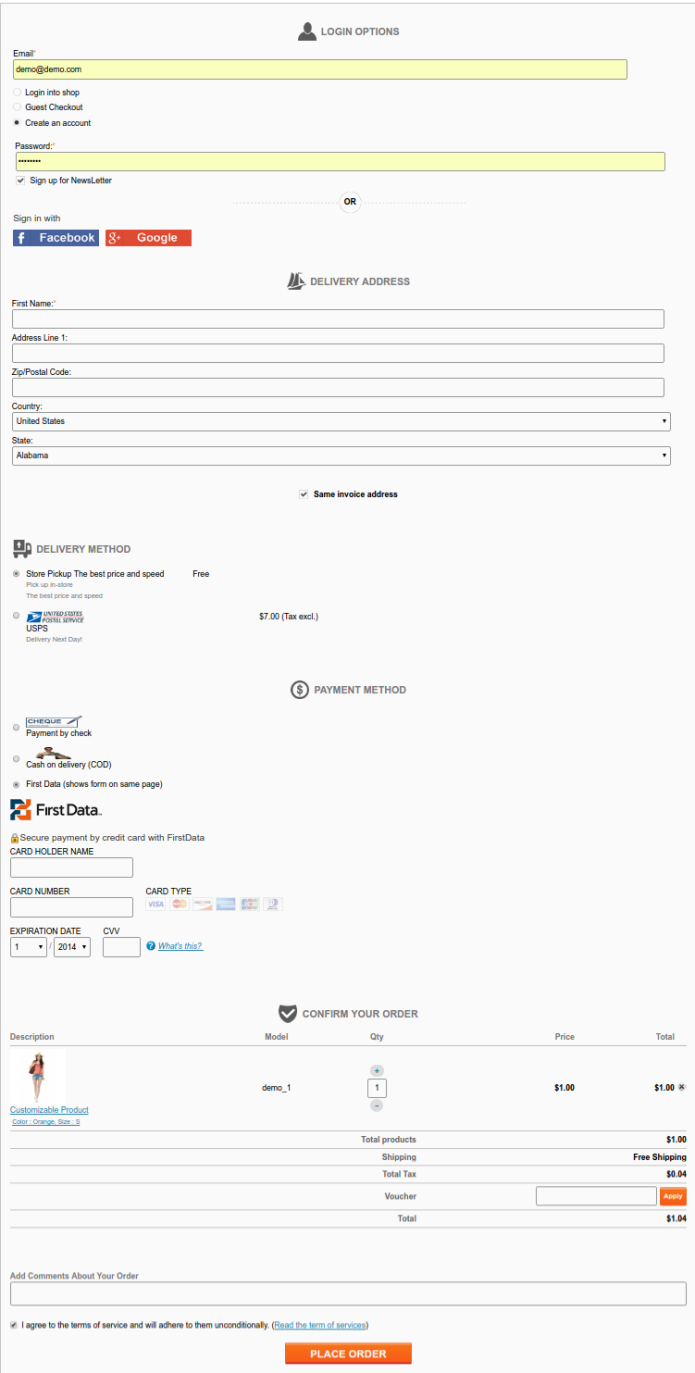
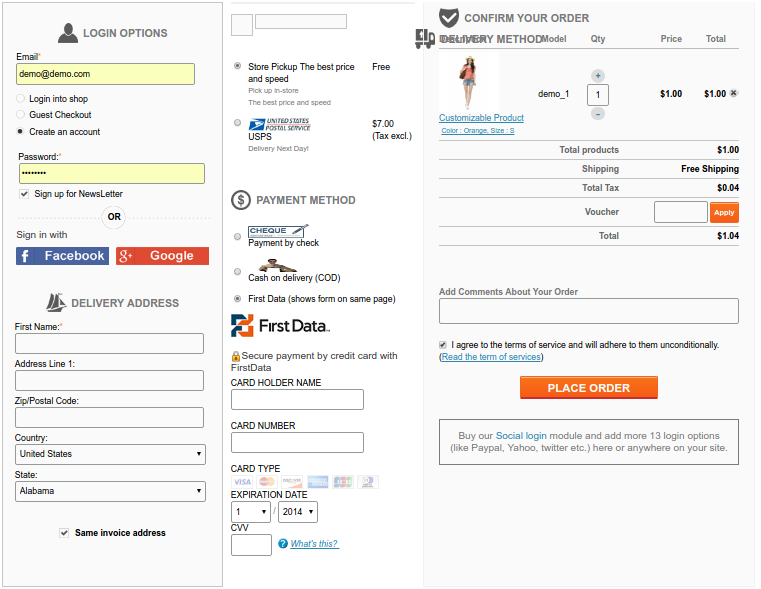
A quick checkout extension works here the same way as suggested by the checkout best practices. For example, the checkout optimization in below one-page checkout module pre-populate the data from the customer information given at sign up process.
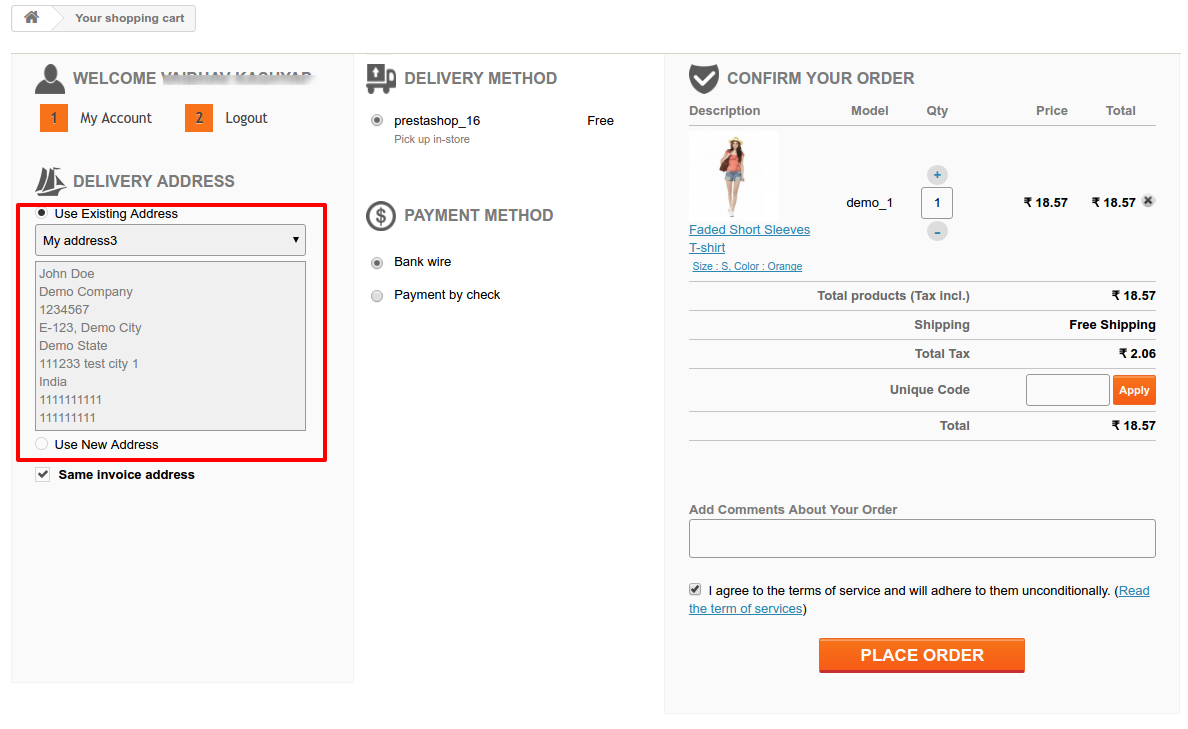
Pre-population of information from customer data

Social login at checkout page-

One of the mistakes is to ask the customers to make an account before checkout is complete. For most of the default, checkout pages have already done the necessary checkout page optimization by proving the customer to checkout as a guest customer. However, there are certain conditions when a guest checkout might not be an option for the site owners.

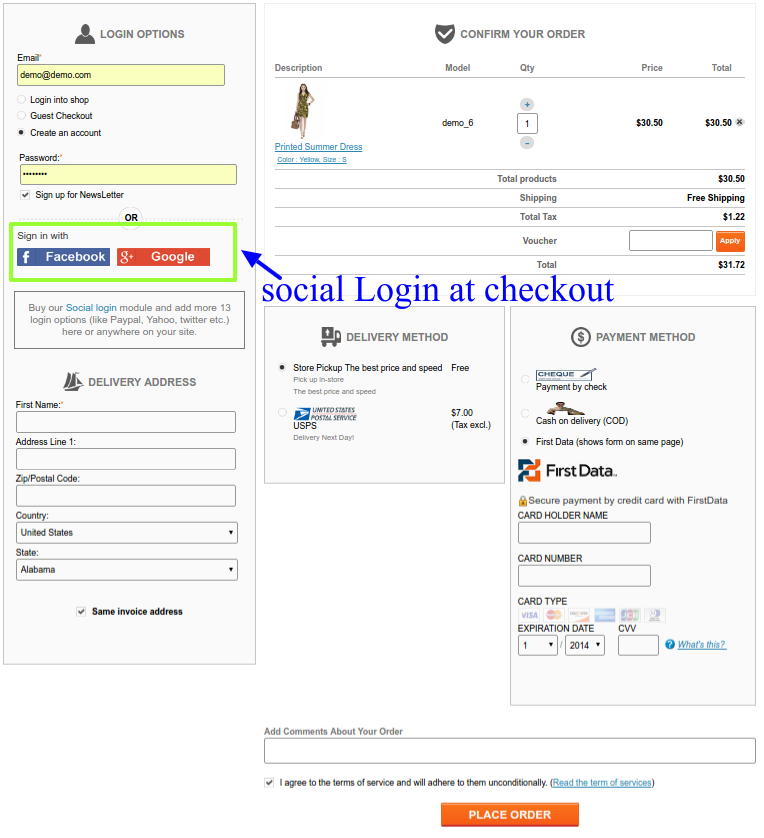
In these certain cases when you only want to allow the registered customers to checkout on our site, the one-page checkout extensions are equipped with social login options. The social login on these quick checkout modules allows the customers to either log in to the site or create an account on the site with the social media credentials itself. Thus, saving the customers from a necessary form filling for account registration.

The default checkout processes are undoubtedly a complete package. However, when sometimes you need to develop an upper hand against your rival sites, they might not be an ideal weapon. The custom one-page checkout extensions with the checkout best practices explained above can help you gain the same upper hand. A little investment of time and money in one-page checkout modules is surely a wise idea provided, you choose the right one from the market. The Knowband’s one-page checkout modules and extensions for PrestaShop, Magento and OpenCart could be a better suggestion if you are looking for one.

Related Stories:

How to write an abandoned cart email to bounced customers?

Online businesses typically flourish with the decent conversion rates on the website. For any eCommerce site, shopping cart abandonment comes as a great threat to the regular efficiency of the website. Seasonal drifts in the sales could be once ignored as a regular tremor in the sales, but one cannot just simply discard the growing number of abandoned carts on his eCommerce site.

To tackle with the shopping cart abandonment, companies deploy various abandoned cart modules and extensions which help the site owner to win back the lost sales. These abandoned cart extensions work by tracking the carts and customers and then notifying the site owner whenever as cart is abandoned by the users. Emails play a great role in working of such abandoned cart extensions. The emails sent by the cron or manually by the site admin allows the website to communicate with the users and then win them back. However, one cannot just simply send any kind of email to the customers. These are specific emails whose conversion is directly dependent on the reduction of abandoned cart on your stores. These email include:

  • Confirmation mail to the customers whenever an account is created.
  • Notification mail to the customers alerting them for the procedures of performing a certain a task, for example, how to redeem a coupon or a voucher.
  • Confirmation emails for the special event like flash sales.
  • Notification mails from wait lists.
  • Emails to notify about the saved carts in their account.
  • Abandoned cart messages with our without offers and discounts.
  • Any many more email that directly affects the conversion rates.

If we talk about preventing shopping cart abandonment on your store, most eCommerce sites focus on the abandoned cart emails. Simply, these mails include an appeal from the eCommerce site to complete a purchase initiated by the user. To make these mails conversion friendly, you might include some non-resistible offers or discounts for completing the purchase. However, focusing on just converting the existing abandoned cart would not be enough to prevent the future abandonments.

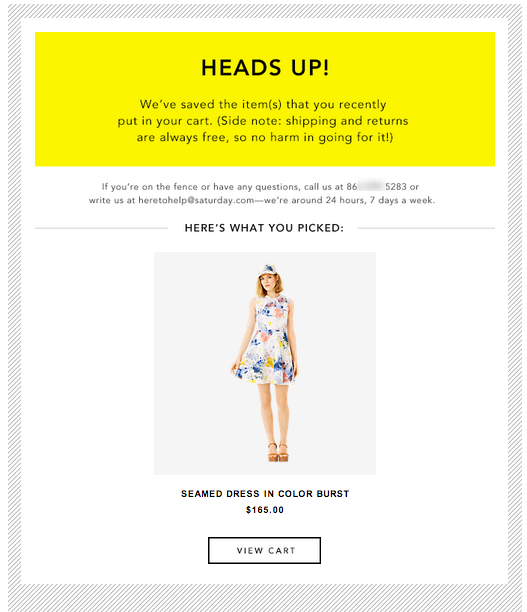
When writing this kind of messages, make sure you remain on the topic and say only what’s needed to be conveyed. Do not forget to personalize the message so that the email do not end up in the spam folder. For example, an email consisting of notification regarding an account creation should consist of the customer’s details with the account information and a direct link to the user account. Another example is, a saved cart email should include the product details with a product image, clear price and quantity of the product.

An easily accessible abandoned cart email consist of some basic elements

I have followed these tips in my OpenCart abandoned cart emails and they have worked for me always. I think, these tips are not limited to the OpenCart abandoned carts, but you can use it for any of the eCommerce sites.

Sharp subject line-

The emails should be clearly identified with its subject line and the user should be able to guess the kind of email in just a single glance at the subject line.

Personalization and to the point-

Each message should clearly specify its purpose. To do this, the mails should stay on topic and use the links when providing excessive details. An email indicating towards the customer specific purpose would be more successful.

Specific marketing-

If you are relying on coupons or vouchers to lure the customers, make sure the coupons are specifically deployed for the particular group of customers and products. For example, in my OpenCart abandoned cart emails, I focus on the customers from specific group of products and allot the coupons for that particular product only. Doing so will make sure that customer feels honored with an exclusive coupon.

Offer only when it’s necessary-

When I have to deal with OpenCart abandoned carts on my site, I do not treat every email with the coupon or voucher. We should understand that, for any kind of eCommerce site the bargaining power with the customers is almost nil. This makes your profit margins to the maximum without hitting your head with the bargaining customers. So, providing offers and discounts in every other mail will let the customers know about how desperate you are. Also, it will degrade the value of your already provided discounts. So, it’s better if you focus on the need of coupons only when it’s necessary.

Liked This? You’ll Like These Too

The battle of Marketplaces – Indian eCommerce market is the new arena

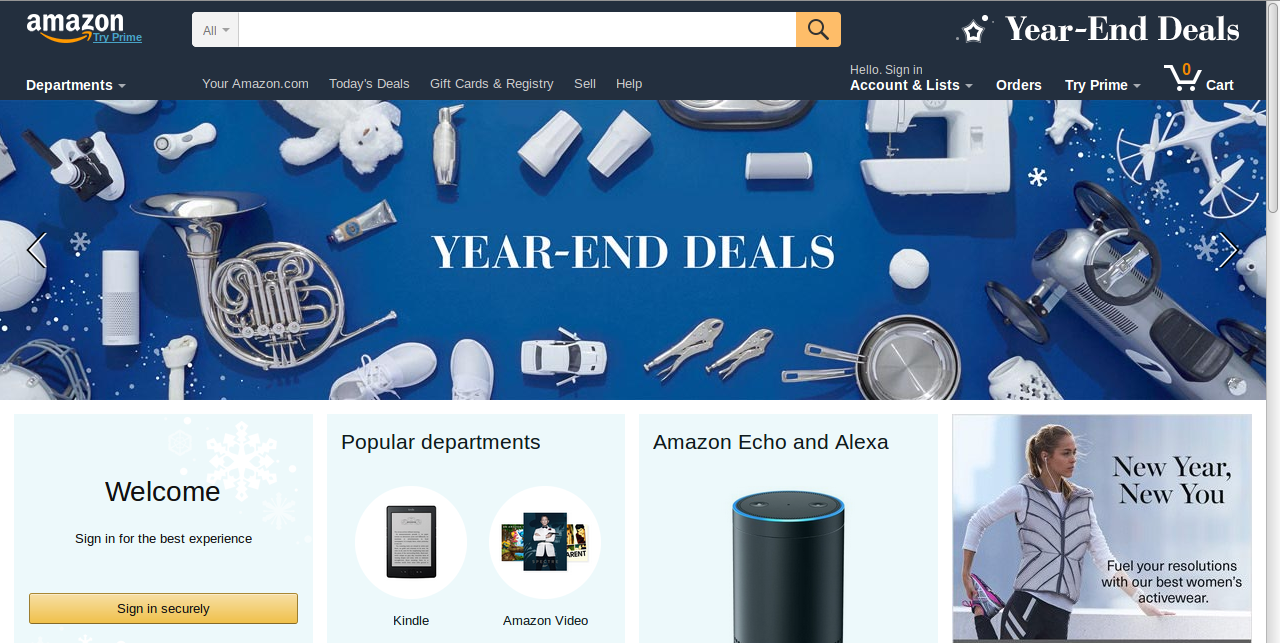
Marketplace model of eCommerce has been in the business for a long time now. However, the fights between marketplace giants still remains a fresh news each day. Each day comes with something new and something exciting for the eCommerce world when we look into their efforts to grab the market share by these marketplace giants.

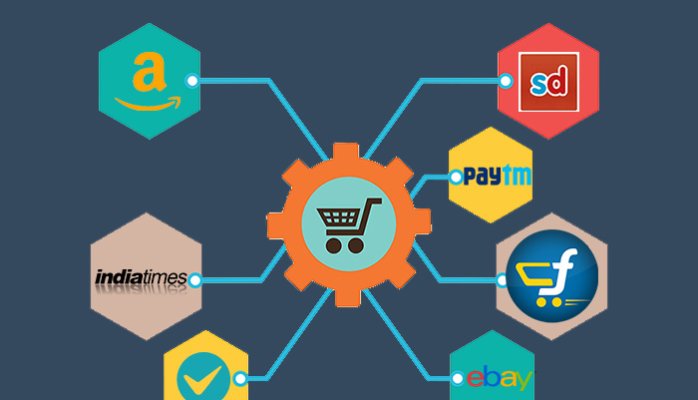
Amazon and Walmart need not any introduction in the marketplace world. Currently, both the companies are busy in a new battleground of Indian eCommerce market. While the local eCommerce site Flipkart remains on the top of the list, Amazon is steadily moving towards the top by securing the 2nd position in the current scenario. Not only that, amazon has also announced the further investment of $3 billion to the Indian market. This additional investment would now reach the Amazon’s total investment in Indian eCommerce market to $5 billion.

Reports say Walmart is not going to leave this chance of extending its market to Indian online consumers and is all set to join the share. Buzz says the e-tail giant has been in talks with local marketplaces such as Snapdeal and Shopclues. The strong indications point towards its inclination towards the top most marketplace site- Flipkart. Considering the current expansion of Amazon in India, Walmart’s alliance with Flipkart would not be a surprise at all.

What’s the buzz in B2B market?

While the giant’s of marketplace model are all set to grab the opportunity to rule the to be on the top online market- India. the local business startups are not in a mood to let them snatch their share so easily. With 100 % FDI in the Indian marketplace, foreign industries are being attracted, the local eCommerce market is also all set to give a tough competition.

Local Indian Marketplace is all set too-

As Knowband, we have been providing eCommerce solutions to the B2B clients across the globe. In the past year, we have noticed that the demand for our modules like PrestaShop Multivendor marketplace, Magento Multivendor marketplace, has increased exponentially. These modules are provided by Knowband to convert the PrestaShop and Magento based eCommerce sites into a fully functional marketplace site. Each day, we get hundreds of queries about how these modules can convert their existing eCommerce store into a marketplace site?

Surprisingly, most of these queries are from India itself. The Indian eCommerce business start-ups are so aware of the growing importance of marketplace model of eCommerce. They are looking for the ways to give these marketplace giants a tough competition in the local market. Knowband is too all set to provide these business aspirants with all they need to survive this battle of Indian Marketplace market.

With the PrestaShop Multivendor marketplace and Magento Multivendor marketplace, we have developed a series of Marketplace addons that will further extend the capabilities of these Multivendor marketplace modules and extensions. The addons are developed keeping in mind the requirements of any typical marketplace site to make it competitive with the rising giants. So, even Knowband is set to provide the business startups with all they need to grab their share in the local market. From Prestashop multivendor marketplace modules to android apps, everything the startups need to join the marketplace model of eCommerce.

Finally,

The marketplace giants are all set to grab the faster growing Indian eCommerce market. However, they should not ignore the importance of local eCommerce entrants who are also all set to give them a tough competition. Each of these small yet full of potential marketplace sites are not in a mood to let them take away their local shares. Indications are, the foreign giants have to be in coordination with these local setups if they really want a flawless penetration to the deepest level of Indian online consumers.

Liked This? You’ll Like These Too

6 Tips to decrease your shipping costs

Shipping is the link which ensures the swift delivery of products from the warehouse of a company till the final end user or the customer. The safe and timely product delivery has become a major concern for both the online shoppers as well as the eCommerce store owners equally. If your eCommerce site is not capable of delivering the ordered products to its customers in an efficient manner, it is bound to affect the conversion rates to a great extent.

With the heated up competition in the eCommerce field, the shipping services are the only component that could effortlessly differentiate your company with that of the rivals. However, the escalated shipping costs have made the selection of shipping services a critical task. Here are the certain tips that can help in keeping the shipping costs under check for the growth of your eCommerce store.

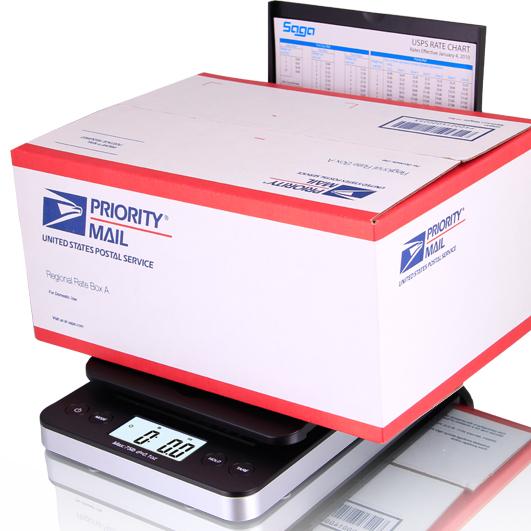
1. Take the help of a USB digital postal shipping scale-

Take the help of digital shipping scale for optimizing store performance and sales.

If you want an improved shipping services for your eCommerce store, it is important to utilize a USB digital shipping scale for increased shipping efficiency and accuracy. These equipment are designed to optimize the parcel shipping services for better customer engagement and sales. The importance of an electronic scale is that it directly connects the industry shipping software to automatically generate the weight into the shipment.

2. Utilize the services of cloud-based shipping services-

Use cloud based shipping services for increasing the efficiency of your eCommerce store.

The online app has services limited to the comparison of shipping rates, printing of shipping labels, sending customer confirmations and tracking of shipments. While a cloud based shipping services provide the functionality of working from anywhere and at any instance of time. If you are not satisfied with the performance of your shipping services, you can also take the help of a third party eCommerce shipping extension to ensure the timely product delivery.

3. Don’t forget to purchase and print postage online-

Using a shipping app for the printing of postage stamps offers you better rates. You need not select a shipping service provider that only offers the best rates to bigger customers but is also equally helpful for small shippers. There are dedicated shipping extensions or one page checkout modules for Magento, PrestaShop, and OpenCart platforms that can provide information about all the shipping costs and shipping services at a single place for the better decision making process.

4. Establish your business accounts with your carriers-

Business accounts have an edge in terms of shipping services as compared to local accounts.

Once, you have decided about the shipping carriers to be used, it is important to set up the business accounts associated with those carriers. There are various shipping services that provide special discounts, expense tracking, online tracking tools for managing shipments and payments for effective product delivery. For situations where you have to ship more than ten products per week with a particular shipping carrier, use of business accounts would be an ideal choice.

5. Compare costs of your shipping services for higher revenue-

If you are one of the owners of the eCommerce store, it will be better for you to first compare the rate and delivery times of various shipping carriers. You can initiate this critical process by taking one order at a time or processing multiple orders in a bulk manner. Apart from this, you need to utilize a shipping app that can help in comparing the costs across various shipping carriers used by them.

6. Include automation in your shipping services-

Automation in shipping services can improve the store performance and product sales.

E-Commerce stores that are catering to a large number of global customers want faster and automated shipping services for higher conversion rates. An automated shipping service will reduce the burden on your eCommerce store for optimizing the store performance and sales. The increased level of automation on your shipping services will help in making things faster in this competitive business environment.

In the end

Shipping costs are an important consideration while deciding the product pricing for any eCommerce store. The higher will be the shipping costs, lesser will be the customer engagement and product sales on your store. So, take all the required steps to reduce the shipping costs for an improved eCommerce business scenario.

Related Stories:

6 Tips to grab customer attention on your site

Customer attention is an important and critical part of every website that can help you achieve the desired business results. A site that is unable to grab the instant customer attention can’t drive its visitors for a quick product purchase. Remember more time the visitor spend on your site, higher will be the chances of making their product sales and conversions. There can be various distractions or sore points in a site that can turn off a visitor from any eCommerce site without making any product purchase.

If you are failing in grabbing the instant customer attention of your site visitors, it is definitely time to revise the promotional strategies of your website without any delay. Here are the 6 tips that need to be followed by the site owners for bringing customer attention towards their eCommerce store to boost conversion rates.

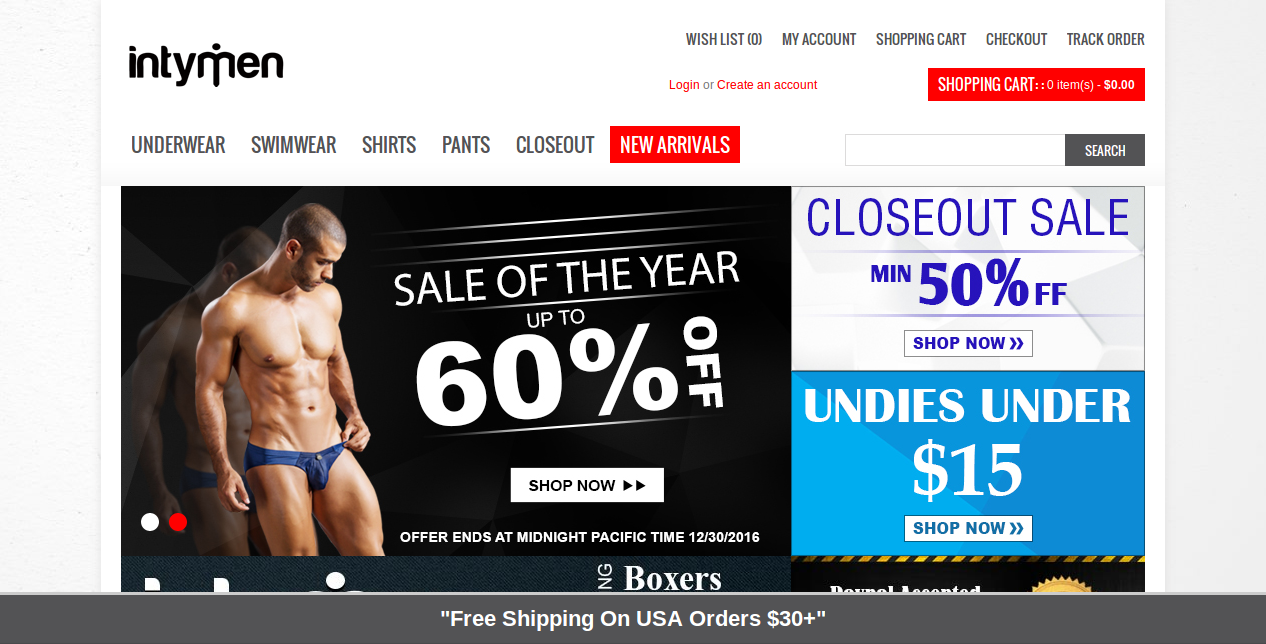
1. Provide interesting shopping deals and offers on your website-

Customer will love to spend time on a site that displays interesting shopping offers and deals.

Due to the emergence of multiple eCommerce stores, it is usually difficult to keep customers engaged on your website. There is one sure shot strategy that can bring customer attention towards your eCommerce store by providing engaging shopping deals and offers on your eCommerce store. To improve the conversion rates and sales on your eCommerce store, you can install any Magento extensions, OpenCart modules, PrestaShop Addons or any other platform based plugins without any further delay.

2. Ensure that the loading time of your site is appropriate-

A slow loading site can distract your visitors and can affect your site conversions.

Online shoppers are not in a habit of waiting on any eCommerce site while making a product purchase. These shoppers are turned off from a site if it is taking more than 2-3 seconds to load. You need to first analyze your site performance effectively with the help of a heatmap tool extension to understand the weak and strong areas of your website. If you are facing too much problem in your loading time, take the help of various speed optimization tools such as Pingdom, GTmetrix, Google PageSpeed Insights and others.

You need to ensure that your eCommerce site is loading at the same pace irrespective of the device type and screen size. Once, your customers are able to get the same user experience and loading time on multiple devices, they will surely love to spend time on your site.

3. Focus actively on your site search system-

Improve your site search results for enhanced customer engagement and sales.

When you want to offer quick product access to your customers, it is important to pay focus on the search facility on your site. Don’t let your customers wait on and on for getting a particular product on your eCommerce site but revamp the existing search facility for improved customer attention. There are various search based OpenCart extensions that can be utilized for grabbing maximum conversion rates and product sales by offering a quick product access to customers. You need to also use advanced search engine techniques on your site for optimizing customer engagement and sales.

4. Make a last ditch sales effort through popup ads-

A customer leaving a particular eCommerce site can be engaged for a quick product sale with the help of engaging popup ads. If you are on a Magento site, you can install the Magento Ajax Popup Login extension on your site that can grab the immediate attention of site visitors when they are about to leave a particular site.

This popup ad extension of Magento can provide customers information about the latest offers and deals for better site conversions. Once, the customers are paying attention towards your popup ads, it will be less difficult for you to achieve higher conversion rates and sales.

5. Use good quality images and videos on your site-

An optimized product image and video can grab instant customer attention on an eCommerce site.

Images and videos play a crucial role in grabbing the customer engagement and attention on your site. You need to understand the fact that product images are the way of direct customer interaction on an online store where people can’t touch and feel the products directly like an offline store. Apart from the images, you need to take the help of engaging videos on your eCommerce store for enhancing customer engagement and sales. If you don’t have the support of appealing videos on your website, you can take the help of product video extension for including engrossing videos.

6. Pay attention to customer reviews on your site-

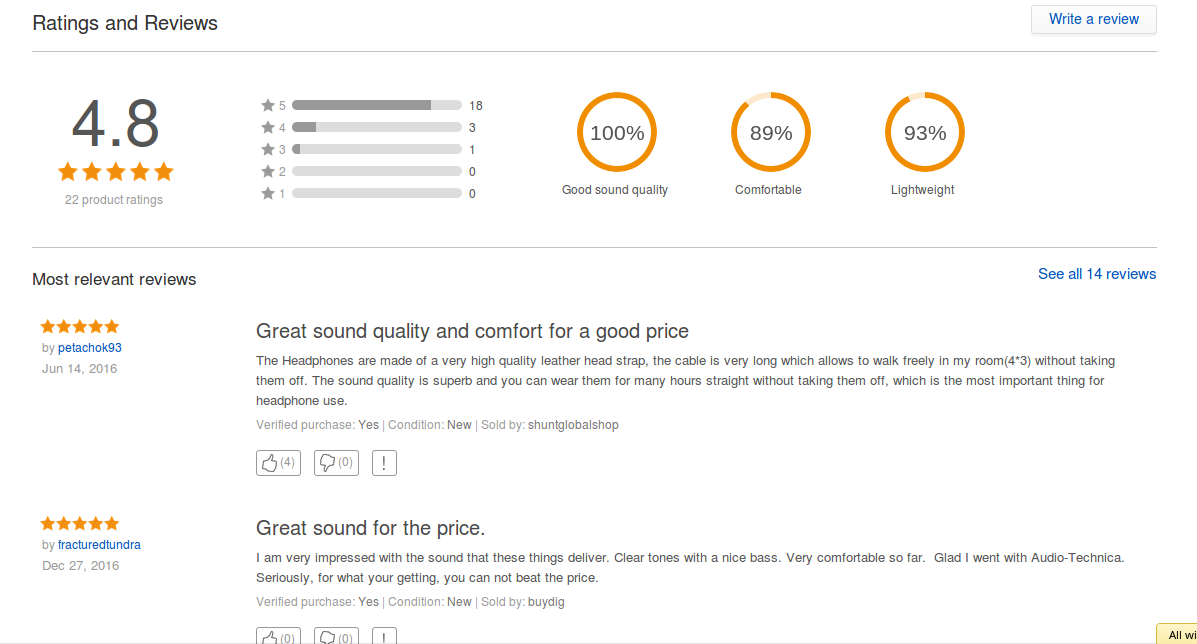
Product reviews on a site can help in grabbing immediate customer attention.

Online shoppers first believe in checking out the product reviews before actually buying the product itself. Being an eCommerce site owner, you need to encourage the customers to write product reviews for your site. There are few eCommerce extensions that can be used for encouraging product reviews from customers to boost sales and conversions. Higher product reviews on a site instill a sense of trust and confidence among online shoppers for grabbing maximum product sales.

Few tips in the end

Getting higher customer engagement and attention on a site is a must for achieving better conversions. If your eCommerce store can’t keep visitors engaged, it will certainly bring a bad reputation to your online store in terms of customer engagement, conversion rates, and product sales. Follow the helpful tips stated above for grabbing maximum customer footfall on your eCommerce site.

Related Stories:
Best Practices and features of a one page checkout module

One Page checkout have been in the eCommerce industry for the past few years. However, the kind of eCommerce experience that has been improved using these one step checkouts need not any introduction. From quickest checkouts to conversion optimization, eCommerce store owners see one page checkouts as a tool of improvement. Improvement in customers experiences, improvement in conversion optimization, improvement in competitive advantages against the rivals and much more.

In this article, I am basically going to explain how a perfect one page checkout would look and behave with the customers to provide the eCommerce sites a better checkout page.

Reduced entries in one-page checkouts- A one page checkout is basically adopted to provide the quickest checkout experiences. Sometimes, we get confused between a one step checkout and a quick checkout experience. The line between the two is very thin.

A pure one page checkout module would work by compacting each and every step of a multi step checkout into a single page. From customer information, shipping address, to payment options each and every step is reduced onto a single page.

However, a better quick checkout design would not only consist of a one page checkout but would also show a decrease in number of entries. These reduced entries are obtained by skipping the redundant or unnecessary entries from the generic checkouts.

For example, in generic checkouts, we would find different entries for mobile number and telephone number. In quick checkouts, we might have the option to skip the telephone number and provide only the mobile number in the form.

Designs and layouts-There are basically three types of layouts that are used by the one step checkouts to compact the whole process on one page. The single column, the two column, and the three column layout.

The single column layouts are generally adopted by those sites which do not ask much of the information. This information can be compacted in a single page without increasing the page length. In case if the number of the entries required are much larger, then a two or three column layout is a better option.

One column layout
2 Column layout
3 column layout

By changing the layout options we can re-arrange the one step checkout to switch the designs and constitute the required fields in a single page accordingly.

Checkout speed and steps- As we know that one page checkout would definitely compact the multi page structure into a single page structure. However, just the compaction of steps is not enough to get a proper one page checkout; at least the customer’s experience will not improve until you work on the speed of the checkout. The checkout speed can be increased by:

  • Removing the unwanted or not necessary fields from the checkout page.
  • Removing the redundant fields.
  • If any field on the checkout page can be helpful but not necessarily required by you, you should make it optional.
  • Pre-filling the customer information from the user account.
  • Reduced the use of graphics intensive objects like carousels.

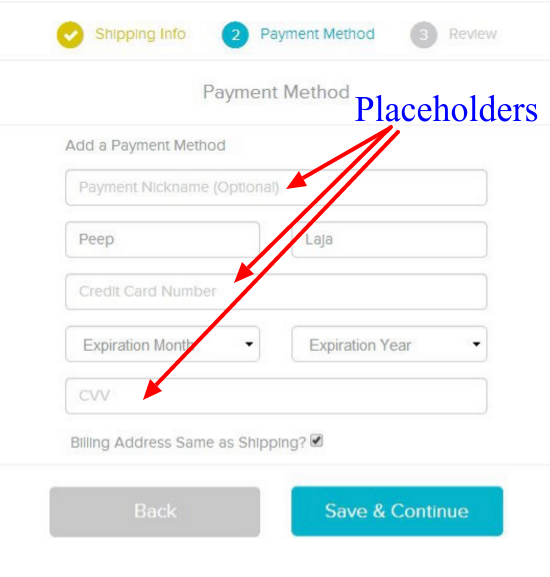
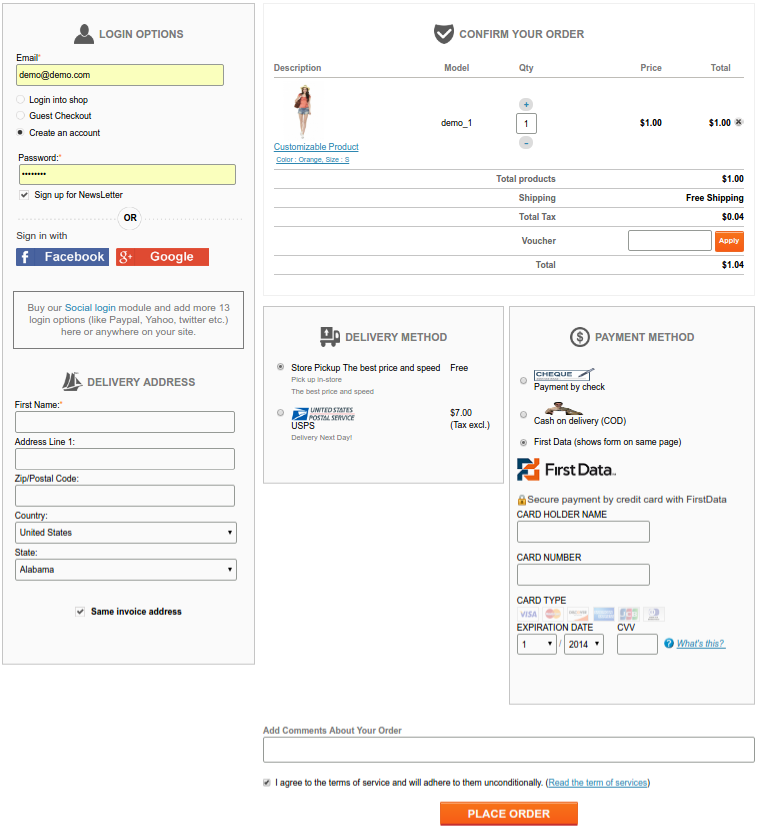
Behavior of fields on checkout page- To reduce the size of the one page checkout and make them conversion friendly, you can skip the labels of text fields and use placeholders instead. However, in some cases, labels are more effective than placeholders. For example, if a checkout form consists of a large number of fields, the user might get confused about the kind of entries he has filled when he reviews the entries afterward.

So, placeholders can be used as a guiding tool to make the fields clearer and it is a better option them using them in place of labels. These placeholders can consist of pre-filled examples.

Placeholders can guide the users in filling correct information

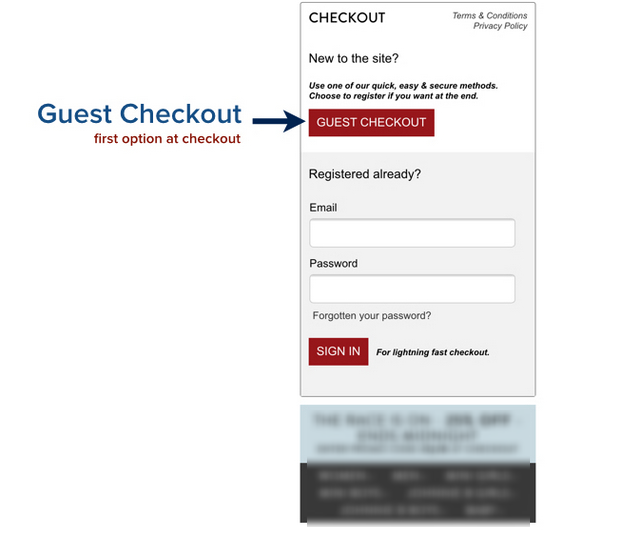
Option of Guest Checkout- There are certain chances that a customer might have come to your online store for the first time and he might not have a user account. A compulsory requirement of sign up would definitely encourage the shopper to abandon your cart. Instead like every effective checkout process, your one page checkout should be able to accept the guest checkouts. The guest checkout just includes the manual entry of email address and customer information. Later on the customer might choose to sign up, but as of now, it would not hamper your conversion at least.

So, like every effective checkout process, you should make sure that your one step checkout is efficiently accepting guest checkouts. It would not only improve your conversion rate but would also help you prevent shopping cart abandonments on your store.

Social login at checkout page-

There are various social Login modules that allow the eCommerce store owners to accept social login on their online stores. These social login options allow the users to login or sign up to a site without a need to fill the registration forms. It is one of the ways adopted by eCommerce store owners for conversion optimizations.

It is a useful feature to include in the one page checkout page too. When a shopper reaches to your checkout pages, he would definitely not want to go back and create an account on your shop first. Instead, you can allow the shopper to use his/her Facebook, Gmail or PayPal account to register on the store. Once the shopper sign-ups using the social login, he would be again directed back to the one step checkout page and can continue from the same.

Best Practices and features of a one-page checkout module

Every one page checkout is adopted by the online store owners to improve their sales and conversions. If it goes wrong, it will result in nothing and would destroy the customers experience in addition. Choose a one step checkout module that has at least these basic features. For PrestaShop, OpenCart and Magento stores, Knowband provides effective one page checkout modules that include all of the above-discussed features and much more.

Related Stories:
Analysis of how India can beat the U.S as the world’s largest eCommerce market

With the changing business landscape and busy lifestyles, more and more people are now moving towards online shopping due to the ease of product availability, product delivery at the doorstep, online payment facility and other such benefits. With this trend, eCommerce is fast growing and is expanding into unknown global territories for offering quick shopping experience. Countries like China, US and India are some of the world’s biggest economies that have embraced the eCommerce market in a big way.

Among all these countries, the Indian economy has emerged as the lucrative and most promising market for eCommerce companies in the years to come. The above situation has arisen due to the number of reasons like young demographic population, increased use of broadband internet services, the rise of mobile-based devices and a number of other such factors. All these reasons have made India emerge ahead among countries like the USA when it comes to eCommerce market and conversion rate optimization results. According to a joint report of ASSOCHAM-Forrester study paper, the Indian eCommerce revenue is expected to grow from $30 billion in the year 2016 to $120 billion in the year 2020, which is supposed to be an annual rate of 51%, the highest in the world.

Where does India stands in terms of eCommerce growth and internet users?

The Indian market may be lower in the base when compared to China and other countries such as Japan but the growth rate is much ahead of others. The rate of eCommerce growth in various countries of the world is as follows. China is growing at the rate of 18%, Japan is currently growing at 11%, South Korea is moving ahead with a 10% growth but all these economies does not stand anywhere when compared to the annual expansion rate of India at 51%.

Additionally, India is ahead of countries like Brazil and Russia under BRICS organization in terms of internet users with 25 million of Internet users being added every year. India has an internet user base of 400 million when compared with the 210 million internet users in Brazil and 130 million internet users in Russia for the year 2016. Apart from this, around 75% of online users in India fall into the age group of 15-34 years due to the young Indian population.

As per the statement of D S Rawat, ASSOCHAM Secretary General, “This is expected to be a continuing trend in coming years, given the age distribution in India”. In this way, the eCommerce stores have also registered growth in the various categories that are dedicated to the young population in the last one year. Further, these young online shoppers come under the age group of 15-24 years representing both males and females.

What are the areas in eCommerce business that are going to be affected?

With the higher reach of the internet and mobile services, people are doing more and more browsing related activities on their mobiles and smartphones instead of desktop/laptop devices. This has led to a significant growth in the online travel category consisting of the various services like car rentals, airlines, hotels, travel review and other information sites. Moreover, the top 10 traveling sites in the travel category consist of a combination of travel options as well as information. There are multiple online users that are trying to gather information on travel options on a regular basis and end up coming to the Indian Railways site.

Further, the retail category has seen an increase of 65 million unique visitors per month that annually contributes to a growth of 55%. This can be seen in all the retail categories that show promising transactions and conversion rates along with the increase in site visitors. Besides this, apparel business has emerged as the fastest growing subcategory in the retail business and has witnessed 24% online users. With this growth, it is time to take the help of eCommerce mobile app extensions that can help in transforming your PrestaShop and OpenCart sites into respective mobile apps for grabbing maximum revenue sales.

What are the things that are working in the favor of India?

            Analyze the eCommerce scenario in India for grabbing optimum business results.

With the increase in the internet users around the world, use of mobile devices, favorable demographics, increased use of online payments and a range of other factors, eCommerce business in India is expected to grow effectively. There are various segments like branded apparel, accessories, jewelry, gifts, footwear and other segments that are the key items in the eCommerce shopping which are quickly moving on the mobile phone applications.

Mobile phones are actively used for making eCommerce sales that form around 60-65 percent of the total sales generated by various eCommerce companies in India. It is believed that m-commerce can help in contributing up to 70 percent as eCommerce revenues in this ever-growing eCommerce market. According to the statement of Ron Kalifa, Vice Chairman at Worldpay, a global payment firm,

“The market is predicted to reach $63.7 billion by 2020 and overtake the US by 2034. This enormous development, will in turn open up enormous opportunities for companies who sell online.”

He further stated that

“Leading companies such as Amazon and Alibaba are already making their move, indicating a clear incentive for merchants to gain their foothold within India’s budding eCommerce market as soon as possible.”

The eCommerce market report of Worldpay also highlighted some of the critical points that are discussed below:

  • The eCommerce growth in India will be driven by the increasing internet users which are roughly around 350 million in number. The strength is expected to be nearly doubled as 600 million by the year 2020.
  • The number of mobile phone shipments in India has risen to a great extent in the past few years. Currently, India is the biggest consumer of mobile phones around the world having data plans two times cheaper as compared to China and three times cheaper than the United States.
  • With the maximum number of people that are switching from the 3G to 4G networks due to affordable prices, the mobile shopping is expected to surge further among the young population.

Conclusion

With the current business scenario in the favor of India, eCommerce site owners need to take the help of an expert eCommerce plugin development services that can help them take up the charge. So, there can’t be any other opportune moment for your eCommerce business if you are still unable to capitalize the present circumstances. It is definitely your chance to emerge big in your particular eCommerce business segment.

Liked This? You’ll Like These Too

5 Factors that boost visual search in the field of eCommerce

E-Commerce is quickly making rapid progress in its operation and working for ensuring better online shopping experience to customers. It is ramping up everything from its inventory control to delivery services to searching for optimizing user experience. We all know that people are opting for online purchase as they want a quick product access and this can be fulfilled only with the help of a result-oriented search facility.Visual searching is a recent introduction that has revolutionized the entire online shopping experience to a great extent. This concept was made popular by an eCommerce company Like.com in the year 2006 which was later acquired by Google in the year 2010. With the starting of the year 2016, the visual searching gained worldwide acceptance through Google’s “Images” search that gave it a big boost. This concept was later adopted by Pinterest, which allowed searching based on the pinned photo of the products. Amazon‘s mobile app extension has also embraced visual searching since the year 2014.

Here are the 5 crucial factors that are responsible for the immense popularity and rise of visual search in the eCommerce field.

1. Regular improvements in the field of Artificial Intelligence- 

                           Artificial Intelligence improvements have made the visual search facility actually possible.

Artificial intelligence is making gradual improvements in leaps and bounds with the ability of computer software to learn things with the help of data provided to it. Visual search is a field where a software needs to identify the photo items and process the search results by matching the required items.

With the rapid growth in the field of computing power and Big data analysis, the data processing became much easier than before. This has helped computer system to analyze and identify billions of shapes, sizes, pictures, images, objects and other figures for facilitating quick visual search experience.

2. Improvement in the real-time environment- 

                            Visual search has improved the real-time accessibility of a product on an eCommerce store.

The technological advancements in the current artificial system have made the real time results more accurate and reliable than before. For implementing visual search on an eCommerce store based on any platforms like Magento, OpenCart, PrestaShop, WooCommerce, Shopify, 3dCart and others, the results need to be as faster as text based results. However, better computing facilities in the recent years have made the analysis of uploaded photo in the real time scenario much faster and accurate. In this way, visual search can now extend up to the direct end users for improved user experience and customer engagement.

There are various eCommerce A/B testing and heatmap extensions like MockingFish that can provide real-time analytical data to eCommerce store owners for better customer engagement, site design, user experience, conversion rates and much more.

3. Easy availability of visual search as a service-

The swift and easy availability of a service helps in its effective and seamless distribution among people. Once, the service is readily available, there will be automatically more takers for it. Similarly, the visual search is adopted by the eCommerce business segment quickly for offering better online shopping experience. There are visual search service providers like Slyce and Cortexica that have ensured easy availability of visual search services to people by integrating their services into an eCommerce site. CamFind, a mobile app extension also offers visual search services for free of cost.

4. Rise of mobile commerce in day-to-day life-

                         Higher use of mobile in business activities has simplified the shopping experience to a great extent.

With the gradual growth of mobile computing, it is now easier for the users to take a photo and transfer it quickly anywhere and at any place. To make the maximum impact in their eCommerce business segment, retailers can implement visual search facility in a seamless manner. Users just have to upload a photo and then search for a particular product for a quick purchase. This enhanced search facility can help in improving the sales and conversion rates for any eCommerce store without many efforts.

5. Higher adoption of Visual Search in the mainstream eCommerce business-

The growth of visual search facility is scripting new history and is quickly expanding into the mainstream eCommerce business. Various large scale retailers such as Neiman Marcus, Nordstrom, J.C. Penney, John Lewis, Urban Outfitters, Home Depot and others provide visual search services through their eCommerce mobile apps. This step has improved the use of visual search among smaller eCommerce companies also. Apart from this, existing visual search providers like Slyce and Cortexica are now available with various popular eCommerce platforms for higher adoption by small retailers.

Conclusion 

It can’t be ruled out that product searching is an important component of every eCommerce store and it needs to be result-oriented for better eCommerce conversion rates. Visual search is a further enhancement in eCommerce services that is aimed at improving customer engagement and online shopping experience. So, embrace it whole heartedly for grabbing optimum business results and sales.

Liked This? You’ll Like These Too

5 Fattori che potenziano la ricerca visiva nel campo dell'eCommerce

L'e-Commerce sta rapidamente facendo rapidi progressi nel suo funzionamento e lavorando per garantire migliore esperienza di acquisto online ai clienti. Sta crescendo tutto, dal controllo dell'inventario ai servizi di consegna alla ricerca di ottimizzazione dell'esperienza utente. Sappiamo tutti che le persone optano per l'acquisto online perché desiderano un accesso rapido al prodotto e questo può essere realizzato solo con l'aiuto di una funzione di ricerca orientata ai risultati. La ricerca visiva è una recente introduzione che ha rivoluzionato l'intera esperienza di acquisto online a un grande estensione. Questo concetto è stato reso popolare da una società di eCommerce Like.com nell'anno 2006 che è stato successivamente acquisito da Google nell'anno 2010. Con l'inizio dell'anno 2016, la ricerca visiva ha ottenuto l'accettazione in tutto il mondo attraverso la ricerca "Immagini" di Google che ha dato una grande spinta. Questo concetto è stato successivamente adottato da Pinterest, che consentiva la ricerca in base alla foto bloccata dei prodotti. AmazonL'estensione per app per dispositivi mobili ha abbracciato anche la ricerca visiva dall'anno 2014. Ecco i fattori cruciali di 5 che sono responsabili dell'immensa popolarità e dell'aumento della ricerca visiva nel campo dell'e-commerce.

1. Miglioramenti regolari nel campo dell'Intelligenza Artificiale-?

[Caption id = "attachment_1986" align = "alignCenter" width = "755"] ?????????????????????????? Artificial Intelligence improvements have made the visual search facility actually possible.[/caption]

Artificial intelligence is making gradual improvements in leaps and bounds with the ability of computer software to learn things with the help of data provided to it. Visual search is a field where a software needs to identify the photo items and process the search results by matching the required items.

With the rapid growth in the field of computing power and Big data analysis, the data processing became much easier than before. This has helped computer system to analyze and identify billions of shapes, sizes, pictures, images, objects and other figures for facilitating quick visual search experience.

2. Miglioramento dell'ambiente in tempo reale?

[Caption id = "attachment_1987" align = "alignCenter" width = "755"] ??????????????????????????? Visual search has improved the real-time accessibility of a product on an eCommerce store.[/caption]

The technological advancements in the current artificial system have made the real time results more accurate and reliable than before. For implementing visual search on an eCommerce store based on any platforms like Magento, OpenCart, PrestaShop, WooCommerce, Shopify, 3dCart e altri, i risultati devono essere più veloci dei risultati basati sul testo. Tuttavia, migliori strutture di elaborazione negli ultimi anni hanno reso l'analisi delle foto caricate nello scenario in tempo reale molto più veloce e preciso. In questo modo, la ricerca visiva può ora estendersi agli utenti finali diretti per migliorare l'esperienza utente e il coinvolgimento dei clienti. Ce ne sono vari eCommerce A / B test e estensioni mappa termica piace MockingFish in grado di fornire dati analitici in tempo reale ai proprietari di negozi e-commerce per un migliore coinvolgimento dei clienti, progettazione del sito, esperienza degli utenti, tassi di conversione e molto altro.

3. Facile disponibilità della ricerca visiva come servizio

La rapida e facile disponibilità di un servizio aiuta nella sua distribuzione efficace e senza interruzioni tra le persone. Una volta, il servizio è facilmente disponibile, ci saranno automaticamente più acquirenti per questo. Allo stesso modo, la ricerca visiva viene adottata rapidamente dal segmento di eCommerce per offrire una migliore esperienza di acquisto online. Ci sono fornitori di servizi di ricerca visiva come Slyce e Cortexica che hanno garantito una facile disponibilità di servizi di ricerca visiva alle persone integrando i loro servizi in un sito di eCommerce. CamFind, un'estensione per app per dispositivi mobili offre anche servizi di ricerca visuale gratuiti.

4. L'aumento del commercio mobile nella vita di tutti i giorni

[Caption id = "attachment_1985" align = "alignCenter" width = "755"] ???????????????????????? Higher use of mobile in business activities has simplified the shopping experience to a great extent.[/caption]

With the gradual growth of mobile computing, it is now easier for the users to take a photo and transfer it quickly anywhere and at any place. To make the maximum impact in their eCommerce business segment, retailers can implement visual search facility in a seamless manner. Users just have to upload a photo and then search for a particular product for a quick purchase. This enhanced search facility can help in improving the sales and tassi di conversione per qualsiasi negozio di e-commerce senza molti sforzi.

5. Maggiore adozione di Visual Search nel business eCommerce mainstream-

La crescita della funzione di ricerca visiva è lo scripting della nuova storia e si sta rapidamente espandendo nel business eCommerce mainstream. Vari rivenditori su larga scala come Neiman Marcus, Nordstrom, JC Penney, John Lewis, Urban Outfitters, Home Depot e altri forniscono servizi di ricerca visiva attraverso i loro App mobili eCommerce. Questo passaggio ha migliorato l'utilizzo della ricerca visiva anche tra le piccole imprese eCommerce. Oltre a questo, i fornitori di ricerca visiva esistenti come Slyce e Cortexica sono ora disponibili con varie piattaforme di e-commerce popolari per una maggiore adozione da parte dei piccoli rivenditori.

Conclusione

Non si può escludere che la ricerca di un prodotto sia una componente importante di ogni negozio di e-commerce e deve essere orientata ai risultati per una migliore tassi di conversione eCommerce. La ricerca visiva è un ulteriore miglioramento nei servizi di e-commerce che mira a migliorare il coinvolgimento del cliente e l'esperienza di shopping online. Quindi, abbracciarlo con tutto il cuore per l'acquisizione di risultati di business e vendite ottimali.

Questo mi piaceva? Ti piaceranno anche questi

E-Commerce Rebuild- Is it always a good Idea?

At some point in time, almost every eCommerce website owner develop an idea of rebuilding his eCommerce site. There could be a range of reasons that encourage the store owners to go for an eCommerce rebuild:

  • The customers and you have gone bored of the same monotonous look for a long time.
  • Entry of new competitors in the market with a newly build eCommerce site.
  • Your competitors have already rebuilt their site and they are scoring well.
  • The current store might not be capable of an upgrade in its current architecture.

Uncountable reasons and uncountable ways are there for a website rebuild, but is it really necessary? For any reason, often times website owners believe that a complete eCommerce rebuild would solve the problems at once. Unfortunately, it is not entirely true. There are reasons to say how a complete website rebuild may not be a better idea always. There could always be a better alternative which might have slipped through your eyes.

To be precise, I have compiled some reasons that review the idea of a website rebuild. We will look into the situations and try to discover if there is any better alternative for them.

You are losing sales because your website is very slow –

Slower loading time of websites can be a headache for the website owners.

There are thousands of cases where website speed is the top most influencing factors for website conversion rates. Just because of this reason alone, a slow loading website looses a major proportion of its sales .

However, a website rebuild might not always be a better solution. E-Commerce websites and their servers deal with a number of requests each moment. It is a genuine issue that is found on any eCommerce website. Your newly build website might load faster in its early days, but it you cannot guarantee that it won’t face any website speed issues in the future. As the website would grow older, the number of requests and elements would increase with it too. You cannot just discard it and rebuild a new one each time you face this issue. There are ways to improve the website speed, you need to stick to them.

Alternatively, you must contact your webmaster and web designer to look for the issues that are slowing your website. There are some certain reasons for why the websites become slow. Large images, heavy use of JavaScript pages, uncompressed images and files, and much more. You can look for the solutions like, compressing the images and files on the website, removing the unnecessary JavaScript, optimizing the codes according to the W3C standards, minimizing the HTTP request size, using Google AMP pages for mobile devices, making the pages responsive, using the one-page checkout instead of multi-page checkout etc. There is always an alternative to optimize the speed of your website pages and checkout process to please your visitors.

The same monotonous look-

Customers get bored of the same monotonous look of websites for a long time.

Every eCommerce website should keep updating its look and feel to prevent a monotonous environment. However, a website rebuild is always not a final solution for this at all. You can go for a website modification, UX, and UI optimization, or website redesign. There are certain risks like your customers might not like the new UI, and you will not be able to revert back the design as it’s a completely new website now.

You can go for a website redesign. You can prepare a PhotoShop design for your new website UI, and later get it converted into a theme or template using the PSD to theme conversion services of the eCommerce service providers.

With the idea of a complete rebuild, there are certain chances that you might face a serious interruption is sales. Your business might not afford the “no sale” for a day or week till the new website is ready. So, try to look for an alternative option if the design of the website is the only consideration you are concerned about.

Your competitions have some new features with their new website-

You might face a situation where a new entrant might have some advanced features to give a serious competition to your sales. Moreover, you might also face a situation where your old competitors might go through a complete rebuild and come up with competitive features.

These cases are the ones which are most likely to come every other day. Every other day new entrant would hit the floor and every other day your competitors would come up with new features. It is your work to stay up-to-date with the latest trends and advancement in the eCommerce market. For example, a better advancement is one when a website goes through a complete makeover to convert itself into a marketplace site. The situation is not always the same. If you are using an eCommerce platform to run your site (Magento, PrestaShop, Shopify, OpenCart etc), you might switch to a marketplace model without going through a complete eCommerce rebuild. There are a number of efficient marketplace modules and extensions already available in the market that can effectively convert your eCommerce store into a marketplace site.

This was just an example of how you can implement even a complete upside down to your website without going for a rebuild. Like I said before, there is always an alternative.

Your website isn’t compatible or flexible to include new features-

E-Commerce websites in 2016 are mostly based on some eCommerce solution like PrestaShop, Magento, OpenCart and much more. These eCommerce platforms are flexible enough to incorporate uncountable numbers of plugins, modules, and extensions. If your eCommerce website, isn’t using any eCommerce platform, then it might be a case where you need to go for a complete makeover to choose any of the eCommerce solutions. Once you are on any of these eCommerce solutions, you will get a uncountable number of new plugins, modules, extensions, themes, and templates.

The range of flexibility of these eCommerce solutions are not less than infinite. They can incorporate any number of extensions to include advanced features and functionalities into your current website; without a necessary rebuild.

Finally, the main purpose of this article is to explain some often faced issues in eCommerce sites. The issues which compel the website owners to go for a website rebuild and opt for powerful strategies that can improve your eCommerce site. I have tried to explain the situations with their alternative solutions. You can use them to save your time money and effort. Save your money and efforts to optimize the UX on your current website and you would never feel a need for eCommerce rebuild; at least not that frequently.

Liked This? You’ll Like These Too