Ecommerce Marketing Calendar 2021- Optimize your Website for Holidays

We are stepping into 2021 and leaving behind the so-called cursed year 2020. Businesses have high hopes for the upcoming year and a successful business year; you need to have a solid marketing plan.

Statista research estimates that by 2021 eCommerce revenue will account for 17.5 percent of global retail sales. It is more critical than ever that eCommerce companies refine their strategy and concentrate on key revenue generation cycles.

With all the important dates in mind, you can schedule your marketing efforts early and use them to maximize your sales potential. Every holiday is an opportunity to drive sales, so to help you get a jump start planning your holiday campaigns this year we’ve put together a list of the most popular U.S. and European holidays so you can schedule your marketing in advance.

Attach these dates to your eCommerce marketing calendar 2021 and use our suggested ideas and promotional checklist to make this your most successful year ever!

January

Jan 1- New Year’s Day

People make New Year’s resolutions. There are generally assurances to themselves that they will make a difference in their own lives. Popular New Year resolutions to avoid smoking or consuming alcohol, lose weight, to exercise more, or to live a healthy lifestyle.

To attract customers to your store during New Year, you can run Instagram challenges and contests. People make fitness resolutions so include this in your New Year marketing strategy.

Running a winter sale can be a good idea as well.

February

Feb 14- Valentine’s Day

The beginning of the spring cleaning is recognized in February. Use this time to give your customers to order themes or items that serve freshness and cleanliness.

For the month when love is in the air, allure Your Audience with email marketing campaigns.

Manage a love theme contest on social media using the required #hashtags in your messages and bring a romantic touch to your social media coverage and profile photos. Run Valentine’s Day theme promotion with taglines ‘Buy two for one’. Also, build a Valentine’s Day gift guide.

Best Instagram Hashtags to Use This Holiday Season

March

Mar 1- St. David’S Day (Celebrated in Wales)

St David’s Day is an ideal opportunity for Welsh companies to tap into national pride through their marketing.

It’s a day to celebrate all things Welsh – not just leeks, daffodils, cricket, choirs, and harpists.

Create your brand and reward your customers with some Welsh-made toiletries, clothing, or a coupon to a Welsh attraction.

Giving your customers a time scale will speed up their decision-making process. Ensure that this deal is widely advertised in the days leading up to St. David’s Day.

Mar 4- World Book Day

Customers love a good book reference. Books make an assortment of innovative designs that fans will love.

Please make sure to keep this under the copyright and trademark rules!

Plan a book giveaway on your online store on this special day.

Mar 17- St. Patrick’s Day

Just when you’re finally out of your winter holiday slump, Daylight Saving Time is catching all of us looking for a nap.

While no amount of coffee will help you prepare for the coming month, I did share a few marketing ideas below to get you started.

Mar 20- Spring Equinox

Marketers will reach customers during the Spring Equinox through advertisements about new beginnings, increased daylight, and spring holidays.

Typically, campaigns to bid farewell to the cold winter months and to welcome the beautiful spring season are common.

April

The weather is getting sunnier and the excitement is beginning for the season. Many consumers would like to take advantage of the first hours of sunlight and be inspired online in advance.

Various marketing campaigns are acceptable in this case.

For example, you can put together appropriate items in your online shop or publish blog posts that encourage your customers to invest their springtime. You can prepare your store for the wedding season.

April 1- April Fool’s Day

April Fool’s Day is another chance to connect with your audience and demonstrate the personality of your company.

Build a marketing plan for April Fool’s Day that’s playful and amusing to promote sharing so you can get the brand in front of a wider audience.

Then make sure that you convert new tourists to your website with a convincing holiday offer.

April 4 – Easter Sunday

Easter is a good time for you to be imaginative. Use the season to advertise your goods, engage your digital audience, bring your consumers back to your brand, and also collect data!

Organize a big egg hunt in your shop! How is that? Generate unique codes, print on chocolate eggs, and hide them in your shop.

Then ask your customers to locate the eggs and enter their unique code to access your online campaign.

Beyond the colorful hard-boiled eggs, there are several other Easter meals that we will enjoy. Inspire your users by offering them suggestions for Easter dinner recipes

April 22 – Earth Day

There are several things you can choose to give away that are reusable.

On AnyPromo.com, we have a whole section dedicated to eco-friendly goods and perfect for promoting your company.

During Earth Day Week, give away an object that your customers can love and value.

For example, if you’re a small grocery store, replace those plastic bags with tote bags for a limited period.

Show your customers the alternatives for plastic bags.

Make your offer exclusive that day only by providing a discount on products that are made from recycled or renewable materials.

23 April- St. George’s Day

The day is celebrated in London and many events take place all across the city.  It is the day of the patron saint of England. Legend has it that he killed a dragon, but the mystery remains where he found one here in Blighty.

It’s an opportunity to indulge consumers with classic comfort food, celebrate the richness of the British palate, and exploit St George’s marketing potential to promote your company.

May

May 9- Mother’s Day

Mother’s Day is when we all express gratitude for our mothers, and when it comes to giving a gift, it’s a big holiday for e-commerce.

Whether or not your goods make perfect gifts to mothers, you can always take the opportunity to show love to mothers everywhere by wishing them well on this day.

You can sell custom personalized gifts in your store. The print and gift ideas are super attractive. Use ……………….. module for adding this to your store.

May 9- Europe Day

Robert Schuman, a former French statesman, and activist brought the idea of Europe Day to life. It celebrates peace and unity in Europe, mostly through political debates and events to raise awareness of the role and history of the European Union.

To celebrate, promote European-themed designs or launch a free shipping campaign to Europe.

May 20 – Shopware Community Day in Duisburg, Germany

Instant wins are useful to improve your interaction with your audience exponentially. But they are also useful for gathering data and newsletters!

May 25 – National Wine Day

Wine lovers are all over the world. National Wine Day is to pour a glass of your favorite chardonnay or Bordeaux, and there’s no doubt that your adult customers will appreciate it as well.

It’s a good day to offer foodies and wine lovers gifts such as embroidered aprons. Don’t forget to send thank you cards to your Zoom dinner guests!

May 31- Memorial Day

Memorial Day is a public holiday in the United States to recognize and commemorate those who have lost their lives in the United States Armed Forces.

Be vigilant when setting up Memorial Day campaigns. Before you share your discount code or social media update, take a moment to re-evaluate the tone and essence of your promotion.

June

We’re halfway through the year. This means it’s time for heatwaves, #RadDadsSquad pictures, rainbow flags in shop windows, and the summer getaways.

6 Summer Holiday eCommerce shipping mistakes to avoid

12 Jun- Queen’s Birthday

Queen’s Birthday is celebrated in the UK on the second Saturday of June, so the Trooping of the Color in London can take place in the warmer summer season.

The event is known by consumers not only nationally, but across the entire commonwealth and beyond. It’s also attracting a major celebrity.

For this purpose, it is useful for small and medium-sized companies to use the event as a marketing tool to increase revenue goals.use patriotic colors such as the red, white, and blue of the Union Jack and offer discounts on the store. Also, you can run video ads to promote your products with the flag colors. Add extra vibes to the celebration!

Jun 20- Father’s Day

Like Mother’s Day, Father’s Day is a major day for e-commerce companies. Sales of athletic products and consumer electronics are on Father’s Day, but if you’re not in this niche, you’re going to have to be imaginative enough to get that slice of pie.

Otherwise, just make sure you show your appreciation for your fathers on this special day.

July

July 4- Independence Day

Often widely known as the 4th of July, Independence Day is a holiday where Americans enjoy the day with friends and relatives.

No other holiday puts Americans together like the 4th of July. Try to liven up your June and July campaigns with some patriotic spirit. If you are selling items with U.S.-themed designs, be sure to promote them just in time for this holiday.

Though it’s not a major shopping day, it’s a perfect excuse to boost sales before the holidays come.

August

Suitable decorations and costumes are a must for the autumn season. Prepare your shop and put home a warm feeling to your clients.

For example, you can highlight relevant products in your shop or write unique blog posts for your customers.

Aug 19- World Photography Day

Why not include art lovers on your potential client list.

It’s a day to celebrate photography and all the talented photographers around the world. It’s a good day to support wall art and inspire your creative customers to share their art on social media.

September

Sept 6- Labor Day

Labor Day is a day that many Americans are looking forward to so they will enjoy a 3-day weekend. Although Labor Day isn’t usually a major shopping holiday, you can use it as an opportunity to keep your brand top of mine.

Wish your audience a happy holiday or even give them a discount on any leftover inventory you want to clear up before the winter.

October

Oct 31- Halloween

The spooky Halloween month is here. Get involved in the Trick-or-Treat Night of your Community.

You can run a costume contest and team up on a good cause. Make sure you’re decorating your store in the theme. You can add fun elements to your store that have custom theme options.

Use the limited time offer to entice customers and send the interactive direct mail promotion out. Also, create the spooky theme email series.

This Holiday Season, launch Spin-wheel integrated PrestaShop Mobile App to boost sales

November

Nov 5- Guy Fawkes Day

When things get more competitive, marketers spend more on Halloween and Bonfire Night campaigns that kick off the winter shopping season.

Organize a classic giveaway where you invite people to actively engage with your brand in exchange for the competition. The idea is to widen your reach, increase brand awareness, and engage with a broader audience.

You don’t need an especially strong connection to the night of bonfire or its associated themes to pull this off either.

Nov 11- Veterans Day

On Veterans Day celebration, people thanks to all the military members who have served in the United States.

It’s a day to celebrate, not to commercialize, so be careful of your campaigns if you don’t want them to turn into a PR nightmare.

Nov 25- Thanksgiving Day

Thanksgiving, celebrated nationally, began as a harvest festival when the first pilgrims shared their food with the native Americans. Today, families and friends come together for a meal to offer thanks for what they’ve got.

This day is a wonderful time to stop for a moment and appreciate what you’ve got. Many organizations use this day to thank their customers for their support.

Nov 26- Black Friday

Black Friday is the day that customers in America are synonymous with the best sales and discounts. No matter what items you sell, you can still take part in a Black Friday sale.

As customers expect major discounts on this day, make sure you put a lot of thought and preparation into your marketing strategies to make them successful.

Black Friday Cyber Monday (BFCM) Marketing Ideas and Strategies to scale-up your Holiday Sales

Nov 29- Cyber Monday

Monday after Black Friday, known as Cyber Monday, is the biggest online holiday ever. In recent years, consumers have been shopping more on Cyber Monday, and retailers are providing far greater discounts than on Black Friday.

December

Dec 25- Christmas Day

These dates are a religious and cultural holiday for the billions of people around the world who commemorate the birth of Jesus Christ.

Christmas may become more commercial every year, but it’s still a family holiday, so focus your marketing strategies on heart-warming ideas and wishes.

Dec 26- Boxing Day

Boxing Day is a pleasure to celebrate as people around the world love getting to unpack all the presents and boxes they got on Christmas.

The day is also known as the Black Friday Sale of Shopping Geeks, and this day you will watch some of the best sales of the year.

Public holidays, followed by shopping, are a perfect opportunity for people looking to make the most out of the festival season.

Dec 31- New Year’s Eve

Celebrate the upcoming year with your existing and potential customers. Since they will be entering the New Year, they have a motive to celebrate.

Take the advantage of this glorifying night for your business and make the best out of it.

Plan it well. Run special discounts on various gift items, drinks, and food.

Have a Happy New Year!

Conclusion: Every holiday or big event is an opportunity to increase your brand awareness and boost sales, so use it to your advantage. You need to start scheduling the holiday marketing plans ahead of time to see the results.

ECommerce can provide a lifeline to many businesses, enabling them to continue to operate and tap into rising customer demand for online shopping. Retailers will have to change their approach to continue to gain sales in this difficult period.

Articles that you may like:

Customer Retention Modules to Increase Your Repeat Sales and Profits on PrestaShop Store

Strategies for customer retention allow you to both provide and gain more benefits from your current customer base. For any e-commerce company, attracting new customers is an ultimate objective and maintaining existing ones forms a foundation for long-term success.

You might have heard again and again that attracting a new customer is more of a hectic thing than making the existing one do a repeat purchase.

You want to ensure that the customers you have worked so hard to attract remain with you, have a better customer experience, and tend to get value from your goods. The loyal customers making a repeat purchase are a driving force to any business.

In this post, we share our top 5 proven customer retention modules for the PrestaShop store that will help you maintain beneficial relationships with your customers and nurture their loyalty.

Let’s take a look at how to proceed.

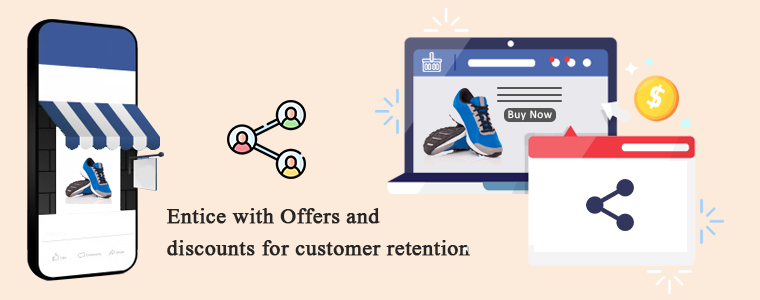
1.     Entice with Offers and discounts for customer retention

To attract a potential customer, discounts and sales are the most exciting strategies. On your PrestaShop store, add the Facebook share and win module which can allow the customer to share the product on the Facebook account, and in exchange, they will earn a discount coupon that can be redeemed on repeat purchases.

You can also run a flash sale on your eCommerce store to increase customer retention.  Sales can attract any type of customer because people love getting their favorite stuff at cheap prices.

2.     Implementing a Loyalty Program can increase customer retention

Another proven strategy to increase customer retention is launching a loyalty program on your online store. The Loyalty Point Module and Reward Point Module are designed to offer a reward to the customers on every purchase they make.

These points can be used in the next purchase from the PrestaShop store according to the rules defined by the store.

3.     Customer satisfaction is the key to customer retention

If you want customers to shop from you again then give them the customer satisfaction they deserve. The journey starts from the home page and ends when the customer receives the expected quality product. Sometimes it happens that the product does not fit well or the customer does not like it and want to return it.

Is your store ready to manage the return order situation? If not then install the PrestaShop Return Manager module to your store which can help you handle the order cancellation and order returns effortlessly.

This is not it. If your customer needs to raise a query or require help then it is important to have a good customer support system. There are various ways you can offer customer support to your eCommerce store. Provide chat support with deskoid helpdesk, email support, live chat, call support, etc.

4.     Add personalization element

Have you heard the term personalized experience? This is the new trend in business. Treat your customers as an individual and take care of their experience as every customer has a unique taste. Customer retention can be achieved if you know how to treat your potential leads.

You can sell on-demand customized products like custom printed coffee mugs, t-shirts, wall clocks, or anything which people will like to purchase with new custom designs.

The PrestaShop Product Designer/Customizer module allows clients to add a product’s desired text, pictures, and QR code. Start this today and increase your sales to the next level.

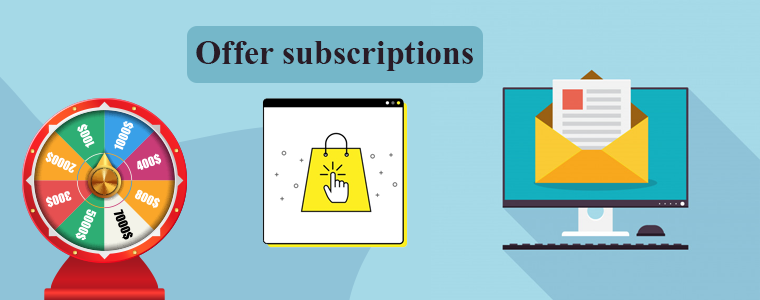
5.     Offer subscriptions:

Encourage customers with an email to make a repeat purchase and for this, you can add a gamified email subscription module on your store in place of the boring subscription popup. The fun and playful Spin and Win fortune wheel will bring you more subscribers and you can offer some discounts, coupons to your new subscribers.

Email marketing can be used to follow your current customers. You can share the details of abandoned carts with them, take the feedback after the purchase, and also share time to time updates from the store. Price alert, new stock details all can provide you more customer retention and increases your overall sales.

Final Words: If, after the sale, you have yet to sell to existing clients, now is a good time to develop a coherent customer retention plan. Along with adding the customer retention modules, you can follow these customer retention strategies too.  To increase your sales and customer retention you must take care of every customer visiting your store. Offer deals, discounts, loyalty points, and encourage them to subscribe to your newsletter. Be clear with customer policies and do not forget to provide customer support channels to give customer satisfaction.

You may like to read:

Give Best Infinite/Endless Scrolling Experience to Your eCommerce Customers

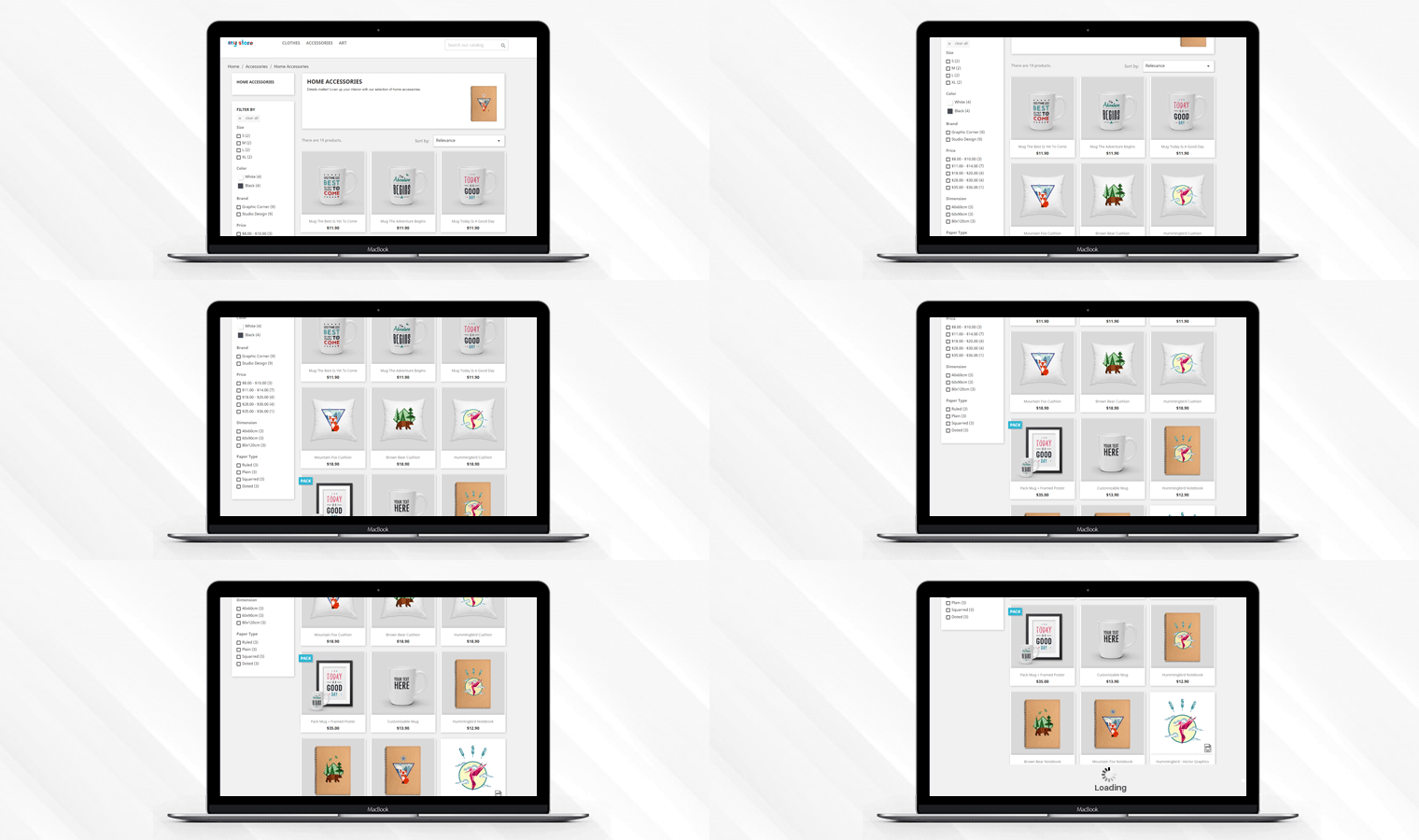
If you’re thinking of infinite scrolling to your site, pause and consider this feature because it does more than any harm to a website. Endless scrolling is a web-design technique that loads content or products continuously as the user scrolls down the page, removing the need for pagination.

Continuous scrolling is desirable for content that streams continuously and has a fairly flat layout, where each element of content is at the same level of the hierarchy and has similar chances of being of relevance to customers. And this makes sense to eCommerce sites where you have numerous products to display.

Infinite scrolling or endless scrolling is not new. Twitter was the first platform that used infinite scrolling back in 2005. Since then it is being used by many social media platforms and eCommerce websites.

If you are looking for the reason why you should add endless scrolling? There is a handful of benefits of infinite scrolling. 

Here, I will be discussing improving the endless scrolling experience of your customer.

1.     Speed and performance optimization

Pagination is the process in which the user has to tap on a button multiple times to see more products. With endless scroll, the user will be able to the products continuously without making any efforts.

The performance and speed test for an eCommerce website is the key element of site optimization.

Make sure your products load fast for everybody and if possible, try to convert your website into a PWA(Progressive Web App).

The user would have to scroll a lot more on a mobile device than on a similar list of items on the desktop due to the smaller screen size. Hence, it is thoughtful to optimize it for speed and performance.

2.     Content optimization for endless scroll

The Internet has given users an infinite amount of knowledge just by pressing a few buttons.

Because the amount of knowledge is infinite, content marketing has become increasingly difficult.

To make your content stand out, you need to make the user experience (UX) meaningful and engaging through better content development and better user experience design.

Write articles tailored to your audience by studying data such as popular trending Meta descriptions.

Will endless scrolling work for your site?

It is necessary to find out if endless scrolling a good idea for your store? It is appropriate for some of the circumstances discussed in this section.

  • For storytelling- It creates a linear framework that storytellers can leverage
  • Continuous and lengthy content, such as a long article or a multi-step tutorial- provides a better user experience than slicing it into many separate pages
  • If the material cannot be separated into separate sections and should be viewed as a whole, for example, an infographic
  • To highlight the characteristics, qualities, or attributes of a product in a tale
  • For product display- Display endless products of a category on mobile websites like Amazon

3.     Smooth scrolling On Touch screen Devices

Mobile usage has grown over the last few years. It’s so easy to only use a thumb to navigate to various Facebook or Instagram pages.

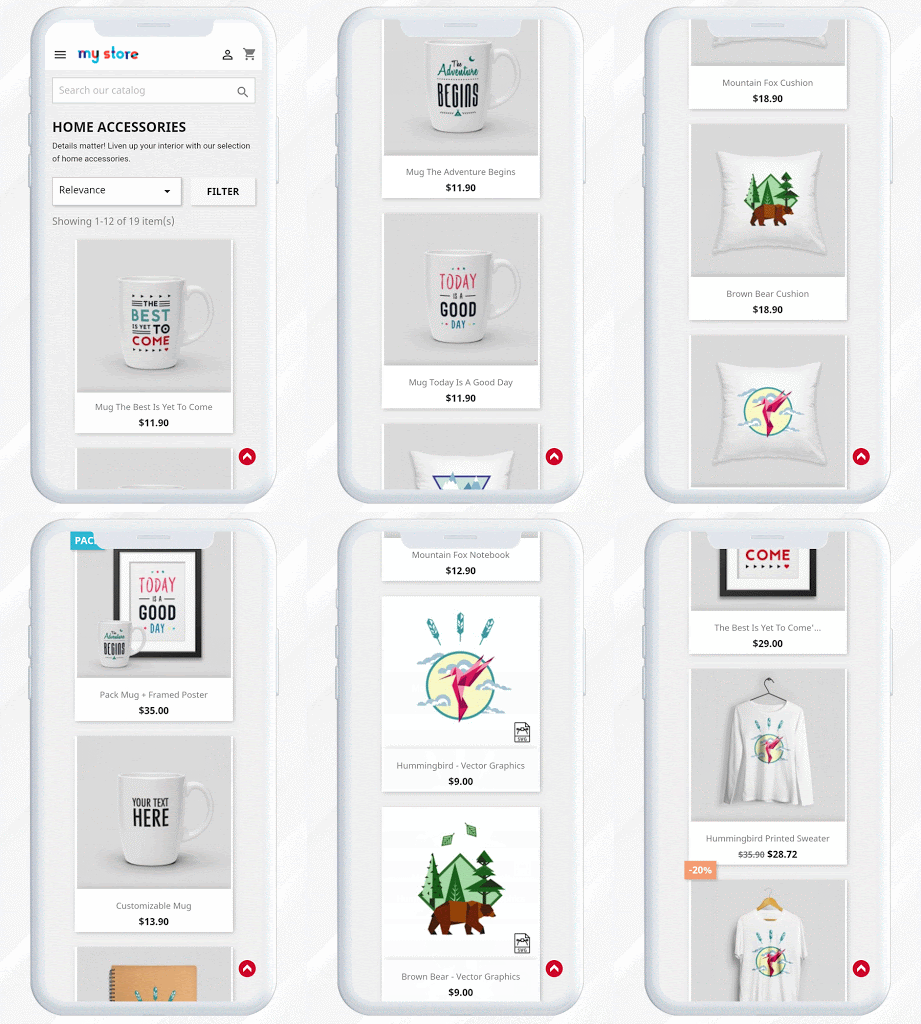
Infinite scrolling provides an amazing browsing experience for mobile users, particularly on mobile apps and the web browser.

With automated product loading, customers only need to scroll to find their expected product. It’s perfect for user-friendliness and navigation, too.

How to take advantage of endless scrolling?

The endless scrolling is now a part of UI and many eCommerce websites use it as a design trend. Here are some trends that you can follow to make it more appealing and increase user engagement. Endless scrolling with these product page design additions will give users a smooth scrolling experience.

  • It gives user-friendly experience– You can add thumbnails with an optimum size that loads faster.
  • Right navigation is necessary: If the user clicks on an image to open it then if the ‘back’ button is pressed, it should remember the last scroll position.
  • Add virtual photographs –And, virtual photography helps you to create better-than-perfect merchandise photographs at a fraction of the cost of traditional photography.
  • Customization is the key- with the help of various available software and apps you can let them see how the product looks by visualizing it in the place where they are supposed to place that.

Or if they are buying a spectacle or clothing then it will be convincing if you let them see how it will look on them.

They will spend more time on your website and it will keep them engaged. Many of the traders already using these latest options are reducing product returns and offering consumers a more enjoyable shopping experience.

Endless scrolling with infinite scroll module by KnowBand

If you want to give your user the smooth experience of infinite scrolling, knowBand’s module can help. The Infinite Scroll module is available for almost all the major eCommerce platforms like OpenCart, PrestaShop, and Magento.

Check them out:

OpenCart Infinite Scroll extension

Infinite/Endless Scroll addon for Prestashop

Endless Scroll extension for Magento

Infinite Scroll extension for Magento 2

It offers several features that make the infinite scrolling more efficient. The infinite scroll module removes the conventional pagination and gives a smooth UX. It allows you to use manual triggers. With this support, the user can also load the products manually after a limit set by you.

The Infinite Scroll Extension also has an additional function to let the customer go to the top of the page by clicking on a connection.

It adds an automatic scroll to the product listing page and allows the user to quickly browse through your store products without switching pages.

Conclusion: It’s an open secret that infinite scrolling works well on certain types of websites that display vast quantities of high-visual content such as photos and videos.

That’s why optimizing your e-commerce pages for endless scrolling can have a tremendous influence on your conversion rates. Give continuous scroll a try and find out if it works best for your online store.

Articles that may interest you:

How to Increase Your Revenue in the Year 2021

The eCommerce businesses have seen a lot of wax and wane post-COVID-19. It is no longer the case that salespeople can expect to follow and still hit the same numbers in their normal sales processes. With companies cutting budgets or holding off on projects until the pandemic is over, purchasing behavior has changed tremendously. To increase sales and boost revenue, you need to optimize your eCommerce store before we enter 2021.

A robust plan blended with innovation and technology can increase your eCommerce revenue and overall sale. Increasing sales and revenues are linked but separate priorities, and each has its own strategy. Although the strategies can be different for each one, they should complement each other. Understanding how sales and income are connected and how to improve both lets you market and maximize the profits efficiently.

Here are some ideas to plan out your revenue strategy for 2021 that can add some sizzle to your business.

1.     Make a plan with experts

It is obvious that every business needs a plan to overcome the pandemic losses. Without a strong sales strategy, sales don’t happen. Luckily, they aren’t as complicated as they may sound.

Take the time to recognize the toughest obstacles and to solve issues to resolve them. Your sales plan is basically the document that organizes the ideas until that’s completed.

Discuss your strategies with your team and other members who can contribute to your success plan. Incorporate marketing strategies, content optimization, and dig into the demands and make a better supply plan.

The business analyst can guide you throughout and digital marketing experts will add more to it.

2.     Market Segmentation

The process of dividing a target market into smaller, more defined categories is market segmentation.

Using various forms of market segmentation helps you to target consumers based on specific features, create marketing strategies that are more successful, and identify opportunities in your market.

Clients and audiences are segmented into groups that share common features such as demographics, preferences, needs, or location. This way you can focus well on your audience and hopefully get a good outcome.

3.     Targeting the right businesses

Focus on developing long-term business partnerships and alliances first, don’t pitch. Approach businesses or people who are a good match for your company.

Someone who is already trying hard to survive after a pandemic won’t be the right choice to make. A sensitive approach is what a business requires while reaching out to people via email or calls.

If companies were to contact me to look at how best to work together to create a win-win outcome, I would be more likely to continue the discussion and create relationships.

If any opportunities to work together are found, fantastic! If not, they have at least provided a new connection to stay in contact with and add value down the road.

Look forward to building long term relationship and collaborations to thrive in the year 2021.

4.     Build a relationship with complementary service providers

To go parallel with the business tycoons and the big eCommerce brands, it’s pivotal to run hand in hand.

Businesses also partner with other brands to collaborate on different ventures that can strengthen brand affinity, expand their scope, and deliver better offerings, either within their sector or targeting the same customer segments.

There are a variety of reasons that businesses chose to participate in complementary collaborations, also known as co-branding.

The key advantage of collaborating with complementary service providers is that you can leverage their trained personnel and expertise.

Also, it increases your customer base and Complementary collaborations will make it easier for participating brands to manufacture goods and services faster and at more cost-effective prices, with improved quality management standards.

5.     Marketing Strategies to Follow this 2021

Digital marketing refers to all types of marketing, including computers, smartphones, and other digital devices, that take place across a variety of digital channels. Online marketing strategies such as social media marketing, SEO, email marketing, content marketing, PPC, and blogging are most frequently referred to in the term.

In 2021, it is expected that you would potentially miss out on lots of potential customers if you don’t have a website or a good online presence.

That is why you need a holistic strategy for digital marketing that utilizes a variety of channels and works to give a competitive edge to your company.

Content Marketing

Business to Business (B2B) and Business to Consumer (B2C) businesses may use content marketing to extend their email lists, promote social media, raise downloads, and generate more leads or sales.

The benefit of content marketing is that with content marketing analytics, you can get as creative as you want and easily monitor progress.

Use the popular Social Media platforms

A successful marketing plan for social media platform enables you to attract more potential clients, engage loyal followers, and drive traffic to your website.

Your content marketing and paid social media advertising strategies can also be a great compliment. You can use social media platforms like Facebook, Instagram, and Twitter that have a humongous user base.

Follow your leads with email marketing campaigns

You need a holistic strategy for digital marketing that utilizes a variety of channels and works to give a competitive edge to your company. One of the most common and efficient digital marketing strategies for companies has long been in email marketing.

You can grow, engage, and sell to your subscriber list with email marketing, raising your chances of converting passive users into paying customers.

6.     Time to focus on customer experience

Customer experience is the impression of your clients of how they are handled by your company. Such values influence their behavior and create memories and emotions to drive their loyalty.

For corporations, customer service has rapidly become a top priority and 2021 will be no different. It wasn’t too long ago when every organization believed that the quality of the product or service they offer was the secret to attracting customers.

Customers do not focus their loyalty on price or product anymore. Instead, because of the experience they get, they remain loyal to businesses. Your clients will abandon you if you do not keep up with their increasing demands.

  • You can offer home delivery services to your customer and free shipping whenever possible.
  • Buy online and in-store pickup (BOPIS) is another trend that is going to continue in the year 2021 and this increases your in-store customer engagement.
  • Give a personalized user experience to your customer and let them feel that they are unique. From their purchase history, you can always reach out to them by email with the products matching their vibes.
  • Offer multiple shipping and payment options in your eCommerce store and see what new you can add to it.
  • For the new normal, maintain hygiene and take all the safety measures while delivering products on their doorstep and also, in your retail store.

Wrapping Up:

For various organizations, the term “sales” has multiple definitions and refers to the wide variety of planning and personal customer-contact practices that you use to produce transactions of your product or service.

Just to be sure with your sales, prepared and ready for your company to make 2021 a defining year and see if the 2020 chaos forced you to diversify or to evolve.

You can use the above-mentioned tactics for business growth and add a personalized customer experience to every interaction you make with your customers. These days’ consumers have more control and options than ever. Thus you are responsible for considering their desires and recognizing them.

You will drive brand loyalty if you make sure their engagement with your business is smooth, fun, and constantly improving.

Recommended Reads:

Acquire New Customers with Referral and Affiliate Marketing Tool for PrestaShop Store

Big brands like Amazon offers an affiliate marketing program and people are earning thousands of dollars with referral and affiliate marketing. It is proven to be a good source of passive income these days.

You might have heard terms like ‘refer and earn’ and came across the links on YouTube videos or blogs dominating a specific category promoting a product. People are making money by influencing others through good content and captivating tactics.

What is Affiliate Marketing?

Affiliate marketing is an opportunity to make passive income. It can work well and do magic if you know how exactly it works. Affiliate marketing is a type of revenue sharing technique. There are many tools available for affiliate marketing. One of the affiliate marketing tools is the ‘Affiliate and Referral Program‘ for your PrestaShop Store.

A person registers himself with an existing product selling website and gets a link for promoting the product. If that link works well and the product gets sold with that particular link, the person who promoted it will get a cookie. Yes, he will get some amount of money on behalf of that purchase. Yay! This is how it works.

Knowband developed a perfect solution for PrestaShop eCommerce store owners, an affiliate marketing tool named PrestaShop Affiliate and Referral Program. What is PrestaShop Affiliate and Referral Program? How you can grow brand awareness and acquire new customers with this affiliate marketing tool? What are the main features of the PrestaShop Affiliate and Referral Program?

We’ll answer all those questions in this blog. If you are interested in affiliate marketing for your store then you must know what ‘Affiliate and Referral Program’ is offering.

Features of ‘Affiliate and Referral Program’- an affiliate marketing tool

1.     Several types of referral

The affiliate marketing tool ‘Affiliate and Referral Program’ module allows the affiliate partners to invite new users through various means into your store. The affiliate partners can bring in new customers by sharing a referral code or a referral link with them.

Affiliate marketing and referral programs also allow the affiliate to generate voucher code. Besides that, affiliate partners can share the reference link on various social media platforms such as Twitter, Facebook, Pinterest, right from their affiliate account.

2.     Defined referral rate for the affiliates

a global referral rate can be set by PrestaShop store admin for the affiliate partners for the user registration and the order placement.

3.     Custom commission for each affiliate

Although the Affiliate marketing tool for PrestaShop the ‘Affiliate and Referral Program’ allows the store administrator to set a fixed global reference rate for the affiliate partners, they can customize this for every different affiliate.

4.     A voucher for affiliates on registration

PrestaShop Affiliate Marketing Module allows traders to assign a coupon on the successful user registration of the affiliates. The store administrator can set the value of the voucher and offer it in the form of a fixed discount or a percentage basis. There’s also the option to define the total quantity of vouchers and the limit of vouchers per user.

5.     Set validity for your referral program

The Affiliate marketing and Referral Marketing addon provide the option to run the specific referral program for a given time interval. If you define a time period, after the specified period, the reference code will get expire.

6.     Keep an eye on registered affiliates

With the Affiliate and Referral Marketing module, you can insight into registered affiliates and look into the details under the ‘Affiliate Customer’ section.

7. Obtain details of the clients referred

“Referral Listing” displays details of the customers who have done the registration via the affiliate link.

8. Check the incentives the affiliates earn

In the “Commission History” tab, the PrestaShop Referral tool allows the store admin to view the incentives earned by the affiliate partners.

9. Check for payout requests from affiliates

The affiliate marketing and referral marketing module allow the affiliate partner to obtain their payout/commission in the form of a voucher or cash.

The affiliate customer must raise a request to withdraw the commission earned from his/her account, which will then be reflected in “Payout Requests.”

Benefits of Referral and Affiliate Marketing Tool

  • Affiliate marketing increases brand awareness

Increase your brand’s popularity by arranging a multi-level affiliate program in the eCommerce website store.

  • The program gives refer and earn opportunity

Offer your customers a unique earning opportunity by displaying on the website an option to register an affiliate.

  • Gather email subscribers

With more registration, you can get more email subscribers. The data can be further used for email marketing strategies. The Affiliate and Referral Program is a boon to the cost of advertising.

  • Improved conversion

When the referent makes a purchase using the voucher code you can drive more conversions and hence more sales. Giving the affiliates exciting incentives can encourage them to bring more customers to you.

Final Words: People are looking for sources to build up the capital and earn more. This is a chance for eCommerce store owners to bring new customers to their store with the ‘Refer and Earn’ program. Affiliate marketing and a referral program can help you grow your PrestaShop business to the next level. Knowband presents the ‘PrestaShop Affiliate and Referral Program’ addon which helps PrestaShop store owners build brand awareness and effectively increase their user base.

Check out the admin demo and the front demo of the PrestaShop Affiliate and Referral Program module. If you have any concerns regarding this addon, you can mail us at support@knowband.com and our team will resolve your query by the earliest.

This can also interest you:

Top 10 Features to Consider While Creating a Marketplace on OpenCart Platform

The rapid growth of the sharing economy is triggered by the increasing number of new online marketplaces. If your idea was to create an online marketplace to allow the exchange of products or services quickly and easily-congratulations! You can name yourself, an entrepreneur!

With the idea of an online marketplace, you might have explored how to create one? And what features you should consider before developing software or purchasing a pre-built module? How will you attract sellers and customers to your marketplace?

Sometimes we feel like we own too much stuff and this can happen with your marketplace too. To make it look attractive and clean, you need to have the functional UI with all the functionalities placed adequately. Clear navigation for both the seller and the customer is a must. This article is for the business entrepreneurs who are looking forward to developing their marketplace and will help you decide what features marketplace users need the most.

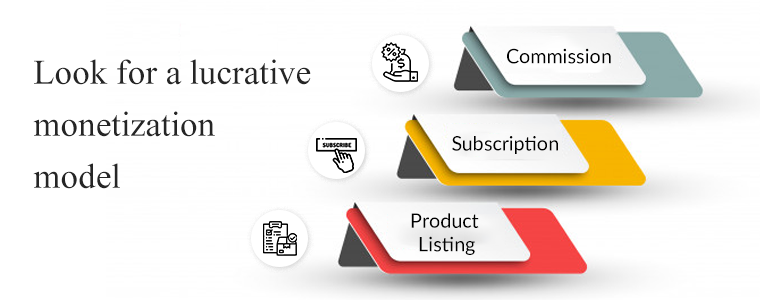
1.     Look for a lucrative monetization model

“Before looking for the answer to” How to create a marketplace? “Answer the question” How am I going to make money from my product? To attract investors and become globally competitive, all ventures have to produce revenue. No exception in the marketplace. There are many forms for your online marketplace to be monetized:

Commission– For any good purchase on the website, the marketplace charges a percentage or fixed fee.

Subscription: To use the marketplace, consumers pay a monthly/annual charge

Product Listing: To list the products, the sellers have to pay some amount.

OpenCart Marketplace Module supports the commission revenue model. The marketplace admin will generate income from the sellers on every order. You can refer to this article for a better understanding of the commission management for the OpenCart Marketplace extension developed by Knowband.

2.     Admin Panel features to consider:

The admin interface of a marketplace extension should allow you to monitor and make the necessary adjustments to support your customers.

If, for example, the terms of service are breached, an administrative interface should be able to monitor behavior on the network and issue warnings. We have designed interfaces for our clients so that it is easy to discover and censor offensive acts such as negative language easily.

It is also possible to use the administrative interface to authorize vendors and products, build customer outreach materials, run promotions, and adjust marketplace settings. It should allow you to keep the track of the seller’s earning, customer feedback, like which suppliers are doing well and which could use some assistance.

The OpenCart Marketplace module has all the above-mentioned functionalities and the admin can keep eye on every move of the seller. The admin can see the order status that will be determined for commission and earning.

3.     It should have a functional seller dashboard:

Rapid onboarding for vendors

You’re going to have to make the seller dashboard and customer handling simpler for sellers, not harder. Keep the sign-up and product listing process as simple as possible for your vendors.

The less time it takes to get started on your website, the more likely individuals are to sign up with you to sell.

Sellers can easily register and enlist their products on your OpenCart Marketplace. Sooner you approve the seller profile earlier he will be able to sell on the marketplace.

4.     Easy Inventory management

Fortunately, by establishing a strong inventory plan from day one, many of the blockades and challenges ravaging eCommerce marketplace inventory management can be easily resolved. Inventory Management is the lifeline for retail sellers, as the success of the business relies on delivering the right order to the right customer at the right time.

The stock management is effortless with the OpenCart marketplace module. It sends the stock notification to sellers and removes out of stock products automatically. To add new products for maintaining the inventory, the seller can bulk upload the product list in .CSV format.

5.     Order handling

Control of marketplace order saves you time on manual tasks and eliminate mistakes in order processing. Speaking of efficiency, from the time a customer clicks “order” to the moment the product leaves your warehouse, consider how much time it actually takes you to process a transaction.

The order handling is uncomplicated when you have a module like OpenCart Multi-vendor Marketplace. It allows the store admin and sellers to change the order status. The seller can handle every minute of action through the seller dashboard.

6.     Payments and payouts

Marketplaces make it tougher than their standard online shops when it comes to payment processing. Customers need an effortless payment system, whether credit cards, debit cards, digital wallets, PayPal, or COD. Some do intimidate while sharing the credit or debit card details hence, you can provide them COD. These are primary online shopping choices whose icons may alternatively be clearly shown in the top corners or near landing page banners or in the menu section.

From their Dashboard, the sellers get to see the order earnings, the pending amount, and the commission paid. The seller can raise payout requests to the owner and the store owner can make the payments manually through OpenCart Marketplace Plugin.

7.     Notify sellers with email

To maintain transparency on your platform you need to notify your sellers and customers about every move. The OpenCart Marketplace module has several pre-crafted email templates that can be used by the admin to send an email notification to the seller after the order is received, payment processes, review approved or removed, and much more.

This maintains transparency, fulfills realistic expectations, and enhances the user experience.

8.     Do not forget about the customer expectations

How can customer support be sustained in a multi-seller marketplace rapidly introducing a new range of products and services? Obviously, ensuring that the current service standards of the retailer are met in the marketplace is critical. In a marketplace, the consumer experience should not get distressed.

What does OpenCart Module offer for customer support?

  • Customer Seller helpdesk:  In order to get help for pre-sale inquiries or post-sale inquiries, the customer may contact the vendors.
  • Manage returns:  The returns for the goods can easily be initiated by the clients. The administrator will be able to view and process return requests from the vendor dashboard.

9.     Compatible and gadget responsive

A mobile-friendly eCommerce shop provides you with an opportunity to stay ahead of your rivals. You’d have more chances of ranking well in search engines, more visitors, and you’d be able to win their loyalty through content interaction and responsive design.

The robust Opencart Marketplace module is compatible with the mobile app. It is compatible with all the themes and models of OpenCart and it supports all currency types. You can sell any type of product digital or physical in the marketplace.

10. Let seller decide the shipping method

To improve the delivery experience, cutting down the shipping cost you need to provide multiple shipping options. In the early stages of operation, using a single shipping service makes sense because order sizes are typically not large enough to warrant using more than one carrier. However, as the company grows and online sales increase, failing to diversify your shipping strategy to meet your increasing needs puts you at risk of inefficient fulfillment of orders and increasing shipping costs.

The OpenCart Multi seller Marketplace admin can enable the seller to create multiple shipping templates. The shipping methods that vendors build will be listed in the Marketplace. And, the marketplace manager can also add or delete the shipping methods created by the seller.

Some Other helpful features of OpenCart Marketplace Module:

  • Admin can approve the product and seller reviews from his end
  • The invoice generated can have either admin’s details or seller’s details or both.
  • By providing coupon code discounts to buyers, the sellers can give the customers a special discount and run promotions
  • Admin can add multiple custom fields on the seller registration page
  • Admin can assign categories and products to the seller
  • All the products can be reviewed before publishing them on the marketplace.

Wrap-up:

These are the favorable features and functionalities you need to look at before launching a marketplace. The OpenCart marketplace module can help you with all these most required features. Remember, a marketplace is a platform for buyers to buy and seller’s toes ell. So, you need to keep your foot in their shoe and find the best you can give.

If you have a brilliant idea that you want to bring to life – drop us an email at support@knowband.com or you can drop a line in the comment section. The Knowband team helped many eCommerce entrepreneurs build a better platform by helping our clients measure the right things. The marketplace module is also available for PrestaShop and Magento 2.

Recommended Read:

How Progressive Web Apps (PWA) can improve mobile conversions of an eCommerce store?

Nowadays people are spending a lot more time using mobile devices to access the internet and consuming twice the data they consume on desktop websites. That goes for online shopping standards as well. Using an eCommerce website to bring sales is challenging when you have flaky internet connectivity. And, asking users to install a mobile app is again a conversion killer. PWA (Progressive Web App) fits in between the native mobile app and the website browser and is more likely designed to boost the mobile conversions for eCommerce stores.

Progressive Web App is the new must-have format for the mobile branding of your business. PWA mobile apps have overcome the most alarming problem of distribution. Do you ever go to your browser for Google Maps navigation? Probably not! Research says that most of the users, around 87% choose to browse on native apps. That makes it mandatory to have the app installed on the user’s device.

PWA mobile app gets derived directly from the mobile browser of the website and no need to visit any third-party app store or medium to install the app. Actually, whenever any user opens a PWA active website on a mobile browser, a prompt message asks to “Add App To Home Screen”.

App developers and service workers (Script files) in combination create PWAs for offering a dynamic, smooth user experience while accessing the content through a website/web-app.

Introduction to Progressive Web App

The Progressive Web Applications, also known as PWA are enhanced versions of web apps, developed with javascript. PWAs have extra capabilities like the user can access them offline and also receive push notifications based on the marketing standards.

PWA improves your website’s performance, security, accessibility, and SEO features. It enhances your reliability and workflow. They allow you to work offline and on flaky networks. Progressive web apps are fast and engaging. The PWA’s have seamless navigation and are packed with smooth animations, jank-free scrolling which makes it faster.

Major Advantages Of Progressive Web App

In order to create efficient web applications, progressive web applications (PWAs) are more of a technique that includes a mix of technologies. With an enhanced user interface, individuals can spend more time on websites and see more advertising. They prefer to buy more, and more likely to return regularly with warning notifications.

#1. Reliable Performance

A typical website forces users to wait while it is busy making trips to the server, doing nothing. Each request from the network to fetch an asset or piece of data passes through a service worker, who first checks if the answer to a specific request is already in the cache. As users immediately get real content, even on a bad link, they trust the app more and see it as more reliable.

#2. Fast Loading

This UI isn’t flaky. Scrolling is seamless and the app reacts to user interaction easily. Your Progressive Web App will naturally be faster than the native apps, being lightweight & having a fast loading mechanism. This provides the app users with an exceptional user experience that keeps the services at par.

#3. More Engaging

It looks and feels like a native application. Over the user’s home screen, a PWA can earn a location. By offering a full-screen work environment, it provides a native app-like experience. To keep users active, it makes use of push notifications.

#4. Offline Usage

The pattern of “offline first or “cache first” is the most common technique for serving the user with content. If a resource is cached and offline accessibility can be checked before you download the content. Download it if it’s not already in the cache and save it for future use.

#5. Push Notifications

Push notifications effectively increase the conversion rate of your eCommerce store. PWAs allow the owners of the store to configure and submit unlimited push notifications. They have in-built functionality to automate & schedule them. Using catchy titles & graphics in your notifications can do wonders.

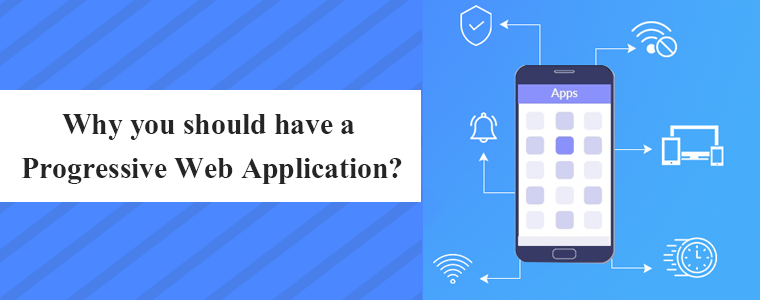
Why you should have a Progressive Web Application?

While a PWA is not a must-have functionality but it is a way to improve your relationship with current and potential customers while also overcoming the difficult challenge of visitors driving away from the website.

Many people become oblivious to the prompts to enter an email list and sometimes do not take the next step to open and read the emails, but you can build real brand loyalty if you can get a customer to use your Progressive Web App.

Google is supporting the PWAs since 2015 and now iOS also allowing them on their web browser. Google scores the Progressive Web Applications better while crawling and other practices. Various Google Chrome extensions are created to support the PWAs.

PWA can be a good idea if you are starting up your new website. It makes sense to distribute your web app to users, in the beginning, to get their feedback before creating your responsive mobile app.

The Progressive Web App cannot be replaced with responsive mobile applications but in a way when you are planning to launch your mobile app, it is a good option to start with.

KnowBand developed PWA for various eCommerce Platforms:

The Progressive Web App Builder extension is available for almost all major eCommerce platforms. The store admin just needs to choose the right plugin and install it to follow the simple guideline for the configuration.

Magento 2 PWA Mobile App

OpenCart PWA Mobile App

PrestaShop PWA Mobile App

WooCommerce PWA Mobile App

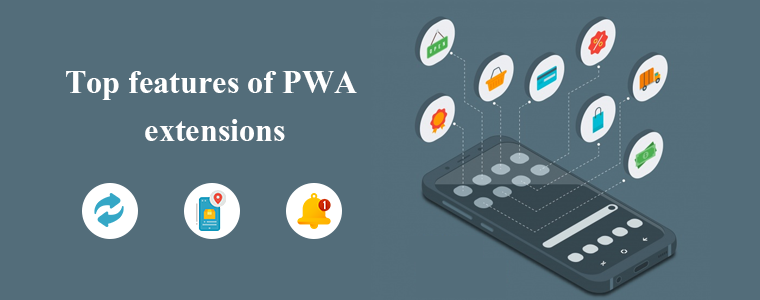
Top features of Progressive Web App extensions

The below-mentioned features are the most prominent ones and are all put together and our Knowband experts developed the Progressive Web Application. The app is lightweight and faster loading and enhanced performance. The PWA Mobile app supports multi-lingual and various currencies that allow you to expand your business globally.

1. Change the Look and feel of the PWA- The store owner can change the colors, add a brand logo and various designs to make it look good. Even the complete home screen design can be edited and changed via a DIY editor. The changes will be reflected in the actual app anytime.

2. Featured Product Listing- Designed in a way that the user can add different product/category-based elements. The store admin can showcase the best sellers, featured products, recently purchased, etc. on the home screen.

3. Easy Installation- The users do not need to visit any third-party app store. Instead, the PWA Mobile App can be added on the phone directly by opening the website on a mobile browser.

4. Reliable and Engaging- The eCommerce PWA Mobile App works flawlessly under no/slow internet connectivity. Even in offline mode, the cached data & previously loaded pages make the content available to app users.

5. E-mail and Social Login- The store owner can allow users to sign up by adding an email address or with their social media accounts.

6. All Payment and Shipping Method Support- Customer often bounces back due to limited shipping and payment methods but with PWA, this is not a challenge anymore. All website payment and shipping methods will be actively functioning on PWA Mobile App.

7. Offline Mode- Even without an internet connection or on a sluggish network, your PWA App will work properly. Users will not have to rely on the internet at all times to shop for app items.

8. One-Page Checkout, Unlimited Push Notifications, Live Synchronization, and Order Tracking like features are the additional advantages of PWA.

9. Cross-selling– It allows you to showcase related products to improve sales on PWA. It also allows the store manager to select the CMS pages from the website and will be optimized automatically.

Here is a list of benefits offered by PrestaShop PWA (Progressive Web App).

We have developed the PWAs for many clients and some of the success stories for 2020 are discussed in our previous article.

Conclusion:

Turn the online eCommerce website into the PWA Smartphone App and give mobile visitors a seamless web shopping app. The highly engaging PWAs can be launched from the home screen as you can add an icon for it and they even send push notifications. This is a great example of technology development and has a lot of scope in future advancement.

Progressive Web Apps are still in their infancy, as described, but it’s an exciting time to experiment with the methodologies behind them and see how well they can relate to your web applications.

Please feel free to comment on-thread if you have input on places that you would like to see covered.

Recommended Reads:

How PrestaShop Delivery Boy Mobile App can help you with Seamless Delivery Management?

The PrestaShop Delivery Boy App is a robust delivery management system that allows store managers to manage home deliveries fast and hassle-free. The framework is designed and developed considering the struggle of eCommerce store owners after receiving the orders.

It is often a major turn-off for the store customers whenever the product delivery gets delayed. There could be a number of reasons behind the cause.  It’s not necessary that the store admin or team is to be blamed every time. Instead, this could be due to poor delivery management.

That’s where KnowBand PrestaShop Delivery Boy App comes as a savior. The module allows the store admin to add unlimited delivery boys to the store. Once added and approved, the delivery boys will be able to login into Delivery Boy App and manage deliveries of those orders which are assigned to them. The admin can keep a keen eye on the progress and thus PrestaShop Delivery Boy App will save the store owner from any mismanagement.

Both the admin and delivery boys have access to this app. Henceforth, enabling order deliveries to be easily allocated and handled. This is a ready-made, time-saving solution that makes the delivery process safe and secure.

Currently, it is available for two eCommerce platforms: PrestaShop and OpenCart

Prime Features of PrestaShop Delivery Boy App

The Delivery Boy Mobile App for eCommerce is developed to make the difficult task of timely deliveries simpler. With the aid of the delivery boy app, the admin can track all the orders and delivery boys can see the order status.

  • Admin can register delivery boys by adding their details.
  • Delivery boy can log-in with the email address and password assigned.
  • The delivery boy can see the order status from the dashboard.
  • Delivery boy can see the navigation map for order tracking.
  • Delivery Boy can mark the order as assigned, in progress & delivered.
  • Sorting of orders is possible: date wise and according to order status.
  • Delivery process validation with OTP
  • Admin and Delivery boy both can see the commission earned by the delivery boy.
  • The app can be published on the Apple store for iOS users and Google Play store for Android users.

1. Register Delivery Boys

The process for registering a delivery boy on the Delivery Boy App is straightforward. The admin will have to add personal details like the name of the delivery boy, email address, verified image, vehicle details, and other required information.

Once the process of registration is completed, the new registered delivery boy will receive the log-in credentials like and User ID and password for further processing.

2. Proficient dashboard for delivery boys

The proficient dashboard displays order information along with assigned, pending & delivered orders to the delivery boy.

3. Google map integration

There will be a navigation system integrated with Google Maps on the app with a marker to pick the desired spot.

4. Delivery boy app has orders listing screen

The delivery boy can see the orders listed on the order listing including all the assigned, pending, and delivered orders.

The delivery boy has the sorting and filtering options for convenience. He can sort the orders for a time like recent and earlier orders first or by price like low to high or high to low.

Other filter options present in the delivery order listing are Order ID, After Date (Orders created after this date), Till Date (Orders created till this date), and Order status (Assigned, pending, or delivered)

5. Interactive App Interface

The app has an interactive screen layout and its quick and simple navigation makes the screen switching easier for delivery boys.

6. Easy Navigation on the app

For the convenience of the delivery agents, a very easy to navigate menu is provided on the App. From here, any sub-pages on the app can be reached by the delivery agent.

With the navigation menu, the delivery boy can jump to the dashboard, order page, configuration tab, or can also log out from the application.

7. One-Time-Password Verification

When the order has been picked up by the agent, the customer will receive a push notification/email informing about the order status.

The customer shall receive an OTP, which they shall provide to the delivery agent at the time of successful delivery. Then only the order status will be marked as shipped.

8. Super smooth delivery management

PrestaShop Delivery Management App also increases customer loyalty by keeping the delivery theme up to date by live monitoring and chatting with store administrators and delivery agents.

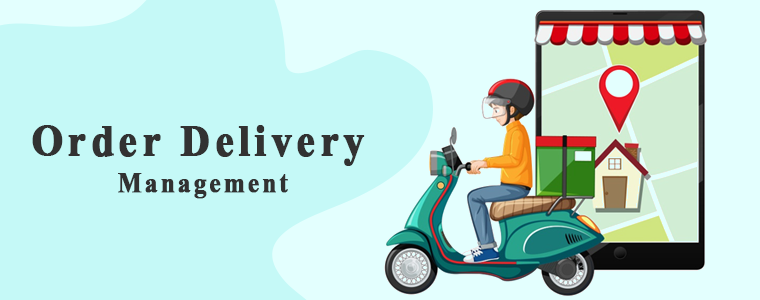
9. Order Delivery Management

This section helps the managers of the store to keep track of all the orders and the delivery men assigned to them. Based on the status of the orders, i.e. ‘Available’,’ Allocated’,’ Shipped’ & ‘Pending’, the administrators can handle the distribution assignment automatically as well as manually.

10. Delivery Boy Management

The store admin can track the delivery boy’s position and manage them with ease. This helps the administrator to most systematically handle all their distribution agents.

The store administrator can monitor the status of the delivery boys in a tabular form using order ID, order date, order delivery date, order amount, or other necessary details.

Also, the admin may activate or disable the status of the agent. The admin will view the information of orders shipped or declined by this agent on this agent’s details screen.

The administrator is also able to add filters on the table that allow the delivery boy to calculate the commission.

11. Delivery Location Management

It may happen that the real-time location and the delivery locations are not the same. In that case, the app allows the customers to add the delivery location which the delivery boy needs to follow.

The store administrator can also handle this if needed. The admin may also enter the delivery location manually and the delivery agent will be informed of the same.

12. Accept/Reject Orders

The delivery boy can accept or reject the orders assigned but he has to specify a reason if rejected.

13. Email notification

The customers and the delivery boy will be informed with a push notification or email notifications. The email will be sent for order status like order picked, in progress, or delivered.

14. Mobile App compatibility and other benefits

One benefit of this “delivery boy app” module is that if the store’s mobile app has been designed using the “PrestaShop Mobile App Builder” module, its corresponding “Delivery Boy App” will provide live monitoring of the shipped orders by default.

Simply quoting, the orders can be tracked using the delivery boy app if the PrestaShop store is using our Knowband’s Mobile App Builder.

Read more in detail from:

PrestaShop Mobile App Builder is compatible with Delivery Boy App 

Conclusion:

Both module and app have been designed by our technical experts. It is a one-stop solution for businesses looking forward to offering home delivery. You can start various businesses like food delivery business, grocery delivery, medicine home delivery, or any other on-demand delivery hyperlocal business with Delivery Boy App on an eCommerce store.

Need to discuss or got any questions? Drop us an email at support@knowband.com.

Recommended Reads:

20 E-commerce Marketing Strategies for Beginners

Are you planning a start-up business or a recently established one? Then, you must be looking for some magical marketing tips that can help you expand it, uplift sales, enhance conversions, and bring new customers to your online store.

Entrepreneurs don’t have a lot of spare time to get the word out about their products and services. Also, it isn’t easy to market your products and brand but with some expert guidance and marketing strategies, you can become a marketing ninja.

It’s certainly reasonable if your company now lacks a marketing budget. Start-ups have thousand other things to put money on. These 20 simple and budget-friendly eCommerce marketing strategies for newbies have been developed to fill that void.

1.     Know your Product/Services before Marketing

The most important strategy for a marketer is to have deep knowledge about the product features and their benefits. An important sales ability is product awareness. Understanding the attributes of your goods helps you to reliably and persuasively present their benefits.

Customers flock to enthusiastic sales workers who are enthusiastic about their products and willing to share the advantages with them.

2.     Focus on What you Want them to Do

The most effective way to reach your target audience is by knowing them. The next step is to find out what is needed to drive them toward a sale once you’ve decided whom you need to meet.

This is easy for certain businesses: encouraging consumers to grab a product and purchase it at the shop. But, before reaching that stage, there may be acts that you push them towards (such as getting on a mailing list or being a follower on social media).

Content Marketing:

Content creation is the simplest and impactful way to reach out to your target audience. Words has more value when spoken at the right time and on the right platform. Make complete use of blogs, social media and try creating your brand identity.

3.     Create E-commerce Content

It is one of the best simple marketing techniques to develop yourself as an expert in your field. You are positioned as an expert by writing a series of articles for a trade publication and these can be serialized for maximum impact as blog posts.

4.     Improve Efficiency of Content

Clients are drawn by keywords. In the content on your website, they need to be placed in strategic places. Make sure to focus on the subjects that your clients are looking for.

Read: Why is content marketing effective for your marketplace website?

5.     Write Blog Posts

On a blog, you can post specials and activities scheduled. These are a perfect way to advertise in a voice of your own.

6.     Publish a Book

You are positioned as an expert in the field by writing a book and self-publishing it. These are also marketed by many business people on their websites.

Social Media Marketing:

7.     Start Facebook Page Shop

To connect with a larger customer base for E-commerce marketing, social media is the best platform and Facebook stands top in the row. You can create a Facebook page for your brand and enlist your products on Facebook Page Shop.

8.     Use Instagram Reels

Instagram has a different crowd than Facebook but some of its features can help you with marketing. Instagram reels are short videos that can be used to display products. All the possible Instagram Reel’s business marketing strategies are discussed in this article.

9.     Use hashtags on Insta and Twitter

Here is the list of best hashtags you can use this holiday season for attracting more customers and visitors to your Instagram Page.

10.   Start to tweet

Social networking is complimentary. It’s one of the best available simple marketing tactics. You can connect with your target group by posting on Twitter.

11.   Run Ads on Facebook

Social advertisements allow you to get out in front of a large crowd. For optimal effect, you can target these to a particular market. Social media advertisement is the best E-commerce marketing method in 2021.

Read: 6 Easy Ways to Boost your Social Media Marketing through Facebook

12.      Invest in Personalized Real-Time Marketing

Personalized marketing is the implementation of a strategy in which businesses, use collected data, analysis, and automation technologies to offer individualized content to recipients.

13.    Online Video Marketing

Did you know that every minute of over 400 hours of video gets uploaded to YouTube? It’s unbelievable. The fact is that it’s the second-largest search engine in the world.

It’s not the only video platform for marketers out there to know about, either. Plus, Facebook and Twitter social videos are becoming increasingly relevant as well.

Read: 7 Benefits of Video Marketing for your E-commerce Business

14.    Offer Newsletter Subscription

Newsletters are a fast and easy way to keep new products and services up to date on a mailing list. One of the more common templates is MailChimp.

Read: What’s new with Mailchimp AI integration: An Insight

15.     Establish an Email Campaign

In front of your target audience, putting together an email marketing plan gets you out. Your email address will be seen by everyone on your list from inside their inbox.

Read: A Definitive Guide to Effective Email Marketing in 2020

16.     Run Give-Aways

In E-commerce, a value-added way of converting guests into consumers is by giving free access to a newsletter or blog. Whether you’re online or in a brick-and-mortar shop, consumers are always drawn to free items.

17.     Pay-Per-Click and Ads

Did you ever see such commercials at the top of the search results? Those are pay-per-click advertisements.

These ads provide excellent opportunities for advertisers to sell products directly to seekers. It’s also great because it helps you to see precisely how much you invest vs. how much money your promotional activities produce.

18.     Influencer Marketing

Why talk about your goods yourself when you can promote them through trusted people? That’s the crux of influencer marketing, which includes working to bring the goods in front of their audiences of famous people within a given niche or industry.

19.   Nailing the Execution

It’s time to put it into motion once the plan is in place.

It requires:

Having the skills: You need to know how to do it once you know what to do.

Getting the best people: The secret to success is putting the right people in the right place.

Having the right instruments: To tackle a given task or problem, a professional always uses the best possible solution.

20.    Use Data to Monitor your Progress

If the effect of your E-commerce marketing efforts cannot be determined, then you might not be doing anything at all.

To achieve a particular objective, any move should always be related to specific metrics.

Wrapping up:

In this article, there are a lot of strategies to process. But, now that you’ve covered much of what you need to know as a marketing professional (both at the surface level and with links to deeper reads on loads of sub-topics), you’re more informed than ever to continue your marketing skills and increase your career level.

If you want to add something to it, let us know below.

Recommended Reads: