Amazon is one of the top platforms for selling goods online. The brand has a worldwide reach along with a well-reputed image amongst the target audience. Amazon witnesses a huge customer and vendor traffic rate every day, which results in millions of product sales daily.
However, if you are a retailer and are planning to sell your products online on Amazon, there are 2 ways to sell on Amazon.
The first one is to sell via Amazon Vendor Central and the second one is to sell on Amazon Seller Central. Moreover, both of the ways have their characteristics. Undoubtedly, merchants prefer both of the selling methods based on their interests, but there are a few things you should go through before selling on Amazon.
What is Amazon Seller Central?
In simple words, Amazon Seller Central is an open-source platform that allows merchants and brands to list their products on Amazon. It allows them to directly sell their products on the Amazon customer base.
In Amazon’s words, if you are an Amazon Seller Central Account holder, Amazon will consider you a third-party seller or a marketplace.
Furthermore, in regards to orders and shipping management, Amazon has two ways for Amazon Seller Central account holders. For the first one, you can manage all the order attributes such as shipping, return, customer service, and all. In the second option, Amazon offers the vendors peace of mind against order management by enrolling them in the “FBA program”.
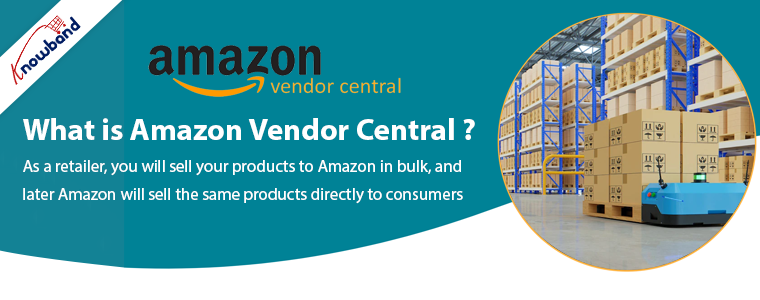
What is Amazon Vendor Central?
Being a genuine seller on Amazon requires the merchant to sell directly to Amazon. For vendors and major distributors, Amazon has its vendor central.
In simple words, as a retailer, you will sell your products to Amazon in bulk, and later Amazon will sell the same products directly to consumers.
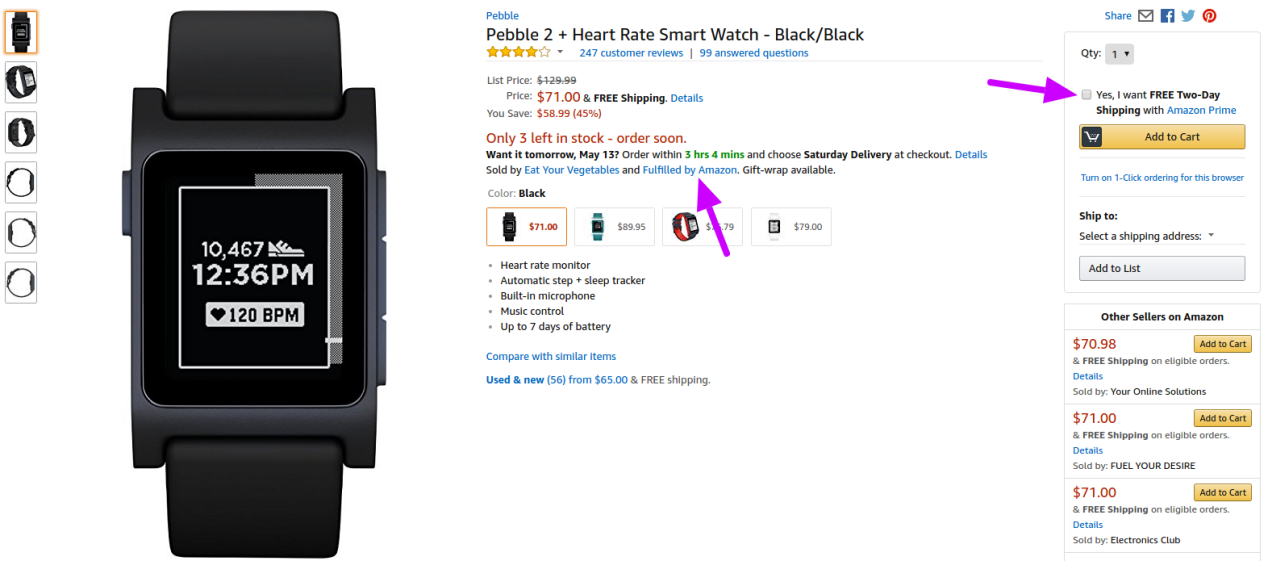
It is easy to check if you are purchasing the products from Vendor Central sellers or Sellers Central sellers. Amazon Vendor Sellers shows the tag “Ships from and sell by Amazon.com” in the product descriptions.
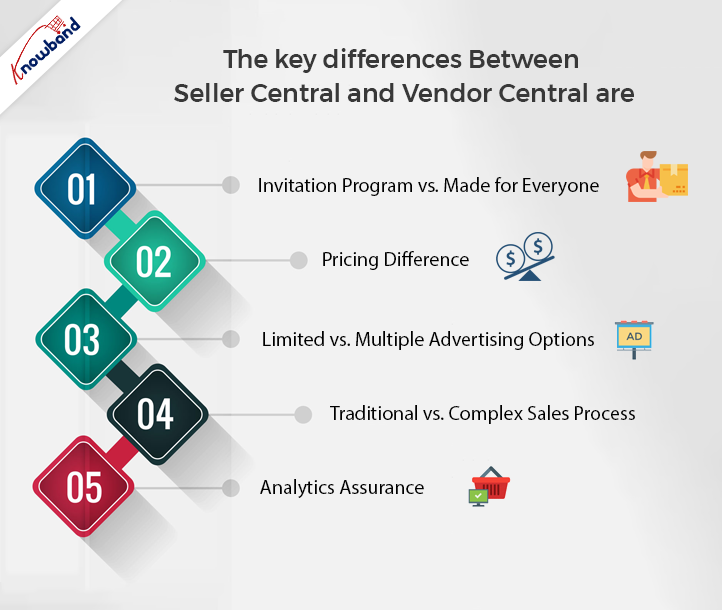
The key differences between Seller Central and Vendor Central
Invitation Program vs. Made for Everyone:
As the very first difference, Amazon Central is an open-source seller base where any merchant can sell their products directly to consumers.
On the other hand, Amazon sends invitations to the sellers to set up their business on Amazon Vendor Central and directly sells to the Amazon brand itself.
Pricing Difference:
Sellers on Amazon Central control their pricing and deal management. They can change the prices and offers on their products at any time.
On the other hand, for Vendor Central, Amazon has all the authority to control the pricing and offer management at its end.
Limited vs. Multiple Advertising Options
Amazon Seller Vendor retailers have limited options for promoting their products via advertisements by Amazon Marketing Services. On the other hand, eCommerce merchants that are members of Amazon Vendor Central have a wider number of promotional options offered by AMS in comparison to Amazon Central sellers.
Traditional vs. Complex Sales Process
When it comes to flexibility in the sales and order management process, Amazon Vendor Central creates a huge gap compared to Amazon Seller Central. The reason for this is that merchants who sell through Vendor Central receive full support from Amazon’s team.
On the other hand, the eCommerce retailers that use Amazon Seller Central for selling their goods have comparatively more headaches than the Vendor central sellers.
Analytics Assurance:
In the data analysis part, Amazon offers custom data to the central online retailer. But as mentioned by Amazon, it is strictly prohibited for the merchants to use the same data for re-marketing or promotional activities.
On the other hand, the merchants selling on Vendor Central have all the aid from Amazon’s sales and marketing team. As a result, they do not have to put more effort into promotional activities.
Do you know?
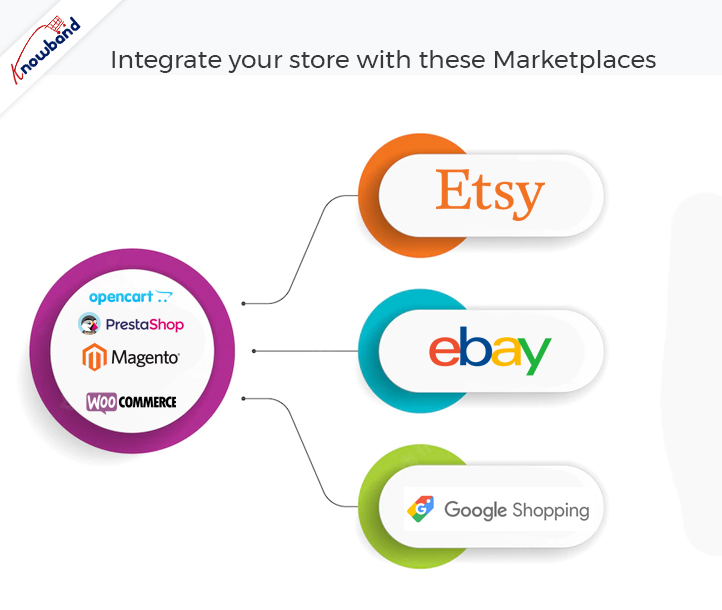
Do you know that, like selling on Amazon, eCommerce merchants having their shops based on OpenCart, PrestaShop, Magento, and WooCommerce can also sell their products on major marketplaces like eBay, Etsy, and Google Shopping?
Knowband Marketplace Connectors assist the merchants by offering all the required features on their shop admin end. Moreover, it allows the store owner to manage the orders on the shop back panel itself.
It’s up to you!
According to the studies, when customers make up their minds to purchase online, 73% of searches begin by simply clicking on Amazon.
Furthermore, if you are willing to sell on Amazon, both Vendor Central and Seller Central have their pros and cons. It’s up to your final call to find the perfect fit for you.
After reading this blog, you will be able to understand how the seller can change inventory and fulfillment latency for products on Amazon using API.
Let’s know about the Fulfillment Latency
Fulfillment latency is the number of days in which the seller needs to dispatch the order after getting the order from Amazon. It can also be defined as the maximum time available to the seller to dispatch the parcel. The fulfillment time is set by the seller corresponding to each product. Fulfillment latency is also known as handling time.
Amazon fulfillment API helps the seller to set the product’s inventory and fulfillment latency time on Amazon.
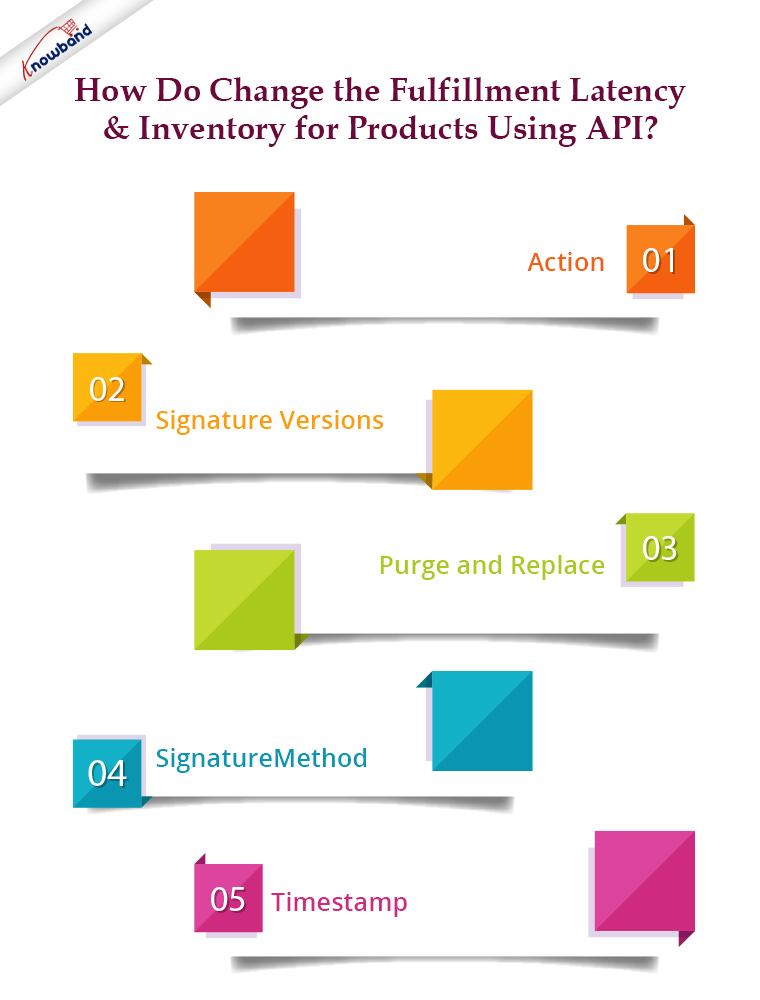
How do change the Fulfillment Latency & Inventory for products using API?
Let us know about the fields that you will need to send in the request to Amazon:
Action
This field specifies the action which needs to be performed on the request and this helps to determine what parameter should be in the request.
Signature: Whenever you send the HTTP request to Amazon, you need to add the signature with the URL. By checking the signature, Amazon can identify the merchant from whom the request has been received. We use a hash value (HmacSHA256), some data of the request, and a secret access key to create a signature.
Signature Versions
2 signature versions are supported and these versions are:
(1)Version 4: (2)Version 2:
Both versions can be used to sign the request but we recommend you to sign your request with Signature Version 4 in this blog, signature version 2 is used.
Purge and replace
The purge and replace field replaces the existing listing of products from Amazon if its value is true. So you always need to set its value to false in the request if don’t want to remove listingsting from AmazFreeTypeType
Feed type specifies how the data should be processed. To change fulfillment latency and inventory, you need to specify the feed type “_POST_INVENTORY_AVAILABILITY_DATA_”.
Signature Method
Signature methods hash-based based protocols and you need to apply these methods to calculate signatures. E.g. HmacSHA256
Timestamp
In this field, you need to add the time at which you are making the request.
To change the fulfillment latency and inventory of the product, you need to send the following data in the request to Amazon:
$url =
https://mws.amazonservices.co.uk                               // Here you need to write the End point
/?AWSAccessKeyId=XXXXXXXXXXXXXXXXXXXX              // Here write your AWS Access Key
&Action=SubmitFeed                                        // Action should be SubmitFeed   &FeedType=_POST_INVENTORY_AVAILABILITY_DATA_  // Feed Type
&MarketplaceIdList.Id.1= XXXXXXXXXXXXXX                 // Here write your marketplace list id
&Merchant=XXXXXXXXXXXXXX                                     // Here write your seller id or merchant id
&Signature=1234Knowband1234example1234         // Here you need to write the signature
&SignatureMethod=HmacSHA256                                  // Hash method which used to create signature
&SignatureVersion=2
&Timestamp=gmdate("Y-m-d\TH:i:s\Z",time()))
&Version=2009-01-01
&PurgeAndReplace=false                                            // Always set purgeAndReplace Value as false
                                                                                   // else it will replace all the existing product data
You will also need to create the XML file which will contain inventory and fulfillment latency details of those SKUs for which you want to change the fulfillment latency and inventory. The sample feed is given below:
$xml_file = Full path of the XML file on the server
You need to send the request UXML XML data and header together in a request. The header values are used by the server for an end-to-end check on the data and for detecting unintentional modifications to the data further in the transition.
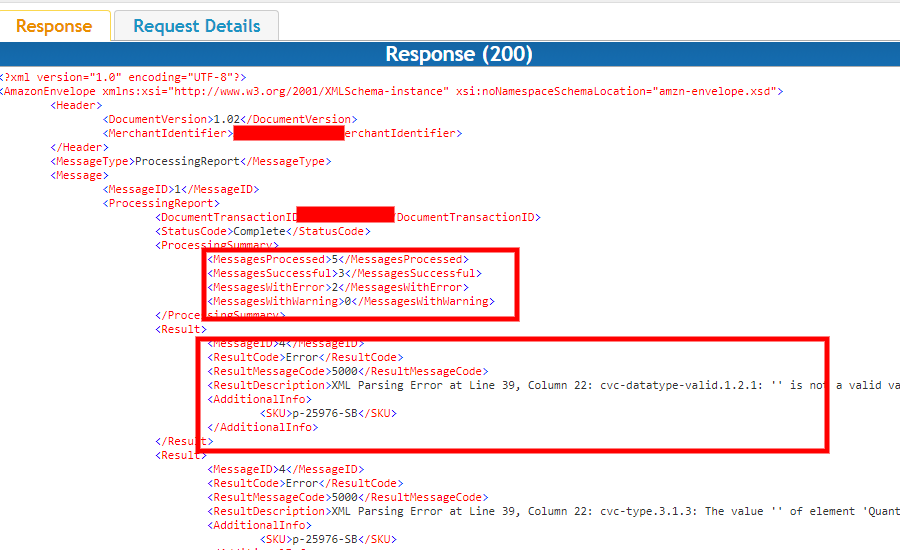
In the response, you will get the number of the SKU which are successfully processed (means fulfillment latency and inventory have been changed) and the number of SKU tis is not processed due to error, as given in the screenshot of the response feed below:
Summary
After reading this document, you (seller) can easily change the fulfillment latency and inventory of products on Amazon using Amazon MWS API.
Knowband offers eCommerce development services and can assist you in creating a brand-new eCommerce website. To provide our customers with the greatest and most efficient post-sale service, we have a dedicated support team that is constantly on hand to help them. We continue to fulfill our duties to clients that want help with urgent website issues even on the weekends.
The best Magento, Opencart, Prestashop, and Magento 2 modules are also available. One Page SuperCheckout, Multi-Vendor Marketplace, Mobile App Builder, Spin and Win Module, Abandoned Cart, and more popular modules are just a few of what Knowband has to offer. You can reach us at support@knowband.com if you have any questions.
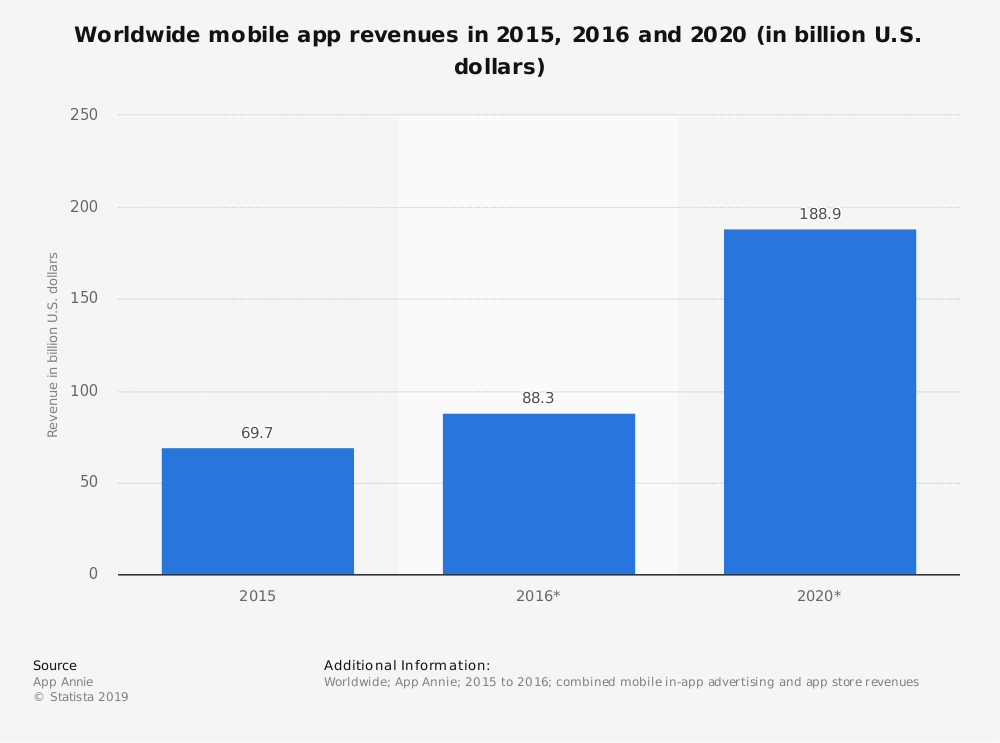
The advancement of the eCommerce industry is increasing every day. Online shopping is one of the most popular segments of an eCommerce business. As technology is getting handy day by day, the increased usage of smartphones clearly depicts the comfort level of shoppers on mobile phones rather than desktops. According to Statista, $69.7 million of revenue was generated through mobile apps in 2015 and it will reach to $188.9 billion by 2020. The reason behind this is the unmatched friendly experience and easy affordability offered by the eCommerce mobile apps. Admin needs to understand the increasing demand for using mobile apps rather than online sites.
The rising use of mobile apps motivated small business owners too to enhance their applications for good sales. Though there are millions of apps listed on the app store, only a few are successful to make space on the smartphones of customers. In this blog, we will take a look at the most successful shopping apps of the eCommerce industry.
Top 10 eCommerce apps of 2019 are as follows:
Amazon:
With 197 million monthly visitors, Amazon tops the list in providing the best shopping experience to their users. It provides you the wide range of products to choose and buy the product.
The light and faster functionality of its mobile app allows you to complete your shopping process in just a few clicks. Secure and multiple payment gateways make it reliable and trustful. Localisation of this app facilitates users to avail offers and discounts too.
Sephora:
Sephora is an international cosmetics brand famous all around the world. It is one of the leading cosmetic company providing a vast variety of luxury cosmetics worldwide.
There are many digital features launched on it’s mobile apps. One of them Augmented Reality feature. The mobile application uses the AR feature known as ‘Sephora Virtual Artist’ which allows users to virtually try on the products before purchase. This helps them to choose the right product and can confidently buy it for themselves.
Lenskart:
Lenskart is one of the leaders in the eye-wear market and also an eCommerce giants company based in India. Leveraged by Augmented Reality Technology, their unique feature is known as ‘3D Try on’ allows users to check how a frame looks on their face by a photo perception before actually making the purchase. Being able to offer this hassle-free way to consumers in the comfort of their home led to massive sales for Lenskart. It is easy to use and has continued to evolve its offering. This feature can be used on both web and app formats.
Walmart:
Walmart is a huge marketplace just like Amazon and provides a great shopping experience to its users. Customers can easily filter and search the products and can also access the local inventory as well.
Its mobile application includes scanning of QR Codes, a voice-search feature for adding the product to shopping lists, real-time price calculations, Easy checkout process and many more.
Nike:
Nike is an international brand for footwear, apparel, equipment, accessories, and services. It delivers innovative products, experiences and services to its valuable customers. Its mobile application was a customer-focused strategy by taking a digital transformation of connecting the physical and digital environments which resulted in massive sales of their products. The bar code scanner facility allows users to easily check the availability of products and allowing to make a reservation for the same.
Customers can also become a member of Nike plus. Nike plus members have the facility to access special Nike products, exclusive offers, and discounts, no delivery charge facility, gain reward points for in-app purchase and redeem them on next purchase and many more.
Nykaa:
Nykaa is an Indian marketplace app for a variety of Indian and international cosmetics. In just a few years, it became popular among customers due to its high discounts and offers on branded cosmetics.
It’s mobile application is just a blessing for all the customers. Its try-it-on feature helps many customers to choose the right product for them without any hassle. The push notification feature does wonders too as it lures the customers by reminding them about all the ongoing deals you shouldn’t miss. Due to it’s secure and multiple payment gateways, it became trustworthy between customers and can go for instant purchases.
H&M:
H&M is one of the leading companies in fashion all over the world. Originated from the USA, it has marked its presence globally. It’s user-friendly and attractively designed mobile application attracts many customers to buy its products and facilitates users by providing many features like sharing of items on social media platforms by bar-code scanning, the push notification feature gives you timely sales alerts, users can also search for the physical stores in the nearby location etc.
Wish:
Wish is an American website and popular for apparels, accessories and electronic gadgets. They usually provide huge discounts and offers to make customers go for instant purchase. It’s user-interface and easy shopping experience makes it popular among customers.
The availability of mobile application in both Android and iOS makes it approachable. Customers can access International brands and can buy or share it among friends. Due to its commendable features, it succeeded in attaining good reviews from the customers and making its position in top 10 eCommerce apps.
Pepperfry:
Pepperfry is a leading online home and lifestyle store, offering a wide range of furniture and home decor products. Headquartered in India, it is the most popular platform among customers for buying furniture online.
Its mobile application is also inspired by the Augmented Reality feature which makes easy for the customers to choose the right product. With the help of this feature home, shoppers can arrange virtual life-size products in their own space so that they can visualise furniture and decor in the real home with a mobile device. This enables customers to purchase the product with full confidence that they will look great and fit in their home space. The easy and hassle-free return policy also makes it convenient for customers to buy products without any worries.
Groupon:
Groupon is an American online marketplace connecting subscribers worldwide with local merchants and offers resources related to travel, goods, and services. It’s popularity in U.S.A makes it one of the most used apps in the USA which makes it attain the position in the top 10 eCommerce apps.
The mobile application feature provides leverages customers with great deals and discounts on the variety of products which compels users to avail them. Promo codes are also provided by this app which users can either redeem or share with their family and friends to avail amazing discounts.
Conclusion:
If you also want your app to get listed in the top 10 eCommerce apps, then start working from today to enhance your eCommerce mobile apps by implementing the latest trend and technology which provides the best features to your customers and very soon you will be getting the desired results.
Haven’t created a mobile app yet for your web-store? Knowband offers Mobile App Builder for various CMS platforms like PrestaShop, Magento, OpenCart, WooCommerce and Magento 2 which provides you an easy way to present your online website in the form of Android and iOS apps. The pre-configured framework helps to complete your work with just a few clicks. With its uncluttered navigation and seamless synchronisation, this app builder is one of the most used app builders for developing a mobile application. In case of any query, contact us via email at support@knowband.com.
With the huge involvement of the internet in daily lives, a large number of customers are buying products online globally. The advancement of the eCommerce industry is flourishing day by day. If you are a retailer then the idea to sell online could never go wrong. Selling online expands your reach globally. This helps the online marketplace to make more profits than usual.
There are numerous ways of selling online apart from starting an online website. Retailers can even sell their products through renowned marketplaces. The growing competition among sellers encourages them to implement some new strategies to attract more customers to your product. Selling on Marketplace like eBay, Etsy, Walmart, etc could be a bet as they can easily give a brand more exposure. and get you instant access to a vast number of potential customers.
If you create your own eCommerce website, you can get full control, large profits, higher scalability. It can become costly for you as setting and promoting a niche brand requires high investments. But if you choose a marketplace, you could sell your products online with certain control but will be able to leverage the global reach and services of a Marketplace. Customers often prefer buying products from Marketplaces because of the wide variety of products and the ease of all-in-one shopping. Apart from this, selling products on Marketplace could offer you much more.
Marketplace statistics to give a clear idea
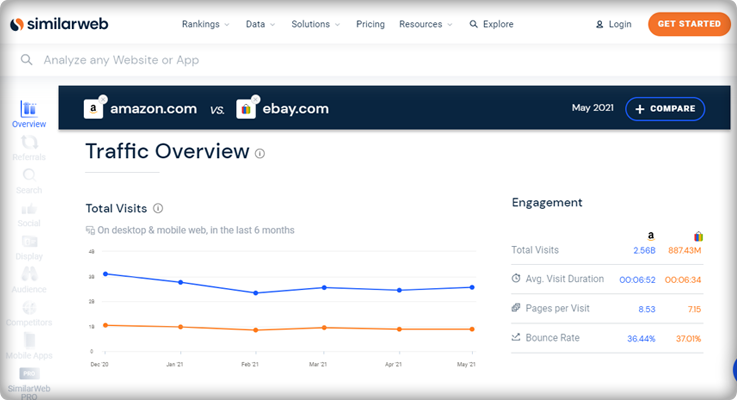
Here is a graph from a similar Web representing the total visits of two famous marketplaces Amazon and eBay.
In a recent blog, published by the webretailer, Amazon is still on the top, surpassing every other marketplace. It gets around 5.2B visits every month.
The report includes data for 155 most visited marketplaces with more than one million visitors per month. And eBay ranks 2nd globally in the similarweb reports.
The top 20 marketplaces have a collection of general merchandise except 3 that sells specific product categories, eg. Etsy.
General, Fashion, Arts, crafts and gifts, Homewares, and Electronics are the top five product categories among the popular marketplaces.
Below are some of the reasons to start selling products on Marketplace:
1. Huge audience access:
The huge popularity of Marketplace like Etsy, eBay, Walmart, etc. for online shopping automatically provides you the accessibility to all its customers without having to spend any money on marketing. It’s a good opportunity for small business owners to gain good profits without any advanced investments.
2. Low Startup Cost:
As Marketplace has all things set up in one place, the retailer has to hardly make any investments other than some few expenses. Thus, the minimal cost is involved in selling on a Marketplace in comparison to selling on your own eCommerce website. For example Marketplaces like Amazon, Walmart, etc charges:
Monthly Subscription Fee for selling on their platforms
And,
Listing Fee or Commission which is a standard amount for every product they listed on the Marketplace’s catalog.
3. To increase trust level:
It usually happens that the users buy the same product as yours from the Marketplace due to a lack of trust. Once your product reaches Marketplace, it will get more exposure and this will definitely motivate the users to go for instant purchase. It’s also beneficial in getting high sales and revenues too.
4. To reach Global Market:
Marketplaces provide you an option to expand your business reach globally with minimal effort. Sellers can access millions of potential customers globally without making any advance investments. This would definitely boost up your cross-border sales and overall business growth. For example, Amazon, Walmart, Etsy eBay are top leading Marketplaces serving millions of online customers all over the world
5. Enhance your brand’s visibility:
If you are a newbie in the eCommerce industry, it’s obvious that customers are unaware of your brand and products. You surely need recognition in the market. Marketplaces like eBay, Etsy, and Walmart help you to boost up your brand and visibility by listing all your products on their web page.
6. Deliver outstanding customer service
There are similar options to help sellers fulfill customer standards for quick, free delivery. They have their customer care teams that work 24/7 for customer service and to resolve their real-time issues.
For example, with programs such as Fulfillment by Amazon (FBA) and eBay Global Shipping, you can choose to have on your behalf the marketplace warehouse, pick, prepare, and ship product.
7. Provides a broad variety of payment and shipping options
For quick purchases, the marketplace offers different payment and shipping methods. A seller does not have to worry about shipping while selling over different marketplaces.
Dropshipping is another trending feature provided by many marketplaces. While some allow the sellers to add their shipping methods or the seller can use the marketplace shipping services.
8. Extremely authoritative and trustworthy
Many eCommerce experts may contradict this but some may take the favor. Marketplace like Amazon is a safe and reliable place for the transaction. They provide secured options for payments and are integrated with various payment gateways.
Similarly, many online marketplace platforms are secured with PayPal security. It is the most trustworthy payment method worldwide.
Expert Sayings:
1. Yasuhiro Fukushima, Japanese business executive -“Thus, in the future, instead of buying bananas in a grocery store, you could go pick them off a tree in a virtual jungle.”
2. Paul Graham, Y COMBINATOR – You can’t wait for customers to come to you. You have to figure out where they are, go there and drag them back to your store.”
3. Mudit Khosla, CEO, Tradus: If one chooses to sell through a Marketplace, then there is very less requirement of working capital unless there is a deal; there are no rentals involved.
4. Ankur Sethi, Founder & CEO, Nupinch.com: If any local retailer wants to reach a million customers to just showcase the products, he’ll end up spending some fairly huge cash. Whilst, these Marketplaces act as a channel partner & help you reach millions of users, to some really deep parts of the countries & in turn push your sales exponentially.
At the initial level, try to provide some discounts and offers to attract more customers to your product.
Keep a check on the customer reviews about your product and try to appreciate them or address their concerns. This strategy helps in making loyal customers.
Always remain aware of the latest trends and technical advancements of selling online.
Choosing the right Marketplace:
Selling through online Marketplaces like Walmart, eBay, Etsy is definitely a great option for an eCommerce retailer but choosing the right one for your business is the basic step to lead. Well, it totally depends on the product type and category of your store. Every Marketplace has its own standardized process of registration, requirements, terms, and conditions, etc. Sellers must go through these instructions and understand that which website will provide the right positioning and brand value to their product. One of the main things on which retailers should keep a check while choosing the right Marketplace is the traffic of the website. The more is the traffic, the more numbers of orders he can get for his products.
6 points to check about a Marketplace:
Although each Marketplace works differently there are some points that are similar in between them and are also a must check for a seller. They are:
Website Traffic
Reputation between customers
Stability
Checkout process
Policies and Guidelines
UI of Marketplace
The most important feature of a Marketplace is that it must provide a user-friendly interface to the customers. Sellers need to keep a check on this feature as they may face an issue in case the product is returned. Many times, the marketplace does not hesitate to accept the product which is returned without even questioning the buyer, thus this may incur a loss for the seller. So, it’s important for a seller to make the right choice for massive sales and overall business growth.
Start a Hyperlocal Marketplace that serves locally
With the clear idea of marketplace selling benefits, you can choose the right platform for your brand. Multichannel selling is profitable and builds your brand identity. Along with that, you can start selling your products locally. To make it painless, start with an online website using KnowBand’s hyperlocal marketplace module. You can deliver the products to your customers at their doorstep. You will need a delivery boy app that will allow you to manage the package delivery process. There is more to learn about it.
Over to you:
The less complexity involved with selling on a marketplace is inevitable for sellers. It’s really necessary to give an enhanced recognition to your business and Marketplace suits perfect for the job. So, regardless of the marketplace, you choose to sell on, it’s important to be aware of the latest trend going on in the eCommerce industry and implement it for a profitable business in the future.
This was all from my end, now it’s totally up to you to select a Marketplace according to the products of your store for the overall growth of your business.
Selling on Marketplace was not that easy before. Integrate your eCommerce store with the Marketplaces like Etsy, eBay, Walmart, and others in just a few simple steps. KnowBand offers Marketplace Integrators for various CMS platforms like PrestaShop, OpenCart, Magento, and Shopify which allows you to present your products to a larger audience and encourage brand awareness as well.
Amazon, the most popular marketplace with the huge base of loyal customers. Started as an online bookstore, today after 20 years, it is the digital retailer of choice for customers across the globe.
In 2016, in U.S alone, Amazon made the net sales worth $136 billion. With more than 310 million active customer accounts worldwide, Amazon is definitely a pool of leads and sales for the sellers.
Want to leverage this huge pool of opportunities?
Thinking about selling on Amazon now?
Hold on for a moment!
Big opportunities do not just knock on your doors without any benefit for themselves. There are risks and vulnerabilities attached to everything that glitters.
So, as a seller, to make sure your products get prime success on the giant marketplace, read this post till the end because I am going to answer some really important questions that we often come across about selling on Amazon.
I am certain that these answers would clear countless confusions that you might already have in your mind as a seller on Amazon.
FAQs regarding selling on Amazon
The fundamental questions
1. What is Amazon Buy Box?
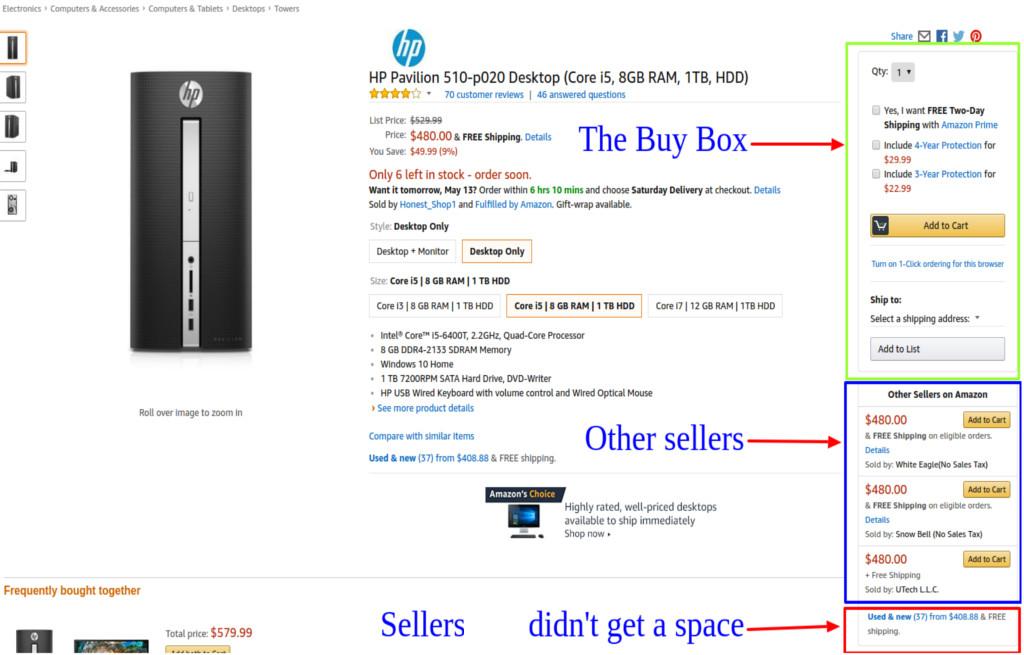
Simply, the Buy Box is a section on the product detail page where customers get the direct option to add a product to the shopping cart.
Amazon in-houses uncountable number of sellers on its marketplace. Many of these sellers offer products that are also being offered by various other sellers on the site. Since Buy Box is the highlighted area on the product page, sellers ending up in the box receive more sales than those who missed it.
Sellers compete on various grounds to get into the buy box so that their product receives the maximum sale.
2. How does Amazon decide the winner of the Buy Box?
As Amazon is the home to thousands of sellers like you, becoming a featured seller in the Buy box is really a tough nut to crack. You will always find a huge number of sellers already competing for space.
It’s pretty unrealistic to think your store is ever going to rank that higher to get featured on the Buy Box. You many think of ‘Other Sellers’ section which is comparatively lesser competitive. However, not that lesser as you think, the sellers who miss the Buy Box with few scores usually get featured in the other sellers section.
But still, it’s really important to know how the Buy Box ranking works. Who knows you might be able to leverage some of the requirements and end up in the Buy Box someday.
A number of factors affect the listing in the Buy Box as well the Other Sellers section.
Product Pricing- Products pricing does not only include the price of the product but also the shipping cost included with it. Customers mostly prefer low prices while browsing the marketplace. Offering a competitive price with shipping cost included may get you significant attention, if not the Buy Box.
Selling history on Amazon- Seller with long, and positive selling histories generally have stronger chances to get in the featured list.
Reviews and feedback- On Amazon, reviews are important like nothing else. Customers get the best possible ways to post honest reviews about the experience with the product delivery, product itself, and sellers too. Though Amazon does not use reviews and rating as a factor in ranking the sellers, a significant amount of negative reviews and feedbacks can still force the marketplace site to ban your shop or suspend your listing.
There are numerous other factors that act as a determiner in deciding your seller ranking. As a rule of thumb, the most effective measure is to deliver the best quality products on time and ensure a communication with the customer if required.
3. What is Amazon FBA?
Amazon FBA or so-called Fulfillment by Amazon is a service offered by this marketplace to its sellers. Here, using this service you, as a seller, can send your merchandise to one of the Amazon’s fulfillment centers to be stocked. When you receive an order for that merchandise, Amazon ships it to the customers directly from their stock.
This service helps the sellers to concentrate on selling, while Amazon will handle the product delivery and customer care. Of course, there is a cost involved in using the FBA services.
Other benefits of FBA involves:
An extended reach to the Amazon Prime members who generally order the Amazon-fulfilled products.
More chances to win the Buy Box as compared to the non-FBA sellers.
FBA is definitely a serious program to try out when you are thinking about selling on Amazon.
4. I already have my own eCommerce site, should I sell on Amazon?
Having your own eCommerce store is never a restriction. In fact, Amazon does not care if you have your own site or not. You can always create an Amazon seller account and start listing your products.
77 % of sellers use multiple sales channels- Marketplace, own site, and brick and mortar shop. Out of these, a quarter of sellers have their own webshops based on different platforms like Magento, OpenCart, PrestaShop, Shopify etc.
When so many multi-channel selling options are already there, the marketplace giant cannot allow sellers to promote their own sites on its platform. That’s understandable. Any marketplace would not want you to steal the commission and traffic it can generate with your sales on the marketplace itself.
5. Can I sell on Amazon from my own eCommerce site?
When you have your own eCommerce site and you are a seller on Amazon too, you won’t want to drop the sales anywhere. However, it becomes so cu-cumbersome to maintain the best efforts on both the platforms at the same time.
When you concentrate on your Amazon listings, you are somewhat pulled off your site and vice versa. This dilemma makes many sellers rethink the idea of selling on Amazon. Still, they completely understand that selling on Amazon can bring some serious sales, it would be foolish to give up the Amazon shop. On the other hand, giving up your own eCommerce site is also not a wise decision.
This is where Amazon integration services come as a savior. Amazon provides the amazing MWS (Amazon Marketplace Web Service) that allow developers to use the MWS API and develop some integration solutions to make the life of sellers easier.
These integration solutions are simply an extension to your eCommerce site which connects your site with your Amazon seller account.
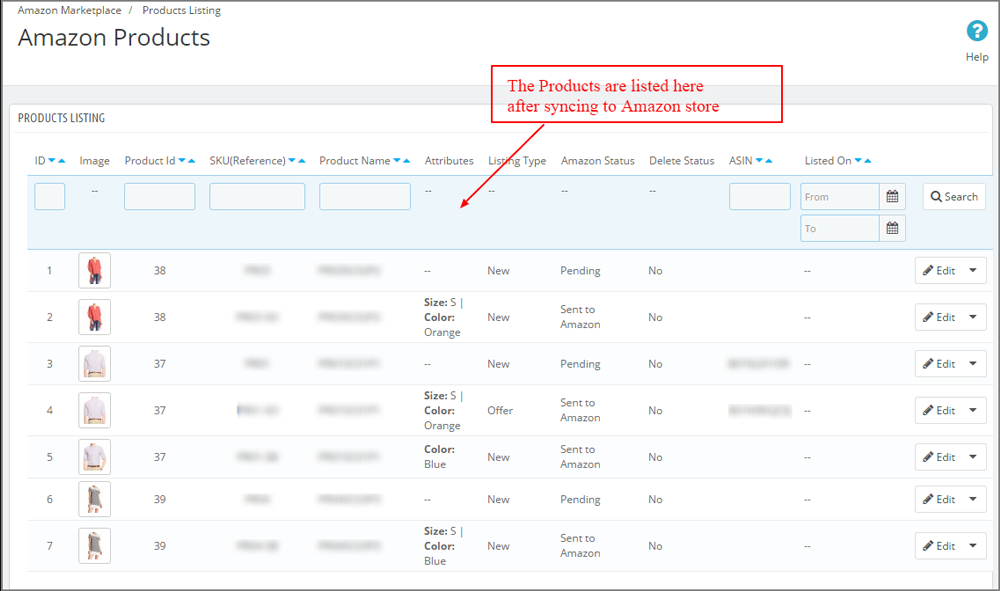
For example, if you install our PrestaShop Amazon Marketplace integrator on your PrestaShop based store, you will be able to manage all your Amazon listings from your PrestaShop store itself. You will not have to go to your Amazon seller account to:
So, yes, you can always sell on Amazon from your own eCommerce site directly by using the Amazon integration services and solutions.
Other Important FAQs
6. A product that I want to sell is already listed on Amazon by other sellers too, should I list a new product or just associate it with this listing?
Amazon allows only a single listing for a particular product in its catalog. All the sellers who want to sell a product that has already been listed in the catalog must associate their listing with the old listing in the catalog.
If you create a second product, Amazon will consider it as a duplicate listing and will immediately remove it.
7. Why does Amazon not reimburse me the correct amount for shipping cost?
Amazon decides the shipping cost reimbursement on the basis of the distance between the merchant’s origin and customer’s shipping address and also the weight of the product. However, sometimes the calculation does not match with the actual expense of the seller on shipping.
PS: The cost reimbursed by the Amazon can be less as well as more than the actual expense by the seller.
8. Why Can’t I map some of the shipping options with my products?
Amazon typically does not want to take the risk of delayed product delivery. A delayed product delivery, (even if it’s the mistake of the seller) directly affects the marketplace’s reputation. So, it’s better to tell correctly about the delivery time, it does not matter if it’s a slower one; customers should get the product on or before the committed date.
So, at the initial phase of your seller account on Amazon, you might not get the access to map quick delivery options like same day, or next day, or two days to your products. You have to earn the access to those options by establishing a history of reliable shipping with the slower shipping speeds. Once you have a nice long history of on-time product delivery with the slower options, you will gradually get the access to quick shipping options.
9. What should I do when I am on a vacation and not available to fulfill the order?
Amazon provides a great option for sellers to temporarily remove all the open listings in the event of taking a holiday, going for vacation, or for any random reason. By using the Listing Status feature, you can deactivate all your self-fulfilled listings while you don’t have to worry regarding your FBA listings. The FBA listings will be fulfilled by the Amazon itself, so you don’t have the option to take down FBA listings using the same option.
Please note: Before changing the status of your listings, you should make sure none of your previous orders are pending. The already placed orders will not get automatically canceled; you have to manage it manually either by canceling the order or by fulfilling it before activating the vacation mode.
10. How to activate or deactivate the vacation mode using Listing Status?
When you are going for the vacation, you can set your listings “Inactive” by following these steps:
Go to Listing Status page from your seller account.
Select the status as Inactive.
Click Submit button to save your selection and within one hour your self-fulfilled listings will be removed from the live product listing on Amazon.
When you come back from the vacation, you can reactivate all your listings by following these steps:
Go to Listings Status page in the same way from your seller account.
Now, select the Status as Active.
Save the selection by clicking Submit button. The listings will be live again within one hour.
PS: This feature is only available to some sellers. If you cannot find the “Edit” button next to Listing Status, you don’t have the authorization to use this feature.
11. Which policies should I be aware of before starting to sell on Amazon?
You should be aware of the following Amazon’s policies that concern the sellers:
While deciding to sell on Amazon, the best thing to consider is how well you know your business and how can you manage the complexities of selling on marketplaces. If you already own an eCommerce site and want to drive more sales, selling on a popular marketplace is the obvious and best recommendation with integration solutions.
A casual view on online marketplaces like Amazon and eBay suggests that the platforms have been created for mutual profit. Store owners leverage increased exposure for their products and in return, the marketplace owners gain the never ending inventory and commission from the sales made by the sellers.
However, a closer look might not suggest the same for all. No doubt the mutual profit for both the entities still remain, but we are here concerned about should you really care about expanding your presence beyond your online store?
The question asked by me here is a conflicting one because we are the ones developing connectors for easy integration of PrestaShop stores with marketplaces like eBay, Etsy, and Amazon. The answer to this question depends on several factors. A decision to sell on a marketplace can be a boon for some, while it may not be the same for others. You need to consider several variables, that may include the type of products you sell, the level of competition in your domain, the fee Marketplaces charge and what restrictions they put on sellers.
In this post, we will discuss the pros and cons of selling on the popular marketplaces that will help you decide, whether you should sell or not on these platforms. So, you will have a choice of making some well-informed decisions on the part after reading this post.
Why should you sell on Amazon and eBay marketplaces?
Perks of starting a shop on eBay, Amazon or any marketplace
Amazon and eBay the two very popular eCommerce sites. Today, everyone knows the name of these websites, and before finalizing a purchase decision one simply does not forget to checkout the product on these sites.
Amazon alone draws an average of 197 million visitors in a month. So, why should you not leverage such a huge exposure to your products? Moreover, an unconfirmed claim from an Amazon executes suggest that an average of 50 % boost in the sales can be seen after joining Amazon marketplace.
2. Opportunities to win new customers-
On marketplaces, customers do not visit especially for a particular seller on the site. They were searching for their desired product and they found it on the marketplace site, other wise they could have just discovered it anywhere on any other site. Similarly, when a customers land on your product pages on the marketplace, it doesn’t mean they have come searching for your store. They were just searching for their desired product on the site and found it on your store. Once, they have landed on your product page or your store page, even if it;s not your site, you can win new and repeat customers through your excellent product, service, and fulfilment.
3. Marketplaces are automatically in preference by many people-
A marketplace site is an all-in-one repository for diversity of products. One can find anything he wants on a single site. There are several customers who prefer to purchase everything they need from a single place only, and the places providing such opportunities are always in their preferences. The case is no different with why people prefer to visit shopping malls or departmental stores instead of a single shop.
The variety and all-in-one aspect draw a lot of customers towards marketplaces who prefer to do that kind of shopping. Moreover, the seamless checkout and fulfilment on these marketplaces bring additional layer of pros in the shopping experience. So, sellers on marketplace sites like eBay and Amazon are always in benefit with these kind of shoppers. While small eCommerce sites might not have that kind of traction.
4. Easy connection from your store to marketplace-
Marketplaces like Amazon and eBay does not necessarily want you to sell through their seller panel only. If you own an eCommerce site already, it could be a laborious task to manage your site and marketplace store separately. To overcome the situation, marketplaces provide some solutions for easy site integration.
For example, Amazon’s MWS allows an eCommerce site owner to connect his site with Amazon Seller central and sell directly from the eCommerce site on the Amazon marketplace. Similarly, there are solutions for eBay integration too. So, selling on Amazon and eBay can a seamless process for some eCommerce site owners too.
Why should you not sell on Amazon and eBay?
Do not forget to inspect the other side of the coin
The pros of selling on these popular marketplaces might suggest that it’s all good and you should start selling instantly. However, I will take this opportunity to also mention conditions when you might not feel good about selling on these platforms.
1. Exposure to a new set of expense:
As mentioned in the very beginning, both the entities on the marketplace site(Admin and seller) receive some mutual benefits. For sellers, it is all that have been mentioned in the previous points. While the marketplace admin receives his share of benefit in the terms of percentage deduction from each sale you make on the site.
Setting up a marketplace shop will surely improve your sales, but it will expose you to a new set of expense paid to the marketplace admin – marketplace commission/fee. The nature and range of the deduction can vary from marketplaces to marketplaces and category to category.
So, before signing up on Amazon or eBay, you must have a deep understanding of sales margin and nature of fees that you would pay. You can refer here for different fees charged on Amazon and eBay.
2. Marketplaces are all about products; not sellers:
Marketplaces don’t exist for the sellers. Though sellers are the crucial entities on the marketplaces, and it is because of the sellers why there are products on the site, marketplaces tend to help themselves first. They will promote the products and categories on the site rather than promoting a seller. That means, they may restrict you from promoting your shop or communicating with the customers.
Certain dictation can be seen in the case when they might be the sole entity to decide which product would go live and which product they would discontinue showing at anytime they want.
Additionally, if they find a popular product from your store receiving good orders, they might just decide to stock those products by themselves and act as a competitor for you for that product. And there would be nothing that could stop them from doing so.
Finally,
Selling on popular marketplaces like Amazon and eBay is a decision that should be made after considering some situations. Both the pros and cons explained here would definitely help you to make an informed choice. You can choose to sell on single marketplace or may also sell on multiple marketplaces at once. As a suggestion, you should have appropriate integration solutions by your side so that you can have your own site and sell on the marketplaces at the same time without any hassle.