How easy is it to build native Magento 2 Mobile Apps? Complete Tutorial

Migrated your eCommerce store to the updated version Magento 2.0? Well, let’s build a pair of native Mobile Apps for the same.

Having a Magento 2 Mobile App for your eCommerce website is much more than just a sales & marketing tool as it enhances your revenue & loyalty in just minimal efforts. But, building a native Magento 2 Mobile App is a lot tougher than it seems as you have to indulge in all sorts of coding languages & expensive tools/software. This article actually covers two basic questions regarding your Magento 2 Mobile APP:

Ques 1: Why you should start selling on App along with Magento 2 website?
Ques 2: How can you get a powerhouse app for your Magento store?

Well, stick to the end of this article & hopefully you will get all your answers.

Magento 2 Mobile Apps: An Introduction
The Magento eCommerce platform has almost all varieties of multi-sized businesses from small-scale industries to start ups. And that too seems to be growing since the Magento has launched its updated version with issues fixed & updated features. Since this is a new platform & the majority of store owners are still deciding to move to the mobile platform, you can take a lead by transforming your website into native Magento 2 Android & iOS app.

As far as profits are concerned, having a Magento 2 Native App will definitely lure heavy mobile user base to your store which will ultimately boost user engagement & sales. Offering your users an amazing shopping app is also the reason behind more sales & revenue. So, getting a featured Magento 2 Mobile App is the next big thing you could do for your store after migration.

Magento 2 Mobile Apps: Development (3-steps Only)
We have made Magento 2 Mobile Apps development process as simple as it could for you. All you need to do is to follow these 3 simple steps:

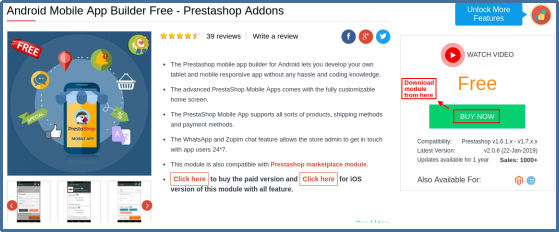
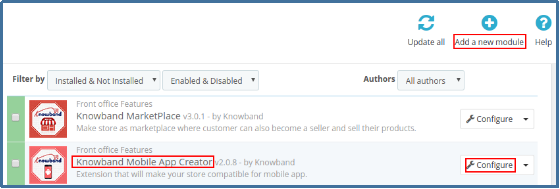
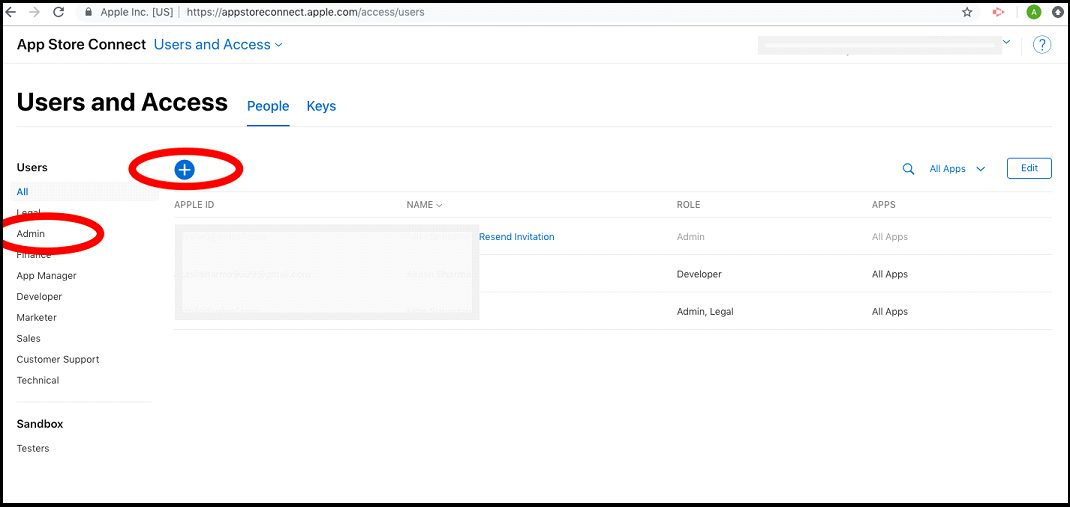
Step 1: Purchase Magento 2 Mobile App Builder module & install the same on your store.
Step 2: Share your app specifications/requirements with our pre-requisites form.
Step 3: Get developed APK/IPA files & publish on respective App Stores.

If you face any issue, we will assist you in publishing your app.

Magento 2 Mobile Apps: Unbelievable Features
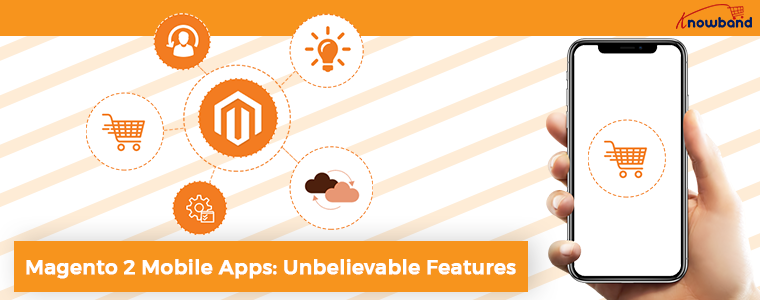
Your Magento 2 Mobile Apps would have numerous features & functionalities that definitely be a game-changer for your business. Let’s take a look at the major ones of them:

1. User-friendly Interface: The Magento 2 Mobile Apps come up with simple yet friendly interface which makes mobile app shopping fun for the users. Various intuitive font options are also there in the app.

2. Customizable Home Screen: The way you offer your app look & feel decides the no. of purchases you are gonna get. The Magento 2 Mobile App Creator offers a fully flexible home screen with all sorts of customization. The store merchant gets various attributes to craft the home screen:

  1. Top Categories
  2. Multiple Banners (Square, Grid, Sliding)
  3. Multiple Products (Square, Grid, Sliding)
  4. Countdown Timer Banner
  5. Recently Viewed Products

All these designing elements are fully configurable & their positioning can be changed with just drag & drop feature.

3. Tab Bar Icon: Magento 2 mobile app comes with tab bar icon functionality which allows users to quickly switch among one section to another section of the app. Tab bar icon functionality makes the experience of app users smoother & simpler.

4. Web-admin Panel Access: The Magento 2 Mobile App Maker offers complete module backend access to the store merchants & let them design & manage the app on their own.

5. Live Synchronization: The Magento 2 Mobile Apps are in 100% synced with your website & which reverts all sorts of website updates on Mobile App. Your Mobile App inventory automatically gets updated as of website.

6. Tablet & Mobile Support: The Magento 2 Mobile App Creator offers tablet & mobile supported apps for your website which runs flawlessly on user’s devices. Whether it’s an iPhone, iPad, Android phone or tablet.

7. Multi-lingual & RTL Support: The Magento 2 Mobile App Maker offers both multi-lingual & RTL writing support on Android & iOS apps. You can offer your app to users living in any corner of the world.

8. One-tap Login: The Mobile Apps with Magento 2 Mobile App Creator offers Google/Facebook/OTP/Fingerprint login options for the shoppers.

9. 24*7 Chat Support: Your Magento 2 Mobile Apps come up with 24*7 Zopim & WhatsApp chat support which makes it easier for the app user to contact directly with the store admin.

10. Easy Payments: The Magento 2 Mobile App Creator supports all sorts of website payment options on the mobile app. You can even add various other native payment methods over a small fee.

11. All Shipping Methods Support: Your Magento 2 Mobile App supports all sorts of website shipping methods & eases the trade for you.

12. All Product Type Support: The Magento 2 Mobile App Creator supports all sorts of products on Mobile App like the single, bundled, configurable, grouped, downloadable, etc.

13. Layered Navigation: The Magento 2 Mobile App has multiple filtering & sorting options which makes the product search more seamless.

14. Voice Search (Android Only): The Magento 2 Mobile App Maker offers advanced voice search in Android App to make the search process easier.

15. Coupons & Vouchers Support: The Magento 2 Mobile App Maker supports all sorts of coupons & vouchers in Mobile App. Your app users can also use active website coupons/vouchers.

16. Simplified Checkout Screen: Easier the checkout process, more are the chances of successful purchases. The Magento 2 Mobile App Builder offers a single-screen checkout approach in Android & iOS apps.

17. Real-time Order Tracking: Curb out your app user’s insecurities with real-time order tracking functionality in Magento 2 Android & iOS apps.

18. Push Notifications: The Magento 2 Mobile App has a handy push notification tool which allows you to send unlimited push notifications regarding daily deals & highlights. Both automated & manual notifications are offered with Magento 2 Mobile App Creator.

19. Wishlist: Sometimes the users will not purchase the products for some reason like unavailability of size, color, product, etc. But, Mobile app for Magento 2 comes with inbuilt wishlist functionality which allows users to save their desired products on it for future purchases.

Conclusion

There might be a variety of Magento 2 Mobile App solutions as of now but, not all of them have such easy process & sale-pushing features. KnowBand has designed this module completely admin-friendly & provided almost every access into your hands. The features are more than enough to make your eCommerce store selling hassle-free on Mobile App.

The merchants who haven’t upgraded their store to Magento 2 & still using the old version can also take their store to the mobile platform with Magento Mobile App Builder. Go & build one for your store today.

Read other such informative articles on:

Mobile Apps Vs Websites: Which are better?
Why you should invest in Mobile Apps?

Mobile Apps can boost your eCommerce sales! Know how?

Top 10 eCommerce Mobile Apps of 2019

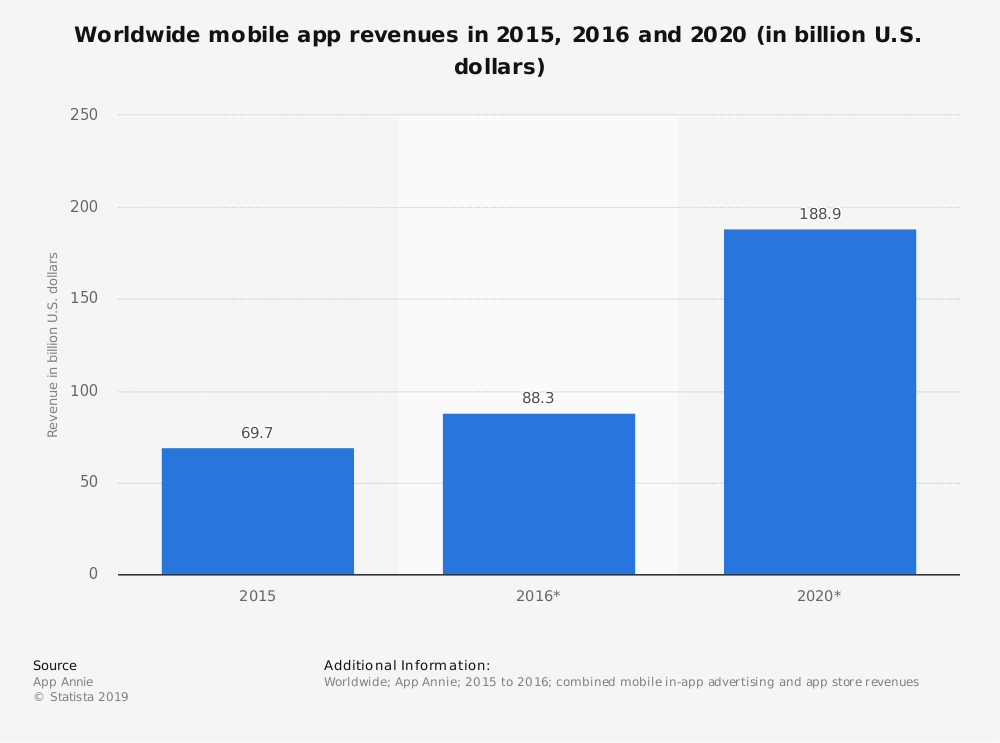
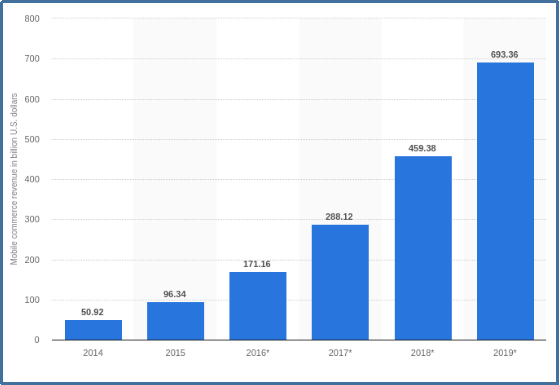
The advancement of the eCommerce industry is increasing every day. Online shopping is one of the most popular segments of an eCommerce business. As technology is getting handy day by day, the increased usage of smartphones clearly depicts the comfort level of shoppers on mobile phones rather than desktops. According to Statista, $69.7 million of revenue was generated through mobile apps in 2015 and it will reach to $188.9 billion by 2020. The reason behind this is the unmatched friendly experience and easy affordability offered by the eCommerce mobile apps. Admin needs to understand the increasing demand for using mobile apps rather than online sites.

                                                        Source: Statista

The rising use of mobile apps motivated small business owners too to enhance their applications for good sales. Though there are millions of apps listed on the app store, only a few are successful to make space on the smartphones of customers. In this blog, we will take a look at the most successful shopping apps of the eCommerce industry.

Top 10 eCommerce apps of 2019 are as follows:

Amazon:

With 197 million monthly visitors, Amazon tops the list in providing the best shopping experience to their users. It provides you the wide range of products to choose and buy the product.
The light and faster functionality of its mobile app allows you to complete your shopping process in just a few clicks. Secure and multiple payment gateways make it reliable and trustful. Localisation of this app facilitates users to avail offers and discounts too.

Sephora:

Sephora is an international cosmetics brand famous all around the world. It is one of the leading cosmetic company providing a vast variety of luxury cosmetics worldwide.
There are many digital features launched on it’s mobile apps. One of them Augmented Reality feature. The mobile application uses the AR feature known as ‘Sephora Virtual Artist’ which allows users to virtually try on the products before purchase. This helps them to choose the right product and can confidently buy it for themselves.

Lenskart:

Lenskart is one of the leaders in the eye-wear market and also an eCommerce giants company based in India. Leveraged by Augmented Reality Technology, their unique feature is known as ‘3D Try on’ allows users to check how a frame looks on their face by a photo perception before actually making the purchase. Being able to offer this hassle-free way to consumers in the comfort of their home led to massive sales for Lenskart. It is easy to use and has continued to evolve its offering. This feature can be used on both web and app formats.

Walmart:

Walmart is a huge marketplace just like Amazon and provides a great shopping experience to its users. Customers can easily filter and search the products and can also access the local inventory as well.

Its mobile application includes scanning of QR Codes, a voice-search feature for adding the product to shopping lists, real-time price calculations, Easy checkout process and many more.

Nike:

Nike is an international brand for footwear, apparel, equipment, accessories, and services. It delivers innovative products, experiences and services to its valuable customers. Its mobile application was a customer-focused strategy by taking a digital transformation of connecting the physical and digital environments which resulted in massive sales of their products. The bar code scanner facility allows users to easily check the availability of products and allowing to make a reservation for the same.

Customers can also become a member of Nike plus. Nike plus members have the facility to access special Nike products, exclusive offers, and discounts, no delivery charge facility, gain reward points for in-app purchase and redeem them on next purchase and many more.

Nykaa:

Nykaa is an Indian marketplace app for a variety of Indian and international cosmetics. In just a few years, it became popular among customers due to its high discounts and offers on branded cosmetics.

It’s mobile application is just a blessing for all the customers. Its try-it-on feature helps many customers to choose the right product for them without any hassle. The push notification feature does wonders too as it lures the customers by reminding them about all the ongoing deals you shouldn’t miss. Due to it’s secure and multiple payment gateways, it became trustworthy between customers and can go for instant purchases.

H&M:

H&M is one of the leading companies in fashion all over the world. Originated from the USA, it has marked its presence globally. It’s user-friendly and attractively designed mobile application attracts many customers to buy its products and facilitates users by providing many features like sharing of items on social media platforms by bar-code scanning, the push notification feature gives you timely sales alerts, users can also search for the physical stores in the nearby location etc.

Wish:

Wish is an American website and popular for apparels, accessories and electronic gadgets. They usually provide huge discounts and offers to make customers go for instant purchase. It’s user-interface and easy shopping experience makes it popular among customers.

The availability of mobile application in both Android and iOS makes it approachable. Customers can access International brands and can buy or share it among friends. Due to its commendable features, it succeeded in attaining good reviews from the customers and making its position in top 10 eCommerce apps.

Pepperfry:

Pepperfry is a leading online home and lifestyle store, offering a wide range of furniture and home decor products. Headquartered in India, it is the most popular platform among customers for buying furniture online.

Its mobile application is also inspired by the Augmented Reality feature which makes easy for the customers to choose the right product. With the help of this feature home, shoppers can arrange virtual life-size products in their own space so that they can visualise furniture and decor in the real home with a mobile device. This enables customers to purchase the product with full confidence that they will look great and fit in their home space. The easy and hassle-free return policy also makes it convenient for customers to buy products without any worries.

Groupon:

Groupon is an American online marketplace connecting subscribers worldwide with local merchants and offers resources related to travel, goods, and services. It’s popularity in U.S.A makes it one of the most used apps in the USA which makes it attain the position in the top 10 eCommerce apps.

The mobile application feature provides leverages customers with great deals and discounts on the variety of products which compels users to avail them. Promo codes are also provided by this app which users can either redeem or share with their family and friends to avail amazing discounts.

Conclusion:

If you also want your app to get listed in the top 10 eCommerce apps, then start working from today to enhance your eCommerce mobile apps by implementing the latest trend and technology which provides the best features to your customers and very soon you will be getting the desired results.

Haven’t created a mobile app yet for your web-store? Knowband offers Mobile App Builder for various CMS platforms like PrestaShop, Magento, OpenCart, WooCommerce and Magento 2 which provides you an easy way to present your online website in the form of Android and iOS apps. The pre-configured framework helps to complete your work with just a few clicks. With its uncluttered navigation and seamless synchronisation, this app builder is one of the most used app builders for developing a mobile application. In case of any query, contact us via email at support@knowband.com.

Related Articles:

  1. Tips to design beautiful eCommerce Mobile Apps!
  2. 2019 Update: 10 Reasons Why Mobile Apps are Better Than Mobile Websites?
  3. Current Technology Trends for iOS Mobile Apps
  4. eCommerce Mobile Apps: Just a Fad or an unavoidable Trend?
  5. The Mobile App Effect in eCommerce Industry during Holiday Season

How to remove extra space between the Navigation Bar and the Scroll View?

Objectives of the blog

After reading this blog we will be able to understand the reason for the extra space between top Navigation Bar and Scroll View in iOS app in versions iOS 7 to iOS 10.

Problem Statement

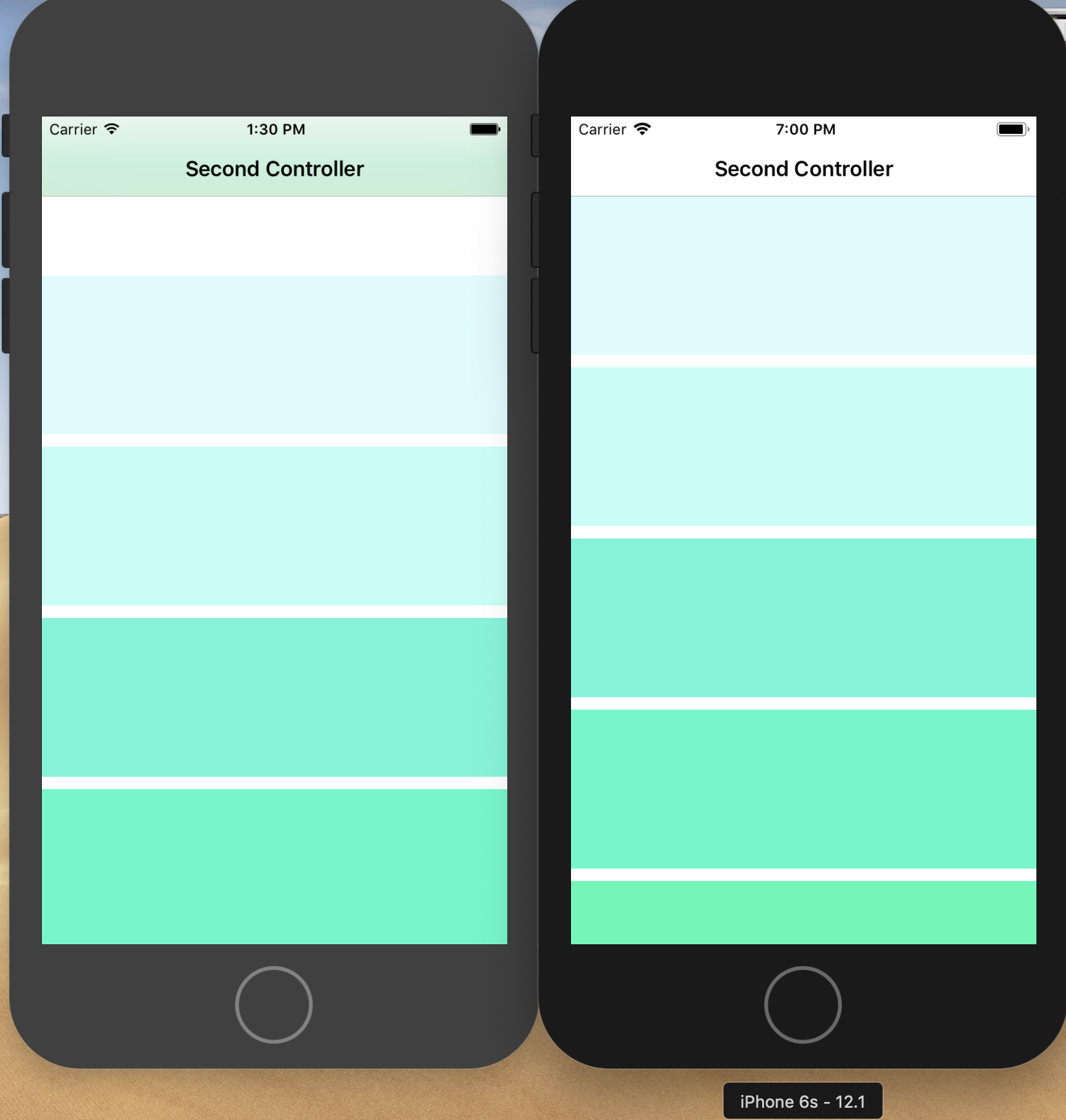
When we add a scroll view or table view (any scrollable view) in a view controller that contains a Navigation Bar at top, we face a common issue that were is some extra space between the top Navigation Bar and the Scroll View.


Why the current issue is there

From iOS 7 to iOS 10, when we add a Navigation Bar on top of any ViewController, then Xcode provides us an option to make the Navigation bar translucent. So that we can see through the Navigation Bar and the scrolling of the page can be seen through the navigation bar.

Now the reason for the issue is that when a Scroll View is added in the ViewController and Navigation Bar is set and translucent, the ScrollView leaves a margin from the main view for navigation bar. But the navigation bar added on the run time and it moves the main view downed so that Navigation Bar can fit on the top. So in that case, the view is shifted downward by Navigation bar and scroll view leaves margin for Navigation bar. Here we observe that the extra spacing added two times.

This was the only reason that we see extra space between the Navigation Bar and the Scroll view.

Procedure to Solve the issue-

There are two ways to resolve the issue. In both the cases we restrict the scroll view to leave extra margin for the Navigation Bar.

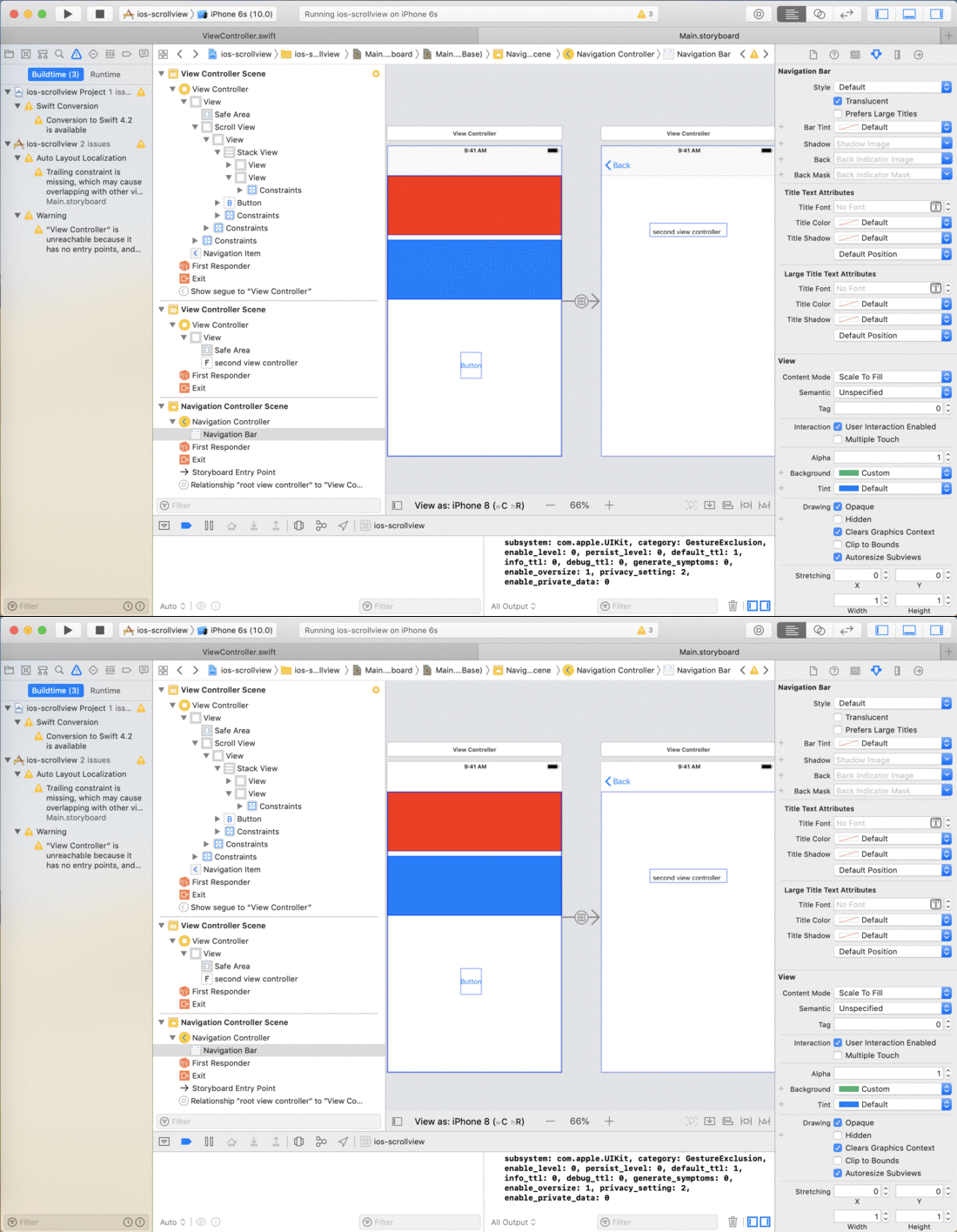
1. We can set the Translucent option for Navigation Bar to “False” in Xcode

— This will make the navigation bar Opaque and then the scroll view is not required to scroll under the Navigation Bar. So that Scroll View will leave no space for Navigation Bar.

In the below Gif you can see that the view’s layout constraint changes when we enable/disable the “Translucent” property of the navigation Bar.


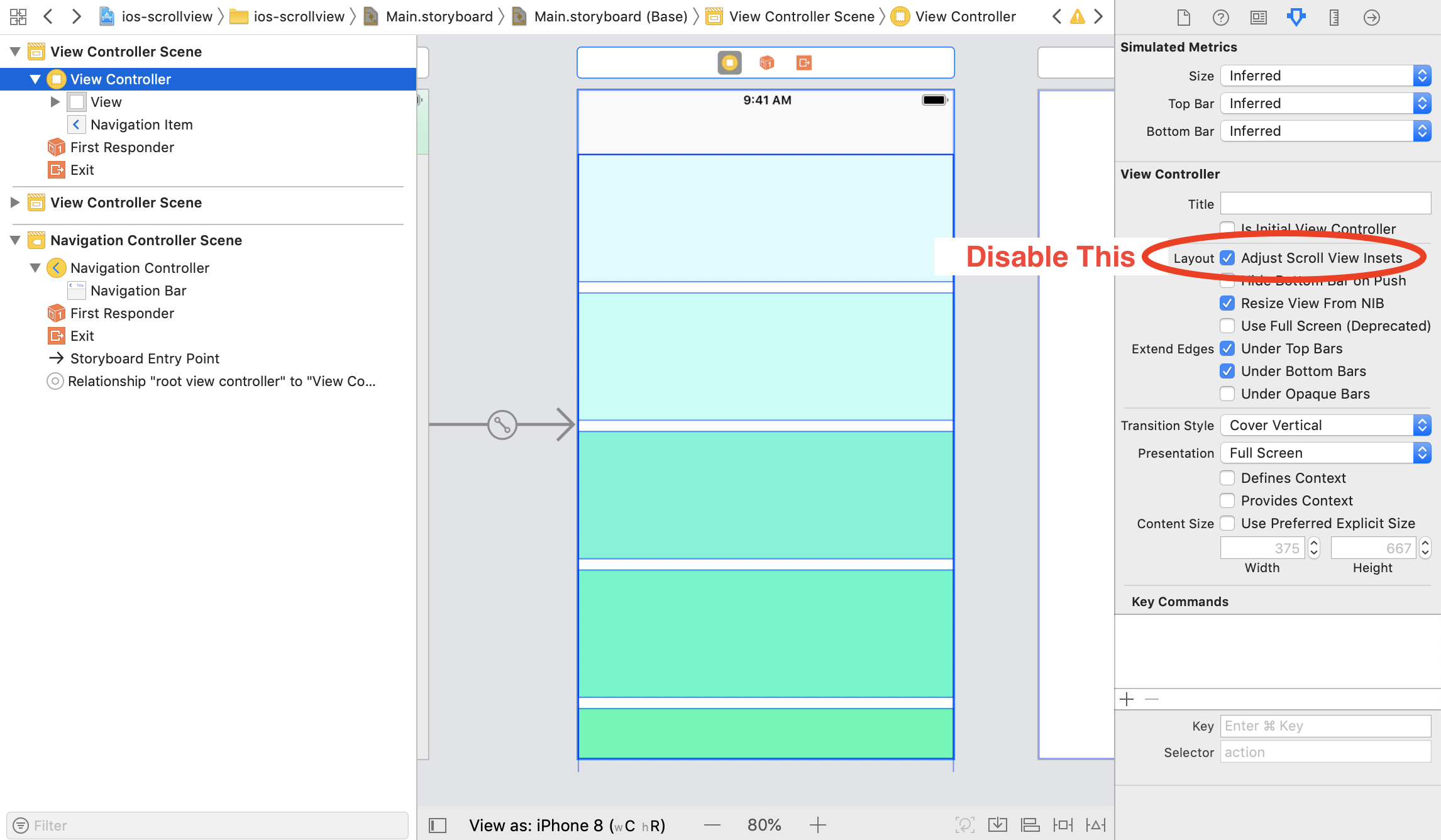
2. We can disable “Adjust Scroll View Insets” property of the ViewController.

— This will restrict the Scroll View to leave extra space for the Navigation bar on top.


Summary

After following the above procedure, you will be able to remove the extra space between the Navigation Bar and Scroll View.

If you face any issues, please feel free to reach us at support@knowband.com. We also provide No Code Mobile App Builder for Prestashop, Opencart, Magento 2 and Woocommerce. Know more here:


How to save data to Firebase in Swift Language (iOS)?

Objectives of the blog

After reading this blog we will be able to install the Firebase SDK in your project and write code to save data to Firebase database along with the creation of the Firebase project.

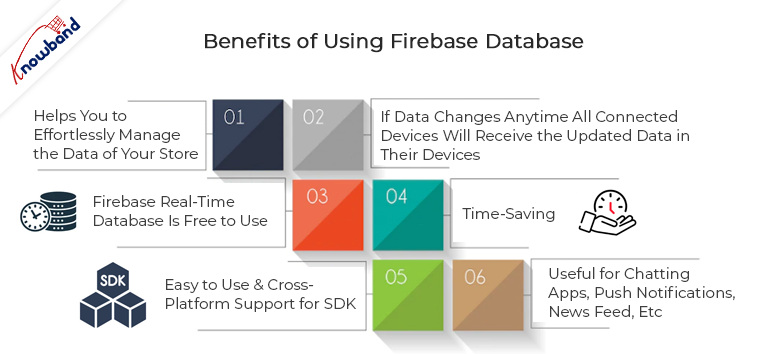
Benefits of Using Firebase Database

It doesn’t matter whether you are working on a small project or your eyes are on a big one you must need a database to store all your information. If you are working on a small project then you can use this Firebase database. Here are the list of benefits using Firebase database:

1. Helps you to effortlessly manage the data of your store.
2. If data changes anytime all connected devices will receive the updated data in their devices.
3. Firebase real-time database is free to use.
4. Time-Saving.
5. Easy to use & Cross-platform support for SDK.
6. Useful for chatting apps, push notifications, news feed, etc.

Pre-requisites

We need to write swift code to save the data to Firebase. For this, first we will have to create the Firebase project. Follow the steps given below to create the Firebase project –

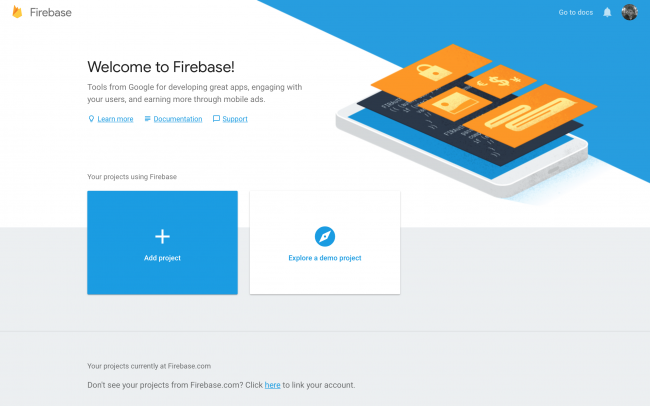
1.Go to https://console.firebase.google.com

2.Click on “Add Project” button


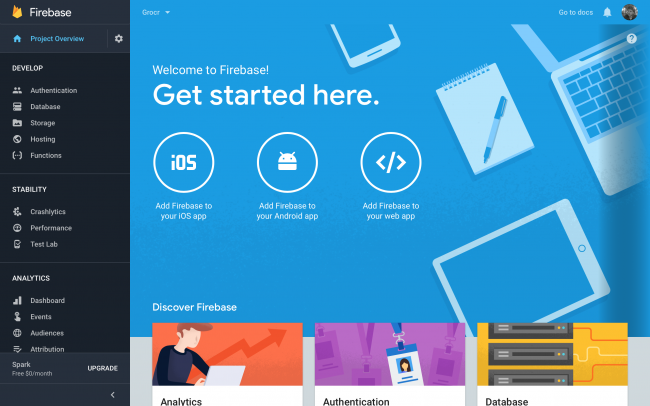
3. Then create iOS app and download GoogleService-Info.plist file

4. Then move the plist file inside the project

5. After than in Xcode, open AppDelegate.swift and add this code before the return statement within application(_:didFinishLaunchingWithOptions:)

FirebaseApp.configure()

6.Then click on “Database” option from the left menu.


7. Select “Realtime Database”, there you will find the database URL, which you can use in the code in order to fetch the data from the database. Generally you will not need this URL as we are using GoogleServices-Info.plist file and the database url is already available in that file, we only need to initialize the Firebase.

8. Firebase setup is completed

Now you will have to download Firebase SDK in the swift. For this you will have to install the following pods.

1. pod ‘Firebase/Core‘
2. pod ‘Firebase/Database‘

Let suppose currently we have no data in the Firebase database and we want to save the following data in the given format in the database  –

// The root of the tree
{
  "movies": [
    "movie1": {
      "name": "Avengers",
      "addedByUser": "John"
    },
 
    "movie2": {
      "name": "Star Wars",
      "addedByUser": "Jane"
    },
  ]
}

After successfully installing the pods on the project, we are ready to implement the coding part.


Code Implementation

Before creating the references, you will have to understand that what is a Firebase reference.

A Firebase reference points to a location in Firebase where data is stored. Even if you create multiple references, they all share the same connection.

First we will have to create reference of the FIRDatabaseReference.

Reference that will hold root node (grocery-items) can be made by using the following code –

let ref = Database.database().reference(withPath: "movies")

or you can also use the following way –

let rootRef = Database.database().reference()
let ref = rootRef.child("movies")

Then we will have to create reference to the child items which are milk and pizza so that we can add the data inside those nodes.

let movieRefAvengers = ref.child("movie1")
let movieRefStarWars = ref.child("movie2")

We know that we need to save the dictionary inside these keys. For that, we will create two dictionaries one for milk and another for pizza.

let dictMovieRefAvengers: [String: String] = ["name": "Avengers", "addedByUser": "John"]
let dictMovieRefStarWars: [String: String] = ["name": "Star Wars", "addedByUser": "Jane"]

After that we can add the dictMovieRefAvengers and dictMovieRefStarWars into the movieRefAvengers and movieRefStarWars and these will get added as a child of those references.

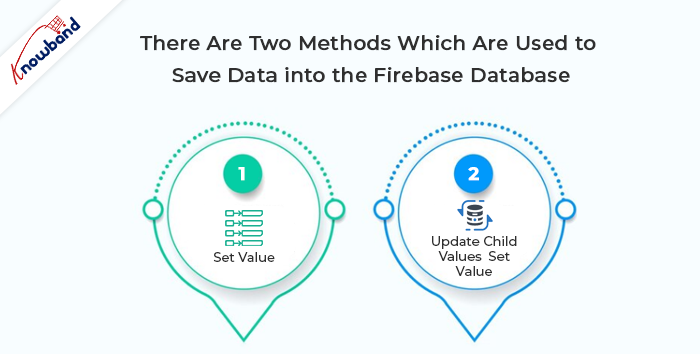
There are two methods which are used to save data into the Firebase database which are setValue and updateChildValues. If you want to know when your data has been committed, you can add a completion block. Both setValue and updateChildValues take an optional completion block that is called when the write has been committed to the database. This listener can be useful for keeping track of which data has been saved and which data is still being synchronized.


// Saving the values in movie1 node
movieRefAvengers.setValue(dictMovieRefAvengers) {
  (error:Error?, ref:DatabaseReference) in
  if let error = error {
    print("Data could not be saved: \(error).")
  } else {
    print("Data saved successfully!")
  }
}
 
// Saving the values in pizza node
movieRefStarWars.setValue(dictMovieRefStarWars) {
  (error:Error?, ref:DatabaseReference) in
  if let error = error {
    print("Data could not be saved: \(error).")
  } else {
    print("Data saved successfully!")
  }
}


After running the code shown above, you will get the same structure in the Firebase database which is already shown.

Summary

After following the above procedure, you will be able to save the data to the Firebase database in swift.

If you face any issues, please feel free to reach us at support@knowband.com. Knowband also provides PWA and Flutter Apps for Prestashop, Opencart, Magento 2 and Woocommerce. Know more:


Also Read This Articles:

Test your eCommerce store on PrestaShop Demo App in 3 simple steps?

In this competitive and revolutionary eCommerce industry, having your own eCommerce mobile app could easily enhance the visibility and engagement of your store. Earlier, you either need to struggle with learning programming or hire a professional and spend a huge amount of money for the same. But, now creating a mobile app is simpler than ever with KnowBand’s PrestaShop Mobile App Builder. This plugin is designed in such a way to provide native eCommerce mobile apps along with complete web-admin panel access. But, before going for any such decision, let’s take a glimpse of the simplest process through which you can test your own store on PrestaShop Demo App:

Step 1: Download Module:

Download the PrestaShop Mobile App Builder free version for Android and iOS from KnowBand store. After successful download, you would receive a zipped file consisting of the source code of module which is to be installed on your web-store.

Step 2: Upload Module and Configure:

Install the downloaded zipped file on your PrestaShop store and you would see the option to configure the module. Open module backend and enable the plugin to link your store with the mobile app.

Step 3: Download Demo App & enter store URL:

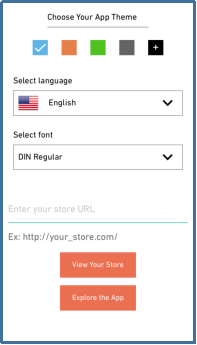
Download our PrestaShop Nautica Demo App on your test device from Google Play Store and Apple App Store. On opening the app, the above-shown splash screen will appear. All you need to do is to enter your website URL and tap ‘View Your Store’. For instance, if your store URL is https://www.knowband.com then, enter it as https://www.knowband.com/ and start testing your app.

That’s it! Now, you can experience your app working on the mobile app. This is the default view of your website on the app and can be customized accordingly with multiple backend options and functionalities. Once you are successfully satisfied with the working of the mobile app, you can go for the paid version of the module for app development with unlocked features.
KnowBand has brought this featured automated Mobile App Builder module for various other eCommerce platforms as well, like OpenCart, Magento, Magento 2 & WooCommerce. The testing process and the features are the same for every platform.

What to test in PrestaShop Demo Mobile App?

Once you start testing the functioning of PrestaShop Mobile App, here are 10 important points which must not be missed:

1. The home screen layout of the app is the default view which can be customized accordingly along with color options from module backend.

2. Multiple social login options(Google & Facebook) along with OTP and Fingerprint Authentication.

3. Add your store logo on the header of mobile app and showcase your brand as well.

4. Seamless product categorization with clutter-free product page. Layered navigation along with product swiping makes the search easier.

5. Social sharing of products on different social platforms directly from the product screen.

6. Add products in the wishlist and Shopping Cart with multiple size and color based options.

7. Simplified checkout screen with easy order creation.

8. Complete details of the placed order along with live tracking facility.

9. Send both automated and custom Push Notifications from the backend panel along with complete history.

10. Experience the flawless functioning of the mobile app right from entering the app to making the purchase.

Conclusion:

If testing your eCommerce website on the demo app is so easy with KnowBand, it’s a quite better option to go for it before actually making up your mind in choosing the right mobile app solution.

For any query or issue regarding testing of PrestaShop Mobile App kindly raise a ticket or contact us at support@knowband.com. Our prompt support team would be honored to assist you.

You might also like:

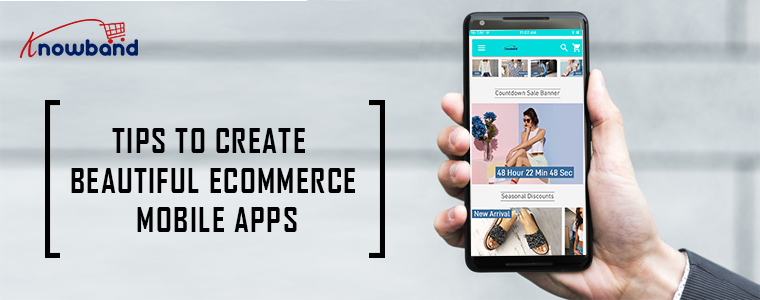
Tips to design beautiful eCommerce Mobile Apps!

E-commerce Mobile Apps and their growth:

Developing your own eCommerce mobile app has its own perks that too on a very high scale. We all are into online shopping nowadays. No one wants to struggle with going market, search products and then come back holding a bunch of bags. Instead, we all go for the online product purchase for our own comfort. Actually, the reason behind this is why to waste our energy when there is a better option to purchase products?

That’s exactly what modern shoppers think. Being an eCommerce merchant you can use this approach to improve the sales for your store. But, along with selling products online, what if there is another way which can get you far more benefits.

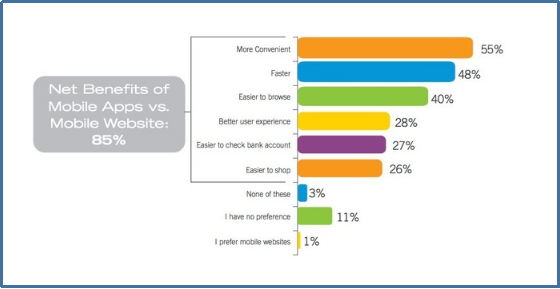
Yeah, that’s right! I am talking about eCommerce mobile apps. We all know that the mobile app industry has seen a huge growth in the past decade. Today, almost every major field needs mobile apps and so is the eCommerce industry. As per a marketing report, 85% of smartphone users prefer mobile apps over mobile websites. This percentage is more than enough to boost the sales and conversion for your store.

So, if you are an online store owner and quite serious about increasing visibility and revenue of your store, you must consider the option of eCommerce mobile app for PrestaShop, OpenCart, Magento, Magento 2, WooCommerce, Shopify platforms. Further, let’s dig up in this article how can you design the perfect eCommerce app of your own?

Need for designing an eCommerce Mobile App:

As they say, the first impression is the last impression. Your eCommerce mobile app voice out your brand among the worldwide mobile audience. Crafting a beautiful and flawless mobile app will definitely portray your professionalism and lure mobile shoppers. So, apart from incorporating other technicalities in eCommerce mobile app development, designing also holds a major spot which shouldn’t be ignored in any case.

Although it seems like all the shopping apps are a look alike, but trust me they aren’t. There are many such factors which if used properly would provide an impressive app to the front end shoppers.

Considerable factors for eCommerce Mobile App Design:

Here are a few major aspects to be kept in mind while designing an eCommerce mobile app of your own:

1. Clutter-free User Interface

The user interface is the soul of a mobile app. While designing the app UI you should keep a check on the screen-size support and effectiveness of the design. These two factors are responsible for making the app interface interactive and responsive.

You must make sure that your app doesn’t get affected by multiple screen sizes of various devices. As far as screen sizes are concerned, either manage the content on the app or create the one which supports multiple screen sizes.

Also, your app interface should be crafted as such it doesn’t create an issue for the user’s while creating an order. Many apps have loads of attributes which makes it tough for the users to select the right product and place the order. Thus, your well designed mobile apps could easily relight the user experience of your store.

2. Home Screen Personalization

The home screen of your app is the first thing which an online shopper experience on entering the app. Try to keep it simple and clutter-free along with highlighting the top products. There must be a proper search functionality on the home screen for the new visitors.

Your eCommerce mobile app should also have the functionality to offer flash sale or time-based sale on the home screen. So, try to optimize the app screen as per various events and occasions without making it messy.

3. Simple Sign-up and Checkout Screen

Users never prefer a multi-page sign-up or login option in the shopping apps. Instead of testing their patience the better approach is to offer them an easy and quick login process. Social media login(Google and Facebook) along with OTP and Fingerprint authentication are few such sign-up options which let the users access the app in a few taps.

Same goes for the checkout page, it shouldn’t be lengthy and multi-screen at all. Your app checkout screen should be that easy to use which compel the users to submit the order. So, once you have thought of developing an eCommerce mobile app you must be sure about keeping both these screens seamless.

4. Better Product Visuals

All the products must be displayed in a nice and effective manner. The product image quality must be up to mark and always have a prominent ‘Add To Cart’ button. You can also decide the navigation of this button by either redirecting users to the shopping cart screen or keep them on the product page for additional browsing.

The product images should load instantly even in an average broadband network. Often it happens that the users leave the app because images take time to load and they lose their patience.

5. Rich Color Schemes

Your app color choice says it all. Try to choose the color which suits your business. While choosing the right colors make sure it doesn’t affect the product visibility at all. Don’t forget that your prime requirement is to highlight the products on the app.

Moreover, you must not opt for very vibrant colors in the apps and try to maintain the right contrast between the theme and background color of your app.

6. Thumb-Friendly Zone

Your mobile app users could be both left and right-handed. Incorporating a thumb-friendly zone on the app screen wouldn’t harm anyone. Instead, it eases the app usability for both sorts of users.

Your eCommerce mobile apps should use this feature in such a way that all the important tasks related to product purchase must lie in this zone. It also helps in enhancing the conversion rate of your store.

7. Proper Filters and Sorts

Product filters are very important for an eCommerce shopping app as they help the users to find the right product from the huge catalog. The filter options in the app should be both broad and specific based on price, size etc. Product sorting is also an important factor which enhances the shopping experience. Whenever any shopper wants to view the lowest price products on your app, he/she can easily opt for the low to high sort option.

8. Simplified Menu Bar

Keeping your menu bar simple and to the point would definitely impact the user’s purchase decision. The right categorization displayed under the menu section allows the users to get along with the complete product catalog easily.

Over to you

Till now, you must be aware that mobile apps are the inevitable need of your eCommerce business. Designing your app beautiful and user-oriented would definitely benefit your eCommerce business. So, it is better to analyze and choose such eCommerce mobile app solution for your online website which provides a tailored and effortless shopping experience to the users. Keep all the above-listed points in your mind while app designing and hopefully it would shine out as a star for your store.

Read some more articles related to mobile app designing:

10 essential tips to create icons for your mobile app.
How to create right splash screen for your app?
The Mobile App Effect in eCommerce industry during Holiday Season


How to build an eCommerce Mobile App?

Mobile Commerce and its growth:

We all can witness the impact of digitization in this tech-centric world. Along with all the major sections, the eCommerce industry has witnessed tremendous growth and advancements in the past few years. Earlier the shoppers were only limited to the websites for product purchase. But, as the majority of online sellers took their website business to the mobile platform, the mobile shopping app is a kind of necessity rather than just a luxury.

First of all, let’s narrow down the exact difference between eCommerce and m-commerce. Mobile commerce is selling products on various handheld devices while eCommerce is selling products through online websites. Many marketing experts are quoting that worldwide mCommerce is about to reach around $693B by the end of 2019.

Mobile Apps are a kind of inevitable need nowadays with the constant increase in mobile users on daily basis. The shoppers want everything at their fingertips to which they can easily reach. But, the need for eCommerce mobile apps often get ignored by online merchants and ultimately faces a huge loss.

How eCommerce mobile apps came out as a trend?

Creating a mobile app for your eCommerce website isn’t just limited to code one. You need to make sure that the app should be matching exactly with your website in terms of both look and functionality. Instead of providing some simple programmable apps to your users, think of a better approach and offer them one with all the help and assistance.

Who doesn’t want to opt for such eCommerce apps which can boost their website revenue? Mobile apps enhance the reach of your regional online business among the worldwide audience. They take your business to every corner of the world where you ever want to reach physically. But, you must be sure about the kind of mobile app which is being offered to your users. Let’s begin with a few basic questions which you should ask for your app:

1. Is your mobile app capable of targeting the right audience?
2. Does your mobile app support the products you sell?
3. How can you manage the inventory with the apps?
4. Can your app expand your business on a global scale?
5. Is your app interface enough seamless and appealing?
6. Is product purchase simple for the shoppers?
7. Can you manage the app functionalities on your own?
8. Can you optimize the home screen UI as per various occasions?
Last but not least,
9. How will you manage the app and store simultaneously at the same time?

These are some basic queries which should be considered before going for coding or non-coding way to create an eCommerce mobile app. There are various other aspects to be analyzed as well while creating eCommerce mobile app.

Key essentials for flawless mobile app creation:

1.  User Experience:

Your app design should be user-centric. All the features and functionalities of your eCommerce mobile app should be crystal clear for mobile shoppers. Try to use the right color selection and correct usage of other designing elements to lure the user’s attention just with the perfect designed app. Often it happens that the mobile app visitors access the app because of the awesome designs and end up as a potential user.

Moreover, you should try to keep a brand touch in your apps. Your app portrays your business to the users so, try to keep it as effective as it can. The app screens should be crafted nicely and the transactions between them must be smooth. Display your store logo on the app and promote your brand as well along with the store products.

2. Audience Analysis

Being an eCommerce store owner you must analyze your target audience. This research has its own significance as it lets you make the decision based on user’s likes, dislikes, purchase behavior etc. It will help you in providing the exact mobile app which your user needs.

Your marketing strategies actually rely on this core aspect of eCommerce business. In this age of sternest competition, you don’t afford to make any error as it can make you lose loads of conversions and leads. Keeping your app features as per the audience taste and preference will definitely be a silver bullet for your business.

3. Track Competition

List down your competition who have already gone mobile or looking forward to doing so. Analyze their move and check what makes them a better choice for the users than you. Research their best features and benefits and try to make up the most out of this analysis.

4. Right Technology

Choosing the right technology for your app is the prime requirement for eCommerce mobile app development. Your app must be updated with all the latest advancements and should work without any flaw. Try to opt for the native eCommerce mobile apps in order to provide sustainability. Similarly, you also need to decide whether you want to develop an Android app or an iOS app or both as per your targeted audience.

These were some of the core aspects of understanding and analysis before actually going for app development. Now let’s take a look at some of the must-have features of your eCommerce Mobile App.

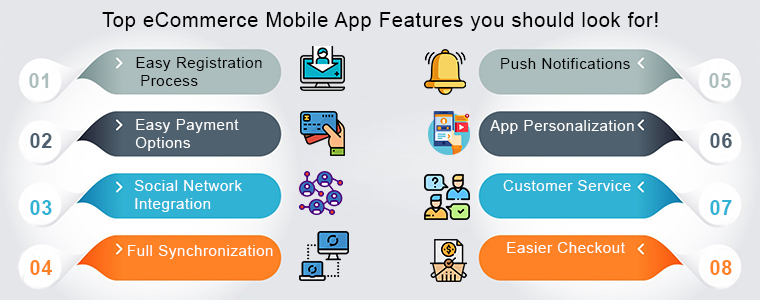
Top eCommerce Mobile App Features you should look for!

1. Easy Registration Process

In this paced day to day lives no one wants to fumble with the lengthy login forms when it comes to access your app. Many eCommerce store owners ignore this fact and eventually it doesn’t end well. You must not make this mistake and incorporate quick login options in your app in the first place.

Moreover, there must be at least 2-3 login options in your apps including social media networks. Providing one or two tap login option in your app could not only motivate them to open the app and browse the store but also boost sale for your business.

2. Easy Payment Options

Let’s take an instance that a user has visited your app and added products in its cart. But, when he/she tried to make the payment there weren’t enough payment options. This will surely make the user leave without successful product purchase.

You should be serious about providing multiple reliable and user-favorite payment options in your app. With Amazon Pay, PayPal, COD, Braintree, Stripe etc. you can easily push your users to make the purchase.

3. Social Network Integration

No one can deny the power of social media. If you are running a business, social media could be a game changer for you if used properly. Your eCommerce mobile app also needs social integration in order to popularize it.

Right from one-tap login to social sharing of products, the mobile apps will spread your word of mouth among potential buyers. So, you must connect the basic social networks in your app for improved benefits.

4. Full Synchronization

Being an eCommerce store owner managing both apps and the store simultaneously could be hectic for you. So, why not connect both with each other? Offer 100% synchronization between your store and the mobile apps and speed-up your inventory management process.
Once the apps and your online website are in synchronization, all the updates made on the website are automatically get reflected on the mobile apps. This halves your workload and saves plenty of time to focus on the competition and improve sales.

5. Push Notifications

Your app is the major communication source between you and the buyer if it has the right tool. Push notifications are the perfect marketing tool for an eCommerce mobile app. Sending personalized notifications to the app users would increase the app engagement. Notifying the users regarding discounts, sales, offers, and other store-related details would definitely enhance your eCommerce store sales.

6. App Personalization

All the top eCommerce mobile apps offer the best shopping experience to the app users. You should opt for the eCommerce mobile app solution which allows you to personalize the home screen on your own.

Your app’s home screen is responsible for the first impression on the users. So, you must make sure it certainly meets the user’s expectation. This will even help the store admin to drive more sales to your store. There is various automated eCommerce mobile app solution for PrestaShop, OpenCart, Magento, Magento 2, WooCommerce and others that allow you to present the desired layout in your apps. You can even read various tips to design beautiful eCommerce mobile apps.

7. Customer Service

Customer satisfaction is an important aspect which shouldn’t be ignored at any cost. While shopping online through your app there is a chance that user might be in doubt regarding the purchase. So, there must be reliable contact options in your app. This will not only let your users directly contact you regarding any query or problem but also brings their loyalty to your store.

8. Easier Checkout

The simpler is your checkout screen, more are the chances of a successful purchase. Easy checkout screen often motivates the users not to abandon the cart without making payment.

Wrap Up

This tour of developing eCommerce mobile app would have hopefully cleared that the mobile apps are better than online websites. So go ahead, do all your research and analysis and choose the right eCommerce mobile app development solution.

Looks good? Find some more articles on how these mobile apps can benefit your eCommerce business:

How eCommerce mobile apps can boost your small business?
Reasons why eCommerce business needs a mobile app?

Top-notch strategies to rule Mobile App Market in the year 2019

Mobile App Marketing is a way of introducing your Mobile Application to users through various platforms and techniques. The major aim behind marketing through the various app markets is to target the ideal audience for your mobile application. Moreover, the mobile app markets have seen immense growth in the past few years. This brings all the latest and upcoming trends come knocking at its door. For all the developers or freelancers who have an idea regarding the mobile app or already developed one should look forward to the marketing approach. As of today, the app industry has billions of running apps. This increases the possibility for your app to be lost if it failed to catch up with new advancements. Read on to find out the major ones in detail.

Importance of Mobile App Marketing!

This era is the era of mobile apps. This makes the mobile app marketing the need of the hour if you really want your app to establish its mark. The app markets let you introduce your Mobile Application among all the worldwide users and even encourage them to download the Mobile Application as well. Audience analysis is also the major factor behind the popularity of Mobile App Marketing. It is very important to understand the kind of audience you want to target for your app. For instance, If you’re planning to launch your gaming app, you would definitely go for the teenagers and children. You would not target the 40+ audience for your app.

Moreover, the importance of mobile app marketing isn’t stopping anywhere soon. With the parallel growth in the mobile app market and mobile users, any milestone could be overpowered in the upcoming time. Following stats strengthen this thought of mine:

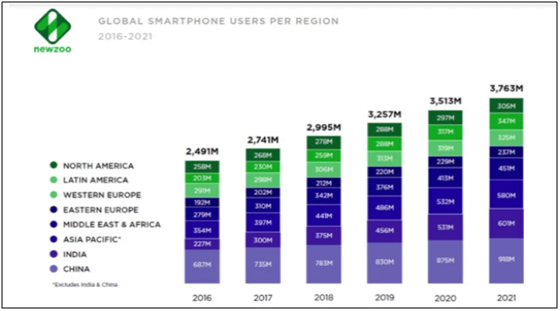
A report says that the total number of smartphones users will reach 3.8 Billion by the year 2021 and imagine where it could lead the mobile app markets then!

Upcoming Mobile App trends to look out for!

Mobile Apps have always been the highlight due to the latest technologies and advancements followed with them. The step by step growth in the mobile app industry also welcomes the new trends with open arms. Here, I have discussed some top picks for the year 2019:

1. App Store Optimization:

The optimization of App Stores is the first one to make up to the list. Many marketing experts are giving hints that this trend will take over in the coming year. Actually, App Store Optimization is a technique to analyze the apps in the app ocean and to display the most relevant and popular ones to the users.  We all are aware of the SEO for Google. App Store Optimization is quite similar to it where App Stores rank your application. The right keyword for your app is the key to perfect optimization of your app. It also depends on the reviews and downloads of your apps, Thus, if your App ranks well in the store, the number of downloads will tend to increase. This makes this trend a silver bullet for the growth of your app in multiple ways.

2. Social Media Advertisements:

No one can deny the power of social media. Social media platforms bring a sheer number of potential users to your app. This is an efficient way to advertise your app on social media and achieve maximum downloads from a single place.  Also, social media platforms provide various ranges of audiences including every age group and interest. Thus, social media advertising is an effective tactic to boost your app growth.

3. Spreading the word:

Spread the loud word for your app. The growth of your app depends on how you tell the users about it. Often, digital frauds happen in the market and the users get afraid to download your app. So, you must make sure that the right information is being spread among the audience. This technique may seem a bit common but it is the pillar behind gaining the user’s trust in your app.

4. User Targeting:

Audience analysis is the prime factor for your app growth. It is very important for you to know how and where you can target the users. We should understand that the interest of the audience before actually beginning its promotion.  Audience analysis is a very important tactic if you don’t want to let your efforts waste. Moreover, you can even target the users by their age-group, location, and multiple platforms.

How growth of mobile apps is readdressing eCommerce industry?

Welcome to the year 2019. Mobile Apps have already taken over the eCommerce world and is still growing. We all use mobile phones for every day-to-day work and most of all for product purchase. Taking your eCommerce store to the user’s pockets would definitely be the booster for sales and conversion.

Nowadays there are various automated solutions to take your online website to the mobile platform which comes with a configurable admin panel. The store owners can easily control the designing and functioning of the mobile app. KnowBand has brought various readymade modules to provide you featured eCommerce app in no time. All you need to do is to get the module for PrestaShop, OpenCart, Magento, Magento 2, WooCommerce, Shopify and share your requirements. That’s all for you! Now, you just sit back and relax instead of indulging in any sort of coding or technical skills.

Conclusion:

Now, this should be crystal clear that app marketing is a very critical component behind the success of your app. So, now in 2019 instead of just developing the app and hoping it to get successful, adopt the above-listed strategies and boost the number of downloads. All the mobile apps who made their mark in the past had a very strong marketing strategy behind them.

Find our other articles on Mobile App Marketing:

Top app marketing campaigns for our inspiration

10 years of growth of the mobile app market

Coding Or Non-Coding: What to choose for eCommerce mobile app?

Looking for the number of bucks required to get a pair of native eCommerce mobile apps? Read on to find the answer.

Why eCommerce mobile app is a big deal today?

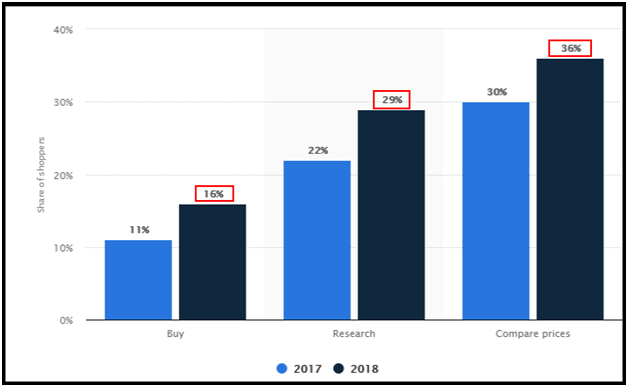
Digitization has touched our lives in the past few years in ways we never imagined. With the ever-growing mobile app market and the ease of shopping provided by mobile devices, the apps have made their mark in the eCommerce industry. The mobile apps for shopping have overtaken the desktop websites with their motive of ‘Shop on the go’. If we believe to the following stats, in the year 2018, 16 percent of worldwide shoppers used their smartphones to buy products. This data was earlier 11% in the year 2017.

All the eCommerce store owners would have dreamed of their store getting crowded with the users. E-Commerce mobile apps could make it true by targeting the majority of mobile users worldwide. Additionally, the ease of doing business with eCommerce mobile apps has no comparison at all. All of these facts and figures are that mobile apps are leading the debate on mobile apps Vs mobile websites.

How should be your eCommerce mobile app?

The exact cost is determined by the aspects that you take into consideration while app development. And, that’s totally up to you! You should get your eCommerce mobile app developed as per your choice and need. But, before that, the basic step is to keep all the concerned factors crystal clear. There are a few key aspects which are a must if you are really sighting your app as a game changer. Let’s have a glimpse of them:

1. Audience Analysis will let you know where to hit!

While developing an eCommerce mobile app, the user analysis is the most essential and basic thing, to begin with.  The success of your business exactly depends on whether you are fulfilling buyer requirements or not.

The fundamental step in the buyer analysis is determining to whom are you selling the product with the app? Their shopping behavior and patterns must be analyzed to know the buyer likings and disliking. Carrying out this research in the précised manner will ultimately get you a relatable approach for your app.

2. Choosing the right technology will get your app far!

Another major aspect is using the right technology while developing your eCommerce mobile app. Along with keeping an eye on the budget of app development, you should go for the solution that offers you maximum benefits. From keeping the perfect synchronization between app and website to multiple language integration are few such technological advancements that you must opt for your app.

Actually, in my opinion, you should go for the native mobile app development solution.  Determine the platform/OS that you will target, whether it will be Android or iOS or both. This is directly based on the preference of the user’s devices and that will be acquired from user analysis.

3. The well-designed app would voice out your brand loudly!

Try to craft your app design soothing and intuitive without getting it cluttered in any possible way. The appealing app visuals, seamless transactions from one app screen to another, alluring color themes and font styles are some designing factors which can provide an unmatchable shopping experience to your users.

Your app is your business identity. So, it should be kept as user-friendly as it could. Your mobile app should present your store to the users with the motive to create an ever-lasting impression.

There are various other such factors as well, but these above discussed must be considered before developing the eCommerce mobile app. Let’s move on to how much does it will cost?

What is the cost involved in eCommerce mobile app development?

Cost required for creating a mobile app is technically narrowed down to two main factors:

  1. Who will be your app developer?
  2. How much amount are you planning to invest?
You should be certain about the money and approach regarding the mobile app development. From here, you can go for either of the choices.

1. Coding:

The first one is to hire a developer for the job which could cost much as you have to make him permanently available for your app. You would have to pay the person every time for even small changes in your app.

2. Non-coding:

The much better and seamless option is to choose a pre-configured mobile app solution. There are various such readymade frameworks available in the market which can get the desired apps for you without any change in the code. The best part about this option is that you would be the boss of your app as its functionalities can be managed over a few clicks and button toggles from the admin panel.

Also, the mobile apps provided by the readymade solution are fully featured and have all the required functionalities for your business. These eCommerce mobile app solutions even provide free support to developed apps. So, if any issue happens in future you wouldn’t need to worry about that.

Conclusion:

Till now, you have got the idea that developing an eCommerce mobile app is a tough decision and requires a lot of analysis and research in the first place. But, there are the ways discussed above through which you can get the job done without any hassle. Knowband understood this concern of all the eCommerce store owners of different platform and came up with the easiest and cost-effective solution Mobile App Builder for Prestashop, OpenCart, Magento, WooCommerce and Magento 2 platforms.

Please do drop us your reviews and comments regarding eCommerce mobile app development. We would love to hear from you.

Find our other articles on eCommerce mobile apps:

E-Commerce mobile apps: Just a fad or an unavoidable Trend!

Why does your eCommerce business need its own mobile app?

7 reasons why mobile apps are better than mobile websites?