4 Incredible Features Offered by Knowband’s OpenCart Product Sticker Extension!

The Opencart product sticker plugin allows retailers to display responsive stickers and product labels on the storefront. Making customers aware of discounts and deals. Additionally, the module comes with 50+ pre-loaded stickers. On top of that the Opencart admins can also upload custom stickers with clicks. Even if the size of the uploaded image is not well enough. We have also provided the option to manage and resize the sticker. Furthermore, managing the positions and sizes of product labels on the storefront does not require any knowledge of HTML, CSS, or any other styling language.

Here are some of the most sounding features offered by Knowband’s product sticker and label plugin.

Pre-Loaded/Upload Sticker Options:

OpenCart Product label extension comes with 20+ pre-available stickers and labels. You can choose from a wide variety of stickers and can go with the most suitable one.Likewise, if you are willing to add stickers as per your choice, we have also provided an option for the same. For uploading a sticker, all you need to do is click on add a sticker, Upload, choose a sticker, and that’s all.

Moreover, you will not have to worry about the sticker dimensions and size. In the sticker setting tab, the admins can resize any stickers and can even manage the opacity for the same. The following flagship feature not only makes the Opencart sticker module a complete plugin in itself but also increases the usability for the OpenCart retailers.
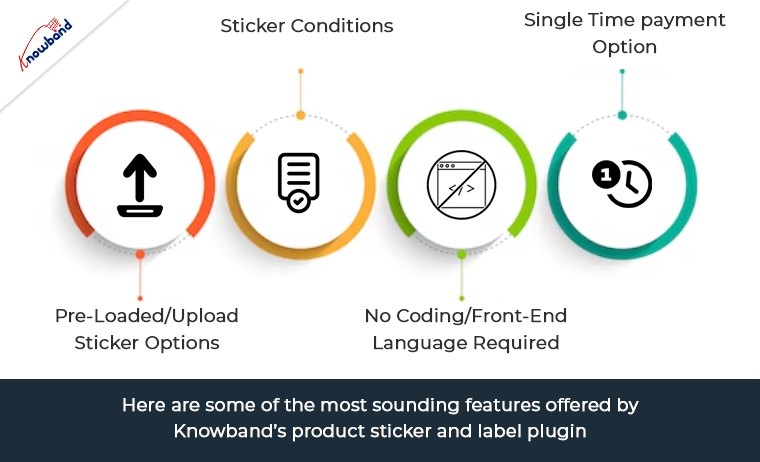
OpenCart Product Sticker Conditions:

When it comes to the sticker conditions, OpenCart product sticker extension provide complete peace of mind to store administrators. Not only the admins can modify the sticker appearance in every single meaning. But, can also show hide stickers based on stocks. Coming in details, the admins can configure any modified sticker appearance by selecting product stock status. Including/excluding special categories and products, and much more. Moreover, the admins can manage the pages where they want to show/hide stickers on their shop’s front end.

No Coding/Front-End Language Required:

OpenCart product label and Stickers extension come with an extremely easy-to-understand structure for the admins. While configuring the module, you will find every step and feature tailored appropriately. You will not have to require any coding or technical skills while setting up the stickers for your storefront.

Single Time payment option:

On top of that the plugin comes with single-time payment options. This means you will not have to pay any annual subscription charges for managing your stickers. Moreover, along with the module purchase, eCommerce sellers get 3 months of free technical support. In case you find yourself stuck somewhere, our tech team has got your back with all the expertise and experience.

Wrapping Up!

The images of your products are a crucial aspect of your online store. As they are often the first thing that catches the attention of visitors. With Opencart’s Product Label and Stickers modules, you can customize your product images by adding stickers on top of them. By doing so, you can inform your customers about any special features or offers on your products, such as discounts or free shipping.

These stickers will be prominently displayed on product images throughout your site. The possibilities for using the Product Label and Stickers Module are endless if you have a creative mindset. Additionally, you can create and add labels to the product page, with multiple customization options available in the backend. Admins have complete control over how each sticker or label looks and can edit them in any way they desire.

Notable Changes in PrestaShop 8.0: A Major Leap Forward for E-commerce

PrestaShop, one of the most popular open-source e-commerce platforms, is known for its robustness, flexibility, and extensive range of modules. With the release of PrestaShop 8.0, there are several technical changes that can significantly enhance both the functionality of modules and the overall website experience. In this article, we will explore some of these changes and their potential impact on PrestaShop users.

Improved Module Management System:

PrestaShop 8.0 introduces an upgraded module management system that offers better control and customization options. It includes a revamped module dashboard, allowing merchants to manage and configure modules more efficiently. The new system also provides enhanced compatibility and improved security measures, ensuring a seamless experience while installing, updating, and removing modules.

Responsive Web Design:


In the era of mobile devices, responsive web design has become crucial for any successful e-commerce website. PrestaShop 8.0 focuses on delivering an exceptional user experience across different screen sizes and resolutions. The platform now offers responsive templates out of the box, ensuring that your website looks and functions flawlessly on desktops, tablets, and smartphones. This technical enhancement can lead to higher customer engagement and increased conversion rates.

Accelerated Mobile Pages (AMP) Support:


Continuing with the mobile optimization theme, PrestaShop 8.0 introduces support for Accelerated Mobile Pages (AMP). AMP is an open-source initiative that allows web pages to load almost instantaneously on mobile devices. By implementing AMP in PrestaShop 8.0, merchants can offer lightning-fast browsing experiences, reducing bounce rates and improving search engine rankings.

Advanced Search and Filtering Capabilities:

Searching and filtering products effectively is crucial for an e-commerce website’s success. PrestaShop 8.0 comes with advanced search and filtering capabilities, enabling customers to quickly find the products they are looking for. The updated search system offers improved relevance, autocomplete suggestions, and the ability to search across multiple product attributes. These enhancements empower customers to navigate the website effortlessly and make informed purchase decisions.

Integration with Progressive Web Apps (PWA):


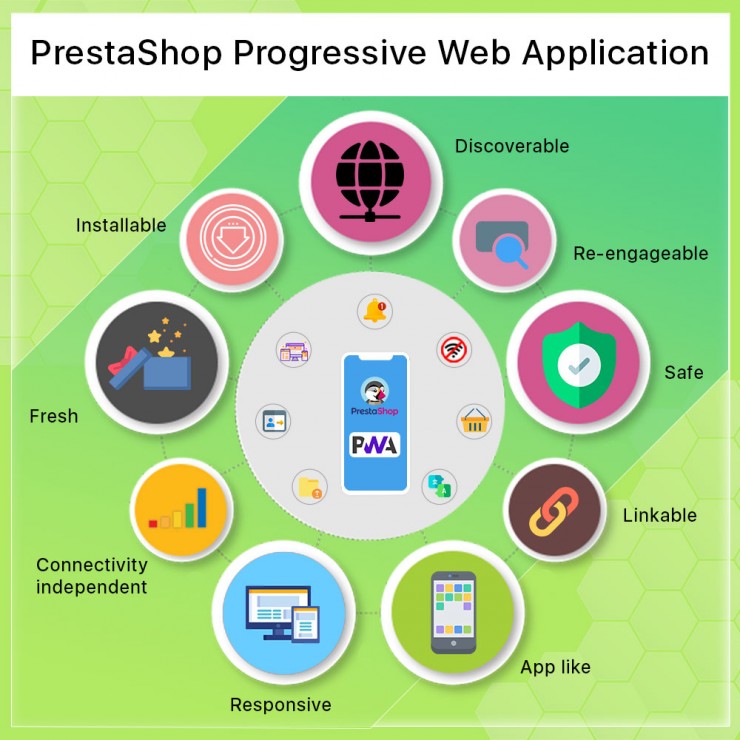
Progressive Web Apps have gained significant traction in recent years due to their ability to deliver an app-like experience within a web browser. PrestaShop 8.0 introduces seamless integration with PWAs, allowing merchants to leverage the benefits of both web and native mobile apps. PWAs offer features such as offline browsing, push notifications, and home screen shortcuts, enhancing customer engagement and retention.

Performance Optimization:

The performance of a website is essential in ensuring user satisfaction and driving conversion rates.. PrestaShop 8.0 focuses on performance optimization, leveraging the latest technologies and best practices. With improved caching mechanisms, code optimization, and database optimizations, the platform aims to deliver faster page load times and a smoother user experience. These technical changes can lead to improved search engine rankings, higher customer retention, and ultimately, increased sales.

Enhanced Security Measures in Prestashop 8.0:

In an increasingly digital world, ensuring the security of an e-commerce website is paramount. PrestaShop 8.0 includes enhanced security measures to protect both the platform and its users. This includes improved encryption algorithms, stricter validation checks, and proactive vulnerability management. By implementing these security enhancements, PrestaShop aims to provide a secure and trustworthy environment for online businesses and their customers.

In the end:

Prestashop 8.0 brings a host of technical changes that can significantly enhance the functionality and user experience of PrestaShop-powered websites.
From improved module management and responsive web design to advanced search capabilities and performance optimizations, these changes aim to empower merchants and provide a seamless shopping experience for customers. By staying up-to-date with the latest version of PrestaShop and leveraging these technical enhancements, businesses can stay competitive in the ever-evolving world of e-commerce.
Furthermore, at Knowband we provide Prestashop web and app development services at very reasonable prices. Not only you can check out a wide range of Prestashop v8.0 compatible addons but also we offer custom module development to our Prestashop eCommerce merchants.  Thus, in case you are having queries or suggestions regarding any of our plugins, feel free to find us at support@knowband.com.

Different Payment Gateways for Your Online Store

As eCommerce continues to thrive, setting up an online store has become more accessible than ever before. However, one crucial aspect that every online store owner must carefully consider is the selection of a reliable and secure payment gateway. A payment gateway serves as the bridge between your online store and the financial institutions that process transactions. In this blog post, we will explore what a payment gateway is, discuss some of the best payment gateways available worldwide, and help you make an informed decision for your online store.

What is a Payment Gateway?

A payment gateway is a software application that enables secure and efficient online transactions by transmitting payment information between the customer, merchant, and the acquiring bank. It plays a vital role in authorizing transactions, encrypting sensitive data, and securely transferring funds from the customer’s account to the merchant’s account. In essence, a payment gateway ensures the smooth processing of payments, giving your customers a seamless purchasing experience.

Best Payment Gateways Available Worldwide

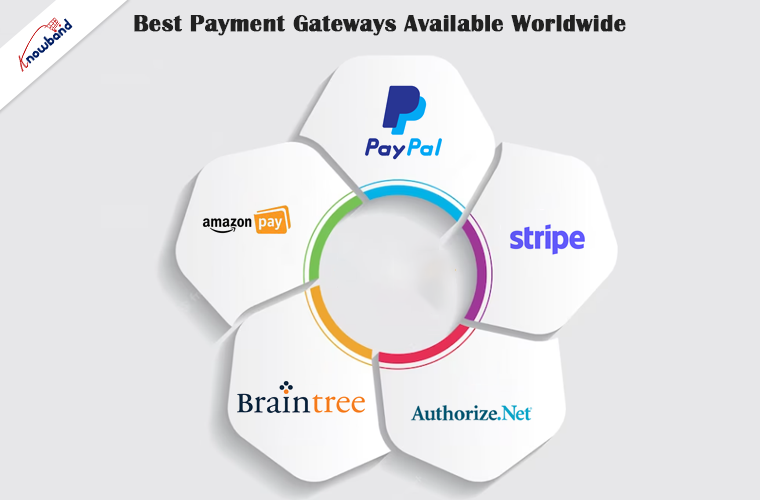
1. PayPal

As one of the most widely recognized payment gateways, PayPal allows customers to make online payments securely using their PayPal accounts or credit/debit cards. It offers a user-friendly interface, supports multiple currencies, and provides buyer and seller protection. With its vast user base and global acceptance, PayPal is an excellent choice for international businesses.

2. Stripe

Stripe is known for its developer-friendly payment gateway solution. It offers robust security, and seamless integration with various e-commerce platforms, and supports over 135 currencies. Stripe provides a customizable checkout experience, recurring billing options, and features like fraud detection and prevention, making it a popular choice for both startups and established businesses.

3. Authorize.Net 

Established in 1996, Authorize.Net has maintained a strong presence in the payment gateway market. It supports a wide range of payment options, including credit/debit cards, e-checks, and digital wallets. Authorize.Net offers advanced fraud detection tools, customizable payment forms, and integrations with major e-commerce platforms. It is particularly suitable for businesses operating in the United States.

4. Braintree

Acquired by PayPal, Braintree is a robust payment gateway that provides seamless integration options and supports multiple payment methods. It offers features like recurring billing, advanced fraud protection, and customizable checkout experiences. Braintree’s transparent pricing structure and developer-friendly APIs make it an attractive option for businesses of all sizes.

5. Amazon Pay

With Amazon Pay, customers can use their existing Amazon accounts to make payments on your online store. It offers a familiar and trusted payment experience, eliminating the need for customers to enter their payment information manually. Amazon Pay is renowned for its security measures, and it provides seamless integration with popular eCommerce platforms.

Conclusion

Selecting the right payment gateway for your online store is crucial for a successful eCommerce venture. Consider factors such as security, ease of integration, available features, and compatibility with your target audience’s preferred payment methods. The payment gateways mentioned in this article are among the best options available worldwide, but it’s essential to evaluate your specific business requirements before making a final decision.

Remember, providing a seamless and secure payment experience is essential for building trust with your customers and ensuring repeat business. If you have any inquiries or queries regarding payment gateways for your online store, feel free to contact support@knowband.com. Their team of experts will be more than happy to assist you in making the right choice for your eCommerce business.

The Importance of Responsive Web Design in eCommerce

In the fast-paced world of eCommerce, where customers are increasingly shopping on mobile devices, having a responsive web design has become a critical factor for success. Responsive web design ensures that your online store looks and functions flawlessly across various screen sizes and devices, providing a consistent and user-friendly experience to customers. In this blog, we will explore the importance of responsive web design in eCommerce and how it can significantly impact user experience, conversion rates, and overall business growth.

1. Enhanced User Experience:

Responsive web design is all about delivering a seamless and intuitive user experience across different devices. With the increasing usage of smartphones and tablets for online shopping, it is crucial to provide customers with a mobile-friendly experience. A responsive website adjusts its layout, font sizes, and images to fit different screen sizes, making it easy for users to navigate, browse products, and complete purchases. By prioritizing the user experience, businesses can engage customers, reduce bounce rates, and increase the likelihood of conversions.

2. Improved SEO Performance:

Search engines, such as Google, prioritize user experience as a ranking factor. Websites that are mobile-friendly and provide a responsive design are more likely to rank higher in search engine results. Google even labels mobile-friendly websites in search results, indicating their commitment to providing the best user experience. By implementing responsive web design, businesses can improve their SEO performance, attract more organic traffic, and reach a wider audience, leading to increased visibility and potential sales.

3. Increased Conversion Rates:

Responsive web design directly impacts conversion rates. Customers who have a positive experience on a mobile-friendly website are more likely to make a purchase. On the other hand, a website that is not optimized for mobile devices can lead to frustration, abandoned carts, and lost sales opportunities. By ensuring that your e-commerce store provides a seamless shopping experience across all devices, you can increase customer trust, engagement, and ultimately, conversions.

4. Cost and Time Efficiency:

Investing in responsive web design eliminates the need to maintain separate websites or mobile apps for different devices. Instead of developing and managing multiple platforms, businesses can focus their resources on a single responsive website that automatically adapts to various screen sizes. This approach not only reduces development and maintenance costs but also saves valuable time. Additionally, with responsive design, updates, and changes can be implemented more efficiently, ensuring a consistent experience for all users.

5. Competitive Advantage:

In a highly competitive e-commerce landscape, standing out from the crowd is essential. A responsive web design gives businesses a competitive edge by providing an optimal browsing experience for customers. When users can easily navigate, view products, and complete transactions on any device, they are more likely to choose a responsive website over a non-responsive one. By prioritizing responsive web design, businesses can differentiate themselves, build trust, and create a positive brand image.

Conclusion:

In the world of eCommerce, responsive web design has become a non-negotiable element of success. It enhances the user experience, improves SEO performance, increases conversion rates, and provides a competitive advantage. Businesses that prioritize responsive design demonstrate their commitment to meeting customer needs and staying ahead of the curve.

To learn more about the importance of responsive web design in eCommerce or for any other inquiries, please feel free to get in touch with us at support@knowband.com. Our team of experts is ready to assist you and provide further insights into implementing responsive web design to enhance your e-commerce store’s performance and success.

Structured Data and Schema Markup Enhance Search Rankings!!

Search engine optimization (SEO) is a critical part of this strategy. Further, structured data and schema markup play a crucial role in improving search rankings. In this article, we will discuss what structured data and schema markup are. Also, about how they work, and why they are important for improving search rankings.

Structured data refers to the way information is present on a website. It is to help search engines understand the content on a page better. Schema markup, on the other hand, is a specific type of structured data. It is added to a webpage’s HTML code to provide additional information to search engines.

Structured data and schema markup help search engines to better understand the context of a webpage’s content. When search engines can better understand the content of a page, they are more likely to show it to users who are searching for related topics. This can lead to an increase in website traffic, which can lead to more leads, sales, and revenue for a business.

Some of the Ways Structured Data and Schema Markup can Improve Search Rankings:

A Better Understanding of Content

When search engines understand the context of a webpage’s content, they can better match it to the queries that users are searching for. For example, a user is searching for a restaurant that serves Italian food. Here search engines can use structured data to understand that a particular restaurant serves Italian food. Also, it can recognize its location in a city. This can help the search engine to rank the restaurant higher in the search results for that query.

Increased Click-Through Rates

When a webpage has a better understanding of its content, it can lead to more targeted traffic. This can lead to higher click-through rates (CTR), which is the percentage of users who click on a search result. When a webpage has a higher CTR, it can signal to search engines that the page is relevant and valuable to users. 

Enhanced Rich Snippets

When schema markup is used on a webpage, it can enhance the rich snippets that are present in the search results. Rich snippets are the extra pieces of information that are in the search results, such as ratings, reviews, and prices. By using schema markup, businesses can provide more detailed information to search engines. This can make a webpage stand out more in the search results, which can lead to more clicks and traffic.

Standing Out from Competitors

Additionally, there are several other ways in which structured data and schema markup can improve search rankings. One important factor is that it can help businesses to stay ahead of their competition. Further which can make their web pages stand out in the search results.

Improved User Experience

When structured data and schema markup are correctly in use, they can improve the user experience on a webpage. By providing more detailed information about the content on a page, users can better understand what they can expect to find on the page. This can lead to a better user experience, which can lead to more engagement and longer time spent on the page. This can also lead to a lower bounce rate, which is the percentage of users who leave a webpage after only viewing one page.

Increased Visibility in Voice Search

When a webpage uses structured data and schema markup, it can make it easier for voice assistants to understand the content on the page. This can lead to increased visibility in voice search results, which can lead to more traffic and revenue for businesses.

Backlinks

Furthermore, structured data and schema markup can help businesses to attract high-quality backlinks. When a webpage has high-quality backlinks, it can signal to search engines that the page is authoritative and trustworthy. By using this, businesses can provide more detailed information to other websites, which can make it easier for them to link back to the page.

Content Optimization

Another benefit of using structured data and schema markup is that it can help businesses to optimize their content for featured snippets. Featured snippets are short, direct answers that appear at the top of the search results for certain queries. Using this method businesses can provide more detailed information to search engines. which can increase their chances of being featured in a snippet.

Benefits Of Local SEO

Finally, using structured data and schema markup can also help businesses to improve their local SEO efforts. By providing detailed information about a business’s location, hours of operation, and other relevant details, search engines can better match the business to local queries. This can lead to more targeted traffic, which can lead to more leads, sales, and revenue for the business.

In the End!!

Finally, structured data and schema markup are essential for improving search rankings. Moreover, it should be an integral part of any SEO strategy. In case you need our assistance with the SEO for your business then connect with us at support@knowband.com. With our team of experts, we will surely assist you depending on your needs.

Effective Email Marketing Strategies for eCommerce Businesses

Email marketing has proven to be one of the most effective strategies for driving sales and building customer loyalty in the e-commerce industry. With the ability to reach a wide audience and deliver targeted messages, email marketing allows e-commerce businesses to engage with customers directly and drive conversions. In this blog post, we will discuss some effective email marketing strategies that can help boost your e-commerce business.

Build a Quality Email List

The first step in successful email marketing is to build a quality email list. Ensure that you are collecting email addresses from interested customers through various channels, such as your website, social media platforms, and offline events. Offer incentives like exclusive discounts or content to encourage sign-ups.

Segment Your Audience

Not all customers are the same, and sending the same email to everyone may not yield the best results. Segment your email list based on factors like demographics, purchase history, or browsing behavior. This allows you to send targeted and personalized emails that resonate with each segment.

Welcome Emails

Send a warm and engaging welcome email to new subscribers. Introduce your brand, provide a special offer or discount, and guide them on how to navigate your website. A well-crafted welcome email sets the tone for the customer’s relationship with your brand and encourages them to make their first purchase.

Abandoned Cart Emails

Cart abandonment is a common occurrence in e-commerce. Send automatic emails to consumers to remind them of the products they left in their shopping cart and to provide incentives like discounts or free shipping to urge them to finish the transaction. These emails have a high conversion rate and can significantly boost your sales.

Personalization

Personalize your emails by using the recipient’s name, recommending products based on their browsing or purchase history, or sending tailored offers. Personalized emails create a sense of individual attention and relevance, increasing the likelihood of engagement and conversions.

Engaging Content

Make your emails visually appealing and engaging. Use compelling images, clear and concise copy, and a strong call to action. Experiment with different content formats like product showcases, customer testimonials, or blog post highlights to keep your emails fresh and interesting.

Social Proof

Incorporate social proof elements in your emails, such as customer reviews, ratings, or testimonials. This builds trust and credibility, reassuring customers about the quality and reliability of your products.

Analyze and Optimize

Regularly analyze the performance of your email campaigns. Metrics such as open rates, click-through rates, conversion rates, and income earned should be tracked. Use this data to identify trends, strengths, and areas for improvement. Adjust your email marketing strategies accordingly to optimize results.

Promotional Campaigns

Run exclusive promotional campaigns for your email subscribers. Offer them special discounts, early access to new products, or loyalty rewards. This not only incentivizes purchases but also makes customers feel valued and appreciated.

A/B Testing

Continuously optimize your email campaigns through A/B testing. Test different subject lines, email designs, call-to-action buttons, or content variations to identify what resonates best with your audience. This data-driven approach helps improve open rates, click-through rates, and overall email performance.

Conclusion:

In conclusion, effective email marketing strategies can significantly enhance the success of your e-commerce business. By building a quality email list, segmenting your audience, and leveraging tactics like welcome emails, abandoned cart reminders, personalization, engaging content, and social proof, you can drive engagement, conversions, and customer loyalty. Remember to continually test, analyze, and optimize your campaigns for the best results.

If you have any further inquiries or need assistance with your email marketing strategies, feel free to get in touch with us at support@Knowband.com. 

Role of Social Signals in Google’s Algorithm and the Impact of Social Media on SEO!!

In today’s digital age, social media platforms have become an important part of our daily lives. Social media networks like Facebook, Twitter, Instagram, and LinkedIn are not only used for socializing and entertainment. But also, these platforms have a significant impact on search engine optimization (SEO). For the same reason, not only start-ups but also major brands are focusing on social platforms for boosting their SEO rankings.

On the other hand, social signals, are the actions taken by users on social media platforms. Play a crucial role in Google’s algorithm. For those who are not aware of the term Google Algorithms. It is a compound term for the metrics that Google uses for defining search results and assigning website rankings.
In this article, we will discuss the role of social signals in Google’s algorithm and the impact of social media on SEO.

What are Social Signals?

Social signals refer to the likes, shares, comments, and other interactions on social media platforms that indicate the engagement and popularity of a page or account. These are used to measure the relevance and quality of content by search engines.

When a piece of content is shared or liked by many people. It indicates that the content is valuable and worth sharing. Based on the same, Google considers the content valuable for the general users and impacts the SEO for the concerned website. Therefore, social signals are a crucial factor in determining the ranking of a website on search engine results pages (SERPs).

How do Social Signals Contribute to Google’s Algorithm?

Google’s algorithm is designed to provide the most relevant and high-quality results for user queries. These are one of the many factors that Google uses to determine the quality and relevance of posted content. When a piece of content receives a high number of social signals. It indicates that the content is valuable, and people find it helpful. Therefore, Google considers social signals as a ranking factor in its algorithm.

However, it is important to note that social signals alone cannot guarantee high rankings on Google. Other factors such as website structure, content quality, and backlinks are also important in determining the ranking of a website. Social signals should be used as a part of a comprehensive SEO strategy. To improve the visibility and ranking of a website on Google. Moreover, you can also check out our other article about Google’s Page Experience update and its impact on SEO.

Impact of Social Media on SEO:

Social media platforms have a significant impact on SEO. It can drive traffic to a website, increase brand awareness, and improve the visibility of a website on Google.

Furthermore, Social media platforms have billions of users worldwide, making them an excellent source of traffic for websites. By sharing content on social media, website owners can attract users to their websites and increase their traffic. Increased traffic to a website can lead to improved rankings on Google.

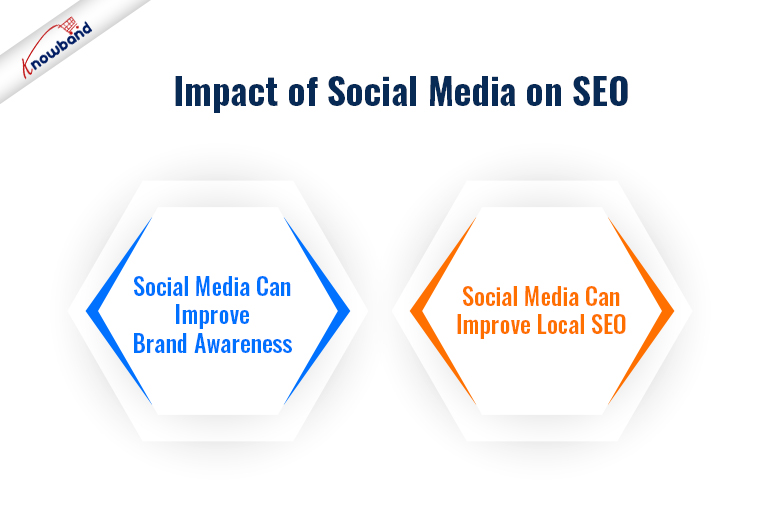
Social Media Can Improve Brand Awareness:

One of the other major advantages of social media platforms is that one can easily Skyrocket brand awareness if they place every card in its place.
By sharing content on social media, website owners can reach a larger audience and increase their brand exposure. Increased brand exposure can lead to more traffic, backlinks, and improved rankings on Google. Thus, this is one of the easiest ways to boost brand awareness for both newcomers and major eCommerce firms.

Social Media Can Improve Local SEO:

Social media can also impact local SEO. Platforms like Facebook, Twitter, and LinkedIn have local business pages. That allows businesses to list their contact information, services, and products. By optimizing their local business pages on social media, businesses can improve their visibility and rankings on Google for local search queries.
Moreover, in the following way, eCommerce merchants can also promote their online business by presenting valuable information to a vast audience.

Conclusion!!

Social media can drive traffic to a website, improve brand awareness, improve website authority, and improve local SEO. Therefore, it is important to include social media in your SEO strategy.
Moreover, it is one of the most effective ways of boosting Search Engine Optimization for an online platform. However, you can also check out our other article concerning Google’s Page Experience update. And, how it is going to impact your rankings!
Furthermore, in case you are having SEO-related queries or requirements, you can also find us at support@knowband.com. Our marketing team will be more than happy to assist you regarding the same.

Mobile First Indexing: A Factor for Website Ranking and User Experience

There has been a sudden spike in mobile usage recently. Further, the indexing system prioritizes the mobile version of a website for indexing and ranking purposes. In this article, we will explore the impact of mobile-first indexing on website rankings and mobile user experience.

Website Rankings

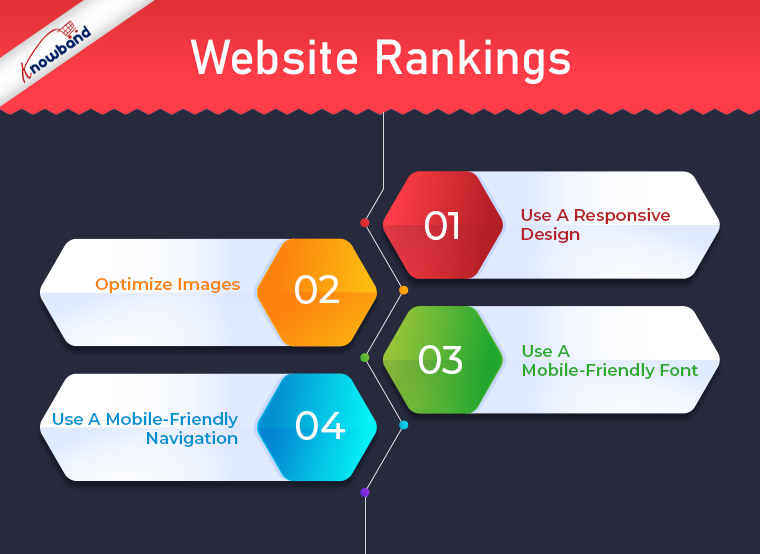
One of the most significant impacts of mobile-first indexing is on website rankings. Additionally, websites that are not optimized for mobile devices will experience a drop in rankings. Also, it is so as Google will prioritize sites that are having mobile optimization. This is because Google’s algorithm takes into account the user experience on mobile devices, and websites that are not mobile-friendly usually provide a poor user experience. Further, this can result in lower rankings and lower visibility in search results.

There are several things that you can do to improve your website’s mobile-friendliness. These include:

Use A Responsive Design

A responsive design is a design that adapts to the size of the screen it is being viewed on. Moreover, this means that your website will look good on any device, whether it is a desktop computer, a tablet, or a mobile phone. Also, using a responsive design will ensure that your website works with mobile devices.

Optimize Images

Images can be a major factor in the speed of your website. Also,  Large images can slow down your website, especially on mobile devices. To ensure that your website has mobile optimization, you should optimize your images by compressing them and reducing their size.

Use A Mobile-Friendly Font

On mobile devices, it is difficult to read some fonts. To ensure that your website is mobile-friendly, you should choose a font that is easy to read on small screens.

Use A Mobile-Friendly Navigation

Navigation can be difficult on mobile devices. To ensure that your website is mobile-friendly, you should use a navigation system that is easy to use on small screens.

Mobile User Experience

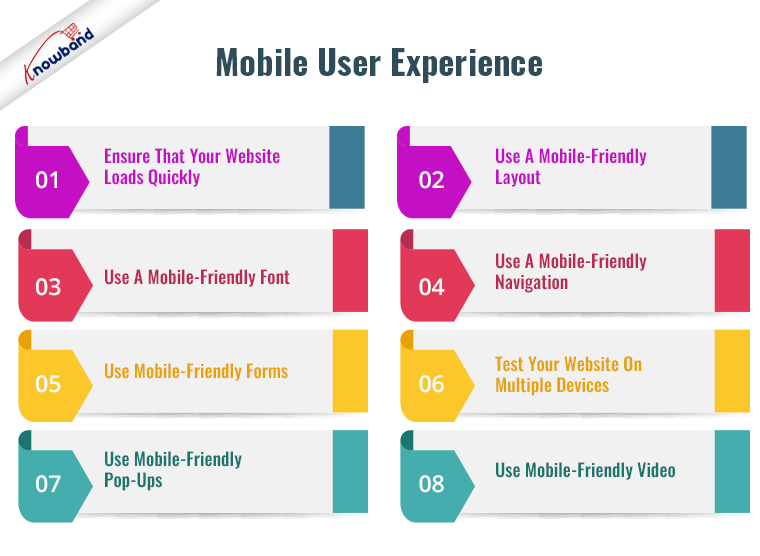
Another significant impact of mobile-first indexing is on mobile user experience. Websites that are not optimized for mobile devices are difficult to navigate, slow to load, and display poorly on smaller screens. This can result in a poor user experience for mobile users, users abandon the site and seek out a competitor that offers a better mobile experience.

On the other hand, websites that have optimization for mobile devices can provide a positive user experience for mobile users. This can lead to increased engagement, lower bounce rates, and ultimately, higher conversions.

There are several things that you can do to improve your website’s mobile user experience. These include:

Ensure That Your Website Loads Quickly

Mobile users have a short attention span, and they expect websites to load quickly. To ensure that your website loads quickly on mobile devices, you should optimize your website’s speed by reducing the size of images, compressing files, and using a content delivery network (CDN).

Use A Mobile-Friendly Layout

A mobile-friendly layout is essential for providing a positive user experience on mobile devices. A mobile-friendly layout should be easy to navigate, with clear headings and a simple design.

Use A Mobile-Friendly Font

As mentioned earlier, some fonts can be difficult to read on mobile devices. To ensure that your website is easy to read on small screens, you should use a font that is easy to read on mobile devices.

Use A Mobile-Friendly Navigation

Navigation can be difficult on mobile devices. To ensure that your website is easy to navigate on mobile devices, you should use a navigation system that is easy to use on small screens.

Use Mobile-Friendly Forms

Forms can be difficult to use on mobile devices. To ensure that your website works for mobile devices, you should use mobile-friendly forms that are easy to use on small screens.

Test Your Website On Multiple Devices

To ensure that your website is working for all devices, you should test your website on multiple devices. Also, this will help you identify any issues that are specific to certain devices.

Use Mobile-Friendly Pop-Ups

Pop-ups can be annoying on mobile devices, especially if they cover the entire screen. To ensure that your website is compatible with mobile devices, you should use mobile-friendly pop-ups that are easy to close.

Use Mobile-Friendly Video

Videos can be difficult to watch on mobile devices if they are not optimized for mobile. Further, to ensure that your website works for all mobile devices, you should use mobile-friendly videos that are easy to watch on small screens.

In The End!!

In conclusion, mobile-first indexing has had a significant impact on website rankings and mobile user experience. Moreover, websites that are not optimized for mobile devices experience a drop in rankings. Google deems them to be providing a poor user experience for mobile users.

In case you have an interest in our mobile app builder plugin then kindly connect with us at support@knowabnd.com. Our team of experts will assist you with your business apps. Also, we will assist with business-specific customizations. Kindly let us know if you are facing any concerns or issues related to the module.

E-Commerce Modules Elements: Importance Of Subscription Model And Recurring Billing

Subscription models and recurring billing have emerged as powerful tools for eCommerce businesses. It helps build and maintain customer loyalty while generating a steady stream of revenue. In today’s eCommerce landscape, businesses need to find new ways to differentiate themselves. Subscription models and recurring billing are effective strategies for businesses to achieve these goals.

What Is A Subscription Model?

The subscription model requires the customer to make regular payments for a specified duration. They need to make payments for continued access to a product or service. This includes services like Netflix and Spotify, meal delivery services, and software products too. By offering subscriptions, businesses can create more revenue and build customer loyalty through engagement. 

The subscription model is especially beneficial for products that are used frequently. For example, a meal delivery service that provides daily or weekly meals can be offered on a subscription basis. This allows customers to have a hassle-free experience without having to worry about placing an order each time they need a meal. Similarly, streaming services like Netflix and Spotify provide access to a vast library of content. Further, the subscription model allows customers to access this content on an ongoing basis.

What Is Recurring Billing?

Recurring billing is the process of charging a customer’s credit card or bank account regularly. This can be used in conjunction with subscription models or as a standalone feature. It is useful for products or services that require ongoing payments, such as software licenses. 

Recurring billing helps streamline the payment process and reduce administrative costs for businesses. By automating the payment process, businesses can reduce the risk of payment delays or missed payments, which can harm cash flow. 

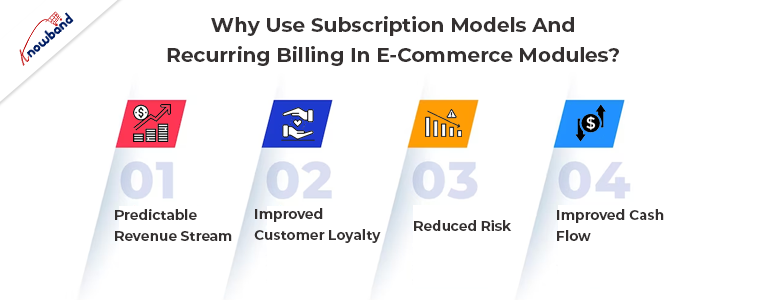
Why Use Subscription Models And Recurring Billing In E-Commerce Modules? 

There are several benefits to using subscription models and recurring billing in eCommerce modules. These benefits include:

Predictable Revenue Stream:

Subscription models and recurring billing provide businesses with a predictable revenue stream. This is because customers are committed to paying for the product or service on an ongoing basis. This predictability allows businesses to plan their resources and investments with greater confidence. Moreover, they know that a certain amount of revenue will be generated each month.

Improved Customer Loyalty:

Subscription models and recurring billing help improve customer loyalty. Customers who sign up for a subscription are more likely to continue using the product or service on an ongoing basis. This is because the subscription model provides convenience and value to customers. Additionally, recurring billing makes it easy for customers to continue using the product or service without having to worry about making manual payments each time.

Reduced Risk:

Subscription models and recurring billing can help reduce the risk for businesses. This is because the predictable revenue stream provides a cushion against fluctuations in sales. Additionally, automated billing reduces the risk of payment delays or missed payments, which can impact cash flow.

Improved Cash Flow:

Subscription models and recurring billing can help improve cash flow for businesses. This is because the automated billing process ensures that payments are received regularly. This helps to reduce the risk of payment delays or missed payments, which can impact cash flow.

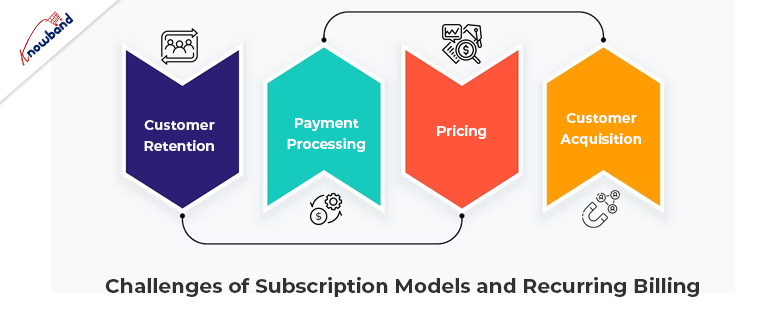
Challenges of Subscription Models and Recurring Billing

Customer Retention:

One of the key challenges of subscription models is customer retention. While subscription models can help improve customer loyalty, businesses still need to ensure that they are providing value to their customers. If customers feel that they are not getting value from their subscription, they will cancel it. Further, this can impact revenue and customer lifetime value.

Payment Processing:

Payment processing can be a challenge for businesses that use recurring billing. Businesses need to ensure that they have the necessary systems and processes in place to handle recurring payments. Moreover, this should include the ability to securely store customer payment information. Additionally, businesses need to be aware of changes to payment regulations and ensure that they follow them.

Pricing: 

Pricing can be a challenge for businesses that use subscription models. Businesses need to ensure that their pricing is competitive and provides value to customers. This should be done while generating enough revenue to cover costs and provide a profit. Additionally, businesses need to be aware of changes in market conditions and adjust their pricing as necessary.

Customer Acquisition:

Acquiring new customers can be a challenge for businesses that use subscription models. Also, subscription models can help improve customer loyalty. Apart from this, businesses still need to attract new customers to grow. Businesses need to have a solid marketing strategy in place to attract new customers and convert them into subscribers.

In The End!

Subscription models and recurring billing are proving to be valuable tools for eCommerce businesses. By offering subscriptions, businesses can create a more predictable revenue stream and improve customer loyalty. Recurring billing helps streamline the payment process and reduce administrative costs for businesses.

Apart from that, if you need any assistance with your business apps and plugins, then kindly revert to us at support@knowband.com. We will make sure you are happy with our plugins and customizations related to our modules if you have any concerns.

Strategies For Retaining And Attracting The Vendors To Multi-Vendor Marketplace

A multi-vendor marketplace is a platform that allows multiple vendors to sell their products or services to customers. Also, these marketplaces have become increasingly popular in recent years. Marketplaces can offer customers a wide variety of products and services from multiple vendors. However, attracting and retaining vendors can be a challenge for marketplace owners. In this article, we will explore some strategies for attracting and retaining vendors in a multi-vendor marketplace.

Provide A User-Friendly Platform

Moreover, the first and most important strategy for attracting and retaining vendors is to provide a user-friendly platform. A platform that is easy to use and navigate will make it easier for vendors to list their products and services, manage their inventory, and interact with customers. A user-friendly platform will also reduce the learning curve for new vendors. It is more likely that sellers will stick around and continue to sell on your marketplace.

Offer Competitive Fees And Commissions

Another important strategy for attracting and retaining vendors is to offer competitive fees and commissions. Vendors are always looking for ways to increase their profits. Moreover, if your marketplace charges too much in fees or takes too large a commission, they may choose to sell elsewhere. Further, you need to find a balance between charging enough to cover your costs and offering vendors a reasonable commission.  Moreover, this will make them feel motivated to continue selling on your platform.

Build Trust With Vendors

Trust is essential in any business relationship, and it is especially important in a multi-vendor marketplace. Vendors need to trust that your platform is secure and that their personal and financial information is safe. They also need to trust that you will provide them with the support they need to be successful on your platform. You can build trust with vendors by being transparent about your policies and procedures, providing excellent customer support, and responding quickly to their needs.

Provide Marketing And Promotion Opportunities

One of the biggest challenges for vendors in a multi-vendor marketplace is standing out from the crowd. With so many other vendors selling similar products or services, it can be difficult for them to get noticed. As a marketplace owner, you can help your vendors by providing marketing and promotion opportunities. This could include featuring their products on your homepage, offering discounts or coupons to customers, or running social media campaigns to promote their products.

Offer Seller Tools And Resources

Another strategy for attracting and retaining vendors is to offer sellers tools and resources. Vendors need access to tools that will help them manage their inventory, track their sales, and analyze their data. They also need resources that will help them improve their sales and marketing skills. By offering these tools and resources, you can help your vendors be more successful on your platform, which will encourage them to continue selling with you.

Provide Excellent Customer Support

Moreover, it is essential to provide excellent customer support to your vendors. Vendors may have questions or concerns about your platform, and they need to know that they can reach out to you for help. By providing prompt and helpful customer support, you can build trust with your vendors and make it easier for them to do business with you.

Establish Clear Policies And Guidelines

Vendors need to understand the rules of their marketplace to sell successfully. It’s important to establish clear policies and guidelines for everything from listing requirements to payment processing to returns and refunds. This will help vendors avoid any confusion or misunderstandings and will ultimately make your marketplace more efficient.

Create A Sense Of Community

Building a sense of community among your vendors can be a powerful way to keep them engaged and motivated. You can do this by creating a private forum or Facebook group where vendors can share tips, ask questions, and connect. Encourage vendors to help each other out and share their experiences. By fostering a sense of community, you can create a more supportive and collaborative environment for your vendors.

Streamline The Onboarding Process

The onboarding process can be a hurdle for new vendors, and a complicated or time-consuming process can turn them off from your marketplace. To make it easier for vendors to get started, consider streamlining the onboarding process. This could include creating tutorials or guides, offering live training sessions, or providing personalized support to help vendors get their products listed and ready to sell.

Offer Incentives For Top Performers

Finally, offering incentives for top-performing vendors can be a great way to keep them engaged and motivated. This could include bonuses, discounts on fees or commissions, or even exclusive access to certain features or tools. By rewarding your top performers, you create a sense of competition and encourage vendors to strive for excellence.

Attracting and retaining vendors is an ongoing process, and it’s important to continually evaluate your strategies and make changes as needed. By staying in touch with your vendors and soliciting feedback, you can identify areas for improvement and make adjustments to better meet their needs

Conclusion:

Ultimately, the success of your multi-vendor marketplace depends on the success of your vendors. By creating a supportive and engaging environment, providing the tools and resources they need to be successful, and rewarding their hard work, you can build a marketplace that attracts top talent and keeps them coming back year after year.

If you are interested in our marketplace module then kindly let us know at support@knowband.com. We will be happy to assist you in case of any customizations and fixes related to the module.