Mark Zuckerberg Introduces Facebook Shops To Help Small Businesses Sell Online

Facebook is one of the favorite social media platforms for brands to market their products and boost brand awareness. Now with Facebook Shops, the social media giant is making a new push into eCommerce.

Due to the COVID-19 pandemic, many local stores have been shut. Some businesses have been permanently closed while some have stopped operating temporarily, and if the current crisis continues, a lot more businesses are going to fail.

Thus, primarily to help small scale businesses, CEO Mark Zuckerberg announced Facebook shops on Tuesday. In his live stream, he said that it is important to rebuild the economy while the pandemic continues.

“If you can’t physically open your store or restaurant, you can still take orders online and ship them to people. We are seeing a lot of small businesses that never had online businesses get online for the first time,” said Zuckerberg.

He also mentioned that small businesses make up the vast majority of Facebook’s more than 8 million advertisers.

Everything you need to know about Facebook Shops

Facebook Shops make it easier for businesses to set up a single online store on both Facebook and Instagram.

From their Twitter handle, Facebook also announced that the facility will soon be available for WhatsApp and Messenger as well.

Creating a Facebook shop is really simple and involves no cost. Mark explained this by saying-

“Our business model here is ads, so rather than charge businesses for Shops, we know that if Shops are valuable for businesses they’re going to in general want to bid more for ads. We will eventually make money that way.”

Though the company has earlier allowed businesses to list their products on Facebook and Instagram, Facebook Shops has taken the online shopping experience to the next level.

It lets businesses upload their catalogs once and then they can choose the products they want to feature from their catalog. The look and feel of the shop can also be customized; brands can set a cover image and choose colors for their shop that reflect the brand.

People can explore shops on a brand’s Facebook page or Instagram account, or find them through stories or ads. From there, they can browse the brand’s total collection, save products and checkout.

The order can be placed directly from Facebook or the customers will be redirected to the business’ website. Direct checkout will only be allowed for businesses participating in Facebook’s Checkout. Facebook charges a small fee for checkout made through their platform.

With Facebook shops, users will be able to get support by dropping a message to the brand through WhatsApp, Messenger, or Instagram Direct. They can also track their order delivery from there.

The company has partnered with Shopify, BigCommerce and other platforms to support small scale businesses.

Facebook to Introduce Instagram Shop this summer

Another tweet by Facebook revealed that they would be introducing Instagram Shop in the US this summer. They will also be adding a “Shop” tab in the navigation bar later this year. It will be a brand new way for Instagram users to discover and buy products.

Brand or Influencers have been using live streaming to showcase or promote a product. Now, Facebook is making it easy to purchase products in real-time. Soon, businesses will be able to tag products from their Facebook shop before they go live, and those tagged products will be displayed at the bottom of the video, making it easy for users to tap on the product and purchase.

Want to integrate your Facebook business page to your website? Try out our FB Store module available for PrestaShop and Magento that lets you list your products on your Facebook shop and provides various customization options.

Facebook acquires the popular GIF search engine Giphy

The largest social media platform Facebook has acquired Giphy; a popular search engine that allows users to share animated images or short looping videos with no sound, known as GIF.

The actual acquisition cost has not been disclosed yet by any of the two, but many sources reveal that the deal was finalized at nearly 400 million USD.

Facebook has planned to integrate Giphy with its owned photo-sharing social media platform Instagram, which they acquired, back in 2012, for $1 Billion. The company made an official announcement by saying-

“GIPHY, a leader in visual expression and creation, is joining the Facebook company today as part of the Instagram team.”

They further went on to say-

“GIPHY makes everyday conversations more entertaining, and so we plan to further integrate their GIF library into Instagram and our other apps so that people can find just the right way to express themselves.”

Two years later, in 2014, Facebook also bought the popular messaging platform WhatsApp for $19 billion.

The acquisition does not mean that Giphy will no longer hold any part since it is sold to Facebook. Giphy will continue to operate its library. Facebook cleared it by saying that-

“People will still be able to upload GIFs; developers and API partners will continue to have the same access to GIPHY’s APIs, and GIPHY’s creative community will still be able to create great content.”

Giphy confirmed the same through their announcement-

“And for our API/SDK partners and developers: GIPHY’s GIFs, Stickers, Emojis, etc. aren’t going anywhere. We will continue to make GIPHY openly available to the wider ecosystem.”

A blog post by Facebook said that 50% of the Giphy traffic comes from Facebook’s owned apps, with nearly half of it coming from Instagram.

A few things you need to know about Giphy

1. Giphy was founded by Alex Chung and Jace Cooke in February 2013.

2. In August 2013, Giphy got integrated with Facebook, hence allowing the users of the network to post, embed, and share GIFs on Facebook. Three months later, Giphy integrated with Twitter as well.

3. Giphy was recognized among the Top 100 websites of 2013, as per PC Magazine.

4. In March 2015, Giphy acquired Nutmeg; a GIF messaging service. The acquisition had coincided with the Facebook Messenger’s own development platform, in which Giphy joined a few exclusive apps in its debut.

5. Giphy launched its second mobile app “GIPHY Mobile Cam” in August 2015 that allowed users to create and share GIFs on various social networks.

6. In July 2017, Giphy announced that it had 200 million daily active users between both the API and website, with nearly 250 million monthly active users on the website.

Check out Knowband’s FB store module that allows you to integrate your Facebook business page to your website, and lets you customize your Facebook shop. The module is available for PrestaShop and Magento.

Implementing Reactions Functionality Like Facebook using PHP, jQuery and HTML

Introduction

Reactions are more expressive as compared to the simple like and dislike buttons. Using reactions the user can easily express their thought because emoticons are basically a way to show the emotions. On the other hand if we use like and dislike button then the user can not show the exact emotion. Using emoticons we can make our site more expressive for the user.

Objectives of the blog

In this blog, you will find an easy and quick way to implement the Reactions functionality. After going through the blog, you will be able to create a reaction system for your website same as Facebook’s Like button.

Working

There will be one Like button and rest of the Reaction buttons. On focus the Like button, the Reaction buttons will be displayed. JQuery will be used to handle the taps on the reaction buttons. On tapping reaction button, an Ajax request is sent on like.php page. The logic to save/update data on database can be written on the handler page.

On tapping the reaction text again, the reaction is undone and this time we are sending Ajax on undo_like.php page.

All the functionality to show/hide the reaction buttons and animation is added through JavaScript and CSS.

Creating the HTML Structure

Before working on the logic, we will have to create the layout. HTML for the layout is following –

<!DOCTYPE html>
<html>
<head>
<title>Facebook Reactions</title>
<meta name="description" content="Facebook Like Reaction System" />
<!-- bootstrap css -->
<link rel="stylesheet" href="https://maxcdn.bootstrapcdn.com/font-awesome/4.3.0/css/font-awesome.min.css">
<link rel="stylesheet" type="text/css" href="css/style.css" />
<!-- Css for reaction system -->
<link rel="stylesheet" type="text/css" href="css/reaction.css" />

<script type="text/javascript" src="js/jquery.min.js"></script>
<!-- jQuery for Reaction system -->
<script type="text/javascript" src="js/reaction.js"></script>
</head>
<body>
<div class="container">
<div class="header">
<h1>Facebook Reactions</h1>
</div>
<div class="main">
<!-- Reaction system start -->
<div class="reaction-container"><!-- container div for reaction system -->
<span class="reaction-btn"> <!-- Default like button -->
<span class="reaction-btn-emo like-btn-default"></span> <!-- Default like button emotion-->
<span class="reaction-btn-text">Like</span> <!-- Default like button text,(Like, wow, sad..) default:Like  -->
<ul class="emojies-box"> <!-- Reaction buttons container-->
<li class="emoji emo-like" data-reaction="Like"></li>
<li class="emoji emo-love" data-reaction="Love"></li>
<li class="emoji emo-haha" data-reaction="HaHa"></li>
<li class="emoji emo-wow" data-reaction="Wow"></li>
<li class="emoji emo-sad" data-reaction="Sad"></li>
<li class="emoji emo-angry" data-reaction="Angry"></li>
</ul>
</span>
<div class="like-stat"> <!-- Like statistic container-->
<span class="like-emo"> <!-- like emotions container -->
<span class="like-btn-like"></span> <!-- given emotions like, wow, sad (default:Like) -->
</span>
<span class="like-details">Knowband and 10k others</span>
</div>
</div>
<!-- Reaction system end -->
</div>
</div>
</body>
</html>

Adding Style

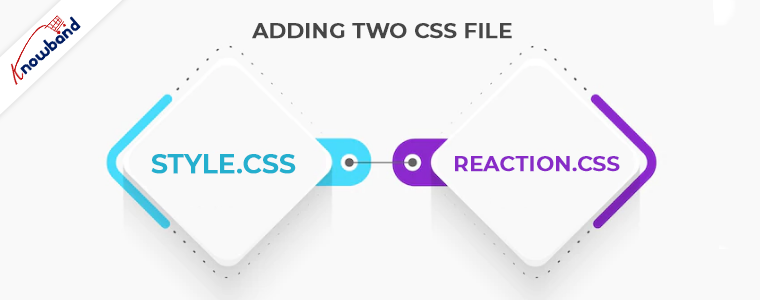
We are using two CSS files (style.css and reaction.css) to add styling in the page.

Note:  You can find the CSS files in the complete project build.

Adding Functionality

Once our layout is ready, we can work on the functionalities.

First we will be handling the taps on the Like and Reaction buttons. For that, we will be using jQuery and we will be adding the click events. The code to add the click events is given below –

// Adding the click event as soon as the document is ready
$(document).ready(function () {
// Adding the click event on reaction button by using the class name
$(".emoji").on("click", function () {   // like click
// Here we will be writing the code, which will run on tapping the reaction button
});
});

On focus of the reaction button, we will be sending the Ajax request on php page. The Ajax request is given below –

// Sending Ajax request in handler page (like.php) to perform the database operations
$.ajax({
type: "POST",
url: "php/like.php",
data: "",
success: function (response) {
// This code runs after the Ajax is successful
}
})

Then we will have to create a handler page. This can be a simple php file.

Note: User can perform database changes in the handler file according to the requirement.

Whatever is returned/printed in that file is returned to the Ajax request and we can update layout accordingly. Here we have added the code to update the layout to show the currently saved reaction. The full code of the reaction.js file is following –

$(document).ready(function () {
$(".emoji").on("click", function () {
// Here we are getting the reaction which is tapped by using the data-reaction attribute defined in main page
var data_reaction = $(this).attr("data-reaction");
// Sending Ajax request in handler page to perform the database operations
$.ajax({
type: "POST",
url: "php/like.php",
data: "data_reaction=" + data_reaction,
success: function (response) {
// This code will run after the Ajax is successful
$(".like-details").html("You, Knowband and 10k others");
$(".reaction-btn-emo").removeClass().addClass('reaction-btn-emo').addClass('like-btn-' + data_reaction.toLowerCase());
$(".reaction-btn-text").text(data_reaction).removeClass().addClass('reaction-btn-text').addClass('reaction-btn-text-' + data_reaction.toLowerCase()).addClass("active");

if (data_reaction == "Like")
$(".like-emo").html('<span class="like-btn-like"></span>');
else
$(".like-emo").html('<span class="like-btn-like"></span><span class="like-btn-' + data_reaction.toLowerCase() + '"></span>');
}
})
});

$(".reaction-btn-text").on("click", function () { // undo like click
if ($(this).hasClass("active")) {
// Sending Ajax request in handler page to perform the database operations
$.ajax({
type: "POST",
url: "php/undo_like.php",
data: "",
success: function (response) {
// Handle when the Ajax is successful
$(".reaction-btn-text").text("Like").removeClass().addClass('reaction-btn-text');
$(".reaction-btn-emo").removeClass().addClass('reaction-btn-emo').addClass("like-btn-default");
$(".like-emo").html('<span class="like-btn-like"></span>');
$(".like-details").html("Knowband and 1k others");
}
})
}
})
});

Summary

You can download the full project from the following location –

Click here to download the complete project

In this tutorial we have not covered the database connection and operations as the database logic can be different as per your needs. With the help of this project, you can easily implement the reactions functionality same as Facebook in your webpage.

If you face any issues, drop us an email at support@knowband.com. We also provide plugins for Prestashop, Opencart, Magento and Magento 2. All sorts of customization is also done by us on your store.

Take a look at one of our top selling modules:

Prestashop One page Supercheckout by Knowband is a must have tool for any eCommerce store as it helps you streamline the checkout process, increase your conversion rate and reduce the abandoned carts. Know more here:


Facebook is extending ads from users and brands to the Marketplace

Facebook launched the Marketplace in the year 2016, the main objective of the Facebook Marketplace was to allow the users buy and sell locally. In order to promote the marketplace, Facebook has started showing it in the main navigation bar. Facebook Marketplace allows the users to browse the products and services from the people in their localities. As posted on the Facebook business page “Over the past few months, we’ve enabled businesses to list a variety of offerings in Marketplace such as used vehicles, home rentals, home services and jobs. And now, businesses can advertise in Marketplace to reach people where they’re actively shopping.

Ads from businesses appear alongside other products and services in Marketplace, and extending your ads to Marketplace is easy. By selecting Automatic Placements, your ads can appear across our various placement options such as News Feed, Instagram, Messenger, Audience Network and now, Marketplace. Advertising across our platforms enables you to reach your target audience wherever they’re spending time, giving you more opportunities to connect with people likely to be interested in your offerings.

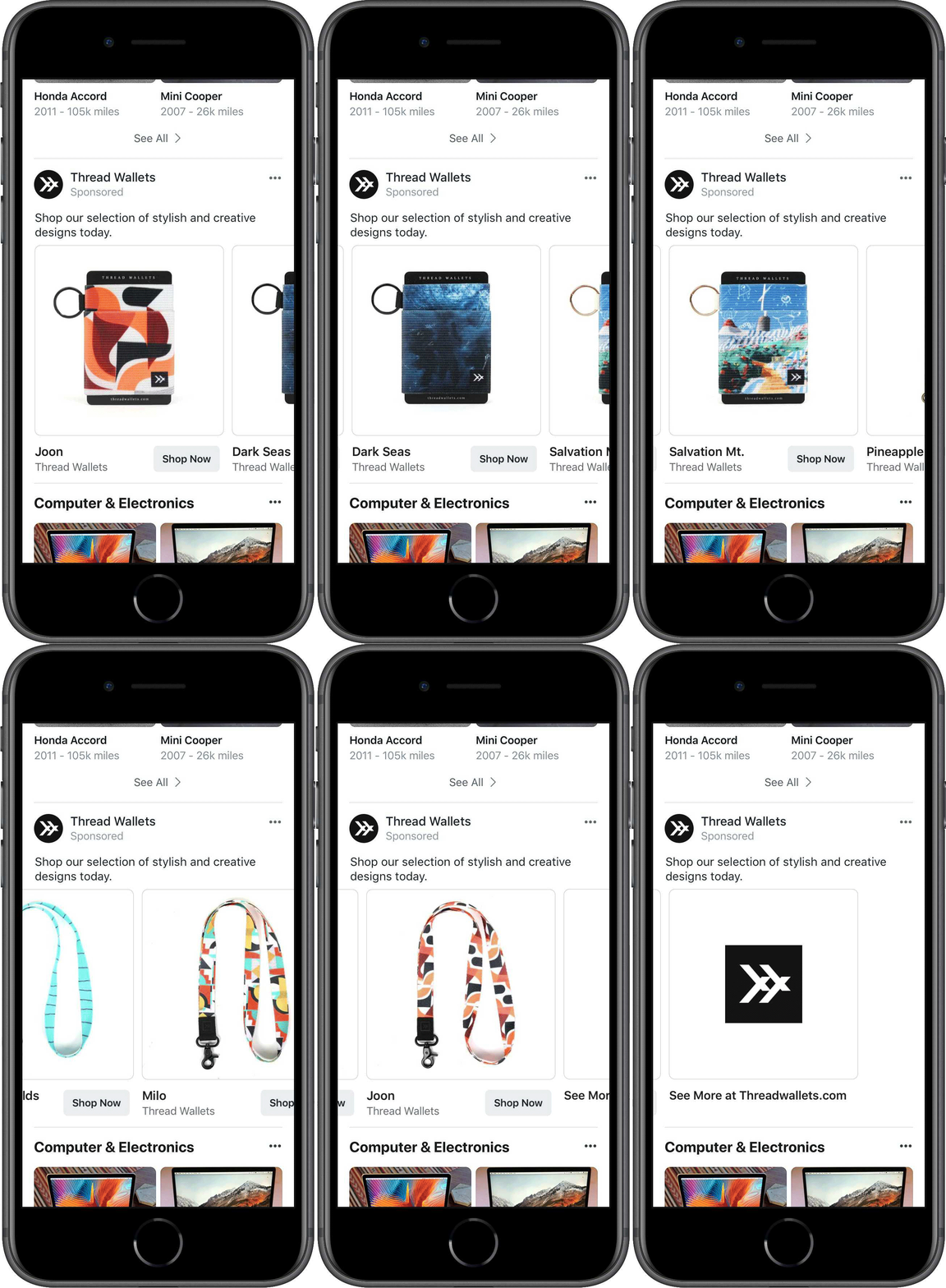
Businesses are already seeing results using ads in Marketplace. Thread Wallets, an accessories company, generated more than 300 purchases while increasing its year-over-year return on ad spend by 41% after adding Marketplace as a placement for its conversions campaigns.

Over the next few weeks, all advertisers targeting audiences in the US, Canada, Australia and New Zealand will be able to run ads in Marketplace using the traffic, conversions, product catalog, video views and reach objectives.”

Use Facebook Shop to grow your business faster

Facebook provides an interface to the users and brands to showcase their products and services on their page. Facebook Shop allows you to display the products from your shop on Facebook. It helps sellers to reach to more audience, in order to reduce the additional efforts of listing the products one by one Facebook has also released the Shop API to automate the process of listing the products on Facebook Shop. By using the Facebook Shop, you can allow the customers to browse and discover the products with ease.

Knowband offers the FB Store Module for the Prestashop store owners to make the process of creating the Facebook Shop hassle-free for the Prestashop store owners.

Benefits of the using FB Shop Module developed by Knowband:

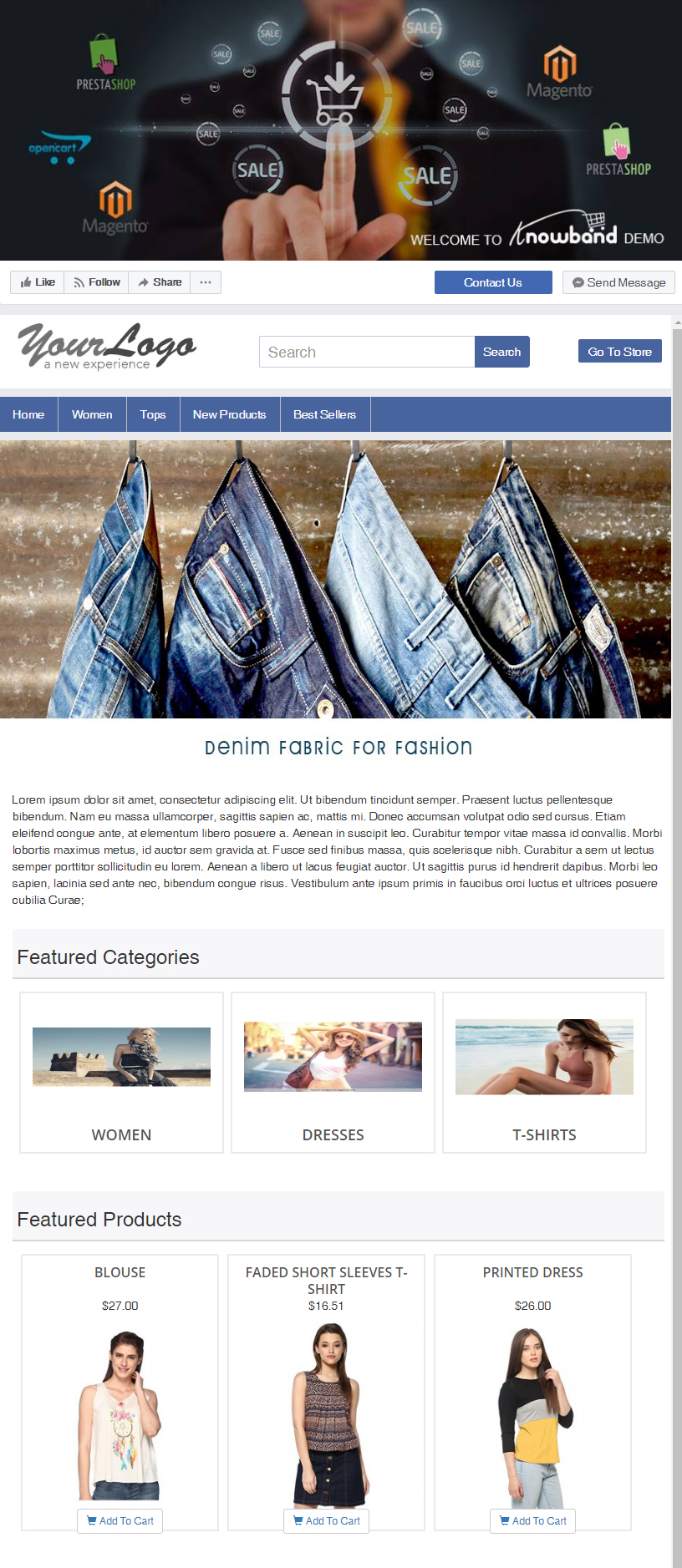
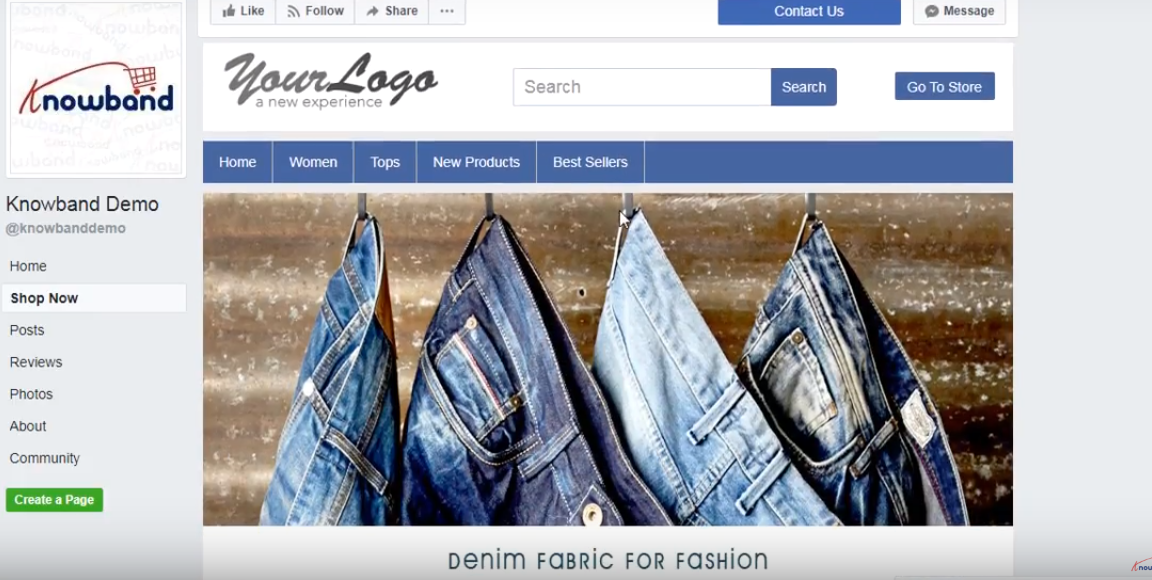
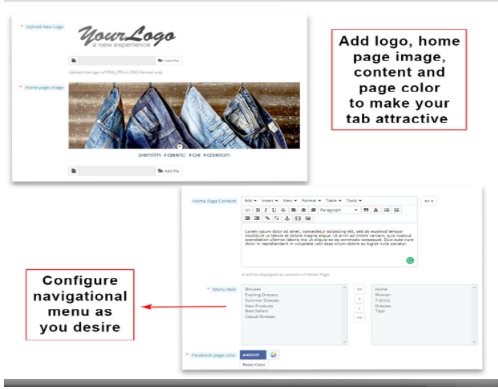
1) Interactive banner to promote your brand:

For the businesses, it is important to win the customer trust. The banner on your Facebook shop allows you to show the vision and purpose, your core values, your culture and behavior. By displaying an attractive homepage banner you can create your brand value.

2) Home Page content:

In this section, you can explain the product and services you offers.

3) Navigation Menu:

You can display the Navigation Menu on the Facebook Shop and highlight the top categories of your Prestashop store on the Facebook Shop page.

4) Featured categories and featured products:

This section allows you to display the featured categories and products on the Facebook shop page.

Please refer to the attached screenshot of the demo Facebook Shop page:

Get the Facebook Shop Module for your Prestashop Store.

Knowband offers Social Media extensions for the different eCommerce platforms like Magento, OpenCart and Prestashop.

8 Solid Evidence a Facebook Store can double your Conversions

 If you are an active Facebook user, you probably would have seen brands promoting their store’s products through their Facebook page and when you open those pages, you will see they have a “Shop Now” option, which we call it as a “Facebook Store.” For an e-commerce store, a Facebook store is a part of their actual eCommerce store that allows them to sell their products directly through their Facebook page.

“Social media is important for online retailers!”

If you are looking to take your eCommerce business to new heights, social media is the trump card today. The vast engagement of the users on social media platforms has proved to be an important aspect for the online sellers to use them for effective marketing. Amongst all the social media platforms, Facebook is one of the most widely used. That is why it is an inevitable aspect for the merchants to establish their web store on the world’s largest social media platform and make more sales. All they need is a facebook page with a few followers to start with.

Facebook provides a platform for eCommerce store owners in the form of a facebook shop to assist them to market their business. It helps online retailers to expand their business in front of a large audience of Facebook.

It is a proven fact that customers tend to purchase a product when it comes to their notice. For this matter, a Facebook shop proves effective. Sellers can create some amazing content on their Facebook business pages and grab users’ attention towards their store. You can easily link your e-commerce store to your Facebook page with the help of some plugins.

Prestashop Facebook store addon by Knowband is one such addon for Prestashop owners that helps them incorporate their own shop on Facebook. It allows them to manage their Facebook shop quite comfortably. A merchant can adjust the look and feel of their shop with multiple color combinations, feature selected categories and products on the shop and do much more.

Knowband provides FB store extension for Magento as well.

Let us briefly discuss how a Facebook store can help you grow your web store and get better conversions.

1. Drives the traffic from Facebook to the website

The number of Facebook users is hitting a new count every day. It is estimated that the number will reach 3 billionin in the next couple of years. With such numbers, retailers get a huge advantage of making people aware of their brand and achieve higher sales. This creates a good opportunity for e-commerce store owners to redirect a good portion of page traffic to their website directly. The Facebook store can create a significant impact on your store conversions

2. Social sharing

Facebook store ensures social sharing. Many times, if a product posted by a seller is liked by the visitors, there are certain chances that they will suggest that product to some of their family members or friends. The Facebook store enables the feature of social sharing where the visitors can share the products with their known ones. The Facebook shop helps the seller in many ways. Firstly, the seller is able to promote the products on a free platform. Secondly, the visitors who share the product can lead it to a potential buyer which helps in making the sales of the product quite easy.

3. Better product visibility

One of the best advantages of the Facebook store is that it is easy to reach for users. Most people do own a Facebook account. Therefore, it becomes quite easy for the seller to reach out to potential buyers. One of the major encountered problems by the seller is to find a good and well-known platform in order to promote the product. With a Facebook store, this problem gets minimized and the chances of conversions increase considerably. In addition to this, the merchants can even increase the number of followers on their Facebook shop with some amazing discounts and offers. Prestashop Superfan addon is one such way to compel the visitors to follow you on Facebook.

4. Ease of shopping

What could be a better option for the users than browsing for their favorite products on the same platform which they use generally for entertainment purposes? The Facebook store ensures that the customer doesn’t have to leave the platform while browsing some stuff on your store. It improves the customer’s experience and helps the seller to improve sales performance.

5. Easy access to the website’s product

Most of the people who use the Internet have easy access to Facebook. Thus, establishing a Facebook store helps the seller to make their e-commerce store easily accessible to Facebook users.

People can access Facebook through mobiles, tablets and other devices. Therefore, the idea of accessing the web store just by using the desktop site becomes obsolete. Users can browse the Facebook store using any mode. Using the Facebook shop approach removes the barrier of a limited form of access to the web store, ensuring better coverage to get more visibility and a better conversion rate.

6. Easy to track the traffic coming through Facebook

Having a Facebook shop makes it easy to track your Facebook community members. When you link your store to your Facebook page, then with the help of Google Analytics, you can get an overview of the traffic coming through Facebook. You can check where your customers are coming from, you can track conversions and optimize your shop accordingly.

7. More user Engagement

Selling products on Facebook isn’t difficult if you know how to engage users. For this to happen, you need to make a friendly relation with your community. Make them feel that you care for them. Announce exciting prizes, sales, discounts, solve their queries in the comment section, use facebook stories, organize quizzes, etc. This way, you will find more user engagement on your facebook shop and it will help you understand your community better.

8. Facebook ads

Facebook ads help you get more customers and increase brand awareness. It presents your brand to a new set of people so that more and more people get to know about it. Facebook provides a “Boost post” option by which you can take your brand visibility to the next level. You can target a specific audience with a specified budget.

Conclusion

Most of the eCommerce stores are shifting to social media for better growth. One simply can’t ignore the power of social media if they wish to take their business to the next level.. Not having a Facebook shop might result in losing a large portion of potential buyers. So, go and open your facebook shop today!

If you have any more points to add, do let us know by leaving a comment below.

You Might Also Like:

How to Tap the eCommerce audience on Facebook?

The popularity of social media is increasing every day. With the tremendous increase in the number of users approaching Facebook, Twitter and Instagram, it has opened new doors of marketing for eCommerce sellers. According to a study conducted by Zephoria, there are around 1.5 billion active accounts on Facebook and they are likely to be doubled within next couple of years. So, if we take a look at these stats, we can easily realize that Facebook is one of the best-suited platforms for promoting your online store.

Most of the online sellers are already adapting to the concept of Facebook marketing. Facebook marketing is one of the easiest ways to reach the customers, boost your sales and make effective conversions. In order to make Facebook marketing feasible for Prestashop owners, Knowband has come up with Prestashop Facebook Store Module. The Facebook shop module is used to create an online store on Facebook and start making sales.

So, what are you waiting for? If you are a Prestashop eCommerce store owner then Facebook Store plugin might be the thing, you are missing on your store. Just use the Facebook store module and see the boost in your sales. Here are some of the ways by which this Facebook store module helps you tap your target audience on Facebook.

Product Visibility

The internet is a huge space with unlimited product choices. Customers who wish to make an online purchase has plenty of options. If you want them to purchase your products then you need to ensure that the products can be fetched with required information easily. With a very high number of active users on Facebook, it serves as the best platform to showcase your products. The rate of conversions highly depends upon the product and store visibility. Having a Facebook store is definitely one of the ways that can enable you to reach out to more customers and make higher sales.

Marketplace Insight

The Facebook Store module helps you to provide your customers a glimpse of your actual web store. The Prestashop owner has the option to showcase any product they want on the Facebook shop. The Facebook store helps the visitors to view the products and services provided by the store without actually visiting it. The visitors also have an option of making purchase from the Facebook shop itself, making effective conversions.

Customizable Facebook Store

One of the immediate advantage of this Facebook store module is easy customization option. Most of the sellers want the theme layout of their store such that it is more engaging for the customers to relate. Sellers can select from a large number of fonts, color composition and product categorization. The Facebook shop module helps in making the store more engaging and customers can relate themselves to the products quite easily.

Improved sales

The presence of a Facebook Store enables the web store owners with another platform to make sales. As, there is huge customer base for online store in Facebook, hence, there is always a chance that visitors might take a look at your products. The Facebook Shop allows the visitors with the product display from the actual web store. At the same time, if customers want to make purchase they can click on the Buy button and they will be redirected to the webs store. It helps in increasing the traffic of your web store and enhance the sales ultimately.

Reduced Marketing expenses

The presence of a Facebook Shop helps you in promoting your eCommerce store without actually promoting it. The marketing expenses that the store owners would have to pay, in order to promote their web store is considerably reduced. The Facebook Store allows the store owner to publicize the web store on the biggest social media platform, which helps in reducing the expenses store owner has to bear on marketing of the web store.

Conclusion

Facebook is one of the best place to grow your business. It helps you to interact with your customers on a personal basis too. The social media trend can boost your eCommerce, all you need is to keep yourself up with it.

You Might Also Like:

6 Easy Ways to Boost your Social Media Marketing through Facebook

The increasing popularity of the social media platforms among the online shoppers have make it one of the most inevitable part of marketing. If we take a look at the statistics, you’ll find that there have an abrupt rise in the total number of users on the social media. Therefore, it is one of the best platforms for the eCommerce stores to promote their product. These platform provides better opportunities to the seller in term of the reaching out to greater number of customers and enhancing the store’s visibility. The foremost concept of marketing includes targeting the right audience and catering them with sufficient information about your products and product count. The Facebook wall posts that showcases your offerings and store information can helps in engaging more customers on the social media platform and at the same time making effective conversions.

1. Easier way to update FB wall

Knowband has come up with Shopify FB Wall Post module. The module enables all the Shopify site owners to connect to their customers on Facebook with attractive and informative wall posts. It is one of the better way to reach to the potential buyers and improve the chances of conversions. The wall post has a higher chances of reaching the required customers as it is easy to access and less time consuming. Keeping the customers informed about your store activity through Facebook is a better than motivating them to visit the store all the time.

2. Contest based marketing

According to a survey by bufferapp, “About 35% online users engage themselves in the product purchase when they get proper information about it”. Therefore web store owners may use this as an opportunity to boost their sales and increase the rate of conversions. If acted properly, it can help in the tremendous increase in the product sales. You can post your content on Facebook. The images and contents can intrigue the visitors to post their comments. Thus, you can increase the engagement even more. Hence, it won’t be wrong to state that this is a less time-consuming to indulge into content marketing.

3. Organize giveaways

Giveaways are one of the best approach to engage the customers. More customers are likely to register themselves to your web store for free giveaways. The seller can use this to promote his products in the future or inform the customer about the ongoing offers or current discounts.

4. Set up a FB Store

If you run an eCommerce store than setting a FB store might boost the sales up for you. Facebook is most popular social media platform. Thus, providing your customers to use your services without actually visiting the store will surely help you grow. Shopping through FB store is the new concept and your customers will surely love to use your FB store to avail your services. It saves them time and will make their experience better with you.

5. Keep the customers informed through FB page

The eCommerce store owners may use a FB page to promote their products. Just create a page and keep your customers updated about your products, deals and discounts offered by you. With the help of this page, you can allow your customers to learn more about your products. This feature helps in increasing the customer data and using it for future references. The customers will be happy to hear about your products, without having to spend their time.

6. Invite the feedback and reviews

One of the most important factor, which is often neglected by the eCommerce store owners. Try to be invite more reviews and feedback about your products and services. It helps you in getting a better understanding of the customer’s priorities and queries. At the same time, customers can easily connect with you. This process also promotes the idea of social sharing and enhances the rate of sales up to a great extent by spreading word-of-mouth.

Over To You

Social media is one of the strongest platform to promote your business. Stay in sync with the social media trends that may change the game of eCommerce take your business to the next level.

Related Stories:

7 Social Media Trends that may Change the Game of the eCommerce

With over 2.5 billion active social media users worldwide, this platform is one of the greatest rays of hope for the online traders. In addition, this figure is growing 9% every single year. The opportunities are huge and so is the risk. The only way to keep up with the ever-changing market scenario and the cut-throat competition is to stay informed about the market trends. While we are on the doorstep of the third quarter of the year, it is high time for all the marketers to analyze their results and make necessary changes in their marketing strategy.

The social media platform has seen most of the sparks in the recent past and will continue to surprise the marketers in the future. The blog talks about some of the social media trends that will hold the gears of eCommerce in the future. Check them out.

1. Live Streaming

While product videos have always been a USP for the online seller, this aspect is expected to take a leap in the coming year. Taking a shift from the content marketing, the social media platform is expected to see a rise in live video contents. As per a report, approximately 30 – 40% social media marketers have used the interactive video this year. This figure is expected to grow even more in the coming year. One of the statistical reports that give a green flag to this estimation is the fact that live streaming on Facebook reached record-breaking numbers around the globe on this year’s New Year eve. Some of the biggest players in the industry have already pulled up their socks for the huge opportunity, the small and medium enterprises need to gear up for the changing ecosystem.

2. Virtual Reality

Artificial intelligence and virtual reality are undoubtedly the future of eCommerce businesses. This is the talk of the town for over a decade now, but haven’t implementation till the last year. Along with Google and Microsoft, even Facebook is working on this technology for a past few years. This makes inevitable for the eCommerce businesses to make changes in their content marketing strategy. The contents should enable the consumers to compare and visualize the products without getting the touch and feel of the same. This would make it easier for them to take the purchase decision. The introduction of the virtual reality in the social platforms has reduced the dependence of the customer’s decision on the word-of-mouth. So, the online businesses should enhance their social media marketing strategy in order to tap the market while it is still hot and new.

3. Social eCommerce

Not just the marketing strategies, the entire face of the online trading has changed from eCommerce to m-commerce and now to social commerce. Trading directly through the social media platforms without driving the traffic to the website is on the rise. According to a survey from Aimia, 56% of consumers said that they follow their brands on social media in order to browse products for sale. Moreover, surprisingly 31% of online shoppers said that they use social media specifically to look for new items to purchase. Not just Pinterest, even Twitter, and Facebook are allowing for purchases. One of the most prominent platforms for tapping the social commerce market is Facebook. Most of the eCommerce stores now offer the option to sync the products of the site on the Facebook store. For instance, Prestashop FB store plugin allows the Prestashop owners to have their own shop on their Facebook pages.

4. Chatting tools

Most of the marketers may consider it a traditional and orthodox method, but SMS has a phenomenal 99% open rate. Most of the brands and the online businesses have made use of the hand held devices to market their brands and have seen exceptional results. The messaging tools, especially, Whatsapp on of the other platforms that will have a marginal effect in the eCommerce ecosystem in 2017 and years to come. It was announced last year that WhatsApp will share user data with Facebook for ad targeting with an option to opt out. Hence, sticking to the classic methods will be one of the ways stay in sync with the growing market.

5. Shift from SnapChat to Instagram

SnapChat have been a trailblazer lately, but this year has seen a change in the trends. A marginal shift in the interest of the online buyers has been observed. Instagram offers a vastly bigger audience than Snapchat. The former has 600 million users while the latter has 150 million users. While Facebook still remains the key to success, the businesses that can quest the market of Instagram will have an egde over the crowd. In fact, many small enterprises have reaped results by advertising their product on Instagram.

6. Mobile advertising

Promotional messages and mobile marketing are two different things. This year, the marketers have made a greater investment in mobile advertising. The ad revenue of Facebook is more than $7 billion out of which 80% came from mobile ads. Even the mobile ad revenue of SnapChat raised the eyebrows of the online marketers, but that of Instagram is something all the online business needs to look out for.

7. Video Storytelling

This is one of the most interesting progressions in the online sphere. Storytelling through video ads has actually succeeded in grabbing the attention of the customers in the competitive marketplace. Amazon.in has made full use of the technique. Their ad for with signature hashtag campaigns and attractive videos is a trend setter. The videos build excitement and nurture customers relationship. Every ad campaign gained millions of views, likes and shares. This has opened up new doors and opportunities for the marketers. Along with this, video testimonials and clips providing quick tips to the customers are other influential ways to stand out among your competitors.

Over to you

The options of social login and Facebook post feed on the eCommerce website are all aimed at increasing the visibility and customer engagement at the social platform. However, eCommerce is changing constantly and so is Social Media. Predicting what’s gonna work and what not is tough, but these staying abreast of these trends will definitely help you go a step ahead in the competitive scenario.

Liked This? You’ll Like These Too