Build a Multi-Vendor Marketplace like eBay with Knowband!

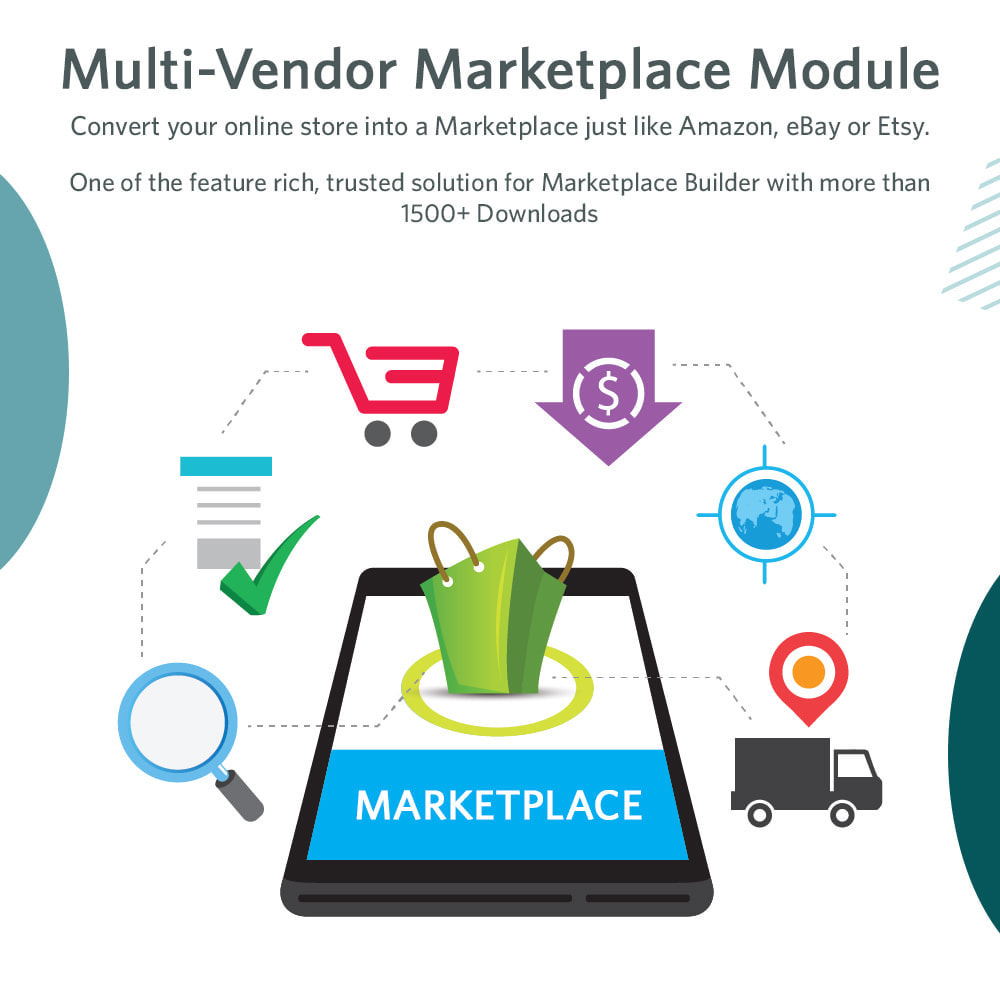
Creating a multi-vendor marketplace akin to eBay can be a transformative step for your e-commerce business. However, building such a comprehensive platform can be challenging without the right tools. Fortunately, Knowband offers an exceptional Multi-Vendor Marketplace module for PrestaShop and OpenCart, designed to simplify the process and provide a seamless experience for both marketplace administrators and users.

Furthermore, multi-seller marketplaces like eBay have revolutionized the e-commerce landscape by bringing together a diverse array of products and sellers under one virtual roof. This model not only attracts a broad audience but also enhances the variety and competitiveness of the offerings.

Knowband’s Multi-Vendor Marketplace Extension:

Knowband is a trusted name in the e-commerce industry, known for delivering high-quality modules and extensions that enhance online store functionalities. On top of that the Multi-Vendor Marketplace Extension for Opencart is a comprehensive solution that equips you with all the tools needed to create and manage a successful multi-seller marketplace.

Key Features!

Intuitive Seller Dashboard: 

With the multi-seller marketplace addon for Prestashop, sellers have access to a dedicated dashboard where they can manage their products, orders, and sales with ease. The dashboard provides detailed insights into performance metrics, helping sellers optimize their strategies.

Easy Product Listing: 

The extension simplifies the product listing process for sellers. They can add, edit, and manage their products effortlessly, ensuring a smooth and efficient workflow.

Moreover, the admin has proper control over seller shops, which means the seller must have to get the product listings and orders approved by the Prestashop store admin to continue selling on the marketplace.

Commission Management: 

Administrators can set and manage commission rates for different sellers. The extension supports flexible commission structures, including fixed and percentage-based fees, providing multiple revenue streams.

This means you can charge different commission rates from sellers based on their selling category.

Order and Shipping Management: 

Sellers can handle their orders and shipping independently. The Multi-Vendor extension for Opencart integrates with various shipping carriers and supports multiple shipping methods, ensuring timely and reliable deliveries.

Review and Rating System: 

A robust review and rating system enhances transparency and trust. Buyers can leave feedback for sellers and products, helping other users make informed purchasing decisions.

Multi-Language and Multi-Currency Support: 

To cater to a global audience, the extension supports multiple languages and currencies.

Mobile-Friendly Design: 

With a responsive design, the marketplace offers an optimal browsing experience across all devices, including desktops, tablets, and smartphones.

Benefits of Using Knowband’s Extension!
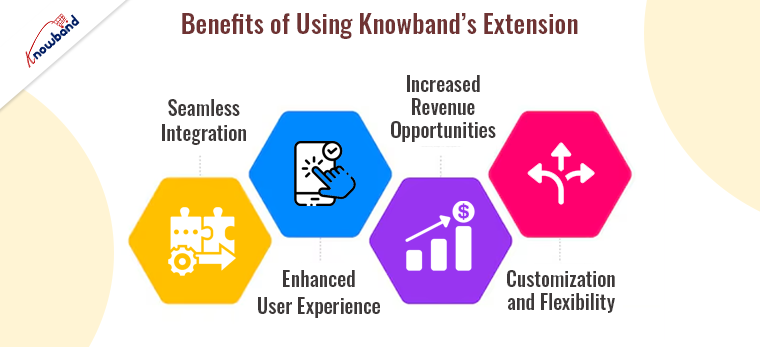
Seamless Integration:

Knowband’s Multi-Seller Marketplace Addon seamlessly integrates with PrestaShop and OpenCart, two of the most popular e-commerce platforms. This ensures that you can leverage the powerful features of these platforms while adding robust multi-vendor functionalities. The extension is designed to work out of the box, reducing the need for extensive customization and allowing you to focus on growing your marketplace.

Enhanced User Experience:

A user-friendly interface is crucial for attracting and retaining users. Furthermore, Knowband’s Multi-Channel Marketplace extension offers an intuitive experience for both sellers and buyers. It ensures that the sellers can manage their stores with ease, while buyers can enjoy a streamlined shopping experience, complete with advanced search and filtering options.

Increased Revenue Opportunities:

By providing a platform for multiple sellers, you can significantly expand your product range and attract more customers. The competitive nature of a multi-vendor marketplace often leads to better prices and increased sales.
Additionally, the marketplace extension for Prestashop allows you to earn through various revenue streams, including commission fees, subscription plans for sellers, and featured product listings.

Customization and Flexibility:

Knowband’s extension offers a high degree of customization, allowing you to tailor the marketplace to your specific needs. Moreover, you can configure seller registration processes, set commission rates, and customize the appearance of your marketplace to align with your brand identity. Therefore, this flexibility ensures that your marketplace stands out in a crowded e-commerce landscape.

Getting Started!
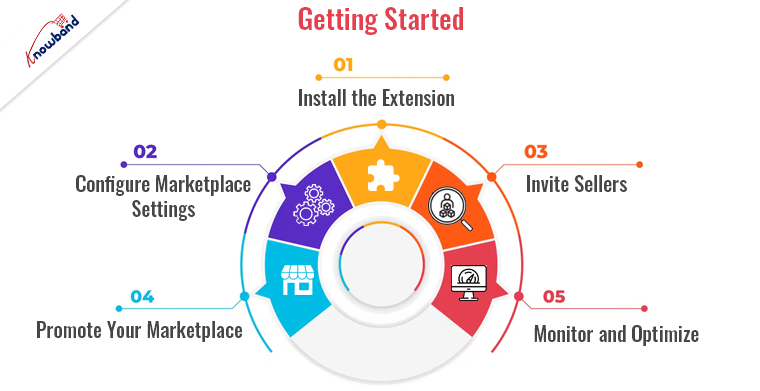
Building your own multi-vendor marketplace with Knowband’s extension is straightforward. Here’s a step-by-step guide to get you started:

Install the Extension: 

Purchase and download the extension from Knowband’s website. Follow the provided installation instructions to integrate it with your PrestaShop or OpenCart store.

Configure Marketplace Settings: 

Access the extension’s settings from your admin panel. Configure general marketplace settings, including commission rates, payment methods, and shipping options.

Invite Sellers: 

Encourage sellers to join your marketplace by highlighting the benefits and ease of use. Provide them with clear guidelines and support to get started.

Promote Your Marketplace: 

Utilize various marketing strategies to attract buyers and sellers to your new marketplace. Consider email marketing, social media campaigns, and SEO techniques to drive traffic.

Monitor and Optimize: 

Use the detailed reports and analytics provided by the extension to monitor marketplace performance. Make data-driven adjustments to optimize user experience and maximize revenue.

Conclusion!

Building a multi-vendor marketplace like eBay is an ambitious but achievable goal with the right tools and strategies. Knowband’s Multi-Vendor Marketplace provides all the features and functionalities needed to create a successful platform. By leveraging this powerful extension, you can offer a unique shopping experience that attracts buyers, empowers sellers, and drives business growth.

Visit Knowband today and start building your multi-vendor marketplace with confidence!


Recommended Read: Stay Tuned: Prestashop v8.1 Compatible Multi-Vendor Marketplace Addon!

A Comprehensive Guide to Choosing the Right PrestaShop Multi-Vendor Marketplace Plugin

Multi-vendor marketplaces have grown in popularity along with e-commerce. These platforms provide a space where multiple sellers can offer their products or services to a wide range of customers. To set up a successful multi-vendor marketplace using PrestaShop, you need a reliable and feature-rich Prestashop multi-vendor marketplace plugin that can handle the complexities of managing multiple vendors, inventory, payments, and more. In this article, we will explore the essential factors to consider when choosing a multi-vendor marketplace plugin for PrestaShop and highlight its benefits of it as a recommended solution.


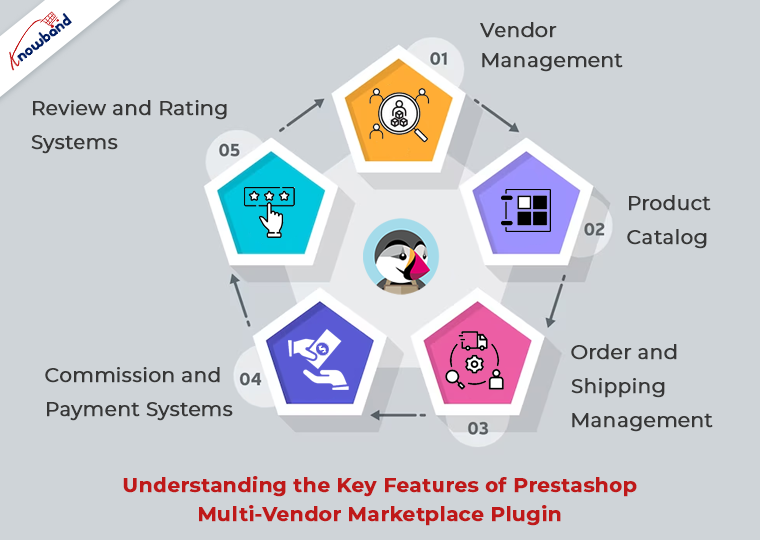
Understanding the Key Features of Prestashop Multi-Vendor Marketplace Plugin:


When evaluating Prestashop multi-vendor marketplace plugin, it’s crucial to assess its key features to ensure they align with your specific business requirements. Some key characteristics to consider include:

  1. Vendor Management: A robust plugin should provide comprehensive tools for managing vendors within the PrestaShop platform, including registration, approval processes, profile management, and communication channels.
  1. Product Catalog: The ability to create and manage a diverse product catalog within PrestaShop is vital. Look for features such as product listings, inventory management, and options for categorization and search.
  1. Order and Shipping Management: Seamless order processing, tracking, and integration with PrestaShop’s shipping modules are crucial for a successful marketplace. Consider plugins that offer automation and efficiency in managing orders and shipping logistics within the PrestaShop environment.
  1. Commission and Payment Systems: Multi-vendor marketplaces operating on PrestaShop typically rely on commission-based models. Look for plugins that offer flexible commission settings and seamless integration with PrestaShop’s payment modules, ensuring smooth and secure transactions.
  1. Review and Rating Systems: A trustworthy marketplace built on PrestaShop relies on customer reviews and ratings. Consider plugins that enable buyers to provide feedback on vendors and their products within the PrestaShop platform.


Why Choose PrestaMarketplace for PrestaShop:


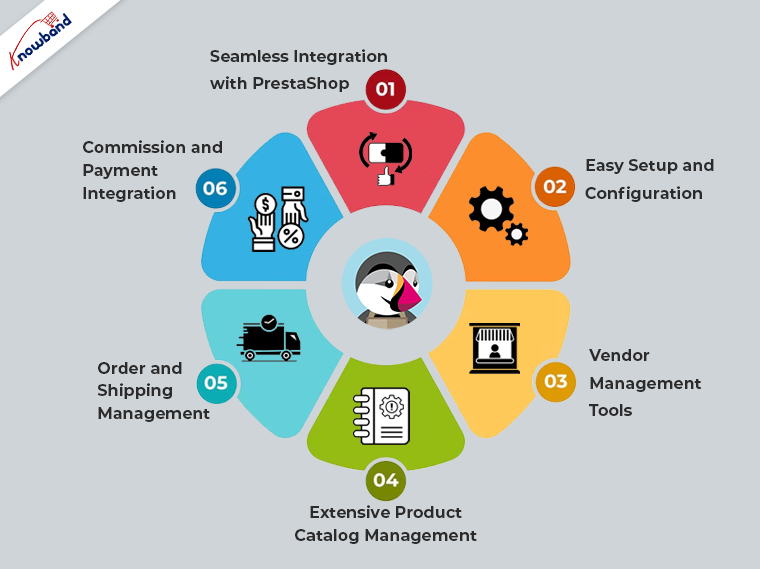
One plugin that stands out in the market for PrestaShop. With its rich set of features and user-friendly interface, it offers a robust solution for building and managing a multi-vendor marketplace within PrestaShop. Here are some reasons why this is worth considering for your PrestaShop-based marketplace:


  1. Seamless Integration with PrestaShop: This is designed specifically for PrestaShop, ensuring seamless integration and compatibility with the platform. This simplifies the setup process and allows you to leverage the existing features and functionalities of PrestaShop.
  1. Easy Setup and Configuration: It provides an intuitive interface and straightforward configuration options that align with PrestaShop’s user-friendly environment. You can quickly customize your marketplace to match your branding and requirements within the familiar PrestaShop interface.
  1. Vendor Management Tools: This plugin offers comprehensive tools for managing vendors within PrestaShop, allowing you to efficiently handle vendor registrations, performance monitoring, and communication within the platform.
  1. Extensive Product Catalog Management: It enhances PrestaShop’s product catalog management capabilities, offering advanced features such as bulk product import/export, inventory management, customizable product pages, and compatibility with PrestaShop’s product attributes system.
  1. Order and Shipping Management: It seamlessly integrates with PrestaShop’s order processing and shipping modules, enabling efficient order management, shipment tracking, and integration with popular shipping providers supported by PrestaShop.
  1. Commission and Payment Integration: The plugin offers flexible commission settings within the PrestaShop environment, allowing you to set commission rates based on vendor categories or individual vendors. It integrates smoothly with PrestaShop’s payment modules, ensuring secure and hassle-free transactions for your marketplace.


Conclusion:

Selecting the right multi-vendor marketplace plugin for PrestaShop is crucial for the success of your e-commerce venture. By carefully evaluating the key features and considering the specific needs of your PrestaShop-based marketplace, you can make an informed decision. It stands as a reliable option, offering a range of essential features that simplify the management of multi-vendor marketplaces within the PrestaShop platform. 


Strategies For Retaining And Attracting The Vendors To Multi-Vendor Marketplace

A multi-vendor marketplace is a platform that allows multiple vendors to sell their products or services to customers. Also, these marketplaces have become increasingly popular in recent years. Marketplaces can offer customers a wide variety of products and services from multiple vendors. However, attracting and retaining vendors can be a challenge for marketplace owners. In this article, we will explore some strategies for attracting and retaining vendors in a multi-vendor marketplace.

Provide A User-Friendly Platform

Moreover, the first and most important strategy for attracting and retaining vendors is to provide a user-friendly platform. A platform that is easy to use and navigate will make it easier for vendors to list their products and services, manage their inventory, and interact with customers. A user-friendly platform will also reduce the learning curve for new vendors. It is more likely that sellers will stick around and continue to sell on your marketplace.

Offer Competitive Fees And Commissions

Another important strategy for attracting and retaining vendors is to offer competitive fees and commissions. Vendors are always looking for ways to increase their profits. Moreover, if your marketplace charges too much in fees or takes too large a commission, they may choose to sell elsewhere. Further, you need to find a balance between charging enough to cover your costs and offering vendors a reasonable commission.  Moreover, this will make them feel motivated to continue selling on your platform.

Build Trust With Vendors

Trust is essential in any business relationship, and it is especially important in a multi-vendor marketplace. Vendors need to trust that your platform is secure and that their personal and financial information is safe. They also need to trust that you will provide them with the support they need to be successful on your platform. You can build trust with vendors by being transparent about your policies and procedures, providing excellent customer support, and responding quickly to their needs.

Provide Marketing And Promotion Opportunities

One of the biggest challenges for vendors in a multi-vendor marketplace is standing out from the crowd. With so many other vendors selling similar products or services, it can be difficult for them to get noticed. As a marketplace owner, you can help your vendors by providing marketing and promotion opportunities. This could include featuring their products on your homepage, offering discounts or coupons to customers, or running social media campaigns to promote their products.

Offer Seller Tools And Resources

Another strategy for attracting and retaining vendors is to offer sellers tools and resources. Vendors need access to tools that will help them manage their inventory, track their sales, and analyze their data. They also need resources that will help them improve their sales and marketing skills. By offering these tools and resources, you can help your vendors be more successful on your platform, which will encourage them to continue selling with you.

Provide Excellent Customer Support

Moreover, it is essential to provide excellent customer support to your vendors. Vendors may have questions or concerns about your platform, and they need to know that they can reach out to you for help. By providing prompt and helpful customer support, you can build trust with your vendors and make it easier for them to do business with you.

Establish Clear Policies And Guidelines

Vendors need to understand the rules of their marketplace to sell successfully. It’s important to establish clear policies and guidelines for everything from listing requirements to payment processing to returns and refunds. This will help vendors avoid any confusion or misunderstandings and will ultimately make your marketplace more efficient.

Create A Sense Of Community

Building a sense of community among your vendors can be a powerful way to keep them engaged and motivated. You can do this by creating a private forum or Facebook group where vendors can share tips, ask questions, and connect. Encourage vendors to help each other out and share their experiences. By fostering a sense of community, you can create a more supportive and collaborative environment for your vendors.

Streamline The Onboarding Process

The onboarding process can be a hurdle for new vendors, and a complicated or time-consuming process can turn them off from your marketplace. To make it easier for vendors to get started, consider streamlining the onboarding process. This could include creating tutorials or guides, offering live training sessions, or providing personalized support to help vendors get their products listed and ready to sell.

Offer Incentives For Top Performers

Finally, offering incentives for top-performing vendors can be a great way to keep them engaged and motivated. This could include bonuses, discounts on fees or commissions, or even exclusive access to certain features or tools. By rewarding your top performers, you create a sense of competition and encourage vendors to strive for excellence.

Attracting and retaining vendors is an ongoing process, and it’s important to continually evaluate your strategies and make changes as needed. By staying in touch with your vendors and soliciting feedback, you can identify areas for improvement and make adjustments to better meet their needs

Conclusion:

Ultimately, the success of your multi-vendor marketplace depends on the success of your vendors. By creating a supportive and engaging environment, providing the tools and resources they need to be successful, and rewarding their hard work, you can build a marketplace that attracts top talent and keeps them coming back year after year.

If you are interested in our marketplace module then kindly let us know at support@knowband.com. We will be happy to assist you in case of any customizations and fixes related to the module.

Best Practices for Designing User-Friendly Multi-Vendor Marketplace

A multi-vendor website is an online store that enables multiple vendors to sell their products on a single platform. In this model, the vendors manage their seller accounts and inventory. Also, they pay a commission to the eCommerce storefront owner for facilitating their sales on the marketplace. 

For both the vendor and the store owner, this arrangement is mutually beneficial as it allows for increased customer traffic and expanded reach. Vendors can also collaborate and seek support from the community in the event of any technical challenges on the website.

Benefits Of Marketplaces

A multi-vendor marketplace provides some advantages for its operators. Its core function is to serve as a reliable platform that connects buyers with suppliers, facilitating secure and trustworthy transactions. The marketplace earns its revenue through commissions charged on each transaction. This business model is designed to benefit all parties involved – including buyers, sellers, and the operator. 

Marketplace Design: Meeting the Needs of Sellers and Buyers

Marketplace websites are designed to cater to two types of users – sellers, and buyers. Therefore, the design of the website should be intuitive and user-friendly for both parties. Here are some essential design features that can help meet the needs of both groups:

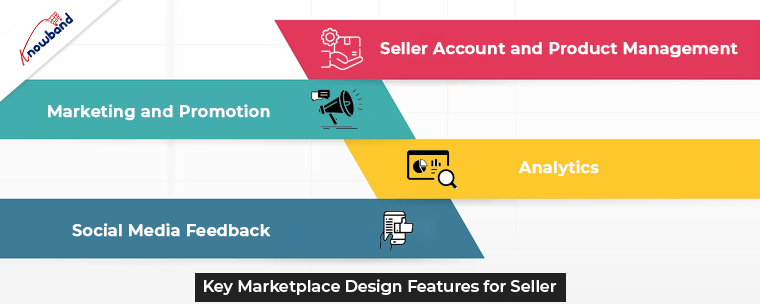
Key Marketplace Design Features for Seller

For a multi-seller marketplace to succeed, it is critical to have an engaged group of sellers. Additionally, it is important to provide them with the necessary tools for efficient management. Here are some essential features that can boost vendors’ capabilities and ensure the success of your marketplace.

Seller Account and Product Management

To manage their products effectively, vendors require access to a personal account that contains data on their products, warehouses, notifications, and more. To provide additional security and flexibility, you can also grant different permission levels to vendors enabling multiple user roles.

Marketing and Promotion

Promotions, discounts, and coupon codes play a vital role in marketing campaigns. They significantly increase revenue and boost customer loyalty. Further, to empower vendors to manage their personalized and customizable marketing tools, they must use these features.

Analytics

Custom dashboards that display essential information, deliver reports, and update statistics are essential to vendors. They need to track key metrics related to their sales, customer session time, and more. Data visualization can help them instantly obtain and perceive this information.

Social Media Feedback

Social media integrations can be used to collect and deliver customer feedback. This helps in allowing vendors to gather opinions about your multi-seller marketplace and increase its popularity. Social networks are an excellent tool to engage customers and increase your platform’s visibility. 

Overall, these key features can help sellers manage their products and drive the success of your marketplace. By providing vendors with the right tools, you can create a thriving ecosystem that benefits both sellers and buyers.

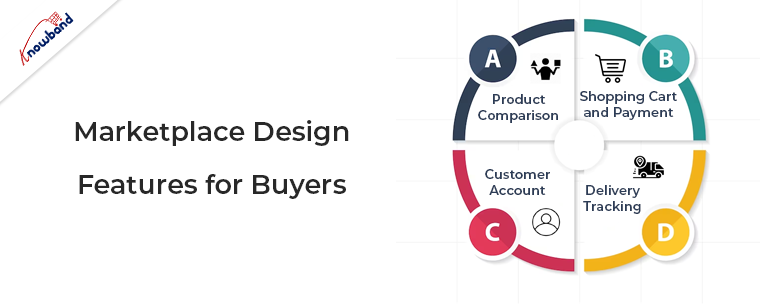
Marketplace Design Features for Buyers

Attracting more customers and ensuring a seamless user experience is the ultimate goal of any marketplace. To achieve this, it is essential to include features that help buyers navigate through the platform and make informed decisions.

Product Comparison

One of the essential features for buyers is the ability to compare similar products and choose the best option based on specific characteristics. Implementing an automated comparison feature will save buyers time and effort, reducing the need to visit multiple online stores to find what they need.

Shopping Cart and Payment 

A clear shopping cart that allows buyers to adjust the number of items, choose shipping options, and add notes is necessary. Providing multiple payment methods such as PayPal, Stripe, and Braintree enhances convenience and ensures that the payment system works smoothly.

Customer Account

Customers should be able to sign up and manage their accounts to view their order history. Additionally, creating shopping lists, and streamlining the sale and order tracking process. However, simplifying the signup process or making it optional can be beneficial for first-time buyers.

Delivery Tracking

To improve customer service, providing timely order status updates and sending notifications is crucial. Allowing buyers to track their delivery, and see the estimated arrival time builds trust. If they can monitor changes then it will enhance their experience and build trust in your marketplace.

In the End

In this article, we have been discussing the various features to be provided to sellers and buyers. Moreover, in case you are looking forward to setting up a multivendor marketplace then you can have our plugins for the same. In case of any concerns or issues regarding the same, you can connect with us at support@knowband.com.

Apart from that in case you need mobile apps for your business then we are here to assist you for the same. Also, we can provide you with custom developments that are specific to your business needs. Further, we can assist you with module modification too.

Cache: An eCommerce Store Taking Over the Market on the Mexican Continent

The e-commerce industry is constantly expanding as it encourages new businesses to try out their business ideas. Online business owners are usually flooded with ideas for the business, and they need a platform for the business.

Online merchants can set up their businesses on multi-vendor marketplaces. The marketplace is also of two types; one is the general one, which is available to everyone selling clothes, electronics, etc. Further, there is also a hyperlocal marketplace that provides its services to specific areas, only selling items like dairy, grocery, fruits, etc. Cacheshop is one of the leading marketplaces and has its base in Guatemala City, Guatemala.

Depending on the business requirements, the sellers choose the type of marketplace and set it up online for the customers. Marketplaces like eBay and Etsy are also good options. Apart from that, Google Shopping is also a useful plugin for listing products on Google. It looks like a huge task to set up and rank your market, but with dedicated efforts and planning, you can build a reputation for your brand.

About Cacheshop

The Cache Shop is an e-commerce multivendor marketplace for the PrestaShop platform. The store is among the top-ranked marketplaces on the Mexican continent and is spreading its wings in the e-commerce market and holding its place among the top brands. The brand is well known for its variety of products from a diverse range of sellers.

The Cacheshop has several categories with a huge variety of products for its customers. The customers choose to take service from the brand as it has a good name in the market and is famous for its superior quality of products. The business sought to build a connection between the sellers and the buyers in a safe and friendly atmosphere.

The transparency of the brand is very much appreciated by the sellers, as it lets them know the product sales cycle at each step. They have authenticity and legality, which is clear from their store policies.

Cacheshop: Exponential Business Growth with Knowledge

The brand uses Knowband’s vendor marketplace plugin for Prestashop. Furthermore, cache shop is based on the PrestaShop platform and manages the entire marketplace with Knowband’s plugin. Moreover, this brand offers several functionalities to the sellers, such as managing and setting up the products and importing and exporting them. The admin can manage the sellers, commissions, and other aspects using the features of the Knowband Marketplace plugin. 

There were numerous customizations done by the Knowband team to meet the business requirements of the brand. Further, some of the customizations were things like exporting all the bank wire details in one file, displaying customer addresses to sellers, etc. The Cache Shop is no average online marketplace, as it has loads of custom features implemented with the help of Knowband.

Multivendor Marketplace Plugin for Knowband

The term “multi-vendor marketplace” is used to describe an online store where customers can purchase goods from many sellers. Further, a wider selection of goods from various vendors who are in charge of inventory, pricing, product details, and delivery is possible. Multi-vendor marketplaces are popular among businesses because they are easy to manage.

Knowband’s Prestashop Multi-Vendor Marketplace provides options for membership, scheduled payments for merchants, a page for vendor registration, and many other options. Additionally, the suppliers can manage each of their products with the help of a specific seller portal and dashboard.

Hence, the Knowband Multi-vendor plugin is the go-to option for the management of an online marketplace.

What Cache-Store Thinks of Knowband

The service they give to their customers is just awesome. They were always there in case of any assistance and took on custom development services too, which was impressive. I hope to work with them again on other projects and will connect soon for some business-specific customizations.

How to Add Payment Methods to Your eBay Shop!!
eBay is undoubtedly one of the best marketplaces in the eCommerce industry. With over 187 million active consumers, eBay is offering amazing services to both consumers as well as sellers.

Aside from products and sellers, eBay is a well-known multi-vendor marketplace for algorithm updates. Moreover, the major marketplace has its in-built SEO algorithms to manage the rankings of sellers.

On top of that, selling on the eBay marketplace is an absolutely easy task. You do not require to have any specific kind of technical knowledge for being an eBay seller. Furthermore, the marketplace offers ease of payment methods to the seller community. The sellers can even add cards, PayPal, and many more payment methods to their eBay shop just by following some simple steps.

Thus, in the following article, we are going to spread light on how new sellers can add payment methods to their eBay shops.

1. PayPal: How to Link with Your eBay Shop!!

PayPal is a widely introduced payment method with millions of transactions per day. Likewise, eBay allows sellers to add PayPal as a payment method on their store-front. One can simply add the PayPal payment method on eBay just by following the below-mentioned steps.

1.1. Log in to Your eBay dashboard.

1.2. Visit the eBay admin panel and then click on the account settings.

1.3. Click on Payments>>PayPal.

1.4. If you already have a PayPal account, you can simply add the details here. Otherwise, you can always create a new one by clicking on the signup button.

1.5. By following the above steps, you will be redirected to PayPal.

1.6. Come back to the eBay admin panel>>Payments>>PayPal.

1.7.  Click on become verifies button.

1.8.  Authenticate yourself with a PayPal account and all set to go.

2. Debit Card: How to Add Debit Cart on eBay Shop!!

Adding debit cards on eBay shop is a pretty easy task. Follow the below-mentioned steps to add debit card payment options to your eBay shop.

2.1. Click on the top left corner buttons.

2.2. Go to Account settings.

2.3. Choose the option payment options from the appeared tab.

2.4. Choose to add payment methods.

2.5. Pick the debit or credit card option.

2.6. Fill in all the details on the appeared page. After getting done with all the details, click on add. All good to go.

3. Automatic Payment Methods on eBay Marketplace:

Automatic payment methods help sellers to minimize headaches during the eBay invoice cycle. The monthly ebay fee gets deducted automatically when the sellers add automatic payment methods on the eBay Marketplace.

Here are the steps to add automatic payment methods on the eBay marketplace.

3.1. Click on the top left corner of your eBay dashboard.

3.2. Visit the account settings page.

3.3. Click on the personal info tab. And then, hit the business info button.

3.4. Click on the financial information tab. Choose the update your automatic payment methods.

3.5. Choose your suitable payment option among PayPal, credit, debit card, or checkout accounts.

3.6. Fill in all the details and click on the save button.

In the above article, we have discussed how to add payment methods to your eBay shop just by following the simple steps. Although eBay is known for changing its algorithms. Yet, we believe the above information is surely helpful for you.

Do You Know!!

Do you know that if you are selling the products from your personalized eCommerce website and are willing to sell the products on eBay? You can simply manage your eBay shop from your personal shop’s admin panel.

How? Knowband’s eBay Marketplace connector extension is the answer. At Knowband, we provide the eBay Marketplace connectors for the eCommerce platforms Magento 2, Prestashop, WooCommerce, OpenCart, and Magento.

One can simply manage both eBay and a personal eCommerce shop at his fingertips. And can even sell their products on eBay Marketplace at an increased/decreased price with real-time stock management.

Want to know more? Feel free to find us at our official email address support@knoband.com for your beloved queries and suggestions.

Multi-Vendor Marketplace – Frequently Asked Questions

The multi-vendor marketplace business model in contrast to the conventional eCommerce approach is very profitable for both the owners and the end customers. Moreover, making an online marketplace website efficient is more difficult than simply having one. A multi-vendor marketplace is an online store where customers can purchase goods from several vendors.

Many people choose to use online marketplaces since there must be a wider variety of goods from numerous sellers. Sellers who are in charge of the inventory, pricing, product details, and shipping provider of a variety of products. Using the Multi-Seller Marketplace Extension is a quick and simple way to turn your eCommerce company into an online market comparable to eCommerce giants. Also, the suppliers can manage each of their things with the help of a specific vendor site and dashboard thanks to this expansion.

The online marketplace plugin also offers bulk product submission using CSV files and enhanced tracking codes for shipping on each order. Furthermore, the administrators must approve the use of the vendors’ customized profiles before they use them on their product websites. Any provider is free to impose restrictions on shipping costs and methods or to present the customer with a range of choices. Additionally, simple tracking and control of invoicing are in need to plan monthly vendor payments.

FAQs For Multi-Vendor Marketplace

Q1. What Is the Difference Between a Multi-Vendor and a Single Vendor?

In a single-vendor marketplace, a single seller sells their goods to various buyers. Moreover, such standalone establishments often don’t offer a wide variety of goods or services. A marketplace where numerous vendors come together to offer their goods is a multi-seller eCommerce site. Similar to single-vendor marketplaces, customers can purchase goods from various brands or merchants. In contrast to single-vendor stores, where there are only two parties present in commercial transactions, multi-vendor marketplaces involve three parties. The three parties namely are the website administrator (owner), the vendor, and the customer.

Q2. What Are the Special Features of Multi-Seller Software?

Determining the essential characteristics your business model demands from the marketplace is the first step in choosing the ideal marketplace software for your enterprise. One thing to keep in mind is that the multi-vendor marketplace features should be able to suit the many situations of an admin-vendor and vendor-customer relationship system. Moreover, there can be a multitude of distinct business needs and platform capabilities to meet them.

Q3. What Distinguishes Multi-Vendor Solutions from a Standard Website?

Multi-vendor marketplaces are eCommerce software solutions. It is a general solution that covers both single-seller shopping cart software and multi-seller eCommerce platforms. A single-seller eCommerce platform differs from a multi-vendor platform because its design is for launching on a traditional online store with just the shop owner as the sole seller.

Q4. What Are the Different Types of Marketplaces?

Based on a variety of business concepts, there are numerous different sorts of online marketplaces. On the basis of the usage of marketplaces, they are present in different groups:

Horizontal and Vertical E-Marketplaces

Vertical Marketplaces give companies access at every level of a certain industry sector, such as the automobile, chemical, construction, or textile industries. Although, using a vertical e-marketplace for your industry sector to buy or sell will help you operate more efficiently while lowering your expenses, inventory, and procurement cycle time.

A horizontal e-marketplace links buyers and sellers from various markets or industries. A horizontal e-marketplace is to buy indirect goods like stationery or office supplies.

Unaffiliated Online Market

A business-to-business online marketplace known as an independent e-marketplace is often run by a third party and accessible to buyers and sellers in a certain sector. Furthermore, you can access classified advertisements, requests for proposals, or bids in your area of the economy by signing up on an independent e-marketplace. Usually, participation will involve paying in some way.

E-Marketplace Focusing on Suppliers and Buyers

This market, which is sometimes referred to as supplier oriented, had its establishment and is established by several suppliers who want to create a successful sales channel online for a big audience of buyers. Also, the given good or services are often searchable.

To create a productive buying environment, a group of buyers often manages a buyer-oriented online marketplace. Furthermore, if you’re looking to buy something, taking part in this kind of electronic marketplace can help you save money on administrative expenses and get the greatest deal from suppliers. As a supplier, you can promote your catalog to a pool of potential clients by using a buyer-oriented online marketplace.

Q5. Can I Incorporate Many Payment Options?

You can incorporate ‘n’ different payment options. However, we automatically offer you both Paypal and bank wire as payment options. Additional fees will apply if you add more payment options.

Q6. What Essential Qualities Must Your Online Marketplace Have?

Some qualities are necessary for the effective management of multi-seller online commerce. This supports efficient business operations and ensures the satisfaction of your suppliers and clients.

  1. What you require is a versatile backend and front end for managing vendors and customers with ease.
  2. Supportive vendor management for product uploads, inventory management, and shipment distribution.
  3. Compatibility with smartphones, tablets, etc.

Wrapping it Up

In this article, we have been discussing some of the questions which are helpful before deciding to have this Multi-Vendor Marketplace plugin for your online shop. Kindly let us know if you want to know more about this module at support@knowband.com. We can also provide assistance with the change of certain functionality or for adding a new feature in the modules. Moreover, we also provide assistance with custom developments which is specific to the online business. 

Various Advantages of The Online Marketplaces

Due to the marketplace’s dynamic nature, it is necessary to continuously improve and update your marketing plan. Your brand might acquire a competitive edge by looking for ways to enhance your marketplace approach. The most popular locations for today’s online shoppers are still online marketplaces like eBay, Etsy, and many others. Online marketplaces are now used by around half of US businesses and European ones to sell their products.

Making the proper online marketplace decisions is crucial for brands all around the world. To be sure you’re on the right path, we have listed 2 the Advantages of two Marketplaces to enhance your online marketplace approach.

eBay Marketplace

One of the most popular online marketplaces in the world is eBay Marketplace thanks to its huge user base. Concurrently operating eBay businesses and internet stores may be challenging. The handling of orders and inventory on the eBay Marketplace takes a lot of time and effort. For owners of e-commerce businesses, this eBay plugin is an excellent option. Owners of online stores can easily link them with eBay storefronts by using eBay Integration. To manage both your eBay store and your offline business, use eBay integration.

The following are the benefits of using eBay:

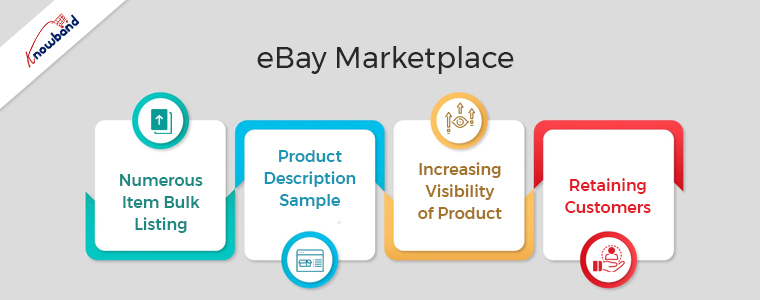
Numerous Item Bulk Listing

The bulk product listing feature of the eBay Integration plugin is very beneficial. The admin can also link the shop category to the eBay Marketplace category. The eBay Marketplace will never run out of the shop class products in that particular eBay category. Furthermore, a single eBay category connection to the administrator is possible with several courses.

Product Description Sample

To reflect the presence of the HTML layout, the shop administrator might apply this plugin. The API Integrator for eBay works with HTML layouts. Shop owners may track eBay product descriptions more easily with the help of this plugin.

Increasing Visibility of Product

By subscribing to an eBay store, more people can see your stuff. You can draw in more customers by being subjected to more crowds. Sales for sellers who switched to eBay store subscriptions significantly increases over the period.

Retaining Customers

When you stock your store with standout goods, people will return to you because they will remember you. They’ll contact you again the next time they need that thing. You can successfully improve your client experience and service if you operate an eBay store. One of the most important elements that affect customer retention is excellent customer service.

Etsy Marketplace

Utilizing the Etsy marketplace is essential for companies offering handmade goods, antique goods, and creative supplies. The US’s fourth-most popular eCommerce site is Etsy. Even though it has a limited user base, there are several advantages for merchants using Etsy Marketplace.

To sell their goods, effectively manage inventory, and process orders, Etsy offers retailers APIs. The Etsy Marketplace Integration module utilizes these APIs, which eliminates the requirement for a store administrator. The Etsy Marketplace is not required for sellers who have separate listings for their products on each platform. Your products need only be present in your store for the Etsy Integration module to immediately list them on the Etsy Marketplace.

Following are the advantages of Etsy Marketplace:

Little to No Listing Fees

You can get access to a variety of tools and the knowledge of a seller community by opening an Etsy shop, which is free to do. When you list items, a small fee of $0.20 per listing applies. It is less expensive to open a shop because there are no ongoing expenses, unlike other possibilities. A minor commission fee and a standard payment processing fee are there for the completion of a sale. To encourage the success of small businesses, Etsy generally maintains moderate fees.

Broad Buyer Pool

One of the main benefits of the website is that it is widely known. This shows that you already have a market for your products. Compared to larger eCommerce sites, Etsy is more frequently visited by customers looking for authentic goods. Etsy has distinct products rather than a product with numerous entries that are comparable.

If your company shares Etsy’s mission of offering customers unique, handcrafted, vintage items, then this is the place for you. This helps you attract visitors who are currently spending time on the website.

Wrapping Up 

In this article, we have explained the advantages of two marketplaces and why they are useful for eCommerce businesses. If you want our help with the same, please contact us at support@knowband.com. For specific developments for your company also you can get in touch with us. We will also help you to add additional functionality to the plugins. Kindly let us know in case you need our help regarding any concerns or issues related to our modules.

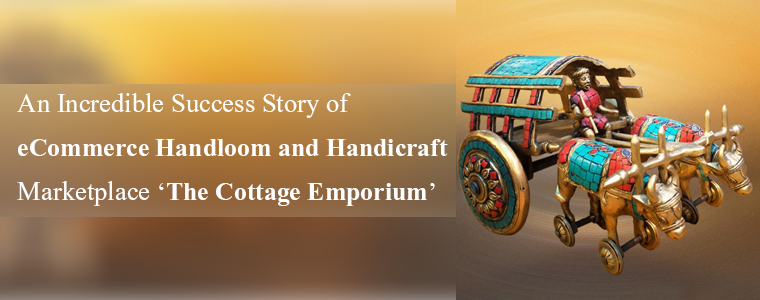
An Incredible Success Story of eCommerce Handloom and Handicraft Marketplace ‘Cottage Emporium’

The success story of e-commerce has its way of encouraging people to turn their business more towards the internet. More than 50 percent of shopping takes place online, current figures say. Therefore, more people are tilting towards creating their own marketplace with the latest trend of online shopping. The Cottageemporium is one such online store that has chosen OpenCart Marketplace to become a full-fledged marketplace.

The world-famous Central Cottage Industries Emporium firm has all the handcrafted and handloom products that reflect the culture and traditions of India. Velocity builds Cottage Industries’ online presence by creating a marketplace on the OpenCart platform using KnowBand’s OpenCart Marketplace Extension where various sellers can sell their quality products with aesthetic designs.

About Cottage Emporium

The Central Cottage Industries Emporium (A Government of India undertaking Ministry of Textiles) was established in 1952. Seeing the adverse effects of industrialization on the Indian economy and social culture, post-colonialism felt a need to give Indian crafts their rightful position and excite millions of craftsmen across the country’s parched creative spirits and help them gain a decent livelihood.

The Central Cottage Industries Emporium has been a favorite among clients in India and around the world as a showcase of the creations of Indian craftsmen, weavers, and folk artists. It has taken special care to make sure that through its goods, décor, exhibits, and everything else that goes with it, you get a sense of what the real India is all about.

The Cottage Emporium stands high, allowing India and the world to access the finest crafts with an assurance of authenticity, elegance, and value, setting aesthetic and design standards. Anyone can register as a seller on the Cottage Emporium Marketplace.

Services offered by Cottage Emporium:

Under one roof, the emporium displays the finest crafts from all over India, ranging from exquisite sculptures, paintings, objects, metalware, woodcraft, pottery, stoneware & marble craft, Bankura silver branded, carpets, furniture, furniture, home linen, sarees, ready-to-wear, shoes, jewelry, craft pieces, herbal products and much more. Every product is distinctive, representing India’s traditional myths, legends, religious beliefs, cultural ethos, and rich heritage.
On multiple fronts, the emporium promoted handicraft and handloom, embracing market analysis, handpicked choice, design growth, impeccable quality, varieties, fixed prices, creative promotions, a basket of auxiliary services such as personalized corporate gifting items, interior design services, packing/shipping facilities, specialist gift wrapping, ATM, foreign exchange counters, etc.

Click here to Visit Central Cottage Industries Emporium Marketplace.

How does Cottage Emporium Marketplace work?

The Velocity Software Solutions have created the Central Cottage Emporium’s digital Marketplace on the OpenCarteCommerce platform using KnowBand’s OpenCart Marketplace Extension. The website is attracting users from all across the world and there are 56308 visitors so far. The marketplace is rich in features and functionalities. By converting their online store into a Marketplace the store admin can allow multiple sellers to register on the marketplace so that they can list their products on the marketplace to reach out to the new audience. The Marketplace admin can charge a commission to the sellers that will be paid on each sale of the seller products. Marketplace admin can also offer a variety of products at a competitive price to the customers, which will increase the customer experience and they can explore a huge variety on a single platform.

The marketplace features can be further customized based on the business needs and as per the requirement of the Cottage Emporium Marketplace, all the required changes have been done by Velocity.

It has a curated admin panel and seller dashboard. The seller registration can be done from the customer registration field.

Front End at a Glance:

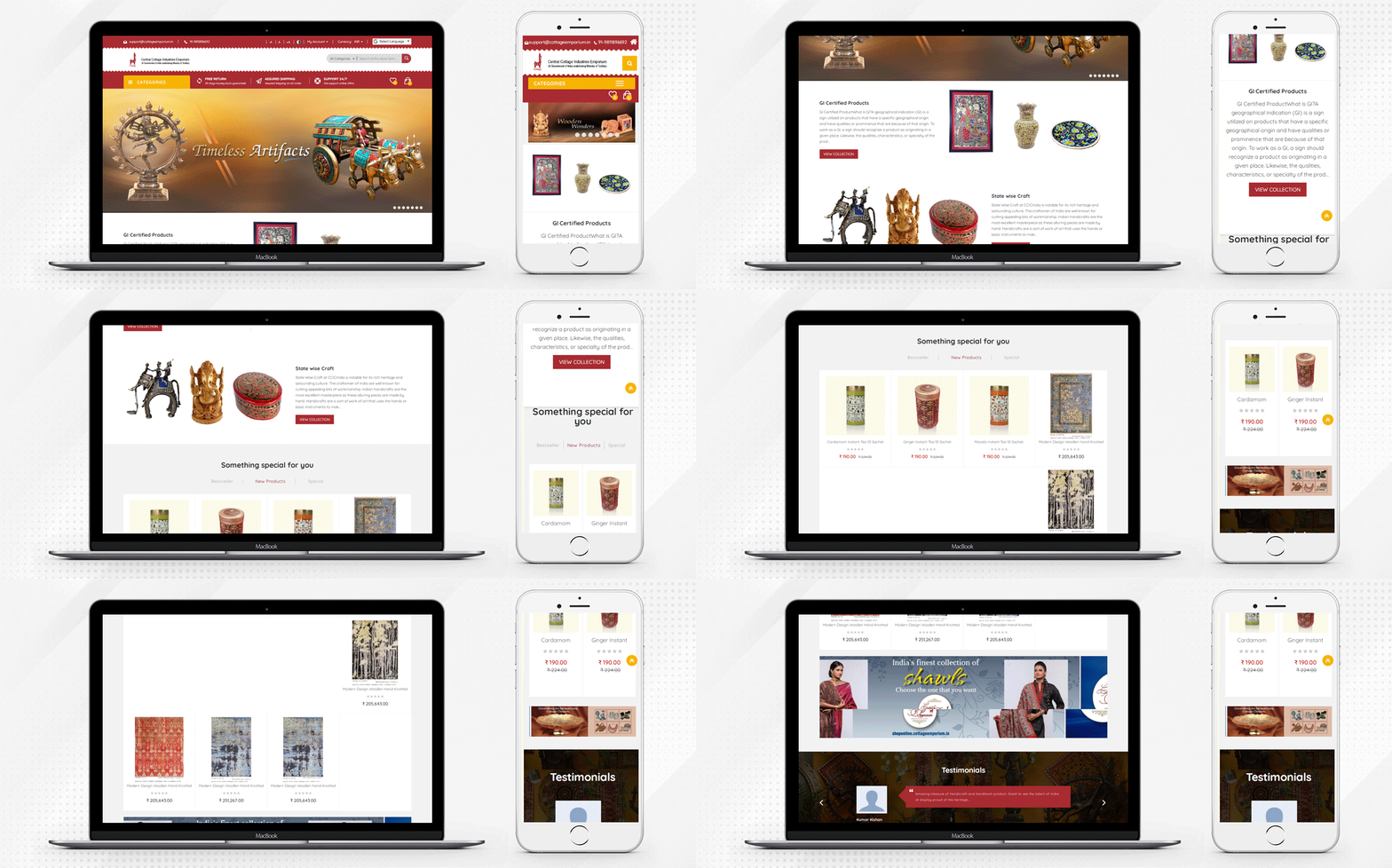
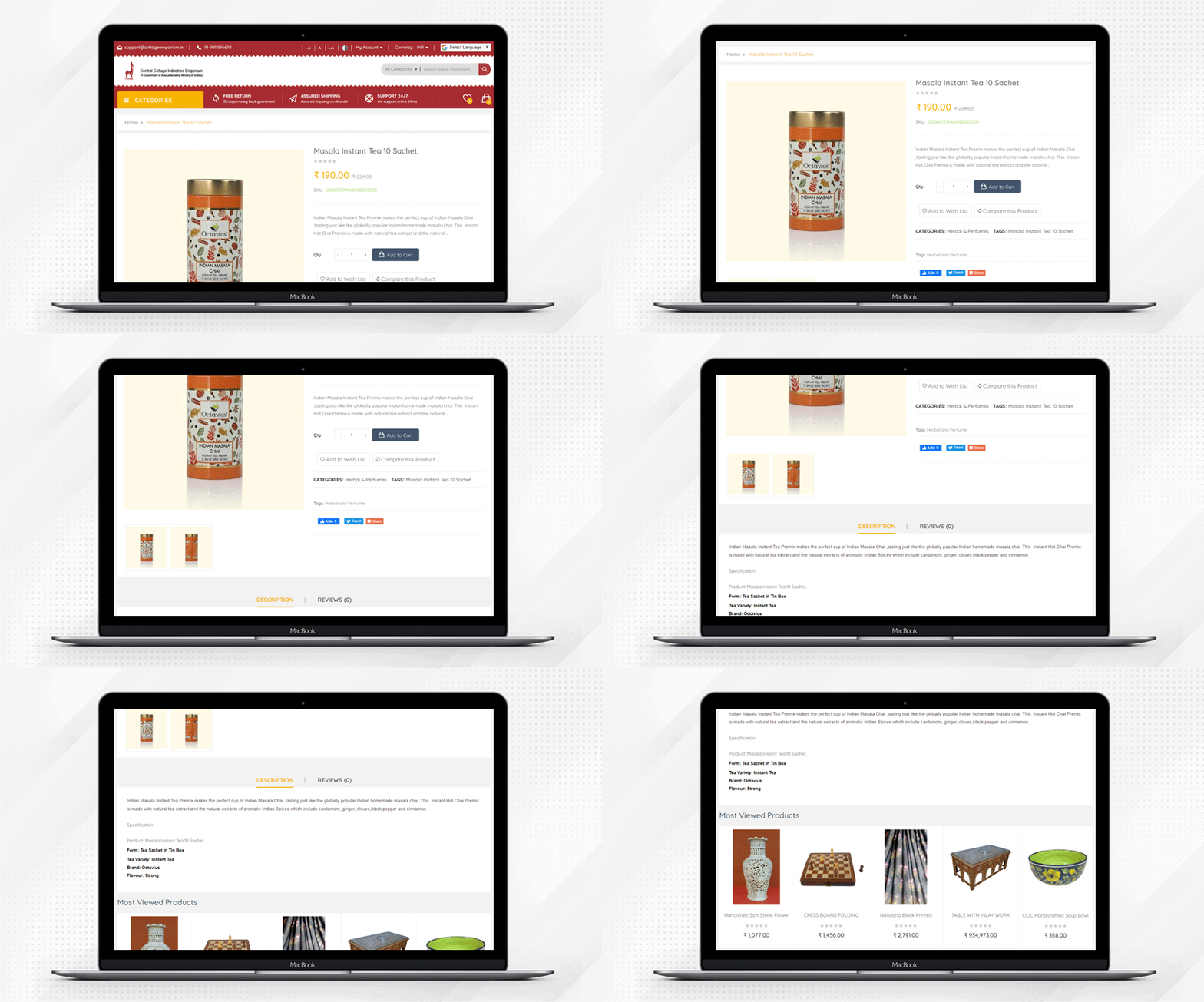
Cottage Emporium for Indian Handicrafts and Handlooms is actually one of the most trusted shopping marketplaces. The marketplace consists of a variety of common categories, all of which include the latest set of famous Indian culture and traditions. Here is a summary below of the full marketplace.

The Landing Page:

Discover the beauty of Indian culture from the comfort of your home. The home page is simple and it has a clean and clear design that is smooth and user-friendly. The products can be found with ease by selecting the category.

Shopping Cart:

With just a few taps, choose your favorite & all the new items and add them to the cart. The marketplace is considered to be the most relevant and accessible marketplace for everyone. Customers can add one or more products to the cart.

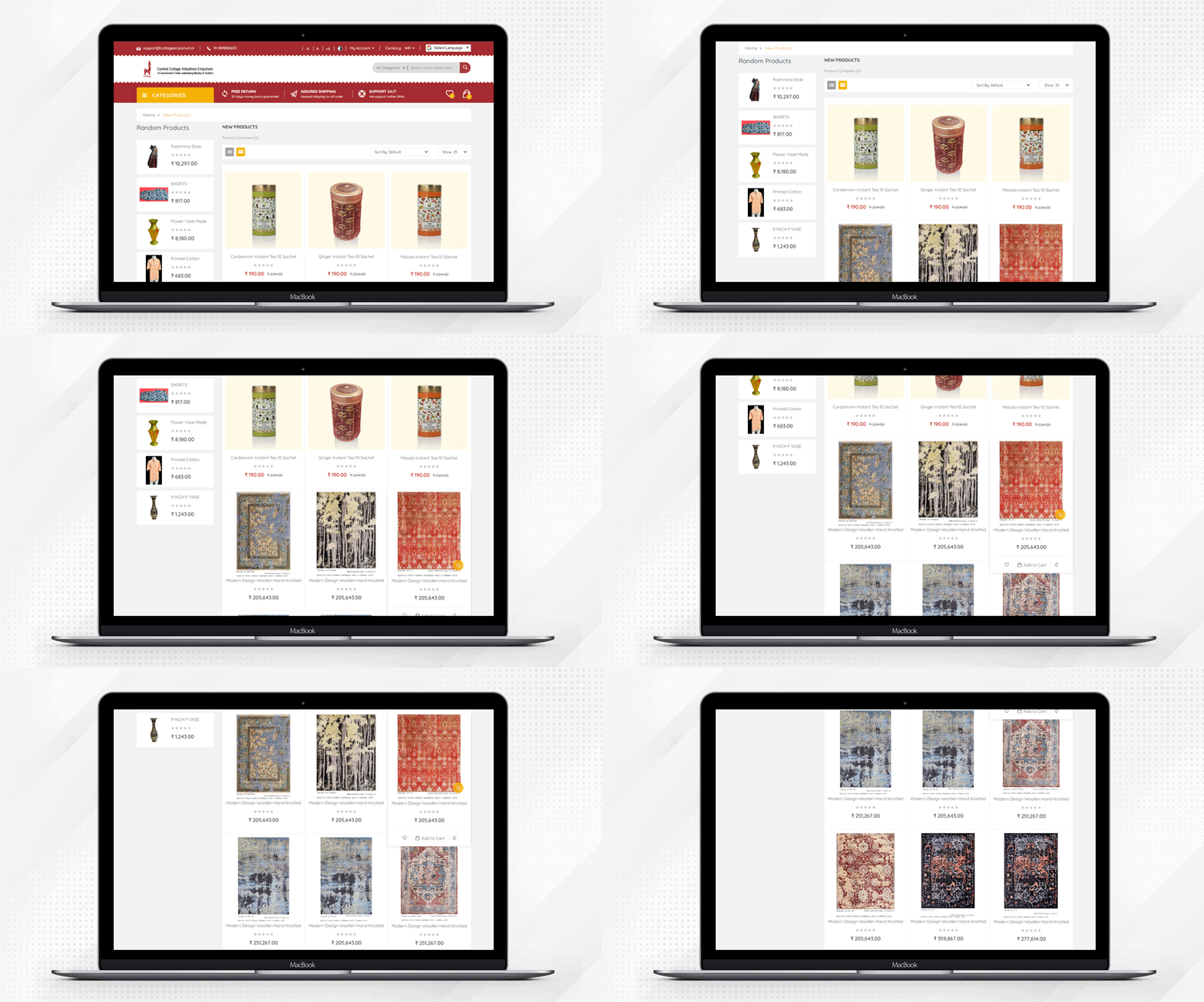
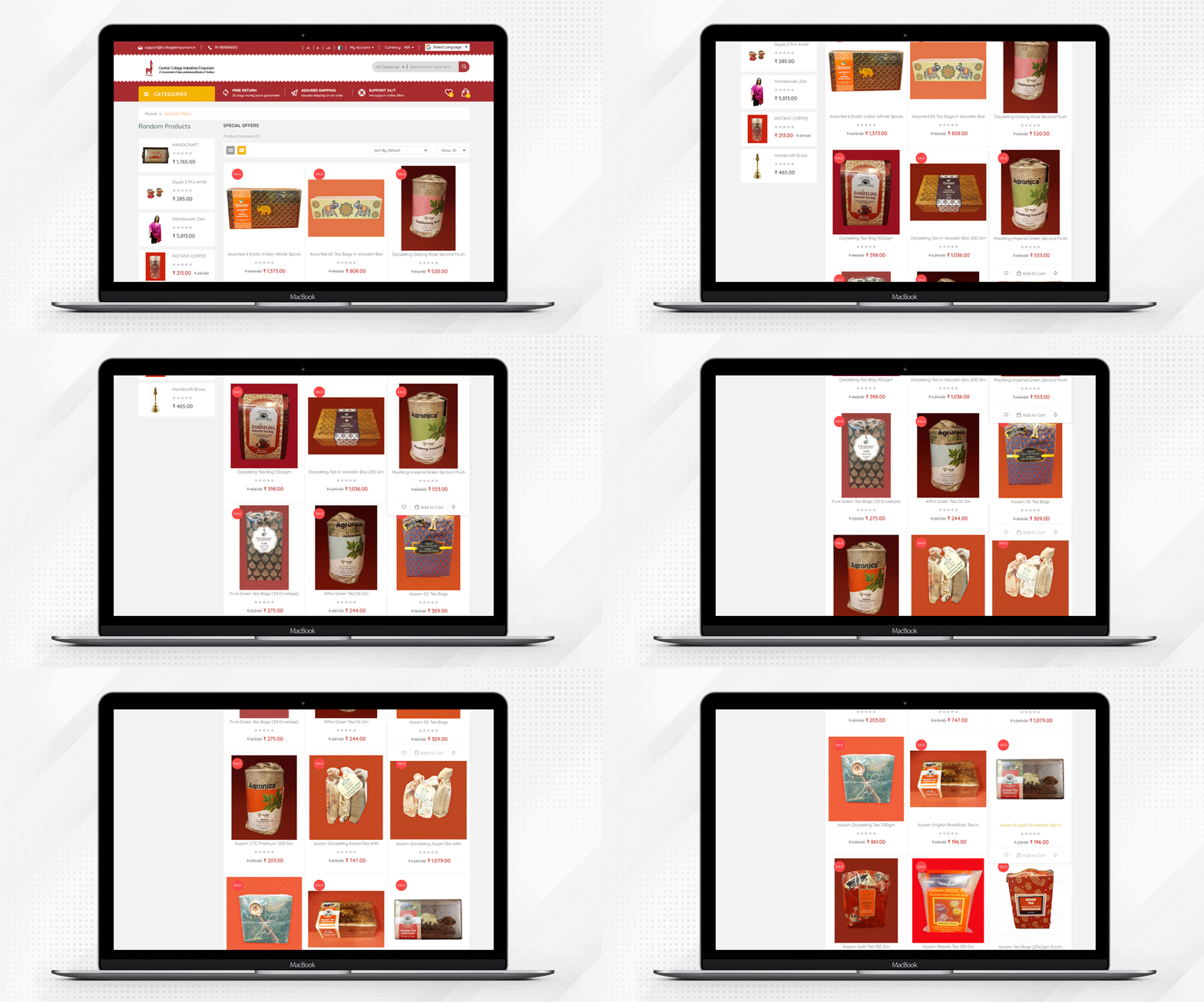
Product Page:

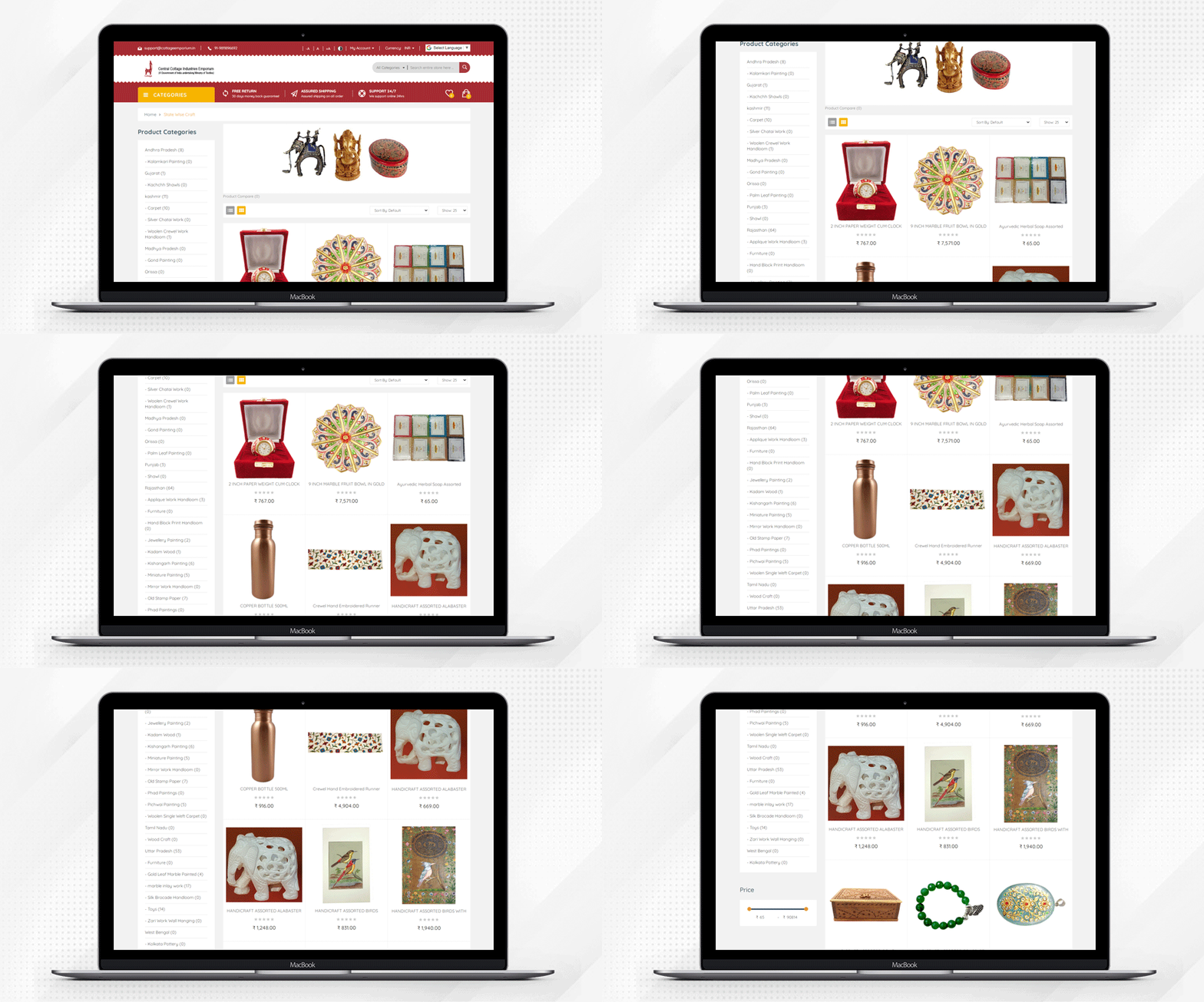
For the product page, there are various categories and the crafts are available as state-wise and certified products collection as well. There are some special categories:

New Products: New products are constantly updated, so explore the Cottage Emporium website to stay updated and become a trendsetter with all the trendy & stylish products.

Best Seller: In the ‘Best In’ tab, get all the best-selling products and enjoy shopping to your fullest potential with the highest product quality provided on Cottage Emporium’s Online Website.

Special: In the ‘Special’ tab, the number of unique items is compiled together to make your shopping friendly and fun-filled. The sellers can run discounts and promotions on the store.

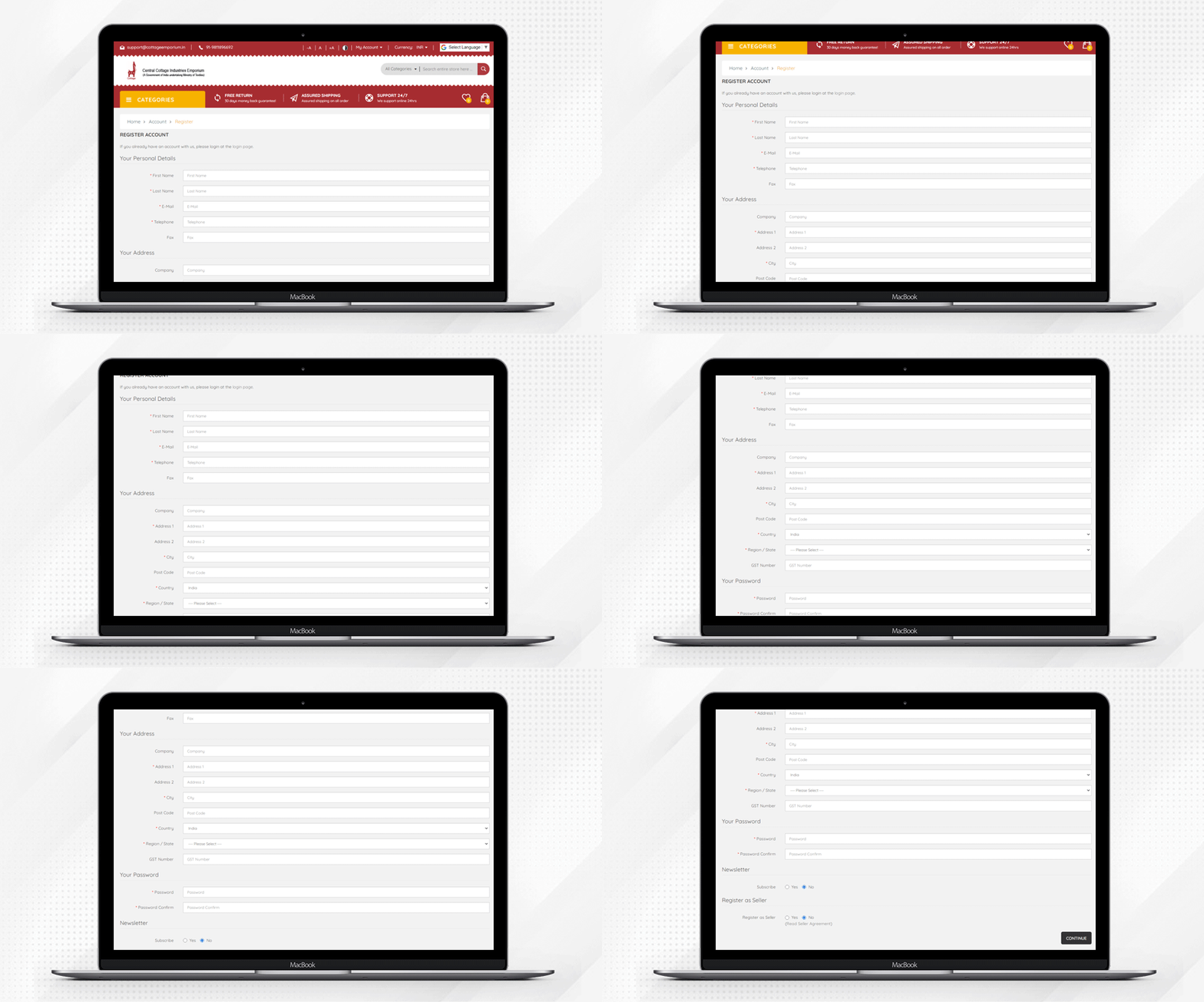
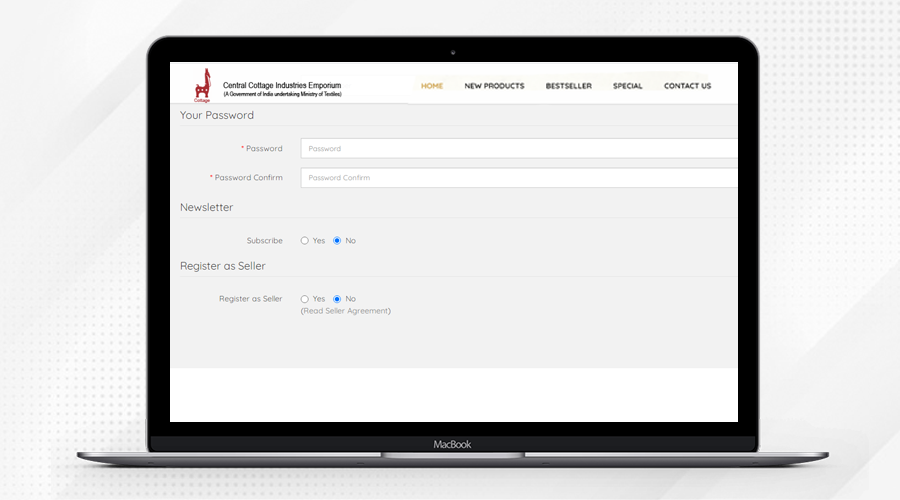
Customer Account Registration:

The customer account registration is easy and can be completed in few simple steps.

Register as Seller:

Any customer can register as a seller by selecting the ‘Register as Seller’ option in the registration form.

Return Policy:

Easy return policy for the customers with 30 days money-back guarantee. They offer 24/7 online support and they offer assured shipping on all orders.

Multiple Language and Currency Support:

The website supports Euro, Indian Rupee, and US Dollar. Along with that, customers from all over the world can access the website in their native language.

Social Media Links:

Multiple social media handles are linked to the marketplace where customers can follow Cottage Industries Emporium’s social media pages and stay updated.

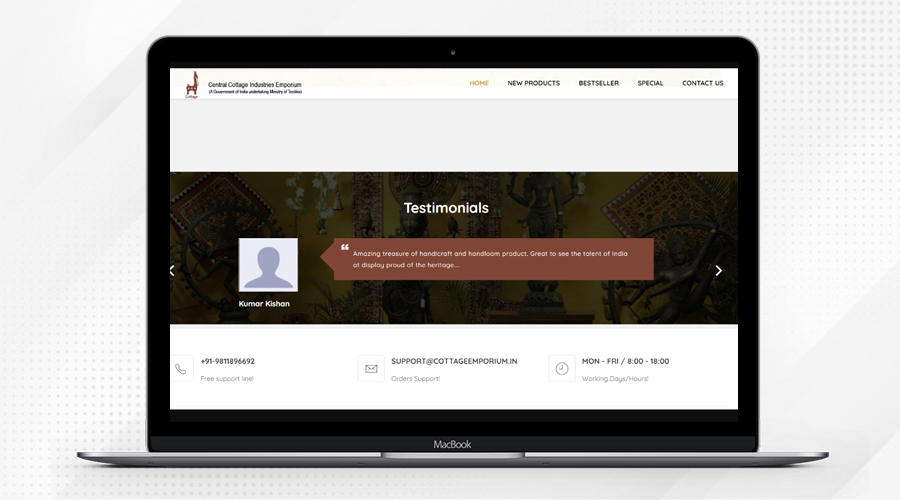
Testimonials:

The Testimonials are the most important element of a marketplace as they help new visitors to trust the website sellers and product quality. There are various testimonials displayed on the website that can influence the shopping decision of the user.

Message from the Central Cottage Industries Emporium:

After exploring various eCommerce platforms and speaking with several developers, we (‘Central Cottage Industries Emporium’) settled on the ready-made marketplace solution for our handloom and handicraft website- The OpenCart Multi-vendor Marketplace.

Velocity Software Solution team transformed our website into a fully-functional Marketplace using KnowBand’s OpenCart Marketplace Extension.

The extension made our tedious work simple!

This is a no-coding solution and it has all the functionalities that help us in seller management, product quality assurance, and inventory management.

We can easily set commissions for the sellers and all the payouts are managed by us with ease.
Moreover, I am thankful to team Velocity who is always available to help us with any issues coming on the way.

About OpenCart Marketplace (Multi-vendor):

The OpenCart Marketplace extension by Knowband will easily transform your single-vendor website into a fully functioning marketplace. The admin can create a marketplace like Amazon, eBay, Etsy by using the Multi-vendor Marketplace module so that many vendors can sell their goods on the market.

The OpenCart marketplace module’s admin interface makes the management of sellers simple. The extension of the OpenCart Multi seller marketplace makes commission management simple for the store administrator. For all updates, personalized email templates are available. With just a click of a mouse, product and category management can be done and

The Opencart mobile app builder plugin is also compatible with this module. Knowband also offers the Mobile App for the marketplace so it will be easy for the marketplace owner to offer the best mobile experience to the customers using the mobile app.

You can explore the OpenCart Marketplace Extension on the KnowBand’s or Click here to see the demo. Our team is always available to provide custom website development services. To discuss, write us at support@knowband.com

Top 10 Features to Consider While Creating a Marketplace on OpenCart Platform

The rapid growth of the sharing economy is triggered by the increasing number of new online marketplaces. If your idea was to create an online marketplace to allow the exchange of products or services quickly and easily-congratulations! You can name yourself, an entrepreneur!

With the idea of an online marketplace, you might have explored how to create one? And what features you should consider before developing software or purchasing a pre-built module? How will you attract sellers and customers to your marketplace?

Sometimes we feel like we own too much stuff and this can happen with your marketplace too. To make it look attractive and clean, you need to have the functional UI with all the functionalities placed adequately. Clear navigation for both the seller and the customer is a must. This article is for the business entrepreneurs who are looking forward to developing their marketplace and will help you decide what features marketplace users need the most.

1.     Look for a lucrative monetization model

“Before looking for the answer to” How to create a marketplace? “Answer the question” How am I going to make money from my product? To attract investors and become globally competitive, all ventures have to produce revenue. No exception in the marketplace. There are many forms for your online marketplace to be monetized:

Commission– For any good purchase on the website, the marketplace charges a percentage or fixed fee.

Subscription: To use the marketplace, consumers pay a monthly/annual charge

Product Listing: To list the products, the sellers have to pay some amount.

OpenCart Marketplace Module supports the commission revenue model. The marketplace admin will generate income from the sellers on every order. You can refer to this article for a better understanding of the commission management for the OpenCart Marketplace extension developed by Knowband.

2.     Admin Panel features to consider:

The admin interface of a marketplace extension should allow you to monitor and make the necessary adjustments to support your customers.

If, for example, the terms of service are breached, an administrative interface should be able to monitor behavior on the network and issue warnings. We have designed interfaces for our clients so that it is easy to discover and censor offensive acts such as negative language easily.

It is also possible to use the administrative interface to authorize vendors and products, build customer outreach materials, run promotions, and adjust marketplace settings. It should allow you to keep the track of the seller’s earning, customer feedback, like which suppliers are doing well and which could use some assistance.

The OpenCart Marketplace module has all the above-mentioned functionalities and the admin can keep eye on every move of the seller. The admin can see the order status that will be determined for commission and earning.

3.     It should have a functional seller dashboard:

Rapid onboarding for vendors

You’re going to have to make the seller dashboard and customer handling simpler for sellers, not harder. Keep the sign-up and product listing process as simple as possible for your vendors.

The less time it takes to get started on your website, the more likely individuals are to sign up with you to sell.

Sellers can easily register and enlist their products on your OpenCart Marketplace. Sooner you approve the seller profile earlier he will be able to sell on the marketplace.

4.     Easy Inventory management

Fortunately, by establishing a strong inventory plan from day one, many of the blockades and challenges ravaging eCommerce marketplace inventory management can be easily resolved. Inventory Management is the lifeline for retail sellers, as the success of the business relies on delivering the right order to the right customer at the right time.

The stock management is effortless with the OpenCart marketplace module. It sends the stock notification to sellers and removes out of stock products automatically. To add new products for maintaining the inventory, the seller can bulk upload the product list in .CSV format.

5.     Order handling

Control of marketplace order saves you time on manual tasks and eliminate mistakes in order processing. Speaking of efficiency, from the time a customer clicks “order” to the moment the product leaves your warehouse, consider how much time it actually takes you to process a transaction.

The order handling is uncomplicated when you have a module like OpenCart Multi-vendor Marketplace. It allows the store admin and sellers to change the order status. The seller can handle every minute of action through the seller dashboard.

6.     Payments and payouts

Marketplaces make it tougher than their standard online shops when it comes to payment processing. Customers need an effortless payment system, whether credit cards, debit cards, digital wallets, PayPal, or COD. Some do intimidate while sharing the credit or debit card details hence, you can provide them COD. These are primary online shopping choices whose icons may alternatively be clearly shown in the top corners or near landing page banners or in the menu section.

From their Dashboard, the sellers get to see the order earnings, the pending amount, and the commission paid. The seller can raise payout requests to the owner and the store owner can make the payments manually through OpenCart Marketplace Plugin.

7.     Notify sellers with email

To maintain transparency on your platform you need to notify your sellers and customers about every move. The OpenCart Marketplace module has several pre-crafted email templates that can be used by the admin to send an email notification to the seller after the order is received, payment processes, review approved or removed, and much more.

This maintains transparency, fulfills realistic expectations, and enhances the user experience.

8.     Do not forget about the customer expectations

How can customer support be sustained in a multi-seller marketplace rapidly introducing a new range of products and services? Obviously, ensuring that the current service standards of the retailer are met in the marketplace is critical. In a marketplace, the consumer experience should not get distressed.

What does OpenCart Module offer for customer support?

  • Customer Seller helpdesk:  In order to get help for pre-sale inquiries or post-sale inquiries, the customer may contact the vendors.
  • Manage returns:  The returns for the goods can easily be initiated by the clients. The administrator will be able to view and process return requests from the vendor dashboard.

9.     Compatible and gadget responsive

A mobile-friendly eCommerce shop provides you with an opportunity to stay ahead of your rivals. You’d have more chances of ranking well in search engines, more visitors, and you’d be able to win their loyalty through content interaction and responsive design.

The robust Opencart Marketplace module is compatible with the mobile app. It is compatible with all the themes and models of OpenCart and it supports all currency types. You can sell any type of product digital or physical in the marketplace.

10. Let seller decide the shipping method

To improve the delivery experience, cutting down the shipping cost you need to provide multiple shipping options. In the early stages of operation, using a single shipping service makes sense because order sizes are typically not large enough to warrant using more than one carrier. However, as the company grows and online sales increase, failing to diversify your shipping strategy to meet your increasing needs puts you at risk of inefficient fulfillment of orders and increasing shipping costs.

The OpenCart Multi seller Marketplace admin can enable the seller to create multiple shipping templates. The shipping methods that vendors build will be listed in the Marketplace. And, the marketplace manager can also add or delete the shipping methods created by the seller.

Some Other helpful features of OpenCart Marketplace Module:

  • Admin can approve the product and seller reviews from his end
  • The invoice generated can have either admin’s details or seller’s details or both.
  • By providing coupon code discounts to buyers, the sellers can give the customers a special discount and run promotions
  • Admin can add multiple custom fields on the seller registration page
  • Admin can assign categories and products to the seller
  • All the products can be reviewed before publishing them on the marketplace.

Wrap-up:

These are the favorable features and functionalities you need to look at before launching a marketplace. The OpenCart marketplace module can help you with all these most required features. Remember, a marketplace is a platform for buyers to buy and seller’s toes ell. So, you need to keep your foot in their shoe and find the best you can give.

If you have a brilliant idea that you want to bring to life – drop us an email at support@knowband.com or you can drop a line in the comment section. The Knowband team helped many eCommerce entrepreneurs build a better platform by helping our clients measure the right things. The marketplace module is also available for PrestaShop and Magento 2.

Recommended Read: