Top 5 Advantages of mCommerce (mobile commerce) for Online Business

mCommerce is surpassing the usage of desktops in every field from banking to shopping. There are various advantages of eCommerce but you know with advantages many challenges appear on the way. Often, what makes it a great thing for mobile marketing is also what opens it up to greater risk. Mobile commerce is influencing the lives of retailers and their consumers.

In the world of Netizens, we need to walk side by side. Do you have any idea about the time an average person spends on the internet every day? One of the studies says an average mobile user spends 3 hours and 15 minutes per day. This reason is enough to explain the on-going demand of the mobile commerce (m-commerce) business. Understanding the advantages of using a mobile app over a desktop website creates the opportunity to maintain sales revenue while growing digitally.

Mobile provides a variety of possibilities, both to communicate with new customers and to allow brands to increase market share as they gain insight into customer behavior. The number of mobile users in the world today is 3.5 billion, which means 44.81% of the world’s population owns a mobile. You will witness consistent growth in the eCommerce and mCommerce marketplace in the upcoming years as the users are thriving to get the products at their convenience with a mobile click.

Now I am going to explain some key advantages of mCommerce or mobile businesses.

Buy and sell on a go

Mobile commerce makes it easier for consumers, through wireless devices, to discover products available on the market. To buy products or services, clients do not need to drive to the market. They can just visit the online application or store and get their work done.
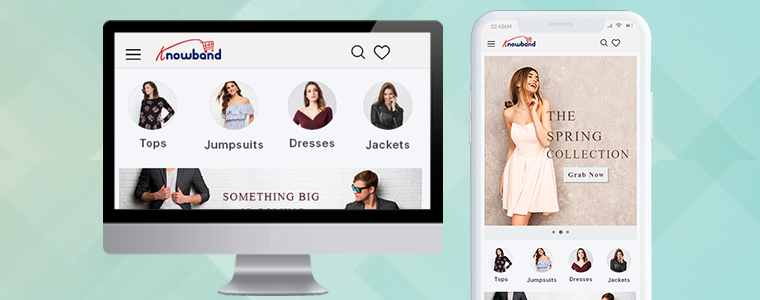
It decreases extra efforts, saves money and time which are the advantages of mCommerce. The hand handled devices like mobile and tablets have increased the demand for cross-device websites and mobile applications.

Better reach

Mobile commerce enables brands to reach new customers that they have never previously considered. It is projected that in the year 2021, three fourth of the world’s adults will own smartphones. For brands, this broad user base provides several future sales leads.

By shifting their slant and emphasis to distinguish themselves from rivals, mobile commerce enables brands to escape market saturation problems. Considering the advantage of mobile commerce, they offer comprehensive distribution opportunities to brands as new markets open up and are discovered.

Convenience, speed, and credibility

Those days are gone when tiny mobile screen, smaller keypads, and limited mobile phone memory was the major concern for mobile commerce. Now with emerging technology, mCommerce is the most convenient way of shopping and the high-speed networks are providing an advantage.

The benefit of mCommerce is that it does not require any extra effort for making the transactions. A mobile responsive website with some trust badges will be sufficient to gain the trust of your customer.

Localization

Mobile commerce specializes in using consumer data, such as geo-location, to optimize the service and, ultimately, to produce more sales. Hyperlocal marketplaces are in trend after the COVID 19 outbreak. The epidemic has become an advantage to online merchants.

This enables brands to target customers at the right time, whether they are looking for an item at midnight or shopping during a lunch-break through the mobile app. In those moments prior to a buying decision, geotracking technology and programmatic ads help retailers interact with these customers, raising the chance that the purchasing will be completed.

Personalization and Enhanced UX

There’s nothing the consumers enjoy more than a personalized experience. It saves their time, makes them feel valued, loved, and so some of the most popular e-commerce companies always use customization to their fullest potential. To make your customers feel unique, you can send personalized push notifications.

Personalization has proven itself to be the secret ingredient of e-Commerce success time and time again, particularly as of now at a time of machine learning and AI. Therefore, to maximize profits, delivering a seamless user experience is a must. Enhanced UX is the major advantage of mCommerce.

Final Thought

These are the primary advantages of M-Commerce for your companies. It is evident that mobile commerce provides tremendous benefits to retailers and brands, whether they are seeking to enter a new market or bringing out a new product. The data and connectivity that mobile commerce offers can be an excellent way to increase market share. Nevertheless, with those benefits also come challenges. As a company owner, in the current market situation, you will never be able to deny the triumph and prevalence of M-Commerce.

Create your mobile app using the Mobile App Plugin available for the major eCommerce platform like PrestaShop, Magento, OpenCart, WooCommerce, etc.

Recommended Reads:
Top Four Mobile Commerce Trends Every Retailer Should Know in 2020

No one can deny or ignore the paced growth of eCommerce (retail) industry. With Mobile Phones stepping into the online commerce, the trends of online shopping has fully revamped. With the growing use of smartphones & mobile devices, m-Commerce has grown exponentially in the past decade. Almost every eCommerce business has released their own mCommerce shopping apps by now. So, to be relevant and to be ahead of the competition in the market, e-retailers must be aware of various mCommerce trends.

Although, we all are aware of the growth in smartphone usage and mobile apps preference when it comes to online product purchase. Yet, not all the e-merchants are achieving its full advantage for the online business. Mobile Commerce is a must have for every eCommerce website in 2020. The more you delay, more sales and conversions are losing. Taking your website business to the mobile platform isn’t any sort of luxury anymore, but merely a basic necessity. Don’t go for my word, just take a look at the below statistics:

In year 2017, the mobile eCommerce sales accounted for around 34.5% of total eCommerce sales. [Source: Statista]

By the end of 2021, the growth in this data is expected to be 54% of total eCommerce sales. [Source: Emarketer]

In this write-up, we will elaborate the top 4 eCommerce trends that have been extremely useful for the store owners.

#1. Multi-Platform Shopping Applications

Targeting both Android and iOS smartphone using audience will definitely bring more conversions for you. Offer a pair of native mobile apps for eCommerce website and let users shop from the applications as well. Native eCommerce Mobile Apps are the ones that are published on the app stores (Google Play Store & Apple App store). With a featured shopping app, the users won’t be just limited to the browsing products but keeping them everything available at their fingertips will increase more sales.

Choose a reliable ready-to-launch Mobile App Builder and get everything ready in 2-3 days. The readymade eCommerce Mobile App Maker extension allows the store admin to create apps without any coding or programming. Nor they need to hire a programmer and spend a huge money for the same. Just purchase the right plugin for your eCommerce and rest everything will be automatically handled from creation to publishing on App stores.

PrestaShop Mobile App Builder

OpenCart Mobile App Builder

Magento Mobile App Builder

Magento 2 Mobile App Builder

WooCommerce Mobile App Builder

#2. Progressive Web Application (PWA)

E-Commerce Progressive Web Apps are the ones that are made live on the website (of the store). Whenever mobile website visitors visit a PWA active website, they see a button/tab which says ‘Add-To-Home-Screen’. Upon clicking it, the PWA mobile app gets instantly installed on user devices. That’s it, now the Progressive Web App will work like any other shopping application.

There are a few readymade extensions have the capability to provide fully customizable mCommerce PWA App for online store. The store admin get a very admin friendly dashboard from where they can edit and manage mobile app, send push notifications, etc. These days, to reach out to all possible target audiences, most eCommerce businesses are utilizing both native (Android and iOS) & PWA mobile apps.

PrestaShop PWA Mobile App

OpenCart PWA Mobile App

Magento 2 PWA Mobile App

WooCommerce PWA Mobile App

#3. Multi-vendor Marketplace & Seller Applications


Store owners that wish to have multiple sellers on the store usually opt for a complete package of Multi-vendor marketplace website and mobile applications. This process is simplified by Advanced Multi-vendor Marketplace with Mobile App extensions. Check out them from below links:

PrestaShop Advanced Marketplace with Mobile App

OpenCart Advanced Marketplace with Mobile App

Magento Advanced Marketplace with Mobile App

Magento 2 Advanced Marketplace with Mobile App

Using these, store owners instantly convert their store into full fledged marketplace & mobile app. On such a marketplace, store owners get a very optimized admin panel which let’s them manage every thing like-

  • Vendor Management
  • Seller Request Approval
  • Seller Commission Management
  • New Category Request Approval/ Disapproval
  • Tax Rule Settings
  • Rating & Review Management
  • Seller Order Tracking & Management
  • Sellers’ Transaction Tracking
  • Payout Management

All of the approved sellers on the store get their own unique vendor panels on which they can get following features:

  • Manual & Bulk Upload of Products
  • Order Management
  • Order Tracking
  • New Category Request
  • Commission Based Payout & more.

#4. Digital Payments & Transactions:

There was a time when online shoppers hesitated to make online payments & always opt for ‘Cash On Delivery’ options. But with the passing time & advancements in technologies & cyber securities, more & more shoppers have started to prefer digital payments over other options. In fact, nowadays the users first approach is to choose mobile payments over other options.

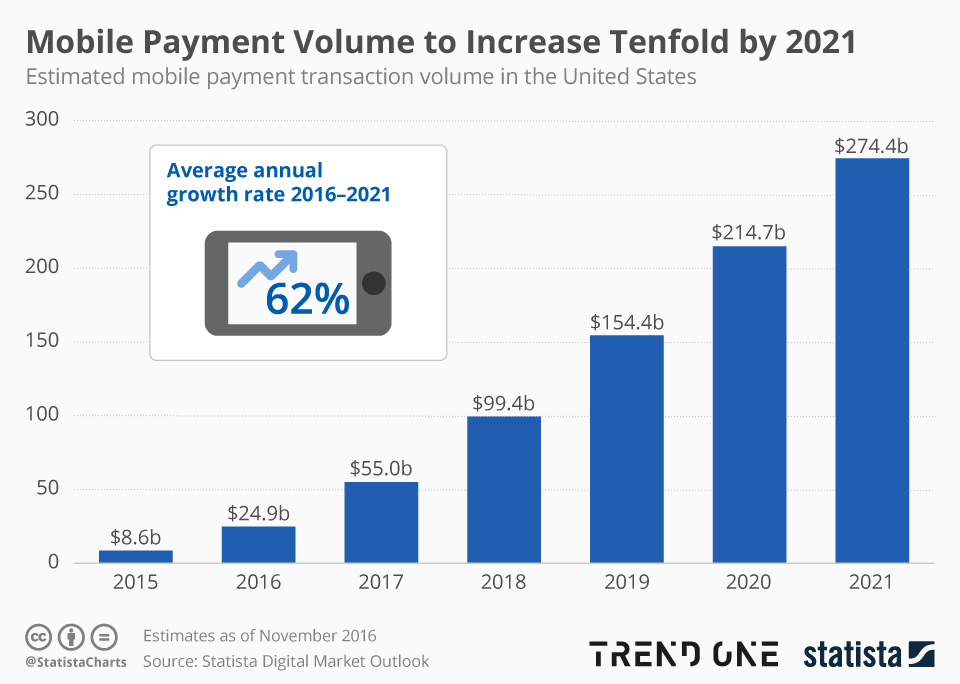
And reason is pretty simple for that. Mobile Payments offers much seamless and quick medium to pay for online product purchase. Just a few taps and the money is paid. Over the past few years, various advanced digital payments have been introduced in the market like e-wallets, Apple Pay, Google Pay, Braintree, Stripe, PayPal, Bank transfer etc. The eCommerce store owners can now opt for any payment options on their website and mobile application. As per Statista, mobile payments is expected to increase tenfold by 2021.

Its good to have e-wallets and UPIs integrated in eCommerce Mobile Apps. The users shopping through mobile applications (Android or iOS or PWA) can choose their preferable option to pay and make secure transactions. So, for businesses who have already stepped into mobile commerce or looking for a way to do so, choose a solution offering various digital payments to cater all sorts of mobile using audience.

Closing Comments

These were a few examples of how online shopping behavior is transforming. The store owners who are running their business on online eCommerce platforms should be in check with these trends. Ignoring the need of eCommerce mobile apps will only be a losing factor in matter of sales or revenue or growth.

So, if you are thinking of launching shopping apps for your website, its high time to act upon the same. Check the readymade solutions shared above or discuss more on support@knowband.com. We, at KnowBand offer readymade native (Android and iOS), PWA (Progressive Web App) & Marketplace Mobile Apps for the eCommerce websites build using any of the below platforms:

Understanding Mobile Commerce: What is it? Examples and Benefits

Mobile Commerce has excelled at a rapid rate in the past few years. Smartphones are dominating the new generation and ease of access to online transactions is the primary reason for the quick evolvement of mobile commerce.

The use of desktops for online purchases has diminished and it is now being replaced by hand-held devices.

In 2018, mobile commerce made a figure of around $207 billion in the US itself, and that was around 40% of the total eCommerce retail sales captured that year. And the numbers are expected to hit the $338 billion mark in 2020, reports Statista.

If you talk about global mCommerce sales, it has already surpassed eCommerce way back in 2016, and it is going to make a powerful impact in the future.

What is Mobile Commerce?

Mobile Commerce also referred to as mobile eCommerce or simply mCommerce/m-commerce is all about online transactions that take place through mobile devices or tablets.

Put simply, whenever you conduct a transaction through your smartphone, it’s mCommerce. From purchasing the smallest of things to expensive ones, today, most of the people prefer to make the payment using their cell phones. This is what has led to mobile commerce expansion.

Mobile Commerce vs eCommerce: What’s the difference?

Though this would have been pretty clear by now, let me make it easier for you to understand. The key difference between m-Commerce and eCommerce is that the latter involves buying and selling of goods through any kind of device, be it a mobile or desktop, whereas m-commerce is used when online transactions are made through mobile devices specifically.

You can also say that eCommerce is the parent category and mCommerce is the child category.

Mobile Commerce Examples

M-commerce can be witnessed in our day to day lives. A few examples are-

Mobile Shopping

When I talk about mobile shopping, Amazon hits my mind straight away. The largest eCommerce company in the world captures a huge number of sales daily through mobile devices. It has its own mobile app as well which makes it even easier to purchase anything from their store. And since it covers a wide variety of items, it is the go-to shopping store for most of the people.

And similar to Amazon, there are multiple other websites that encourage mobile shopping.

Mobile Banking

Another example of mobile commerce is Mobile banking. Until a few years ago, people either used to meet-in-person or go to a money transfer store to send money to someone. Thanks to Mobile banking which has now made it a few clicks task.

If you want to transfer money to a user, all you require is their account details like account number and IFSC code, and a single tap would deposit the money in the recipient’s account. Digital wallets like Google Pay does not even require account details if the recipient is registered on the same platform.

Benefits of Mobile Commerce

There is a reason why m-commerce has achieved a significant rise in the past few years. Some of the major advantages of mobile commerce are-

1. Better Customer Experience

M-commerce makes it convenient for mobile users to make online payments. They do not need a laptop or desktop to conduct a transaction. If you are having a smartphone and a good Internet connection (since payment may fail if there is network issue), you can make a payment anytime, anywhere, without any hassle.

2. More and more people are shifting towards m-commerce

Mobile eCommerce is expected to reach 70% of the total eCommerce retail sales this year. Therefore, it is vital that you allow your mobile visitors with the facility of easy mobile transactions. Failing to do so may result in a huge loss in your mobile conversions.

Work on the mobile version of your website. Optimize it, make it responsive.

3. Faster transactions

Everyone wants comfort. Nothing would make a person happier if he or she could perform any task without getting up from their bed. Not sure about other things but mobile commerce applications have made it possible to make payments faster and you do not need to get up from your bed and search for your laptop.

You cannot carry a laptop with you every time. A cell phone? Definitely.

Final word

The first and the foremost thing to do to improve mobile commerce is making your web pages load quickly. The faster your website loads, the more mobile conversions you will have. The use of AMP in such cases proves to be beneficial.

From the moment a visitor enters your website to the final payment page, each and every step must be optimized, primarily the checkout page, so that the visitors do not find any kind of trouble on your website.

Make mobile commerce more flexible through our Mobile App Builder.

You May Also Like:

Mobile App Marketing: How to Promote your Mobile App?

Tips To Boost User Engagement with eCommerce Mobile Apps

How eCommerce Mobile Apps enhance Customer Loyalty?

KnowBand is a leading Mobile Commerce Solution Provider, says Global Market Researchers

We are pleased to announce that KnowBand has been recognized as one of the leading Mobile Commerce Solution Providers by Global Market Researchers. As per research reports of various global retail & mobile market agencies, KnowBand has made to the list of top eCommerce mobile app developers.

It is a remarkable accomplishment that has made our entire team, at KnowBand, proud of their continuous hard work and efforts behind the Mobile App Builder in providing a better, easy and simplified shopping experience to mobile users.

Regions/Countries covered in the research include the United States, Europe, China, Japan, South-East Asia, India and Central & South America.

Read complete news from here: https://www.marketinsightsreports.com/reports/06211304981/global-mobile-e-commerce-software-market-size-status-and-forecast-2019-2025

What led KnowBand’s Mobile App Builder to this?

A majority of online shoppers prefer mobile devices to shop nowadays, and ever since the introduction of mobile apps, online shopping has become way too easy.

It can be backed by the fact that mobile sales accounted for 40% of the total eCommerce sales in the US, in 2018, and expected to reach 54% by the year 2021, as per a report by Statista.

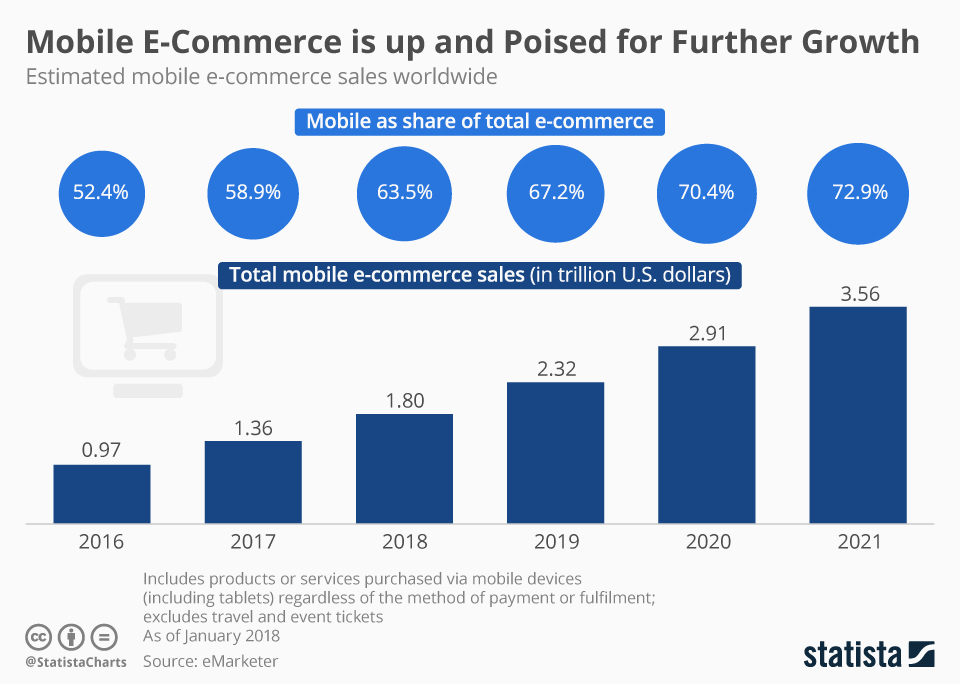
If we talk about global mobile commerce statistics, m-commerce has already surpassed desktop sales in 2016, accounting for 52.4% of m-commerce sales that particular year. The sales graph can reach as high as 73% by the year 2021.

Considering the continuous growth in mobile commerce, KnowBand has been putting its all every day to help eCommerce merchants to take their business to the next level and increase their sales margin. With its tech-savvy pool of developers & entire focused team efforts, every eCommerce merchant got the best shopping apps for their business. KnowBand is also a Superhero Seller on the official PrestaShop Addon Store.

The Mobile App Builder is currently available for PrestaShop, OpenCart, Magento, Magento 2 and WooCommerce. Check them out:

PrestaShop Mobile App Builder

OpenCart Mobile App Builder

Magento Mobile App Builder

Magento 2 Mobile App Builder

WooCommerce Mobile App Builder

Outstanding features that make our Mobile App Builder stand out from the rest:

1. Customizable Home Screen

2. One Tap Login(Google, Facebook, OTP &Fingerprint)

3. Multi-lingual and RTL Support

4. Real-time synchronization

5. Unlimited Push Notifications

6. Both Web-view & Native Payments

7. Zopim and WhatsApp Chat Support

8. Full Back-end Panel Access

9. Layered Navigation with Voice Search

10. Compatible with Multi-vendor Marketplace

11. Real-time Order Tracking

Apart from these features, it offers multiple elegant themes to give an attractive look to your mobile app.

Get the Mobile App Builder today and launch a pair of shopping apps for your online business.

How to build an eCommerce Mobile App?

Mobile Commerce and its growth:

We all can witness the impact of digitization in this tech-centric world. Along with all the major sections, the eCommerce industry has witnessed tremendous growth and advancements in the past few years. Earlier the shoppers were only limited to the websites for product purchase. But, as the majority of online sellers took their website business to the mobile platform, the mobile shopping app is a kind of necessity rather than just a luxury.

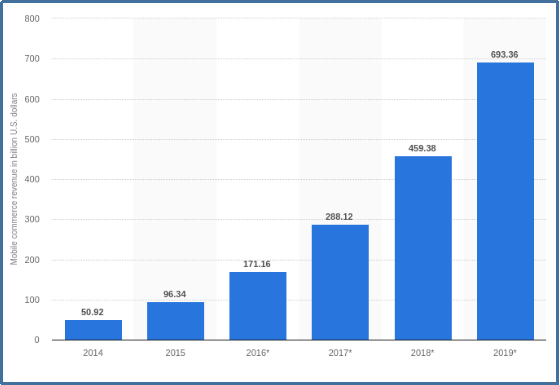
First of all, let’s narrow down the exact difference between eCommerce and m-commerce. Mobile commerce is selling products on various handheld devices while eCommerce is selling products through online websites. Many marketing experts are quoting that worldwide mCommerce is about to reach around $693B by the end of 2019.

Mobile Apps are a kind of inevitable need nowadays with the constant increase in mobile users on daily basis. The shoppers want everything at their fingertips to which they can easily reach. But, the need for eCommerce mobile apps often get ignored by online merchants and ultimately faces a huge loss.

How eCommerce mobile apps came out as a trend?

Creating a mobile app for your eCommerce website isn’t just limited to code one. You need to make sure that the app should be matching exactly with your website in terms of both look and functionality. Instead of providing some simple programmable apps to your users, think of a better approach and offer them one with all the help and assistance.

Who doesn’t want to opt for such eCommerce apps which can boost their website revenue? Mobile apps enhance the reach of your regional online business among the worldwide audience. They take your business to every corner of the world where you ever want to reach physically. But, you must be sure about the kind of mobile app which is being offered to your users. Let’s begin with a few basic questions which you should ask for your app:

1. Is your mobile app capable of targeting the right audience?
2. Does your mobile app support the products you sell?
3. How can you manage the inventory with the apps?
4. Can your app expand your business on a global scale?
5. Is your app interface enough seamless and appealing?
6. Is product purchase simple for the shoppers?
7. Can you manage the app functionalities on your own?
8. Can you optimize the home screen UI as per various occasions?
Last but not least,
9. How will you manage the app and store simultaneously at the same time?

These are some basic queries which should be considered before going for coding or non-coding way to create an eCommerce mobile app. There are various other aspects to be analyzed as well while creating eCommerce mobile app.

Key essentials for flawless mobile app creation:

1.  User Experience:

Your app design should be user-centric. All the features and functionalities of your eCommerce mobile app should be crystal clear for mobile shoppers. Try to use the right color selection and correct usage of other designing elements to lure the user’s attention just with the perfect designed app. Often it happens that the mobile app visitors access the app because of the awesome designs and end up as a potential user.

Moreover, you should try to keep a brand touch in your apps. Your app portrays your business to the users so, try to keep it as effective as it can. The app screens should be crafted nicely and the transactions between them must be smooth. Display your store logo on the app and promote your brand as well along with the store products.

2. Audience Analysis

Being an eCommerce store owner you must analyze your target audience. This research has its own significance as it lets you make the decision based on user’s likes, dislikes, purchase behavior etc. It will help you in providing the exact mobile app which your user needs.

Your marketing strategies actually rely on this core aspect of eCommerce business. In this age of sternest competition, you don’t afford to make any error as it can make you lose loads of conversions and leads. Keeping your app features as per the audience taste and preference will definitely be a silver bullet for your business.

3. Track Competition

List down your competition who have already gone mobile or looking forward to doing so. Analyze their move and check what makes them a better choice for the users than you. Research their best features and benefits and try to make up the most out of this analysis.

4. Right Technology

Choosing the right technology for your app is the prime requirement for eCommerce mobile app development. Your app must be updated with all the latest advancements and should work without any flaw. Try to opt for the native eCommerce mobile apps in order to provide sustainability. Similarly, you also need to decide whether you want to develop an Android app or an iOS app or both as per your targeted audience.

These were some of the core aspects of understanding and analysis before actually going for app development. Now let’s take a look at some of the must-have features of your eCommerce Mobile App.

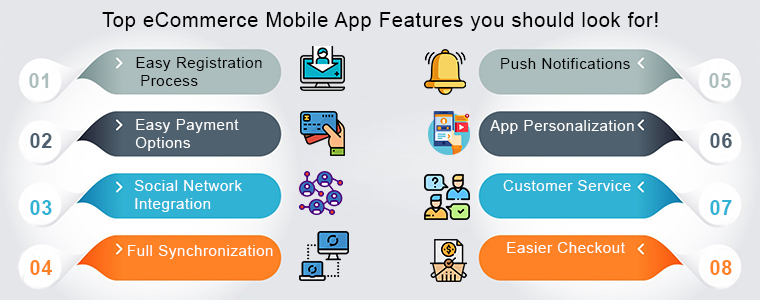
Top eCommerce Mobile App Features you should look for!

1. Easy Registration Process

In this paced day to day lives no one wants to fumble with the lengthy login forms when it comes to access your app. Many eCommerce store owners ignore this fact and eventually it doesn’t end well. You must not make this mistake and incorporate quick login options in your app in the first place.

Moreover, there must be at least 2-3 login options in your apps including social media networks. Providing one or two tap login option in your app could not only motivate them to open the app and browse the store but also boost sale for your business.

2. Easy Payment Options

Let’s take an instance that a user has visited your app and added products in its cart. But, when he/she tried to make the payment there weren’t enough payment options. This will surely make the user leave without successful product purchase.

You should be serious about providing multiple reliable and user-favorite payment options in your app. With Amazon Pay, PayPal, COD, Braintree, Stripe etc. you can easily push your users to make the purchase.

3. Social Network Integration

No one can deny the power of social media. If you are running a business, social media could be a game changer for you if used properly. Your eCommerce mobile app also needs social integration in order to popularize it.

Right from one-tap login to social sharing of products, the mobile apps will spread your word of mouth among potential buyers. So, you must connect the basic social networks in your app for improved benefits.

4. Full Synchronization

Being an eCommerce store owner managing both apps and the store simultaneously could be hectic for you. So, why not connect both with each other? Offer 100% synchronization between your store and the mobile apps and speed-up your inventory management process.

Once the apps and your online website are in synchronization, all the updates made on the website are automatically get reflected on the mobile apps. This halves your workload and saves plenty of time to focus on the competition and improve sales.

5. Push Notifications

Your app is the major communication source between you and the buyer if it has the right tool. Push notifications are the perfect marketing tool for an eCommerce mobile app. Sending personalized notifications to the app users would increase the app engagement. Notifying the users regarding discounts, sales, offers, and other store-related details would definitely enhance your eCommerce store sales.

6. App Personalization

All the top eCommerce mobile apps offer the best shopping experience to the app users. You should opt for the eCommerce mobile app solution which allows you to personalize the home screen on your own.

Your app’s home screen is responsible for the first impression on the users. So, you must make sure it certainly meets the user’s expectation. This will even help the store admin to drive more sales to your store. There is various automated eCommerce mobile app solution for PrestaShop, OpenCart, Magento, Magento 2, WooCommerce and others that allow you to present the desired layout in your apps. You can even read various tips to design beautiful eCommerce mobile apps.

7. Customer Service

Customer satisfaction is an important aspect which shouldn’t be ignored at any cost. While shopping online through your app there is a chance that user might be in doubt regarding the purchase. So, there must be reliable contact options in your app. This will not only let your users directly contact you regarding any query or problem but also brings their loyalty to your store.

8. Easier Checkout

The simpler is your checkout screen, more are the chances of a successful purchase. Easy checkout screen often motivates the users not to abandon the cart without making payment.

Wrap Up

This tour of developing eCommerce mobile app would have hopefully cleared that the mobile apps are better than online websites. So go ahead, do all your research and analysis and choose the right eCommerce mobile app development solution.

Looks good? Find some more articles on how these mobile apps can benefit your eCommerce business:

How eCommerce mobile apps can boost your small business?
Reasons why eCommerce business needs a mobile app?