Important Alert by Knowband: Universal Analytics to be Phased Out by Google!

Google is calling on users to swiftly transition to Google Analytics 4 (GA4) to avoid losing valuable data. As the digital landscape evolves, Google has announced its plan to discontinue all Universal Analytics (UA) services and application programming interfaces (APIs) by July 1. Furthermore, this move signifies a pivotal shift towards Google Analytics 4 (GA4), marking the end of access to UA properties through both the Google Analytics interface and its APIs starting in July.

For users who have not yet embraced GA4, Google emphasizes the urgency of migrating.
The transition is not just a technical necessity but an opportunity to harness more sophisticated analytics capabilities offered by GA4. Unlike its predecessor, GA4 focuses on privacy-compliant data collection and offers a more intuitive user interface, enhanced machine learning models, and cross-platform tracking capabilities. Moreover, these features are designed to provide deeper insights into user behavior and improve the accuracy of data-driven decisions.

Why Immediate Action is Essential!

Data is one of the most important assets for an online website. For the same reason, it becomes essential to protect the same.
Delaying the migration process poses a significant risk of data loss, which could irreversibly impact the effectiveness of marketing strategies and campaign performances. Thus, to facilitate a smooth transition, Google has made available a comprehensive migration guide that outlines step-by-step instructions.

Data Preservation Techniques!

Preserving historical data is crucial. Google Analytics Help Center details several methodologies for exporting data from UA properties. For those with Universal Analytics 360 properties looking to export historical data through BigQuery, it’s imperative to begin this process immediately. Post-transition, exported data will continue to be accessible within BigQuery, ensuring continuity of data analysis and reporting.

Understanding the Changes:
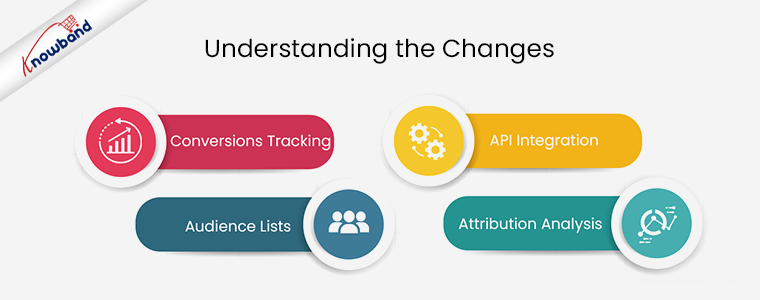
Conversions Tracking:

The discontinuation of UA will halt the tracking of new conversions. This could significantly affect the optimization of ad campaigns, particularly for those utilizing Google’s Smart Bidding strategies.

Audience Lists: 

With the closure of Universal Analytics, custom audience lists used for targeting in advertising campaigns will become unavailable, potentially diminishing campaign effectiveness. However, you can access more advanced features with GA4.  

API Integration: 

Post-UA, API requests related to Universal Analytics will not be processed. This includes data deletion requests via the User Deletion API, affecting the functionality of analytical tools like Looker Studio.

Attribution Analysis: 

The sunsetting of Attribution Projects within Google Analytics highlights the need for marketers to adapt their attribution modeling in GA4. It will ensure the continued understanding of customer touchpoints and conversion paths.

In the END!

Transitioning to GA4 is not just a mandatory shift but an opportunity to leverage advanced analytics that can drive more nuanced and effective marketing decisions. The comprehensive features of GA4, designed to meet the demands of a privacy-first digital environment, offer businesses the tools to thrive in an increasingly competitive online space.

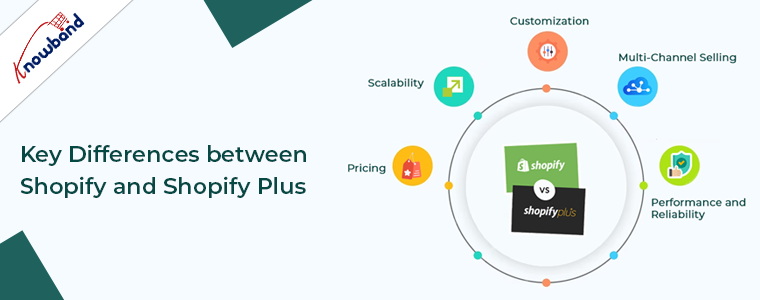
 

Shopify vs. Shopify Plus: Making the Right E-commerce Platform Choice for Your Business!

In the fast-paced world of e-commerce, choosing the right platform for your online store can make all the difference in your business’s success. Thus, two popular options are Shopify and Shopify Plus, each catering to different needs and business sizes.
Following the same, we will explore the differences between Shopify and Shopify Plus to help you make an informed decision and select the platform that best suits your business.

Understanding Shopify and Shopify Plus!

Before delving into the comparison, let’s briefly understand what Shopify and Shopify Plus are:

Shopify:

Shopify is a widely used e-commerce platform designed for small to medium-sized businesses. Furthermore, it provides an easy-to-use, cloud-based solution for entrepreneurs looking to set up their online stores quickly and efficiently.
Therefore, Shopify offers a range of features, including customizable templates, payment processing, and inventory management, making it an excellent choice for startups and small businesses.

Shopify Plus:

Shopify Plus, on the other hand, is an enterprise-level e-commerce platform built to accommodate large and high-growth businesses. Moreover, it offers advanced features and scalability, making it suitable for companies with higher transaction volumes and more complex needs.
Furthermore, Shopify Plus is also known for its flexibility, allowing businesses to tailor their online stores to meet specific requirements.

Key Differences between Shopify and Shopify Plus:


To help you make the right choice for your business, let’s compare Shopify and Shopify Plus across various aspects:

1. Pricing:

Shopify: Shopify’s pricing starts at $29 per month for its basic plan and goes up to $299 per month for its Advanced Shopify plan. While this pricing may be suitable for small to medium-sized businesses, it can become cost-prohibitive for larger enterprises with substantial sales volume.

Shopify Plus: Shopify Plus, on the other hand, operates on a custom pricing model.
Thus, it caters to businesses with higher sales volumes and complex needs, meaning you’ll need to request a quote to get an accurate pricing estimate. While it may be more expensive than Shopify, the cost can be justified by the additional features and capabilities it offers.

2. Scalability:

Shopify: Shopify is ideal for businesses that are just starting or have moderate growth ambitions.
While it can handle a considerable amount of traffic and transactions, it may not be as scalable as Shopify Plus when it comes to handling rapid growth and high-volume sales.

Shopify Plus: On the other hand, Shopify Plus is designed for high-growth businesses. Thus, with its robust infrastructure, Shopify Plus can easily scale to accommodate the demands of rapidly expanding enterprises.

3. Customization:

Shopify: Shopify offers a range of customizable templates and themes to help businesses create a unique online presence. However, the level of customization may be limited compared to Shopify Plus.

Shopify Plus: Shopify Plus provides extensive customization options, allowing businesses to tailor their online stores to their exact specifications. Moreover, this level of flexibility is crucial for enterprises that require unique branding, user experiences, and functionality.

4. Multi-Channel Selling:

Shopify: With Shopify, you can sell through various channels like your online store, social media, and marketplaces. However, the breadth and depth of multi-channel selling options are more extensive in Shopify Plus.

Shopify Plus: Shopify Plus offers advanced multi-channel selling capabilities, including integration with popular marketplaces like Amazon and eBay, as well as POS (Point of Sale) solutions for physical retail stores. This makes it a great choice for businesses looking to expand their presence across different sales channels.

5. Performance and Reliability:

Shopify: Shopify provides reliable hosting and security, but it may not offer the same level of performance and redundancy as Shopify Plus. Smaller businesses may not notice a significant difference, but larger enterprises may require the added stability and uptime of Shopify Plus.

Shopify Plus: Shopify Plus offers robust infrastructure, ensuring high performance, scalability, and redundancy. This is essential for businesses that cannot afford downtime, especially during peak sales periods.

Which Platform Is Right for Your Business?

Choosing between Shopify and Shopify Plus ultimately depends on your business’s specific needs, size, and growth trajectory.

Choose Shopify if you are a small to medium-sized business with a limited budget and moderate growth expectations. It’s user-friendly, cost-effective, and provides all the essential features for online selling.

Opt for Shopify Plus if your business is an enterprise with high sales volumes, complex requirements, and rapid growth plans. The additional features, customization options, and scalability make it a valuable investment for larger businesses.

In the END!

In conclusion, both Shopify and Shopify Plus are excellent e-commerce platforms, but they cater to different business sizes and needs. By evaluating your specific requirements and growth goals, you can make an informed decision and select the platform that aligns best with your online business. 

React & Retail: Merging Modern Tech with eCommerce!

In the rapidly evolving digital landscape, the fusion of modern technologies with eCommerce platforms has become a pivotal strategy for businesses aiming to thrive in the competitive market. From PHP to Python, there are a lot of options available in the market today to design a fully functional eCommerce platform. Among these technologies, React.js stands out as a powerful tool, transforming the way retailers build and manage their online presence. Furthermore, in this article we will dive into the synergy of React and retail, exploring how this technology enhances eCommerce experiences and drives industry innovation.

The Rise of React in eCommerce:

React.js, developed by Facebook, is an open-source JavaScript library used for building user interfaces, particularly for single-page applications. Moreover, it’s renowned for its efficiency, flexibility, and the seamless experience it offers.
In the context of eCommerce, React brings these benefits to the forefront, enabling developers to create fast, responsive, and dynamic shopping platforms.

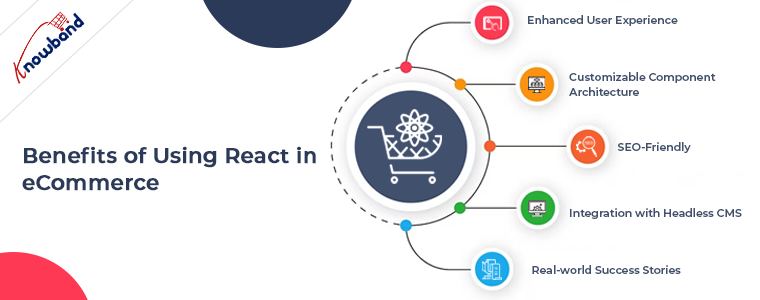
Benefits of Using React in eCommerce:


Enhanced User Experience:

User experience is the cornerstone of successful online retail. Not only React aids developers in creating highly interactive and responsive user interfaces. But, also ensures a smooth user experience for the front-end users.
Moreover, with features like Virtual DOM, React ensures that any changes made on the webpage don’t affect the entire structure. Instead, only the required components are updated, leading to faster and smoother performance. This means shoppers can enjoy quick page loads and real-time feedback, significantly enhancing their browsing and shopping experience.

Customizable Component Architecture:

React’s component-based architecture is a game-changer for eCommerce sites. It allows developers to build encapsulated components that manage their state and then compose them to make complex UIs.
Therefore, for retailers, this means they can easily customize and reuse components across different parts of their application. Whether it’s a product display grid, a checkout form, or a search bar. This modularity not only speeds up development and maintenance but also ensures consistency in the look and feel of the online store.

SEO-Friendly:

In the competitive realm of online retail, being visible to potential customers is crucial. Thus, React’s ability to render on the server side (using Node.js) makes it SEO-friendly.
Moreover, it means that the content of a React-powered website can be indexed by search engines more effectively, improving the site’s visibility and ranking.

Integration with Headless CMS:

The concept of a headless Content Management System (CMS) is gaining traction in the e-commerce world. It separates the front end (what users see) from the back end (where content is stored) of your website. Thus, React is particularly well-suited for use with headless CMSs.
Retailers can also use React to build a dynamic front end that pulls data from the CMS. This approach allows for greater flexibility, faster performance, and a more personalized shopping experience.

Real-world Success Stories:

Many leading eCommerce giants have already embraced React to revitalize their platforms. For instance, Airbnb has leveraged React’s capabilities to enhance its booking system.
Similarly, Netflix has utilized React on its platform to ensure a fast, smooth, and engaging user interface that keeps millions of users worldwide glued to their screens.

Conclusion!

The amalgamation of React and retail is a testament to how modern technology can revolutionize traditional industries. React’s ability to create dynamic, fast, and SEO-friendly applications makes it a formidable tool in the eCommerce arsenal. As businesses continue to strive for better customer engagement and sales, React stands as a beacon of innovation, guiding the way toward more interactive, efficient, and successful online retail experiences.
Furthermore, at Knowband we also provide React development services. If you have requirements/queries regarding your project, feel free to get in touch with the team at the official email address support@knowband.com.


Troubleshooting Common PHP Issues in eCommerce Platforms by Knowband!

In the rapidly evolving world of eCommerce, PHP stands out as a robust scripting language that powers many online stores and platforms. It’s favored for its flexibility, simplicity, and wide-ranging capabilities.
However, like any technology, PHP is not immune to issues, especially when integrated with complex eCommerce platforms like PrestaShop, WooCommerce, OpenCart, and Magento 2. Here, we’ll delve into some common PHP issues and provide strategies for effective troubleshooting.


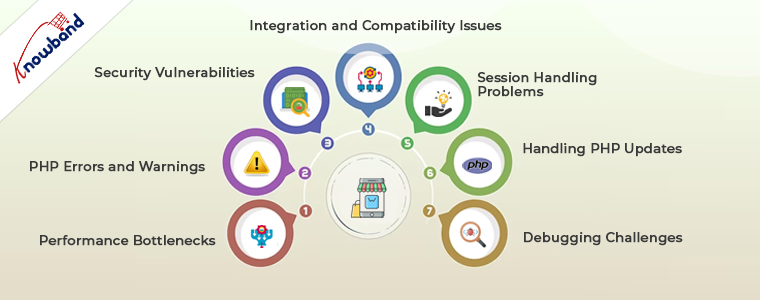
1. Performance Bottlenecks:

One of the most frequent challenges faced by eCommerce platforms is slow performance, often due to PHP scripts. Furthermore, long load times not only frustrate customers but also negatively impact search engine rankings. Thus, it becomes important to optimize the website from the loading speed perspective as well.

Solution: To resolve loading speed-related errors, you can optimize your scripts by using PHP accelerators like OPCache. Regularly profile your code with tools like Xdebug to identify and resolve performance bottlenecks. Furthermore, you can also consider leveraging efficient caching mechanisms and optimizing database queries.

2. PHP Errors and Warnings:

Errors and warnings can disrupt the user experience and indicate underlying issues with your code. Common problems include undefined variables, syntax errors, and deprecation warnings.

Solution: To address this kind of error, enable error reporting during the development phase by setting `error_reporting` to E_ALL. This practice helps catch issues early. Use a version control system to manage updates and rollbacks safely, and always test code in a staging environment before deploying it live.

3. Security Vulnerabilities:

Security is paramount in eCommerce. Furthermore, not only for the store admin but also for the store visitors, security plays an impactful role. PHP, being a server-side script, is a frequent target for attacks like SQL injection, cross-site scripting (XSS), and session hijacking.

Solution: Always sanitize and validate user inputs. Employ prepared statements with PDO or MySQLi when interacting with databases. Moreover, it is also recommended to regularly update your PHP version and use security tools like Suhosin and mod_security. As a basic practice, you should always implement HTTPS and secure user sessions to protect sensitive data.

4. Integration and Compatibility Issues:

Integrating PHP with various APIs and third-party services is common in eCommerce for functionalities like payment gateways, shipping, and inventory management. However, compatibility issues can arise due to different API standards or outdated libraries.

Solution: Regularly update your PHP libraries and APIs to the latest versions. Adhere to best practices for API integration and ensure thorough testing is conducted with each update or addition. Therefore, if issues persist, consider consulting with the service provider or community forums for specific guidance.

5. Session Handling Problems:

Session management is crucial for tracking user activity and preferences. However, issues like session data loss or mismatches can occur, which can lead to cart abandonment or incorrect data processing.

Solution: This type of issue can be handled by Using a reliable and scalable session storage solution, especially if you’re handling a high volume of users. Moreover, you should regularly clear old session data to prevent overload and configure your PHP environment to handle sessions securely.

6. Handling PHP Updates:

PHP regularly releases updates that improve performance, add features and patch security vulnerabilities. However, updating PHP can sometimes break existing functionality if your code or extensions are incompatible with the new version.

Solution: Before updating, thoroughly test your site in a staging environment with the new PHP version. Check compatibility with all plugins and extensions. Read through PHP’s migration guides for insights into potential issues and new features.

7. Debugging Challenges:

Effective debugging is essential for maintaining a smooth and functional eCommerce platform. However, diagnosing issues in complex PHP Language/ code can be daunting.

Solution: Utilizing comprehensive debugging tools like Xdebug, which provide features like stack traces and variable display can help a lot in these situations. Implement logging mechanisms to capture errors and unusual behavior in production. Also, consider adopting a modern IDE that offers advanced debugging features.

Conclusion!

Troubleshooting PHP issues in eCommerce platforms requires a systematic approach and a deep understanding of both the language and the specific platform you’re using. Remember, the key to successful troubleshooting is proactive monitoring, regular updates, and a community-driven approach to problem-solving. With these practices, you can ensure that your eCommerce site remains a reliable and powerful tool for your business.

Furthermore, at Knowband along with eCommerce extensions, we also offer custom web and app development services. Thus, in case you have project requirements or queries, you can contact the support team at support@knowband.com or we are also available on Calendly for discussion.

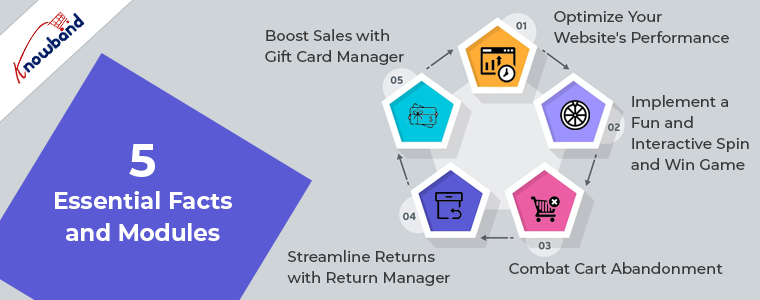
Preparing Your eCommerce Store for New Year: 5 Essential Facts and Modules!

New Year season is a worldwide season of joy and happiness Not only more customers like to purchase their favorite products online during this time. But also, a multitude of gifts is exchanged among individuals. For the same reason, it becomes necessary to prepare eCommerce stores to welcome a vast customer base cheerfully.
Thus, we have got 5 suggestions that can significantly enhance the look and feel of your Presta store and will surely help you to turn your store visitors into customers. To ensure a successful year-end, consider these five crucial facts that will help you prepare your Prestashop store for the upcoming sales extravaganza.

Optimize Your Website’s Performance:

One of the first steps in preparing your Prestashop store for the New Year sales season is to ensure that your website is running at its peak performance. The potential loss of customers often stems from slow-loading pages and glitches on the website. Furthermore, you can also consider utilizing the Prestashop Website Decoration Effect module to enhance your website’s aesthetics and create a seamless and visually appealing shopping experience. This module allows you to add engaging effects and animations to captivate visitors and keep them engaged throughout their journey on your site.


Implement a Fun and Interactive Spin and Win Game:

The first impression on any eCommerce website plays a major role in order making decisions for the visitors. Thus, to welcome your customers with discounts and visually appealing pop-ups, consider incorporating the Prestashop Spin and Win Addon.
Moreover, engaging customers with a fun and interactive game not only keeps them entertained but also encourages them to make a purchase. The spin-and-win game can be a creative way to offer discounts, promotions, or exclusive deals. Make the shopping experience more enjoyable for your customers while promoting sales on your Prestashop store. Furthermore, the module also captures the visitors’ email addresses, which can be further used for making and promotional purposes.

Combat Cart Abandonment:

E-commerce businesses frequently grapple with the issue of abandoned shopping carts. However, with the right strategies, you can recover potential sales. The Abandoned Carts module for Prestashop is a powerful tool to help you tackle this issue. Moreover, the Abandoned cart module allows you to send automated reminders to customers who have abandoned their carts, enticing them to complete their purchases.

By addressing cart abandonment, you can significantly boost your sales conversion rates during the New Year sales season.

Streamline Returns with Return Manager:

An often overlooked aspect of the e-commerce experience is the return process. As the number of customers increases during the new year sales season, the following factors also impact the return orders. Thus, offering a hassle-free return policy can instill confidence in your customers and encourage them to make a purchase. The Return Manager module for Prestashop simplifies the return process, making it convenient for both customers and store owners. Highlighting your customer-friendly return policy during the New Year sales season can be a distinguishing factor that sets your Prestashop store apart from the competition.

Boost Sales with Gift Card Manager:

Gift cards are a popular choice during the holiday season, making the Gift Card Manager module an invaluable addition to your Prestashop store. Furthermore, this module allows you to create and manage gift cards, providing your customers with a convenient gifting option.
Promoting gift cards as thoughtful presents for the New Year can attract more shoppers to your store and contribute to increased sales. Highlight the versatility and ease of use of the Prestashop Gift Card Manager module in your marketing efforts to maximize its impact on your New Year sales.

Conclusion!

It is for sure that more customers are going to visit your store during the new year sales season. Thus, it becomes more important to provide your customers with a unique and mannered shopping experience that can leave a positive brand impact on their minds.

The following factor makes it crucial to take every necessary step to make your website ready for peak sales time. Further, we hope the above suggestion will surely help you to get an idea of what your customers looking for. Further, in case you have further queries/suggestions, please feel free to get in touch with the support team at our email support@knowband.com.


Laravel vs. Symfony vs. CodeIgniter: Which is Best and Why!

In the ever-evolving landscape of web development, choosing the right PHP framework is a crucial decision that can significantly impact the success of a project.
Furthermore, in 2023, Laravel, Symfony, and CodeIgniter continue to stand out as three of the most prominent PHP frameworks, each with its unique strengths and characteristics.

Thus, following the same, in the following article we are going to provide a comprehensive comparison of these frameworks to assist developers in making informed decisions for their projects.

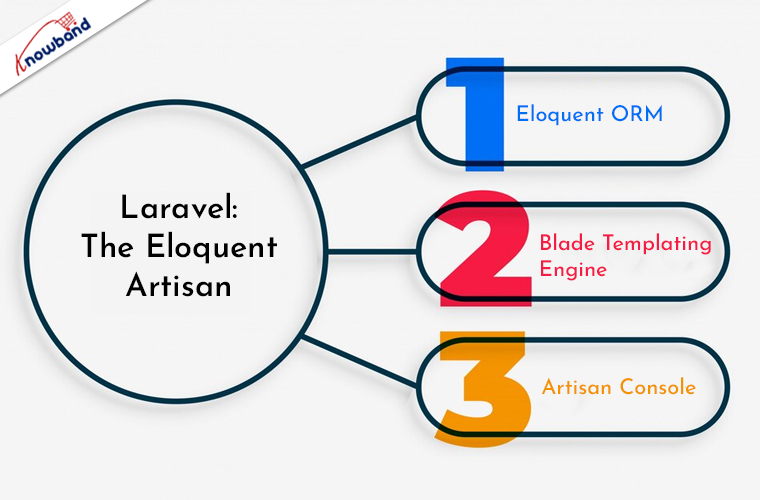
Laravel: The Eloquent Artisan


Laravel has emerged as a dominant force in PHP development, known for its elegant syntax, expressive codebase, and a wide range of built-in features. Moreover, Laravel continues to be the go-to framework for developers who prioritize simplicity and developer-friendly tools. These features not only make the framework flexible but also the in-built libraries enhance the user-friendliness.

Key Features:

Eloquent ORM: Laravel’s ORM system allows developers to interact with databases using an expressive syntax which further simplifies database operations.

Blade Templating Engine: Blade provides a clean and intuitive templating system, enhancing the development of dynamic and engaging views.

Artisan Console: The Artisan command-line tool automates repetitive tasks. Furthermore, not only does the following factor make the code fast but also maintains the efficiency.

Use Cases:

Laravel is well-suited for a variety of projects, from small-scale applications to large enterprise-level systems. Its extensive ecosystem of packages and vibrant community contribute to its popularity.

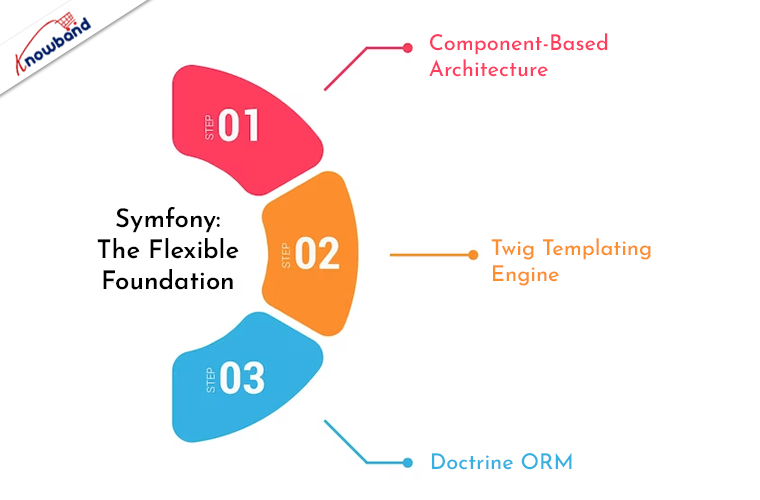
Symfony: The Flexible Foundation


Symfony, known for its stability and flexibility, is a framework that provides a robust foundation for building complex and scalable web applications.
Furthermore, Symfony remains a top choice for developers who require a high degree of customization and control.

Key Features:

Component-Based Architecture: Symfony’s components can be used independently, allowing developers to pick and choose the elements they need for a particular project.

Twig Templating Engine: Twig offers a powerful and secure templating engine, facilitating the creation of dynamic and maintainable views.

Doctrine ORM: Symfony integrates with Doctrine for powerful database abstraction and object-relational mapping.

Use Cases:

Symfony excels in projects that demand a high level of customization and scalability. Therefore, it is often chosen for large-scale enterprise applications and projects with complex requirements.

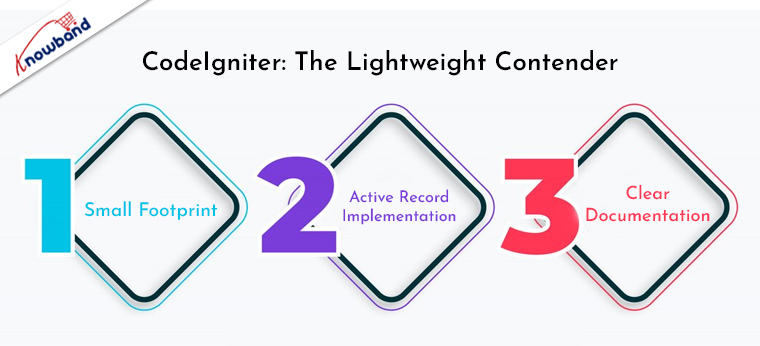
CodeIgniter: The Lightweight Contender


CodeIgniter has long been appreciated for its simplicity, speed, and ease of use. In 2023, it continues to be a reliable choice for developers who prioritize a lightweight framework without sacrificing essential features.

Key Features:

Small Footprint: CodeIgniter’s minimalistic approach results in a small footprint. Which makes it a fast and straightforward framework to work with.

Active Record Implementation: CodeIgniter’s active record implementation simplifies database interactions, providing a convenient way to build queries.

Clear Documentation: The framework’s documentation is comprehensive and user-friendly, making it easy for developers to get started.

Use Cases:

CodeIgniter is an excellent choice for small to medium-sized projects, where a lightweight framework with a quick learning curve is advantageous. It is often chosen for projects with straightforward requirements and a need for rapid development.

Conclusion:

In 2023, Laravel, Symfony, and CodeIgniter continue to play significant roles in shaping the PHP development landscape. The choice between these frameworks ultimately depends on the specific needs and preferences of the development team and the project at hand.

Laravel stands out for its elegant syntax and developer-friendly tools, making it a great fit for a wide range of projects. Whereas, Symfony’s flexibility and component-based architecture make it ideal for complex, scalable applications.
CodeIgniter’s lightweight nature and simplicity make it a strong contender for smaller projects and rapid development.

Ultimately, the best framework for a particular project will depend on factors such as project size, complexity, and the preferences and expertise of the development team.
As technology continues to advance, these frameworks will likely evolve further, ensuring that PHP developers have the tools they need to build robust and scalable web applications. Furthermore, at Knowband we also provide PHP web development services for eCommerce platforms. You can get in touch with the support team at our official email support@knowband.com for project discussions and requirements. 

Related Article: https://www.knowband.com/blog/tutorials/read-file-in-php-language/

Recent Changes in SendinBlue and Mailchimp APIs

“Your goal should be to own quality time in your customer’s inbox.” – Drew Davis 

Digital Marketing is a major pillar of increasing sales and it is evolving day by day. But being up to date with the changes in the marketing platforms is crucial. Brevo (formerly SendInBlue) and Mailchimp, two prominent players in this field, have recently made significant changes in their APIs. In this article, we will delve deeper into the key changes and improvements.


Mailchimp: –

The new version of API 3.0 has been released and version 2.0 has been shut off on June 1, 2023.

The new root URL for the API is 

https://<dc>.api.mailchimp.com/3.0/ 

where <dc> defines the data center.

You can easily find your data center at the end of the API key as the keys are in the form of key-dc.

Here, we have mentioned the major change in adding the subscriber to a list.

The method of adding members to a list has been changed.

The path has been changed from lists/subscribe

To lists/_listid_/members

 Where _listid_ is the list ID in which you want to add the subscriber.

Along with that, if you want to send some additional data for the subscriber after the request, then you can use the patch request. 

Patch Request is used for performing partial updates.

Use the below path for the patch request

lists/_listid_/members/_subscriber_hash_

Where _listid_ is the list ID in which you have added the subscriber.

And _subscriber_hash_ is the hash of the subscriber email.

Similarly, the method of fetching the lists has been changed. GET Method is used to fetch the lists. Earlier the path parameter used was lists/list This has been changed with the lists only

For more information regarding the Mailchimp API v3, please refer to the API Doc:-

https://mailchimp.com/developer/marketing/api/ 


Brevo (Formerly Sendinblue): –

Sendinblue was started as a Newsletter Service. But now they also deliver email, SMS, WhatsApp, chat. 

Earlier the root URL for the API was

https://api.sendinblue.com/v2.0 

which has now been changed to the 

https://api.brevo.com/v3 

which clearly shows the changes in the name of the API regarding Sendinblue renamed to Brevo along with the change in the API version.

For contacts, we use contacts also as a part of the root URL

https://api.brevo.com/v3/contacts/ 


To fetch all the lists from the Brevo, the GET method is used, earlier the function used was ‘list’ which has been changed to lists. 

We can pass the limit also with the request if we want to fetch limited lists.

In a similar way, we can add/update the subscribers in the lists.

To add/ update the subscribers, an earlier user/created user function was used which has now been replaced with the contacts.

Passing the subscriber’s email or mobile number with country code is mandatory.

Also, you can pass the first name and last name of the subscriber in the attributes.

If you want to update the subscribers in the same request, then pass update Enabled as true.

Also, we need to pass a list of IDs of the lists present at the Brevo in which we want to add the subscriber.

I hope I have the necessary information about the Brevo API key changes.

For more information regarding the Brevo API changes, please refer to the Doc of the API-

https://developers.brevo.com/reference/intro/my-requests 


Must-Have eCommerce Modules for the 2023 Holiday Season!

Is your store ready to welcome customers this holiday season? The holiday season is one of the most significant and lucrative times of the year for eCommerce businesses. With the right tools and strategies, you can maximize your sales and create a seamless shopping experience for your customers.
Furthermore, at Knowband, we have eCommerce modules that can help you boost your holiday season sales. In this article, we’ll explore six must-have modules that can make a significant difference in your online store’s performance.


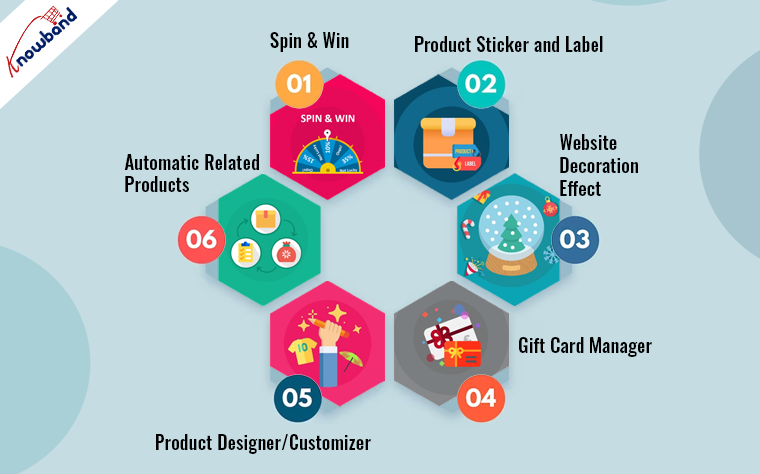
Spin and Win: Engaging Gamification:

Gamification is a powerful tool to engage and retain customers. Therefore, Knowband’s “Spin and Win” module allows you to create interactive games on your eCommerce site.
Thus, during the holiday season, you can use the Spin and Win pop-up module to offer customers the chance to spin a virtual wheel for discounts, free products, or other special offers. Moreover, the Prestashop Spin and Win not only adds an element of fun to the shopping experience but also encourages visitors to explore your website and make a purchase. It’s an effective way to capture the holiday spirit and keep customers coming back for more.

Product Sticker and Label: Eye-Catching Promotions

During the holiday season, shoppers are inundated with choices, making it crucial to stand out. Product Sticker and Label modules allow you to add eye-catching badges and stickers to your products. Moreover, you can highlight special offers, limited-time deals, or product features. For example, you can add “Black Friday Special” or “Best Seller” labels to your products, which can significantly increase their visibility and sales.

Website Decoration Effect: Festive Atmosphere

Creating a festive atmosphere on your eCommerce website can go a long way in attracting and retaining customers during the holiday season. The Website Decoration Effect module allows you to easily decorate your site with snowflakes, twinkling lights, or other holiday-themed graphics. Furthermore, it creates a warm and inviting atmosphere that resonates with the holiday spirit. Thus, the customers are more likely to enjoy their shopping experience and spend more time on your site when they feel the holiday vibe.

Gift Card Manager: Flexible Gifting Options

Gift cards are a popular choice for holiday shoppers, as they allow the recipients to choose their own gifts. Knowband’s Gift Card Manager module makes it easy for your customers to purchase and redeem gift cards on your eCommerce platform. You can offer customizable gift cards with different designs and denominations, making it convenient for customers to select the perfect gift for their loved ones. Additionally, gift cards can help boost your revenue, as they often lead to additional sales when recipients shop on your site.

Product Designer/Customizer: Personalization for Unique Gifts

Personalization is a growing trend in eCommerce, and it’s especially relevant during the holiday season when shoppers are looking for unique and thoughtful gifts.

The Product Designer/Customizer addon allows your customers to personalize products by adding their names, photos, or custom text. Whether it’s custom mugs, T-shirts, or jewelry, this feature adds a personal touch to your products, making them ideal for gift-giving. Offering this option can set you apart from competitors and drive higher sales.

Related Products: Cross-Selling and Upselling

The Related Products module is a strategic tool for increasing your average order value during the holiday season. It suggests complementary or upgraded items to customers based on their current selections. For example, if a customer is browsing for a smartphone, the module can recommend compatible accessories or extended warranties. This not only enhances the shopping experience by providing useful suggestions but also increases your revenue by encouraging customers to purchase more items. During the holiday season, when people are looking for complete gift solutions, this module can be highly effective.

In the End!

In conclusion, the 2023 holiday season presents a significant opportunity for eCommerce businesses to boost their sales and create a memorable shopping experience for customers. By incorporating these must-have modules, you can engage customers with creative planning.

By implementing these modules, your eCommerce business can thrive during the holiday season and set the stage for a successful year ahead. Furthermore, we are also available at our email address support@knowband.com in case of any queries or suggestions.

The Psychology of eCommerce: How to Influence Customer Behavior!

In the vast world of eCommerce, understanding the psychology behind customer behavior is crucial for achieving success. With millions of online stores competing for attention, knowing how to influence and guide your customers can make all the difference. Thus, in this article, we’ll delve into the fascinating world of consumer psychology and provide actionable strategies to help you boost conversions and sales.

The Power of Perception:

Visual Appeal: 

The first impression matters, and it’s often visual. Ensure your website design is clean, aesthetically pleasing, and aligned with your brand. Furthermore, the Colors, fonts, and imagery also play a significant role in shaping the perception of your brand.

Thus, always make navigation and information retrieval effortless. Customers should quickly find what they’re looking for without confusion. Simplify the purchasing process to reduce friction.
Moreover, to provide your customers with relevancy in exploring your website, you should always include a sitemap.  


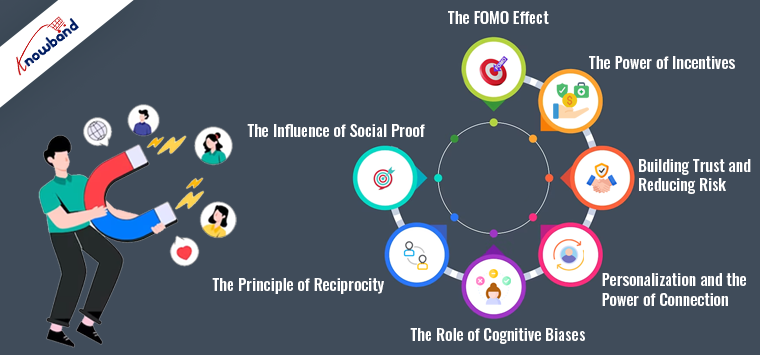
The Influence of Social Proof:

Reviews and Testimonials: 

Positive reviews and testimonials are potent social proof. Thus, you can encourage satisfied customers to leave feedback and prominently display these on your product pages. Honest opinions from real people build trust. And guess what, people are well aware of what’s fake and what’s real.

Scarcity and Urgency: 

Create a sense of urgency by showcasing limited-time offers or low stock levels. When customers feel like they might miss out, they’re more likely to make a purchase.

The Principle of Reciprocity:

As an eCommerce store admin, you should always provide valuable content, such as informative blog posts, tutorials, or free resources. Because, when customers receive something valuable without an immediate expectation of return, they are more likely to reciprocate by making a purchase.

The Role of Cognitive Biases:

Anchoring: 

Use anchor prices to influence perception. Display the original price alongside a discounted price to make the discount seem more significant.

Furthermore, you can also highlight what customers might lose by not making a purchase. For instance, “Don’t miss out on this exclusive offer!” triggers loss aversion.

Personalization and the Power of Connection!

Personalized Recommendations: 

Analyze customer behavior and use it to suggest products they might like. Personalization creates a sense of connection and enhances the shopping experience.

You can also share your brand’s story and values. Create an emotional connection with customers by showcasing how your products can improve their lives.

Building Trust and Reducing Risk!

Security and privacy are the two most important components of a process. The following thumb rule also applies while shopping online. Thus, as an eCommerce store owner, you can invest in robust security measures to protect customer data.

Also, a flexible return policy reduces the perceived risk of making a purchase. Make the return process hassle-free to build trust.

The Power of Incentives!

Loyalty Programs: 

Reward loyal customers with exclusive discounts or early access to sales. Loyalty programs foster a feeling of belongingness while also stimulating recurring purchases. Furthermore, if you are a Prestashop or Opencart store owner, you can also check Knowband’s Prestashop Loyalty points addon to incentivize your customers with lucrative offerings and the User manual of the Prestashop Loyalty points system.

Furthermore, set a minimum purchase amount for free shipping. Customers are more likely to add items to their cart to reach that threshold.

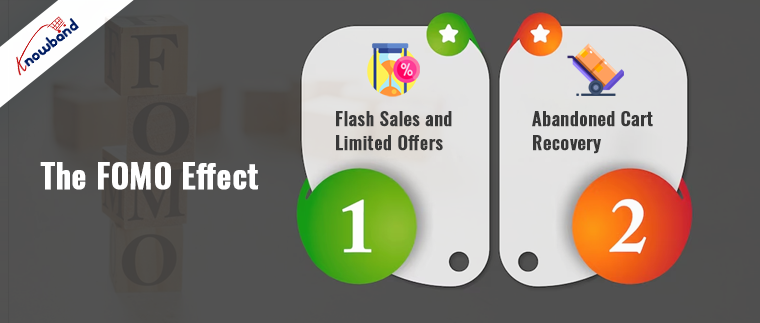
The FOMO Effect:


Flash Sales and Limited Offers: 

Announce flash sales or limited-time offers through email and social media. These create a sense of urgency and fear of missing out (FOMO).

Abandoned Cart Recovery: 

Implement abandoned cart recovery emails to remind customers of the products they left behind. Offer an incentive to encourage them to complete the purchase.

Conclusion!

Understanding the psychology of eCommerce is a powerful tool for influencing customer behavior. By leveraging principles such as perception, social proof, reciprocity, cognitive biases, personalization, trust-building, incentives, and FOMO, you can create a shopping experience that resonates with your customers and drives conversions. Keep in mind that these strategies should align with your brand and values, providing genuine value to your customers and building lasting relationships. 

Furthermore, you can also reach out to our support staff at support@knowband.com for more amazing eCommerce tips.


PrestaShop to Shopify Migration: Things to Consider before Moving Your Store Platform

In the ever-evolving world of e-commerce, businesses must adapt to changing market trends and customer expectations to remain competitive. One crucial decision that online store owners may face is whether to migrate from their current platform to a new one. In recent years, PrestaShop to Shopify migration has gained popularity due to Shopify’s user-friendly interface and robust features. However, before making the leap, there are several essential factors to consider.


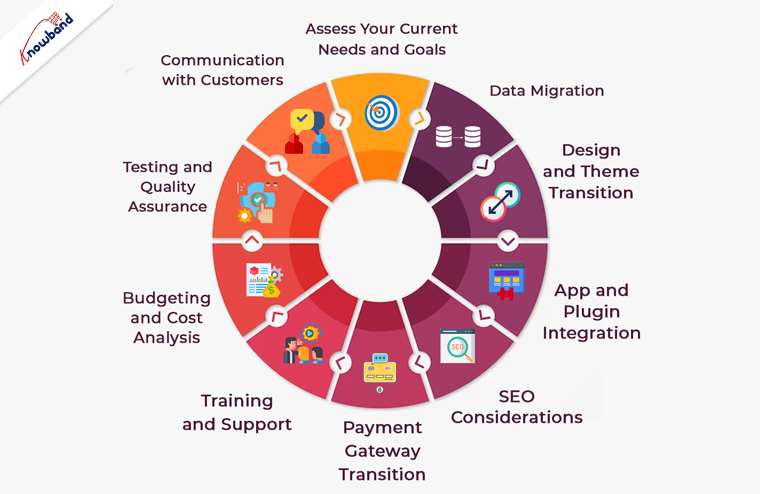
1. Assess Your Current Needs and Goals:

Before initiating a migration, it’s vital to understand your current e-commerce needs and long-term goals. Moreover, you should take a close look at your PrestaShop store and identify any shortcomings or limitations.

You can consider factors like scalability, customization options, and the ability to implement future changes. Furthermore, Shopify offers a wide range of features, but it’s essential to ensure they align with your specific business requirements.

2. Data Migration:

One of the most critical aspects of migrating from PrestaShop to Shopify is data transfer. This encompasses product listings, client details, past order records, and additional data. Therefore, ensure that your data is organized and cleaned before the migration process begins. Moreover, Shopify provides several tools and services to facilitate data migration, but a meticulous approach is necessary to avoid data loss or inaccuracies during the transition.

3. SEO Considerations:

Maintaining your website’s SEO ranking is crucial during a platform migration. Be prepared to update and redirect your URLs to prevent any loss in search engine visibility. Make a list of all your PrestaShop URLs and set up 301 redirects in your new Shopify store. Additionally, create an XML sitemap and submit it to search engines to help them index your new site quickly.

4. Design and Theme Transition:

The look and feel of your online store play a significant role in customer engagement. If you have a custom PrestaShop theme, you’ll need to recreate or find a similar one for Shopify.Shopify provides a diverse selection of themes, which include both free and premium choices.Thus, you can ensure that the selected theme aligns with your brand identity and provides an excellent user experience.

5. App and Plugin Integration:

Both PrestaShop and Shopify have their ecosystems of apps and plugins to extend functionality. Therefore, as an eCommerce shop admin you should always identify the essential Prestashop addons and integrations your business relies on and check if they are available on the Shopify platform. While Shopify has an extensive app store, some specific apps may not be available, which could impact your business operations.

6. Payment Gateway Transition:

The processing of payments is a vital element of every e-commerce establishment.Shopify supports various payment gateways, but the ones you were using on PrestaShop may not be the same.
Research the available payment options on Shopify and ensure they meet your business needs. Additionally, plan for a seamless transition to minimize any disruption in your revenue stream.

7. Training and Support:

Shopify is known for its user-friendly interface, but it’s essential to invest time in learning the platform thoroughly. Take advantage of Shopify’s extensive documentation and support resources to familiarize yourself with its features and capabilities. Consider providing training to your staff if necessary to ensure a smooth transition.

8. Budgeting and Cost Analysis:

Migrating from PrestaShop to Shopify involves various costs, including subscription fees, theme purchases, app subscriptions, and potential design and development expenses.
Thus, create a detailed budget to account for these costs and assess whether the benefits of moving to Shopify justify the investment.

9. Testing and Quality Assurance:

Before making your Shopify store live, thoroughly test all aspects of the website, including functionality, design, and data accuracy. Test the checkout process, navigation, and user accounts to ensure a seamless customer experience. Address any issues or glitches promptly to avoid customer dissatisfaction.

10. Communication with Customers:

Keep your customers informed throughout the migration process. Notify them in advance of any planned downtime or temporary disruptions to your online store’s services. Provide clear instructions on how they can access your new Shopify-based website. Effective communication can help maintain customer trust and loyalty during the transition.

In the End!

In conclusion, migrating from PrestaShop to Shopify can be a beneficial move for your e-commerce business if done thoughtfully and strategically.
Furthermore, careful planning, attention to detail, and thorough testing are essential to ensure a successful transition. By considering these key factors, you can make the migration process as smooth as possible and position your online store for growth and success in the competitive e-commerce landscape.
At Knowband with 13+ years of technical expertise in Web and App development, we also offer custom development and platform migration services. In case you have any queries, you can also find us at our official email address support@knowband.com. 

You can also visit:

Prestashop eBay Marketplace Integration Extension

Prestashop Google Shopping Integration Addon

Prestashop Etsy Integration Addon