Selecting the right eCommerce platform is a crucial decision when launching your online store. OpenCart and Prestashop are two popular choices that often come into consideration.
Both platforms have their unique features and benefits, making it essential to conduct a comprehensive comparative analysis. In this article, we will delve deeper into the features and benefits of OpenCart and Prestashop to help you make an informed decision.
OpenCart:
OpenCart has earned its reputation for being one of the most user-friendly eCommerce platforms available. It’s particularly well-suited for those who are new to eCommerce and want to get their online store up and running quickly. Here are some of OpenCart’s key features and benefits:
1. Ease of Use:
OpenCart boasts an intuitive and straightforward user interface. Setting up your store and managing products, categories, and orders is relatively easy, even for beginners. Furthermore, this simplicity is a significant advantage for small business owners or startups looking to establish an online presence rapidly.
2. Customization:
OpenCart offers a wide range of themes and extensions in its marketplace. This flexibility allows you to customize your store’s appearance and functionality to align with your brand and meet specific business needs. Whether you need a sleek and modern design or advanced inventory management, OpenCart’s marketplace has you covered. Moreover, at Knowband, we also offer a wide range to use Opencart extensions to take care of all your selling needs.
3. Community Support:
OpenCart has a robust community of users and developers. This means you’ll find plenty of resources, tutorials, and active support forums to help you address any issues or questions you may encounter while using the platform. Moreover, the power of community support cannot be underestimated when running an eCommerce business.
4. Cost-Effective:
OpenCart is an open-source platform, which means it’s free to download and use. This cost-effectiveness is particularly appealing for startups and small businesses with limited budgets. While there may be expenses associated with themes and extensions, the core platform itself is a budget-friendly option.
Prestashop:
Prestashop is another formidable player in the eCommerce platform arena. It’s known for its extensive list of features right out of the box, making it an attractive choice for businesses of all sizes. Let’s explore some of Prestashop’s key features and benefits:
1. Feature-Rich:
Prestashop comes with an impressive array of features, including multi-language support, SEO optimization, and compatibility with a wide variety of payment gateways. These built-in features mean you can get your store up and running quickly without the need for extensive customization.
2. Scalability:
Prestashop is highly scalable, making it suitable for both small businesses and large enterprises. Whether you’re just starting or planning for significant growth, Prestashop can accommodate your needs. This scalability is particularly valuable for businesses with ambitious expansion plans.
3. Advanced Analytics:
Prestashop provides advanced analytics and reporting tools. These tools allow you to gather critical data on your store’s performance, customer behavior, and sales trends. Moreover, armed with this data, you can make informed decisions to optimize your store and enhance its profitability.
4. Mobile Responsiveness:
In today’s eCommerce landscape, mobile responsiveness is a must. Prestashop prioritizes this aspect, ensuring that your store looks and functions flawlessly on all devices, from smartphones to tablets and desktops. This mobile-friendly approach can significantly improve the user experience and boost conversions.
Comparative Analysis:
Now that we’ve highlighted the key features and benefits of both platforms, let’s perform a comparative analysis to help you make a well-informed choice:
Price: OpenCart has a clear advantage in terms of cost. It’s an open-source platform, which means the core software is free. Prestashop, while feature-rich, may require a more substantial initial investment, especially if you opt for premium themes and extensions.
Ease of Use: OpenCart is known for its user-friendly interface, making it an excellent choice for beginners. Prestashop, while not overly complex, has a steeper learning curve. However, mastering Prestashop can lead to a more powerful and feature-packed store once you’re familiar with it.
Scalability: Prestashop shines in terms of scalability. It can accommodate businesses at various stages of growth, from small startups to large enterprises. OpenCart is better suited for businesses with modest growth expectations.
What to Choose!!
In conclusion, the choice between OpenCart and Prestashop depends on your specific needs and priorities. If you’re seeking a cost-effective, user-friendly solution for a small to medium-sized store with a limited budget, OpenCart is likely your best bet. On the other hand, if you anticipate significant growth, need a feature-rich platform with advanced analytics, and are willing to invest in your eCommerce venture, Prestashop might be the right choice for you.
Ultimately, the decision should be based on a thorough analysis of your business requirements and goals. Both OpenCart and Prestashop have their merits, so choose the one that aligns most closely with your eCommerce ambitions. Remember that the success of your online store ultimately depends on factors beyond the platform, such as product selection, marketing, and customer service.
If you have been selling online for a long and now if you want to take your business to new heights of success, why aren’t you thinking of a multi-vendor marketplace? Converting your store into a multi-vendor marketplace is not only beneficial for your business but your budget as well because you don’t have to invest too much.
According to research, 95 percent of online customers have made a purchase on one of the markets, 31 percent of eCommerce shoppers making their first purchase prefer to do so, and 54 percent of online purchasers think marketplace purchasing has changed the way they shop.
Why you should start your own multi-vendor eCommerce store?
The key to success in any business is Innovation. Furthermore, the multi-seller model comes with several benefits over a regular online store.
You can sell a variety of products
A multi-vendor eCommerce store gives you the freedom to add any number of vendors to your store. These vendors can have their inventory. As a result, your store will come close to the physical world marketplace, a place where various vendors can provide a huge variety of products to the customers.
Streamlined And Smooth Operations
It’s all about optimizing processes to manage as well as distribute things as quickly as possible when running an online store. Further, Individual vendors manage inventories, introduce new products, as well as provide product catalog updates when you turn your online store into a multi-vendor marketplace. As a result, activities run smoothly and without hiccups, and the burden of management is shared among various actors. Also, you can simply relax, even think about how to improve your operations as well as expand your business.
Budget-friendly
Having an online marketplace can significantly reduce the cost of managing the multiple teams required to keep the inventory side of the business running well. Furthermore, you can concentrate only on your sales and customer service staff. Moreover, this division of labor not only reduces prices but also improves efficiency and service quality on your multi-vendor e-commerce store.
You get more control
Selling on a multi-vendor marketplace comes with lesser responsibility as well as more control. Furthermore, store merchant of an online marketplace gets complete control as well as the authority of choosing, allowing as well as restricting or rejecting any vendor. Once a vendor is listed on your multi-vendor marketplace, the vendor is also responsible for order fulfillment. Further, this relieves the administrator of several obligations while allowing him to continue to monitor and assist suppliers with the fulfillment process.
Multi-vendor marketplace modules offered by Knowband
Prestashop Marketplace Addon
For Prestashop owners, Knowband offers Prestashop Marketplace addon which is beneficial for Prestashop store merchants as it helps in creating their marketplace. Further, the module allows multiple sellers to sell their products.
Key features of PrestaShop Marketplace module:
The module allows managing sellers.
Prestashop Marketplace module offers an approval configuration feature.
Allows managing the commission from the sellers.
For notification, the addon can customize templates.
Module is compatible with PrestaShop Mobile App for Multi-Vendor Marketplace.
PrestaShop Multi-Vendor Marketplace Gold Plan
PrestaShop Multi-Vendor Marketplace Gold Plan launched by Knowband for e-store owners. Further, this plan includes various modules. Including Marketplace CSV import/export plugin, Marketplace Customer-Seller Ticket Addon, Marketplace Deal Manager module, etc. Furthermore, the plan permit owners to create a fully-functional marketplace similar to Amazon.
Key features of Prestashop Multi-Vendor Marketplace Gold Plan:
Provide basic features of the PrestaShop Marketplace module as well as other features of other supportive marketplace modules.
Via CSV, it allows bulk uploading of the products for the sellers.
To resolve queries, it offers seller customer ticket systems.
Allows sellers to run deals as well as discounts for their items with the help of deal managers.
Allows sellers to customize the invoice for better branding with the seller invoice module.
OpenCart Marketplace extension
Opencart Marketplace Extension offered by Knowband is capable of transforming your single-vendor website into a fully-functional marketplace swiftly. Further, with the assistance of a multi-vendor marketplace module, store merchants can build a marketplace similar to Amazon, eBay, etc. This even helps multiple sellers to sell their items on the marketplace.
Key features of Opencart Marketplace Extension:
Opencart’s Multi-vendor marketplace’s new admin interface makes seller management effortless.
Makes commission management effortless for the store admin.
Offers email templates customization for all the notifications.
With a button click, the product as well as category management can be done.
Compatible with Opencart mobile app builder plugin.
Magento 2 Marketplace addon
Magento 2 Marketplace addon provided by Knowband helpsMagento 2 store owners to build their own marketplace. Further, the addon permits various sellers to sell their items.
Key features of Magento 2 marketplace:
Magento 2 marketplace helps manage sellers.
Addon provides approval configuration.
Helps in managing the commission from the sellers.
Helps in product management.
Offers management of the orders without any hassle.
Offers multi-language functionality.
Compatible with Magento 2 Mobile App Builder.
Magento Marketplace Addon
Magento Marketplace Addon is a KnowBand extension that allows Magento store owners to create their own marketplace where numerous merchants can sell their products.
Key features of Magento marketplace:
Manage sellers
Approval configuration
Manage the commission from the sellers
Customized e-mail templates for notification
Product management
Compatible with Magento Mobile App for Multi-Vendor Marketplace.
If you face any difficulty in any of the above modules, hence feel free to write us at support@knowband.com
The rapid growth of the sharing economy is triggered by the increasing number of new online marketplaces. If your idea was to create an online marketplace to allow the exchange of products or services quickly and easily-congratulations! You can name yourself, an entrepreneur!
With the idea of an online marketplace, you might have explored how to create one? And what features you should consider before developing software or purchasing a pre-built module? How will you attract sellers and customers to your marketplace?
Sometimes we feel like we own too much stuff and this can happen with your marketplace too. To make it look attractive and clean, you need to have the functional UI with all the functionalities placed adequately. Clear navigation for both the seller and the customer is a must. This article is for the business entrepreneurs who are looking forward to developing their marketplace and will help you decide what features marketplace users need the most.
1. Look for a lucrative monetization model
“Before looking for the answer to” How to create a marketplace? “Answer the question” How am I going to make money from my product? To attract investors and become globally competitive, all ventures have to produce revenue. No exception in the marketplace. There are many forms for your online marketplace to be monetized:
Commission– For any good purchase on the website, the marketplace charges a percentage or fixed fee.
Subscription: To use the marketplace, consumers pay a monthly/annual charge
Product Listing: To list the products, the sellers have to pay some amount.
OpenCart Marketplace Module supports the commission revenue model. The marketplace admin will generate income from the sellers on every order. You can refer to this article for a better understanding of the commission management for the OpenCart Marketplace extension developed by Knowband.
2. Admin Panel features to consider:
The admin interface of a marketplace extension should allow you to monitor and make the necessary adjustments to support your customers.
If, for example, the terms of service are breached, an administrative interface should be able to monitor behavior on the network and issue warnings. We have designed interfaces for our clients so that it is easy to discover and censor offensive acts such as negative language easily.
It is also possible to use the administrative interface to authorize vendors and products, build customer outreach materials, run promotions, and adjust marketplace settings. It should allow you to keep the track of the seller’s earning, customer feedback, like which suppliers are doing well and which could use some assistance.
The OpenCart Marketplace module has all the above-mentioned functionalities and the admin can keep eye on every move of the seller. The admin can see the order status that will be determined for commission and earning.
3. It should have a functional seller dashboard:
Rapid onboarding for vendors
You’re going to have to make the seller dashboard and customer handling simpler for sellers, not harder. Keep the sign-up and product listing process as simple as possible for your vendors.
The less time it takes to get started on your website, the more likely individuals are to sign up with you to sell.
Sellers can easily register and enlist their products on your OpenCart Marketplace. Sooner you approve the seller profile earlier he will be able to sell on the marketplace.
4. Easy Inventory management
Fortunately, by establishing a strong inventory plan from day one, many of the blockades and challenges ravaging eCommerce marketplace inventory management can be easily resolved. Inventory Management is the lifeline for retail sellers, as the success of the business relies on delivering the right order to the right customer at the right time.
The stock management is effortless with the OpenCart marketplace module. It sends the stock notification to sellers and removes out of stock products automatically. To add new products for maintaining the inventory, the seller can bulk upload the product list in .CSV format.
5. Order handling
Control of marketplace order saves you time on manual tasks and eliminate mistakes in order processing. Speaking of efficiency, from the time a customer clicks “order” to the moment the product leaves your warehouse, consider how much time it actually takes you to process a transaction.
The order handling is uncomplicated when you have a module like OpenCart Multi-vendor Marketplace. It allows the store admin and sellers to change the order status. The seller can handle every minute of action through the seller dashboard.
6. Payments and payouts
Marketplaces make it tougher than their standard online shops when it comes to payment processing. Customers need an effortless payment system, whether credit cards, debit cards, digital wallets, PayPal, or COD. Some do intimidate while sharing the credit or debit card details hence, you can provide them COD. These are primary online shopping choices whose icons may alternatively be clearly shown in the top corners or near landing page banners or in the menu section.
From their Dashboard, the sellers get to see the order earnings, the pending amount, and the commission paid. The seller can raise payout requests to the owner and the store owner can make the payments manually through OpenCart Marketplace Plugin.
7. Notify sellers with email
To maintain transparency on your platform you need to notify your sellers and customers about every move. The OpenCart Marketplace module has several pre-crafted email templates that can be used by the admin to send an email notification to the seller after the order is received, payment processes, review approved or removed, and much more.
This maintains transparency, fulfills realistic expectations, and enhances the user experience.
8. Do not forget about the customer expectations
How can customer support be sustained in a multi-seller marketplace rapidly introducing a new range of products and services? Obviously, ensuring that the current service standards of the retailer are met in the marketplace is critical. In a marketplace, the consumer experience should not get distressed.
What does OpenCart Module offer for customer support?
Customer Seller helpdesk: In order to get help for pre-sale inquiries or post-sale inquiries, the customer may contact the vendors.
Manage returns: The returns for the goods can easily be initiated by the clients. The administrator will be able to view and process return requests from the vendor dashboard.
9. Compatible and gadget responsive
A mobile-friendly eCommerce shop provides you with an opportunity to stay ahead of your rivals. You’d have more chances of ranking well in search engines, more visitors, and you’d be able to win their loyalty through content interaction and responsive design.
The robust Opencart Marketplace module is compatible with the mobile app. It is compatible with all the themes and models of OpenCart and it supports all currency types. You can sell any type of product digital or physical in the marketplace.
10. Let seller decide the shipping method
To improve the delivery experience, cutting down the shipping cost you need to provide multiple shipping options. In the early stages of operation, using a single shipping service makes sense because order sizes are typically not large enough to warrant using more than one carrier. However, as the company grows and online sales increase, failing to diversify your shipping strategy to meet your increasing needs puts you at risk of inefficient fulfillment of orders and increasing shipping costs.
The OpenCart Multi seller Marketplace admin can enable the seller to create multiple shipping templates. The shipping methods that vendors build will be listed in the Marketplace. And, the marketplace manager can also add or delete the shipping methods created by the seller.
Some Other helpful features of OpenCart Marketplace Module:
Admin can approve the product and seller reviews from his end
The invoice generated can have either admin’s details or seller’s details or both.
By providing coupon code discounts to buyers, the sellers can give the customers a special discount and run promotions
Admin can add multiple custom fields on the seller registration page
Admin can assign categories and products to the seller
All the products can be reviewed before publishing them on the marketplace.
Wrap-up:
These are the favorable features and functionalities you need to look at before launching a marketplace. The OpenCart marketplace module can help you with all these most required features. Remember, a marketplace is a platform for buyers to buy and seller’s toes ell. So, you need to keep your foot in their shoe and find the best you can give.
If you have a brilliant idea that you want to bring to life – drop us an email at support@knowband.com or you can drop a line in the comment section. The Knowband team helped many eCommerce entrepreneurs build a better platform by helping our clients measure the right things. The marketplace module is also available for PrestaShop and Magento 2.
Do you own an OpenCart store and willing to start a marketplace business? OpenCart Multi-Vendor Marketplace extension by Knowband is an exemplary plugin available for your OpenCart Marketplace business.
You must be coming up with a lot of questions for the same. First, what makes a multi-vendor marketplace an appealing business model for a peer-to-peer, B2B, or B2C business? The thing is: you want to make sure that you are working on the most profitable possible business. And that is just what a marketplace is. You can choose an industry to start your business with.
How does the OpenCart Multi-Vendor Marketplace Extension work?
If you are looking for a well-developed option for managing admin and seller interface then OpenCart Multi Vendor Marketplace extension is the solution. The extension has a separate admin interface and seller interface along with the front-end.
The registered seller is provided with a seller dashboard to manage all his orders, product inventory, delivery, and payment gateways and what not! The seller can easily register for selling his products on OpenCart Marketplace and access the dashboard. This is what a marketplace owner wants.
OpenCart Multi-Seller Marketplace plugin has a flawless admin interface that allows admin to manage all the sellers easily. It makes the seller commission management effortless. Proving multiple product choices in different categories is now handy with the OpenCart Marketplace extension.
How Admin of OpenCart Marketplace is Benefited?
Setting up a marketplace itself is an optimum business idea. This can make you plenty of money if done thoughtfully and strategically. All you need is a plan and a management system. The OpenCart Multi Vendor Marketplace extension is fully functional which can be incorporated into your existing single-vendor eCommerce site and converts it into a marketplace.
Easy Commission Management: A Source of Passive Income
The marketplace business is a source of passive income. If you are an owner of the marketplace then you will be earning some commission over every sell completed over your marketplace. The Multi Vendor Marketplace Plugin designed for OpenCart allows the admin to charge the sellers the global as well as the category-based commission.
Prudent management of sellers, products, and categories
It is simple to accept the seller’s profile from the admin panel of the OpenCart Marketplace plugin. The store owner can easily track the profile of the vendor and the items that are posted on sale. The admin can also assign sellers the categories. Besides, the vendors can submit an admin category request that is handled at the back end of the OpenCart Multi Vendor Marketplace plugin.
Offer Several Shipping Choices
OpenCart Marketplace Multi-vendor plugin provides custom delivery options to the customers. A seller is allowed to offer different shipping options for their products.
Track the Orders and Payments
Keeping the track of the sales, orders, and payments is an essential part of the business. The OpenCart Marketplace Extension provides efficient monitoring of the site’s sales report and the pay-outs.
Opencart Multi-Vendor Marketplace plugin offers admin to configure the payment settings for PayPal from the store’s backend. Admin needs to fill in the store’s backend with the Client ID, Client Secret Key, Paypal Email subject, and Paypal Currency.
Attract More Sellers to your Marketplace
Easy Seller Registration
If you want more vendors to sell on your OpenCart Marketplace then install the OpenCart Multi-vendor Marketplace extension because it allows third-party vendor registration in few clicks by simply filling out a form.
Sell Everything
The OpenCart Multseller marketplace extension allows sellers to sell ‘N’ number of products added in different categories. They can easily list the products and manage the inventory. OpenCart Marketplace allows the seller to request for the approval of product categories.
Lucrative Product Page
Sellers can incorporate banners, shop logo, and metadata from the dashboard to make the product page more appealing. An SEO friendly URL can be added by the seller.
Sellers can keep the Track
The sellers can track the Dashboard’s overall transactions and sales report with ease. It makes management simpler and quicker.
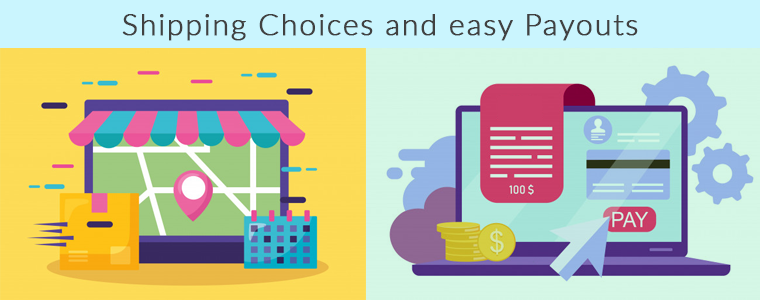
Shipping Choices and easy Payouts
If allowed from the OpenCart Multi seller Marketplace module admin panel, the sellers can add their own shipping methods. This will give customers a lot more choices.
Sellers can request the payment from time to time. This is very simple and easy.
Provide Notifications and Alerts through Email
This has a powerful email notification system that is capable of providing timely updates and feedback to the marketplace community concerned. Provide all the information about activities taking place within the online marketplace to customers, sellers, and store managers for taking the appropriate action at the earnest level. This will help us make the right business decision with no hiccups.
Customers are the Most Benefited Entity
Wonderful services at the most competent price: A customer will be happy to buy a product from your store if he can see what others are saying about the product they are willing to buy. It has been observed that a product that is highly reviewed receives more engagement.
Visitors of the OpenCart Marketplace store can now select the ideal products from a wider range of product choices. Let you the customer decide if the product and the seller are good enough by asking for feedback and reviews. From the seller’s account page, customers can easily contact the product sellers and raise a ticket for their queries and problems.
Final Words
Handling a business is not easy and a small task. Not every business owner can set up their own marketplace and earn money but giving them an opportunity will make the difference. Also, you need a strong and easy-to-use marketplace platform to create a successful marketplace. And to help you find the best platform, we have developed a Multi-Vendor Marketplace Extension for you, to see the demo you can click here.
OpenCart is undoubtedly one of the fastest-growing bizarre e-commerce sites. Flexibility, functionality, and ease of use are great. Moreover, the broad variety of customization options available to create personalized customer experience is the key reason why OpenCart is the first choice for most business owners and e-commerce entrepreneurs.
It is an open-source platform and there are plenty of free and paid extensions available for OpenCart websites. These extensions can provide you with excellent customer conversions, good customer retention, and an amazing user experience.
The last quarter of the year is about to begin. This is the best time to add these extensions to your eCommerce store which can boost your overall sale this holiday season. ‘Knowband’ provides many extensions that can help you with multi-channel selling improve customer experience, boost customer conversions, and much more. These exiting modules will increase your sale in the 2020 holiday season. Let’s have a quick understanding of extensions which can benefit you as a store owner.
This holiday season start New Services at your eCommerce store
To increase your turnover you can start providing new services on your eCommerce store. These days renting over the buying trend is on a boom. Every individual wants to buy or gift personalized kinds of stuff. Some of the extensions you can add to your store for providing new services are discussed below:
1. Booking and Rental System:
With Booking and Rental System – OpenCart Extension installed in the eCommerce store, the online merchant allows online users to fix an appointment, book hotel rooms, and book daily or hourly rental products. During the holiday season, people often rent costumes and vehicles. Renting a product can be a productive idea from both vendor and marketplace owner.
With the help of Knowband’s OpenCart Booking and Rental System Extension the online merchant can offer these facilities on the website:
The online merchant can offer booking and rental facilities
Showcase location on the booking/rental product pages
Offer hotel booking facility
Showroom details
Allow fixing appointments
Offer to book daily/hourly rental based products like cars, bikes, and even costumes.
The product features and details are available on the Knowband shop. Click here link to know more about this very useful extension.
2. Product designer/customization:
Product designer/customization extension for OpenCart store empowers your customers with the ability to design and shop custom products at your websites like T-shirts, mugs, cushions, and more. People prefer products which match their look and vibe. This holiday season, Why not giving them a personalized solution with which they can buy customized products for themselves and their loved ones? Here is why it would make your Web store better.
List of modules for Marketplace integration in OpenCart store:
OpenCart is an advanced and strange open source e-commerce store management program written in PHP using MySQL database and HTML components. This makes it an easy interactive platform for merchants and customers. With the help of available extensions and modules, you can easily sell on multiple marketplaces like eBay, Amazon, Google Shopping, Wallmart, Etsy, Wish, Reverb, Mercadolibre, etc.
What makes a multichannel extension a must buy?
Multichannel sales or omnichannel sales are the processes of providing consumers with a range of outlets from which they can buy different products.
It is ideal for companies that do not have physical stores and operate in the virtual world as multi-market online platforms.
If you’re selling your product in more than one location, it can be a brick and mortar store.
Some of the best selling extensions for market place integration by Knowband are:
4. Google Shopping:
The Google Shopping Integrator Extension helps consumers to scan, view, and compare items on the Google Search page. Google Shopping OpenCart extension lets store owners map their items to Google Shopping.
5. eBay – OpenCart Integration:
The eBay OpenCart integration module offers a smart solution for the store owners to link their store to the eBay marketplace. It provides a profile based product update feature.
6. Walmart – OpenCart Integration:
KnowBand provides a Walmart OpenCart integration extension to help the store owners start selling their goods on the Walmart site. The Walmart OpenCart Integration Module is the simplest way to connect your OpenCart store to the popular Walmart Marketplace.
7. Etsy Marketplace Integration:
Etsy OpenCart Integration module provides an effective user-friendly interface to manage the product listing, inventory, and orders for the Etsy marketplace from the admin panel.
Sears – OpenCart Integration and Jet – OpenCart Integration is coming soon in the knowband shop.
A smart way to prevent bad bot visits:
There could be any reasons to prohibit a malicious IP or user agent from visiting the eCommerce website. Undoubtedly, in this digitally transformed world, bots can be of any kind, either good or bad. Blocking irrelevant traffic helps to protect the website from potential threats and malware. Knowband has two extensions for your store which can save you from unwanted visitors.
8. OpenCart Blocker – Block Bot/User by IP, Country or User Agent Extension
Knowband gives you full power to block unwanted traffic and irrelevant users from accessing site information. With OpenCart Block user extension, prevent as many suspected users or bots from accessing your store and stealing website data without your knowledge. The Spam Blocker extension gives you great versatility to intelligently screen out suspicious bot traffic on the store.
Safeguard your site from unauthorized users and their malicious content
This multilingual blocker module enhances the speed and contributes to the overall user experience.
OpenCart Block Bot by IP module helps reduce the cost of server loads and bandwidth.
To know more about this amazing blocker bot visit our Knowband store.
9. Google ReCaptcha:
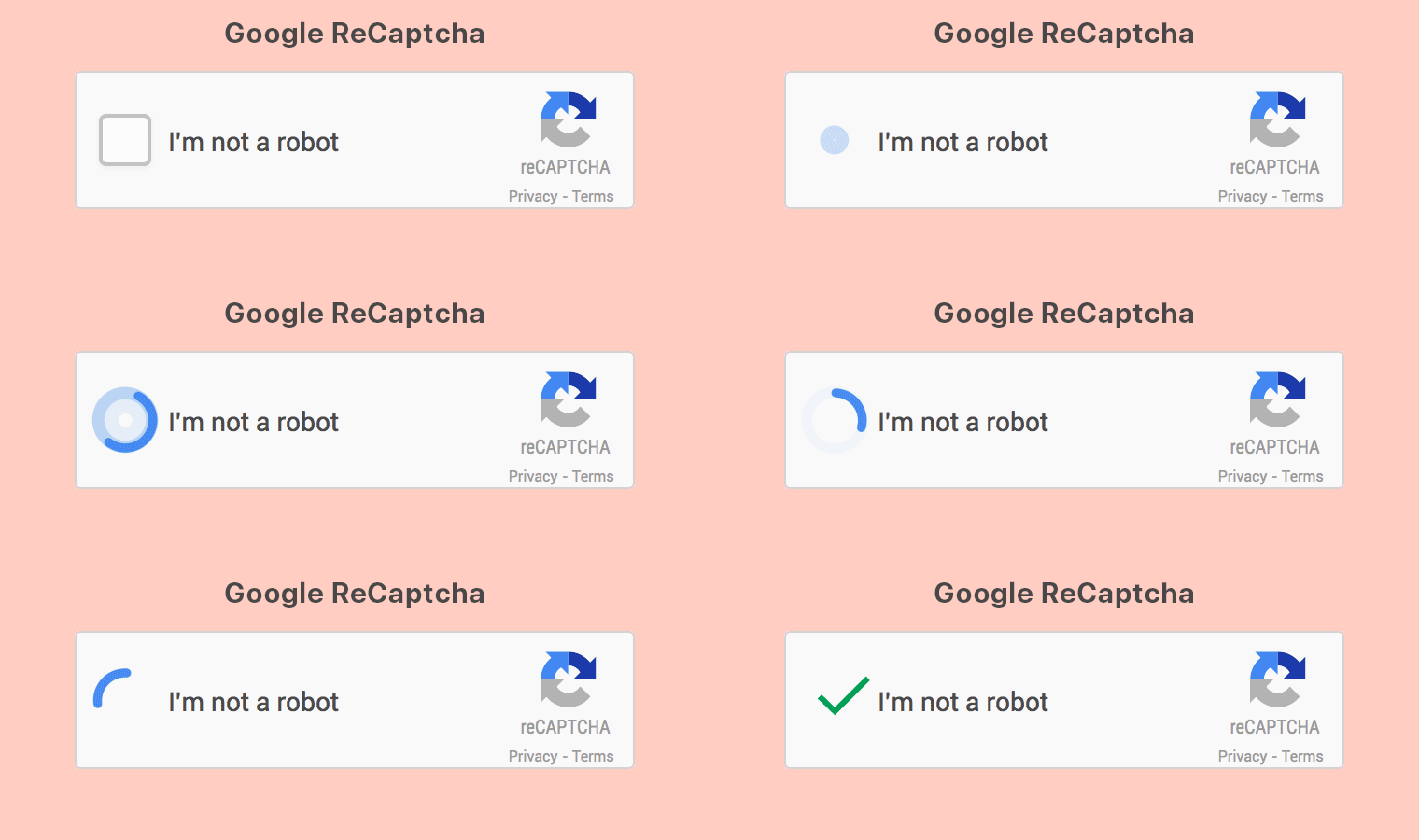
Many spammers try to divert the traffic from your website in the heavy sell days. But, by incorporation Google reCaptcha to your store, you can protect your site from such bad bots. Protect your OpenCart store from spambots by integrating the Google ReCaptcha extension for human verification. This Google Captcha operates by checking the people accessing the website are human or not.
Admin can include the Google ReCaptcha on the login page, registration page, contact us page and forgot password page
Google ReCaptcha module helps to push quality content to your website and also helps avoid fake registrations in your shop
Adding a fully-featured countdown timer to the OpenCart can Take your eCommerce website to another level. eCommerce store owner can draw urgency for the goods and boost the conversions with an easy-to-use shipping timer. Fast shipping or one day shipping always excites the customer to shop more. It displays a countdown timer on your eCommerce store.
One day or the same day, delivery helps to create trust in customers for a swift buying decision.
This Countdown Timer keeps the customer aware of the expiry of the shipping deal. As a result, buyers can position their orders accordingly.
This Shipping module removes the challenge of comparing the delivery time of the same goods on different websites.
Excite your customers with this countdown timer by Knowband, the Shipping Timer – OpenCart Extensions, and take advantage of the holiday season.
11. Free Shipping Manager:
With this Free Shipping Manager extension by Knowband, online merchants can offer free shipping to online customers. Online store owners can set up free shipping rules, and free shipping terms and conditions to customers. Store admin can set the minimum time duration available for free shipping. Free shipping reduces the number of abandoned carts and also motivates customers to buy products to reach the minimum amount.
The OpenCart Free shipping Manager allows customers to purchase more from your store which increases the sale. For more details on the OpenCart Free shipping Manager, please visit Knowband shop.
12. Deal Timer:
Knowband’s OpenCart Deal Timer plugin allows the admin to provide discounts to the customer for a special period of time. You can give discounts or special deals on Christmas or Halloween days. The admin can set the list of products in which the OpenCart countdown timer is to be used to provide the discount. The OpenCart extension helps the store owners to boost the conversion of the site.
To add this extension to your store you can visit the Knowband shop and read more about this Deal Timer.
Conclusion:
After the COVID 19 outbreak, this is the best time to make some money. These modules can bring a lot more traffic to your store. By providing new services you can establish a multivendor market place which will allow many sellers to generate more and more revenue. Add these super-smart modules to your store and boost your sales.
The OpenCart-based eCommerce store owners can now create an online marketplace like Etsy and eBay with Knowband’s OpenCart Marketplace plugin. Further, just install the OpenCart Multi vendor Marketplace plugin in your store. Moreover, this will enable multi-seller functionality at your site. Third-party sellers can easily register and list their products on the site. The various aspects of the store management rest in the hands of the site admin. Thus, the seller’s profile, category request, products, and review approval happen from the back-end of the OpenCart Multi seller marketplace extension.
1.1 Admin Benefits of OpenCart Marketplace Extension
The various admin benefits of Knowband’s OpenCart Multi-vendor marketplace plugin are mentioned below:
The store admin can easily convert their single-vendor eCommerce site into a whole new and fully-functional marketplace with the help of Etsy clone for OpenCart.
The OpenCart Multi vendor Marketplace plugin supports all types of products including simple, configurable, and bundled.
The OpenCart multi-seller marketplace plugin enables the admin to set the global as well as the category-based commission to be charged to the sellers.
The store owner can easily monitor the seller’s profile and products being posted at the site. They can easily approve/disapprove the seller’s profile from the admin interface of the OpenCart Multi-vendor Marketplace plugin.
The admin can even assign the categories to the sellers. Additionally, the vendors can send a category request to the admin. These requests are processed by the store admin from the back-end of the OpenCart Multi seller Marketplace extension.
The OpenCart Marketplace Module allows the store admin to enable/disable the review/rating option from the site. If enabled, the customers can give reviews for the products as well as the sellers.
OpenCart Multi-vendor Marketplace plugin offers custom shipping options. If this feature is enabled, the sellers can add their own shipping methods.
The OpenCart Marketplace Plugin offers easy tracking of sales report and overall transaction of the site.
The store admin gets 24 default email templates to keep the sellers notified about the various aspects.
1.2 Seller Benefits of OpenCart Multi-Vendor Marketplace Extension
The third-party vendors can easily register as a seller at the site just by filling out a form.
Once the account approves, the sellers can list their products at the site from their dashboard.
The sellers can add banners, shop logos, and metadata from their dashboards. The vendors can easily make an SEO-friendly URL for their shop.
The sellers even get an option to track the overall transaction and sales report from the dashboard with ease.
The sellers get an option to add category requests. The admin can approve/disapprove their request from the back-end of the OpenCart Marketplace Extension.
If enabled from the admin panel of the OpenCart Multi seller Marketplace module, the sellers can even add their own shipping methods.
1.3 Customer Benefits of OpenCart Multi-seller Marketplace Extension
The store visitors can now choose the ideal products from a wider range of product options.
The online shoppers can view the seller’s profile on the products page. Further, only if the admin allows it.
The customers even get an option to give their reviews for the products as well as the seller.
Customers can easily contact the sellers of the product from the seller account page and raise a ticket for their queries and issues.
1.4 New Features in OpenCart Multi vendor Marketplace plugin:
Improved Admin UI: It has a dynamic and functional new admin UI for effortless management.
A new Seller Custom Form: A new custom field is available to the backend of the Multi vendor marketplace. It allows the admin to create a separate registration form for the sellers.
Now admin can allow sellers to display the seller and admin details on the invoice.
To choose the order status for which commission/earning will be calculated a field in the admin panel is now available. Previous earning was being calculated on all the order status i.e. Cancelled, Returned, etc.
Admin can decide order status options for sellers which they can use for the customer orders.
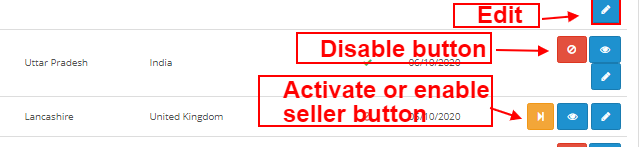
An option is now available in the admin panel to enable/ disable the sellers. All the products will be removed automatically from OpenCart Marketplace if a seller is disabled by the admin.
Admin assigns the products to the individual seller.
OpenCart Marketplace extension allows the admin to register any customer as a seller.
OpenCart Marketplace Product page and admin UI
2. Installation of OpenCart Marketplace Plugin
Purchase the OpenCart Multi-vendor Marketplace Module from the Knowband store. You’ll get the following files:
Zipped File containing the source code of the module
User Manual
Follow the steps mentioned below in order to install the open cart Multi vendor Marketplace plugin in your store:
Unzip the zipped file. The vqmod must be installed, otherwise, the plugin will not work. You’ll get the folders as shown in the image below:
Copy all the files and folders of the zip file in the Root Directory of the site.
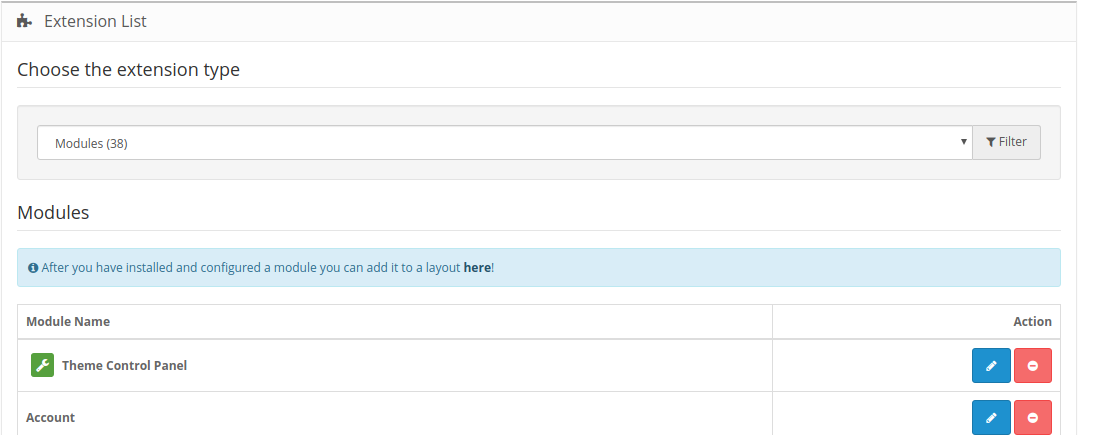
The admin can find the OpenCart Multi-Seller Marketplace extension at the path Admin Panel -> Extensions. Install the module by clicking on the ‘Install’ button corresponding to the module.
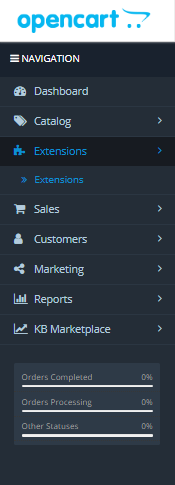
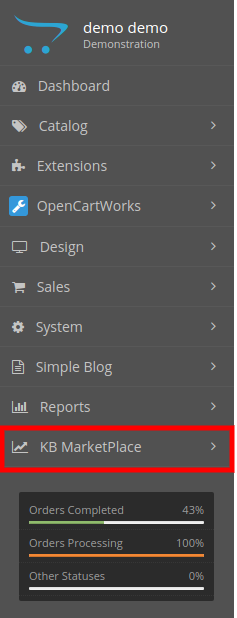
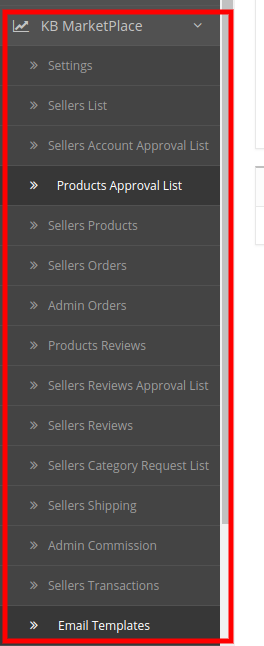
The OpenCart Marketplace plugin is now installed and is ready to use. Go to Admin -> Main Menu -> KB MarketPlace as shown in the image below:
3. Admin Panel
The OpenCart Multi-vendor Marketplace plugin offers multiple options for the configuration and management of the online marketplace.
After that, click on the edit option of the KnowBand Marketplace.
There are 6 main menus in the configuration settings:
3.1 Setting
3.2 Sellers
3.3 Products
3.4 Orders
3.5 Commissions
3.6 Support
All the six main menus are discussed below in detail:
3.1 Settings
The various fields of this menu of the OpenCart Multi-vendor Marketplace plugin are discussed below:
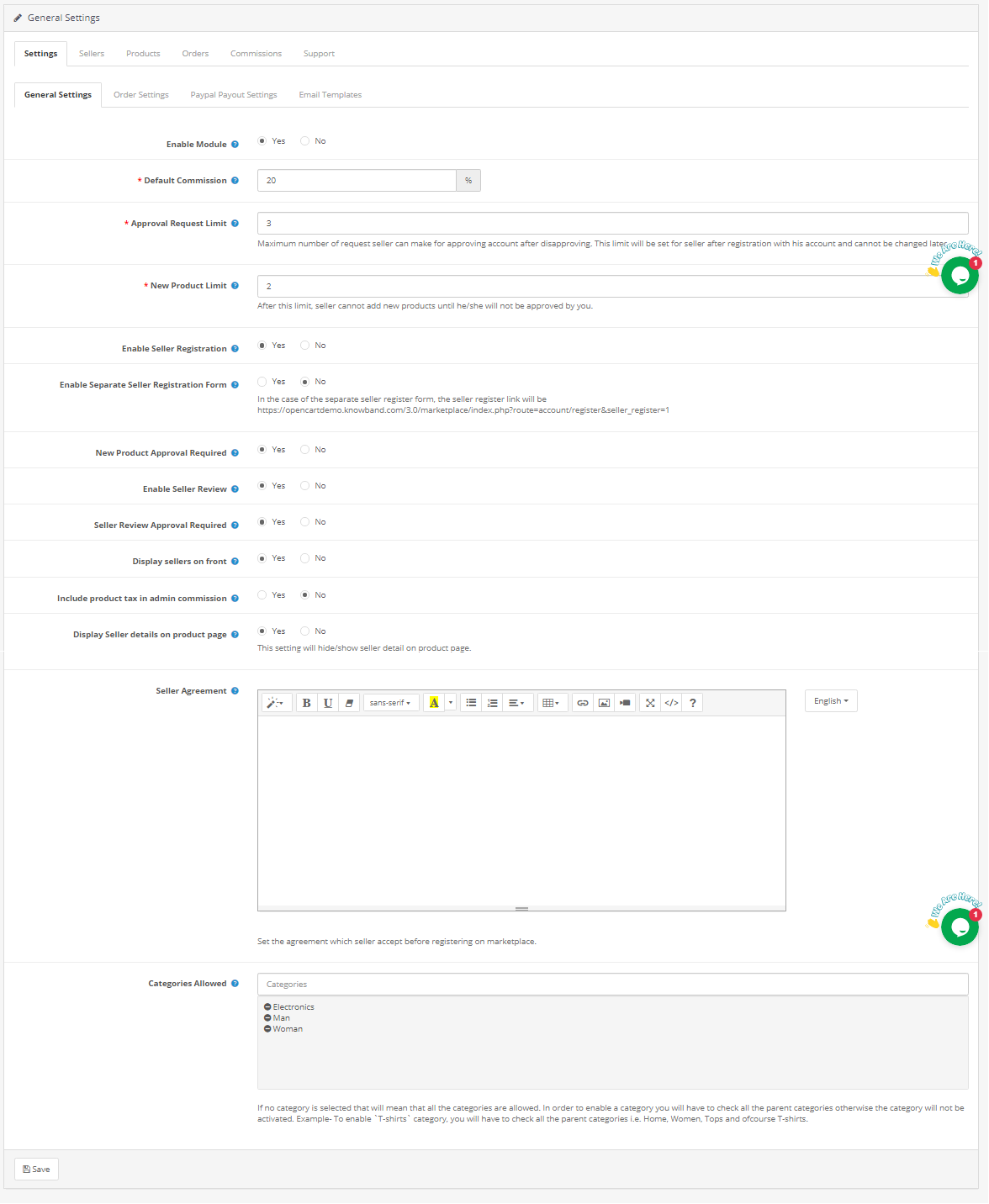
3.1.1 General settings
Enable Module: Toggle the button to “enable” the module on the website.
Default Commission: Set the commission to be charged to the sellers here. The percentage amount as specified by the admin here will be applicable to all the marketplace sellers by default.
Approval Request Limit: The store admin can approve/disapprove the seller’s account from the back-end of the OpenCart Multi vendor Marketplace plugin. The sellers can send a request for account approval. The admin can set the maximum number of requests that the seller can send in this section.
New Product Limit: Fix the maximum number of new products that a seller can list in the marketplace.
Enable Seller Registration: Select ‘yes’ in order to enable the third-party seller registration.
Enable Separate seller registration form: Select ‘yes’ in order to enable the separate seller registration form.
New Product Approval Required: If he selects ‘Yes’, then, the approval of the admin will be required to list the product at the site.
Enable Seller Review: Select ‘Yes’ if you want to enable the seller review option in the front-end.
Seller Review Approval Required: If this feature is enabled, then, the review will be posted in the front-end only after the approval of the store admin.
Display Sellers on the front: Enable to display the list of the sellers in the front-end of the website.
Include Product Tax in Admin Commission: If he selects ‘Yes ’, then, product tax will be included in the admin commission.
Display Seller Details on Product Page: Enable this option to display the seller’s details on the product page of the website.
Seller Agreement: Specify the terms and conditions for the sellers in this section. The agreement details as mentioned here display in the front-end of OpenCart Multi-seller Marketplace.
Categories that the admin allows: The admin can select the category that they want to assign to the sellers in this section.
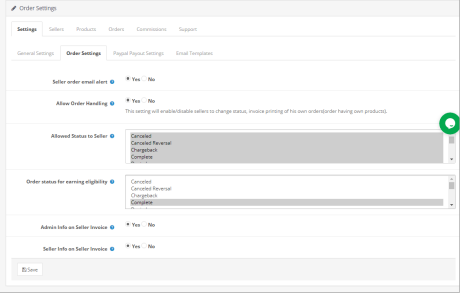
3.1.2 Order Settings:
Seller order email alert: If he selects ‘Yes’, then, an automated email will be sent to the vendors every time the order of their product is received.
Allow Order Handling: If he selects ‘Yes’, then, the sellers can handle the orders received on their products. They can process the orders and change the order status.
Allowed Status to Seller: Order statuses that are okay for sellers to update the order. It includes Cancelled, Cancelled Reversal, Chargeback, Complete, denied, processing, failed, expired, etc.
Order Status for Earning Eligibility: Order status assigned to the sellers only for which they will receive the Payouts or they will get the earnings only for the assigned order status such as complete, shipped, voided, etc. Admin can choose from the options mentioned in dropbox.
Admin Info on seller invoice: Select yes or no for sending a system-generated email to the seller on the new order.
Seller Info on seller invoice: Select yes or no for sending a system-generated email to the seller on the new order.
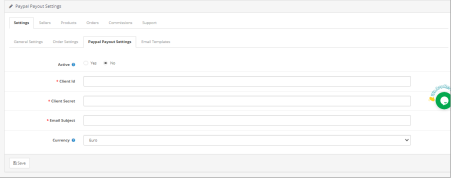
3.1.3 PayPal Payout Settings
Opencart Multi-Vendor Marketplace plugin offers admin access to set the PayPal Payout Settings from the backend of the store. Admin needs to activate the setting and fill the Client ID, Client Secret key, Paypal Email Subject, and Paypal Currency in the backend of the store.
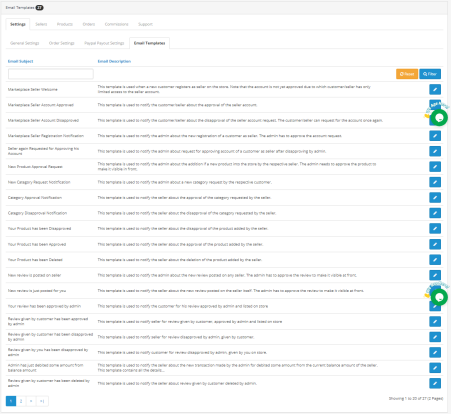
3.1.4 Email Templates
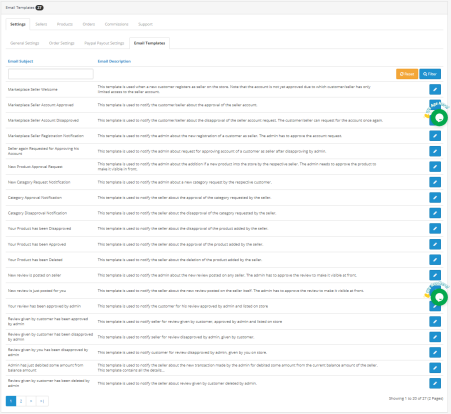
The OpenCart Multi seller marketplace plugin offers 24 pre-designed email templates for various scenarios. The store admin can even edit the templates if required by clicking on the Edit button.
3.2 Sellers
3.2.1 Sellers Setting
This page of the OpenCart Multi-vendor Marketplace extension has a list of all the sellers that the store owner approves. The admin can view the list of the sellers whose accounts he approves from the Seller Account Approval List tab of the OpenCart Multi seller Marketplace extension.
Admin can enable/disable the seller from the buttons shown below.
How to Edit Seller’s Account?
The admin can even edit the profile of the vendors from the back-end of the OpenCart Multi vendor Marketplace plugin. In order to edit the same, click on the Edit button. This will redirect you to an interface of the OpenCart multi-seller marketplace extension where you can make the required changes.
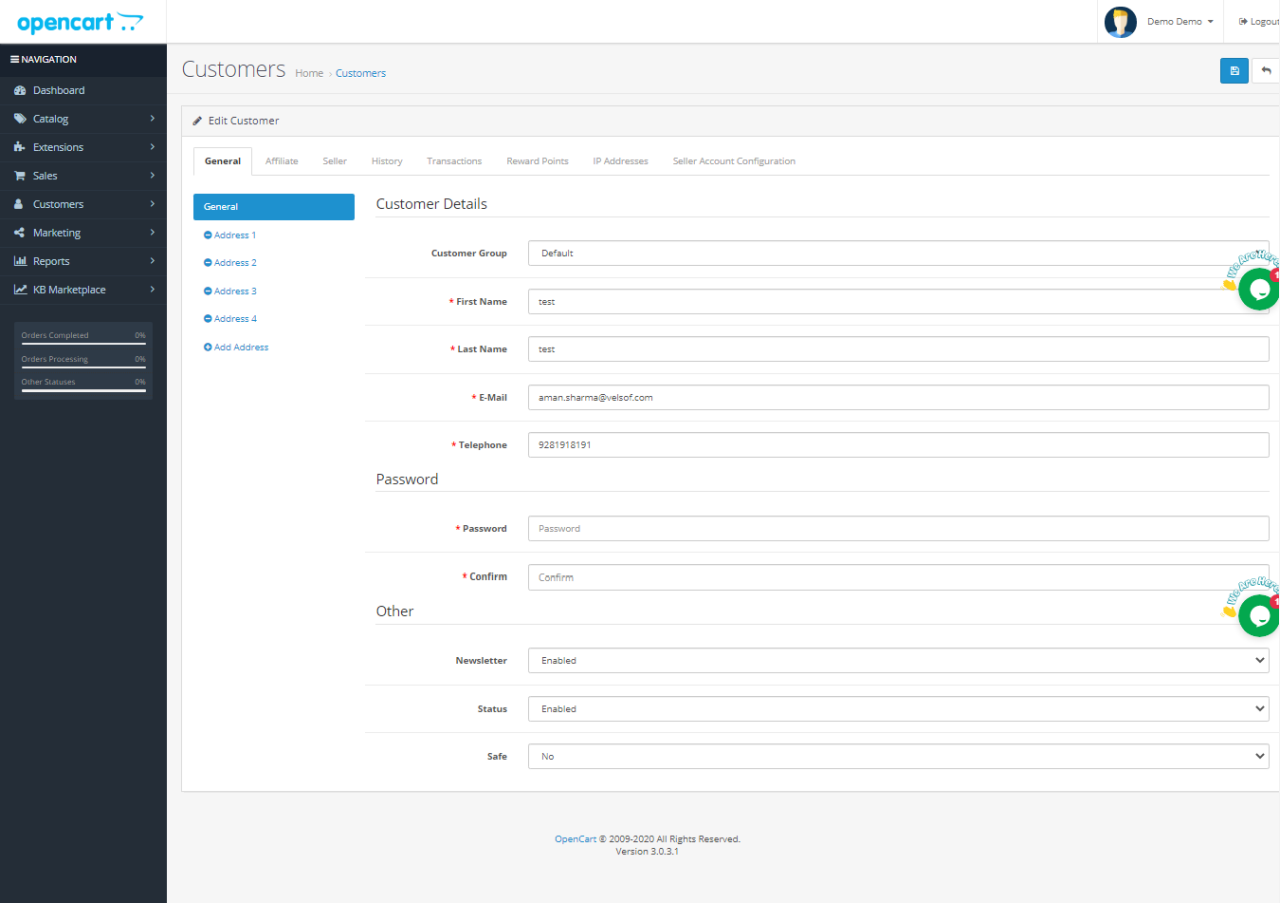
3.2.1.1 General
Customer Detail: Admin can edit all the basic details of sellers on the Customers Setting Page. This includes Customer group, Name, email address, contact information, etc.
Password: Admin can set the password for the seller.
Other: It includes more settings for Newsletter subscription, Enable/Disable the seller, and categorizing the seller as safe.
Multiple Addresses: the OpenCart Multi-Vendor Marketplace allows the admin to add one or more addresses to the seller’s account.
3.2.1.2 Affiliate
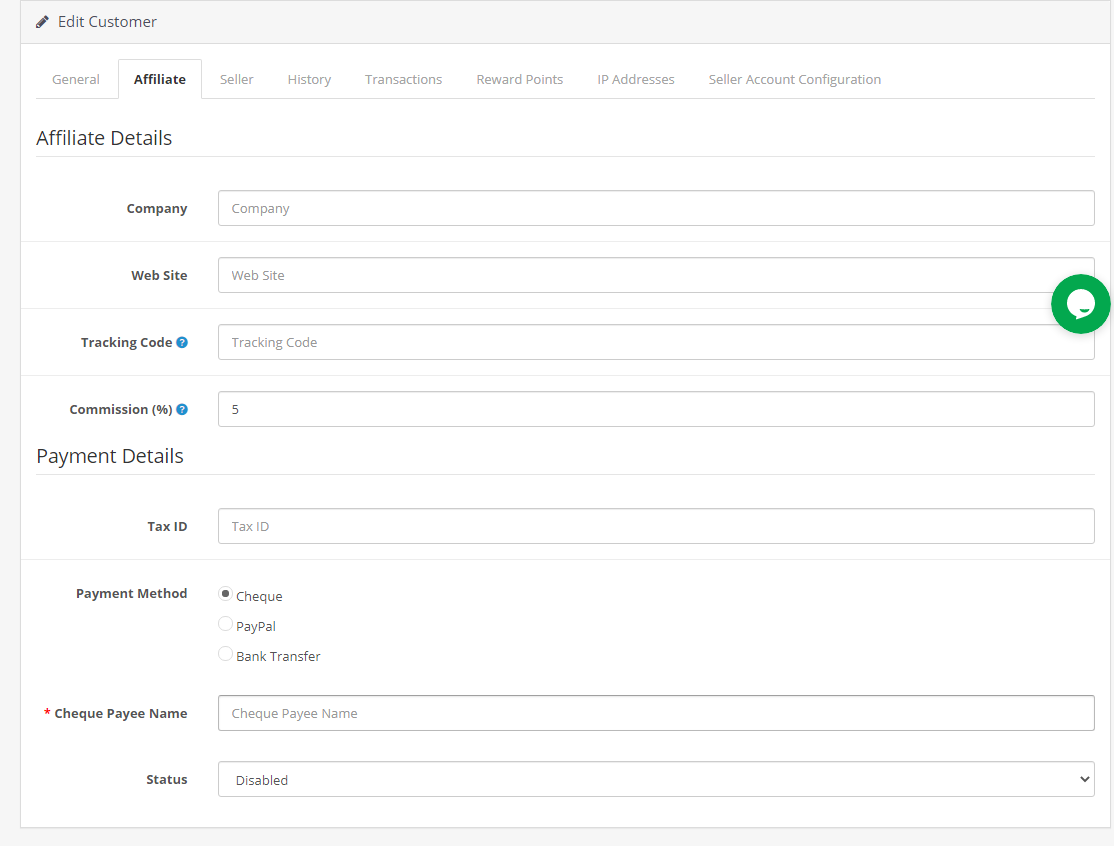
Admin can add affiliate Details in the Affiliate setting.
Affiliate Details: All the information such as Company Name, Website, Tracking code, Commission Percentage.
Payment Details: The admin can add or select the tax ID and Payment Methods. In fact, the payment methods that are indexed in the extension are Cheque, PayPal, and bank transfer.
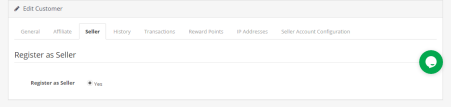
3.2.1.3 Seller
Admin can register the company as a seller by selecting the Yes button.
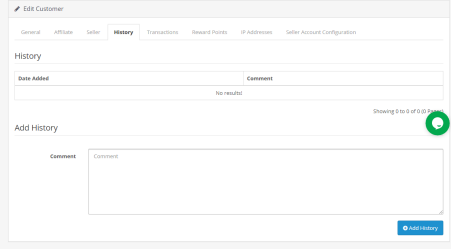
3.2.1.4 History
History: Seller history and comments will display here.
Add History: Admin can add comments for the seller in the History section which will display on History Table.
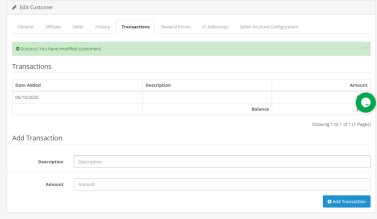
3.2.1.5 Transaction
Transactions: All the transactions will be shown here for the particular seller.
Add Transaction: The store owner even gets an option to add a transaction by clicking on the ‘Add New Transaction’.
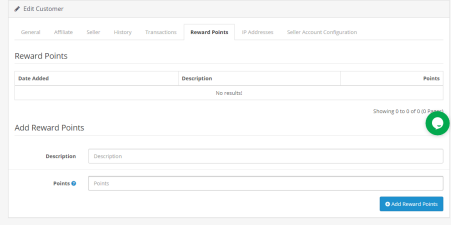
3.2.1.6 Reward Points
If the admin wants to reward the seller then he/she can add the reward description and points in this section of the Sellers setting.
Reward Points: A table showing all the reward points given to the seller by the admin will display here.
Add Reward Points: Admin can add new reward points by clicking on the ‘Add Reward Points’ button.
The window will display as shown below:
3.2.1.7 IP Address
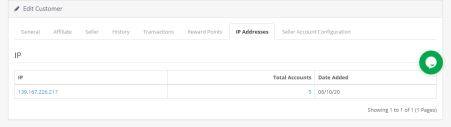
The IP address of the seller and the number of accounts registered will display here.
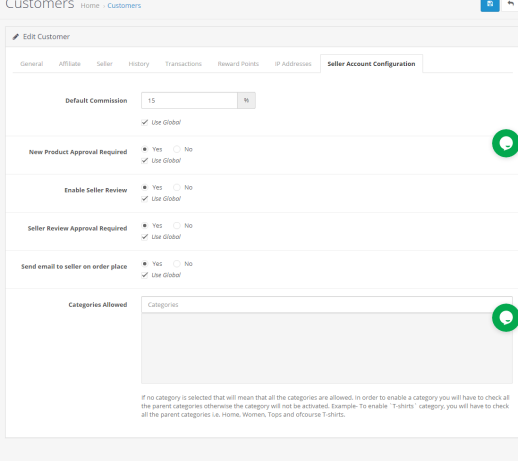
3.2.1.8 Seller Account configuration
OpenCart Multi-vendor Marketplace extension allows admin to set the commission amount for individual sellers.
Default commission: Admin can add the commission details in the Seller Account Configuration setting.
New Product Approval required: Select Yes if the admin wants to approve the new product and select no otherwise.
Enable Seller Review: Yes/No buttons are given to enable/disable seller reviews.
Seller Review Approval Required: If this feature is enabled, then, the review will be posted in the front-end only after the approval of the store admin.
Send email to seller on order place: If enabled then an auto-trigger mail will be sent to admin with the default email template.
Categories that the admin allows: Admin can assign categories to the seller. Sellers can only sell products from the allotted categories.
3.2.2 Pending Approval
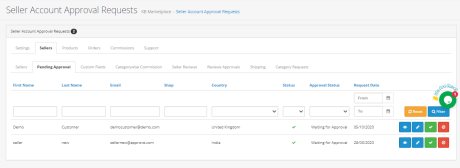
The third-party vendors can fill up the form in order to create a seller account at the site. The seller’s profile will list in this tab of the OpenCart Multi-vendor Marketplace Plugin for approval as shown in the image below:
How to Approve/Disapprove the Seller’s Account?
The admin can approve the seller’s account at a button click from the back-end of the OpenCart Marketplace module.
Just click on the approve or disapprove button corresponding to each seller account. On clicking on the Approve button, a pop-up will display asking for permission to approve or disapprove the seller account.
Once the seller’s profile approves, the same will list in the ‘Seller List’ tab of the OpenCart Multi-vendor Marketplace module.
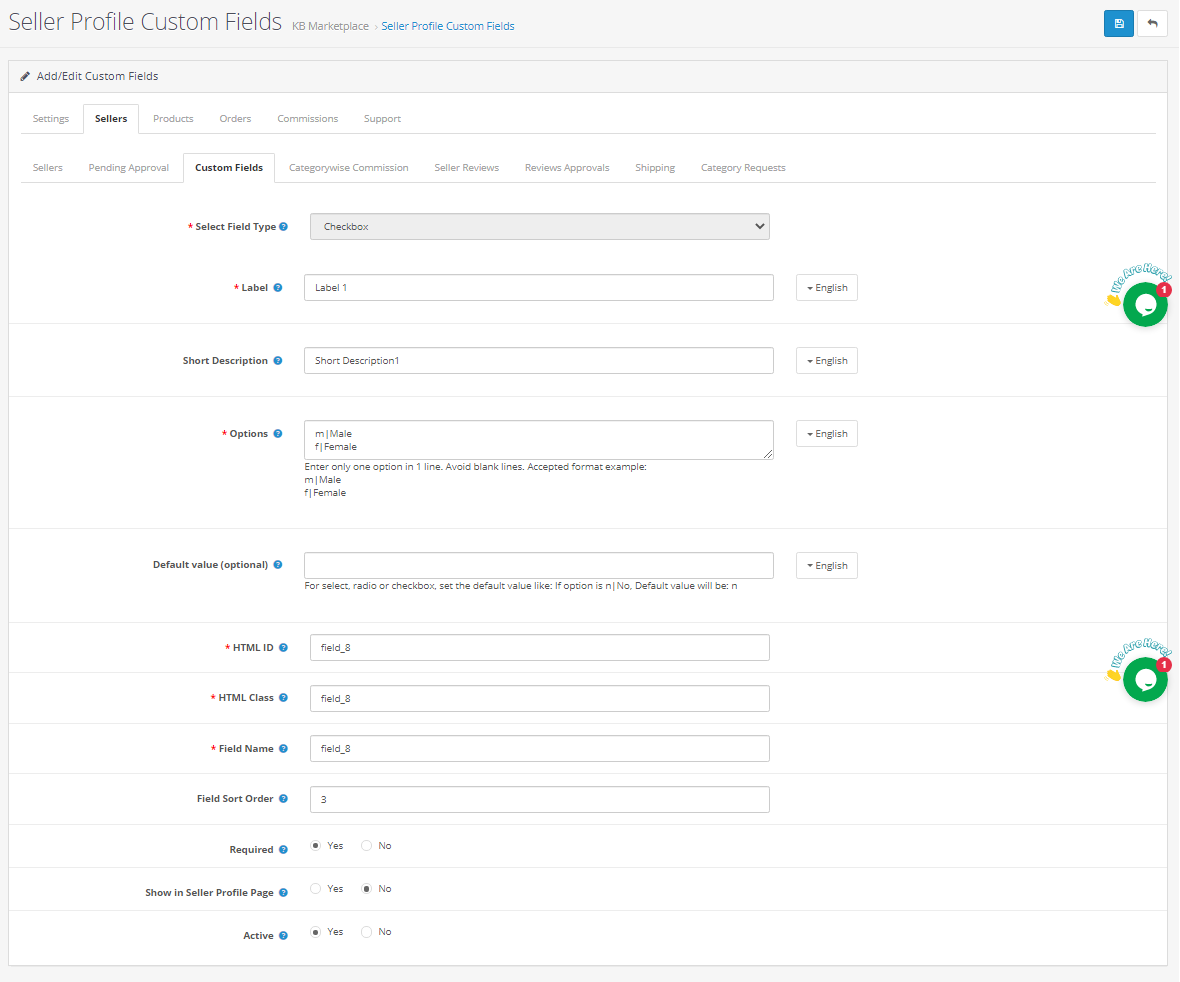
3.2.3 Custom Fields
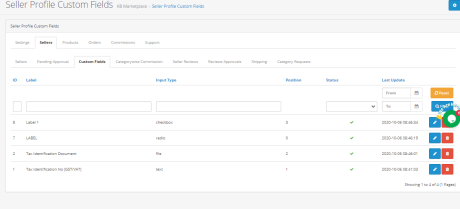
(New)Admin can add a custom field for seller profile. This setting allows the admin to add one or more fields on the seller page to collect extra information from the seller.
Click on the edit button for adding or updating the custom fields. On clicking the ‘edit button’, the following window will appear:
Select Field Type: Select the field type as a checkbox
Label: Add the field name which will display on the front end of the seller dashboard.
Short Description: Add the short description for the field
Options: Add the options for the field like Male, female, or Yes, No as the accepted format mentioned in the field.
HTML Details: Add HTML ID and HTML class here.
Add New Field Details: like field name, field sort order etc.
Required: Set the field as optional or mandatory
Show in seller profile page: Select Yes if the field is to display on Seller Profile Page otherwise select no.
Active: Activate or deactivate the field by selecting yes or no options.
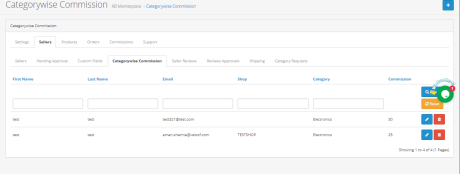
3.2.4 Category wise commission
With the Opencart Multi-Seller Marketplace plugin, the store admin gets access to set the commission category-wise. Admin can easily view the total earning, total commission for a particular category in Category Wise Commission. Category wise commission for the particular seller will display here as shown below:
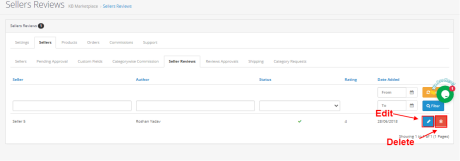
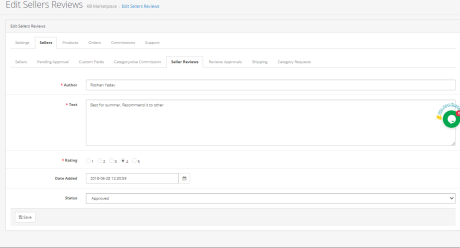
3.2.5 Seller Review
Admin can see the seller reviews and edit them from the backend if required.
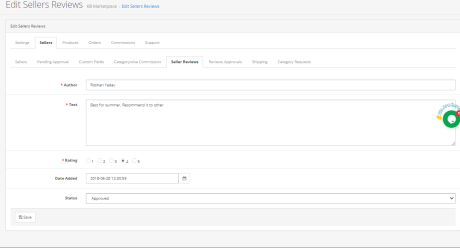
The admin can add the author details, Text, update ratings, change the date of the review.
Admin can approve or disapprove the review from the status field.
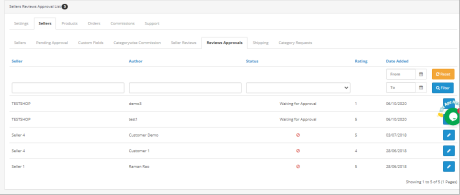
3.2.6 Reviews Approval
The list of approved and disapproved seller reviews will display here. If the admin click on the edit button then he will be directed to a new page.
Store Admin can add the author details, Text, update ratings, change the date of the review.
Status: Admin can approve or disapprove the review.
The various fields of this interface are discussed below:
Author: The name of the reviewer will be shown here. The admin can change the name if required.
Text: The review entered by the customer will be shown here. The store owner can edit the review if required.
Rating: This section will by default show the rating given by the customer. The admin can even change the rating.
Review Date is available: The date when the review is available will display here.
Status: Enable or disable the review from here. If the admin enables it, the review will display on the product page.
3.2.7 Shipping
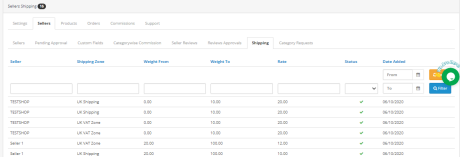
Seller’s shipping information can be reviewed by the admin from the backend of the OpenCart Multi-vendor Marketplace. The OpenCart Multi-seller Marketplace extension comes with custom shipping options wherein the sellers can add their own shipping methods. If this feature is enabled by the store admin from the Settings Tab of the OpenCart Multi-vendor Marketplace module, then, the sellers can add their shipping methods.
The shipping templates available by the sellers will list in the Sellers Shipping tab of the OpenCart Multi vendor Marketplace plugin. All the orders shipping details like shipping zone, weight, Rate, and status will display on this page as shown below:
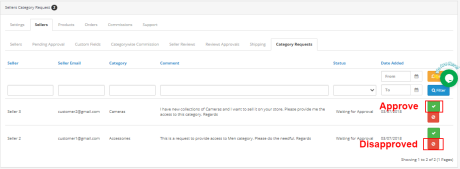
3.2.8 Category Requests
The admin assigns the category to the third-party seller for listing the products. The sellers can even request the admin to add a new category from their Dashboard. The category requests sent by the sellers will list in the Seller Category Request tab of the OpenCart Multi-Vendor Marketplace extension as shown in the image below:
3.3 Products
3.3.1 Seller Products
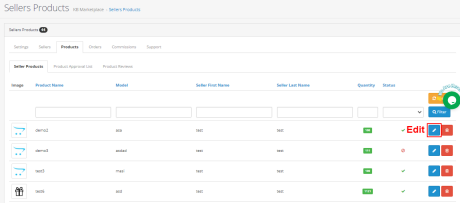
The admin approves the products from the back-end of the OpenCart Multi-vendor Marketplace extension. Further, they will list in the Sellers Products tab.
OpenCart Multi vendor Marketplace plugin- Sellers products
3.5.1 How to edit/remove the details of the products?
The store owner can edit or delete the product details of the sellers if required. Click on the ‘Edit’ or ‘Delete’ button respectively.
3.3.1.1 General
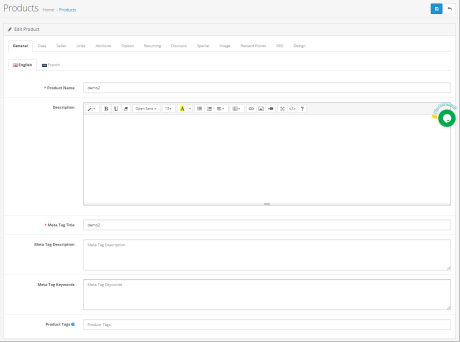
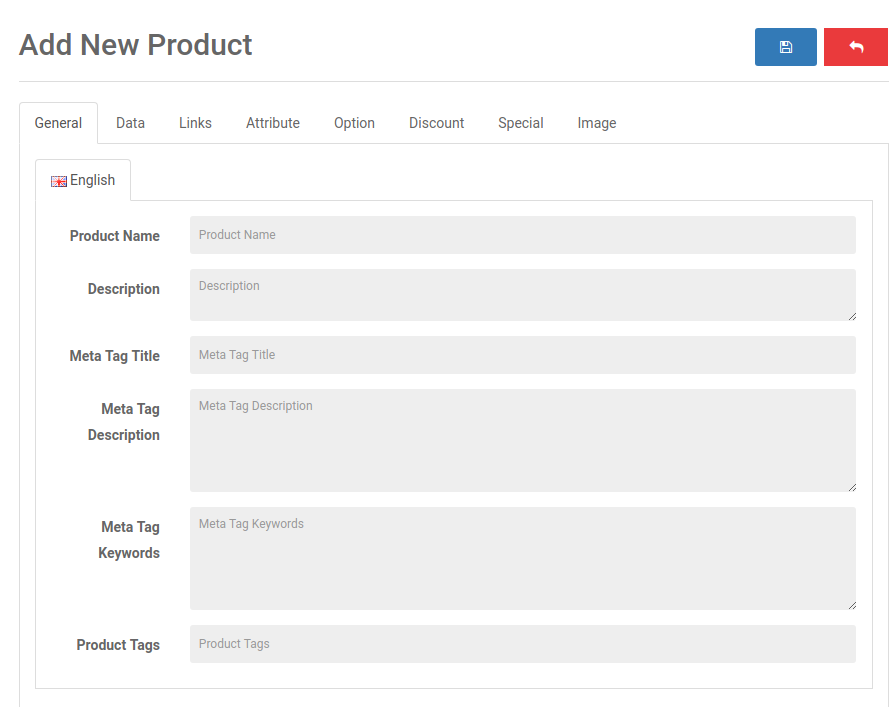
Add a general product description in the General setting tab of the product.
Product Name: Add product Name in this field.
Product Description: Add the product description in the description field.
Meta Tag Title: Enter the Meta tag here.
Listing Meta Description: Enter the Meta description of the website here.
Meta tag Keywords: Enter the meta keywords in this section. Enter the tags and separate them with comma.
Product Tags: Add all the product tags here.
3.3.1.2 Data
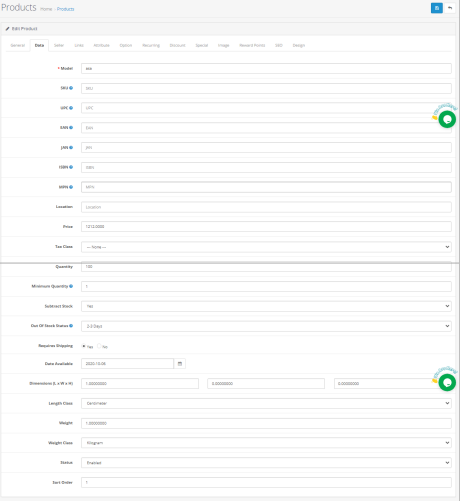
In the data section of Product description, the admin have to fill the details like Model, Product codes like SKU, UPC, EAN number, JAN, ISBN and MPN, Location details, Product price, Tax class, Quantity, Minimum quantity, Stock status, Shopping charges requirements, dimensions, weight etc.
3.3.1.3 Seller
Select the seller from the given seller’s list.
3.3.1.4 Links
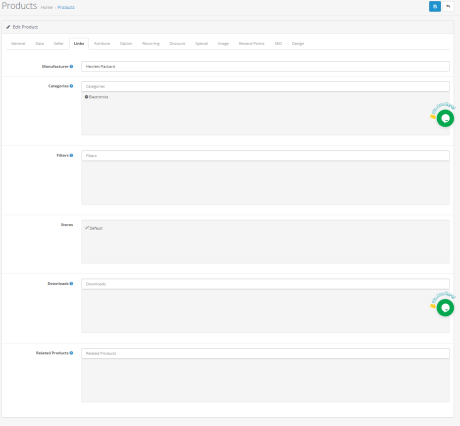
Add details like manufacturers, categories, filters, stores, related product, etc.
3.3.1.5 Attributes
Admin can add product attributes in English and French.
3.3.1.6 Option
If required then a product option will be available from this section.
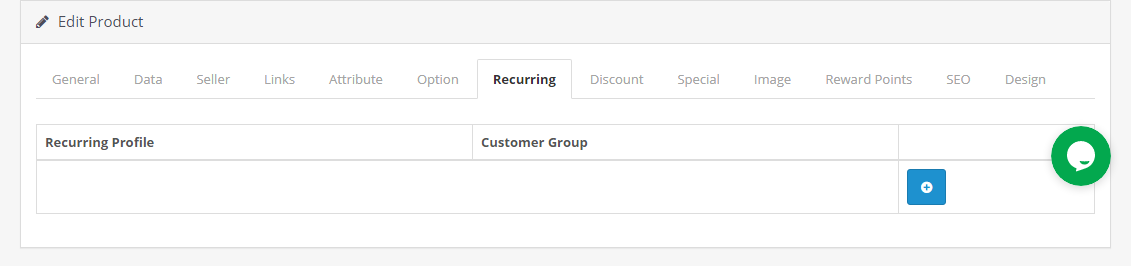
3.3.1.7 Recurring
From this section, addition of recurring profiles will happen.
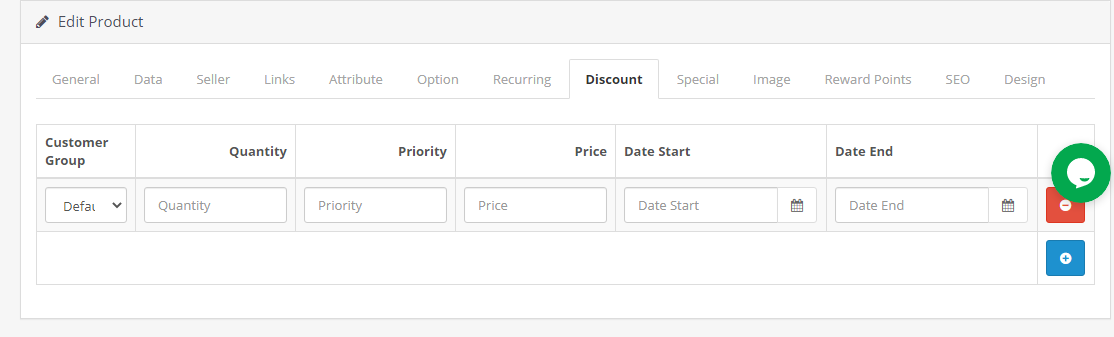
3.3.1.8 Discount
The discount details on the particular product will display here.
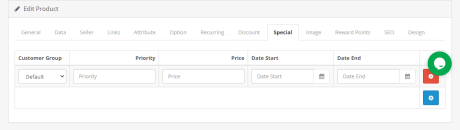
3.3.1.9 Special
Admin can set the product on priority for a period by adding start date and end date.
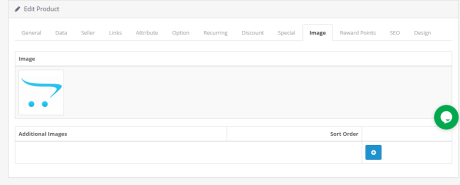
3.3.1.10 Image
Upload the Image of the product here. Addition of one or more images can happen with order to display.
3.3.1.11 Reward Points
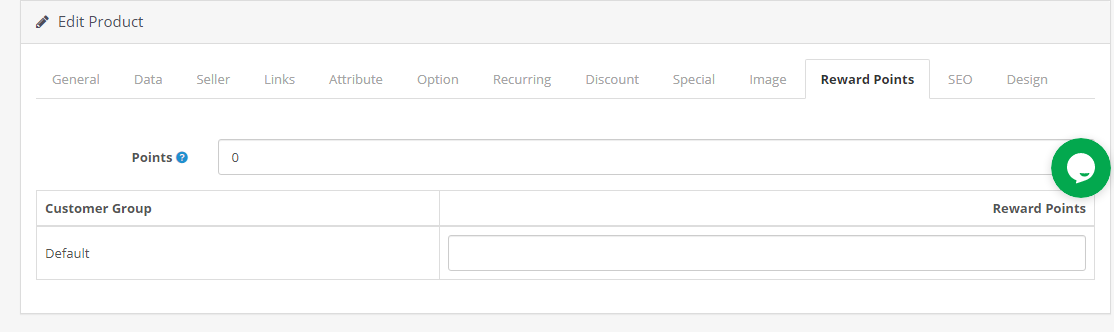
Admin can add a minimum number of points needed to buy this product.
3.3.1.12 SEO
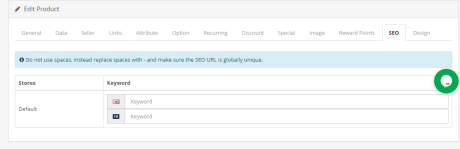
Add SEO for the product here.
3.3.1.13 Design
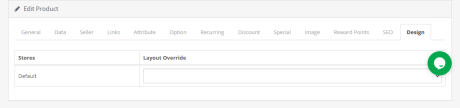
From this design section, sellers can choose the layout design.
3.3.2 Product Approval List
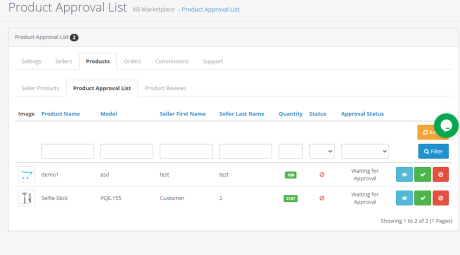
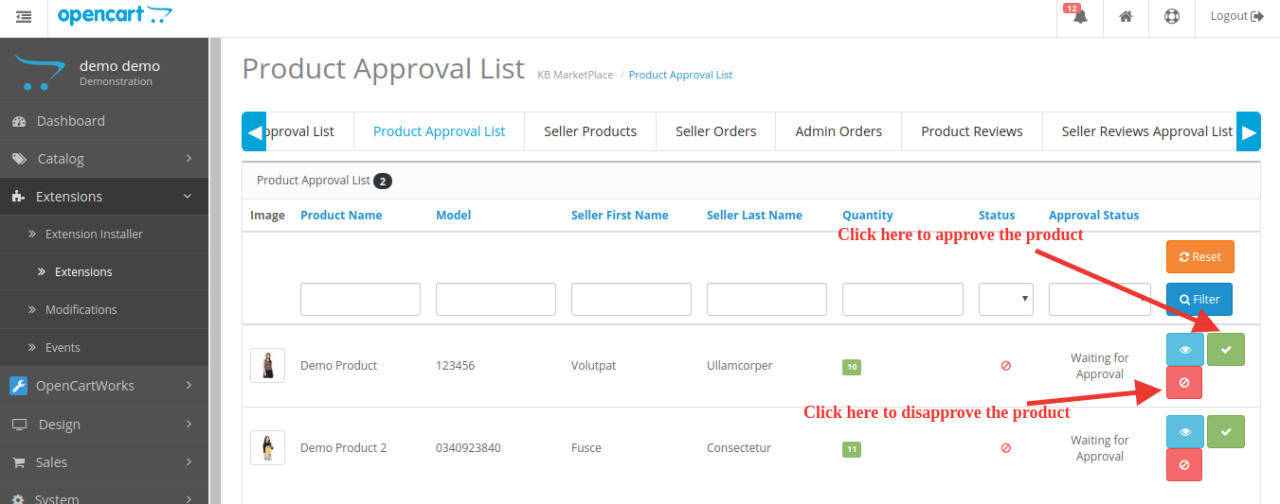
The third-party vendors can list their product from the dashboard of their profile. The products put in from the dashboard list in this tab of the OpenCart Multi-vendor marketplace module for approval. Admin approval is required only if this feature is enabled. The store admin can, then, approve or disapprove the product at a button click.
The products put in by the sellers will list in the Product Approval List tab of the OpenCart Multi seller Marketplace module as shown in the image below:
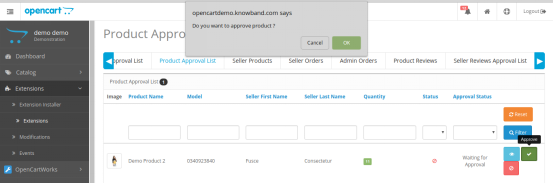
The admin can approve or disapprove of the products by clicking on the respective button corresponding to each product. Refer to the image below:
Once the Approve or Disapprove button is clicked, a pop-up will display with the message “Do you want to approve product?”
3.3.3 Product Reviews
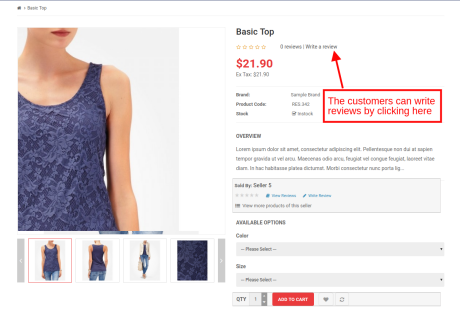
The customers can give ratings and write reviews for the products if this feature is enabled from the back-end of the OpenCart marketplace plugin. If enabled, the customers can leave their reviews by clicking on ‘Write a Review’.
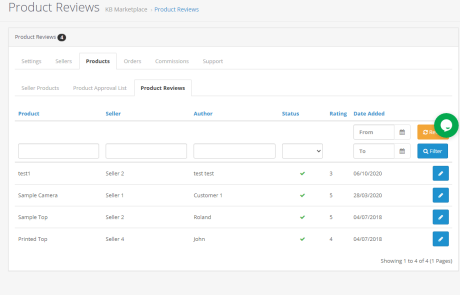
The reviews written in the front-end will list in the back-end of the OpenCart Multi-vendor Marketplace plugin as shown in the image below:
Click on the ‘Edit’ button to edit or approve the product reviews. This will redirect you to the review edition page of the OpenCart Multi-vendor Marketplace module.
3.4 Orders
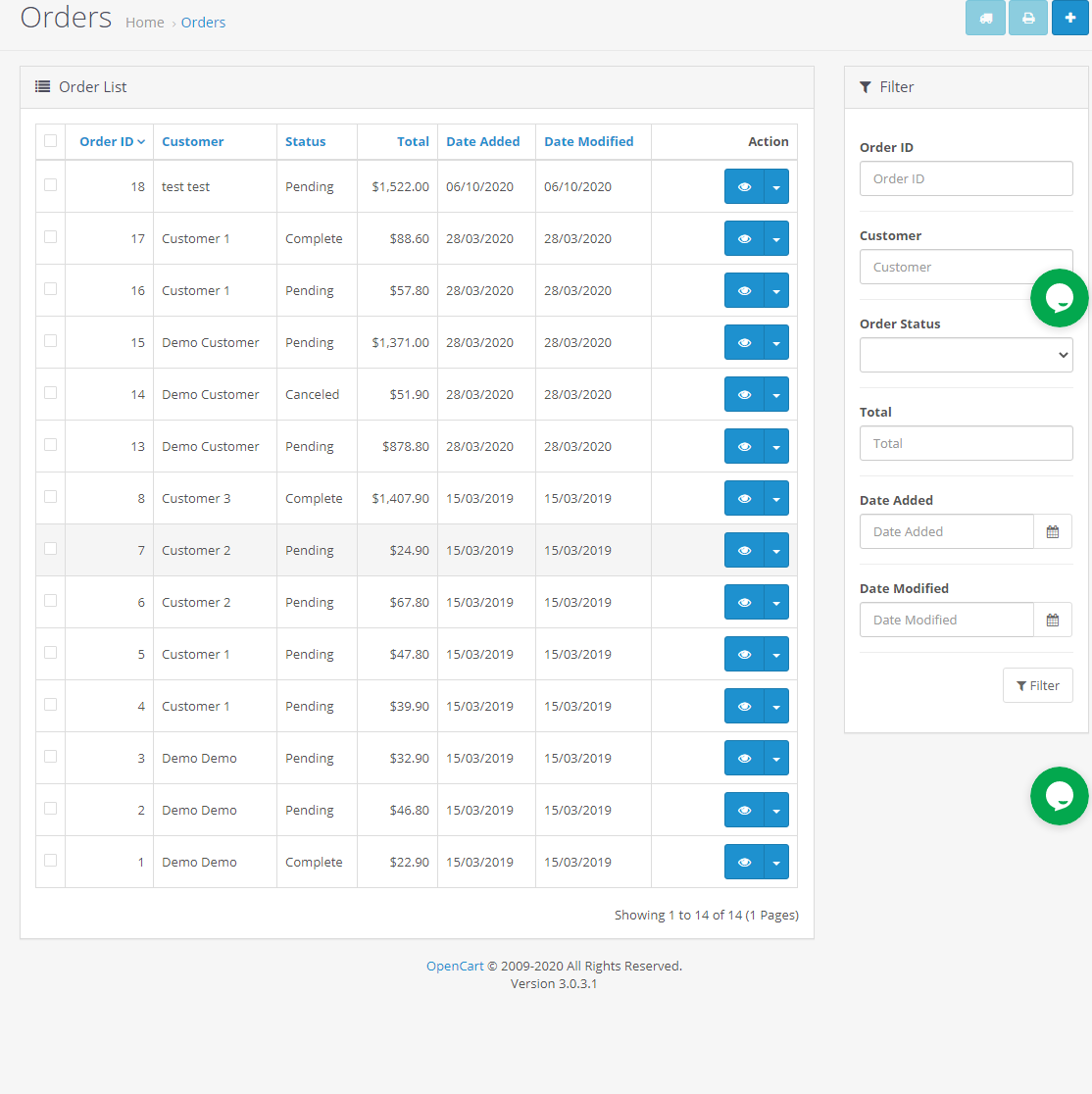
OpenCart store admin can view the list of all the orders here.
3.4.1 Seller Orders
The orders received on the seller’s product will list in the tab of the OpenCart Multi seller marketplace plugin. The store admin can view or edit the orders by clicking on the View and Edit buttons respectively.
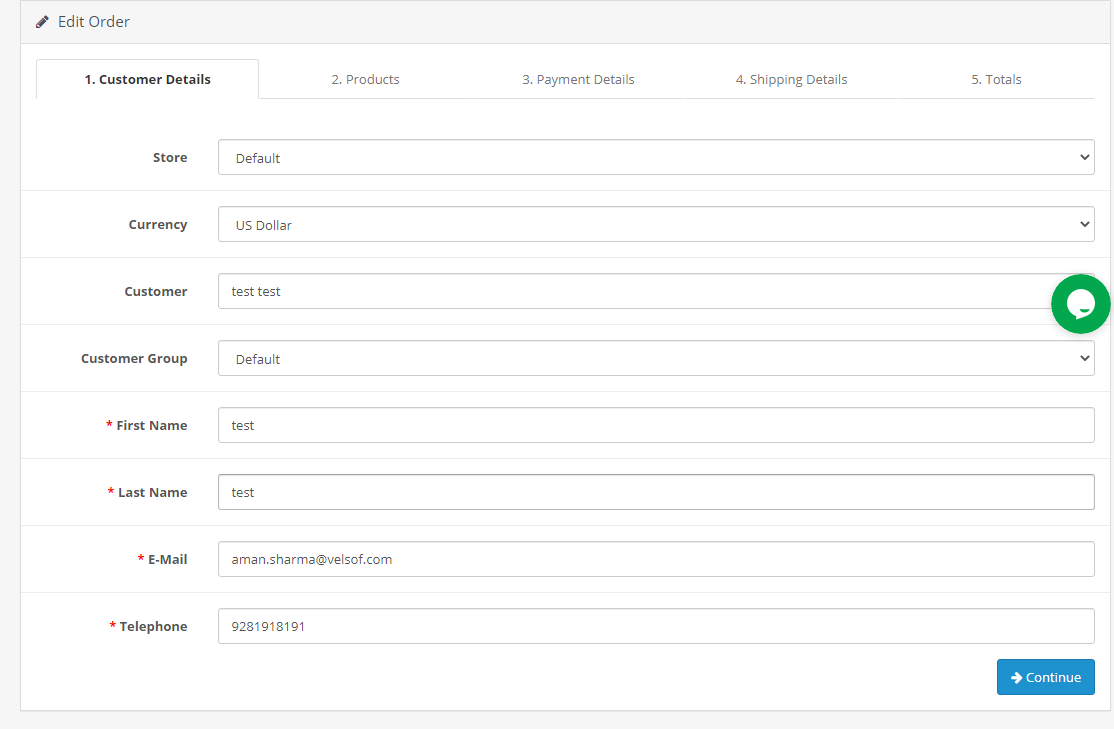
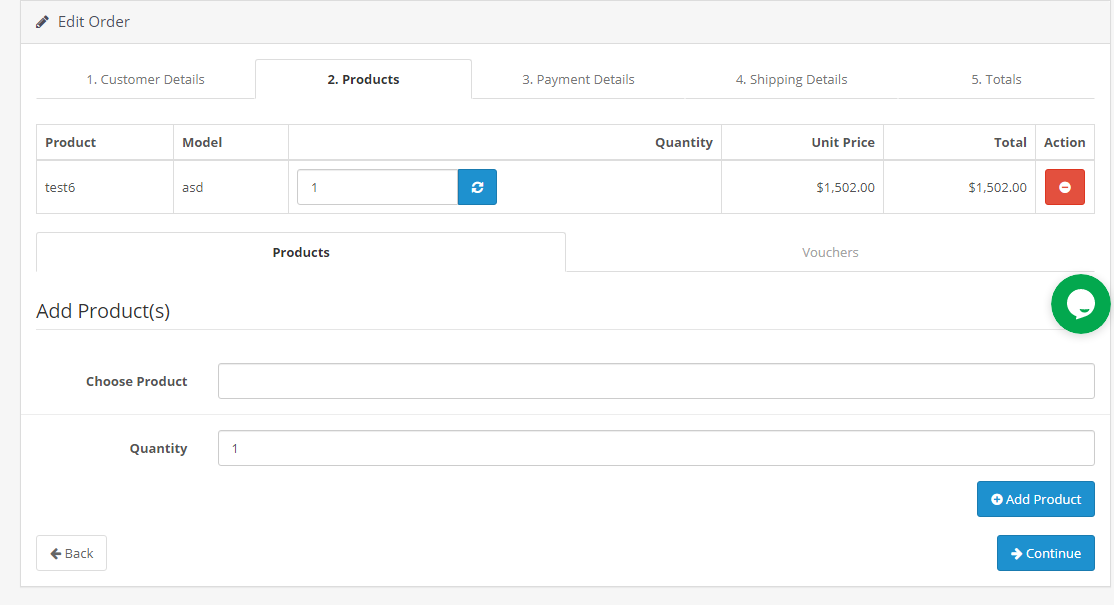
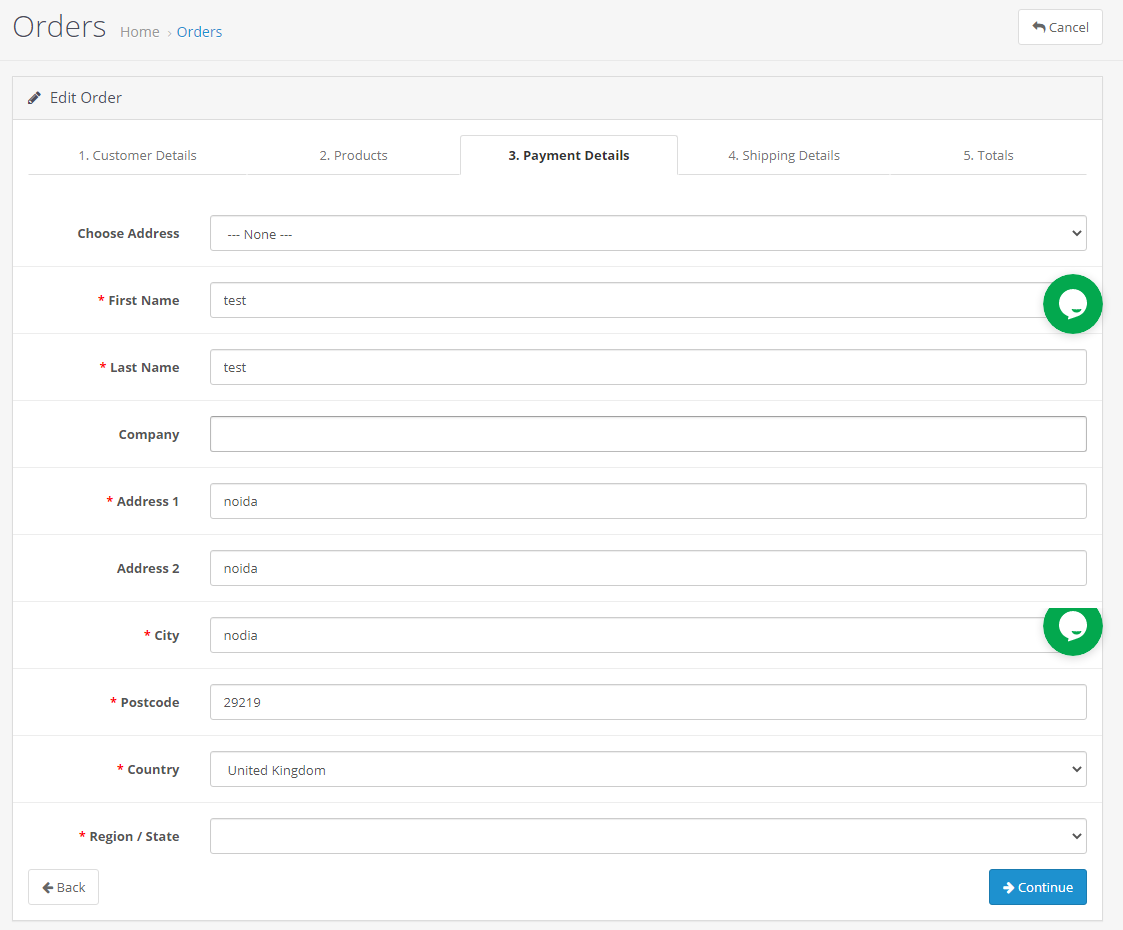
The following window will display if admin clicks the edit button. Admin can make the changes in all the fields as required.
3.6.1 Customer Details
From this section, admin can add their customer’s details.
3.6.2 Products
From this section, admin can add their products details.
3.6.3 Payment Details
From this section, admin can add their payment details.
3.6.4 Shipping Details
From this section, the admin can add their shipping details.
3.6.5 Totals
From this section, the admin can add the details of their total.
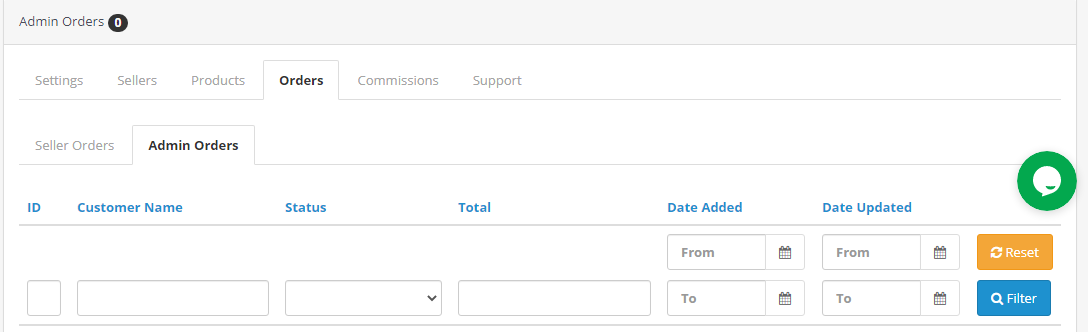
3.4.2 Admin Orders
The admin can track the order details of their products in the Admin Order tab of the OpenCart Multi seller marketplace extension.
3.5 Commissions
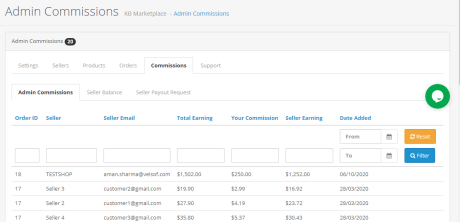
3.5.1 Admin commission
The admin can view the commission earned from the marketplace in this tab of the OpenCart Multi-vendor Marketplace Plugin. The store owner gets an option to view the earnings of the seller and total earnings.
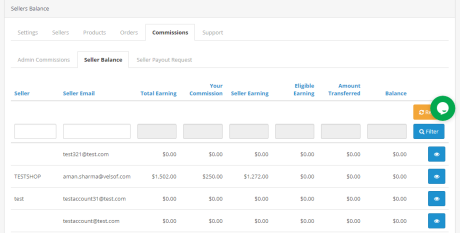
3.5.2 Seller Balance
The store admin even gets an option to view the transaction of the sellers. The admin can see the Seller Balance History as well as Transaction History in this tab of the OpenCart Multi seller Marketplace plugin.
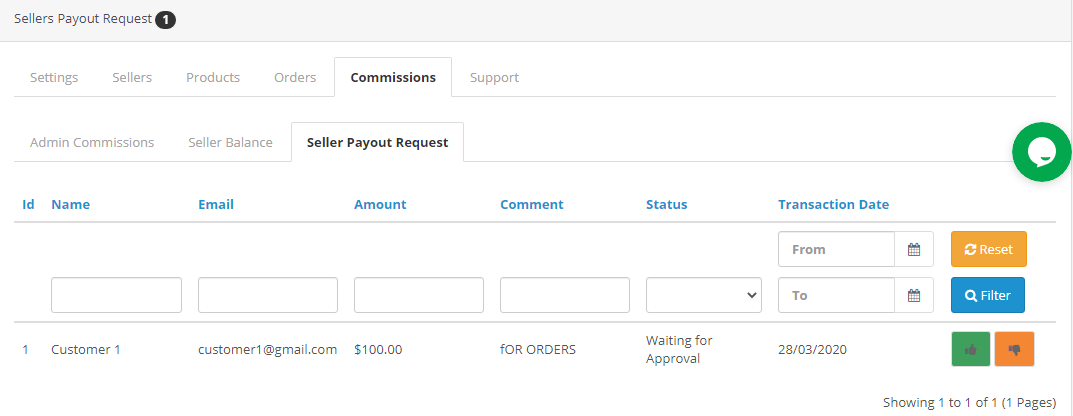
3.5.3 Seller Payout Request
Payout Request sent by the sellers can be viewed by the admin from the backend of the Sellers Payout Request. Admin can approve/ disapprove the payout request with a few clicks. Once the admin clicks on the “Approve” button a pop window as shown in the figure will appear.
When the admin will click on the “Disapprove” button, a dialog box with a comment field will appear. Once the admin clicks the submit button after filling the comment fields, the request will disapprove.
3.6 Support
This tab is used to find the user manual of the Opencart multi-seller Marketplace Module and also to raise a support ticket for any kind of queries and issues.
4.0 Front-end UI
Once the OpenCart Multi vendor Marketplace plugin is successfully installed at the OpenCart store, third-party vendors can fill a simple form and open-up their online shop. For easy management of the shop, the seller gets access to their dashboard.
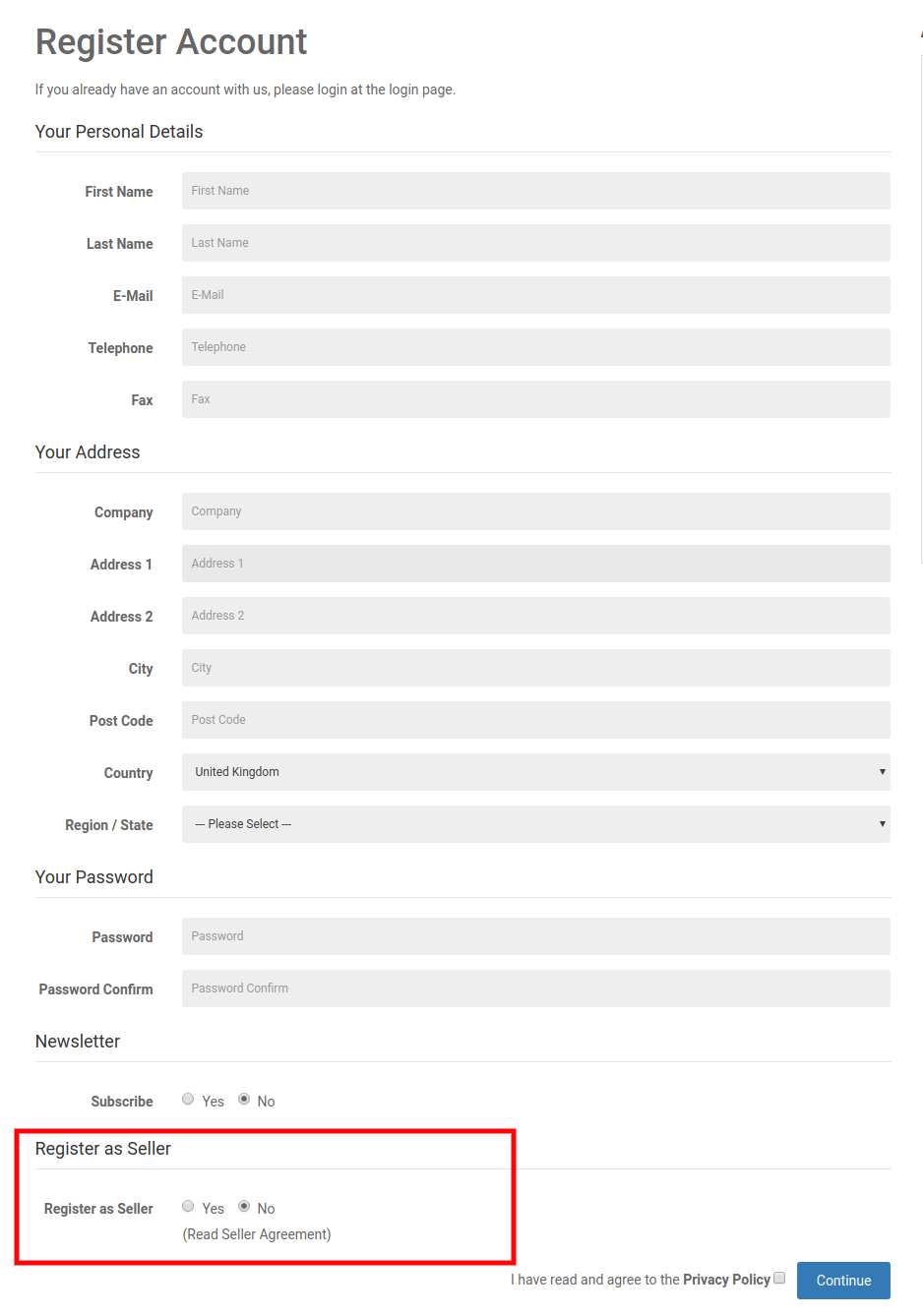
4.1 Seller Registration
The third-party vendors can easily register as a seller of the site by filling a simple registration form. In order to register as a seller, select ‘Yes’ in the Register as Seller section of the form.
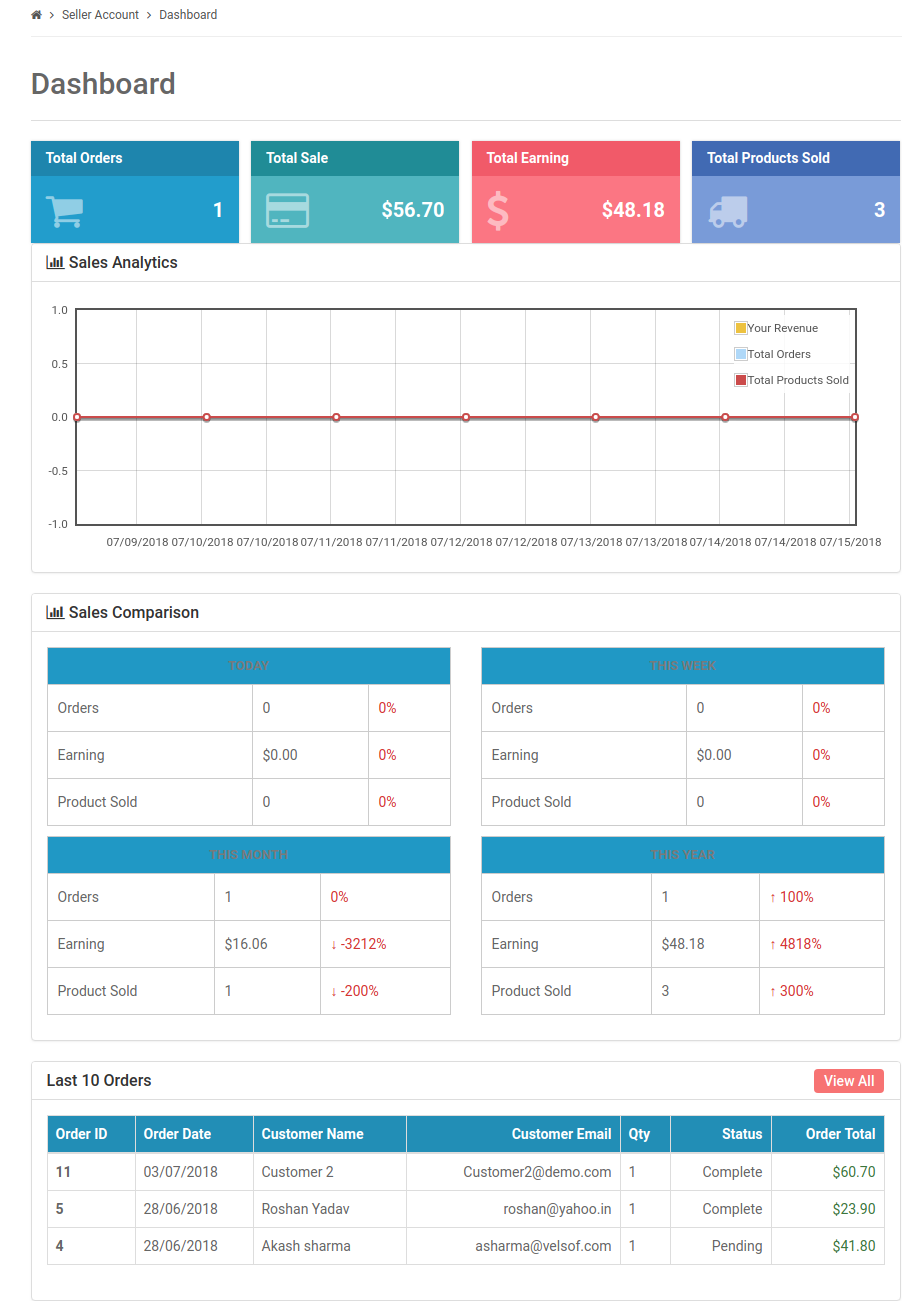
4.2 Seller Dashboard
Once the registration is complete and the seller’s account approves from the back-end of the OpenCart multi-seller Marketplace plugin, the seller gets access to the Dashboard.
They can view the entire sales report and order details.
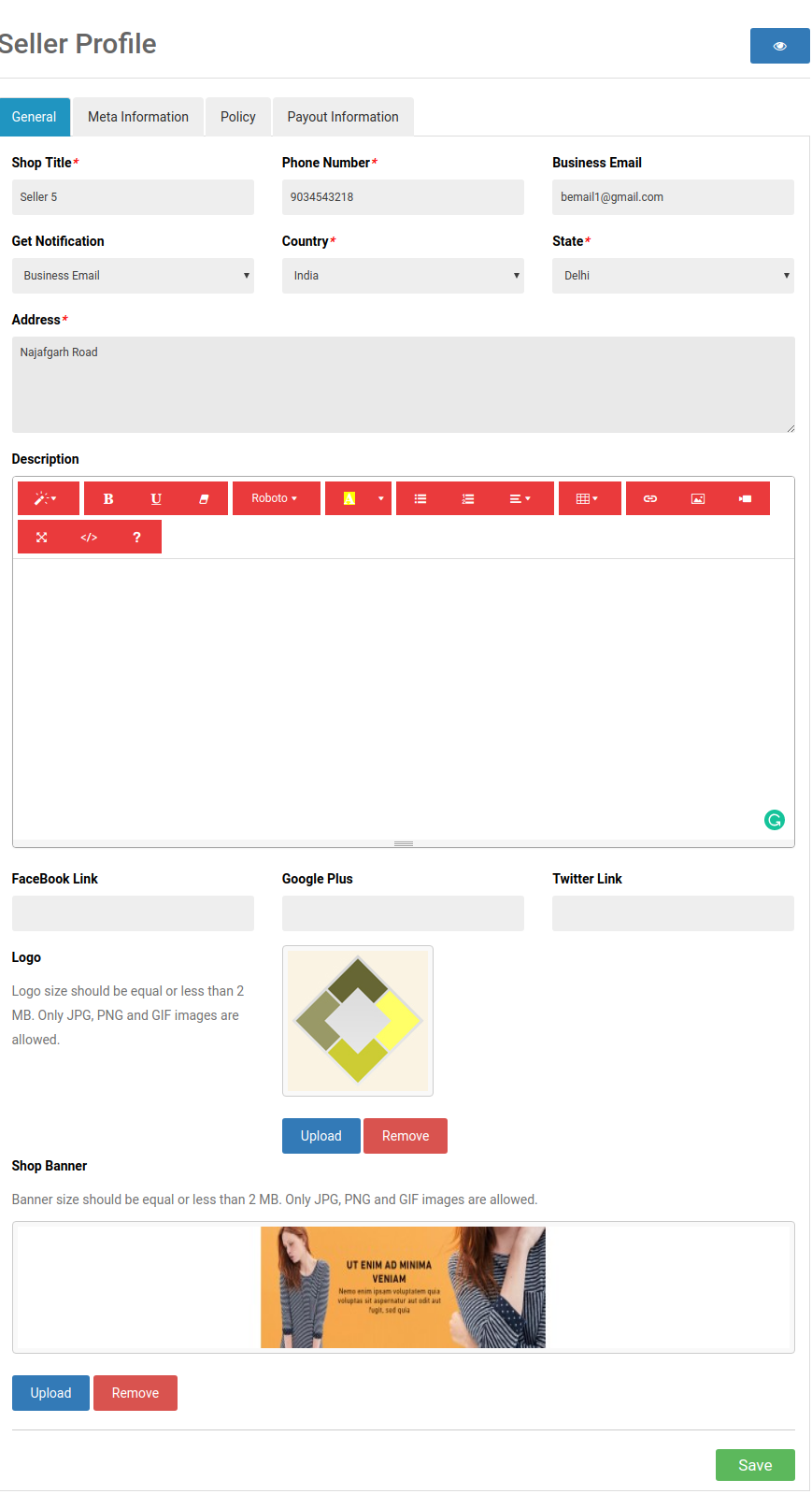
4.2.1 Seller’s Profile
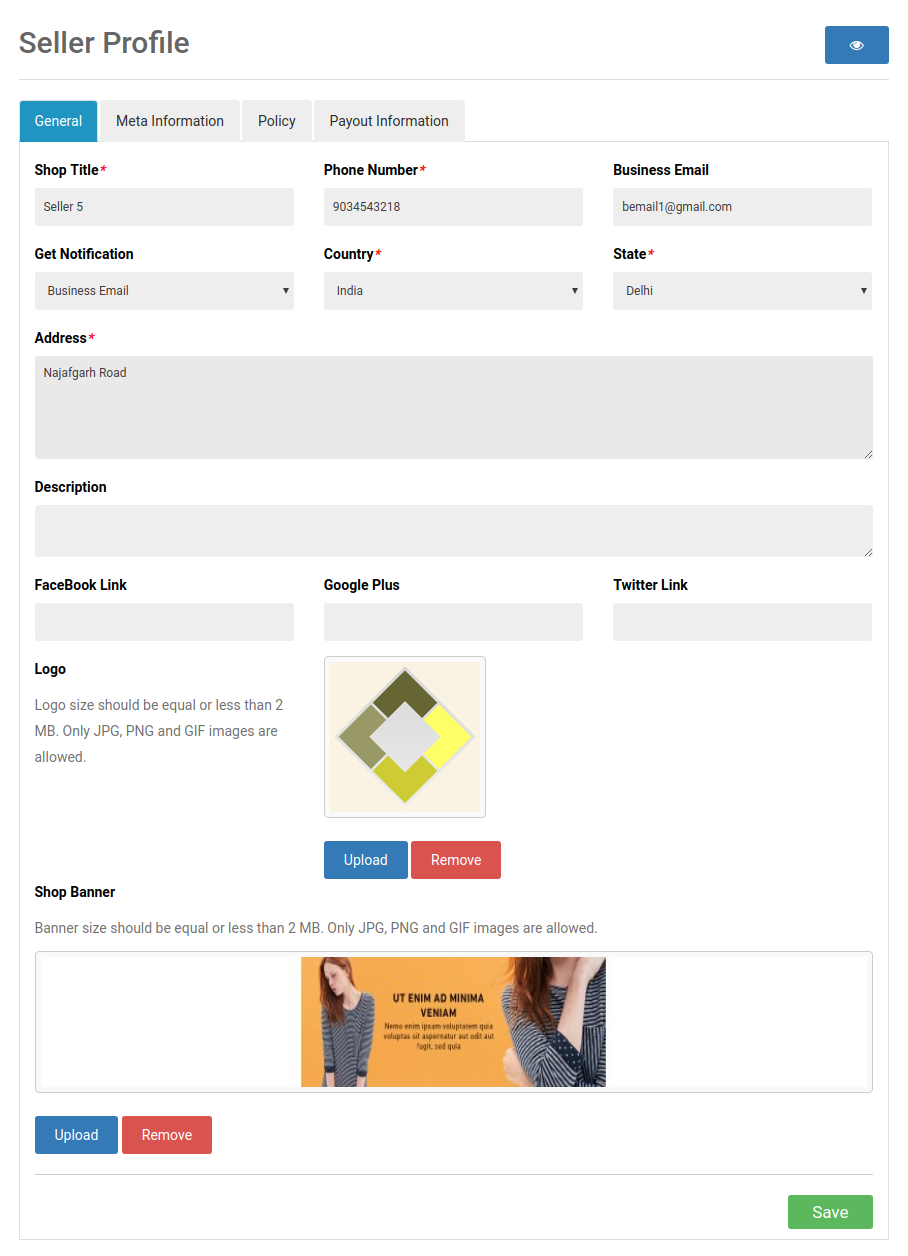
The sellers can edit their profile and personalize their shop from this tab of the dashboard.
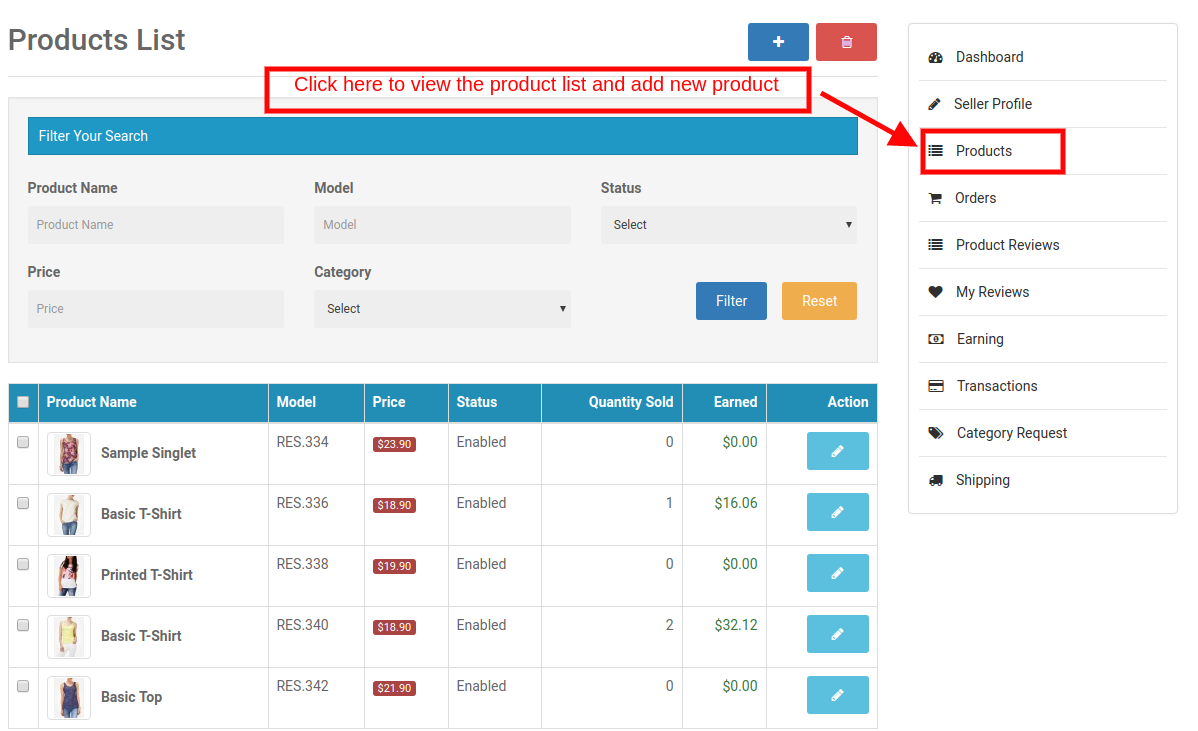
4.2.2 Seller’s Product
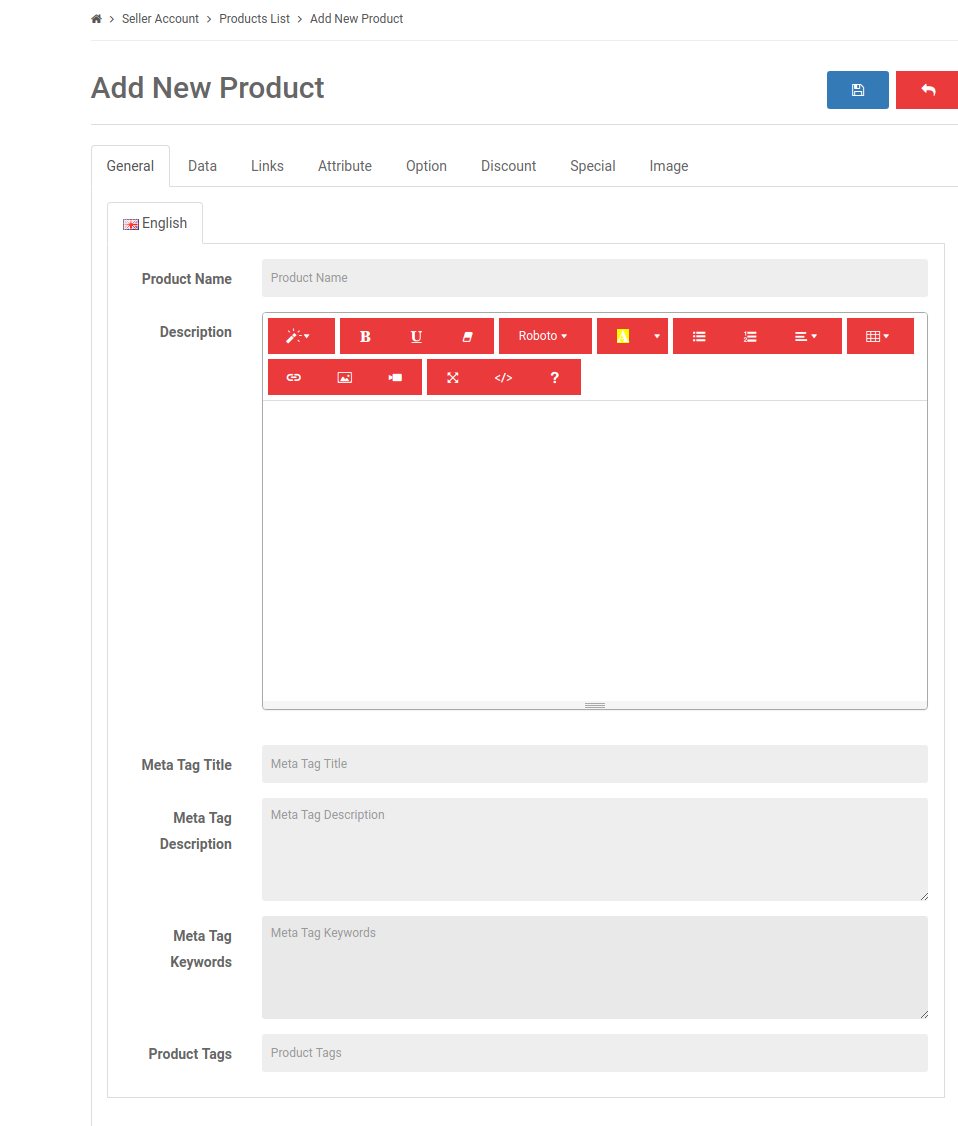
The sellers can follow the path mentioned below in order to add a new product.
Go to My Account -> Dashboard -> Products
The list products display in this tab of the seller’s Dashboard.
In order to add a new product click on the ‘+’ sign at the top right portion.
This will redirect you to the ‘Add New Product’ page. Fill up the required detail in order to add the product.
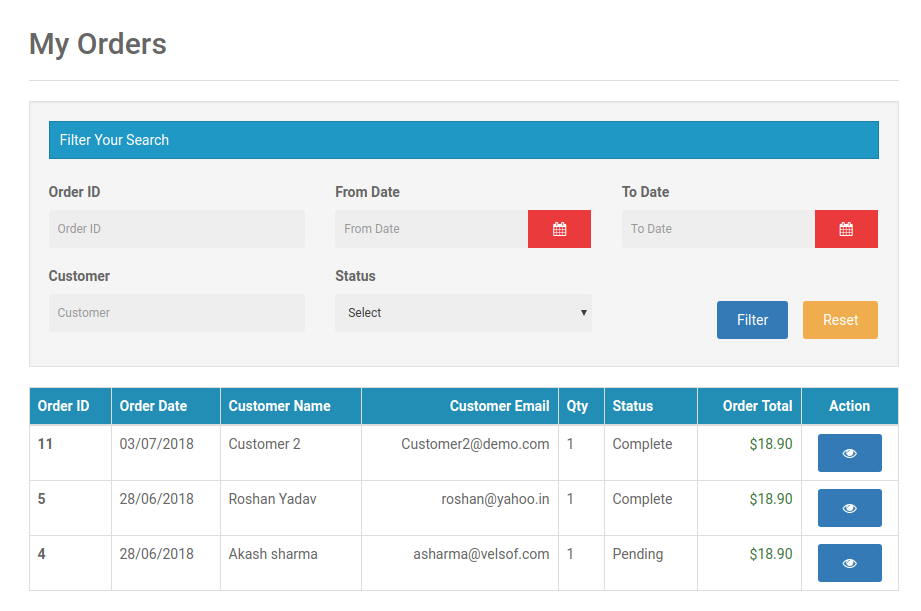
4.2.3 Order
The sellers can view their orders and related details in this tab of the Dashboard.
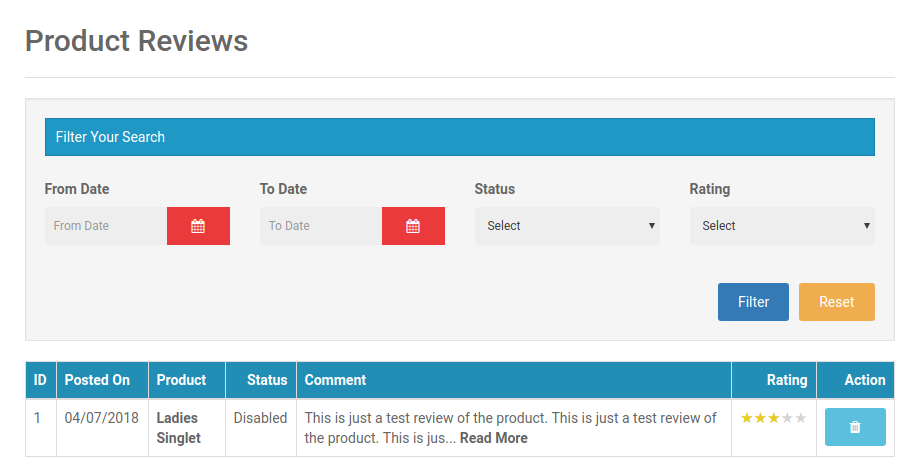
4.2.4 Product Reviews
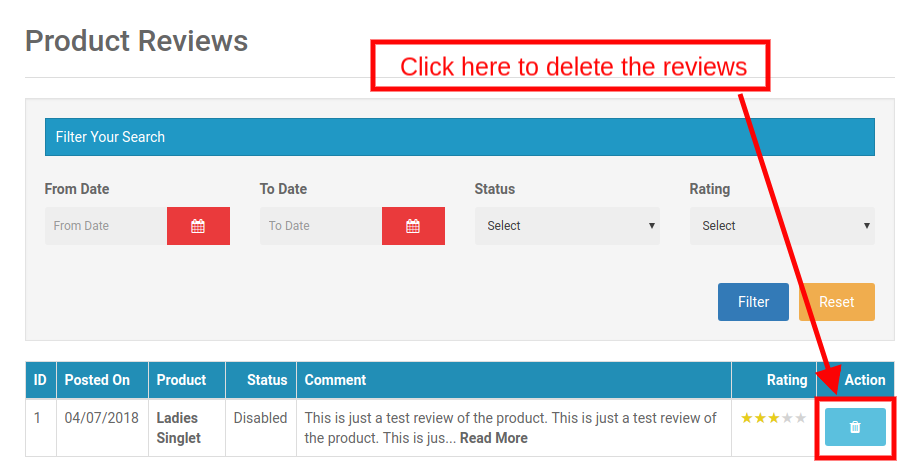
The sellers can view the review received on their product in the Product Review Tab of their Dashboard. All the reviews received will list as shown in the image below:
4.2.4.1 How can the sellers delete the Product Reviews?
Even the sellers get an option to delete the reviews. This happens by clicking on the ‘Delete’ button corresponding to each review.
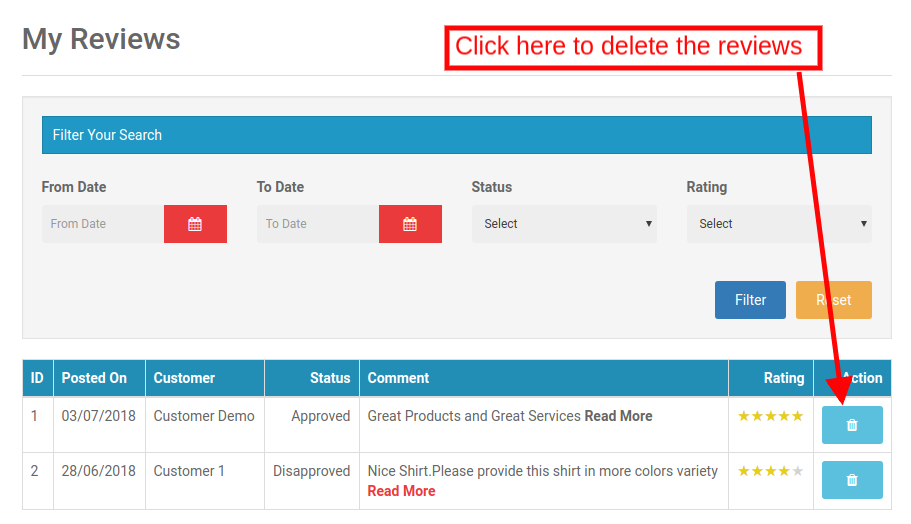
4.2.5 My Reviews
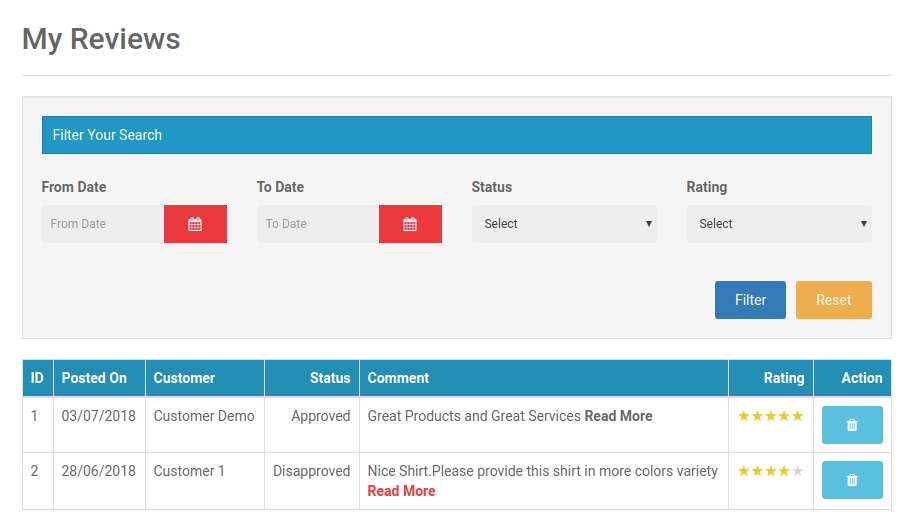
The tab of the seller’s dashboard lists out the reviews received on their profile.
OpenCart Multi vendor Marketplace plugin- My reviews
4.2.5.1 How can the Sellers Delete the Reviews on their Profile?
The sellers can even delete their profile reviews if required. This happens by clicking on the ‘Delete’ button corresponding to each review.
4.2.6 Earnings
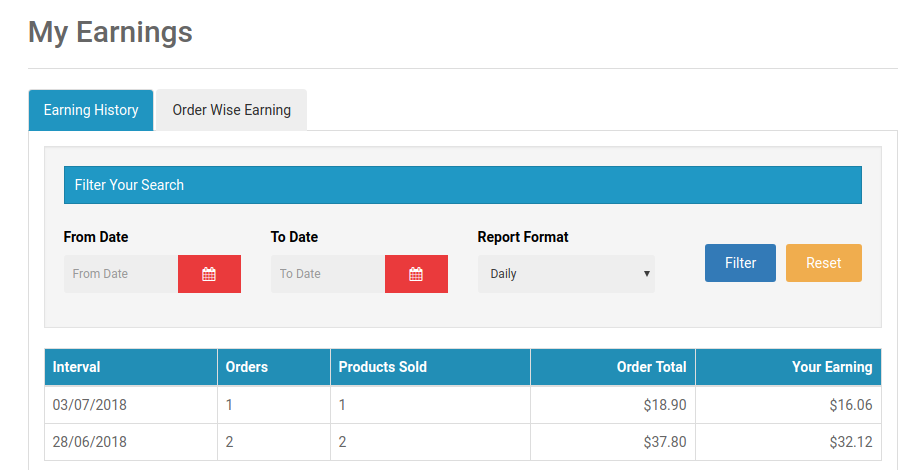
The total earnings of the seller can be viewed in this tab. The vendors can filter the results as per requirement.
The total earning history will display as shown below:
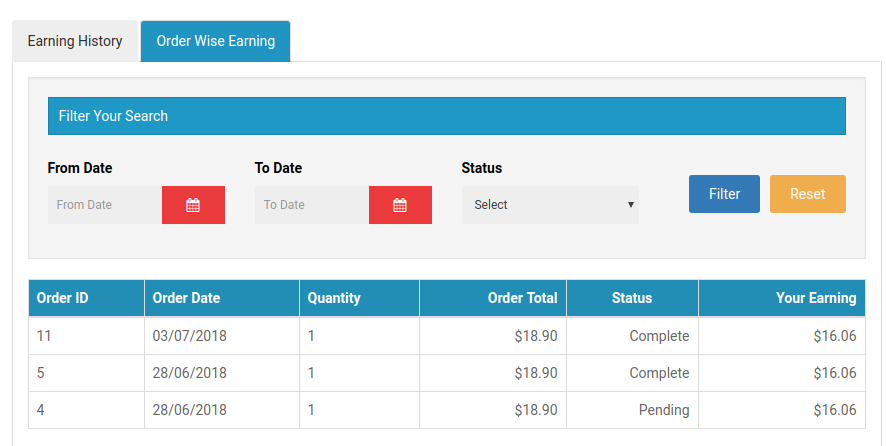
The sellers can even view the order-wise earning as shown below:
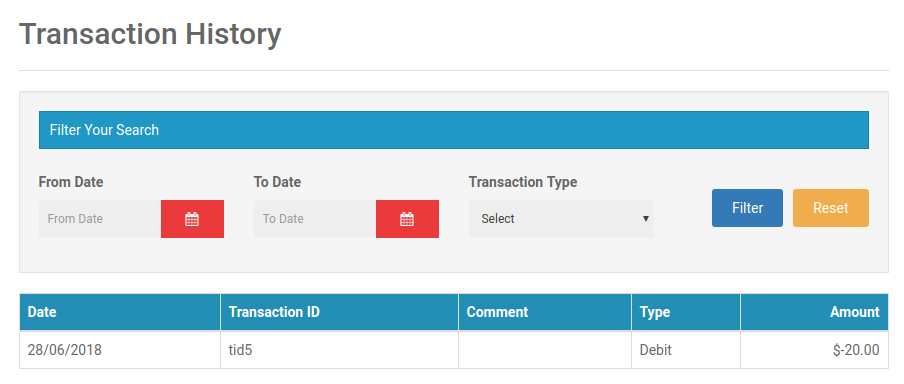
4.2.6 Transactions
The seller can view their entire transaction history in this tab. The amount debited or credited in their account can be viewed here.
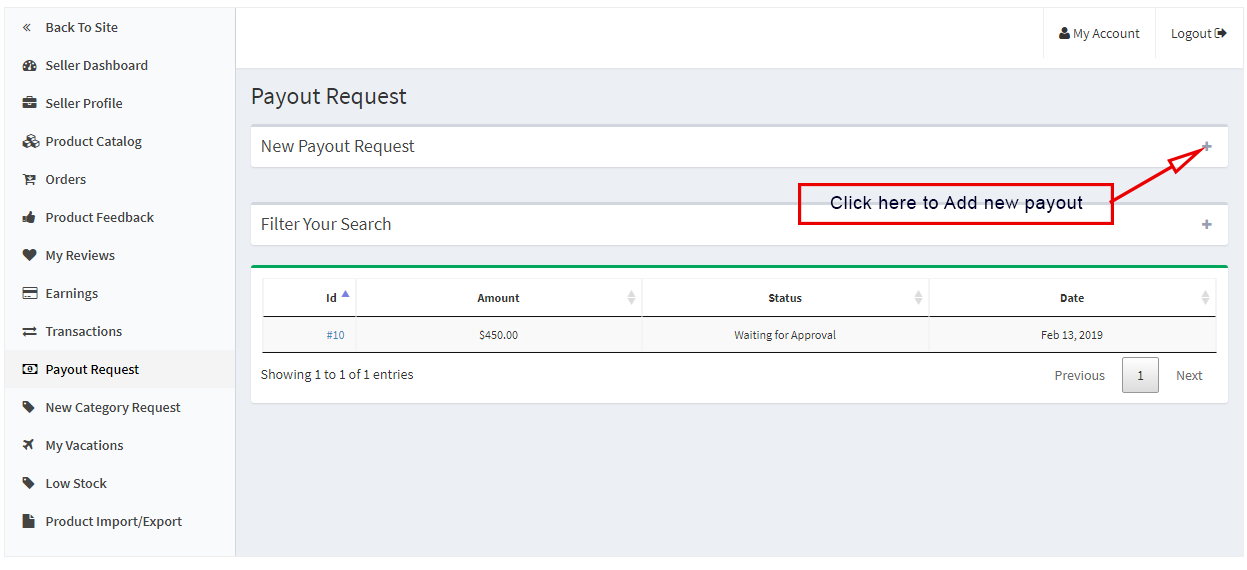
4.2.7 Payout Request
Sellers can view the list of payout request sent to the admin from the Payout Request tab. For a new payout request sellers need to fill the payout amount and reason and send it to the admin for approval.
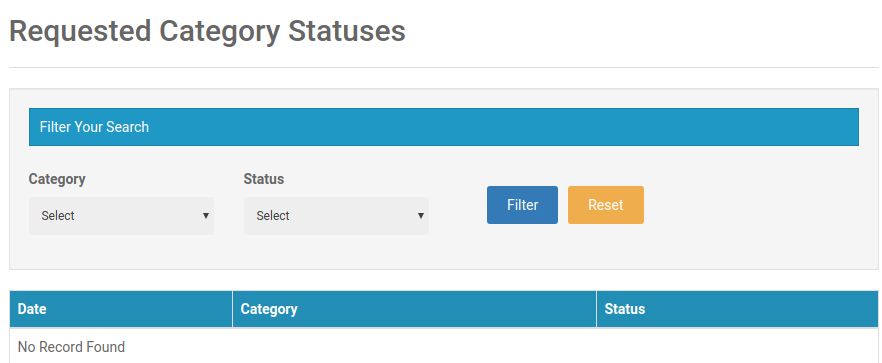
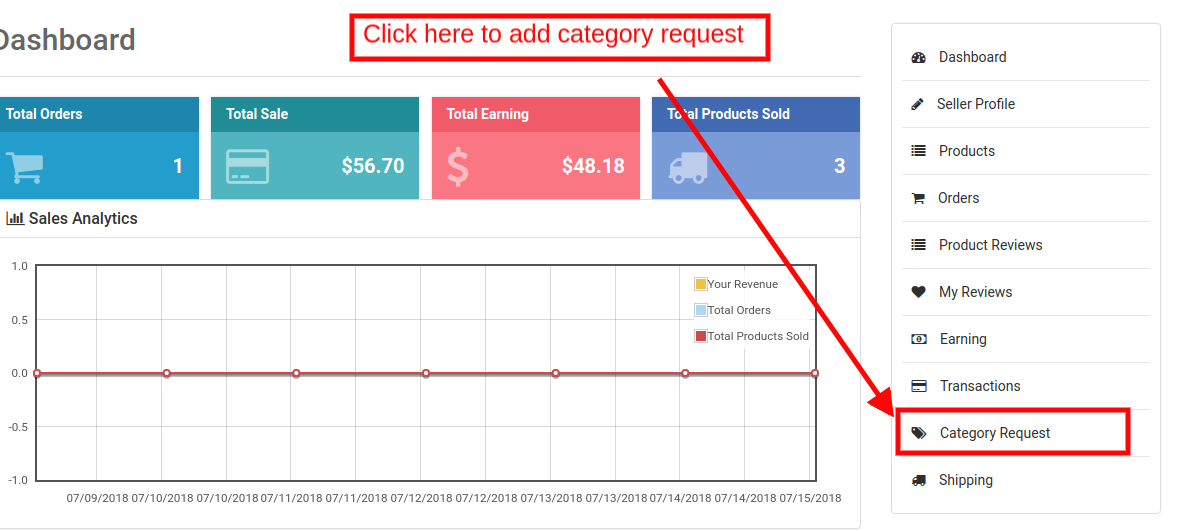
4.2.8 Category Request
The sellers can view the categories assigned to them. Additionally, they can even send a category request to the store admin. In order to send category request, go to the Dashboard -> Category Request
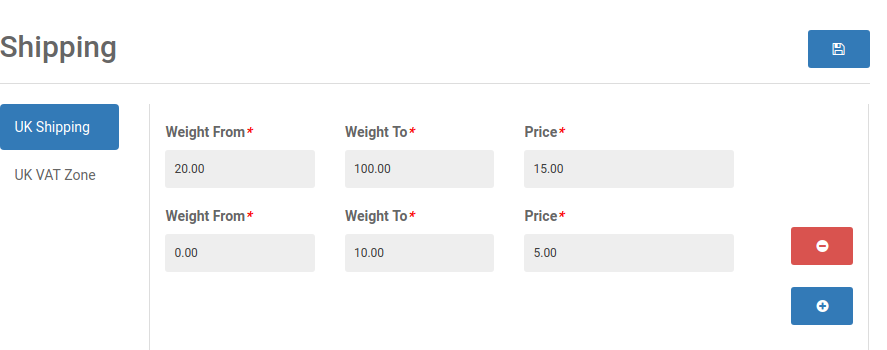
4.2.9 Shipping
The sellers can view the shipping process as in the screenshot below:
4.2.10 Product Import
With the help of the product import feature, sellers can add products in bulk. They have to download the template for products upload and just fill in the information of their products and upload again to list the products in bulk.
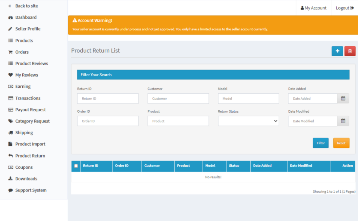
Product Return:
The seller can see the product return list here. The seller can add a filter to search for the product returned or requested for the product return.
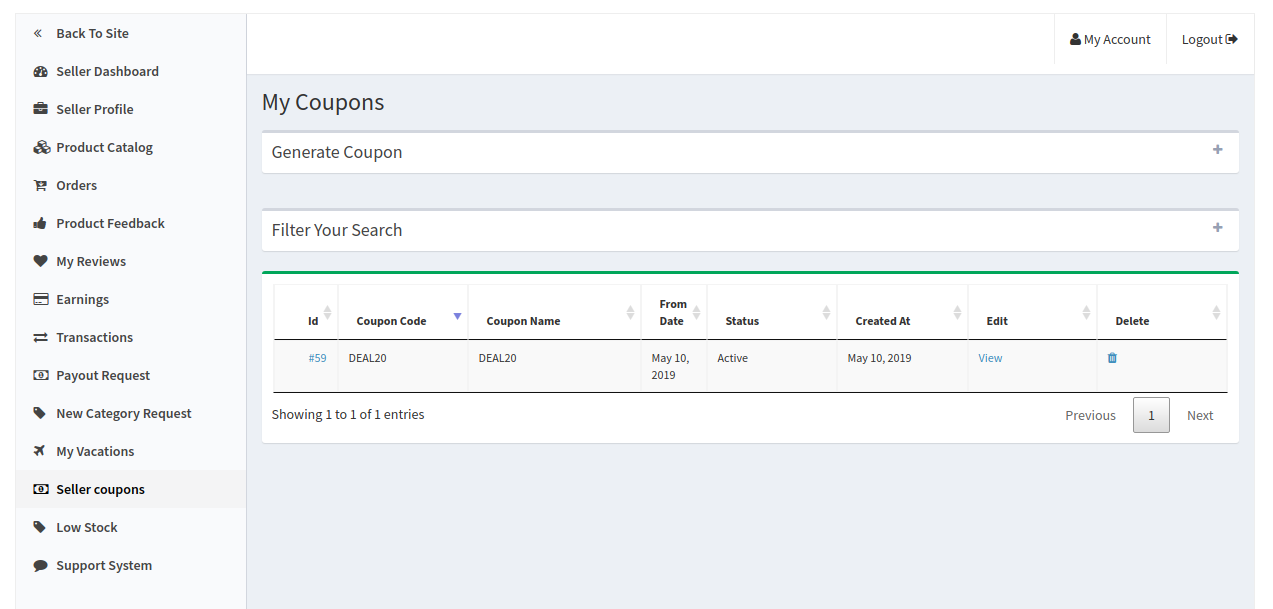
4.2.11 Seller Coupons
Using this feature seller’s can generate coupons for their customers. Sellers can use different variations for creating their coupons like users per coupon, coupon type etc.
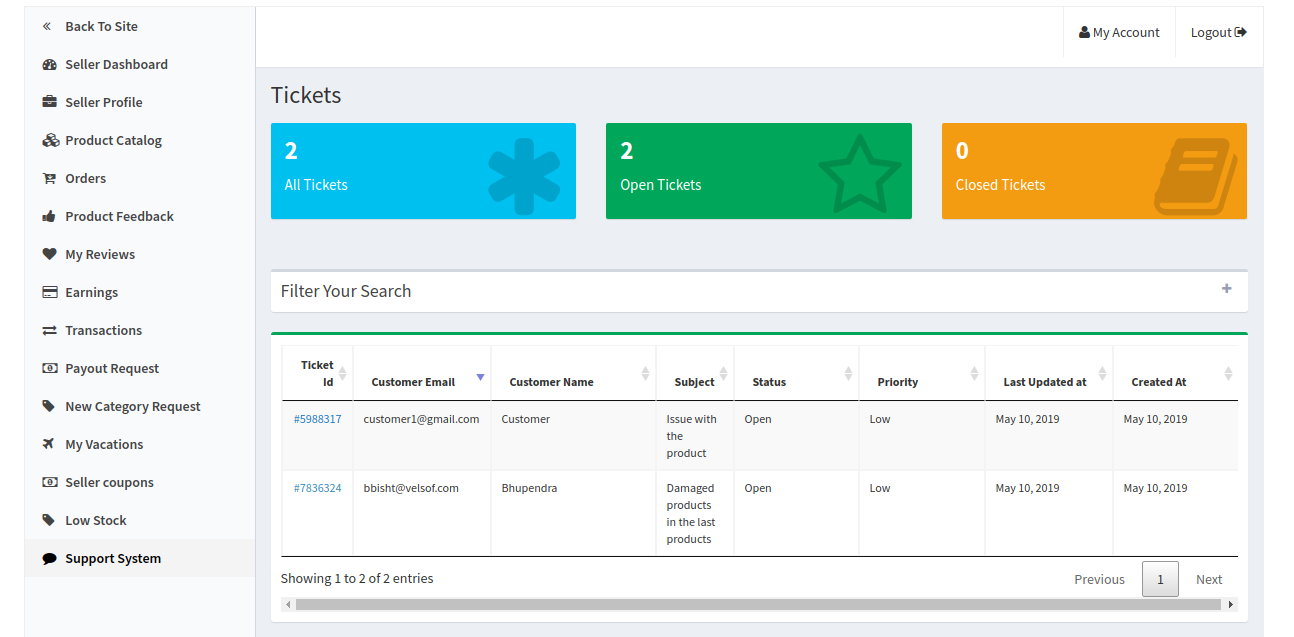
4.2.12 Support System
This feature allows the sellers to view the queries of their customers in the form of tickets. When the seller clicks on the Ticket ID they are able to see the full detail about the query and even reply and change the status of the query.