How To Create An Online Store With OpenCart?

It’s 2020 already & most businesses are willing to bring their shops & services online. With the growing usage & popularity of online shopping, it has become a necessity for businesses to be online to thrive. The most effective way to do so is by launching your own OpenCart eCommerce online store.

Although many startups are already maintaining their presence on social platforms like Facebook marketplace & on other marketplaces like Amazon, etc, these platforms have a lot of limitations & marketplaces even end up taking some share of the profit.
The most efficient way is an eCommerce website (for selling online) or a catalogue website built using well-renowned eCommerce solutions like OpenCart, PrestaShop, etc. For startups, these two are the best platforms as they are open source solutions yet extremely feature-rich & customizable.

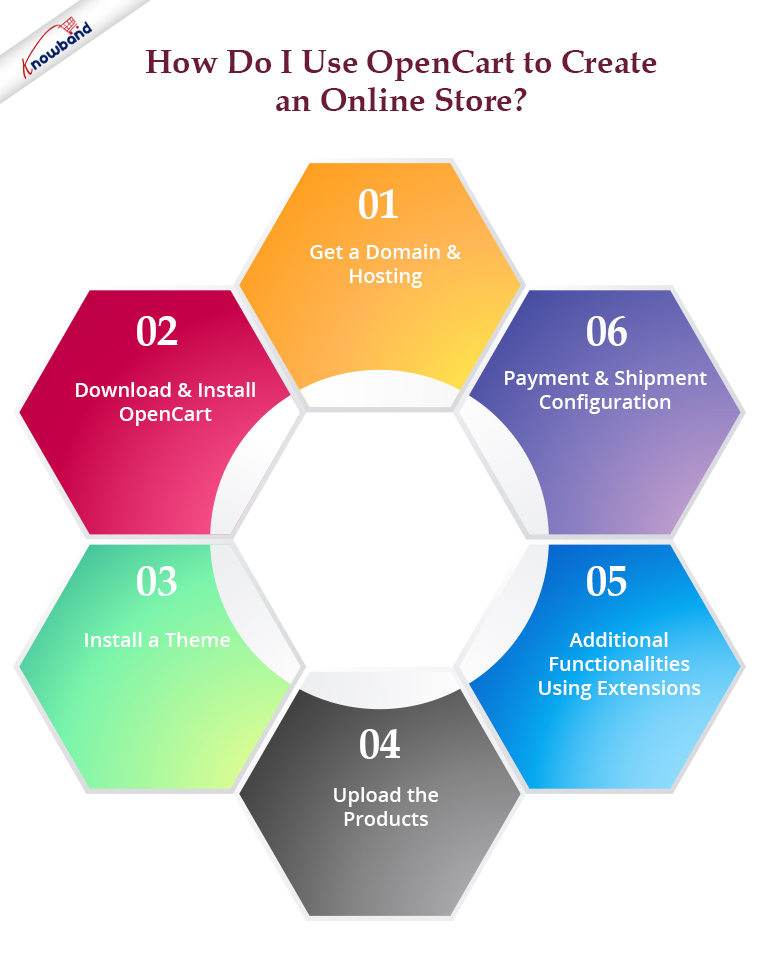
In this article, I will elaborate on various factors that can help you create an online store with OpenCart. Following are the steps to build & design an OpenCart Website:

1. Get A Domain & Hosting:

The benefit of having your website is the option to have your unique web address. For example, Facebook has its web address i.e. facebook.com. Having your choice of domain name helps you build a better brand reputation. It also provides you with all possible kinds of marketing opportunities. You also get a better hold of getting more profound insights into your audiences & customers. This allows you to improve your services by following a customer-centric approach & it all eventually boosts your revenue & helps your business thrive.

The first step you need to take is to buy a domain name & suitable hosting (shared/ VPS, dedicated, cloud hosting, etc.) according to your needs. Once you get a hosting space, you can install & design your OpenCart website on it.

Alternatively, you can design your OpenCart website on your local computer (using Xampp/ Wamp/ Mamp) & then later upload your well-designed OpenCart website to your domain & hosting space.

Recommended Read: Top 10 Important Website Elements You Must Keep an Eye On

2. Download & Install OpenCart:
Download the latest version of OpenCart from the official website of OpenCart. Upload the downloaded file to your hosting space (usually the public_html folder of the cPanel of your Linux Hosting). Then simply set up the database (MySQL for OpenCart), connect it with your OpenCart website & run the installation.

Viola! Now, you can easily sign in to the backend of your website & design your site. OpenCart has a very flexible yet easy-to-use backend with features that even a non-tech-savvy person can use.

3. Install A Theme:

OpenCart has several theme templates that already are mobile-responsive & customisable to every extent. Choose the one that suits your business needs. You can also design your theme from scratch or heavily customize an existing theme as per your needs & budget. You can even outsource the OpenCart development & hosting task to a professional eCommerce firm.

4. Upload The Products:

No eCommerce website can function without the products being listed on it. Simply add the products & enter the relevant description, price, tax rules, delivery fees, etc. You can also upload the products in bulk using the ‘.csv’ file upload method.

Recommended Read: 6 Must-Have OpenCart Extensions for Your eCommerce Store

5. Additional Functionalities Using Extensions:

To add more designs & functions other than what your theme offers, you can install 3rd party extensions on your OpenCart website. Some of the common OpenCart extensions are the ‘One-Page Checkout’ extension, ‘ZIP code product availability check’ extension, ‘Mobile App Builder’ extension, etc.

6. Payment & Shipment Configuration:
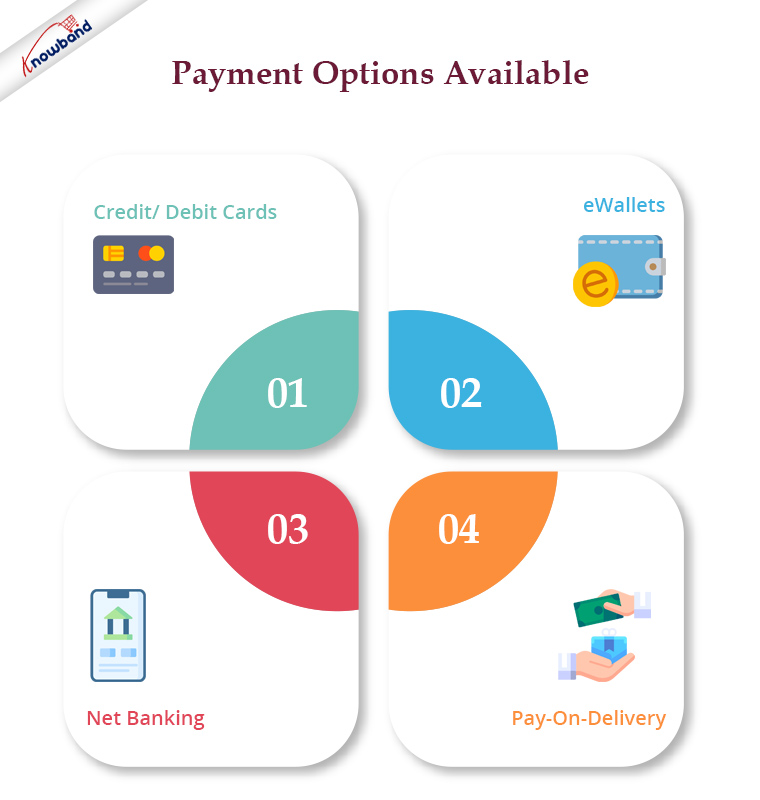
Set up the payment methods according to the popularity of your potential audience. The easiest one to set up is PayPal. You can also add payment options using Credit/ Debit cards, eWallets, Net Banking, Pay-On-Delivery, etc.
Next, you must set up the shipment. The most popular shipment companies are FedEx, DHL, etc. Based on your business location & the location of your target audiences, make sure to choose relevant shipment companies.
These are all the minimum steps you would need to get your OpenCart eCommerce website up & running. Later on, you can make any desired modifications on your OpenCart site whenever you need them.

From the backend of your OpenCart website, you can manage orders, add site managers/ editors with selective privilege, add CMS pages like ‘about-us’, ‘privacy policy, etc.
OpenCart can also be used by brick & mortar shops to simply display their products like a catalogue website (without setting payment & shipment options). This can help them build a better online presence with improved branding. Those who sell products via affiliate links can also build a catalogue website using OpenCart. The options with OpenCart are just endless.

Recommended Read: Real-Life Example of Knowband’s Opencart Mobile app

Wrap Up

Great news for OpenCart Store Owners !!!

Knowband has decided to drastically alter your company’s operations as a result of its outstanding OpenCart Extensions, which are exceptional in many ways. These modules can be easily installed and set up because of their responsive design, device compatibility, and ease of installation. We, at KnowBand, offer OpenCart plugins along with website development and designing services. Check out the following ones as they can be used to offer more for your business:
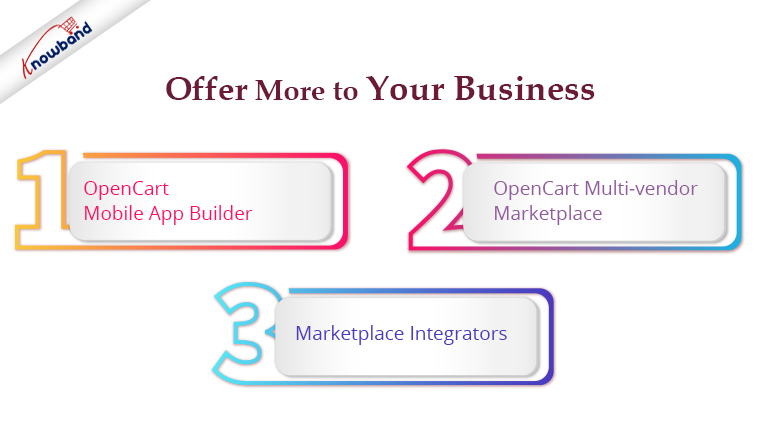
They can assist in rescuing your online stores from the suffering of declining product sales and conversion rates. Don’t wait; visit our Knowband store right away and make a hasty business selection in this regard. Check other useful plugins from here or drop us an email at support@knowband.com in case of prompt assistance.

E-Commerce Mobile App Development & Custom Enhancements

We all have experienced & acknowledged the shift of eCommerce biggies from websites to mobile apps. Utilizing the functionalities of the smartphones & tablets, eCommerce Mobile Apps provide more personalization, user engagement & hence help in the improvement of your business services. With smartphones being the most commonly & widely used device for all purposes, the rise of Mobile Commerce is quite obvious.

With eCommerce Mobile App Development, you can build a new app or you could even modify an existing eCommerce app. Adding custom enhancements not only helps to make your app stand out from the competitors but also improves brand recognition. Whether your requirements fall under the former or latter category, under a team of expert App Development & Quality Assurance team, you can rest assured that your eCommerce Mobile App gives you & your customers the best experience.

At KnowBand, we equip businesses with eCommerce Mobile Apps laced with the latest features that are not only convenient to use for customers but also for the eStore merchants & vendors.

Factors from Customers’ Point of View:

1.Omni-Channel Presence:

For customers to be able to access the mobile app on all the operating systems & devices, prefer to keep your eCommerce App completely omnichannel by making it compatible with both Android & iOS for smartphones as well as tablets.

2. Customer-Centric UI (User Interface):

To make it easier for customers to navigate through & browse your app in order to make faster purchases, having a customer-focused design is a must-have for all kinds of businesses these days.

3. Enhanced Layered Navigation:

Add layered navigation with multiple sort & filter options according to each of the product categories on your App. This further enhances the user experience.

4. Language & Currency Support:

Based on your business needs, equip your app with support for multiple languages & currencies. Also, consider the support for RTL scripts like Arabic, Persian, Hebrew, etc.

5. Offline Mode Accessibility:

Unlike websites, Mobile Apps can be equipped with offline mode accessibility through which app users can access the app even with slow or no internet. Hence, they can access previously loaded pages, cart, wishlist, my-account pages, etc.

6. Product Search via Image:

Add the Image Search feature in your eCommerce Mobile App so that the app users can easily search for a product on your store using a reference image either taken via their device’s camera or via selected images in their photo gallery.

7. Voice Search:

This feature allows the app users to search for products on your eStore using voice commands.

8. Payment Methods:

Add options for multiple payment methods & be sure to have the security at par.

9. Optimized Checkouts:

Lengthy checkouts can increase the cart abandonment rate & frustrate the customers. To aid that, optimize the checkout process by having a quick yet secure one-page checkout & by prefilling some entries from the previous purchases, like delivery address, phone number, etc.

10. Order Tracking:

Add order tracking features in your app. Allowing your customers to track order improves customer satisfaction & also makes it easier for the support team to resolve any delivery related issues if any arises.

11. Push Notifications:

Push Notifications drive more sales by improving user engagement & retention. They also provide effortless personalization using automated notifications. Some of the common usages of Push Notifications are for birthday wishes, abandoned cart reminders, price drop notifications, upcoming sale reminders, etc.

12. Chat Support & Chatbot Integrations:

Allow your customers to reach out to your support team at any time of the day. Adding chatbot fulfills that need & also is a preferred mode of communication by the app users. Chatbots can even be automated with AI to reduce a load of your chat support team from manually handling every query.

13. Load Speed Optimization:

Having an app that takes too long to load its pages & content, is not ideal for the fast-paced users. So, make sure to optimize the loading time so that your eCommerce Mobile App runs smoothly.

Factors From Admins’ Reference:

1. Choice of eCommerce Solution:

If you are willing to build a new eCommerce App, then choose the right solution to build your app. Some of the common platforms are PrestaShop, Magento, OpenCart, WooCommerce, Shopify, etc.

2. Custom App Theme Development:

If required, businesses can opt to develop a custom-designed theme that’s unique to their app. This allows more personalization of the app & improves brand recognition.

3. Security:

Have all the useful encryptions & relevant certificates to keep your eCommerce Mobile App secure to every last bit. Having security on platforms that use online payment is a must.

4. Admin Panel:

The backend/admin panel of an eCommerce must be convenient to use even for the admins/ vendors/ merchants. Make sure that your eCommerce Mobile App Development team equips your business with such a dashboard.

5. Branding:

Choosing the theme design from pre-existing templates can limit some of your design needs according to your business. You could either opt for getting your own custom theme designed or you could make heavy customizations in an existing theme. For both the route, the result is a personalized theme that is unique to your business & helps in improving your brand recognition.

6. Quick HomePage Editing:

The homepage is something that eCommerce businesses need to change from time to time. Hence, admins must have a quick editor especially for customizing the homepage. Also, the editing panels must be user friendly & less time-consuming.

7. Live Synchronization:

Businesses with both an eCommerce website as well as a mobile app must have both their platforms synchronized. In such cases, it is likely that both your app and website use the same database. This ensures Automatic Inventory Management & both the platforms remain synchronized in real-time with each other. Therefore, changes made on one instantly reflect on the other.

8. Testing & Quality Assurance:

Rigorous testing must be done before the app is launched on the app stores. Accordingly, faults must be debugged for quality assurance.

9. Multi-Vendor Marketplace:

If your business model demands so, then your app must support multivendor marketplace configuration.

10. ASO (App Search Optimization):

Just like SEO is for improving the search engine rank of websites, apps can also be made to stand out on the app stores by following the ASO. Have the ASO features in your from the beginning itself. It helps to increase the visibility of your eCommerce Mobile App on Play Store / App Store.

11. Analytics & CRM Integration:

Mobile Apps help businesses to get deeper insights into their app users. To fully utilize that, integrate an analytics tool like Google Search Console/ Analytics. Similarly, choose a CRM that serves your business needs. They ease the decision making a task for the eStore owners & admins & helps make smarter marketing strategies.

12. Add-ons & Plugin Integration:

Add more functionalities in your eCommerce Mobile App using plugins/ add-ons. Under an expert app development team, you could even develop your own custom plugin to suit your exact business needs.

13. Scope For Unlimited Customizations:

Most businesses end up going customizations in the future to keep up with the ever-changing trends. So, make sure that your eCommerce Mobile App can undergo desired customizations. Keeping the mobile app updated with the latest trends is a crucial factor while eCommerce Mobile App Development.

If you are looking for custom eCommerce mobile app development and give a boost in sales and revenue of your business. Drop us a message at support@knowband.com.

At KnowBand, we also offer ready-to-go native Mobile App Builder for following eCommerce platforms:

PrestaShop Mobile App Builder

OpenCart Mobile App Builder

Magento Mobile App Builder

Magento 2 Mobile App Builder

WooCommerce Mobile App Builder

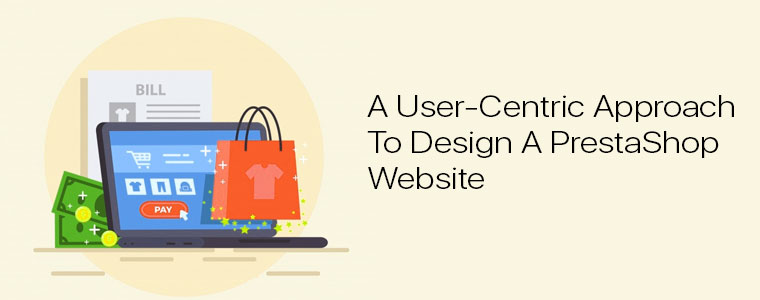
A User-Centric Approach To Design A PrestaShop Website

To build an interactive & powerful eCommerce website, PrestaShop surely is a great option for all small businesses and biggies. The major benefit of PrestaShop website development is that the store admin can simply manage the entire website with a few tweaks which ultimately gives tremendous results in a matter of reach and sales.

By now, almost every eCommerce business is aware that they must serve their customers in a more personalized manner than ever. This has led e-businesses to take extensive measures & build loyalty with their audiences. Such a business pattern has improved the brand reputation of those companies & witnessing that more & more businesses have started to implement such designing in the store.

But in order to design a PrestaShop website with a customer point-of-view on the top, one must re-consider multiple factors than just conventionally designing an eCommerce website. This article aims to unfold various such parameters that help in designing a PrestaShop web-store with a great focus on improving user experience & satisfaction. Check the points discussed below to know further in detail:

#1. List Down Your Needs:

Determine whether you would be requiring a multi-vendor marketplace or just a single store. Similarly, lay out all your plans so that the concerned team can work on the best possible design for your PrestaShop website.

If you already have a PrestaShop website & you only need to redesign it, instead of building a new site, be clear on the checks and trends. After that, get along with your further move.

#2. Responsive Design:

Keep your PrestaShop website as an omnichannel. Because a lot of us access the internet via smartphone on a daily basis, the design of the store must be compatible with mobile devices as well aka responsive design.

In fact, eCommerce businesses are going a level up by not just having a responsive design but also having AMP (Accelerated Mobile Pages) or PWA (Progressive Web Apps) or even their own PrestaShop Mobile App. All these contribute to acquire & serve a variety of customers on all possible devices and browsers.

By default, PrestaShop is responsive. But if any custom re-designing is coded, then that must be manually made responsive as well to make it appear beautifully on the mobile devices.

#3. Include CTA’s:

Call-To-Action elements are really important as they are meant to attract visitors so that your business can acquire more leads. CTA is usually kept precise with a straightforward yet catchy message. It should urge the site visitors to interact & take action.

The most common one is a CTA Button for newsletter sign-up. Based on your purpose use any relevant CTA s on the webpage but make sure not to overdo it.

#4. Showcase Customer Reviews:

On the website product page, have a design that allows users to write reviews of the products purchased by them. Having such testimony influences others to purchase the products based on their reviews. It has also been found e-shoppers find it good to have genuine reviews on products. This ensures unbiased information on products and helps newbies in making the decision.

As per a survey, 84% of people trust product reviews as much as they trust their friends’ recommendations. So, it’s a trendy & must-have feature to offer honest reviews for the products.

#5. Seamless Navigation & Accessibility:

On any eCommerce website, it’s not ideal to have the products listed without proper categorization. Apart from just categorizing the products, each category/ sub-category must be arranged on the navigation-bar/ toggle- menu in a way that the customers don’t need to make more than 4 to 5 clicks to reach their choice. Also, have all other necessary links in the navigation menu.

Set the category URLs to be SEO friendly & have relevant thumb-nail images with alt tags on images’ source code. This further enhances your on-site SEO & makes your category image discoverable & reachable on search results.

#6. Product Page Design:

Depending on the product you are selling, add necessary fields like SKU, dimensions /weight, expiry date, stock availability, minimum quantity per order, shipping charges & taxes, deliverability in specific areas (Pincode), etc. Have the option to add a product to wishlist. Some eCommerce websites also allow users to create multiple wishlist folders which they can also share with their respective friends. This can also encourage the new visitors to set up a new account & contribute to increasing conversions on your eCommerce site.

Add the Social Sharing quick links for popular platforms like Facebook, WhatsApp, Pinterest, Instagram, custom URL, etc. Apart from product images, it’s also a trend to add a video about the product. It helps the customers to get a better view of various details about the product. This further helps to boost sales for that particular product. For instance, the assembly video of a DIY Wardrobe (like IKEA).

#7. Add A Chatbot:

Chatbots have the power to be statically/ dynamically serve the customers 24/7. Also, about 50% of the netizens prefer to initially connect with a company via their chatbots. So, incorporate a chatbot and let users share their queries with you. Static chatbots are quite affordable & can even be automated to some extent. Chatbots can also be integrated with AI technologies to offer more dynamic & human-like support. Choose the one according to your business requirements.

#8. Simplified Checkout Procedure:

A lengthy & complicated checkout process can churn the online shoppers leading to reduced satisfaction and retention. To avoid such downfalls, have quick checkout procedures by designing a One-Page Checkout on the website. Optimize it to have some pre-filled entries like previous addresses, phone no’s, etc. Nowadays, majority websites even have the previously used payment options saved for faster checkouts.

Guest checkouts are also getting trendy among eCommerce businesses. It is helpful for the new visitors who don’t want to go through lengthy signup processes & increase efforts in checkout.

#9. Secure Payment Methods:

Offer all reliable payment options on the store according to the audiences you are serving. Set up your payment gateways along with all required security factors. Keep the process simpler so that users don’t back out from checkouts & payments.

#10. Strategies For User Retention:

User retention plays a vital role in improving sales of the PrestaShop website as returning users come with the best chance for more purchases. Keep your eCommerce store design to be enough encouragement for users to keep coming back in the future for shopping. Relevant CTA’s can be used to achieve the same. Attractive and catchy upcoming sale banners with correct display of vouchers, coupons, referral programs or loyalty programs usually helps is user retention.

Conclusion:

All the above factors help in designing an eCommerce website that makes an ecosystem of personalized services for your customers. It’s all about giving great focus on how to serve your customers in a better way.

If you are willing to give your best in designing such a website, we suggest you connect with KnowBand Plugins or drop us an email at support@knowband.com. After all, in such a competitive retail environment, there mustn’t be any factors to slow down your business.

Is eCommerce Conversion your Problem?

With the right SEO strategy and website optimization, bringing the traffic to the website becomes easier. Even the task of finding the right target audience is achievable. However, most of the eCommerce companies complain about low conversion. If you are getting the desired traffic, but the visitors are not converting, the
your bottom line will suffer for sure.

Is your online shopping site suffering from any such issue? The very first step to deal with such an issue to find the root cause.

From the outside, CRO might look like a daunting task but the same as what’s generating your revenues by 2% or 3%. There are areas in your website that require expert recommendations and improvements and that’s exactly where ecommerce SEO services step in.

Invest in high-resolution images

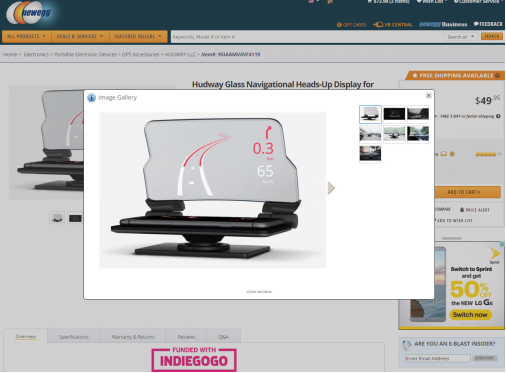
We know what they all say – a picture can say a thousand words. Well, they are not wrong. When you are investing in practices like social media optimization with blogs and rich content, investing in high-resolution images is what you would want to take a closer look at. Not only in the content, but the product images used on the product pages should be of high quality. After all, the customers would not be able to touch what you’re selling so they have to feel it by the eyes. In accordance with the product description available on the same page, the image should come across as a worthy product to be purchased. Depending on the detailing that you want the customers to get to, make sure that your image resolution is high.

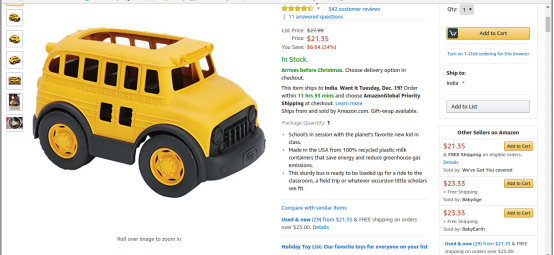
Free shipping is the key

Who doesn’t like free things? Every customer does. Every online shopper keeps an eye on a few things and free shipping is one of them. When you keep such policies (shipping, return, delivery and more) in accordance with what the shoppers like, you’re in for high conversions. You would find some store giving free shipping on “order of x or more” whereas; there are those which don’t have a respective amount as well. When you offer free shipping to your customers, there are lesser chances of the customers bouncing back abandoning the cart.

Coupon codes work miracles

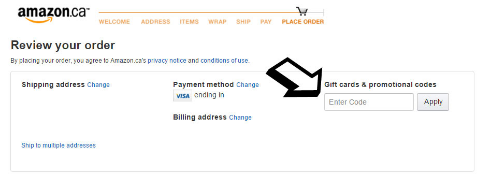
Why do you think the coupon companies are earning so good? Because they offer discounts from all the big online stores. If you take a look at the image below, you’ll find that the women’s clothing store offering a section where you can apply the coupon code and the customer will get a hefty discount. And, when you talk about discounts – it is one of the best ways to please the shoppers and get your visitor to convert to a customer.

Tailor-make the prices

With a store like Amazon that offers a gamut of brands under the same roof, you would have to cut-down the prices or at least adjust the same in order to be visible to the customer. In today’s time, you know how the competition among the stores is and the awareness among the shoppers has made given them the freedom to compare the prices on all the respective stores in order to get the best buy. Don’t keep a specific price all the time. Keep fluctuating within the limit and also keep a check on the competitor stores. This would make your online store come across as a credible one resulting in being the solution to the conversion problem.

Modify your checkout process

Or

Image source: Awake

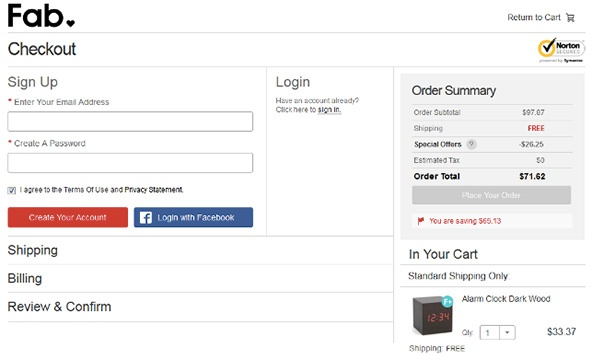
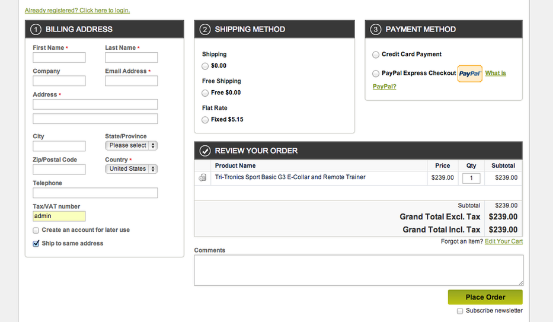
Gone are those days when you would give lengthy forms to the customers to fill before they make the payment for the purchase. Now, if you indulge in such practices, your rate of the abandoned cart will go up a level. Now’s the time to modify your checkout page and adopt one-page checkout module in order to retrieve the basic information that you need from the customer and get them to make the payment without wasting any time. This is the step where you can look for the better option with the advantages of A/B testing or any other method that lets you get to know your visitors better.

Incorporate the abandoned cart tool

Low conversions are when your visitor didn’t convert. Whether it by leaving the items in the cart or by not filling the details on the checkout page, or any other way, the result is a high bounce rate. Now, specifically talking about abandoned carts – it is when a customer lands on your site, adds products to the cart and then leaves without converting Send notifications to the customer about the items in the cart with the options of you providing them a special coupon to buy the product that they forgot in the cart.

Use chatbots

Chatbots are one of the most upcoming ways to keep your customers engaged at the store. Whether in a form of providing help in their search-hunt or by giving them the desirable option based on their likes, chatbots have come quite handy in eCommerce SEO. The availability when your customer needs you provides a sense of credibility towards your store and that’s exactly where you get a bonus point from your customer.

If you are all set with someone or the other to be available to handle the questions that pop up from the customer’s end, this module can help you in the long run.

With these ways, you can turn your low conversion rate into high conversion rates.

Related Stories:

Black Friday and Cyber Monday Throw-back: Lessons you can Learn from 2016

The Black Friday sales touched remarkable heights last year. With a record-breaking $ 3.34 sales, the eCommerce industry saw a boost of around 21%. But beyond the statistics, it is the lesson that the e-retailers should focus on. The incredible achievements of the year 2016 has for sure shaped a lot of trend to follow this year as well.

The blog has outlined some of the essential takeaways of the sales season of last year. Amp yourself up with these facts and get ready for the busiest season of the year.

It is not a one-day affair

One of the biggest aspect that requires the consideration of the e-marketers is that this is not a one-day affair. This implies that the expectation of the customers won’t end on same day. In fact, there is a huge customer base who actually waits for the post-sale offers. There were a lot of sites last year that extended their deals from Black Friday to Black November. What was earlier a single day sale has now turned into a week-long sale. The eCommerce giants like Amazon extended there sales from Black Friday to Thanksgiving. And this is what your customers will be expecting this year as well. While the bargain hunters must have already started hitting the internet to strike the right deal, it is important to provide them with what they are looking for.

Suggestion: With few more days to go, it is high time that you gear up for the extended sales season. This behavior might continue the entire holiday season. Thus, you need to gear up for the holidays accordingly. Do not expect close the deal and achieve the target on the same day. There are many more opportunities ahead and you need to be prepared for the same.

Mobile domination is the key

It is interesting to note that 75% of the total net searches online was done using mobile phones. Moreover, 55% of the online purchases was done using hand-held devices. The mobile domination is bound to increase this season as well. Moreover, if we take a close insight into the consumer behavior, we’ll see that the online shoppers expects to get everything then and there. This is what makes it even important to bring the store at an arms distance of the customers. In addition to this, another exciting figure shows that the mobile apps touched a peak of 1.2 million installs on Black Friday.

Suggestion: The very first consideration is to make the website mobile-responsive which you must have already done. However, the last minutes preparation for the busiest week must include the final testing as well. Make sure that the site is ready to handle the unexpected traffic coming from the mobile devices. The additional holiday functionalities such as exit pop-ups must be working on the mobile phones as well as. Besides, this is the best time upgrade your site to a mobile platform. Knowband’s mobile app builder can help you go mobile even in the eleventh hour. Whether you have a eCommerce store on Prestashop, Magento, OpenCart or any other platform, you can convert it into a complete mobile store. Provide lucrative offers in return of the downloads and motivate your loyal customers to install your application.

Greater traffic, but lesser revenue

This was one of the observations last year. The website traffic was more than the expectation while the revenue earned was less. This is proven fact that the customers are spending less than expectation. The reason might be the presence of so many choices or the intention of the customers to hit a better deal. This may hit you hard if you are still not prepared to counter the same. The e-merchants should focus on the aiding the purchase intention of the visitors. Provide compelling reasons to customers to avoid procrastination and place the order instantly. Another way to curb these exits is to showcase deadline offers to the customers. Provides the customers with the offers that they just can’t resist. One day delivery option with a countdown timer can do the magic. Something like Prestashop shipping timer is one such way to create the sense urgency in the minds of the shoppers.

Suggestion: Get your landing pages ready for unexpected traffic. Along with this, be ready to get less conversions that expected. This is when the role of the re-marketing and re-targeting comes into play. The holiday season are more prone to cart abandonment. Use this as an opportunity for future conversions. The Black Friday is getting longer every year and this trend may continue in the future as well. The opportunities would not end after this day. The e-marketers need to stay at their toes in order to bring these customers back to the store.

Let them hit the bargain

The whole idea of Black Friday and Cyber Monday sales is to get an edgy deal. With so many options to choose from, even the expectation of the online shoppers has gone up. Thus, the flat discounts may not intrigue them. You need to lure them to checkout page, but in a subtle way. Even though it is the perfect time for aggressive marketing, it might not be fruitful at times. In addition, the bargain seeker love to shop early. According to report, more than half a million visit on the eCommerce store happened at 1 AM in the morning.

Suggestion: With the above-mentioned aspect in mind, the e-marketers need to find out innovative ways of giveaways to attract the visitors. Instead of going with the conventional means, provide them an opportunity to hit a bargain. The interactive gamified pop-ups such as spin and win can be of some help. The process of spinning the wheel in order to get offers makes the customers feel as if they have won something hit a bargain. Even a small discount may be well-appreciated. Moreover, offering mid-night offers may boost up the sales to new heights.

Wrap up

The expectation of the customers is high. While any strategic changes in this hour may be hazardous, this is the perfect time to make some back-up plans. As well as, it important that you plan out the post-holiday sales strategies. Use the takeaways from the last year and tap the opportunities effectively.

You Might Also Like:

Stay Away from these Mistakes Before Launching your eCommerce Business

The idea of expanding the business to the online sellers has encouraged to open the online stores. The eCommerce market is expanding at a very rapid rate. Observing the behavior of the online buyers is the key aspect to optimize your services in order to serve your customers in a better way. On one hand, the idea of having a shopping site is feasible, but to popularize it among the target audience is quite a task. The mass existence of such store has led the new comers to work on a clear and well worked strategy, so that, all the efforts made in order to make the store grow and gain profit goes hand in hand. There are various points which must be kept in mind before launching an eCommerce business. As, to make a presence among existing giants will require to work on various areas for establishing a successful store.

Here are some of the points which must be considered before launching an eCommerce store so that the visitors can flow in the store and make a purchase.

Lack of research

Starting an eCommerce store could be a tricky deal. One of the important things that must be taken into consideration before starting an eCommerce store should be proper research. Starting up any new venture requires lots of research. Whether it’s a retail store or online. This research is required to gain complete information about the market, however if this is missing one may enter into a wrong market. A complete research must be performed regarding the habits, behavior and preferences of the customers in the market. It would be advised to take some leads from the already established shopping stores who are doing fine in business. This will provide you with ideas and strategies that can help you to grow better and reach out to potential buyers. Absence of proper results may lead to panic and frustration if the store doesn’t make required sales.

Low budget

Remember you are trying to get into a market where people want you to buy your products. Thus, having a proper budget plan for every small details will help you flourish rapidly. Financing is an important aspect for marketing of the products without which you can suffer huge losses. The store may need to get promoted and advertised in order to get customers which requires money. Plan your budget and sending on every single aspect that will help you gain the desired results.

Lack of Interaction

Once the visitors start to flow into your store, they need more than just products to get engaged. The web store must be incorporated with various features that will keep your visitors occupied and turn them into paid buyers. Providing with a proactive chat services is one of the ways. Motivate the existing customers to leave their feedback and queries. Rectify their doubts and keep the entire process interactive. In order enhance the customer engagement, make use of interactive elements in the store such as gamified pop ups. They help in better engagement of the customers and help them stay in the store and make better purchases. Absence of these interactive pop ups might cause your store to lose on the potential leads that have been generated. On other hand the online store must be prepared for better customer navigation using the easy process flow. It not only helps your newly involved visitors to make a purchase but also makes sure that they enjoy their purchase from the store.

Not using the digital platform wisely

It is another thing to have a better equipped eCommerce store and different to get the customers attention towards it. Therefore, make sure that the store is optimized for better search results. For this purpose, the web store can take help of SEO. These services help in improving the store visibility by taking various factors into consideration which are not possible on self-level. The better use of keywords which targets the Google search results to your store can be of great help in promoting the eCommerce store. There are various other aspects such as web design, use of better elements in the site which are offered by these services. Make sure you use them so that it becomes easy for store to come out from the shadows and make a place in the market.

Marketing glitches

The inclusion of quality products and renowned brand is not sufficient for the people to know about the store availability. Therefore, making proper usage of other factors such as content marketing and digital marketing will help in making better presence. The online stores must try to keep the users informed about the existence about the store by making proper use of social media, contents and blogs. Keep posting regularly about the products offered by the store so that the visitors may check in about it and roll in to the web store. The use of paid media can also be done, so that the influence of the store is made on the audience. The Facebook followers can help your business grow. Hence, go for social media marketing is a must.

Lack of execution

Even with the help of paid media and other marketing techniques, it is not a assured that the business will flourish over time So, make sure that you execute the business plan in its best shape. Your execution plan should have product photography and a brief summary of how it helps the customers as top priority. People need to know what they are buying with clear images and basic details about the products. Make sure that the web store is provided with all the necessary information required for a better purchase from the buyers.

Over to You

Establishing a successful online store requires a lot of research to be done and proper strategies to be executed. Therefore, several factors must be taken into consideration which will help in making sure that the web store sees the success and required customer inflow in the eCommerce store.