WooCommerce vs PrestaShop vs OpenCart vs Magento vs Shopify

Choosing the right platform is one of the most important decisions when you are starting an online store. With so many options available, it can become tiring to decide which platform best fits your business needs.  If you are looking best platform to start an online store, then you are at right place. Each platform offers different benefits and flaws in terms of usability, scalability, cost, and features. We at Knowband already manage these stores as we provide the service for these platforms. This will help you in choosing the right platform for your store.

This article provides a practical comparison of five popular e-commerce platforms, WooCommerce, PrestaShop, OpenCart, Magento, and Shopify, based on key factors such as ease of use, performance, customisation, scalability, and overall cost. You will also learn the e-commerce platform pros and cons. 

Additionally, understanding these helps your business select open source ecommerce platforms that aligns with your business goals.

Key Factors to Consider When Choosing an E-Commerce Platform

Before comparing platforms, as a store owner, you need to understand the core factors that will play a crucial role.:

  • Ease of Use: If you are technical or non-technical, you first need it to be simple to set up and manage products, your entire catalogue and orders.
  • Customisation & Flexibility: Platform should have the ability to modify design and functionality according to your business needs.
  • Performance & Speed: Additionally, there is a major factor that is how well the platform handles traffic and large catalogues
  • Scalability: Also, scalability is the factor your platform can grow with the business
  • Cost: Cost is one of the most important factors as it should be affordable not too expensive.

WooCommerce: Ideal for WordPress-Based Stores

WooCommerce is one of the most used e-commerce platforms and works as a plugin for WordPress. Furthermore, its popularity makes it unique due to its simplicity and flexibility, especially for businesses already familiar with WordPress.

Key Feature  of the WooCommerce

  • Easy to use, especially for WordPress users
  • Massive plugins 
  • Strong SEO capabilities
  • Highly recommended for content-driven stores and blogs

Limitations of WooCommerce

  • Performance can be reduced with large catalogues without optimization
  • Requires paid plugins for advanced features like wishlist 
  • Heavily dependent on hosting quality

Knowband recommends it as the best e-commerce platform for small businesses, medium-sized businesses, bloggers, and entrepreneurs looking for an easy way into online selling.

PrestaShop: Feature-Rich and International-Friendly

PrestaShop is an open-source platform designed specifically for e-commerce. This is the best e-commerce platform for startups. Moreover, it is particularly popular in Europe and offers strong built-in functionality. Furthermore, unlike wordpress it offers the basic functionalities, wishlist, abandoned cart, designs and many more.

Key Highlights of Prestashop

  • Support for multiple currencies and languages
  • Support many advanced taxes and shipping options
  • Strong back-office dashboard
  • Handles large catalogues efficiently

Limitations of the Prestashop

  • Requires moderate technical knowledge
  • Paid modules can increase costs
  • Smaller extension marketplace than WooCommerce

We recommend it to international sellers and businesses that need advanced e-commerce features without heavy reliance on plugins.

Prestashop Plugins

Explore all the plugins that will make your prestashop store more professional


Install Now

OpenCart: Lightweight and Performance-Focused

OpenCart is known for its simplicity and speed.  Additionally, it provides essential e-commerce features without unnecessary complexity. This OpenCart platform also supports built-in tools for coupons, discounts, and special prices like prestashop

Strengths of the Opencart

  • Lightweight and fast
  • Simple admin interface
  • Built-in multi-store functionality
  • Low hosting requirements

Drawback of the Opencart Platform

  • Smaller extension ecosystem
  • Limited advanced features
  • Smaller community compared to competitors

Knowband recommends it to small businesses with straightforward needs and limited budgets that prioritize performance.

Opencart Extension

Give the advanced features to your Opencart store Using Popular Extensions


Install Now

Magento: Enterprise-Level Power

Magento is what the big players use when they need a serious, robust, enterprise-grade solution. Here, Big player refers to the major enterprises and retailers that have a large volume of products through their stores. This Magento Platform is best ecommerce platform for large businesses.

Key Highlights of Magento:

  • Magento scales to handle millions of products and transactions
  • Inventory and customer management tools 
  • Customisation is easy in Magento
  • Built to handle large product catalogues 

The Downsides of Magento are:

  • Learning Magento is a bit difficult for store owners
  • Professional developers are required
  • Hosting and keeping it running will cost you high money

Magento Plugins

Let Knowband Manage Your Magento Plugins, while you only work on selling.


Contact Us Now

Shopify: Everything is handled by them

Shopify takes a totally different approach than other platforms. They handles everything for you unlike others. It’s fully hosted, which means they deal with the technical things while you focus on selling

Key Features of the Shopify

  • You can easily have a store there
  • Shopify handles the hosting, security, and performance. The store owner only focuses on selling.
  • Customer support is highly active
  • A variety of plugins on the app store when you need extra features
  • Perfect for dropshipping or selling across multiple channels (social media, in-person, etc.)

The Downsides:

  • Monthly fees that add up over time
  • Transaction fees on certain plans (unless you use Shopify Payments)
  • Less control over the backend compared to platforms you host yourself

Shopify Custom Development

Let Knowband handle your Shopify store seamlessly, so you can concentrate on scaling your store and brand.
Contact Us Now

Pricing Plans of all the Platforms: WooCommerce, Prestashop, Opencart, Magento and Shopify

Platform Initial Cost Hosting Cost Theme & Extension Cost Development & Maintenance Overall Cost Suitability
WooCommerce Free (WordPress plugin) $5–$30/month (shared to managed hosting) Free to $200+ (plugins & themes) Low to medium, increases with customization Best for small to medium businesses
PrestaShop Free (open-source) $10–$40/month $50–$500 (modules & themes) Medium, often requires developer support Suitable for growing businesses
OpenCart Free (open-source) $5–$25/month $20–$300 (extensions & themes) Low to medium, limited for complex needs Ideal for small businesses
Magento Open Source Free (software only) $50–$200+/month (cloud or dedicated hosting) $100–$1,000+ (extensions & themes) High due to complexity Best for large or fast-growing stores
Magento Commerce (Adobe) Paid license Included or enterprise-level hosting Often custom-built Very high (enterprise development) Enterprise-level businesses
Shopify Monthly subscription Included $0–$350 (themes) + paid apps Low, fully managed platform Best for beginners & fast launches


The conclusion is that there’s no magic “best platform” that works for everyone. It really comes down to what you need for your specific situation.

WooCommerce is fine when you want flexibility, and you’re already comfortable with WordPress. PrestaShop has built-in features that international sellers actually need. OpenCart keeps things simple and fast. Magento gives enterprise-level businesses the scalability they require. And Shopify just makes everything easy if you want a managed solution.

Your decision should come down factors about cost, your technical skill and your business size. Moreover, you can also switch platforms eventually as your business evolves. 

About Knowband

Knowband is a sub-company of Velocity Software Solutions Pvt. Ltd., a leading technology company specialising in e-commerce development and digital solutions. Knowband provides a wide range of ready-to-use plugins, extensions, and custom development services for popular eCommerce platforms like prestashop, WooCommerce, Opencart, Shopify and Magento.

With a strong focus on innovation and performance, Knowband helps online businesses enhance functionality, improve user experience, and increase conversions.

Shopify vs. Shopify Plus: Making the Right E-commerce Platform Choice for Your Business!

In the fast-paced world of e-commerce, choosing the right platform for your online store can make all the difference in your business’s success. Thus, two popular options are Shopify and Shopify Plus, each catering to different needs and business sizes.
Following the same, we will explore the differences between Shopify and Shopify Plus to help you make an informed decision and select the platform that best suits your business.

Understanding Shopify and Shopify Plus!

Before delving into the comparison, let’s briefly understand what Shopify and Shopify Plus are:

Shopify:

Shopify is a widely used e-commerce platform designed for small to medium-sized businesses. Furthermore, it provides an easy-to-use, cloud-based solution for entrepreneurs looking to set up their online stores quickly and efficiently.
Therefore, Shopify offers a range of features, including customizable templates, payment processing, and inventory management, making it an excellent choice for startups and small businesses.

Shopify Plus:

Shopify Plus, on the other hand, is an enterprise-level e-commerce platform built to accommodate large and high-growth businesses. Moreover, it offers advanced features and scalability, making it suitable for companies with higher transaction volumes and more complex needs.
Furthermore, Shopify Plus is also known for its flexibility, allowing businesses to tailor their online stores to meet specific requirements.

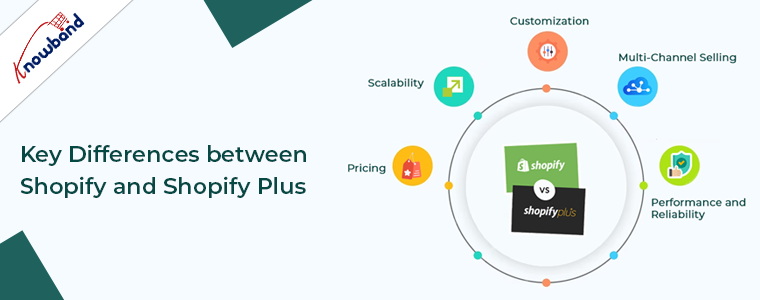
Key Differences between Shopify and Shopify Plus:


To help you make the right choice for your business, let’s compare Shopify and Shopify Plus across various aspects:

1. Pricing:

Shopify: Shopify’s pricing starts at $29 per month for its basic plan and goes up to $299 per month for its Advanced Shopify plan. While this pricing may be suitable for small to medium-sized businesses, it can become cost-prohibitive for larger enterprises with substantial sales volume.

Shopify Plus: Shopify Plus, on the other hand, operates on a custom pricing model.
Thus, it caters to businesses with higher sales volumes and complex needs, meaning you’ll need to request a quote to get an accurate pricing estimate. While it may be more expensive than Shopify, the cost can be justified by the additional features and capabilities it offers.

2. Scalability:

Shopify: Shopify is ideal for businesses that are just starting or have moderate growth ambitions.
While it can handle a considerable amount of traffic and transactions, it may not be as scalable as Shopify Plus when it comes to handling rapid growth and high-volume sales.

Shopify Plus: On the other hand, Shopify Plus is designed for high-growth businesses. Thus, with its robust infrastructure, Shopify Plus can easily scale to accommodate the demands of rapidly expanding enterprises.

3. Customization:

Shopify: Shopify offers a range of customizable templates and themes to help businesses create a unique online presence. However, the level of customization may be limited compared to Shopify Plus.

Shopify Plus: Shopify Plus provides extensive customization options, allowing businesses to tailor their online stores to their exact specifications. Moreover, this level of flexibility is crucial for enterprises that require unique branding, user experiences, and functionality.

4. Multi-Channel Selling:

Shopify: With Shopify, you can sell through various channels like your online store, social media, and marketplaces. However, the breadth and depth of multi-channel selling options are more extensive in Shopify Plus.

Shopify Plus: Shopify Plus offers advanced multi-channel selling capabilities, including integration with popular marketplaces like Amazon and eBay, as well as POS (Point of Sale) solutions for physical retail stores. This makes it a great choice for businesses looking to expand their presence across different sales channels.

5. Performance and Reliability:

Shopify: Shopify provides reliable hosting and security, but it may not offer the same level of performance and redundancy as Shopify Plus. Smaller businesses may not notice a significant difference, but larger enterprises may require the added stability and uptime of Shopify Plus.

Shopify Plus: Shopify Plus offers robust infrastructure, ensuring high performance, scalability, and redundancy. This is essential for businesses that cannot afford downtime, especially during peak sales periods.

Which Platform Is Right for Your Business?

Choosing between Shopify and Shopify Plus ultimately depends on your business’s specific needs, size, and growth trajectory.

Choose Shopify if you are a small to medium-sized business with a limited budget and moderate growth expectations. It’s user-friendly, cost-effective, and provides all the essential features for online selling.

Opt for Shopify Plus if your business is an enterprise with high sales volumes, complex requirements, and rapid growth plans. The additional features, customization options, and scalability make it a valuable investment for larger businesses.

In the END!

In conclusion, both Shopify and Shopify Plus are excellent e-commerce platforms, but they cater to different business sizes and needs. By evaluating your specific requirements and growth goals, you can make an informed decision and select the platform that aligns best with your online business. 

PrestaShop to Shopify Migration: Things to Consider before Moving Your Store Platform

In the ever-evolving world of e-commerce, businesses must adapt to changing market trends and customer expectations to remain competitive. One crucial decision that online store owners may face is whether to migrate from their current platform to a new one. In recent years, PrestaShop to Shopify migration has gained popularity due to Shopify’s user-friendly interface and robust features. However, before making the leap, there are several essential factors to consider.


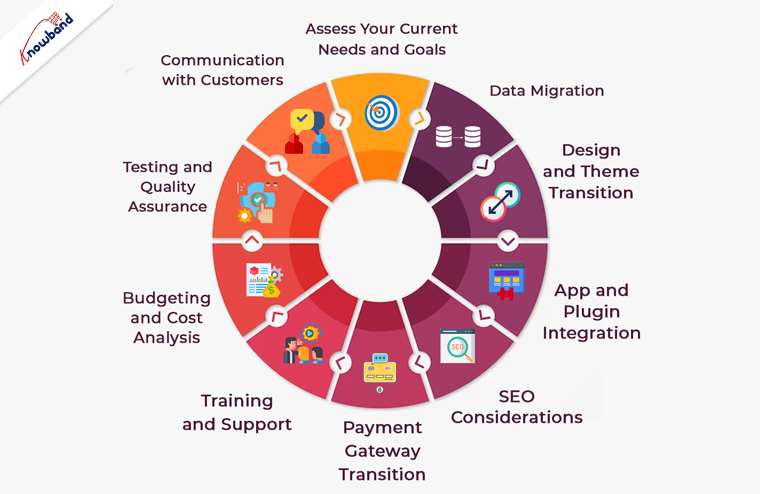
1. Assess Your Current Needs and Goals:

Before initiating a migration, it’s vital to understand your current e-commerce needs and long-term goals. Moreover, you should take a close look at your PrestaShop store and identify any shortcomings or limitations.

You can consider factors like scalability, customization options, and the ability to implement future changes. Furthermore, Shopify offers a wide range of features, but it’s essential to ensure they align with your specific business requirements.

2. Data Migration:

One of the most critical aspects of migrating from PrestaShop to Shopify is data transfer. This encompasses product listings, client details, past order records, and additional data. Therefore, ensure that your data is organized and cleaned before the migration process begins. Moreover, Shopify provides several tools and services to facilitate data migration, but a meticulous approach is necessary to avoid data loss or inaccuracies during the transition.

3. SEO Considerations:

Maintaining your website’s SEO ranking is crucial during a platform migration. Be prepared to update and redirect your URLs to prevent any loss in search engine visibility. Make a list of all your PrestaShop URLs and set up 301 redirects in your new Shopify store. Additionally, create an XML sitemap and submit it to search engines to help them index your new site quickly.

4. Design and Theme Transition:

The look and feel of your online store play a significant role in customer engagement. If you have a custom PrestaShop theme, you’ll need to recreate or find a similar one for Shopify.Shopify provides a diverse selection of themes, which include both free and premium choices.Thus, you can ensure that the selected theme aligns with your brand identity and provides an excellent user experience.

5. App and Plugin Integration:

Both PrestaShop and Shopify have their ecosystems of apps and plugins to extend functionality. Therefore, as an eCommerce shop admin you should always identify the essential Prestashop addons and integrations your business relies on and check if they are available on the Shopify platform. While Shopify has an extensive app store, some specific apps may not be available, which could impact your business operations.

6. Payment Gateway Transition:

The processing of payments is a vital element of every e-commerce establishment.Shopify supports various payment gateways, but the ones you were using on PrestaShop may not be the same.
Research the available payment options on Shopify and ensure they meet your business needs. Additionally, plan for a seamless transition to minimize any disruption in your revenue stream.

7. Training and Support:

Shopify is known for its user-friendly interface, but it’s essential to invest time in learning the platform thoroughly. Take advantage of Shopify’s extensive documentation and support resources to familiarize yourself with its features and capabilities. Consider providing training to your staff if necessary to ensure a smooth transition.

8. Budgeting and Cost Analysis:

Migrating from PrestaShop to Shopify involves various costs, including subscription fees, theme purchases, app subscriptions, and potential design and development expenses.
Thus, create a detailed budget to account for these costs and assess whether the benefits of moving to Shopify justify the investment.

9. Testing and Quality Assurance:

Before making your Shopify store live, thoroughly test all aspects of the website, including functionality, design, and data accuracy. Test the checkout process, navigation, and user accounts to ensure a seamless customer experience. Address any issues or glitches promptly to avoid customer dissatisfaction.

10. Communication with Customers:

Keep your customers informed throughout the migration process. Notify them in advance of any planned downtime or temporary disruptions to your online store’s services. Provide clear instructions on how they can access your new Shopify-based website. Effective communication can help maintain customer trust and loyalty during the transition.

In the End!

In conclusion, migrating from PrestaShop to Shopify can be a beneficial move for your e-commerce business if done thoughtfully and strategically.
Furthermore, careful planning, attention to detail, and thorough testing are essential to ensure a successful transition. By considering these key factors, you can make the migration process as smooth as possible and position your online store for growth and success in the competitive e-commerce landscape.
At Knowband with 13+ years of technical expertise in Web and App development, we also offer custom development and platform migration services. In case you have any queries, you can also find us at our official email address support@knowband.com. 

You can also visit:

Prestashop eBay Marketplace Integration Extension

Prestashop Google Shopping Integration Addon

Prestashop Etsy Integration Addon


5 Ways to Control the Exit Rate from your Website

The visitor’s behavior when it comes to shopping online is quite unpredictable. The customer may wish to stay in the web store as long as they are able to connect with various aspects of the website. Once they lose touch of the contents provided offered by the store, they may not be interested in staying any longer. At this point, it becomes important for the eCommerce owners to keep the customers stay put in the web store. To do this they need to use various approaches and methods.

The exit rate of the customers in a website is one of the biggest concerns for the eCommerce companies. According to a study, about 65% of the customers exit the website after browsing a few pages. These figures are quite scary for a website owner as they are losing a major portion of their sales with these customers and the effective number of conversions of the website is also going down. Thus, an immediate need to control these exit rate from the website needs to be made by the web store owners.

There is no particular reason for the exit rates of the website, but a decent efforts can be made by them to control those numbers and try to get the customers back to the store. It is never an easy task to lure back a customer back to the store after they have decided to exit. The website must try to provide them with some strong motive, so that, they may feel like taking another look to the website or try other features. With some decent efforts and better approach the owner may be able to get back a decent number of customers back to the stores who had decided to exit.

The below discussed are some ways in which the exit rate of a website can be controlled.

Optimizing the website content

One of the important point that strikes the website owner’s mind after seeing a large number of exit rates in the website is the optimization of website. Yes, the main problem may be the website contents. The customers will only entertain themselves with the website as long as they understand the contents and are in the same page as the website but as soon as the communication gap rises the customer starts to move apart, eventually leaving the website. Therefore, a better option would be to optimize the website for better engagement. The number of CTA, their positioning, images, ALT images all these features play a great role in engaging the customer hence optimizing the website may help in lowering the exit rates.

Exit surveys

Exit surveys are also of great importance and helps the store owners to know the exact reasons of the cause of the customers exit. The website may use attractive pop ups in order to get customer’s reasons of leaving. Exit surveys provide essential information about the level of satisfaction with your company’s products, prices or the website’s UX, loading speed and many more things. The websites may use the survey results to reduce the exit rates by making use of branching logic. This process requires to engage the customers and convince them to convert by throwing lights on the positive aspects of the website. The exit surveys are found to serve the purpose of knowing the reason of customer’s dissatisfaction with the website, so that the services can be improved and the exit rate may be controlled in the near future. Therefore, the classic surveys won’t help you to improve the exit rates of your pages unless you won’t use scenarios with branching logic.

Website performance

There is almost a drop in 7% of the conversion rates of the website due to 1 sec delay in page load. This shows the urgency to improve the website performance. In the era of online marketing the options are multiple, the customers need not to wait for any longer in order to make a purchase. If the websites can’t provide them with efficient and fast results than they are likely to move out. This makes it one of the possible reason of the high exit rates. Thus, the websites needs to be timely checked for the performance and their seed. If the response rate is being delayed somehow than the web store needs to check it out.

Exit pop ups

One of the efficient way to control the exit rates is by using the interactive exit intent pop up. The exit pop ups are designed in such a way that when the customers tend to exit the store, these pops up in their screen. The exit pop ups are filled with attractive offers and discounts for the customer, which the customers can utilize and avail. Shopify spin and win is one such example for attractive exit pop-ups for the Shopify stores. Such gamified pop-ups are even available for other platforms such as Prestashop, Magento and others. The wheelio curbs the exit-intent of the customers by offering various alluring giveaways. This is definitely one of the surefire ways to make the customers reconsider their exit and motivate them to place the order instead.

A/B testing

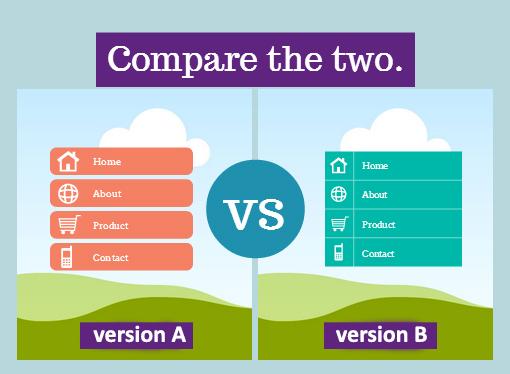
A/B testing is one of the important solution to all the conversion related problems today. The website owner needs to know the specific reasons where the website is not performing. In this efforts, the website owner can make use of A/B testing approach. Usually, it’s better to start testing the pages from the bottom part of the funnel as you’ll see changes in revenue more clearly. If it’s a successful change you’ll get more sales and a bonus. On the other hand, if the test fails, you won’t lose too much, because it’s just a test and you included only a sample of traffic.

Over to You

The exit rates of the website can lead to some unwanted results. Therefore, it is necessary to eliminate exit rates causes by using better approaches and optimizing the website for better results.

You Might Also Like:

6 Easy Ways to Boost your Social Media Marketing through Facebook

The increasing popularity of the social media platforms among the online shoppers have make it one of the most inevitable part of marketing. If we take a look at the statistics, you’ll find that there have an abrupt rise in the total number of users on the social media. Therefore, it is one of the best platforms for the eCommerce stores to promote their product. These platform provides better opportunities to the seller in term of the reaching out to greater number of customers and enhancing the store’s visibility. The foremost concept of marketing includes targeting the right audience and catering them with sufficient information about your products and product count. The Facebook wall posts that showcases your offerings and store information can helps in engaging more customers on the social media platform and at the same time making effective conversions.

1. Easier way to update FB wall

Knowband has come up with Shopify FB Wall Post module. The module enables all the Shopify site owners to connect to their customers on Facebook with attractive and informative wall posts. It is one of the better way to reach to the potential buyers and improve the chances of conversions. The wall post has a higher chances of reaching the required customers as it is easy to access and less time consuming. Keeping the customers informed about your store activity through Facebook is a better than motivating them to visit the store all the time.

2. Contest based marketing

According to a survey by bufferapp, “About 35% online users engage themselves in the product purchase when they get proper information about it”. Therefore web store owners may use this as an opportunity to boost their sales and increase the rate of conversions. If acted properly, it can help in the tremendous increase in the product sales. You can post your content on Facebook. The images and contents can intrigue the visitors to post their comments. Thus, you can increase the engagement even more. Hence, it won’t be wrong to state that this is a less time-consuming to indulge into content marketing.

3. Organize giveaways

Giveaways are one of the best approach to engage the customers. More customers are likely to register themselves to your web store for free giveaways. The seller can use this to promote his products in the future or inform the customer about the ongoing offers or current discounts.

4. Set up a FB Store

If you run an eCommerce store than setting a FB store might boost the sales up for you. Facebook is most popular social media platform. Thus, providing your customers to use your services without actually visiting the store will surely help you grow. Shopping through FB store is the new concept and your customers will surely love to use your FB store to avail your services. It saves them time and will make their experience better with you.

5. Keep the customers informed through FB page

The eCommerce store owners may use a FB page to promote their products. Just create a page and keep your customers updated about your products, deals and discounts offered by you. With the help of this page, you can allow your customers to learn more about your products. This feature helps in increasing the customer data and using it for future references. The customers will be happy to hear about your products, without having to spend their time.

6. Invite the feedback and reviews

One of the most important factor, which is often neglected by the eCommerce store owners. Try to be invite more reviews and feedback about your products and services. It helps you in getting a better understanding of the customer’s priorities and queries. At the same time, customers can easily connect with you. This process also promotes the idea of social sharing and enhances the rate of sales up to a great extent by spreading word-of-mouth.

Over To You

Social media is one of the strongest platform to promote your business. Stay in sync with the social media trends that may change the game of eCommerce take your business to the next level.

Related Stories:

The Ways Exit Popup can help Boost your eCommerce Conversions

One of the biggest problem with the eCommerce store owners is to retain their customers. Most of the time, if a customer doesn’t find better products or deals, they tend to leave the website. In such cases, the seller must come with a better idea to keep the customers engaged to the website. Thus, the idea of exit popup proves to be a better option, in order to lure back the customer to the web store.

Therefore, Knowband has come up with Shopify Exit popup module. The module allows the Shopify site owners to generate an exit popup when the customer is about to exit the web store. The exit popup offers the discounts to the customer just when they intend to leave the site. The exit popup encourages the customer to check the web store once again and avail the offer received.

The Shopify exit popup module is one of the better approach to redirect the attention of the customers to the website. So, if you are a Shopify site owner, who wishes to improve traffic to their website, then Shopify exit popup might be the tool you are seeking for.

The Exit popup benefits the eCommerce stores in following ways:-

Increase Web Traffic

Well, the exit popup redirects the customers to the web store again. Hence, exit popup provides them with an opportunity to make a purchase on products with the discounts they received through exit popup. The customers can browse through the web store again for the products to avail the discounts with the exit popup. The exit popup increases the customer’s activity on the web store and increases the web traffic considerably. There are playful exit popups that not just retains the existing customers, but even helps acquiring new ones. Spin and win is one such example of the exit popups which makes shopping a more fun experience for the customers and at the same time generate better revenues for the web stores.

Boost the Sales

The customers are tempt to avail the offers, they received through exit popups. Thus, they re-enter the web store in order to use the discount code or the avail the offer received. The exit popup turns out to be a win-win situation for the sellers as well as the customers. Curbing the exit intend of the customers, the exit popups help in enhancing the customer engagement to a greater extend. However, at the same time, the exit popups are considered to be annoying by some of the customers. In order to make it fun and engaging at the same time for the customers, you can use gamified exit popup. Shopify Spin and Win module is one such way to convert the visitors into leads without annoying them. The interactive exit popup of wheelio is not a playful way to offer giveaways to the customers and curtail their exit intend. Thus, by enhancing the engagement, the exit popup not just increases the traffic of the site, but even boost the sales at the same time.

Better UI and UX

The whole idea of providing discount offers to the customer upon their exit is to stop them from exiting the store. It provides the customers with a better interface to connect with the seller. The idea of providing offers to the customers via discounts coupons enhances the customer’s experiences. The discounts received while they intend to the exit from the store imparts a feeling of trust on the web store. The exit popup bends the customer to make purchase from your web store in the near future. While just asking the customers to enter their email ids and offering 10% discount is tedious, the exit popups can  make the entire thing exiting and fun for the customers. The gamified and attractive exit popups introduced in the recent past makes the interface of your website alluring. Thus, by enhancing the UI as well as UX, the exit popup is one way to staying in the good books of the  customer.

Email Integrator

The exit popup allows the user to avail discount after they have entered their email id. Therefore, now the store owner is provided with personal details of the customers. Hence, the seller can now use the information of the customers for the future sales promotion with the exit popup. The exit popup helps in increasing the product visibility. Some of the exit popup plugins including the Wheelio module is an email integrator that integrates the email ids in the MailChimp, Klaviyo and other account of seller. Thus, exit popup is one of the ways to make email marketing a cinch and lure the customers back to the store.

Reduced Abandoned Carts

The exit popup is one of the best method to deal with the problem of abandoned carts. According to a survey by Baymard, “There is about 70% average documented online shopping cart abandonment rate”. Therefore, it becomes a challenging problem for the eCommerce store owners to get better conversions. The exit popup lures the customers to use the discount code and complete their purchase, which otherwise they would have left without going to the checkout page. The web store can provide the customers with various offers and discounts, so that they may get back to the web store and re consider exiting the store. Exit popup has a very high success rate in reducing the number o abandoned cart rate.

Better marketing options

Once the attention of customer is redirected back to the web store then it becomes quite easy for the web store to market them more products. The sellers get a chance to showcase some of their more products which the customers may find suitable to make a purchase on. Thus, the web store is able to make sales out using these exit popups. Therefore, the idea of using exit popup to get back to the leaving customers may help the web store to makes sales on more products.

Conclusion

The idea of marketing is tough and if you are not in sync with the what’s happening in the eCommerce market. One of the biggest hack to reduce exit rate and abandoned cart is by cutting short of the mistakes of the checkout page that may be killing your conversions. The exit popup is an effective way to boost up your sales and make effective conversions. So, find a solution for your site and take your business to the next level.

Related Stories: