UX and Personalization: Why Is it Important for E-commerce Modules?

To keep users engaged and attract new clients, eCommerce businesses must be creative with their user experience (UX) design. A visually appealing website is not enough. The UX design should have several critical elements that work to provide an intuitive and effortless user journey. Further, this allows visitors to complete their goals efficiently. When creating a module, every aspect, from its architecture to feature details, should be optimized. The module optimization should take place while keeping the user experience in mind.

How to Enhance User Experience on the Website?
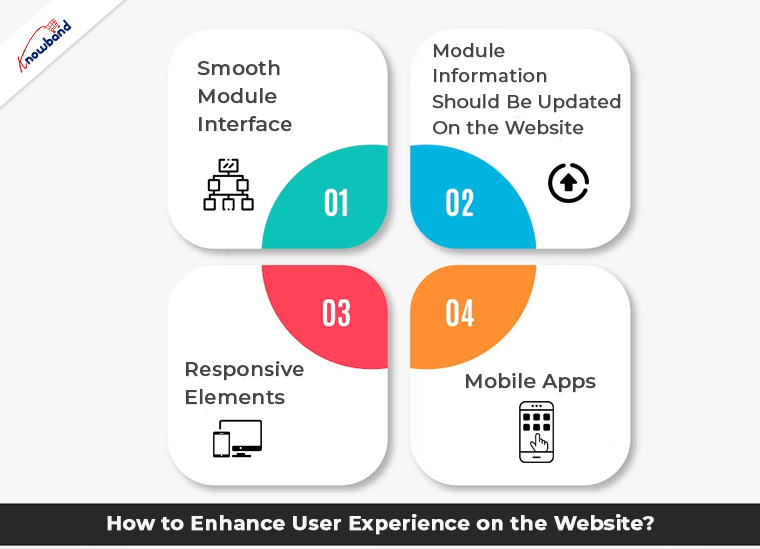
Smooth Module Interface

Creating a seamless navigation experience is a critical component of the UX strategy for eCommerce plugins. Complex navigation features can reduce user interest, leading to higher bounce rates. So, it is essential for eCommerce business owners to optimize their modules and user interface for smooth navigation. 

Module Information Should Be Updated On the Website

Developing a plugin is just the beginning of establishing an online presence in the market for e-commerce modules business. Making it successful, requires ongoing effort, such as module optimization in a periodic manner. Apart from that, on-site/off-site SEO, link building, and social sharing are also important. Keeping your module updated with relevant features and information is essential. It is also necessary to remove features that are no longer in demand. 

Responsive Elements

For eCommerce apps or plugins, all user interface (UI) elements must be highly responsive and perfectly functional. Responsiveness is a critical aspect of UX design that helps to increase customer engagement levels. Further, online sales while encouraging returning visitors to your online store. 

Mobile Apps

In today’s world, it is not surprising that most online transactions occur on mobile devices. Therefore, adopting a mobile-first strategy is vital for achieving consistent revenue growth. Additionally, it helps in effectively managing the online store. Along with creating a mobile app for your eCommerce business, it is essential to optimize your Mobile app plugin for all kinds of mobile devices as well. Although a mobile app is very important its interface on the admin which is generally used on the desktop should be easy and interactive too. 

Benefits of Having Good User Experience
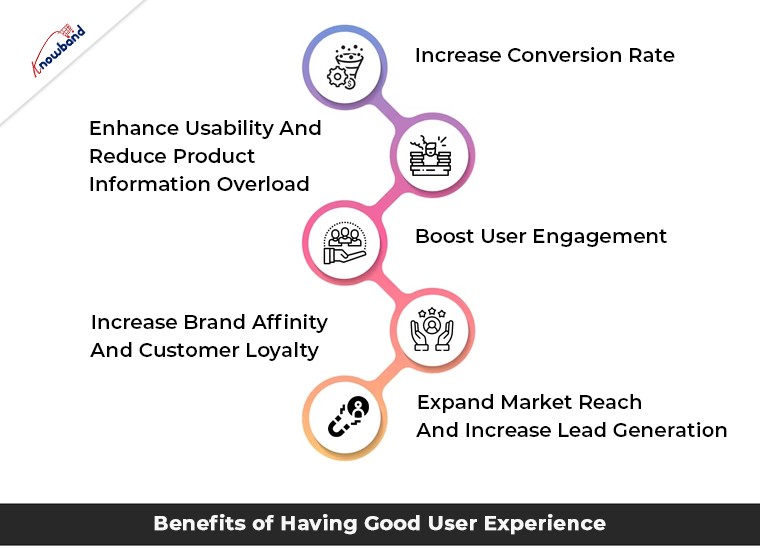
Increase Conversion Rate

To gain credibility and inspire trust, your plugins should look professional and trustworthy. If users cannot navigate your modules easily or efficiently, they will not convert. Further, this will lead to losing credibility in users’ minds. A great user experience can increase conversion rates and help establish trust and credibility. Also, this takes time and consistency in each user interaction and online transaction. 

Enhance Usability And Reduce Product Information Overload

Too much information or too many options can distract users and lead them away from their objective. A UX design done correctly fulfills the expectations of target customers. Further, it provides specific information or action moments at the right time. A good module UX design facilitates the purchasing decision by allowing customers to find what they are looking for easily. 

Boost User Engagement

UX design aims to create a positive user experience that stimulates users and impacts their experience. A simple, clean design can stimulate a user’s sight and grab their attention. This helps to create a unique and distinct customer journey that separates your business from the competition. Consistent design can achieve user engagement, and brand recognition, and reduce the bounce rate. Including interactive elements, such as videos, call-to-action buttons, and social media icons, can encourage users to engage with your plugin interface and make them eager to return to your website. 

Increase Brand Affinity And Customer Loyalty

Offering an outstanding customer experience through your UX design can lead to increased customer loyalty and retention rates. When users feel understood by your brand, they are more likely to develop an affinity towards your brand. By showing empathy and addressing user intent, behavior, and issues, you can humanize your brand, product, or service. Additionally, this builds a solid relationship with your customers. 

Expand Market Reach And Increase Lead Generation

Having a mobile-friendly website is crucial as more than half of the world owns a mobile device, and all of them use internet searches from mobile devices. Our mobile app builder module can help in creating mobile apps for your business. Mobile users expect to have the same experience on their mobile devices as they do on a laptop or PC. 

In The End

Here, in this article, we have shared some points on making user experience better and further and what are the benefits of the same. If you are interested in our modules then kindly let us know and we will be happy to assist you. Apart from that, we want to inform you that in case you have any specific requirements then you can connect with us. You can connect with us at support@knowband.com and our tech team will assist you with the custom module development too. If you have any issues or concerns related to our module then we will assist you with it. For any customizations with the module and its features also we are here to assist you.

Tips To Boost User Engagement with eCommerce Mobile Apps

Often while online shopping, we all end up praising a few applications whereas uninstalling some of them. There might be various factors behind the satisfaction but, next-level creativity to serve users better is one of the primes. Worldwide mobile shoppers prefer to choose that eCommerce mobile app only with whom they feel comfortable and reliable.

That’s where user engagement comes into the picture for a shopping app. Be it credits awarded for shopping or money cashback, the mobile apps have all such necessary tactics to improve user connectivity & brand reputation.

Further, most eCommerce stores have already acknowledged that user engagement via the Mobile App channel is much better when compared to their website. This might make you wonder about the ways to achieve it for your eCommerce Mobile App? Well, this article covers all such tips and tricks. Just give it a read and you’ll get to know all the secrets.

TIP: User On-Boarding & Welcoming

The majority of newbie mobile app users either come to know about the app via website or directly from app store. In both cases, they expect to have a friendly & un-complicated first impression of the app. Hence, to improve the user onboarding, you can have:

1. Social Logins/ Signups:

It makes easier for the users to register/sign-in to your shopping app. The cluttered login process might annoy customers. The most common and better approach is to offer various social login options like Facebook, Google, etc. Also, various modern apps come up with inbuilt Fingerprint & Phone No (OTP) login.

2. Quick Tutorials For New App:

A simple 3-5 step tutorial screens help to guide new users about the basic functionalities of the apps. Though everyone is aware of the basic shopping app working, yet the tutorials will do no harm.  Instead, they will save precious time for users.

3. Welcome E-mails & Messages:

During signup in an eCommerce mobile app, you can set up an automated sending of welcome E-mail & SMS. This might sound like very common but have been proven to be much helpful in gaining users’ trust and reliability.

TIP: User-friendly Navigation:

The tab bar, navigation menu & other countless features in an app must be made to function in accordance with the dimensions & features of smartphones/tablets.

1. Sticky Menu:

In mobile devices, the toggle menu on the navigation bar should be a ‘sticky menu’ so that the user needn’t scroll all the way to the top in order to access the menu.

2. Product List & Grid View:

As per their preferences, mobile shoppers get to choose either a list view or grid view to browse products. Both of them should offer a more precise & detailed view of the products.

3. Browse Products Horizontally:

It’s a common style for shopping apps to have vertical swiping in order to browse products. Along with that, an additional feature can also be added offering left & right swipes. It further enhances the user experience & engagement especially for the millennials who are fond of quick & seamless browsing.

TIP: Personalization Of Apps:

As per various survey reports, millennials are frustrated with the irrelevant emails & notifications being shared with them. They, being a major percentage of e-shoppers, must be served with personalized newsletters & notifications.

1. Push Notifications:

Push notifications on the mobile devices are quite an efficient tool to drive sales for your store. The personalized notifications have proved to boost user retention & conversion rates by 3 times when compared to email campaigns & web notifications. Using your creative and design skills, leading users to a successful purchase is more facile.

2. Newsletter Subscriptions:

Out of all categories available on shopping websites/apps, users may want to opt-in for selective newsletters. For example, the female app audience on a clothing e-store may want to follow up with the newsletters of only the ‘Women Apparels’ section. Hence, to have better user engagement, such personalized opt-in newsletters popup forms must be configured on a Shopping App.

3. Multi-Lingual & Multi-Currency Support:

For personalization of the app & catering to international customers in a better way, multiple languages & currencies should be available in the apps. For Arabic, Persian & similar languages that follow right to the left pattern (RTL), should be made compatible as well.

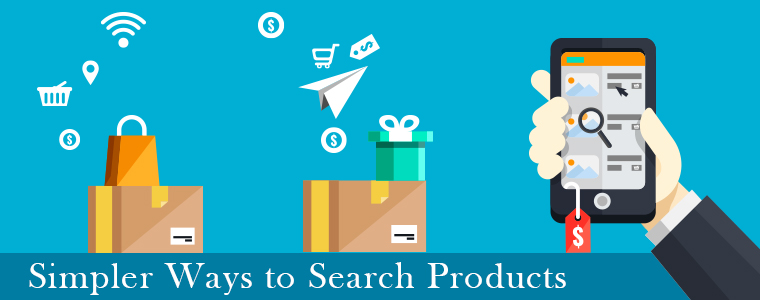
TIP: Simpler Product Search:

1. Layered Navigation (Filter & Sort):

Easy navigation has always been a prime requirement for eCommerce apps. With filtering and sorting of products, it is just a matter of moments for users to find their desired product. This feature improves user-experience by narrowing down the time spent on successful purchases.

2. Wishlist:

Wishlist functionality aids customers with shortlisting the favorite products that they are willing to buy. Certainly, this saves the user time by displaying the bookmarked products on a single screen.

3. Social Sharing Of Products:

The users get to share eCommerce mobile app products on social media channels like Facebook, Google, etc. This way, the existing users can lure the potential audience available on various social networks.

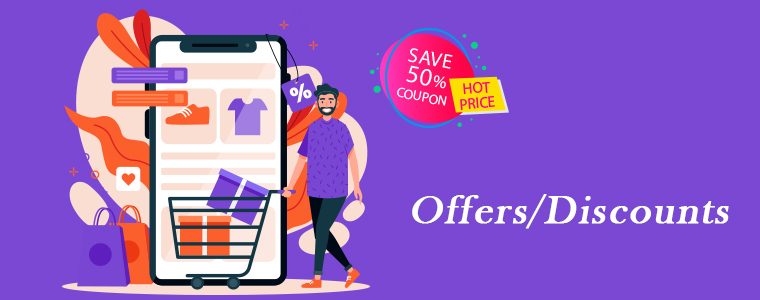
TIP: Offers/ Discounts & Banners:

1. Flash Sale (Time Based):

Most shopping websites & apps use the strategy to create an urgency for online product purchases. This has been already proven quite helpful for online retail biggies. Offer timer-based countdown sale on your app & encourage customers to buy products as soon as possible. With the limitation, online shoppers tend to purchase more quickly.

2. Discount Vouchers & Coupons:

Discounts are everyone’s favorite and play a huge role in increasing sales. All such vouchers & coupons running on your website should work seamlessly in your eCommerce mobile app as well.

3. Gamified Email Subscription:

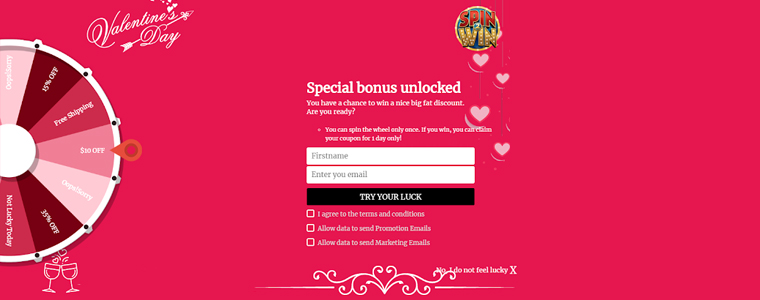
You would have observed a gamified ‘Spin & Win’ wheel-like interface on some eCommerce websites. The user who spins its digital wheel wins a discount mentioned in the pie. Some sections may even state ‘try your luck next time’. Whether the user gets a desirable discount or not, either way, he/she ends up submitting E-mail address. The outcome here is solely beneficial for remarketing purposes. The users also get an interactive interface to gain offers.

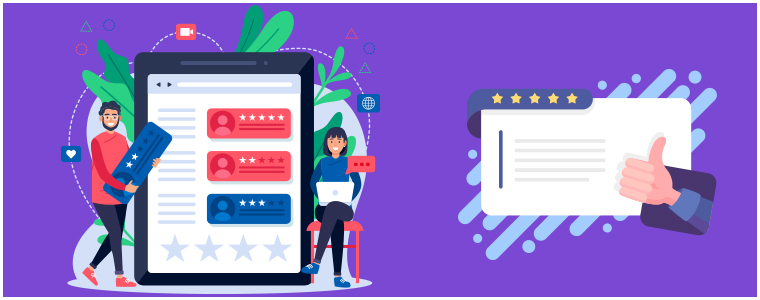
TIP: Feedback, Loyalty & Reward Points:

1. Feedback:

Often, we all receive in-app feedback popups that ask-

  • ‘How would you rate us out of 5 stars?’
  • ‘From a scale of 1 to 10, how likely will you recommend us to your friends?’

Such surveys help the e-business to be aware of their weak areas are opens the doors to improvisation and improvement. It also ensures to serve customers in a better way.

2. Customer Loyalty:

You can award frequent shoppers with loyalty cards that can be used as a discount coupon while next purchase. Improving customer loyalty in your eCommerce mobile app can be a direct boon for your sales.

3. Reward Points:

On each online purchase, an eCommerce mobile app rewards its customers with some points. Upon accumulating such points & reaching a limit of say 1000 points, customers receive major cashback & offers. This encourages customers to shop more from the app.

4. Referral Points:

You can provide a unique referral code to each of your app users. When the user encourages another newbie user for signup using his/her referral code, you can award the former one with relevant reward points.

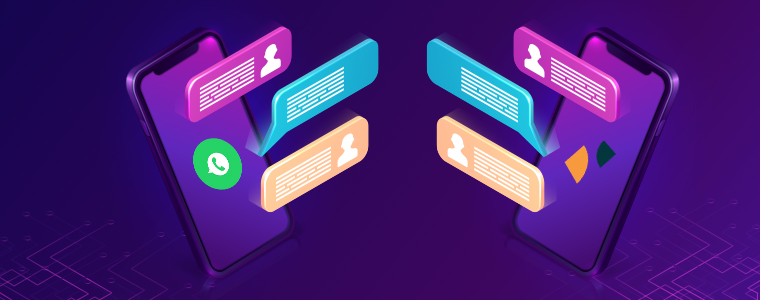
TIP: Live Chat For Instant Support:

1. Social Chat Options:

Your mCommerce shopping app with inbuilt chat support will allow users to communicate in case of any issue. For instance, WhatsApp & Zopim (Zendesk) chat in the mobile app is more likely for customers to get the required assistance.

2. ChatBots:

Many applications also have a chatbot integrated with them. It further offers more opportunities to even set automated messages for certain types of pre-defined user queries.

TIP: Checkout & Payments:

1. Favorable Payment & Shipping:

We all prefer our favorite payment method when it comes to making online transactions. That too in online shopping, the users tend to leave products in the cart without successful purchases in case of unavailable payment options.  The store admin should keep in mind to add all necessary shipping & payment methods on the eCommerce shopping app. This can be a prime measure to reduce the rate of cart abandonment.

2. Handy Checkout Process:

Ask only the necessary details on the checkout screen. The one-page checkout in eCommerce mobile apps requires only essential order related entries before leading to the payment screen. This way, the user even gets to review the complete order before the final purchase.  Having a single screen checkout aids the users from backing out of lengthy form fillings. It engages better with the users & helps in achieving high conversion rates.

3. Order Tracking:

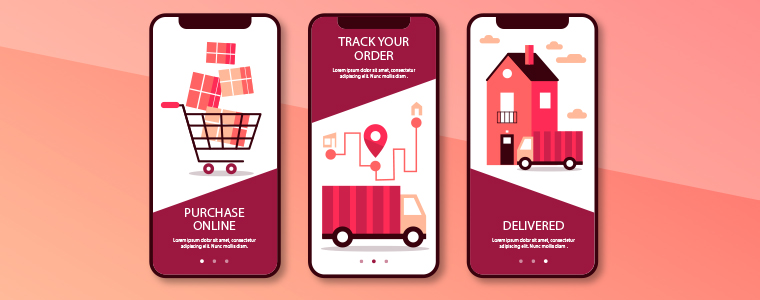
The order tracking feature in mobile apps must allow the customers to be aware of the whereabouts of the placed orders. The mobile shoppers can keep an eye on the delivery of the previous purchase items. Keeping a potent tracking option will also motivate users to prefer your app again & make more purchases to increase revenue.

Summing Up:

For eCommerce Shopping Apps, these are some of the trendy ways to engage more users in an organic way. It not only improves the sales but also builds a good brand reputation. These days, most of the shopping apps are built using a readymade tool like eCommerce Mobile App Builder. It handles the complexities and burden of e-store owners for the creation and management of shopping applications. Having listed all the prominent mobile app user engagement tips, I hope you find this article helpful.

Check out Mobile App Builder for various eCommerce platforms: 

PrestaShop Mobile App Builder

OpenCart Mobile App Builder

Magento Mobile App Builder

Magento 2 Mobile App Builder

WooCommerce Mobile App Builder

5 ways to Increase User Engagement on Your Website

User Engagement is an important aspect in the eCommerce space. Failing to engage users on your website results in a high bounce rate and eventually losing out on potential customers.

Brands try to implement multiple strategies to increase user engagement. But before we delve into the user engagement strategies, let’s try to understand what it is and why is it important.

What is User Engagement?

In simple terms, User Engagement, or Customer Engagement is the interaction, or say the behaviour of users towards your website, product or services. It can be measured by certain activities such as clicks, downloads, shares, etc.

To be precise, customer engagement and user engagement are generally considered the same but there is a slight difference between both.

Customer engagement is the interaction of customers, people who buy from your brand and have much more knowledge than random or anonymous visitors to which we term as users, and hence the term user engagement.

A customer is always a user but a user cannot always be a customer. Highly engaged users are an asset for any business as they keep coming back to the website. And the more time they spend on your website, the more likely they are to turn into your regular or loyal customers.

Why is User Engagement Important?

User engagement has a key role to play in the success of your products or services. If users are spending time on your website or on the mobile app, it means it is providing them with some value and they are liking you as a brand. For example, let’s say you have a blog. You are getting good hits. People are coming to your blog, reading the information that you have put, leaving comments, checking out the products that you have enlisted in your blog content. What is it? This is all user engagement.

Highly engaged users are good brand advocates. They will not only purchase themselves but would recommend your brand or its products to others as well.

User Engagement Metrics

The definition of user engagement varies from business to business. Depending on the niche, businesses measure user engagement through certain factors.

For example, for a blogging website, the bounce rate and the average time spent by a user would reflect user engagement. For online streaming platforms like Netflix and Hotstar, user engagement would be determined by how much time people spend on watching. E-commerce websites would track how often users are interacting with the products or adding the items to the cart.

How to Increase User Engagement?

There are certain ways to increase user engagement. In this article, I have put up 5 best strategies to increase customer engagement.

1. Cut-down the Page Load Time

The primary thing to do to increase user engagement is reducing the page load speed. I mean, there is no point of talking about increasing user engagement if your website takes too much time to load.

A study says that users bounce off from the websites that take more than 3 seconds to load. Your website design, products, offerings, none of it really matters if your website does not load quickly.

Eliminate unnecessary and clunky elements that are causing slow loading. You can download a few plugins that will help you improve your page load speed.

One of the few plugins that I would recommend is the Accelerated Mobile Pages plugin. The AMP module increases the page load speed in mobile devices, thus reducing the bounce rate and the page load time.

Related: Benefits of Google Accelerated Mobile Pages (AMP) for eCommerce

2. Have Clean and Appealing Web Pages

You do not want your users to cringe when they enter your website, right? Your motive is to engage users.

So, it is important that your web pages are well set up and do not look cluttered. If you want users to take some action, you need to make them comfortable first.

Who would not want to spend a little time browsing through a website that looks pleasing?

Pay most attention at your home page. It is the interaction point of your website. Fill it with elements that leave a strong impression and encourage users to take action.

If it is packed with some exciting information, users will interact more and you will surely witness higher user engagement.

3. Easy Navigation

Before you aim to increase user engagement, make sure you have optimized your website for great user experience. User engagement is directly proportional to the user experience.

And one of the best ways to increase customer engagement is by having a simplified and attractive navigation bar. There must be enough space between the tabs, proper listing of categories and sub-categories. In short, it should appear professional.

Knowband’s Navigation Bar

Also, have an easy to spot search bar. It should be eye-catchy so that if a user visits your website to make a search, the search bar is instantly spotted.

Do not forget to optimize your checkout page. It holds the utmost importance for user engagement.

4. Optimize your Website for Mobile

M-commerce has already gone past eCommerce and it is going to be a dominating factor in the upcoming years as well.

The count of smartphone users has increased too. So, it is to be kept in mind that your website is equally optimized for mobile devices as it is for desktop. To put it simply, it should be responsive.

A non-responsive eCommerce site will look bulky and unorganized in mobile phones and might compel users to take an exit. This can have a severe effect on the bounce rate.

Thus, having a mobile-friendly eCommerce website is necessary to increase user engagement.

5. Encourage Cross-selling and Up-selling

It is always a good idea to display related or even better versions of your product. Browse Amazon or Flipkart, they have a separate section that says “Similar products” or “Frequently bought together”.

You can follow the same approach on your website too. Up-selling and Cross-selling are some effective ways to engage users.

Related: A complete guide to Cross-selling and Upselling in eCommerce

User Engagement Tools

I am putting forward a list of tools that will help you increase user engagement.

1. Increase User  Engagement with “Spin and Win”

One of the best ways to engage users on your website is by incorporating a Spin and Win popup on your website. Today, it has been adopted by many eCommerce brands.

It adds a Gamification element to your website and engages users in a fun activity, persuading them to spin the wheel to win some exciting offers.

Not only it works as a user engagement tool but also helps you grow your email list comfortably and boosts your conversions.

2. Place a Scratch Card on the Header with “Scratch Coupon” Module

The Scratch Coupon module integrates an unscratched coupon on the top of your website and makes it an amazing technique to draw user attention.

Curious to see what’s behind the scratch card, users scrape the coupon. The coupon contains your website deals and offers which the user can avail after scratching it.

This proves to be an effective way to increase user engagement.

3. Test with “Infinite Scroll”

You can give a thought about implementing Infinite Scroll on your website. The Infinite Scroll module converts the pagination process into continuous scrolling.

Users do not need to click on the next page to visit it. With Infinite Scroll, the next page content is automatically fetched and displayed within the same page, as the user scrolls down.

But this user engagement tool does not fit with every eCommerce business. So, before you decide to opt for the Infinite scroll, check whether it would suit with your business niche or not.

Related: Pagination vs Infinite Scrolling

4. Leverage “Web Push Notifications”

Web Push Notifications have proved to be effective in increasing customer engagement.

With Web Push Notifications module, you can reach out to your subscribers even when they are not present at your website. You can use this tool to send abandoned cart notifications, stock alert notifications, price alert notifications, flash sale notifications, etc.

The Bottom Line

For a successful conversion, or taking users onboard, user engagement has a significant role to play.

User engagement will automatically increase if you focus on improving the user experience and manage to reduce the bounce rate.

Apply the above-mentioned user engagement strategies, try out the user engagement tools and see if they have helped you achieve desired results.

For any doubt regarding the modules, you can contact us at support@knowband.com

Read our popular posts:

One Page Checkout vs Multi-Page Checkout

5 Benefits of Product Customization

10 Benefits of Social Login in eCommerce

8 Simple Tips to Reduce Product Returns in eCommerce