Revolutionizing PrestaShop eCommerce with Enhanced Mobile App Builder Addon!

In the fast-paced digital world, staying ahead in the eCommerce game is paramount. Knowband has always been at the forefront of providing innovative solutions to enhance online business platforms. This time, we have taken a significant leap forward with our latest updates to the “Prestashop Mobile App Builder Module”.

 

These enhancements are designed to elevate the user experience, streamline navigation, and boost engagement on your PrestaShop eCommerce Mobile App.

Let’s delve into the exciting new features that are set to transform the way customers interact with your PrestaShop mobile application.

Automated Banner Slider: A Visual Feast

 

The introduction of an Automated Banner Slider in our PrestaShop Mobile App Builder is a game-changer. This feature allows you to display multiple banners in a sliding format, making it easier to highlight promotions, new arrivals, and bestsellers. Moreover, it’s an engaging way to grab the attention of app users right from the moment they launch the app, enhancing the visual appeal and user engagement of your PrestaShop store’s Android and iOS Mobile App.

Stay Updated with the Notification Tab:

 

Communication is key to keeping customers engaged. Therefore, our PrestaShop eCommerce Mobile App Builder now includes a dedicated Notification Tab that serves as a central hub for all updates, offers, and announcements. Moreover, this feature ensures that your customers are always in the loop about the latest deals and news, significantly enhancing the customer experience in your Mobile App for PrestaShop.

Enhanced Review Page: Building Trust

 

The Enhanced Review Page in our PrestaShop Mobile App Creator addon is designed to build trust and credibility for your products. Now, customers can easily scroll the reviews based on positive and negative feedback, all on a single page.

Moreover, Customers can now easily read and write reviews, making it simpler for potential buyers to make informed decisions based on genuine customer feedback. This transparency fosters a sense of trust and encourages more customers to shop with confidence.

Simplified Access with Email Login/Sign-Up Pop-Up:


First impressions matter, and our Email Login/Sign-Up Pop-Up feature ensures that new users are greeted with a seamless onboarding experience. This addition to our PrestaShop iOS App Maker and Android version simplifies the process for first-time app installers, making it easier for them to start their shopping journey without any hassle.

Furthermore, to remind the customers about completing the login process in their mobile app, we are showcasing the login/sign-up pop-up on top of the home page layout. Once the users log in to the app, the same will be replaced with other layout components.

Listings: A View for Every Preference

 

The introduction of List/Grid View options on product listing pages in our Prestashop Android and iOS Mobile App Builder Module is all about providing choices to the users. Whether your customers prefer a compact list view or a more visual grid layout, this feature caters to everyone’s preferences, enhancing the shopping experience on your eCommerce platform.

 Moreover, this applies to the search result page, product listing page, and category listing page as well.

Elevating Your PrestaShop Store to New Heights!

These enhancements to the Mobile App Builder Addon for PrestaShop are not just about adding new features; they’re about creating a more engaging, user-friendly, and visually appealing shopping environment. With the PrestaShop eCommerce Mobile App, you’re equipped to offer a seamless shopping experience, driving higher engagement and, ultimately, conversions.

Our commitment to innovation and excellence in the PrestaShop eCommerce Mobile App Maker space is unwavering. Thus, the latest updates to our PrestaShop Mobile App Builder are a testament to our dedication to helping you grow your business. Upgrade your PrestaShop store with Knowband’s enhanced Mobile App Builder Module today, and set the stage for unparalleled growth in the eCommerce realm.

Win Back Lost Shoppers: Top 5 Knowband’s PrestaShop Plugins Every Merchant Needs!

In the competitive realm of eCommerce, every visitor counts, and losing a potential customer can be a significant setback. If a customer visits your store, there can be a thousand reasons that prevent him from making the orders. Either, it could be out-of-stock products, internet connection issues, or there are other reasons possible too.

Thus, it becomes crucial to win back such potential customers by following different strategies, turning them into potential buyers.

Furthermore, in the following article, we have the most innovative solutions that can make it possible for merchants not only to attract but also win back those who might have left without making a purchase.

Developed by Knowband, one of the leading names in the industry, these plugins are designed to enhance customer engagement and retention. Here are the top 5 PrestaShop plugins every merchant needs to re-engage lost shoppers.


1. Back in Stock Notifications:

Nothing disappoints a customer more than finding their desired product out of stock. Following the same, the PrestaShop Back in Stock Notifications plugin is a game-changer in this scenario. The module allows customers to subscribe to an alert and receive a notification when their desired product is back in stock.
This not only improves the user experience but also increases the chances of converting a lost sale into a successful transaction.

2. Abandoned Cart Notifications:

Cart abandonment is a prevalent issue in online shopping, with numerous shoppers leaving their carts due to various reasons. Not only does it impact the overall sales but also disappoints the store admin.

Addressing the cart abandonment issue, the PrestaShop Abandoned Cart Notifications addon addresses this problem by sending gentle reminders to customers about their unfinished purchases. Moreover, the Prestashop admin gets the option to modify the email discount at their fingertips. This nudge can significantly increase the likelihood of customers returning to complete their transactions, thereby boosting sales.

3. Spin and Win/Entry-Exit Pop-Up:

Engaging customers from the moment they land on your site is crucial. The Spin and Win/Entry-Exit Pop-Up addon offers an interactive way to capture the attention of visitors. Moreover, this plugin displays a fun, game-like pop-up where customers can spin a wheel to win discounts or offers.
Therefore, it’s an excellent tool for capturing email addresses and reducing bounce rates, making it easier to win back customers who might be on the fence.

4. PrestaShop Exit Pop-Up:

The PrestaShop Exit Pop-Up Plugin is specifically designed to target users attempting to leave the site. By displaying a compelling message or offer at the crucial moment they decide to exit, this plugin can effectively persuade them to reconsider their decision. Whether it’s a special discount, a reminder of what’s in their cart, or an exclusive offer, this plugin can significantly reduce exit rates and increase customer retention.

5. Return Manager:

A smooth return process is essential for customer satisfaction and retention. Not only does it help customers to get better services but also maintains healthy business customer relationships.
Therefore, the PrestaShop Return Manager plugin simplifies the management of return requests, making it hassle-free for both the merchant and the customer. By facilitating an easy return process, this plugin helps maintain a positive relationship with customers, encouraging them to shop with confidence and return in the future.

Conclusion!

In the fast-paced world of eCommerce, staying ahead means continuously finding ways to engage and retain customers. The top 5 PrestaShop plugins developed by Knowband, including Back in Stock Notifications, Abandoned Cart Notifications, Spin and Win, Exit Pop-Up, and Return Manager, are essential tools for any merchant looking to win back lost shoppers. By implementing these plugins, merchants can enhance the shopping experience, increase customer satisfaction, and ultimately, boost their sales and profitability.


Flutter vs. React Native: A Detailed Comparison for App Developers!

In the dynamic world of mobile app development, two frameworks have emerged as frontrunners in cross-platform development: Flutter and React Native.
Both have their unique strengths, community support, and use cases and choosing between them is pivotal for app developers. Let’s start by focusing one by one on all the technical aspects to help you decide the right choice for your next project.


Performance:

Flutter, developed by Google, is renowned for its high performance. It uses the Dart programming language and compiles native ARM code, which enhances app speed and responsiveness. Furthermore, Flutter’s widget-based architecture also contributes to its performance, which allows more customizable and efficient rendering of UI components.

React Native, on the other hand, developed by Facebook, offers near-native performance by using a bridge to communicate with native components.
While this approach is effective, it can lead to slightly lower performance compared to Flutter, especially in complex or graphics-intensive applications.

Development Experience:

React’s hot-reload feature significantly speeds up the development process by allowing instant feedback on changes.

On the other hand, Flutter’s hot reload is equally impressive and offers a smooth and fast development experience. Dart, while less popular than JavaScript, is easy to pick up for developers with experience in object-oriented languages.
Therefore, the comprehensive documentation and rich set of widgets in Flutter further enhance the development experience.

UI Components and Design:

Flutter’s widget-based approach ensures a high level of customization and control over the app’s appearance and layout. Moreover, it comes with a rich set of Material Design and Cupertino widgets, enabling developers to create beautiful, natively compiled applications for both Android and iOS from a single codebase.

React Native, relying on native components, allows for the creation of apps that closely mimic native UI elements.

However, this can sometimes lead to inconsistencies across platforms, requiring additional effort to achieve a uniform look and feel.

Community and Ecosystem:

React Native has been around since 2015 and has built a large and active community. It boasts a vast ecosystem of libraries and tools, making it easier for developers to find resources and support for their projects.

Flutter, though newer, has seen rapid growth in its community and ecosystem. The availability of packages and support has significantly increased, closing the gap with React Native. Google’s active involvement in Flutter’s development also promises a bright future for its ecosystem.

Future Prospects:

React Native has established itself as a reliable choice for cross-platform development, with a proven track record and wide adoption, including high-profile apps like Instagram and Facebook.

Flutter, with its growing popularity and Google’s backing, is quickly becoming a favored choice for developers looking for high-performance and expressive UI capabilities. Its adoption by major companies like Alibaba and Google Ads signifies its potential for building commercial-grade applications.

Conclusion!

Choosing between Flutter and React Native boils down to the specific needs and preferences of the project and the development team. For projects that prioritize performance and custom UI design, Flutter might be the way to go. Conversely, if leveraging a vast ecosystem and using JavaScript is a priority, React Native could be more suitable.

Both frameworks are capable of delivering high-quality, cross-platform apps, and the choice between them should be guided by the project requirements, developer expertise, and long-term app maintenance considerations. As the mobile development landscape continues to evolve, both Flutter and React Native are expected to grow and adapt, offering even more to the developers and the mobile app industry.

Furthermore, at Knowband we also provide Flutter and Reach development services. Along with custom developments, we provide no-code Flutter app builders for Prestashop, Opencart, WooCommerce, and Magento 2 eCommerce platforms.

In case you have queries/suggestions, please feel free to get in touch at our email address support@knowband.com.

5 Compelling Reasons You Should Start Multi-Channel Selling in 2024!

In the ever-evolving world of e-commerce, staying ahead means embracing strategies that not only enhance your reach but also diversify your sales avenues. Multi-channel selling is one such strategy that has proven to be highly effective, particularly with powerhouses like eBay and Etsy in the mix.
As we step into 2024, here are five compelling reasons why you should consider expanding your online presence to multiple marketplaces. Furthermore, we are also going to spread light on how tools like the PrestaShop Etsy Marketplace Connector and PrestaShop eBay Marketplace Connector can streamline this transition.


1. Expanded Customer Base:

One of the most significant advantages of multi-channel selling is the substantial expansion of your potential customer base. Moreover, eBay and Etsy both have their unique audiences, with eBay being a global marketplace known for its vast and diverse product range. On the other hand, Etsy is renowned for handmade, vintage, and unique items.
Thus, by listing your products on platforms having such potential and huge customer base, you’re not just waiting for customers to find your shop; you’re putting your products directly in front of millions of potential buyers who are ready to purchase.

2. Increased Brand Visibility:

Selling on multiple channels naturally increases your brand’s visibility. When customers see your products on eBay and Etsy, it not only boosts your chances of making sales on these platforms but also enhances your brand’s overall online presence. Moreover, highlighting the fact that you are also providing services on platforms like eBay and Etsy on your shop can help you draw the attention of your customers too.

Therefore, this increased visibility can lead to higher traffic to your website and can boost your brand’s credibility and trustworthiness in the eyes of consumers.

3. Risk Diversification:

Relying on a single sales channel can be risky. Changes in marketplace policies, algorithm updates, or unexpected downtrends can significantly impact your business. On the other hand, multi-channel selling mitigates these risks by spreading your presence across several platforms.
Thus, if one channel experiences a downturn, sales from other channels can help compensate, ensuring your business remains stable and continues to grow.

4. Insights into Consumer Behavior:

Each marketplace comes with its analytics and insights, allowing you to understand better and cater to your target audience.
Furthermore, by selling on eBay and Etsy, you can gather data on what works best on each platform and tailor your strategies accordingly. Therefore, this data can be invaluable in refining your overall marketing and sales tactics, ensuring you meet your customers’ needs more effectively.

5. Leverage the Power of PrestaShop Connectors:

To seamlessly integrate your PrestaShop store with eBay and Etsy, leveraging Knowband’s PrestaShop Etsy Marketplace Connector and PrestaShop eBay Marketplace Connector can be a game-changer.
Moreover, these connectors simplify the process of listing your products on these marketplaces, synchronizing inventory, and managing orders directly from your PrestaShop dashboard.
This means you can enjoy the benefits of multi-channel selling without the added complexity of managing each platform separately, making it easier to scale your business.

Conclusion

In conclusion, multi-channel selling in 2024 is not just a trend but a strategic necessity for e-commerce businesses aiming for growth and sustainability. Platforms like eBay and Etsy offer unique opportunities to reach a broader audience, increase brand visibility, and gain valuable consumer insights.
Thus, by leveraging the capabilities of the PrestaShop Etsy Marketplace Connector and PrestaShop eBay Marketplace Connector, you can streamline your operations and ensure a cohesive and efficient multi-channel selling strategy. Embrace the power of multi-channel selling and watch your e-commerce business soar to new heights in 2024.

Mastering Xcode: Tips for Faster iOS App Development by Knowband!

In the dynamic world of iOS app development, efficiency and productivity are key. Xcode, Apple’s integrated development environment (IDE), offers a plethora of features designed to streamline the development process. However, leveraging these features to their fullest potential requires insight and expertise.
Thus, in this article we will dive into the practical tips for mastering Xcode, focusing on accelerating your iOS app development journey.

Furthermore, you can not only streamline your Xcode deployment but also speed the process up.


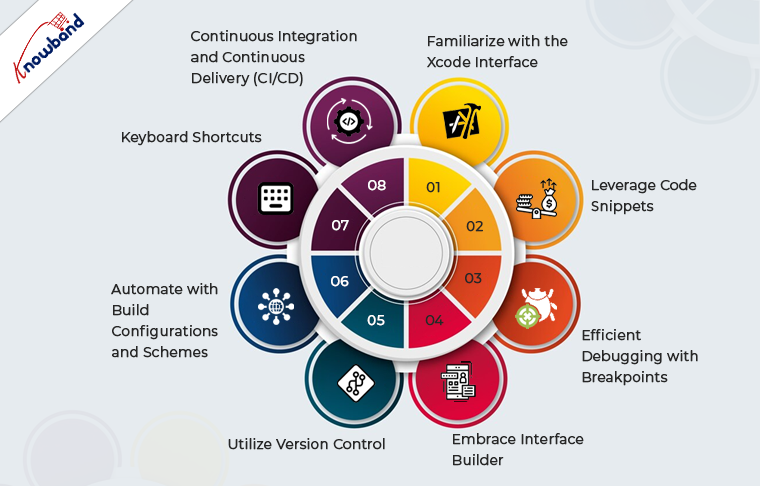
Familiarize with the Xcode Interface:

Understanding the Xcode interface is the cornerstone of efficient app development. Moreover, Apple has designed the Xcode to not only provide a robust but also a feature-rich experience to the app developers.

The Navigator, Editor, and Utilities areas are your primary workspaces. Use the Navigator for quick file access, the Editor for coding, and the Utilities area for property adjustments and documentation. Familiarity with these sections will significantly reduce development time.

Leverage Code Snippets:

Code snippets are a powerful feature in Xcode that can save you a considerable amount of time. Thus, by creating snippets of frequently used code blocks, you can avoid repetitive typing.
To create a snippet, simply select the code you wish to save, drag it into the Code Snippet Library, and give it a name and shortcut. This practice not only speeds up coding but also ensures consistency across your projects.

Efficient Debugging with Breakpoints:

Debugging is an integral part of development, and Xcode’s debugging tools are robust. The developers get the option to use breakpoints to pause execution at specific lines of code, that allow inspection of variables and evaluate expressions.
Moreover, the conditional breakpoints can be particularly useful for isolating issues without halting the program unnecessarily.

Embrace Interface Builder:

Xcode’s Interface Builder is a powerful tool for designing UIs. It allows developers to create interfaces visually, without writing extensive code.
Thus, instead of writing the design code manually, you can utilize Auto Layout to make your apps responsive across different devices and screen sizes.
Understanding and using Interface Builder efficiently can significantly accelerate UI development.

Utilize Version Control:

Version control is essential for managing changes and collaborating on projects. Therefore, Xcode integrates seamlessly with Git, providing a graphical interface for committing changes, branching, and merging. Regularly commit your changes to keep track of your project’s evolution and to facilitate collaboration with other developers.

Automate with Build Configurations and Schemes:

Build configurations and schemes are Xcode features that allow you to manage different versions of your app, such as development, testing, and production.
Thus, automating the tasks like setting environment variables, and API endpoints, and enabling debug options can significantly streamline your workflow.

Keyboard Shortcuts:

One of the most straightforward ways to increase efficiency in Xcode is to master keyboard shortcuts. Instance, common shortcuts for actions like running your app (Cmd + R), opening the Assistant Editor (Cmd + Option + Enter), and showing or hiding the Navigator (Cmd + 0) can save valuable time.

Continuous Integration and Continuous Delivery (CI/CD):

Implementing CI/CD with Xcode can automate the process of building, testing, and distributing your iOS apps. Furthermore, tools like Xcode Server, Jenkins, or GitHub Actions can be configured to automate these tasks, ensuring that your app is always in a deployable state.

Stay Updated!

Apple frequently updates Xcode with new features and improvements. Staying current with the latest versions ensures access to the most advanced tools and functionalities, which can enhance your development process.

Conclusion!

By familiarizing yourself with the IDE, utilizing its features to their fullest, and staying updated on the latest developments, you can significantly enhance your productivity and efficiency in iOS app development.
Whether you’re debugging with advanced breakpoints, designing interfaces, or automating builds, every aspect of Xcode offers an opportunity to streamline your workflow and bring your innovative app ideas to life more swiftly.

Additionally, at Knowband, we offer both native and hybrid app development services. If you have any project inquiries or need a quotation, please don’t hesitate to reach out to our team at “support@Knowband.com”.

Shopify vs. Shopify Plus: Making the Right E-commerce Platform Choice for Your Business!

In the fast-paced world of e-commerce, choosing the right platform for your online store can make all the difference in your business’s success. Thus, two popular options are Shopify and Shopify Plus, each catering to different needs and business sizes.
Following the same, we will explore the differences between Shopify and Shopify Plus to help you make an informed decision and select the platform that best suits your business.

Understanding Shopify and Shopify Plus!

Before delving into the comparison, let’s briefly understand what Shopify and Shopify Plus are:

Shopify:

Shopify is a widely used e-commerce platform designed for small to medium-sized businesses. Furthermore, it provides an easy-to-use, cloud-based solution for entrepreneurs looking to set up their online stores quickly and efficiently.
Therefore, Shopify offers a range of features, including customizable templates, payment processing, and inventory management, making it an excellent choice for startups and small businesses.

Shopify Plus:

Shopify Plus, on the other hand, is an enterprise-level e-commerce platform built to accommodate large and high-growth businesses. Moreover, it offers advanced features and scalability, making it suitable for companies with higher transaction volumes and more complex needs.
Furthermore, Shopify Plus is also known for its flexibility, allowing businesses to tailor their online stores to meet specific requirements.

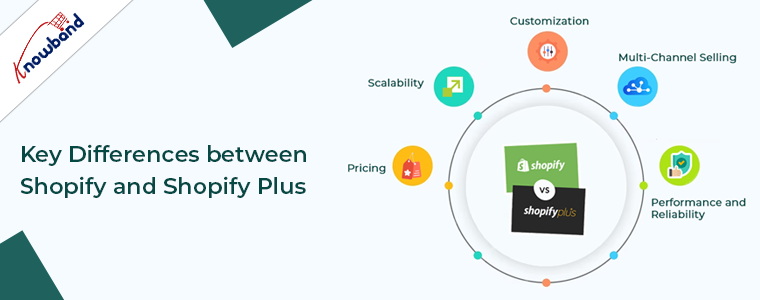
Key Differences between Shopify and Shopify Plus:


To help you make the right choice for your business, let’s compare Shopify and Shopify Plus across various aspects:

1. Pricing:

Shopify: Shopify’s pricing starts at $29 per month for its basic plan and goes up to $299 per month for its Advanced Shopify plan. While this pricing may be suitable for small to medium-sized businesses, it can become cost-prohibitive for larger enterprises with substantial sales volume.

Shopify Plus: Shopify Plus, on the other hand, operates on a custom pricing model.
Thus, it caters to businesses with higher sales volumes and complex needs, meaning you’ll need to request a quote to get an accurate pricing estimate. While it may be more expensive than Shopify, the cost can be justified by the additional features and capabilities it offers.

2. Scalability:

Shopify: Shopify is ideal for businesses that are just starting or have moderate growth ambitions.
While it can handle a considerable amount of traffic and transactions, it may not be as scalable as Shopify Plus when it comes to handling rapid growth and high-volume sales.

Shopify Plus: On the other hand, Shopify Plus is designed for high-growth businesses. Thus, with its robust infrastructure, Shopify Plus can easily scale to accommodate the demands of rapidly expanding enterprises.

3. Customization:

Shopify: Shopify offers a range of customizable templates and themes to help businesses create a unique online presence. However, the level of customization may be limited compared to Shopify Plus.

Shopify Plus: Shopify Plus provides extensive customization options, allowing businesses to tailor their online stores to their exact specifications. Moreover, this level of flexibility is crucial for enterprises that require unique branding, user experiences, and functionality.

4. Multi-Channel Selling:

Shopify: With Shopify, you can sell through various channels like your online store, social media, and marketplaces. However, the breadth and depth of multi-channel selling options are more extensive in Shopify Plus.

Shopify Plus: Shopify Plus offers advanced multi-channel selling capabilities, including integration with popular marketplaces like Amazon and eBay, as well as POS (Point of Sale) solutions for physical retail stores. This makes it a great choice for businesses looking to expand their presence across different sales channels.

5. Performance and Reliability:

Shopify: Shopify provides reliable hosting and security, but it may not offer the same level of performance and redundancy as Shopify Plus. Smaller businesses may not notice a significant difference, but larger enterprises may require the added stability and uptime of Shopify Plus.

Shopify Plus: Shopify Plus offers robust infrastructure, ensuring high performance, scalability, and redundancy. This is essential for businesses that cannot afford downtime, especially during peak sales periods.

Which Platform Is Right for Your Business?

Choosing between Shopify and Shopify Plus ultimately depends on your business’s specific needs, size, and growth trajectory.

Choose Shopify if you are a small to medium-sized business with a limited budget and moderate growth expectations. It’s user-friendly, cost-effective, and provides all the essential features for online selling.

Opt for Shopify Plus if your business is an enterprise with high sales volumes, complex requirements, and rapid growth plans. The additional features, customization options, and scalability make it a valuable investment for larger businesses.

In the END!

In conclusion, both Shopify and Shopify Plus are excellent e-commerce platforms, but they cater to different business sizes and needs. By evaluating your specific requirements and growth goals, you can make an informed decision and select the platform that aligns best with your online business. 

Stay Tuned: Prestashop v8.1 Compatible Multi-Vendor Marketplace Addon!

In the ever-evolving world of e-commerce, staying ahead of the curve is paramount for online store owners. Prestashop, a popular e-commerce platform, has consistently delivered robust solutions to help businesses thrive in the digital marketplace. Now, with the imminent release of Prestashop v8.1, we are excited to announce our latest offering: the Prestashop Marketplace Addon. An all-in-one solution to transform your online store into a thriving multi-vendor marketplace.

Empowering Your Prestashop Store with the Marketplace Module!

Unveiling Prestashop v8.1 Compatibility:

As the e-commerce landscape continues to evolve, Prestashop remains committed to providing cutting-edge tools to empower online businesses. The upcoming release of Knowband’s Prestashop v8.1 compatible marketplace addon represents a significant milestone in the journey. Not only we are promising enhanced features and improved performance but also an even more user-friendly interface.
And, to complement this exciting update, we are thrilled to introduce the Prestashop Marketplace Module, fully compatible with Prestashop v8.1 soon.

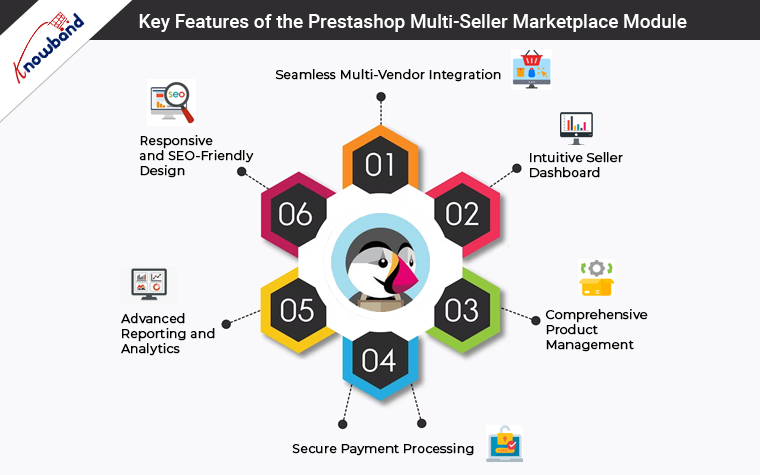
Key Features of the Prestashop Multi-Seller Marketplace Module:


1. Seamless Multi-Vendor Integration:

With Knowband’s Prestashop Multi-Vendor Marketplace Plugin, you can seamlessly transform your single-vendor store into a dynamic multi-vendor marketplace. Furthermore, you can also empower multiple sellers to list their products on your platform, expanding your product catalog and increasing your revenue potential.

2. Intuitive Seller Dashboard:

The Prestashop Marketplace Extension offers an intuitive seller dashboard, making it easy for vendors to manage their products, orders, and customer interactions. Moreover, this user-friendly interface streamlines the vendor experience, fostering collaboration and growth.

3. Comprehensive Product Management:

The Prestashop Multi-vendor Marketplace addon provides robust product management features, enabling vendors to add, edit, and manage their product listings effortlessly. Therefore, it also supports multiple product types, ensuring compatibility with a wide range of products.

4. Secure Payment Processing:

We understand the importance of secure transactions in the world of e-commerce. Our Prestashop Multi-seller Marketplace Module comes with secure payment processing options, guaranteeing smooth financial transactions between vendors and customers.
Moreover, we have provided a tailored process to handle seller-admin and seller-customer payment processes.

5. Advanced Reporting and Analytics:

To help you make informed decisions, Knowband’s Marketplace Addon for Prestashop offers advanced reporting and analytics tools. Thus, the store admin can monitor the performance of vendors, track sales, and gain valuable insights into your marketplace’s growth.

6. Responsive and SEO-Friendly Design:

The Prestashop Multi-vendor Marketplace Extension boasts a responsive and SEO-friendly design, ensuring that your marketplace looks great on any device and is easily discoverable by search engines. Moreover, it also contributes to higher visibility and increased organic traffic.

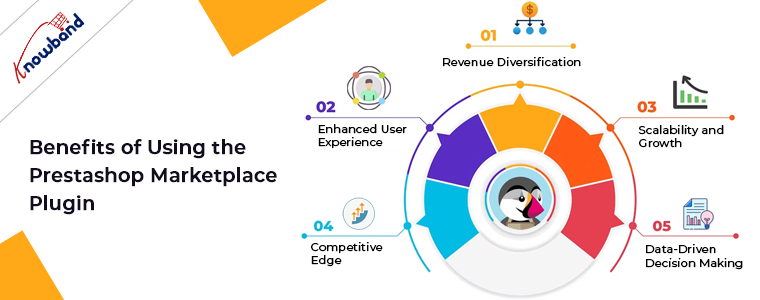
Benefits of Using the Knowband’s Prestashop Marketplace Plugin!


1. Revenue Diversification:

By allowing multiple sellers to join your marketplace, you can diversify your product offerings and increase your revenue potential. Moreover, the store admin can earn commissions on each sale made by vendors, creating a sustainable income stream.

2. Enhanced User Experience:

The intuitive seller dashboard and user-friendly design of our Marketplace Module ensure a positive experience for both vendors and customers.

3. Scalability and Growth:

As your marketplace grows, so does your business. Thus, with the Prestashop Marketplace Addon, you can easily scale your operations and add more vendors, products, and categories to meet the demands of your expanding customer base.

4. Competitive Edge:

In a competitive e-commerce landscape, offering a multi-vendor marketplace sets you apart from the competition. Furthermore, it provides customers with a wider selection of products and encourages repeat visits to your platform.

5. Data-Driven Decision Making:

With advanced reporting and analytics, you can make data-driven decisions to optimize your marketplace’s performance, identify trends, and tailor your strategy for success.

Conclusion!

With Prestashop v8.1 compatibility, a plethora of features, and numerous benefits, the marketplace module for Prestashop is the perfect solution to take your online business to the next level.

Stay tuned for the release of our Prestashop v8.1-Compatible Prestashop Multi-Vendor Marketplace Addon and unlock the full potential of your e-commerce store. Don’t miss out on the opportunity to boost your revenue, enhance your user experience, and stay competitive in the ever-expanding world of online retail.


7 Must-Have Features Your PrestaShop eCommerce Mobile App Should Have in 2024!

eCommerce is a landscape of the latest trends and technologies. The reason behind the same is to provide customers with a unique, and mannered shopping experience. The following factor not only leads to happy customers but also contributes to the business success.

Therefore, in the fast-paced world of eCommerce, staying ahead of the curve is crucial. As we step into 2024, PrestaShop store owners must ensure their mobile presence is not just strong but also feature-rich. Therefore, at Knowband we provide the PrestaShop Mobile App Builder Addon a powerful tool designed to elevate your online store into an efficient, user-friendly Android and iOS mobile app. Here’s a look at seven essential features your PrestaShop eCommerce Mobile app should include this year:


1. Seamless Integration with PrestaShop:

Before using any Mobile App Builder tool, the question comes into mind if all the data such as products, categories, orders, etc will be synchronized. Well, with Knowband’s Prestashop Android and iOS App builder, the answer is yes.
The PrestaShop Mobile App Builder ensures your mobile app is perfectly synced with your PrestaShop store. Furthermore, this integration allows for real-time updates on products, categories, and orders, ensuring consistency across platforms. It’s a feature that makes the PrestaShop eCommerce Mobile App a necessity for businesses aiming for operational efficiency.

2. Customizable and Intuitive User Interface:

User interface plays an impactful role for the customers to make the purchase decision. Thus, for the same reason, it is important to always have an App design that always suits your brand image. Following the same, with the PrestaShop Mobile App Maker, the power to design an appealing and intuitive user interface is in your hands.
Moreover, the app’s layout, color scheme, and navigation can be tailored to match your brand identity, providing a consistent user experience that resonates with your customers.

3. Multi-Platform Compatibility:

Given the diversity of devices in use today, the number of Android and iOS device users is huge. Considering the fact, PrestaShop Android App Builder and PrestaShop iOS App Maker components are invaluable. They ensure your app performs flawlessly across both Android and iOS platforms, making your store accessible to a wider audience.

4. Push Notifications for Enhanced Engagement:

App Push notifications are one of the most effective marketing methods nowadays. Push notifications are not only short in content but also help to deliver an accurate message to the app users. Thus, understanding the market needs, we provide unlimited push notifications feature in both Android and iOS Apps.
This feature is crucial for engaging users with personalized offers, updates, and reminders, thereby boosting customer retention and sales.

5. Secure and Multiple Payment Gateways:

Security is paramount in eCommerce. The Mobile App for PrestaShop includes secure payment gateways, offering customers a variety of options to complete transactions safely and conveniently.
In fact, you can use the same payment methods in your app as available on your Prestashop eCommerce website.

6. Social Media Integration:

In 2024, social media continues to be a vital marketing tool. The PrestaShop Android and iOS Mobile App Builder Addon facilitate social media integration, allowing users to share products on their social platforms and even log in through their social media accounts for a streamlined experience.
Moreover, the users also have a choice to log in via their favorite platform as we provide Apple, Facebook, Google, Face ID, and Fingerprint login options in the Mobile apps developed with the Prestashop Mobile App Maker add-on.

7. Analytics and Reporting:

Finally, the Android and iOS App Maker for PrestaShop offers robust analytics and reporting tools. Understanding customer behavior and app performance is key to refining strategies and driving growth.

Conclusion!

The PrestaShop Mobile App Builder Addon is more than just a tool; it’s a gateway to unlocking the full potential of your eCommerce store in the mobile realm. By incorporating these seven features, your PrestaShop app will not only meet but exceed customer expectations, setting your business up for success in 2024 and beyond.

With the PrestaShop App Maker, the journey towards a high-performing, feature-rich mobile app is just a few clicks away. Get ready to transform your online store into a mobile powerhouse today!


React & Retail: Merging Modern Tech with eCommerce!

In the rapidly evolving digital landscape, the fusion of modern technologies with eCommerce platforms has become a pivotal strategy for businesses aiming to thrive in the competitive market. From PHP to Python, there are a lot of options available in the market today to design a fully functional eCommerce platform. Among these technologies, React.js stands out as a powerful tool, transforming the way retailers build and manage their online presence. Furthermore, in this article we will dive into the synergy of React and retail, exploring how this technology enhances eCommerce experiences and drives industry innovation.

The Rise of React in eCommerce:

React.js, developed by Facebook, is an open-source JavaScript library used for building user interfaces, particularly for single-page applications. Moreover, it’s renowned for its efficiency, flexibility, and the seamless experience it offers.
In the context of eCommerce, React brings these benefits to the forefront, enabling developers to create fast, responsive, and dynamic shopping platforms.

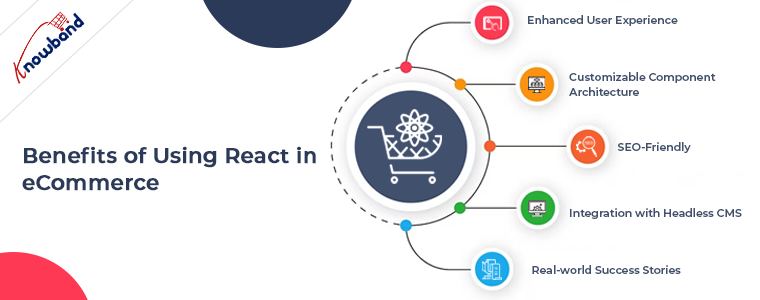
Benefits of Using React in eCommerce:


Enhanced User Experience:

User experience is the cornerstone of successful online retail. Not only React aids developers in creating highly interactive and responsive user interfaces. But, also ensures a smooth user experience for the front-end users.
Moreover, with features like Virtual DOM, React ensures that any changes made on the webpage don’t affect the entire structure. Instead, only the required components are updated, leading to faster and smoother performance. This means shoppers can enjoy quick page loads and real-time feedback, significantly enhancing their browsing and shopping experience.

Customizable Component Architecture:

React’s component-based architecture is a game-changer for eCommerce sites. It allows developers to build encapsulated components that manage their state and then compose them to make complex UIs.
Therefore, for retailers, this means they can easily customize and reuse components across different parts of their application. Whether it’s a product display grid, a checkout form, or a search bar. This modularity not only speeds up development and maintenance but also ensures consistency in the look and feel of the online store.

SEO-Friendly:

In the competitive realm of online retail, being visible to potential customers is crucial. Thus, React’s ability to render on the server side (using Node.js) makes it SEO-friendly.
Moreover, it means that the content of a React-powered website can be indexed by search engines more effectively, improving the site’s visibility and ranking.

Integration with Headless CMS:

The concept of a headless Content Management System (CMS) is gaining traction in the e-commerce world. It separates the front end (what users see) from the back end (where content is stored) of your website. Thus, React is particularly well-suited for use with headless CMSs.
Retailers can also use React to build a dynamic front end that pulls data from the CMS. This approach allows for greater flexibility, faster performance, and a more personalized shopping experience.

Real-world Success Stories:

Many leading eCommerce giants have already embraced React to revitalize their platforms. For instance, Airbnb has leveraged React’s capabilities to enhance its booking system.
Similarly, Netflix has utilized React on its platform to ensure a fast, smooth, and engaging user interface that keeps millions of users worldwide glued to their screens.

Conclusion!

The amalgamation of React and retail is a testament to how modern technology can revolutionize traditional industries. React’s ability to create dynamic, fast, and SEO-friendly applications makes it a formidable tool in the eCommerce arsenal. As businesses continue to strive for better customer engagement and sales, React stands as a beacon of innovation, guiding the way toward more interactive, efficient, and successful online retail experiences.
Furthermore, at Knowband we also provide React development services. If you have requirements/queries regarding your project, feel free to get in touch with the team at the official email address support@knowband.com.


Troubleshooting Common PHP Issues in eCommerce Platforms by Knowband!

In the rapidly evolving world of eCommerce, PHP stands out as a robust scripting language that powers many online stores and platforms. It’s favored for its flexibility, simplicity, and wide-ranging capabilities.
However, like any technology, PHP is not immune to issues, especially when integrated with complex eCommerce platforms like PrestaShop, WooCommerce, OpenCart, and Magento 2. Here, we’ll delve into some common PHP issues and provide strategies for effective troubleshooting.


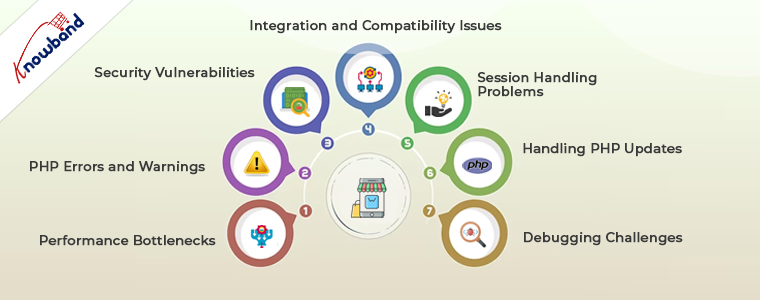
1. Performance Bottlenecks:

One of the most frequent challenges faced by eCommerce platforms is slow performance, often due to PHP scripts. Furthermore, long load times not only frustrate customers but also negatively impact search engine rankings. Thus, it becomes important to optimize the website from the loading speed perspective as well.

Solution: To resolve loading speed-related errors, you can optimize your scripts by using PHP accelerators like OPCache. Regularly profile your code with tools like Xdebug to identify and resolve performance bottlenecks. Furthermore, you can also consider leveraging efficient caching mechanisms and optimizing database queries.

2. PHP Errors and Warnings:

Errors and warnings can disrupt the user experience and indicate underlying issues with your code. Common problems include undefined variables, syntax errors, and deprecation warnings.

Solution: To address this kind of error, enable error reporting during the development phase by setting `error_reporting` to E_ALL. This practice helps catch issues early. Use a version control system to manage updates and rollbacks safely, and always test code in a staging environment before deploying it live.

3. Security Vulnerabilities:

Security is paramount in eCommerce. Furthermore, not only for the store admin but also for the store visitors, security plays an impactful role. PHP, being a server-side script, is a frequent target for attacks like SQL injection, cross-site scripting (XSS), and session hijacking.

Solution: Always sanitize and validate user inputs. Employ prepared statements with PDO or MySQLi when interacting with databases. Moreover, it is also recommended to regularly update your PHP version and use security tools like Suhosin and mod_security. As a basic practice, you should always implement HTTPS and secure user sessions to protect sensitive data.

4. Integration and Compatibility Issues:

Integrating PHP with various APIs and third-party services is common in eCommerce for functionalities like payment gateways, shipping, and inventory management. However, compatibility issues can arise due to different API standards or outdated libraries.

Solution: Regularly update your PHP libraries and APIs to the latest versions. Adhere to best practices for API integration and ensure thorough testing is conducted with each update or addition. Therefore, if issues persist, consider consulting with the service provider or community forums for specific guidance.

5. Session Handling Problems:

Session management is crucial for tracking user activity and preferences. However, issues like session data loss or mismatches can occur, which can lead to cart abandonment or incorrect data processing.

Solution: This type of issue can be handled by Using a reliable and scalable session storage solution, especially if you’re handling a high volume of users. Moreover, you should regularly clear old session data to prevent overload and configure your PHP environment to handle sessions securely.

6. Handling PHP Updates:

PHP regularly releases updates that improve performance, add features and patch security vulnerabilities. However, updating PHP can sometimes break existing functionality if your code or extensions are incompatible with the new version.

Solution: Before updating, thoroughly test your site in a staging environment with the new PHP version. Check compatibility with all plugins and extensions. Read through PHP’s migration guides for insights into potential issues and new features.

7. Debugging Challenges:

Effective debugging is essential for maintaining a smooth and functional eCommerce platform. However, diagnosing issues in complex PHP Language/ code can be daunting.

Solution: Utilizing comprehensive debugging tools like Xdebug, which provide features like stack traces and variable display can help a lot in these situations. Implement logging mechanisms to capture errors and unusual behavior in production. Also, consider adopting a modern IDE that offers advanced debugging features.

Conclusion!

Troubleshooting PHP issues in eCommerce platforms requires a systematic approach and a deep understanding of both the language and the specific platform you’re using. Remember, the key to successful troubleshooting is proactive monitoring, regular updates, and a community-driven approach to problem-solving. With these practices, you can ensure that your eCommerce site remains a reliable and powerful tool for your business.

Furthermore, at Knowband along with eCommerce extensions, we also offer custom web and app development services. Thus, in case you have project requirements or queries, you can contact the support team at support@knowband.com or we are also available on Calendly for discussion.