Top Examples of Robust Progressive Web Apps (PWAs) developed by KnowBand

Are you looking for a Progressive Web Applications (PWA) solution for your eCommerce website? PWA app looks very similar to mobile applications but they are certainly different. In reality, they work on browsers and provide us with an app-like experience. You’ve most likely visited PWAs before without even realizing it.

Progressive web apps are all designed to work with any browser that sticks to the relevant web standards. The aim, as with other cross-platform solutions, is to make it easier for developers to create cross-platform apps than native apps.  Google Developers claims that!

This article is a compilation of some exclusive examples of Progressive Web App (PWA) developed by KnowBand. The PWA uses as little data as possible to provide a smooth and quick browsing experience.

1. We Are Whisky

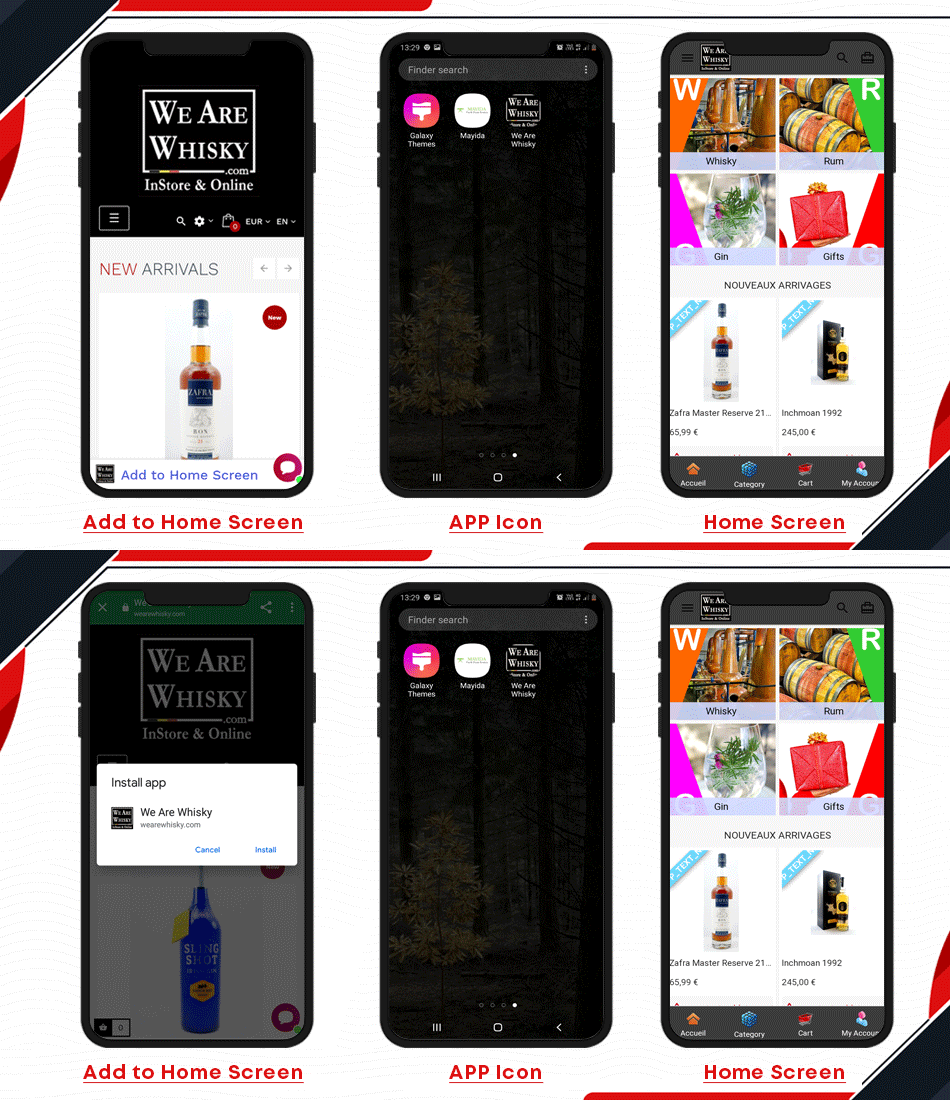
The We Are Whisky website has an App-like interface. To the user, it feels like an app, with app-style interactions and navigation. PWA employs progressive improvement concepts that work with all users, regardless of browser preference.

The Progressive Web App developed using KnowBand Plugin is responsive! It works on every computer, including desktop, mobile, tablet, and future types.

The website URL has HTTPS which is used to avoid snooping and ensure that the content isn’t tampered with.
2. Betty fresh

For a PWA, after the initial loading is complete, the same content and page elements do not need to be re-downloaded each time. Web caching in browsers, on the other hand, will prevent redundant loading of static elements on standard HTML-based pages.
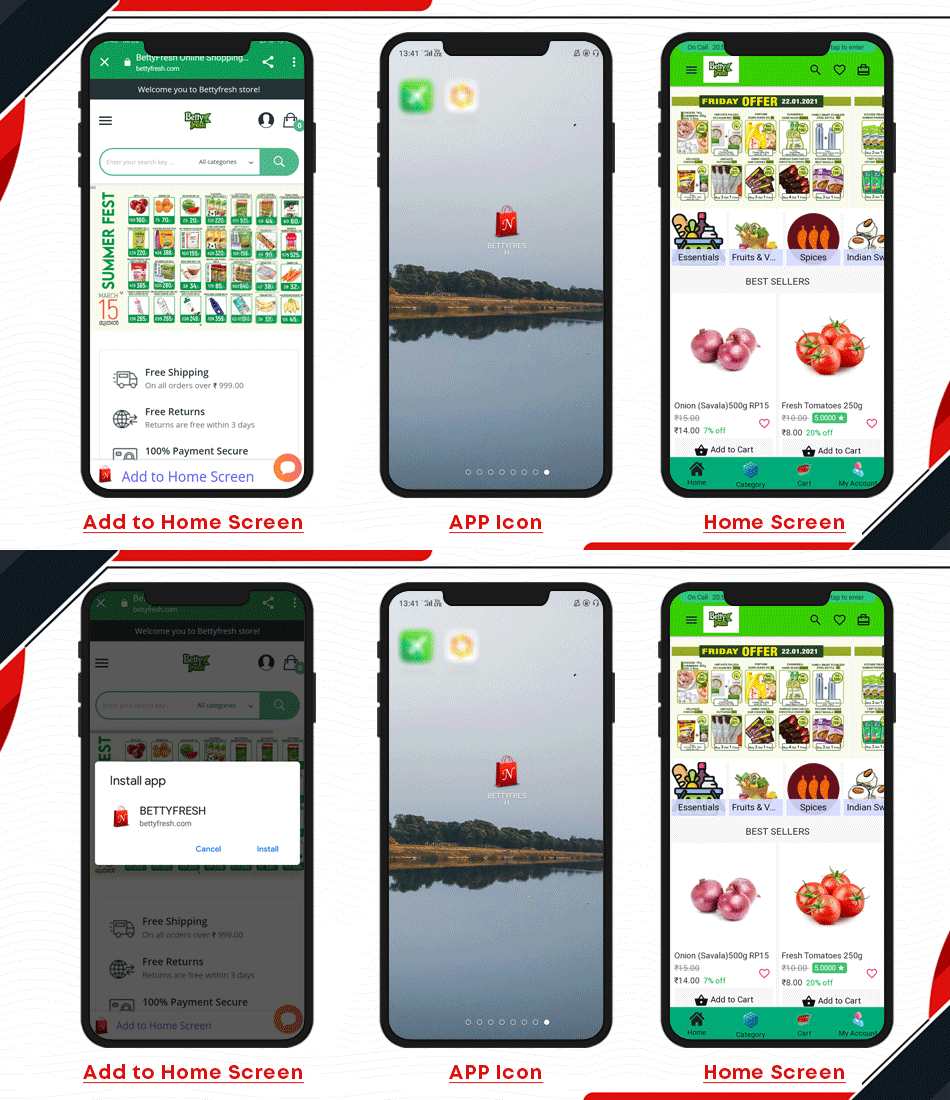
Admins can easily add desired graphics and redirects to their banners and sliders using the KnowBand Progressive Web App. By strategically highlighting certain items and banners, you can improve the user experience.

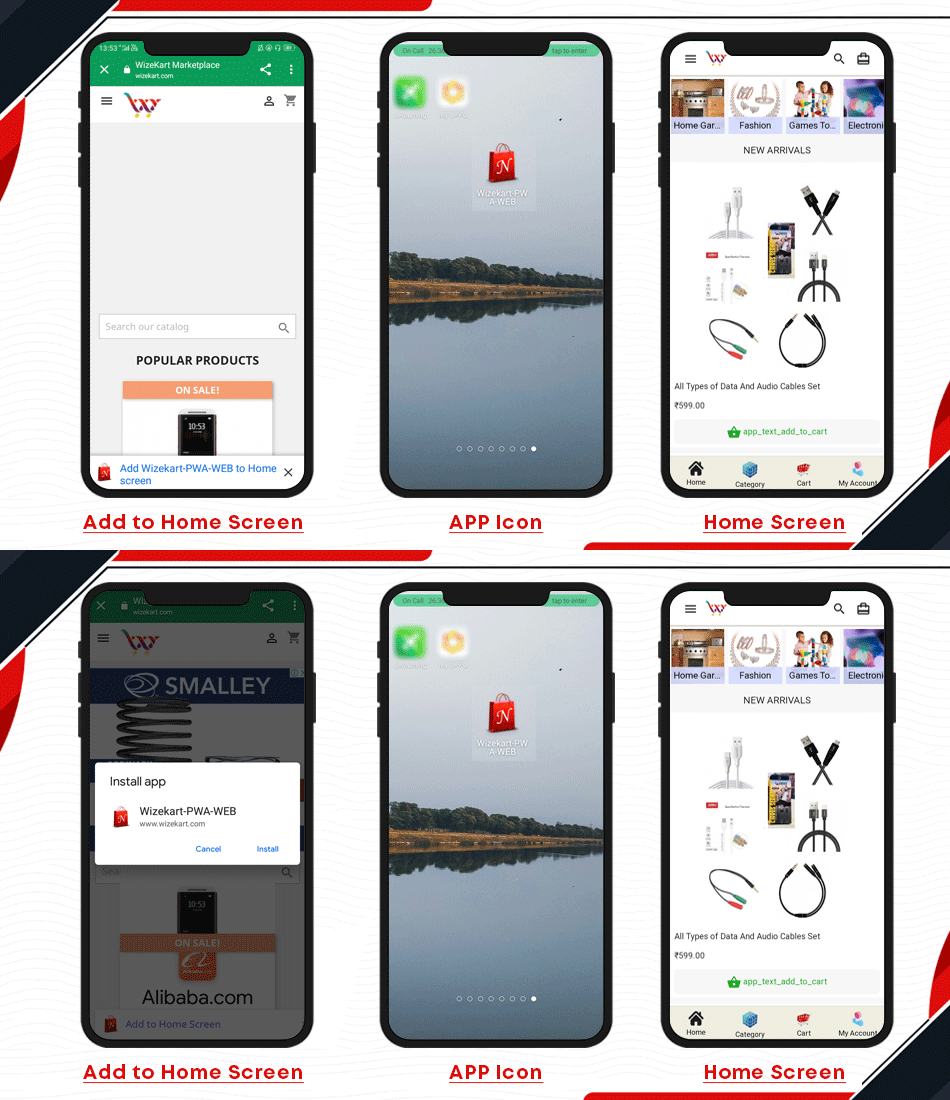
3. Wize kart

It provides home screen icons without requiring an App Store subscription.

Thanks to the upgrade process, the app be always up to date.  The ability to use push alerts to keep users engaged.

And when there is no or slow internet connection, the PWA apps function flawlessly. The app is available to app users even while they are offline due to cached data and previously loaded pages. Push notifications, for example, are useful tools for re-engaging app users.
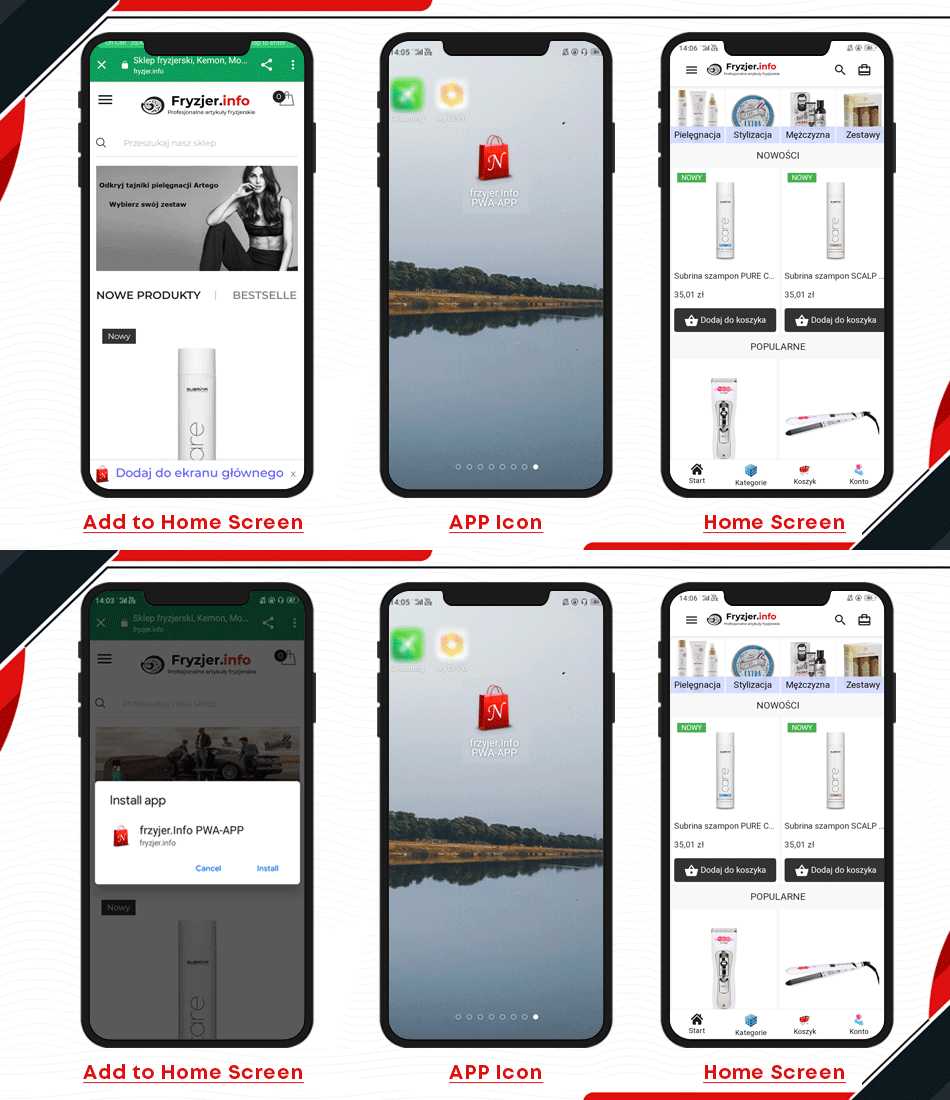
4. Fryzjer

Users of the KnowBand PWA App will log in easily using their Google or Facebook accounts. Such one-tap onboarding options save time and effort while improving the user experience. The most basic form, namely registration/login via email, is also included.
 

Run several sales and discounts focused on current events, holidays, and so on. On the home screen, use intuitive campaign graphics to enable users to make more purchases. The administrator may also use a countdown banner to run timer-based sales and generate a sense of urgency for the sale.

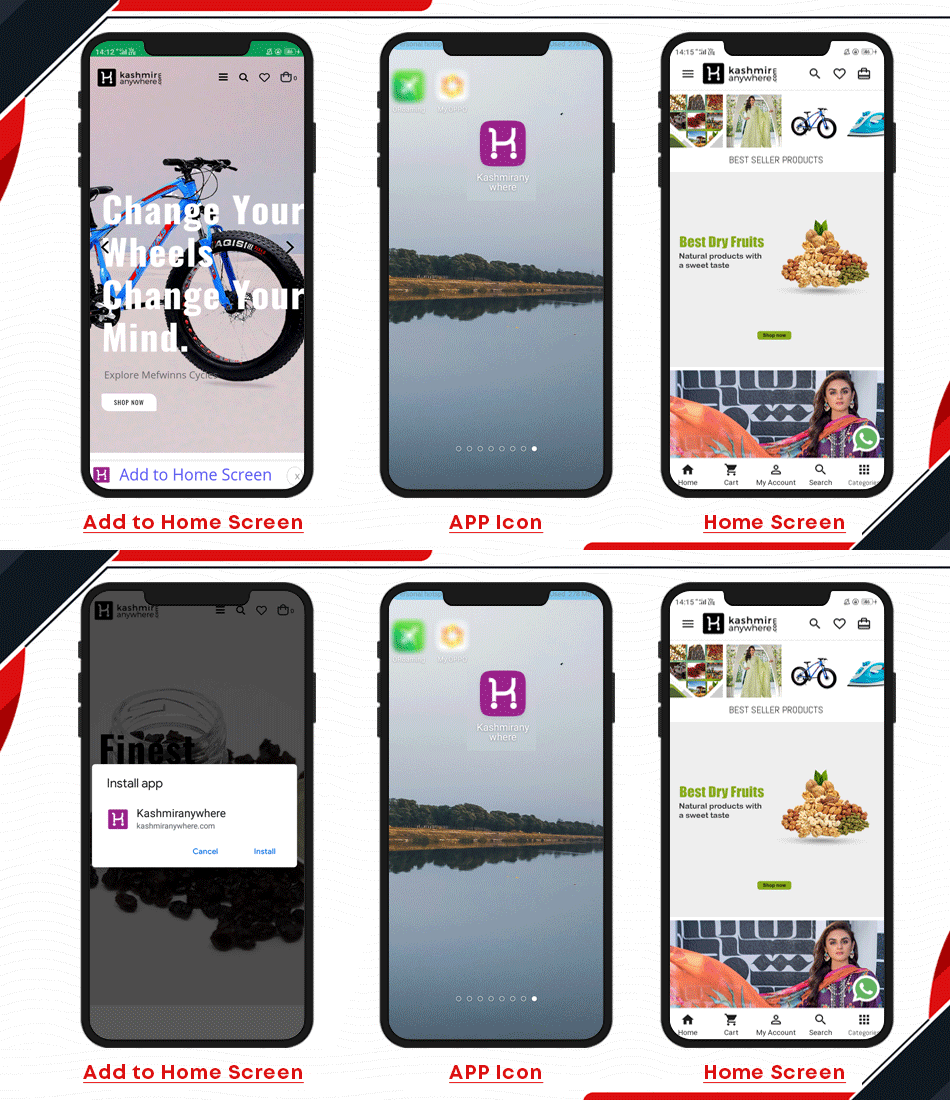
5. Bony Licores

The Progressive Web App developed for Bony Licores allows app users to share their favourite items with their friends and family. Also, provide incentives when sharing on various social media platforms.

Offer a more refined product search and category views with in-built sorting and filtering options to meet the needs of each Progressive Web App user. The user-friendly navigation bar is also well-organized to make surfing easier.
The PWA App users can keep track of previous app orders with real-time order status updates. The order status is automatically synced with the store and modified as required.

The PWA developed by licores bony is multi-store compatible!

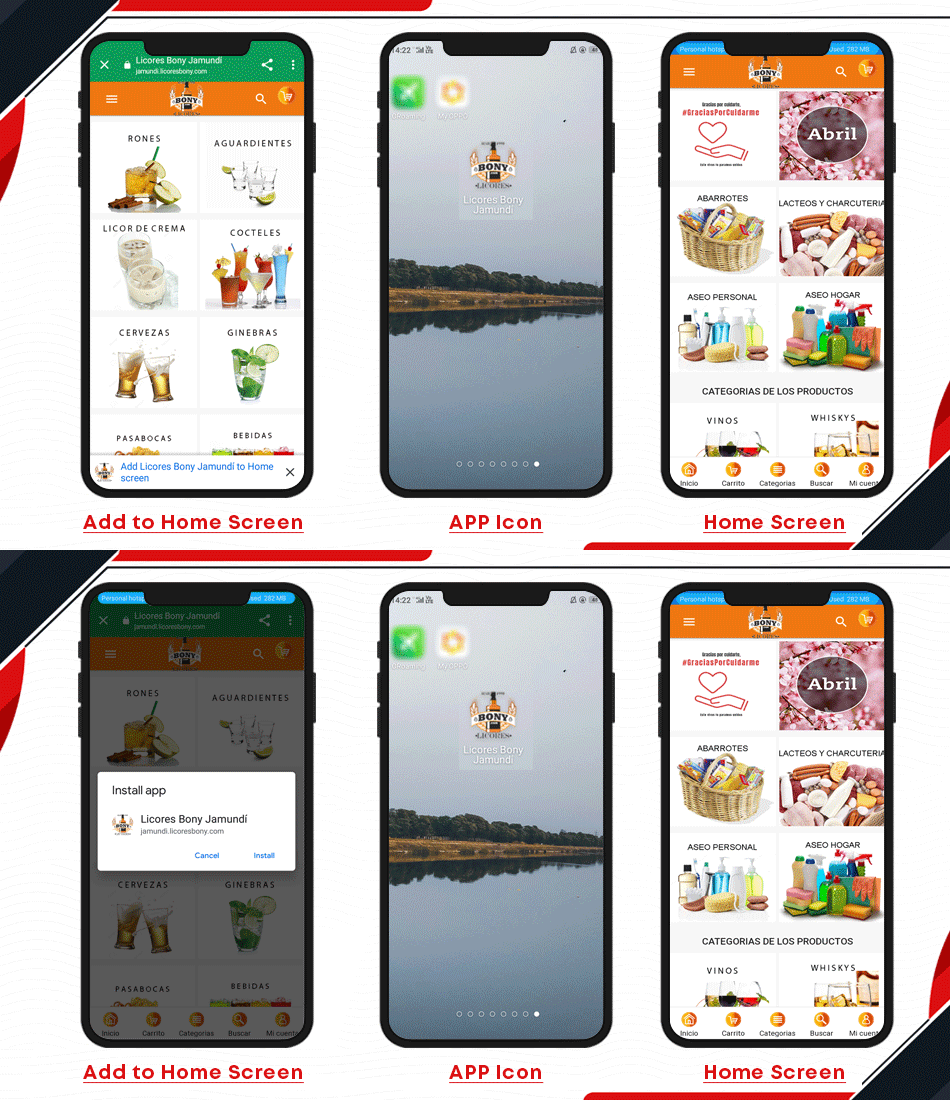
6. Kashmir anywhere

The App Shell Model is an architectural approach used by some radical web applications. In this model, PWA saves the sensitive web design web application’s Basic User Interface, or “shell,” in the browser’s offline cache.

All Payment Options Are Accepted: All of your website’s payment options will work with KnowBand Progressive Web App as well. All PWA app transactions are synced with the order section of your website.
The PrestaShop Progressive web application includes a built-in single-screen checkout page that only asks for the information that is needful.

Do you have more queries regarding PWA App?

The Progressive Web App automatically syncs the entire inventory/catalogue of the website. Moreover, there is no need for manual application maintenance. All inventory adjustments are in real-time synchronization. Some of the best features of the PWA app are as follows:

  • No secret fees or subscriptions | One-time payment Validity for a Lifetime
  • It is to be noted that it can be shared easily via a URL and does not require a complicated setup.
  • You can showcase similar goods to increase cross-selling and up-selling opportunities.
  • Showcase product reviews to help mobile shoppers make better purchasing decisions.
  • Zendesk and WhatsApp chat is built-in, allowing users to communicate directly with the admin.
  • There is no reliance on Google Play or the Apple App Store. Start shopping after a quick PWA installation with just one tap.
  • KnowBand PWA is compatible with KnowBand’s Multi-vendor Marketplace addon.

Support:

Convert your eCommerce website into a PrestaShop PWA Mobile App and enable your mobile visitors to shop with ease. Fully customizable DIY editor to adjust the look and feel of the live home screen!

If you were looking forward to a PWA that can be reliable, responsive, and robust, we are ready to help! Contact our expert team at support@knowband.com and discuss your requirements.

Recommended Reads:

Top Four Mobile Commerce Trends Every Retailer Should Know in 2020

No one can deny or ignore the paced growth of eCommerce (retail) industry. With Mobile Phones stepping into the online commerce, the trends of online shopping has fully revamped. With the growing use of smartphones & mobile devices, m-Commerce has grown exponentially in the past decade. Almost every eCommerce business has released their own mCommerce shopping apps by now. So, to be relevant and to be ahead of the competition in the market, e-retailers must be aware of various mCommerce trends.

Although, we all are aware of the growth in smartphone usage and mobile apps preference when it comes to online product purchase. Yet, not all the e-merchants are achieving its full advantage for the online business. Mobile Commerce is a must have for every eCommerce website in 2020. The more you delay, more sales and conversions are losing. Taking your website business to the mobile platform isn’t any sort of luxury anymore, but merely a basic necessity. Don’t go for my word, just take a look at the below statistics:

In year 2017, the mobile eCommerce sales accounted for around 34.5% of total eCommerce sales. [Source: Statista]

By the end of 2021, the growth in this data is expected to be 54% of total eCommerce sales. [Source: Emarketer]

In this write-up, we will elaborate the top 4 eCommerce trends that have been extremely useful for the store owners.

#1. Multi-Platform Shopping Applications

Targeting both Android and iOS smartphone using audience will definitely bring more conversions for you. Offer a pair of native mobile apps for eCommerce website and let users shop from the applications as well. Native eCommerce Mobile Apps are the ones that are published on the app stores (Google Play Store & Apple App store). With a featured shopping app, the users won’t be just limited to the browsing products but keeping them everything available at their fingertips will increase more sales.

Choose a reliable ready-to-launch Mobile App Builder and get everything ready in 2-3 days. The readymade eCommerce Mobile App Maker extension allows the store admin to create apps without any coding or programming. Nor they need to hire a programmer and spend a huge money for the same. Just purchase the right plugin for your eCommerce and rest everything will be automatically handled from creation to publishing on App stores.

PrestaShop Mobile App Builder

OpenCart Mobile App Builder

Magento Mobile App Builder

Magento 2 Mobile App Builder

WooCommerce Mobile App Builder

#2. Progressive Web Application (PWA)

E-Commerce Progressive Web Apps are the ones that are made live on the website (of the store). Whenever mobile website visitors visit a PWA active website, they see a button/tab which says ‘Add-To-Home-Screen’. Upon clicking it, the PWA mobile app gets instantly installed on user devices. That’s it, now the Progressive Web App will work like any other shopping application.

There are a few readymade extensions have the capability to provide fully customizable mCommerce PWA App for online store. The store admin get a very admin friendly dashboard from where they can edit and manage mobile app, send push notifications, etc. These days, to reach out to all possible target audiences, most eCommerce businesses are utilizing both native (Android and iOS) & PWA mobile apps.

PrestaShop PWA Mobile App

OpenCart PWA Mobile App

Magento 2 PWA Mobile App

WooCommerce PWA Mobile App

#3. Multi-vendor Marketplace & Seller Applications


Store owners that wish to have multiple sellers on the store usually opt for a complete package of Multi-vendor marketplace website and mobile applications. This process is simplified by Advanced Multi-vendor Marketplace with Mobile App extensions. Check out them from below links:

PrestaShop Advanced Marketplace with Mobile App

OpenCart Advanced Marketplace with Mobile App

Magento Advanced Marketplace with Mobile App

Magento 2 Advanced Marketplace with Mobile App

Using these, store owners instantly convert their store into full fledged marketplace & mobile app. On such a marketplace, store owners get a very optimized admin panel which let’s them manage every thing like-

  • Vendor Management
  • Seller Request Approval
  • Seller Commission Management
  • New Category Request Approval/ Disapproval
  • Tax Rule Settings
  • Rating & Review Management
  • Seller Order Tracking & Management
  • Sellers’ Transaction Tracking
  • Payout Management

All of the approved sellers on the store get their own unique vendor panels on which they can get following features:

  • Manual & Bulk Upload of Products
  • Order Management
  • Order Tracking
  • New Category Request
  • Commission Based Payout & more.

#4. Digital Payments & Transactions:

There was a time when online shoppers hesitated to make online payments & always opt for ‘Cash On Delivery’ options. But with the passing time & advancements in technologies & cyber securities, more & more shoppers have started to prefer digital payments over other options. In fact, nowadays the users first approach is to choose mobile payments over other options.

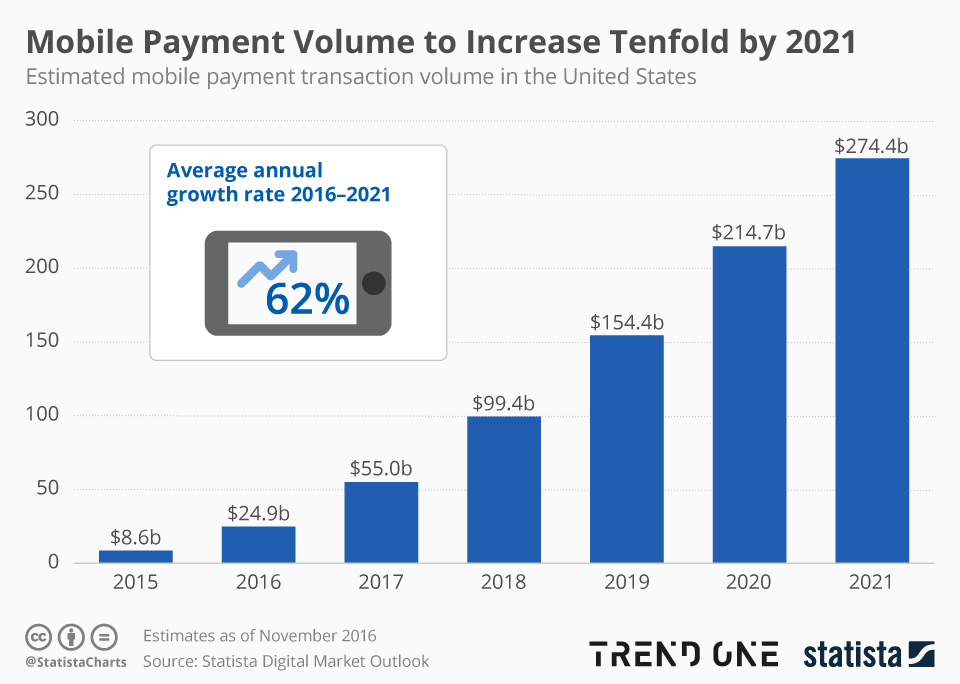
And reason is pretty simple for that. Mobile Payments offers much seamless and quick medium to pay for online product purchase. Just a few taps and the money is paid. Over the past few years, various advanced digital payments have been introduced in the market like e-wallets, Apple Pay, Google Pay, Braintree, Stripe, PayPal, Bank transfer etc. The eCommerce store owners can now opt for any payment options on their website and mobile application. As per Statista, mobile payments is expected to increase tenfold by 2021.

Its good to have e-wallets and UPIs integrated in eCommerce Mobile Apps. The users shopping through mobile applications (Android or iOS or PWA) can choose their preferable option to pay and make secure transactions. So, for businesses who have already stepped into mobile commerce or looking for a way to do so, choose a solution offering various digital payments to cater all sorts of mobile using audience.

Closing Comments

These were a few examples of how online shopping behavior is transforming. The store owners who are running their business on online eCommerce platforms should be in check with these trends. Ignoring the need of eCommerce mobile apps will only be a losing factor in matter of sales or revenue or growth.

So, if you are thinking of launching shopping apps for your website, its high time to act upon the same. Check the readymade solutions shared above or discuss more on support@knowband.com. We, at KnowBand offer readymade native (Android and iOS), PWA (Progressive Web App) & Marketplace Mobile Apps for the eCommerce websites build using any of the below platforms: