Motivation is the driving force behind buying decisions, as customers are constantly looking to fulfil their needs. It promotes impulse buys, constant engagement with your brand, and makes them more likely to want to learn more about you.
If you could know precisely why a prospect is looking to buy, you would have no trouble tailoring an appropriate sales plan to suit their desires and inclinations. If you could consider the motives of your customer, you will never miss out on a contract.
Even though telepathy isn’t real (as far as we know), there are still ways to sense the underlying buying motivations that motivate most purchases. To influence the buying decision, you must produce a greater justification for them.
Understanding Buyer Motivation:
Consumers do not come in one form. People have several reasons for buying any product or services:
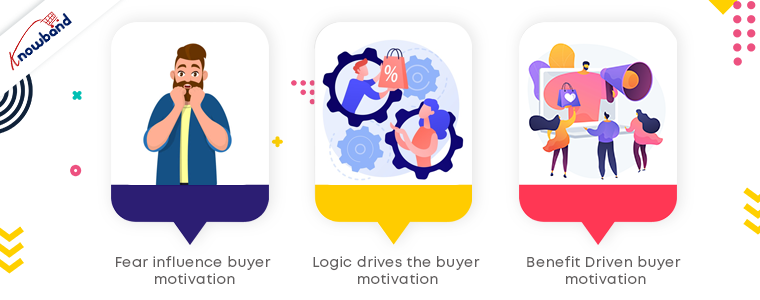
Broadly we can classify the buyer motivations in three different types:
1) Fear influences buyer’s motivation
The most strong of the three B2B buyer motives, fear, will be the driving force for the next few months or the whole year as companies and governments continue to follow their ‘defend,’ ‘diversify,’ ‘disrupt’ and ‘fast-track’ strategies. Consumers and businesses alike have built-in fears about parting with their capital.
2) Logic drives the buyer motivation
Unfortunately, the weakest from a motivational point of view, reasoning buying is about business sense and is dedicated to developing and building on a place to prevent being irrelevant. Logic purchasing is proactive and intentional.
3) Benefit Driven buyer motivation
This buying style is best aligned with the years leading up to economic downturns, such as the GFC, or the time immediately before the deep recession that the world is experiencing as a result of COVID-19. Benefit-driven buying boosts development or pushes the brand’s ‘feel good’ position. Organizations and individuals had ample resources at their disposal, and little concern or danger if it did not take place.
Let’s examine these and explore the buyer motivation prevalent in B2B and B2C buyers.
Psychological Reasons that Motivates a Buyer
1) The desire for financial gain
Emphasizing these gains and how they apply directly to the decision-maker will make a major difference to a sales call. The more adept the telemarketer is at explaining these advantages, the more likely it will be to overcome the fear of failure in the decision-mind.
2) Convenience and comfort
They want the comfort and convenience that a service or product can offer. They want to experience the pride and ownership of a commodity, or they can buy to fulfill the needs of love and ego. The prevailing purchasing motive may be the comfort and convenience of a new layout and new cupboards.
3) Security and safety
A desire for protection or security is a significant reasonable purchasing motive that affects many purchases. For example, iron safes or safety lockers are purchased by people because they want to protect their cash, jewelry, etc. against theft. Protect your website from spam and bots and do not forget to take the SSL certificate.
4) Pride of ownership
Pride of ownership is a psychic term. Psychologically, others feel better about buying rather than renting. Typically this is illustrated with good care of the house, but not always.
5) Pleasure or Recreation
Desire for fun or enjoyment is often one of the emotional motivations for buying. For example, radios, musical instruments, etc. are purchased by people because of their desire for fun or enjoyment.
6) FOMO- Fear of missing out
FOMO (Fear of missing out) refers to the feeling or belief that others are having more fun, living better lives, or experiencing more than you are. It involves a strong sense of jealousy, and it affects self-esteem.
7) Impulse buying
Personality, enjoyment, and product associations can all contribute to impulse purchases. The purchasing of impulses is normal behavior today. Our culture of consumption allows us to succumb to temptation and to purchase something without taking into account the implications of purchasing something.
Other reasons:
You’ll find that the amount of acts you want to take is quite a few. You’re probably going to want someone to subscribe to your newsletter, get a free sample, suggest a friend, or most of all, buy something. Whatever the action, give attention to it, get interested, create desire, and then ask for action. Ask customers to take the action! CTAs can help.
If you want them to click on it, put it down simply. If you want them to buy, please ask for the sale very clearly (as in “Buy Now”). Much of the sales are missed at the last moment because no one has asked the customer to purchase them. Don’t be shy, then. Ask for the step to take.
Patronage buyer motivation
Patronage buying motivations are the reasons why a consumer prefers one store or service provider over another. These buying motives are considerations or reasons why the shopper would want to patronize a certain retailer instead of another retailer while purchasing a product or service.
Emotional patronage of purchasing reasons includes:
- The appearance of the store/location/UI
- Product Display
- Recommendation from others
- Imitation or emulation
- Habit
- Prestige
Buying motive is the driving force behind what makes your consumers decide to buy on your platform.
Engaging with them at every point of their journey, understanding the right psychological factors at play, and being able to know yourself and how to place your goods on the market correctly complete this image.
How to find Buyer Motivation
Pay attention to the type of traffic and the platform it is coming from.
Where’s the traffic coming from?
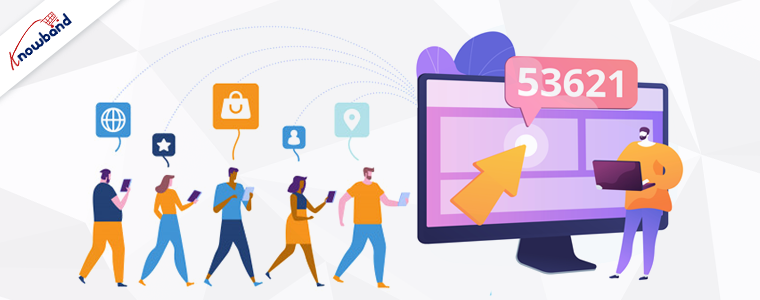
Knowing where your customers have found you online is one of the key factors of how you can decide what they’re purchasing. Start by defining the acquisition or marketing channels from which you get the most traffic volume.
What are the consumers’ demographics?
The social aspects of your customers are also essential sources of inspiration for the purchaser. Demographics such as age, gender, and location would immediately give you some insight into who and what your customers are and their potential purchasing motives.
What items are most of the customers browsing?
Keep your eye on Google Analytics reports and other marketing campaign analysis data. These detailed reports help you understand the customer’s behaviors and when are they converting.
Conclusion:
To make the most of this sales strategy, telemarketers need to consider the motives of the prospect as clearly as possible. This is the product of opening a discussion early in the conversation and building up a relationship with the decision-maker. The more effective telemarketers can do this the more convincing their calls will be.
Making a few small improvements to your telemarketing strategy can have a huge effect on the results you achieve. To find out more or to learn how we can help you improve the efficiency of your calls, visit our site – or get in contact with a member of our expert team.