Why Competitor Analysis is Important for an eCommerce Store

Competition is a good thing all the time. This forces us to do our very best. A monopoly makes individuals complacent and happy with mediocrity. You will build a more knowledgeable and efficient marketing strategy if you know how to carry out a competitor analysis. Researching the industry’s rivals lets you see the business environment clearly, where your brand fits in, and what you need to do to stand out and thrive.

What is competitor analysis?

It is simple to understand from the term itself but practically it includes a lot of research and evaluation of your rival’s business strategies.

A competitive analysis is a research method that shows who your rivals are and how your brand is relative to their goods, positioning, strengths, and weaknesses. It’s an analysis that explains you following things from the competitive study, such as:

  1. Identifying your opponents and judging them
  2. Evaluating their strategies
  3. Their strengths and vulnerabilities
  4. Take business decisions that help to beat them
  5. How to compare them to your business?
  6. What amount of brand recognition in your market do your rivals have?

Find their rates, earnings results, share prices, best practices for customer service, cutting business, distribution, and a whole lot more.

Why do competitor analysis?
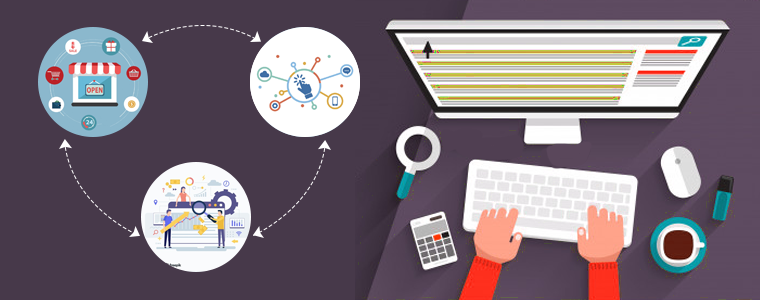
With competitor analysis, you will be able to improve your own marketing plan. In the industry, you can also find opportunities that rivals have missed. You’ll discover new areas of opportunity that your competitors are proving popular, that you’ve missed. For example, you should target countries that are working for them.

Our products have helped shape a lot of companies with eCommerce platform plugins like the marketplace, social networking, SEO wizard, etc. We helped many dreamers to start their own business apart from that. We know how to start a company with eCommerce and how to be a top performer. And one of the most important of these was doing competitor analysis.

Today, eCommerce means rivalry cutthroat. For a single moment, you can’t afford to lose concentration. If you don’t constantly keep track of your rivals, you’ll unexpectedly start losing clients one day and you won’t even know why.

Doing regular competitor analysis does not only give one an advantage over rivals for an eCommerce company, it is a must-do to remain in the race and make a constant profit from your business.

How to do a competitor analysis?

We put together this guide to help you learn how to do a competitive analysis that explains what to do during each phase, what competitor analysis tools you can use to discover the details, and how to use the data to guide your marketing strategy.

  1. Identify your competitors
  2. Compare positioning in marketing
  3. Compare the traffic and efficiency of sites
  4. Make a comparison of keywords
  5. Compare Voice Share
  6. Backlinks comparison
  7. Compare the efficacy of SEO

There is no foolproof advice to make the right one for your competitor analysis. Instead, it focuses on the sector in which your company is.

Popular competitor analysis tools

After knowing the importance of competitor analysis, the question that arises is how to do this? Are there any software or tools that can help? It is easy. There are various famous competitor analysis tools for different niches.

To compete with the competitors you must use the most efficient tools for business analysis. Some tools can assist you with competitor analysis for SEO, content, keywords, and social media. Let’s dive deep into the popular competitor analysis tools.

1.     QuickSprout

To learn about sites similar to yours and to find out how to outrank them, use the QuickSprout competitor research app.

When using this method, the one thing to bear in mind is that the reports can take time to load. Usually, the competitive analysis tab loads within 60 seconds, and it typically takes 90 seconds for the social media report.

2.     SEMRush

Analyze the top organic and paid keywords, backlinks, and more with SEMrush from your rival. SEMrush is a flexible tool that allows you to perform competitive research on any domain name and to use the knowledge to optimize your campaigns. This instrument allows you to do four significant things:

  • Keyword Analysis
  • Study of Competitor
  • Audit of Web
  • Study Backlink

3.      Google Advanced Search Operators

Google Search Operators is a competitive audit tool that lets you find just what you’re searching for if you want your search terms to be changed easily and efficiently.

Google Search Operators are also query terms or symbols that you use to trigger specific actions and send you the most important search results. When making blog posts or searching for the most accurate data, I use these search operators every day.

4.    Ubersuggest

Ubersuggest makes it simple to easily dig up and analyze

  • Top keywords
  • Backlinks and where they come from
  • Top ranking pages

And if you do so, with the idea of outranking your competitors, you can change your strategy.

5.      SpyFu

Learn the PPC keywords and SEO tactics of your opponent, scan and download their keywords. An awesome analysis tool for Pay-Per-Click. To enhance your SEO results, it shows you the paid keywords that rivals are targeting, as well as the organic search keywords.

6.     SimilarWeb

See from where the rival gets its traffic, what the sources of the traffic, and its audience’s demographic are. You can reliably guess how many unique visitors your competitors produce every month with SimilarWeb. It is used by top brands because it is flexible and offers one of the most precise sets of insights on any given site.

7.     BuzzSumo

Buzzsumo is a fairly common monitoring tool for social networks that helps you find the most shared content by entering the domain for a given subject or competitor. In Buzzsumo, just use your industry keywords to see what kind of articles get the highest social interaction score. It is a realistic tool for producing viral content and making viral headlines.

8.     Alexa

Alexa is a corporation owned by Amazon. It was founded in 1996 and has a long history of offering in-depth analytical insights to compare and optimize companies on the internet. Get detailed statistics and analytics on web traffic using Alexa.

9.     Google trends

Using Google Trends, find when and where your competitor is being listed on the web in real-time. Google is, without a doubt, the world’s most used and useful search engine. Google Trends is a website by Google that analyzes the popularity across different regions and languages of top search queries in Google Search. The website uses graphs to compare, over time, the search volume of various queries.

10.        Siteliner

You need ties when it comes to improving your search rankings. Between external links and Google rankings, there is still a connection. To search for broken links from any site, use Siteliner and then assist the site to repair it by pitching your link as a substitute for it.

Wrap-up: It’s not going to happen immediately. It’s a continuous phase. Doing a periodic analysis of rivals will give your business the edge it needs to outsmart the competition. Learn and watch. Installing monitoring to monitor your progress – Google Analytics, SEMrush, Moz, Webmaster Tools. With QuickSearch and Talkwalker Warnings, observe your competitors and industry. See what works and what doesn’t.

Recommended Read:

How to Start Online Clothing Business- Complete Guide

Are you planning to start your own clothing business online? Well, thanks to the innovators and web developers. Now you can start an online merchandising business with minimal cost without any physical brick and mortar store.

Online clothing business is an opportunity if you are looking for a breakthrough idea. Strategic planning, the right approach, and excellent marketing can make you a dominator in the clothing industry.

Finding a good idea to work on is the first step to starting an online clothing business. You’re going to spend a lot of time, probably money, and effort on it, so make sure that you work on something that has real potential to earn you passive income, allow you to leave your job and do it full-time, provide value and use your skills and talents, or else.

You can sell anything like kids’ clothing, designer, vintage, or anything in between. It is now simpler than ever to set up an online clothing store, thanks to the invention of online store builders, such as OpenCart, Shopify, Wix, and PrestaShop, and the best part is you don’t even need to know how to code!

Since you have reached this far imagining about this new clothing business idea, now you require a plan which can help you start your new venture.

Before that starting a clothing business, ask yourself these questions: Are you skilled enough to start this? If you are passionate enough for starting a clothing business? Will you be able to deal with the new situations coming? Is it profitable? If your answers are in favor then you are preceding in the right direction.

1.     Choose the business model

It’s time to choose a business model for your online clothing store business, now that you know your niche and have an idea of the types of items you want to sell. Online clothing and fashion stores fall into the following categories of business models:

  • Retail
  • Wholesaling
  • Manufacturing

After choosing a business model, one has to select the type of clothing they want to sell:

  • Fast Fashion
  • Traditional Fashion
  • Custom Personalised Clothing
  • Designer Apparels

Each business model has its pros and cons and your ultimate aim, budget, and skills should be focused on choosing between them.

2.   Launch your Website:

Starting a clothing business online is a profitable business as 80% of millennials prefer shopping online.

It is important to have your website. It’s the only place you can sell clothes online and it’s where you’re going to develop your brand, get traffic, and implement all your knowledge to earn a profit. Your website will always be there, at the heart of your business, no matter how much your business expands over the years, and how many monetization methods you pursue.

A website consists of a domain name (the name of your clothing store website), a hosting provider (the company that provides the server to support online business), and a content management system such as Shopify, OpenCart, PrestaShop, Magento, etc. The online platform is the program that allows you to build an online store for selling clothes, creating content, and adding the product, email marketing, and much more.

For starting a clothing business you need an attractive name that should be easy to remember. You can hire a website development service provider to create the best to compete in this rapidly evolving world of fashion.

3.    Find your Target audience:

There is a target audience for every company, so make sure to do your research before settling on a niche. The more you understand your clients and what they want, the more are your chances of delivering the goods they want.

It isn’t easy to start an online clothing business but if you know your customer and have studied their consumer behavior then you can make this difficult task an easy one.

Start blogging:

I can’t emphasize enough how important content is to your overall online clothing business strategy.

You need to build content in multiple ways to start the online clothing business flourish. Writing blog posts, comprehensive guides, videos, social media posts, podcasts, courses, etc. can support every potential lead. Repurposing content is simple as once you have published a blog post, you can easily convert it into a series of emails, a free guide for your subscribers to download, several social media posts, and what not!

Conduct Online Surveys:

To know your target audience and to understand their demands you can conduct online surveys with free available Google forms or any other means. Surveying before starting an online clothing business has added benefits. For the starter, this can help you in deciding the type of product you can sell in your store.

4.    Build Your Clothing Brand

What shapes your brand is you and everything you do online. You need to make sure your brand is compatible with all the elements of your online clothing business.

It means:

  • Using the matching colors, photos, products, etc. on your web.
  • To build all types of graphics for your clothing brand, use a free tool, and capture interactive pictures of the clothes you want to sell.
  • Create a logo with a tagline to stand out
  • Writing an awesome page about telling your brand story and what you will be selling on an online clothing store;
  • Be on every platform of social media and get involved. That’s a way to connect, build up your followers and generate brand recognition with your audience and other business owners;
  • Capture professional images and add them to your website and social media pages for your product;
  • Ask them for reviews and display these testimonials on your website once you have some clients and email subscribers.

5.    Register Your Online Business

In your country, how to start an online business? You have built the foundation of your brand when your clothing website is launched and you have started making your first cash. That’s something you’re going to need to remember.

It’s an easy procedure to register an online company, but you need to follow your country’s rules. After making the lawful registration for paying taxes you will receive all the required details like company registration number, VAT number, etc.  Start your online clothing company and register it as per your country’s laws.

6.    Design Your Products:

Let’s look at the things in more detail that go into creating a product.

You have to choose any available service provider companies as your fulfillment service to design a product. Assume that you have created your online shop. You all know what it takes for fashion lovers to find something pleasant to wear, so imagine what it’s like to design it. Lots of things to take into consideration:

  • The creator of the designs cannot just imagine but are capable of making it a reality.
  • The survey which you have conducted before setting up your online clothing store will now help you as you know what your target audience like.
  • It is needful to keep an eye on the quality of the product you are going to sell. The cut and material of the garment is something you need to take care of. The fabric you will be using, its stretch and fit, all are important factors to start selling clothes online.
  • For the final result, from A to Z-the fit, the color, the design, you have to be sure about everything. You have to develop a product which makes them buy it. Otherwise, selling isn’t worth it. Before going live, be sure to order a copy.

Read: 8 Things that make a Perfect Mobile Product Page

7.    Master the Marketing and Sales Funnel

Getting your store up and running is the first step, but you will need to market your clothing store to make sure that you start (and continue) selling clothes online.

We highly recommend you marketing your online clothing shop over social media. This is a free and simple way to get out into the world with your brand name.

You can simply allow your customers to like your company on Facebook or follow you on Twitter with share and win schemes, which means they can keep up with all brand promotions, industry news that you can share, and any upcoming deals.

Affiliate and referral programs can help you with spreading brand awareness. It is the sneakiest way of bringing new potential customers. Another marketing tool is email marketing. You can send follow-up emails, promotional emails using apps, email marketing tools, and plugins to your customers who have visited your online clothing store before.

Your online clothing store will be making big bucks in no time at all with these easy, powerful, and inexpensive marketing methods.

It’s time to track success.

Conclusion:

When you start your online clothing store, you’ll need to find the middle ground between your quality standards, manufacturing costs, and making a profit.

Almost nobody is born with the full stack of expertise to start and run a successful business, so make the effort to learn about the pieces that you don’t know as much about, whether that’s how to connect in the fashion world, or how to build a growth-oriented business plan.

Be ambitious, understand your brand, and keep your set-up costs down! Good luck!

Recommended Reads: