How to Cross-sell and Upsell?

You do not always require cold calling or sending the bulk of emails to close a deal or make higher sales. If you know how to Upsell and Cross-sell, it makes your job easy.

Cross-selling and Upselling are marketing strategies that provide you with an excellent opportunity to earn more revenue or make more money from your existing customers. If implemented well, it can boost your sales by a significant margin.

Research says that it is 5-25x times more challenging to acquire a new customer than retaining an existing one. It is because existing customers are already familiar with your brand. If they are satisfied with your products or services, they will likely visit your website again in the future and spend more.

On the other hand, acquiring a new customer is challenging because they have never interacted with your brand before and will take time to get familiar.

This is why Upselling and Cross-selling are considered the best practices to get sales from your existing customers as they give the best ROI.

Let’s dig further and understand the cross-selling and upselling techniques.

What is Cross-selling?

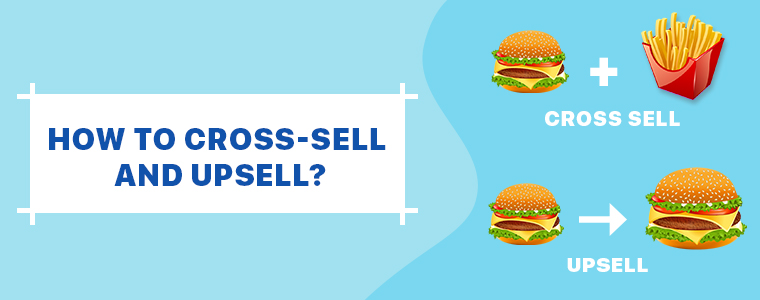
Cross-selling is a tactic to encourage customers to purchase related products along with the primary product. For example, if a customer has purchased or is purchasing an iPhone, he/she can be recommended to purchase Apple Airpods along with it.

This fits well with the product which he/she initially came to buy, right? If they are buying an iPhone, they would love to have Airpods to listen to music which usually costs around 235 USD. This added $235 in the order value reflects cross-selling.

What is Upselling?

Upselling is the marketing tactic to encourage customers to purchase a higher end-product than the one they are primarily purchasing. For example, when you purchase any tool, it usually comes with a basic plan and a premium plan; which obviously has got more features.

The basic plan is set by default during the purchase but you push customers to upgrade to the premium plan to enjoy more benefits; that is Upselling.

Difference between Cross-selling and Upselling

From the above-mentioned definitions, we can conclude that the cross-selling involves pushing customers to purchase products relevant to the primary purchase while upselling involves persuading customers to buy a more expensive or premium version of the product.

This is the difference, but both Upselling and Cross-selling have a similarity, i.e., both tend to increase the average order value.

Studies suggest that Upselling is more effective than Cross-selling as it is easier to convince someone to upgrade to a premium plan than convincing them to purchase a related and new product.

4 Ways to Cross-sell and Upsell

Some of the best practices to cross-sell and up-sell are-

1. Know Your Audience

You may be aware of the buyer persona but it’s important to understand your audience and know them more once they have purchased your product. Analyze their shopping behaviour, use demographic information, and collect their feedback to understand their motives and challenges to present them with the most useful products that you could upsell and cross-sell.

2. Be a Good Listener

When you try to cross-sell or upsell your products or services to your customers over call, make sure that you do not go gaga over it. Customers will find out within seconds that you are just calling to take out money from their pocket if you keep bragging about how good your products are.

Be a good listener. Ask if they had a good experience with their previous purchase. Do not be in a rush to pitch. If they have something to tell, be it a wish, a suggestion or a complaint; listen to it carefully and then mention how your products or services can be helpful for them to get what they want.

3. Provide a Relevant Solution

You need to understand that cross-selling and upselling needs to be done in the right manner, only then it will be useful and bring results. Until and unless what you are offering is helpful to the customers on their current or recent purchase, it would not bring any positive outcome.

Track the customer’s purchase history. Go through their journey. Then review your product offerings and identify how it can provide a solution to the challenges your customers would be facing.

4. Use Remarketing Tactics

Remarketing is the best way to automate cross-selling and upselling and involves minimum efforts. Once you have set up your remarketing campaign, run some ads.

Configure remarketing campaigns across various social networks as that’s where your possible target audience would be.

Through remarketing, customers are shown ads on different platforms about products which they intended to purchase or it can also be used to display some related products which could complement with their recent purchase.

Final Thoughts

Ecommerce websites can use upselling and cross-selling to suggest products based on consumer’s search, clicks and their purchase history.

Knowband provides a few modules that help you encourage cross-selling and upselling on your website, such as Related Products module and Thank You Page module.

Check out the module for complete features and benefits. I hope this article helped you understand the concept of cross-selling and upselling.

A complete guide to Cross-selling and Upselling in eCommerce

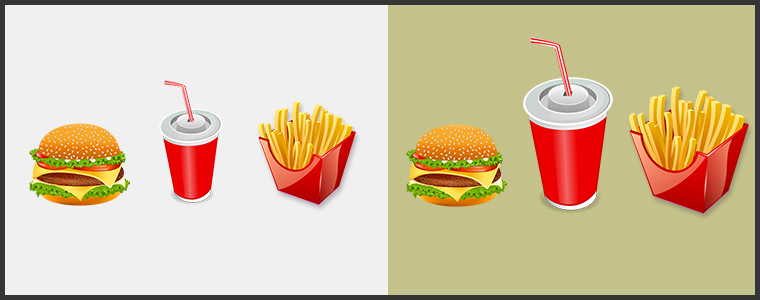
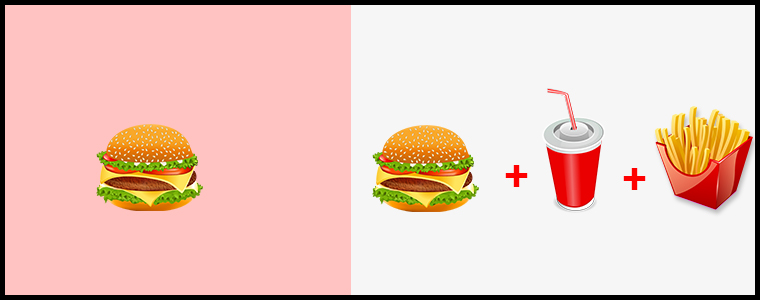
You go to McDonald’s or Burger King. You ask for a Burger but they ask you back in a very polite way “Sir/Mam, would you like to have some fries or coke with it?” This is Cross-selling.

Let’s say you agree to this combo meal which has one burger, regular fries and a small coke. But they ask you whether you would like to have medium or large fries or a large coke. This is Upselling.

A simple definition for these two terms would be-

Cross-selling: It is a practice where you encourage a customer to purchase products related to the one they are already purchasing. These related products are those that add value to the current purchase.

Another example of cross-selling would be buying a screen protector and mobile case along with the smartphone.

Upselling: It is a practice that involves encouraging a customer to purchase a better version of the product they have decided to purchase.

You would have often received suggestions to upgrade your existing plan when buying a subscription for a service. This is another example of Upselling.

Difference between Cross-selling and Upselling

Put simply, the difference between Cross-selling and Upselling is that Cross-selling is making customers purchase products that would seem complementary with the existing product while Upselling is making customers purchase a higher-end product, a product that is slightly expensive than the original one.

Talking about their similarity, both Cross-selling and Upselling intend to bring in more sales and hence more revenue, and at the same time, leaving customers satisfied.

In eCommerce, these strategies are implemented by brands or businesses on the product page so that the prospect can have a look around on the products that could match their purchase before they head towards the checkout page.

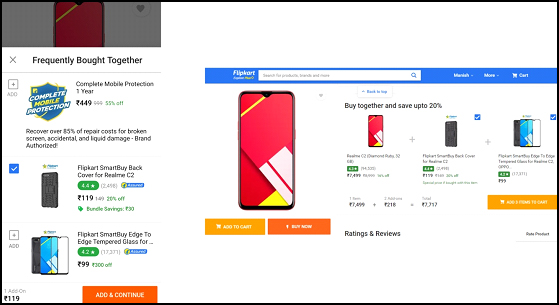
E-commerce giants like Amazon and Flipkart encourage Upselling and Cross-selling on their website by using the terms like “Frequently bought together”, “Similar Products”, or “Customers who viewed this item also viewed”.

Cross-selling and Upselling: Best Practices and Strategies

Let’s try to understand how to make the best use of the Cross-selling and Upselling strategy.

1. Make Sure Products are Highly Relevant

For your Upselling and Cross-selling tactics to deliver positive results, the recommended products must sync well with the product the user is purchasing. If they are not relevant, there would not be any added or expensive purchase. Instead, you will be more likely to turn off the customer.

Knowing what would fit with what product is the foundation of a successful Upselling and Cross-selling strategy.

2. Make it Easy to Add Related Items

Simply displaying similar products would not make an effective cross-selling strategy. Let’s say the consumer wants to purchase related products. Now he or she will need to add each item separately to the cart. This, being a time-consuming process, can often be avoided by the user, thinking they would buy it any other day.

How about making the user purchase related products comfortably, right when they click on the “Buy Now” button?

I like the way Flipkart uses its cross-selling strategy. They simply display a “Buy together and save upto” right next to the product and “Frequently Related Products” popup (on mobile devices) that slides up from the bottom and allows shoppers to add the related items right from that place, hence eliminating the extra efforts required to put otherwise.

3. Offer a Bundle Package

Following the second point, the more convenient approach would be to offer a bundle package of the product and its associated products. And the bundle should be comparatively at a lesser price than the total price of the individual products combined. It creates higher chances of a sale.

Benefits of Cross-selling and Upselling

Let’s take a look at what benefits do Cross-selling and Upselling provide.

1. Increased Sales and Revenue

Since cross-selling encourages customers to purchase similar items, it leads to an increase in the sales count and hence boosts your revenue.

This strategy often helps businesses sell those products which otherwise are gone unnoticed or purchased very rarely.

2. Increased Average Order Value

With both Cross-selling and Upselling pushing customers to spend more than the actual amount, this ultimately leads to an increase in the average order value.

3. Increased Customer Engagement

Customers tend to spend more time interacting with the products on your website when you display the related or better version of the products. They engage more, thus generating higher user engagement.

4. Customer Satisfaction

Upselling and Cross-selling help potential customers in their purchase decision by recommending them products which could go well with their purchase or get even better. This leaves customers highly satisfied after the purchase, hence enhancing the customer experience.

Want to enable Cross-selling and Upselling on your eCommerce website? Try out our Automatic Related Products module.

Automatic Related Products Module by KnowBand

The Related Products module by Knowband helps you perform Cross-selling and Upselling on your eCommerce website. This lets you display best sellers, new arrivals, top visited products and products based on a user’s history, on the Home Page, Product Page, Category Page, Cart Page, etc.

You can specify a limit to the number of products to be displayed and also select the display position. The module is available for PrestaShop and OpenCart. Check out

PrestaShop Automatic Related Products addon

Magento Automatic Related Products extension

If you liked this information on Cross-selling and Upselling, do leave a comment below. And if you need any kind of assistance with the Related Products module, you can reach out to us at support@knowband.com

Read our Popular Posts:

One Page Checkout vs Multi-Page Checkout

5  Benefits of Product Customization

10 Benefits of Social Login in eCommerce

6 Simple Tips to Reduce eCommerce Returns

Pagination vs Infinite Scroll