Top 5 Advantages of mCommerce (mobile commerce) for Online Business

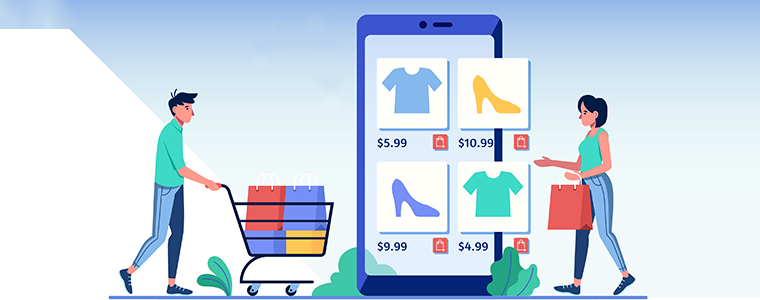
mCommerce is surpassing the usage of desktops in every field from banking to shopping. There are various advantages of eCommerce but you know with advantages many challenges appear on the way. Often, what makes it a great thing for mobile marketing is also what opens it up to greater risk. Mobile commerce is influencing the lives of retailers and their consumers.

In the world of Netizens, we need to walk side by side. Do you have any idea about the time an average person spends on the internet every day? One of the studies says an average mobile user spends 3 hours and 15 minutes per day. This reason is enough to explain the on-going demand of the mobile commerce (m-commerce) business. Understanding the advantages of using a mobile app over a desktop website creates the opportunity to maintain sales revenue while growing digitally.

Mobile provides a variety of possibilities, both to communicate with new customers and to allow brands to increase market share as they gain insight into customer behavior. The number of mobile users in the world today is 3.5 billion, which means 44.81% of the world’s population owns a mobile. You will witness consistent growth in the eCommerce and mCommerce marketplace in the upcoming years as the users are thriving to get the products at their convenience with a mobile click.

Now I am going to explain some key advantages of mCommerce or mobile businesses.

Buy and sell on a go

Mobile commerce makes it easier for consumers, through wireless devices, to discover products available on the market. To buy products or services, clients do not need to drive to the market. They can just visit the online application or store and get their work done.
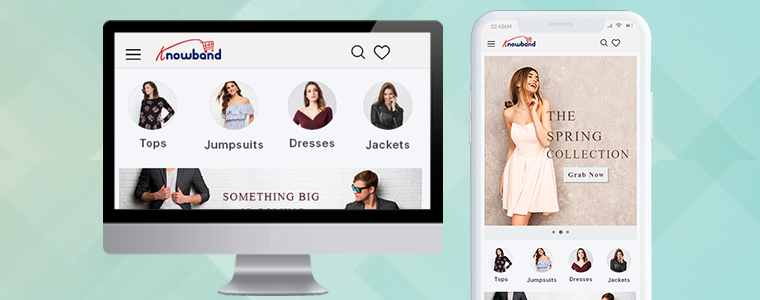
It decreases extra efforts, saves money and time which are the advantages of mCommerce. The hand handled devices like mobile and tablets have increased the demand for cross-device websites and mobile applications.

Better reach

Mobile commerce enables brands to reach new customers that they have never previously considered. It is projected that in the year 2021, three fourth of the world’s adults will own smartphones. For brands, this broad user base provides several future sales leads.

By shifting their slant and emphasis to distinguish themselves from rivals, mobile commerce enables brands to escape market saturation problems. Considering the advantage of mobile commerce, they offer comprehensive distribution opportunities to brands as new markets open up and are discovered.

Convenience, speed, and credibility

Those days are gone when tiny mobile screen, smaller keypads, and limited mobile phone memory was the major concern for mobile commerce. Now with emerging technology, mCommerce is the most convenient way of shopping and the high-speed networks are providing an advantage.

The benefit of mCommerce is that it does not require any extra effort for making the transactions. A mobile responsive website with some trust badges will be sufficient to gain the trust of your customer.

Localization

Mobile commerce specializes in using consumer data, such as geo-location, to optimize the service and, ultimately, to produce more sales. Hyperlocal marketplaces are in trend after the COVID 19 outbreak. The epidemic has become an advantage to online merchants.

This enables brands to target customers at the right time, whether they are looking for an item at midnight or shopping during a lunch-break through the mobile app. In those moments prior to a buying decision, geotracking technology and programmatic ads help retailers interact with these customers, raising the chance that the purchasing will be completed.

Personalization and Enhanced UX

There’s nothing the consumers enjoy more than a personalized experience. It saves their time, makes them feel valued, loved, and so some of the most popular e-commerce companies always use customization to their fullest potential. To make your customers feel unique, you can send personalized push notifications.

Personalization has proven itself to be the secret ingredient of e-Commerce success time and time again, particularly as of now at a time of machine learning and AI. Therefore, to maximize profits, delivering a seamless user experience is a must. Enhanced UX is the major advantage of mCommerce.

Final Thought

These are the primary advantages of M-Commerce for your companies. It is evident that mobile commerce provides tremendous benefits to retailers and brands, whether they are seeking to enter a new market or bringing out a new product. The data and connectivity that mobile commerce offers can be an excellent way to increase market share. Nevertheless, with those benefits also come challenges. As a company owner, in the current market situation, you will never be able to deny the triumph and prevalence of M-Commerce.

Create your mobile app using the Mobile App Plugin available for the major eCommerce platform like PrestaShop, Magento, OpenCart, WooCommerce, etc.

Recommended Reads:
Understanding Mobile Commerce: What is it? Examples and Benefits

Mobile Commerce has excelled at a rapid rate in the past few years. Smartphones are dominating the new generation and ease of access to online transactions is the primary reason for the quick evolvement of mobile commerce.

The use of desktops for online purchases has diminished and it is now being replaced by hand-held devices.

In 2018, mobile commerce made a figure of around $207 billion in the US itself, and that was around 40% of the total eCommerce retail sales captured that year. And the numbers are expected to hit the $338 billion mark in 2020, reports Statista.

If you talk about global mCommerce sales, it has already surpassed eCommerce way back in 2016, and it is going to make a powerful impact in the future.

What is Mobile Commerce?

Mobile Commerce also referred to as mobile eCommerce or simply mCommerce/m-commerce is all about online transactions that take place through mobile devices or tablets.

Put simply, whenever you conduct a transaction through your smartphone, it’s mCommerce. From purchasing the smallest of things to expensive ones, today, most of the people prefer to make the payment using their cell phones. This is what has led to mobile commerce expansion.

Mobile Commerce vs eCommerce: What’s the difference?

Though this would have been pretty clear by now, let me make it easier for you to understand. The key difference between m-Commerce and eCommerce is that the latter involves buying and selling of goods through any kind of device, be it a mobile or desktop, whereas m-commerce is used when online transactions are made through mobile devices specifically.

You can also say that eCommerce is the parent category and mCommerce is the child category.

Mobile Commerce Examples

M-commerce can be witnessed in our day to day lives. A few examples are-

Mobile Shopping

When I talk about mobile shopping, Amazon hits my mind straight away. The largest eCommerce company in the world captures a huge number of sales daily through mobile devices. It has its own mobile app as well which makes it even easier to purchase anything from their store. And since it covers a wide variety of items, it is the go-to shopping store for most of the people.

And similar to Amazon, there are multiple other websites that encourage mobile shopping.

Mobile Banking

Another example of mobile commerce is Mobile banking. Until a few years ago, people either used to meet-in-person or go to a money transfer store to send money to someone. Thanks to Mobile banking which has now made it a few clicks task.

If you want to transfer money to a user, all you require is their account details like account number and IFSC code, and a single tap would deposit the money in the recipient’s account. Digital wallets like Google Pay does not even require account details if the recipient is registered on the same platform.

Benefits of Mobile Commerce

There is a reason why m-commerce has achieved a significant rise in the past few years. Some of the major advantages of mobile commerce are-

1. Better Customer Experience

M-commerce makes it convenient for mobile users to make online payments. They do not need a laptop or desktop to conduct a transaction. If you are having a smartphone and a good Internet connection (since payment may fail if there is network issue), you can make a payment anytime, anywhere, without any hassle.

2. More and more people are shifting towards m-commerce

Mobile eCommerce is expected to reach 70% of the total eCommerce retail sales this year. Therefore, it is vital that you allow your mobile visitors with the facility of easy mobile transactions. Failing to do so may result in a huge loss in your mobile conversions.

Work on the mobile version of your website. Optimize it, make it responsive.

3. Faster transactions

Everyone wants comfort. Nothing would make a person happier if he or she could perform any task without getting up from their bed. Not sure about other things but mobile commerce applications have made it possible to make payments faster and you do not need to get up from your bed and search for your laptop.

You cannot carry a laptop with you every time. A cell phone? Definitely.

Final word

The first and the foremost thing to do to improve mobile commerce is making your web pages load quickly. The faster your website loads, the more mobile conversions you will have. The use of AMP in such cases proves to be beneficial.

From the moment a visitor enters your website to the final payment page, each and every step must be optimized, primarily the checkout page, so that the visitors do not find any kind of trouble on your website.

Make mobile commerce more flexible through our Mobile App Builder.

You May Also Like:

Mobile App Marketing: How to Promote your Mobile App?

Tips To Boost User Engagement with eCommerce Mobile Apps

How eCommerce Mobile Apps enhance Customer Loyalty?