New Update: What’s New in PrestaShop AI Content Generator Module by Knowband

In the fast-competitive world of e-commerce, content is most important. From product descriptions to meta titles, high-quality content not only informs potential buyers but also enhances SEO, driving traffic and boosting sales. Knowband has recently released a significant update to its PrestaShop AI Content Generator module, making it even more powerful and user-friendly for online store owners.

Introducing DeepSeek: A Smarter AI Experience

The latest update introduces DeepSeek, an advanced AI model that works alongside Chat & Reasoner. Previously, the module relied on Claude, Gemini, and ChatGPT, but with DeepSeek, users can expect more refined and contextually accurate content generation. Moreover, this upgrade ensures that AI-generated content is not only grammatically correct but also highly relevant to the products and categories in your store. 

The addition of DeepSeek represents a major achievement in AI-driven eCommerce content creation, making it faster and easier for merchants to maintain a high-quality online presence.

Key Features  of the Prestashop AI Content Generator Module

Product Content Generation

First and foremost, the PrestaShop AI Content Generator excels in creating high-quality product content effortlessly. Not only does it generate product descriptions, meta descriptions, and meta titles, but it also ensures that each product is presented clearly and attractively.

 Moreover, the module supports multilingual stores by translating product titles, meta descriptions, and meta titles into multiple languages. 

Consequently, merchants can reach a wider global audience without the hassle of manual translation.

Category Content Generation

In addition to product pages, category pages are vital for guiding customers and improving SEO. The Prestashop AI-Powered Content Generator & Translator module effectively generates comprehensive category descriptions, meta descriptions, and meta titles, making each page both informative and search-engine-friendly. Furthermore, it translates category titles, meta descriptions, and meta titles, allowing international customers to navigate the store seamlessly. As a result, your website maintains consistency and professionalism across all categories.

CMS Page Content (New)

Another exciting enhancement in the latest update is the ability to generate content for CMS pages, which previously required manual creation. Specifically, the Knowband’s Prestashop CMS AI Content Generator &Translator now generates CMS descriptions, meta descriptions, and meta titles. In addition, these CMS titles, descriptions, and metadata can be translated into different languages. This ensures that your content remains consistent, SEO-optimised, and engaging across every part of your website.

Bulk CSV Upload (New)

To further improve efficiency, the module has a Bulk CSV Upload feature. W

ith this, store owners can generate content for multiple products at once simply by uploading a CSV file containing product IDs and fields marked with 0 or 1. 

Large inventories can be managed quickly and accurately, reducing the time and effort required for content creation.

Key Page Generation (New)

Moreover, the module now supports key page generation for products, categories, and CMS pages. 

Along with this, users can add additional prompts for each page, allowing for more tailored and precise content creation. Therefore, every main section of your website is fully optimized, aligning closely with marketing goals and brand identity.

Task Logs

To enhance usability and transparency, the module includes detailed task logs. Moreover, these logs track all content generation activities, helping users monitor progress efficiently. ‘

As a result, merchants can stay organised and ensure that no task is overlooked, making content management smoother and more reliable.

Editing Options

Finally, while the module automates much of the content creation process, it also provides flexibility through editing options. 

Users can modify both the prompts and the AI-generated content, ensuring that each description, title, or meta tag reflects the store’s unique brand voice. 

🤖 Also on OpenCart?


Knowband Launches AI Content Generator and Translator Plugin for OpenCart


Running an OpenCart store? The AI Content Generator and Translator Plugin by Knowband is available for OpenCart too, bulk content generation, multilingual translation, SEO-optimized descriptions, support for ChatGPT, Claude, and Gemini, and a rollback feature for full content control.

Explore the OpenCart AI Content Generator Plugin

Why This Update Matters for eCommerce Stores

The improvements in the Knowband PrestaShop AI Content Generator module address several common challenges faced by online merchants. 

First, content creation can be time-consuming, especially for stores with extensive catalogues. By automating the generation of product, category, and CMS content, this module allows store owners to focus on other critical aspects of their business, such as marketing and customer engagement.

Secondly, the addition of bulk operations and task logs streamlines workflow and improves efficiency. Store owners can generate content for hundreds of products in a matter of minutes, while logs provide a clear overview of completed tasks and pending actions.

Finally, the new prompts and additional key page generation ensure that AI content aligns closely with the merchant’s specific goals. If the store owners find the unsatisfactory content for the particular product, then they can add an additional product.

Therefore, whether it’s crafting persuasive product descriptions, engaging category overviews, or informative CMS pages, this module provides a comprehensive solution for all content needs.

Conclusion

In conclusion, the latest update to the Knowband PrestaShop AI Content Generator Addon is a game-changer for e-commerce store owners. 

With the introduction of DeepSeek, expanded content generation capabilities, bulk CSV uploads, key page generation, and detailed task logs, this module now offers unmatched efficiency and versatility.

 By automating content creation, store owners can enhance SEO, engage customers more effectively, and save significant time. For those looking to optimise their online store’s content strategy, this update represents a powerful addon that combines AI intelligence with practical usability.

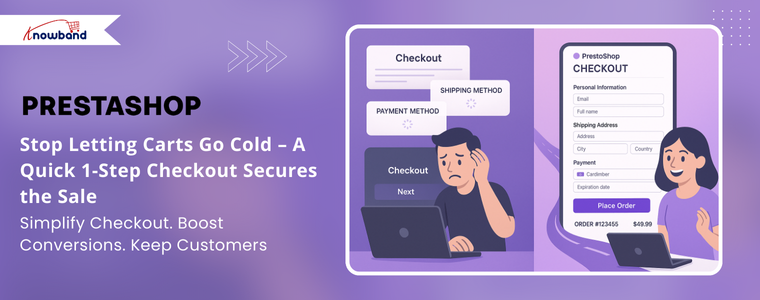
Stop Letting Carts Go Cold : A Quick 1-Step Checkout Secures the Sale

Are you losing customers at the final step? You’re not alone. Cart abandonment is one of the biggest struggles faced by eCommerce store owners worldwide, and research shows that a complicated checkout process is one of the main reasons customers walk away without completing their orders. When customers are asked to click through 5 or 6 different pages, fill in repetitive forms, and face unnecessary delays, frustration builds up. Instead of finishing their purchase, they abandon their carts and often move straight to a competitor who offers a faster and simpler checkout experience.

This is where the PrestaShop One Page Checkout Module changes the game. Instead of spreading the process across multiple pages, it combines all the key steps, including personal information, delivery address, shipping methods, payment options, and order confirmation, into one clean, user-friendly page. The result? A quick, seamless, and hassle-free checkout experience that your customers will love.

By streamlining checkout, you not only reduce cart abandonment but also increase customer satisfaction, loyalty, and repeat purchases. Faster checkout means fewer distractions, smoother conversions, and ultimately, more sales for your store. 

Stop Losing Sales to Complicated Checkouts

Every online store faces the same nightmare- customers fill their carts, head to checkout, then disappear. It happens because traditional multi-step checkout processes are simply too much work. PrestaShop One Page Checkout Module changes everything by bringing the entire checkout experience onto a single, streamlined page.

Think about it: no more jumping between pages, no more endless loading screens, no more abandoned carts. Your customers can enter their details, choose shipping, and complete payment all in one place. It’s that simple, and it works.

Why Knowband’s Prestashop One Page Checkout Stands Out

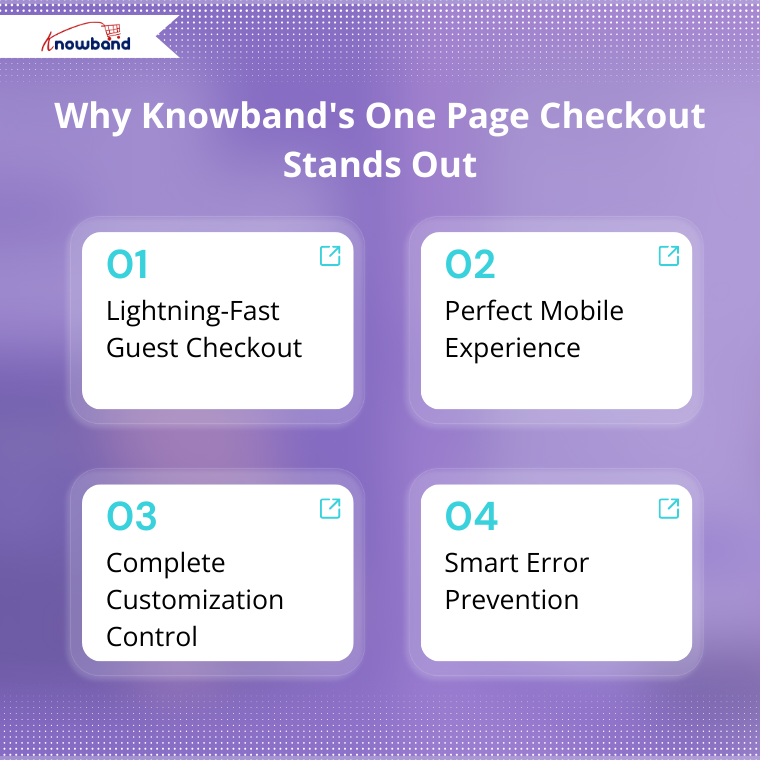
Lightning-Fast Guest Checkout

First and foremost, Knowband eliminated the biggest barrier to quick purchases,  mandatory account creation. Your customers can buy instantly without signing up, or they can log in using their Google or Facebook accounts in seconds. Moreover, this flexibility means more completed sales and happier customers.

Perfect Mobile Experience

Over half your customers shop on mobile devices, so your checkout better work flawlessly on every screen size. Furthermore, the module’s responsive design ensures your checkout looks perfect and functions smoothly on multiple devices, including mobile devices, tabs as well and systems. 

Complete Customisation Control

Your checkout should reflect your brand, not look generic. With our module, you control everything, including field arrangements, button colours, layout design, and overall appearance. Make it match your store’s personality perfectly while maintaining optimal functionality.

Smart Error Prevention

 Moreover, a real-time validation system catches mistakes instantly, letting customers fix problems before they become deal-breakers. No more frustrated customers abandoning full carts over simple errors.

Real Results You Can Measure

Slash Cart Abandonment Rates

When checkout becomes effortless, customers stick around to complete their purchases. Moreover, store owners have consistently reported dramatic reductions in cart abandonment after implementing Knowband’s Prestashop One Page Checkout Addon.

Boost Conversion Rates Immediately

Fewer steps equal more sales, it’s that straightforward. By removing friction from the buying process, you’ll see more visitors convert to paying customers right away.

Satisfy More Customers

Happy customers return and recommend your store to others. Furthermore, streamlined checkout creates positive experiences that build customer loyalty and drive word-of-mouth marketing.

Serve Global Markets Better

If you wish to sell internationally, then  Knowband’s Prestashop Quick Checkout module supports multiple languages and currencies, making international customers feel welcome and confident about purchasing from your PrestaShop store.

Flexible Payment and Shipping Options

Your customers have preferences, and this powerful module accommodates them all. Support multiple payment gateways and shipping methods while setting up location-specific carriers. Give your customers the choices they want while maintaining control over your operations.

Start Free, Upgrade When Ready

Not sure if it’s right for your store? Try the Knowband free version first. Test the core features, see the improvements, then upgrade to Knowband’s premium version when you’re ready for advanced capabilities like social login integration, Google auto-address filling, custom field management, and detailed analytics.

Why Choose Knowband?

Proven Expertise: Knowband helped thousands of PrestaShop stores optimise their checkout processes 

Easy Integration: Prestashop Quick Checkout module installs seamlessly with your existing PrestaShop setup 

Ongoing Support: Get regular updates and dedicated customer support when you need it.

Universal Compatibility: The prestashop one-page checkout addon is now compatible with Prestashop 9. x.x, 8. x.x, & 1.7x.

Scalable Solution: Perfect for small shops or enterprise-level operations

Ready to Stop Losing Sales?

Your competitors are already optimising their checkout processes. So, don’t let a complicated checkout system lose your customers. 

Knowband’s PrestaShop Quick Checkout Module transforms browsers into buyers by removing every possible barrier between your customers and their completed purchases.

The solution is here, tested, and proven effective. Install Knowband’s One Page Checkout Module today and watch your store’s sales go high with SuperCheckout.

Check out the tutorial:

PrestaShop 9: A New Chapter with Symfony

PrestaShop 9 marks a major advancement for the platform. This is not just an ordinary update; it is a significant effort from the community to build a modern, reliable core. The entire system now runs on the Symfony framework. This transition was a careful plan that took years. The switch to Symfony is critical. It makes the platform faster, more secure, and more adaptable for everyone. Ultimately, PrestaShop 9 is a total overhaul. Its design makes it ready for the future and competitive in today’s e-commerce landscape.

The Symfony Switch: A Closer Look

The most significant change in PrestaShop 9 is that the entire administration area now operates on Symfony 6.4 LTS. Before, the PrestaShop team used a mix of old code and Symfony. This was complicated for developers and often caused bugs. But with this new version, the team rebuilt every single admin page. They built them to fully use Symfony and Twig templating.

As a result, developers can now work with a single, consistent framework. This consistency simplifies creating new modules and makes fixing issues much easier. The platform can also use Symfony’s strong security features. It benefits from the support of a large developer community.

In addition, this change allowed the project to remove a lot of outdated code. For example, the team has permanently removed features like the old XML API and the confusing product form. In their place is a cleaner system that is simpler to maintain. The platform also now supports newer versions of PHP (8.1–8.4). This is a huge benefit. These new PHP versions bring significant performance boosts and better error handling.

They also include Just-In-Time (JIT) compilation. This can make your store run much faster. In summary, the move to Symfony is all about making the platform more dependable, more powerful, and easier to expand.

New Features for Store Owners

While the biggest changes are “under the hood,” the admin panel itself offers a much better user experience. The interface has a more modern look, and all pages now feel consistent. You won’t see that frustrating mix of old and new interfaces anymore. This consistency makes managing your store a lot smoother and reduces the time you need to train new staff members.

For developers, one of the best new tools is the Admin API. This new API provides a modern way for other systems to communicate with your store. It’s built on a framework called API Platform, which makes connecting with things like your inventory system, customer management software, or a mobile app simple. For example, it’s now very easy to automatically update prices or sync your stock with your warehouse management system.

You could even create a custom mobile app for your store. Then you can have it pull all product and order data directly from this API. In fact, this new API is what makes headless commerce a reality. It lets you use PrestaShop for its back-end. Meanwhile, you can create a totally custom front-end with modern frameworks like React or Vue.js.

Why This Is Great for Everyone

These technical updates provide real benefits for both store owners and developers. For store owners, the platform is much faster. The updated code and PHP compatibility mean your pages will load quickly. Quick loading is crucial for keeping customers happy and getting more sales. Also, PrestaShop 9 now supports new image formats like WebP and AVIF. These images are much smaller. This speeds up your site even more without reducing quality. A faster site can also improve your Core Web Vitals score. That score is a key factor for good SEO.

The SEO features have also been refined. The platform creates cleaner, shorter URLs by default. This makes it easier for search engines to understand your site. For developers, the benefits are huge. The full Symfony architecture gives them a consistent, well-documented environment.

This makes building modules and themes easier and more enjoyable. With the new Admin API, they can build better, more powerful integrations. They can also meet today’s demanding business needs. All in all, PrestaShop 9 is a massive improvement. It’s a modern, future-proof platform.

Need trustworthy PrestaShop plugins or expert help with migration and compatibility? Our team delivers seamless solutions tailored to your store’s version—whether you’re on 1.6, 1.7, 8, or moving to 9. We handle the technical complexity, so you can focus on growing your business with confidence.

Step-by-Step Guide to Launch Your eCommerce Mobile App with Knowband

Today, most people shop on their phones, so making the buying experience easy and smooth is a must. With mobile commerce on the trend, having your own app can give your brand a competitive edge.

That’s where Knowband’s Mobile App Builder comes in. Whether you’re using PrestaShop, Magento, OpenCart, or WooCommerce, Knowband makes it incredibly easy to turn your online store into a sleek mobile app with no coding required.

If you’re thinking about launching your e-commerce app, here’s a step-by-step guide to walk you through the entire process.

Step 1: Choose the Right App Builder for Your Platform

First things first, go to Knowband.com and select the Prestashop Mobile App Builder module that matches your store’s platform. Whether you’re running on PrestaShop, Magento 2, OpenCart or WooCommerce, there’s a version tailored just for you.

Once you’ve purchased the module, you will receive a downloadable ZIP file along with setup instructions.

Step 2: Install the Module on Your Website

Next up, it’s time to install the module on your site, and the good news is that it’s a pretty straightforward process. 

Depending on the platform you’re using, the steps may vary slightly. If you’re using PrestaShop, you can easily upload the module right from the admin panel. 

For Magento 2 users, installation is typically done using Composer or via FTP, whichever you’re more comfortable with. 

If your store is built on OpenCart or WooCommerce, the installation is even easier; it just takes a few clicks within the extensions or plugin section of your admin dashboard.

Once the Opencart Mobile App Builder Extension is successfully installed using FTP, you’ll see the Mobile App Builder panel show up right in your backend.

 Moreover, store owners can start set to begin customising their app’s design and functionality.

Step 3: Customise the App Design and Features

Knowband gives the full control to the store owner to customise the app based on the store’s needs.

Using the Mobile App Builder module, you can easily set up banners, sliders, featured product sections, countdown timers, and more. Furthermore, you’ll also be able to tweak the theme colours, fonts, and layout, so your app matches your brand perfectly.

Everything is highly customizable, and you don’t need to write a single line of code.

Step 4: Provide App Branding Details

Once your app layout is ready and you’re happy with the design, the next step is to provide your branding details so Knowband can begin building your mobile app. Moreover, this information helps ensure that your app looks and feels exactly like your brand, consistent, professional, and personalised.

Here’s what you’ll need to share:

  • App name
  • Logo and app icon
  • Splash screen image
  • Primary theme colour
  • Your store URL
  • Firebase keys (used for enabling push notifications)
  • Developer account access ( Android & iOS)

If that list feels a bit overwhelming, don’t worry, Knowband has you covered. We provide clear, step-by-step documentation and friendly support for the WooCommerce Mobile App Builder Plugin to walk you through each requirement. Whether you’re a first-time app creator or just need a little guidance, our team is always ready to help.

Step 5: App Compilation and Delivery

After you’ve submitted all the required information, our team takes over.

We compile your mobile app for both Android and iOS and typically deliver the test builds within 4-5 working days. You’ll receive APK (for Android) and IPA (for iOS) files, which you can test on real devices before going live.

Moreover, this is a good way to review the app thoroughly and ensure everything works just as expected.

Step 6: Test Your App Thoroughly

Before launching, it’s important to test your app across multiple devices and platforms. Try out the login process, navigation, product browsing, checkout, payment gateways, push notifications, and anything else that matters to your user experience.

If you notice any issues or have last-minute customisation requests, our support team is responsive and ready to assist.

Step 7: Publish to App Stores

You can upload the APK file to your Google Play Developer Account and submit the iOS version through your Apple Developer Account using App Store Connect. If you’re unsure how to do this, Knowband guide you through the process or even handles it for you.

Step 8: Promote and Optimise Your App

Promote your mobile app on your website with banners or pop-ups, share download links on social media, and offer exclusive app-only deals to encourage downloads. Moreover, you can also use push notifications to keep users engaged and bring them back to your store regularly.

Don’t forget to monitor reviews, track analytics, and gather feedback so you can continuously improve the experience.

Final Thoughts

Launching a mobile app for your e-commerce store doesn’t have to be expensive or complicated. With Knowband’s Magento 2 Mobile App Builder Plugin, you can go from idea to live app in just a few days and provide your customers with the modern, mobile-first experience they expect.

Whether your store is on PrestaShop, OpenCart, Magento 2, or WooCommerce, we have the perfect solution to create your own mobile app based on your website or store theme. Visit opencartmobileshop.com to get started.

So why wait? Now is the perfect time to take your store mobile.

Get started today and let your store go mobile with KnowBand

AI for E-Commerce: Generate and Translate Content in a Click with Knowband

Writing and maintaining optimised content for an e-commerce store often demands significant time and effort. The AI Content Generator and Translator Module from Knowband offers a powerful solution to simplify this process.

This all-in-one module brings together the strengths of ChatGPT, Claude AI, and Gemini AI, enabling store owners to easily create and translate content with minimal effort.

Whether you’re adding new products, updating meta details, or targeting a multilingual audience, this module streamlines everything in just a few clicks. Moreover, the plugin is available for all major platforms like prestashop, opencart, Magento 2, & woocommerce.

Let’s explore how this all-in-one solution transforms content management for your online store.

Key Features of the Knowband’s PrestaShop AI Content Generator and Translator

1. Multi-AI Engine Support

The PrestaShop AI Content Generator Module smoothly connects with leading AI engines such as ChatGPT (GPT-3.5 and GPT-4), Claude AI (Haiku and Sonnet models), and Gemini AI (including 1.5 Flash, 2.0 Flash, and Pro versions).

As a result, you gain the flexibility to choose the engine and model that best aligns with your specific needs, whether you’re looking for creative flair, factual accuracy, or ultra-fast content generation.

2. Complete Content Generation

The PrestaShop AI Content Generator Module quickly creates important content for online stores, like product descriptions, meta titles, meta descriptions, and category text. Moreover, all content is well-structured, SEO-friendly, and crafted in a tone that resonates with online customers, ensuring both clarity and conversion potential.

3. Bulk Content Management

If you are managing a large store? Then no worries. The Opencart AI Bulk Content Generator Extension enables store owners to create or translate large volumes of content efficiently in a single operation. Furthermore, this saves hours of manual effort and helps you scale faster.

4. SEO Optimisation Built-In

From keyword-rich meta titles to optimised product descriptions, the WooCommerce AI Content Generator and Translator Addon ensures that your content ranks well on search engines.

5. Accurate Multilingual Translations

Most importantly, with Knowband’s Magento 2 ChatGPT AI Content Translator Plugin, store owners can effortlessly translate content into multiple languages while maintaining both accuracy and proper formatting. Moreover, this includes everything from product and category titles to descriptions, as well as meta information like titles and descriptions, ensuring your store speaks clearly and effectively to a global audience.

6. Predefined AI Prompts

The powerful & advanced AI Content Generator Module includes 14 built-in prompts for both content generation and translation. Additionally, the store owner can customise the prompt according to the way they like.

Moreover, these prompts make it easy to execute tasks based on your specific needs and desired content style or description, eliminating the need to write instructions manually.

7. User-Friendly Admin Interface

Even with complex advanced technology, the Prestashop Content Translator & Generator Addon is designed for simplicity. Moreover, store admins can operate everything from an intuitive dashboard—no coding or technical knowledge needed.

8. Activity Logs for Full Transparency

Each action performed using the WooCommerce AI Content Generator Plugin is automatically logged for tracking and transparency.

Moreover, you can review timestamps, prompt types, and content changes to keep track of all updates made via AI.

Top Benefits of Using Knowband’s AI Content Generator and Translator Module

Boosts Productivity and Focus

First and foremost, by automating repetitive content tasks, store owners and teams can redirect their time and energy toward strategic areas like marketing, customer engagement, and business development, instead of spending hours writing and translating content manually.

Ensures Brand Consistency Across Markets

In addition, the AI-generated and translated content maintains a consistent tone, style, and message across all product listings and languages. This helps your brand appear reliable, professional, and trustworthy, regardless of the target audience or region.

Reduces Dependency on Third Parties

Moreover, with AI handling both content creation and translation, there’s less need to hire external writers or translators. This not only reduces costs but also gives you greater control over output quality and turnaround time.

Accelerates Global Expansion

As a result, the built-in multilingual capabilities allow your store to easily reach and engage international customers, enabling faster entry into new markets without the usual complexities of manual localisation.

Supports Scalability

Finally, whether you’re managing 50 or 5,000 products, the module is built to handle bulk operations seamlessly. In other words, as your store grows, the module scales with you, keeping your content strategy efficient and future-proof.

Conclusion

The AI Content Generator and Translator Plugin is a must-have for any store looking to scale efficiently while maintaining high-quality content. Whether you’re managing SEO, translating for global reach, or launching new products, this single module handles it all with ease.

Whether you’re launching new products, managing hundreds of listings, or expanding into international markets, this all-in-one AI-powered addon simplifies everything. Moreover, it integrates the strengths of ChatGPT, Claude, and Gemini, giving you unmatched flexibility and control.

As a result, you save valuable time, reduce operational costs, and enhance your store’s SEO performance. In addition, accurate multilingual translations enable you to connect with a global audience while maintaining quality and brand tone.

So, why wait?
Install the Knowband AI plugins today—and let your store speak every language, brilliantly.

PrestaShop 9 Module Migration: A Developer’s Guide to Backward Compatibility

The release of PrestaShop 9 has brought exciting new features and improvements to the e-commerce platform. However, for module developers, this upgrade presents significant challenges when maintaining backwards compatibility with older versions. Furthermore, the complexity increases when you need to support legacy installations like PrestaShop 1.7.5 while simultaneously preparing for the latest version.

Understanding the Migration Challenge

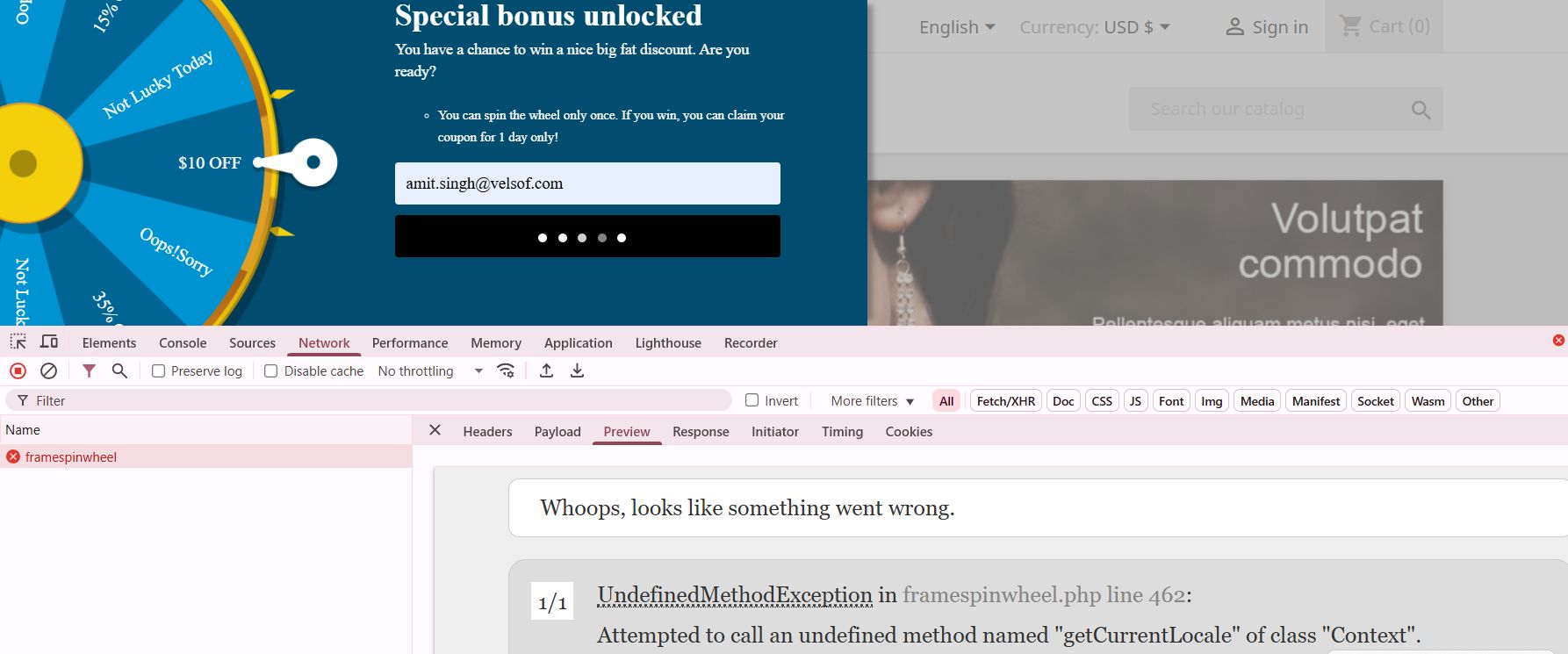
Upgrading modules from PrestaShop 8 to PrestaShop 9 can introduce unexpected compatibility issues. While a module may function correctly in the latest environment, it may break completely when tested on older versions like PrestaShop 1.7.5.

A common source of these issues is method availability differences across versions. Certain methods available in newer versions may not exist in older ones, leading to fatal errors. Additionally, architectural changes between PrestaShop versions can render previously stable code unusable without adjustments.

The Technical Breakdown: Price Formatting Nightmare

One particularly challenging example involved the getCurrentLocale() method. In PrestaShop 8 and 9, this code works flawlessly:

$formattedPrice = $this->context->getCurrentLocale()->formatPrice($price, $currency);

However, when the same code runs on PrestaShop 1.7.5, it throws a fatal error because getCurrentLocale() doesn’t exist. Consequently, the entire module becomes unusable on older installations.

The Solution: Smart Compatibility Detection

To resolve this issue, I implemented a robust compatibility checking system. First, I created a method existence check before calling any potentially unavailable functions:

public function formatPriceCompatible($price, $currency = null) {

    if (method_exists($this->context, ‘getCurrentLocale’)) {

        // Modern PrestaShop 8+ approach

        return $this->context->getCurrentLocale()->formatPrice($price, $currency);

    } else {

        // Legacy fallback for PS 1.7.x

        return Tools::displayPrice($price, $currency);

    }

}

Moreover, I extended this approach to version checking for more complex scenarios:

public function getPrestaShopVersion() {

    return defined(‘_PS_VERSION_’) ? _PS_VERSION_ : ‘1.6.0.0’;

}

public function isModernPrestaShop() {

    return version_compare($this->getPrestaShopVersion(), ‘1.7.6.0’, ‘>=’);

}

Beyond Price Formatting: Other Compatibility Pitfalls

Price formatting isn’t the only area where compatibility issues arise. Similarly, Mobile_Detect integration presents challenges because the library handling differs between versions. Therefore, I implemented a conditional loading mechanism:

public function loadMobileDetection() {

    if (class_exists(‘Mobile_Detect’)) {

        $this->mobileDetect = new Mobile_Detect();

    } elseif (file_exists(_PS_MODULE_DIR_ . ‘your_module/lib/Mobile_Detect.php’)) {

        require_once(_PS_MODULE_DIR_ . ‘your_module/lib/Mobile_Detect.php’);

        $this->mobileDetect = new Mobile_Detect();

    } else {

        // Fallback: assume desktop

        $this->mobileDetect = null;

    }

}

Hook System Evolution

Furthermore, the hook system has evolved significantly between versions. While newer hooks provide better functionality, they’re unavailable in older versions. Thus, I created a hook compatibility layer:

public function registerCompatibleHooks() {

    $modernHooks = [‘displayProductAdditionalInfo’, ‘displayAdminProductsExtra’];

    $legacyHooks = [‘displayProductTab’, ‘displayAdminProduct’];

   if ($this->isModernPrestaShop()) {

        return $this->registerHook($modernHooks);

    } else {

        return $this->registerHook($legacyHooks);

    }

}

Best Practices for Multi-Version Support

Essential Strategies for Maintaining Backward Compatibility:

Always test across versions before deploying any updates. Additionally, create a testing environment with multiple PrestaShop versions to catch compatibility issues early.

Use defensive programming techniques. In other words, never assume a method or class exists without checking first. Moreover, implement graceful fallbacks for every modern feature you use.

Document your compatibility range clearly. Therefore, merchants know exactly which PrestaShop versions your module supports.

Create abstraction layers for version-specific functionality. Consequently, your main code remains clean while compatibility logic stays separate.

The Future of Module Development

As PrestaShop continues evolving, module developers must balance innovation with backwards compatibility. Nevertheless, this challenge presents an opportunity to create more robust, flexible modules that serve a broader audience.

The key is building modules that gracefully degrade functionality rather than breaking entirely. Subsequently, merchants can continue using your module regardless of their PrestaShop version, while still benefiting from enhanced features when they upgrade.

Conclusion

PrestaShop 9 brings powerful new capabilities, but successful module development requires careful attention to backwards compatibility. By implementing proper version checking, creating fallback mechanisms, and thoroughly testing across versions, you can build modules that work seamlessly across the entire PrestaShop ecosystem.

Remember, the goal isn’t just to make your module work in the latest version—it’s to ensure it provides value to merchants regardless of their current PrestaShop installation. Therefore, invest time in compatibility testing and defensive programming. Your users will thank you for it.

If you’re looking for reliable PrestaShop plugins or need assistance with migration and compatibility services, our team is here to help. We specialize in delivering seamless solutions tailored to your store’s version—whether you’re on PrestaShop 1.6, 1.7, 8, or migrating to 9. Let us handle the complexity, so you can focus on growing your business with confidence.

Strengthening PrestaShop Security: How Google reCAPTCHA Keeps Your Store Safe from Bots and Spam

As online shopping continues to dominate the e-commerce market, security concerns have grown more pressing than ever. Customers want a smooth shopping experience — but more importantly, they want it to be secure. For PrestaShop store owners, maintaining that balance between scalable and robust protection is critical. Fortunately, one smart and simple way to boost your store’s defences is by integrating Google reCAPTCHA.

With this in mind, we’re introducing the PrestaShop Google reCAPTCHA module, a lightweight yet powerful solution that helps you filter out malicious bots while letting real customers shop with confidence.

What is Google reCAPTCHA?

Google reCAPTCHA is a service from Google that helps website owners detect and block bots while allowing real human users to pass through without friction. Essentially, it does this by presenting simple challenges like identifying objects in images or clicking a checkbox labelled “I’m not a robot.”

While these tasks may seem trivial, they serve as an effective first line of defence. Bots, which are automated scripts designed to exploit forms and steal data, typically fail to pass these tests, keeping your website safer with minimal user effort.

Why PrestaShop Stores Need It

If you’re running a PrestaShop store, customer trust is everything. The moment a customer senses a lack of security — whether through spam in forms, malicious performance, or suspicious activities — they’re likely to abandon your site for a competitor. Even worse, repeated bot attacks can flood your system with fake accounts, clutter your database, and slow down key functions.

This is precisely where Knowband’s PrestaShop Google reCAPTCHA module becomes invaluable. It’s a proactive solution that quietly filters out suspicious activity in real time, letting your real customers shop uninterrupted while bots hit a dead end.

How the Knowband PrestaShop reCAPTCHA Module Works

This human verification tool is designed for simplicity and impact. Once installed, it can be placed on critical key pages throughout your store, including login, signup, contact, and checkout pages.

Here’s how it works:

First, when a visitor interacts with a protected form (like creating an account), they’re prompted with a reCAPTCHA challenge.

Next, if completed correctly, the user can proceed.

However, if not, access is denied, effectively preventing bots from registering, spamming, or completing fake checkouts.

Furthermore, the module integrates smoothly with your PrestaShop backend, ensuring top-tier security without affecting your site’s performance.

Key Benefits of Using the PrestaShop Google reCAPTCHA Addon

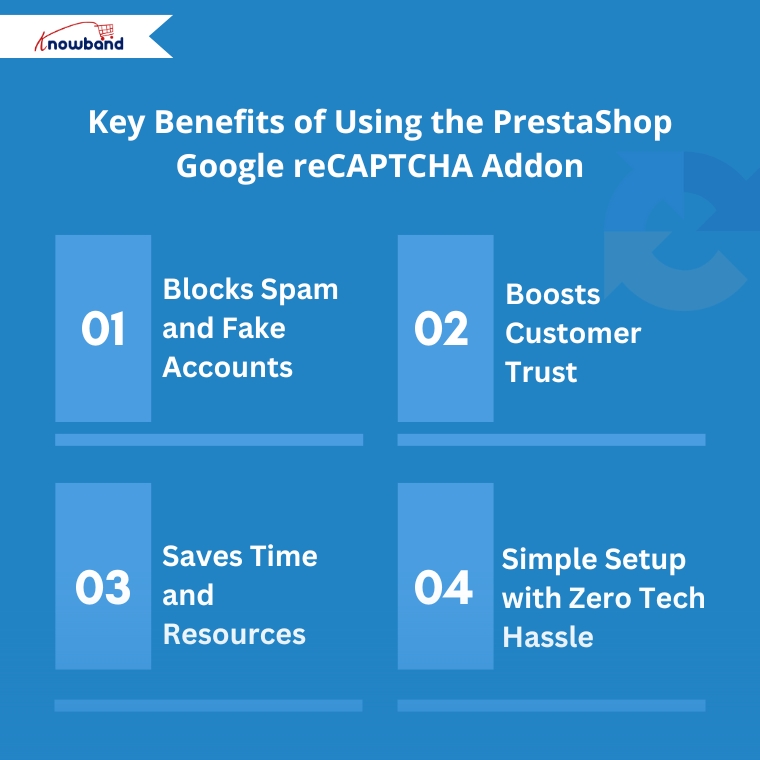
1. Blocks Spam and Fake Accounts

Bot-generated spam can overwhelm your contact forms and create fake user accounts that pollute your database. Fortunately, this module stops that activity at the gate, keeping your store clean and secure.

2. Boosts Customer Trust

When shoppers see that your site uses trusted security tools like Google reCAPTCHA, it reassures them that their personal and payment data is protected, which consequently encourages higher conversion rates.

3. Saves Time and Resources

Manually cleaning out fake accounts or filtering spam messages can take hours. However, with this automation in place, your team can focus on what really matters — running and growing your store.

4. Simple Setup with Zero Tech Hassle

No coding skills? No problem. The Knowband human reCAPTCHA module for PrestaShop is built to be plug-and-play. Simply install it, activate it, and choose where you want it to appear — all within a few clicks.

Where to Add reCAPTCHA for Maximum Protection

To fully leverage this module’s capabilities, it’s recommended to enable human verification in the following areas:

Login Page – Prevents brute-force attacks or unauthorised login attempts

Registration Page – Blocks bots from creating fake customer profiles

Contact Forms – Eliminate spam messages that clutter your inbox

Checkout Page – Ensures only genuine users can complete purchases

By adding reCAPTCHA at these key steps, you ensure your store’s most sensitive user interactions are protected.

Final Words: A Smart Move for a Safer Store

Security isn’t just a technical concern — it’s a business priority. Every time a bot bypasses your system, it erodes user trust and potentially damages your brand reputation. Therefore, by using the PrestaShop Google reCAPTCHA module by Knowband, you’re adding a vital shield to your online store.

This simple yet powerful tool helps keep bad actors out while preserving the frictionless shopping experience your customers expect. Whether you’re a beginner or an experienced store owner, this module is a smart, low-effort investment in your site’s future.

Don’t wait for bots to cause problems. Instead, stay one step ahead — secure your PrestaShop store with reCAPTCHA today.

Building a Mobile App for Your PrestaShop Store Without Any Technical Skills

In today’s fast-moving eCommerce world, customers expect a seamless shopping experience not just on desktops but also on their smartphones. If you run a PrestaShop store and are wondering how to launch a mobile app without writing a single line of code, you’re in the right place. Introducing Knowband’s PrestaShop Mobile App Builder, the easiest way for store admins to create a fully functional & professional mobile app with no technical hassle.

Whether you’re a small business owner or a large online retailer, you can now build a fully functional Mobile App for PrestaShop without hiring developers or learning programming.

Let’s explore how you can build your own app with no coding, step by step.

Why Your PrestaShop Store Needs a Mobile App

Mobile commerce is growing rapidly. In fact, more than 70 per cent of online customers prefer to shop via mobile devices. As a result, if your store doesn’t have a dedicated mobile app, you could be missing out on valuable sales and repeat customers.

Furthermore, a Mobile App helps you:

  • Improve customer engagement
  • Send personalised push notifications
  • Offer a faster, smoother checkout process
  • Build customer loyalty and brand recognition

No Coding Required: Use a PrestaShop Mobile App Builder

Traditionally, developing a mobile app required hiring a team of developers, managing timelines, and spending a significant budget. However, today, the PrestaShop Mobile App Maker enables you to launch your own branded mobile app in no time, without writing a single line of code.

Moreover, these solutions are designed for non-technical users. With user-friendly dashboards, drag-and-drop components, and full integration with your PrestaShop store, they make the entire app-building process effortless.

What Is the Prestashop Android and iOS Mobile App Builder Addon?

The Prestashop Android and iOS Mobile App Builder Addon is a plug-and-play module designed to help PrestaShop merchants create and launch native mobile apps without any coding.

Here are some of Knowband’s Prestashop Mobile App Builder’s key features:

  • Builds native Android and iOS apps
  • Syncs in real-time with your online store
  • Supports multiple languages and currencies
  • Allows full design customization
  • Integrates with popular payment gateways
  • Offers push notification capabilities
  • Includes social login and guest checkout
  • Enables WhatsApp and live chat support

Most importantly, everything from the product catalogue to inventory and customer orders is automatically synchronised with your mobile app.

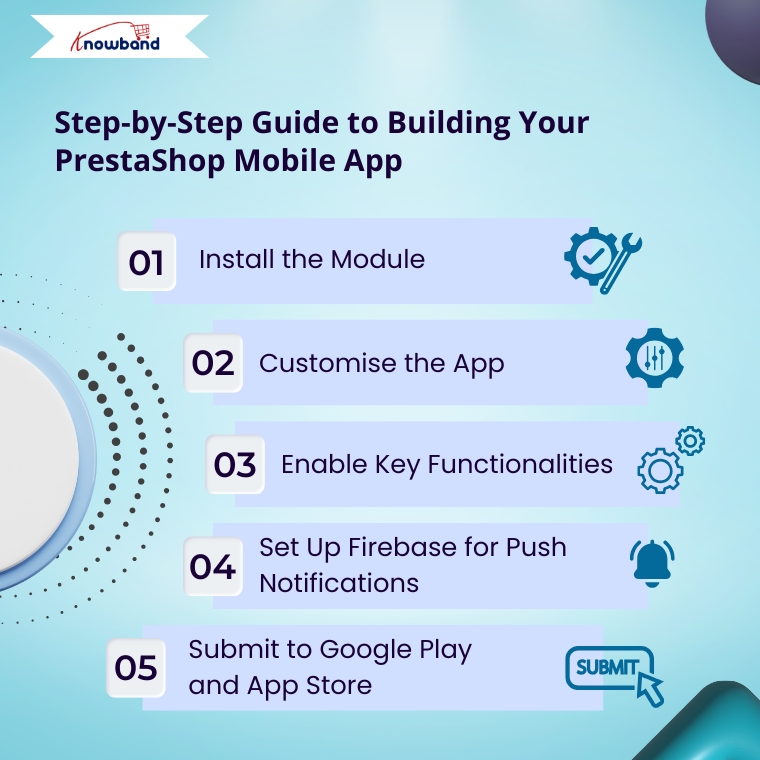
Step-by-Step Guide to Building Your PrestaShop Mobile App

Even without technical knowledge, you can launch your own PrestaShop Android and iOS Mobile App in just a few steps.

1. Install the Module

First, start by installing the Prestashop Android and iOS Mobile App Builder Module in your store’s back office. This module acts as the core engine that connects your website with your future mobile app.

2. Customise the App

Next, use the built-in customisation options to make your app match your store’s branding. You can choose your logo, colour scheme, splash screen, banners, and layout style. Consequently, these design settings help maintain a consistent brand identity across platforms.

3. Enable Key Functionalities

Then, turn on essential features such as push notifications, real-time order updates, advanced product filtering, multilingual support, and payment/shipping options. Additionally, you can activate login via Facebook or Google.

4. Set Up Firebase for Push Notifications

For push notifications, you’ll need to link your app to Firebase. Although it may sound technical, most builders provide easy-to-follow guides that take only a few minutes.

5. Submit to Google Play and App Store

Finally, this step usually requires app store knowledge, but KnowBand makes it easy. When you use the Mobile App Builder Addon for PrestaShop developed by KnowBand, their expert team helps you with the full app publishing process.

Specifically, from preparing the APK and IPA files to submitting them to the Google Play Store and Apple App Store, KnowBand takes care of everything. Therefore, this saves you time and avoids any technical complications.

Must-Have Features in a PrestaShop Mobile App

Here are some key features you should ensure are included in your mobile app:

  • Real-time synchronization with your store
  • Push notifications for promotions and order updates
  • Multilingual and multi-currency support
  • Simple and fast one-page checkout
  • Wishlist and recently viewed items
  • Product ratings and customer reviews
  • Intuitive navigation and filtering
  • Chat support integration, including WhatsApp

Integrate Your Prestashop Shop with Etsy Marketplace

No Coding Skills Required

SHOP NOW

Ultimately, these features help deliver a smooth and personalized shopping experience that keeps users coming back.

Final Thoughts

In conclusion, launching a mobile app for your PrestaShop store is no longer a complex or costly process. Moreover, this powerful prestashop mobile app builder allows you to create fully functional apps for both Android and iOS platforms.

With features like real-time synchronisation and intuitive interfaces, your app stays perfectly aligned with your online store. Furthermore, Modules KnowBand offer complete end-to-end support, from app creation to publishing.

As a result, you get more than just an app, you gain a fully optimised eCommerce solution. Features like push notifications, easy navigation, and secure checkout enhance the user experience.

Meanwhile, custom branding options help your app reflect your unique store identity.

Therefore, now is the ideal time to transform your store into a powerful mobile commerce hub.

Let KnowBand’s Prestashop Mobile App Maker make your mobile app journey seamless and business-focused.

What is New in PrestaShop 9.0? Full Feature & Migration Guide

Why PrestaShop?

PrestaShop is a leading open-source e-commerce platform, known for its flexibility, powerful features, and zero licensing costs. Known for its intuitive interface, multi-language/currency support, and rich ecosystem of modules and themes, it’s ideal for SMEs creating customised online stores. PrestaShop 9.0 represents a significant milestone, delivering performance upgrades and essential architectural advancements reflecting modern development standards, scalability, and long-term maintainability.

What’s New in PrestaShop 9.0?

PrestaShop 9.0 brings complete core framework modernisation—a major leap forward, redefining how developers and store owners interact with the system.

Core Architecture Changes

Full Symfony Integration: PrestaShop 9 finalises its transition to the Symfony framework, providing a modern, stable foundation for future development. Legacy classes and outdated controllers have been deprecated or replaced, making the system more maintainable and aligned with best practices.

PHP 8.1+ Support: Requires PHP 8.1 or higher, ensuring compatibility with the latest features, improved security, and faster performance.

Doctrine DBAL: The Database Abstraction Layer improves database interactions, offering better abstraction, query building, and testability—especially beneficial for large-scale customisations.

Composer-Centric Development: Composer 2.x now plays a central role in the development workflow, handling dependency management, module integration, and autoloading seamlessly.. This simplifies version control and enhances CI/CD compatibility.

Back Office & Developer Enhancements

While focusing on backend improvements, merchants and developers will notice:

  • Faster page loads and improved server response times
  • Cleaner codebase through legacy logic removal
  • Improved modularity for cleaner, standalone modules
  • Stronger test coverage for stable, secure releases

Though UI changes are minimal, these under-the-hood updates drastically enhance store stability and maintainability.

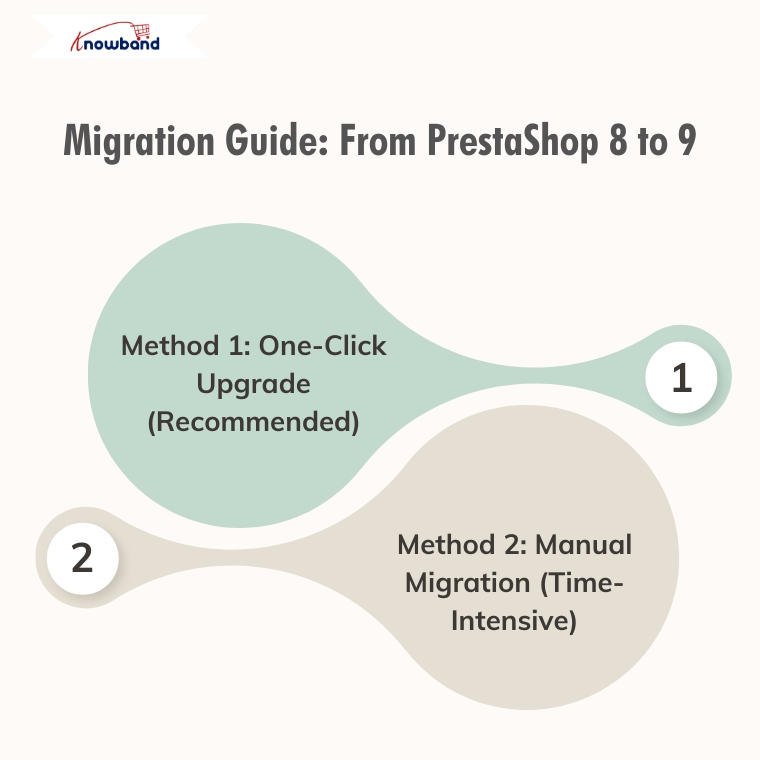
Migration Guide: From PrestaShop 8 to 9

Method 1: One-Click Upgrade (Recommended)

Available Tools:

  • Official 1-Click Upgrade Module: Standard PrestaShop upgrade module handling version transitions automatically
  • MigrationPro: Third-party solution supporting migration with comprehensive data transfer
  • PrestaShop Migrator: Alternative one-click solution for seamless upgrades

Advantages:

  • Automated process with minimal manual intervention
  • Built-in data integrity checks
  • Reduced human error risk
  • Faster migration time
  • Automated backup creation

Autoupgrade Backup Process:

  1. BackupInitialization: Process start, clearing leftover temporary files
  2. BackupFiles: Complete backup of store files, themes, modules, images, and custom code
  3. BackupDatabase: Creates a complete backup of the entire database, including all tables and stored data.
  4. Let me know if you prefer a more concise or more detailed version.
  5. BackupComplete: Process finalisation with verification

Rollback Process: If the upgrade encounters issues, easily revert through the autoupgrade module’s “Rollback” section by selecting the backup archive and monitoring rollback progress.

Data Migration: Automatically handles transfer of products, categories, attributes, customer accounts, order history, CMS pages, configuration settings, images, and compatible module configurations.

Method 2: Manual Migration (Time-Intensive)

Fresh PrestaShop 9 installation followed by manual data migration.

Process Overview:

  1. Review Server Requirements: PHP 8.1+, MySQL 5.7+/MariaDB 10.3+, Composer 2.x, Apache/Nginx
  2. Complete Backup: Database, files, configuration, custom code
  3. Install PrestaShop 9.0: Fresh installation via Git and Composer
  4. Data Migration Strategy: Export from PS8 (products, customers, orders, CMS, configurations) and import to PS9 using native tools, third-party modules, or manual entry
  5. Module Compatibility Assessment: Audit existing modules, update compatible ones, identify alternatives for incompatible modules
  6. Theme Reconstruction: Rebuild themes using PS9’s updated architecture, adapt to Symfony requirements
  7. Comprehensive Testing: Front office (browsing, checkout, payments, mobile) and back office (product management, orders, reporting) functionality

Recommendation

Method 1(One-Click Upgrade) is strongly recommended for most merchants due to:

  • Significantly reduced migration time
  • Lower risk of data loss/corruption
  • Automated handling of complex data relationships
  • Built-in rollback capabilities
  • Professional support availability

Consider Method 2 (Manual Migration) only for specific customisation requirements necessitating a fresh installation or when automated tools are incompatible.

Post-Migration Checklist

Regardless of the chosen method:

  • Verify all critical store functions
  • Test payment and shipping integrations
  • Confirm SEO settings and URL structures
  • Update DNS and SSL certificates if needed
  • Monitor site performance and loading speeds
  • Train staff on interface changes

Final Thoughts

PrestaShop 9.0 sets a strong course toward improved speed, enhanced security, and a more developer-centric ecosystem. Although upgrading requires planning and effort, long-term benefits are considerable—better performance, cleaner code, enhanced scalability, and modern tooling.

If running an older version, evaluate the long-term value of moving to Prestashop 9. If unsure about the process or lacking in-house developers, consulting with a PrestaShop expert or certified partner is highly recommended.

Still deciding whether to switch?

If you’re unsure whether moving from PrestaShop 8 to 9 is the right step for your store, we invite you to check out our detailed comparison and expert insights.

Discover the key benefits, potential risks, and real-world impact of migrating — and make an informed decision for your business.

Explore the PrestaShop 8 vs 9 Comparison Guide

Should You Move from PrestaShop 8.1 to 9.0? A Complete Feature Comparison

With the release of PrestaShop 9.0, the platform is moving toward a more modern, performance-oriented, and developer-friendly future. However, as with any major update, merchants and developers are left with an important question: Is now the right time to migrate from PrestaShop 8.1?

In this blog, we’ll explore the key differences between PrestaShop 8.1 and 9.0. From performance upgrades to developer tools, we’ll cover everything you need to know to make an informed decision about your store’s future.

Symfony Framework Upgrade: From 4.4 to 6.4

To begin with, one of the most significant changes in PrestaShop 9.0 is the upgrade of the Symfony framework from version 4.4 to Symfony 6.4, the latest long-term support (LTS) release. This transition ensures better stability, security, and access to modern development tools.

Symfony 6.4 will be maintained with bug fixes through November 2026 and security patches until November 2027, ensuring long-term stability for evolving projects. By comparison, Symfony 4.4—used in PrestaShop 8.1—has already reached the end of its support life. Therefore, PrestaShop 9.0 becomes the smarter choice for long-term projects.

PHP Compatibility and Performance Enhancements

In addition, PrestaShop 9.0 introduces support for PHP 8.1, 8.2, and 8.3. This allows merchants to benefit from improved performance, better memory handling, and modern PHP features.

Unlike PrestaShop 8.1, which stopped at PHP 8.1, the new version embraces the latest PHP releases, representing a major step forward. As a result, PrestaShop 9.0 is better aligned with modern PHP standards and development practices. However, keep in mind that older hosting environments and custom code may require updates to ensure compatibility.

Modern API Platform for Headless Commerce

Furthermore, PrestaShop 9.0 brings a brand-new API system based on API Platform v3, dramatically improving how it interacts with external applications.

This makes it ideal for headless commerce architectures, mobile app integrations, and third-party services. In contrast, PrestaShop 8.1 relied on a legacy API, which lacked the flexibility and scalability modern developers expect. As a result, the new API system opens up a world of opportunities for automation and integration.

PrestaShop 9 debuts a completely reimagined Admin API, built using API Platform—a cutting-edge PHP framework known for its flexibility and power. This innovation marks a significant leap toward creating a more open, extensible, and developer-focused PrestaShop environment.

Here’s what the new Admin API offers:

  • Simplified integration with external platforms such as ERPs, CRMs, and marketing tools.
  • Automation-ready architecture that helps reduce manual store management and boosts operational efficiency.
  • RESTful structure with JSON formatting, ensuring ease of use for developers accustomed to modern API standards.
  • Future-ready modularity, allowing the system to grow and adapt with community and business demands.

It’s worth noting that the Admin API is still evolving. While the core framework is already in place, additional features and endpoints are being actively developed.

Key Hook Updates in PrestaShop 9

 PrestaShop 9 retains most of the widely used hooks from version 8 to ensure module and theme compatibility. Common front-office hooks like displayHeader, displayFooter, displayHome, and displayProductButtons remain supported. In the back office, important hooks such as displayBackOfficeHeader, displayAdminOrderMain, and displayAdminProductsExtra are still available for extending core functionality.

Alongside these, PrestaShop 9 introduces modern Symfony-based hooks like actionSymfonyResponse, actionAfterCartSave, and actionProductFormBuilderModifier. These offer a cleaner, event-driven approach to customisation and are part of the platform’s move toward a more modular, scalable structure.

Redesigned Back Office Using Symfony and Twig

Another significant improvement is the full revamp of the back office, now built with Symfony and Twig for a more modern and maintainable structure. This results in a more intuitive, mobile-friendly, and user-centred admin experience.

For store owners, the redesigned layout means easier navigation and improved productivity. For developers, the shift supports cleaner templating and reduces legacy code dependencies. On the other hand, PrestaShop 8.1 retains a more traditional interface, which may now feel outdated in comparison.

Developer-Focused Improvements

Additionally, PrestaShop 9.0 has replaced several outdated libraries used in previous versions. For example:

  • Guzzle HTTP Client → Symfony HTTP Client 
  • SwiftMailer → Symfony Mailer 

These updates result in a more secure, efficient, and future-proof module and email handling.

Moreover, the login system has been modernised. Legacy hooks have been removed, and a new actionBackOfficeLoginForm hook has been introduced, offering cleaner and more customizable authentication flows.

Transition Toward Twig Templates

Importantly, PrestaShop 9.0 also makes a bold move toward full Twig integration, gradually replacing the legacy Smarty engine. Twig is now widely used in both front and back offices, offering more readable, modular, and reusable templates.

For theme developers, this is a significant improvement. In contrast, PrestaShop 8.1’s reliance on Smarty limits flexibility and long-term maintainability.

Should You Upgrade to PrestaShop 9.0?

PrestaShop 9.0 brings major improvements—but before upgrading, make sure your store is ready to handle the change. If your themes, modules, and hosting environment are compatible—or can be easily updated—then migrating can bring notable performance and UX benefits.

Alternatively, if your current store depends heavily on legacy plugins or complex custom code, it might be wiser to wait until broader module support becomes available. Testing in a staging environment is highly recommended before committing to a full upgrade.

Migration Tips for Store Owners

Before making the switch, follow these best practices:

  • Backup your entire store, including the database and any custom files.
  • Test the upgrade in a staging environment first to avoid disrupting your live store.
  • Verify compatibility for all third-party themes and modules.
  • Monitor community feedback for bug reports and migration issues.
  • Conduct thorough testing, especially checkout, payment, and product display areas. 

Final Thoughts

PrestaShop 9.0 marks a major leap toward a modern, secure, and scalable e-commerce platform. From faster performance and updated frameworks to a cleaner developer experience, it brings meaningful benefits for merchants and developers alike.

In conclusion, while migration requires effort and planning, the long-term gains make it a worthwhile investment. Whether you’re a seasoned PrestaShop user or planning your first store, now is an excellent time to explore what version 9.0 can do for your business.

If you’re looking for a reliable solution to ensure a smooth upgrade, KnowBand offers custom module development and PrestaShop 9.0-ready extensions that can accelerate your transition. Their expert support and robust library of PrestaShop modules make them a valuable partner during major upgrades.