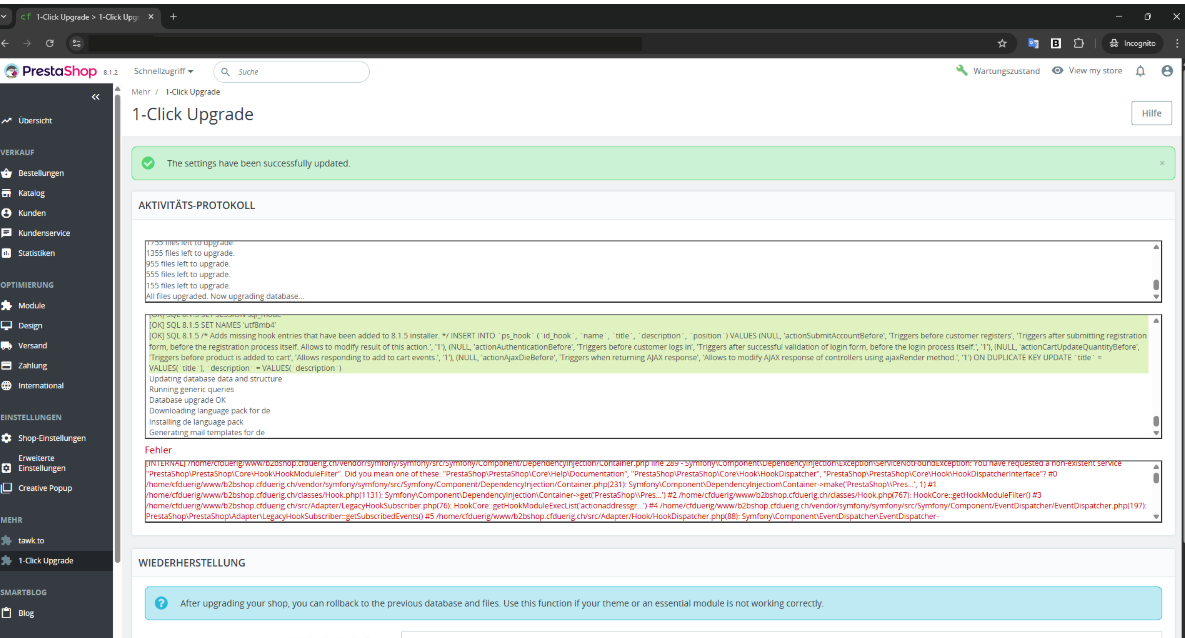
Using PrestaShop Hooks Effectively in Your Module Development

If you’ve spent any real time building PrestaShop modules, hooks are probably where most of your battles have been fought. They’re how your module speaks to the core — how you plug in functionality without ever cracking open a file you shouldn’t be touching. Knowing they exist is one thing. Using them without shooting yourself in the foot is another.

What a Hook Actually Is

At its simplest, a hook is a moment in PrestaShop’s execution where it pauses and checks whether anyone’s listening. If your module is registered for that hook, it gets a turn to respond.

There are two types worth distinguishing: action hooks and display hooks. Action hooks are for running logic tied to an event,  an order being placed, a product being saved, that sort of thing. Display hooks are for injecting HTML into specific spots on the storefront or back office. The distinction shapes how you write the method. Action hooks process something and usually return nothing meaningful. Display hooks return rendered HTML that PrestaShop slots into the page.

Where Developers Go Wrong with Registration

The most common early mistake is registering hooks in the wrong place or in a disorganized way. Registration belongs in your module’s install() method via $this->registerHook(). You can pass an array of hook names in one call — which is much tidier than stringing together repeated calls.

Just as important: unregister them in uninstall(). It’s easy to skip this and easy to regret. Orphaned hook registrations sitting in the database after a module’s been removed can cause genuinely confusing behavior down the line. A clean pattern looks roughly like this:

public function install()

{

    return parent::install()

        && $this->registerHook(['displayHeader',

           'actionOrderStatusUpdate',

           'displayFooterProduct']);

}


Get the Method Names Right

PrestaShop resolves hook methods by convention: hookHookName(), with the hook name in camelCase. So displayHeader maps to hookDisplayHeader(). Mess up the casing and PrestaShop silently skips your method, no error, no log entry, nothing. 

It’s one of those bugs that can eat an embarrassing amount of debugging time before you spot it.

Every hook method receives a $params array. What’s inside depends entirely on which hook triggered it. During development, dump $params once before writing any real logic. The documentation is a decent starting point but it doesn’t always reflect what actually gets passed in.
 

Handling Display Hooks Properly

For display hooks, the standard approach is to assign variables to Smarty and return the output of $this->display() pointing to a .tpl file. Keep your templates in views/templates/hook/ inside your module,  it’s the conventional structure and makes things easier to navigate as the module grows.

One detail worth emphasizing: always return the output, never echo it. The hook system collects return values and places them where they belong in the layout. If you echo directly, the output ends up at the top of the page regardless of where the hook actually sits.
When Built-In Hooks Aren’t Enough

PrestaShop’s native hooks cover a lot of ground, but there are situations — especially when building modules meant to be extended, where you need something more targeted. You can register a custom hook with Hook::register() and fire it using Hook::exec() from anywhere in your codebase.

Custom hooks are particularly useful in multi-module projects. Instead of modules calling each other directly, you expose a hook and let other modules respond independently. It keeps the architecture clean and makes future changes much less painful.

Don’t Ignore the Performance Side

It’s easy to underestimate how much damage a poorly optimized hook method can do. Hooks like displayHeader fire on almost every page load. If your method is hitting the database or calling an external API without any caching, page speed takes a real hit — and your clients will notice before you do.

A few habits help. Cache anything that doesn’t change between requests. Use PrestaShop’s built-in cache layer where it fits. And if your hook logic only applies under certain conditions, check those conditions at the top of the method and return early if they’re not met. Keeps the overhead low and the code readable.

When the Hook Isn’t Firing

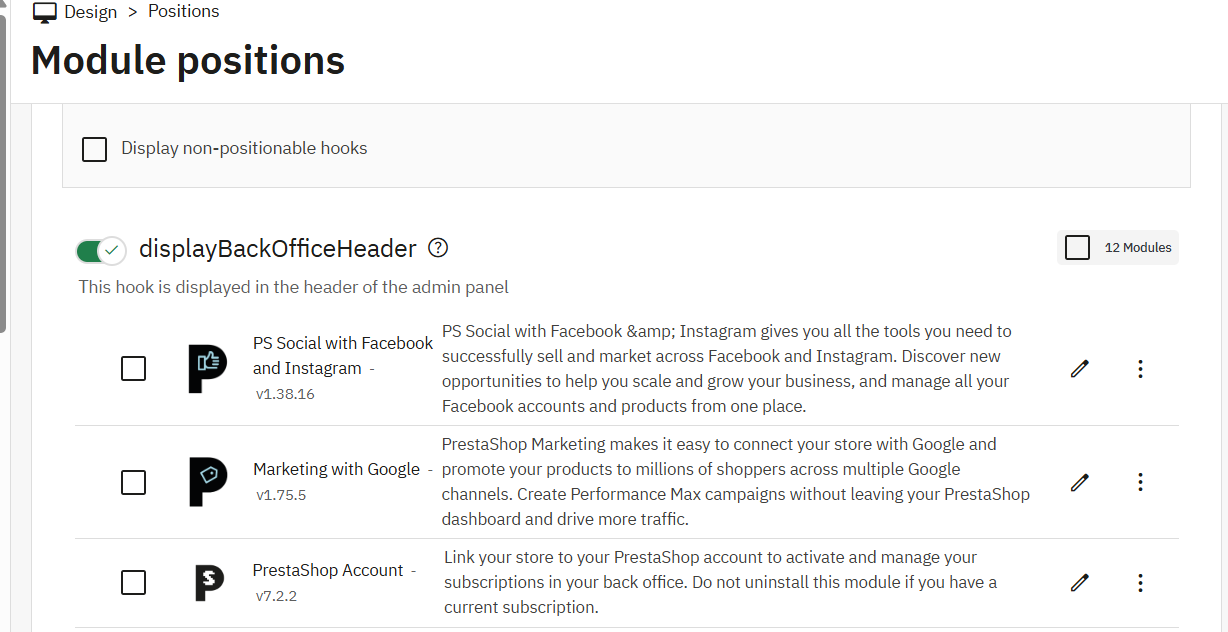
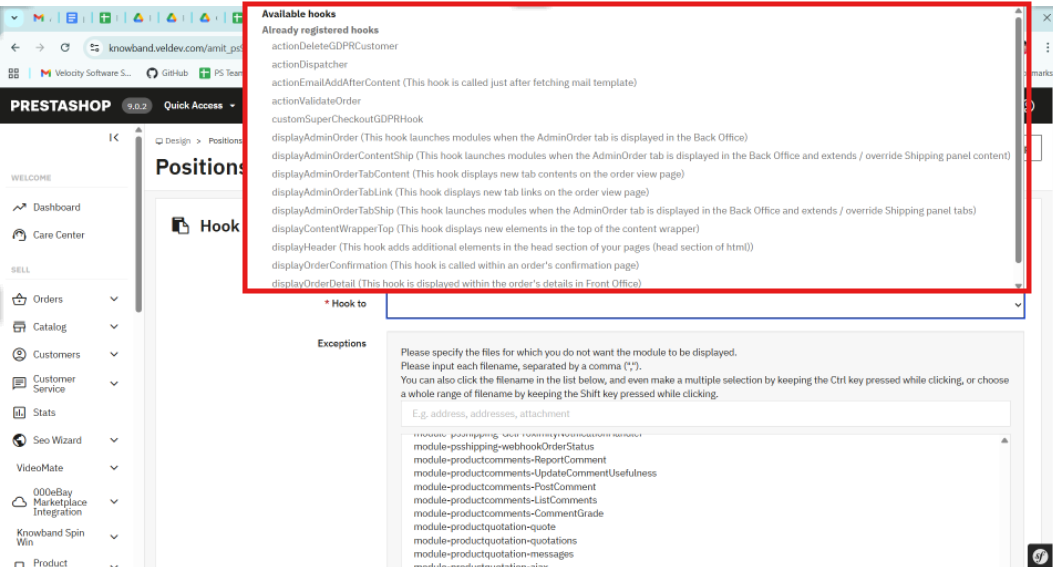
When something isn’t working as expected, the first thing to check is whether the module is actually attached to the hook. Head to Modules > Positions in the back office, or look directly at the hook table in the database. A module can be installed while a hook registration silently failed during setup.

Custom Development Services

Tailored solutions by Knowband for your eCommerce success

Looking for powerful and scalable solutions? Knowband offers expert custom development services to help you build high-performance eCommerce features with ease.

✔ Custom Module Development
✔ eCommerce Plugins
✔ API Integration
✔ Performance Optimization
✔ Third-party Integration

Also worth considering: execution order. If a module earlier in the chain throws an unhandled exception, PrestaShop can stop processing everything else on that hook. The Positions panel lets you adjust the order, and sometimes that’s all it takes to fix what looks like a mysterious disappearing hook.

The Takeaway

Hooks are what make PrestaShop modules actually modular. Used well, they let you build clean integrations that don’t step on the core or on other modules. The fundamentals aren’t complicated: register in install(), name your methods precisely, return from display hooks, cache on high-traffic hooks, and reach for custom hooks when the built-in set falls short.

Once that becomes a habit, the development process gets a lot smoother,  and your codebase stays something you’ll actually want to revisit later

At Knowband, our development team regularly works with complex PrestaShop module architectures, where efficient hook usage becomes critical for performance and scalability. If you’re looking to speed up development or implement advanced functionality, exploring professionally built modules and solutions can save significant time and effort.
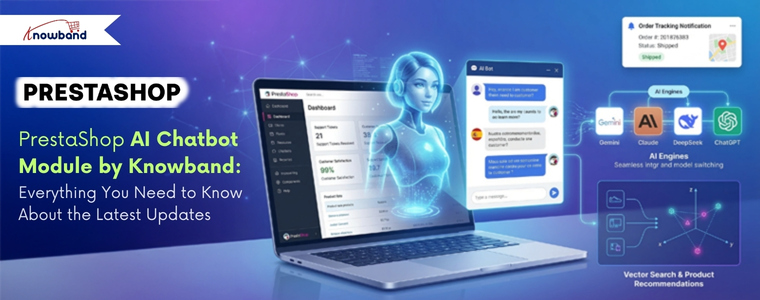
PrestaShop AI Chatbot Module by Knowband: Everything You Need to Know About the Latest Updates

Running an online store in 2026 means you aren’t just competing on price; you’re competing on how quickly and accurately you can answer a customer’s question. If a customer has to wait two hours for an email reply about stock levels, they’re already gone.

Knowband’s latest update to the PrestaShop AI Chatbot Module changes the game by moving beyond simple “if/then” logic. It’s no longer just a chat box, but it’s a high-level Live AI assistant that understands the customer’s intent. Here is a look at the major upgrades and how they actually impact your day-to-day operations.

The Big Update in Prestashop AI Chatbot Addon

Gemini, Claude, and DeepSeek Integration

Recently, the Prestashop AI Chatbot Module supported only OpenAI’s ChatGPT. That’s changed. The PrestaShop Live AI ChatBot Module now supports integration with Google’s Gemini, Anthropic’s Claude, and DeepSeek, giving store owners real choices when it comes to which AI engine powers their chatbot.

Better Control and Security

An AI chatbot is only useful if it’s secure and manageable. Knowband has introduced several security and management features for the admin side:

  • IP-Based User Blocking: Every store deals with bots or “problem” users who spam chat systems. Now, you can now block specific IP addresses to ensure your AI resources are reserved for genuine customers.
  • Chat Availability Scheduling: Sometimes, you only want the AI Chatbot to be active during specific hours. Therefore, you can now set a custom schedule for when the chatbot appears on the front end.
  • Detailed Chat Logs: The Prestashop AI Chatbot module now stores full interaction histories with users. By reviewing these, you can see exactly where customers are getting confused and refine your product descriptions or AI prompts accordingly.

🤖 Also on OpenCart?


Automate Store Conversations with an OpenCart AI Chatbot using OpenAI


Answer customer questions 24/7, reduce cart abandonment, and free up your support team, all with one smart AI Chatbot for OpenCart.

Try the demo for Free Now →

Smart Features of Prestashop AI Chatbot Module

The PrestaShop ChatGPT AI Bot doesn’t just talk; it does the heavy lifting of a sales assistant by recommending the products.

1. Vector Search (Qdrant Integration)

This AI Chatbot typically searches for exact keywords. If a customer types “ocean colored shirt” but your product is named “Navy Blue Tee,” a standard search might fail. With Vector Search integration, the chatbot understands the context and intent, showing the customer exactly what they mean, not just what they typed.

2. Live Store Data Retrieval

The Chatbot pulls real-time data directly from your PrestaShop catalogue. It can instantly answer the information of the catalogues available in your catalogue

3. Order Tracking Made Easy

One of the most common support tickets is “Where is my order?” This eCommerce AI Chatbot handles this automatically. Moreover, customers can simply provide their queries about the recent order ID, and the chatbot fetches the real-time status and tracking info without you ever lifting a finger.

4. Fully Customizable Interface

The chatbot’s visual appearance, like background colour, chat box styling, button design, icons, can all be adjusted to match your store’s branding. This is the kind of detail that makes the PrestaShop AI ChatBot Module feel like a native part of your store rather than a third-party widget.

5. Multi-Language and Multi-Currency Support

The Prestashop AI-Powered module detects the language and currency settings of your store automatically and responds accordingly. For stores selling across multiple regions, this removes the need to maintain separate chatbot instances for different markets. It just works, in the language and currency your customers expect.

The Conclusion

The PrestaShop AI Chatbot Addon by Knowband has evolved with new advanced features. With support for multiple AI engines, detailed chat logs, IP-based controls, and scheduling on top of already having the vector search, automatic live AI Chatbot, multilingual currency and language support,  it’s become a genuinely capable customer engagement tool.

The key question for any store owner is always: Will this reduce workload while maintaining (or improving) the customer experience? Based on what this module now offers, the answer is a credible yes, provided you’re willing to take a few hours to configure it properly at the start.

If your store is growing and your support inbox is starting to feel like it’s running the show, this is an AI Chatbot Module that can be game changer.

Checkout the latest AI Modules here.

How to Use PrestaShop’s Override System Without Breaking Core

PrestaShop’s override system allows you customize core behavior without touching original files. But used carelessly, it creates fragile stores that break on updates. This guide by Knowband covers how overrides work, when to use them, and three critical gotchas every developer should know.

What Is the Override System?

PrestaShop uses PHP inheritance to let you swap in your own version of any core class without touching the originals. Every core class is named with a Core suffix for example, ProductCore. If you create /override/classes/Product.php with a class called Product that extends ProductCore, PrestaShop loads your version instead. The same applies to controllers.

Only override the specific methods you need to change never copy an entire class file. This keeps your override lean and far less likely to conflict with future updates.

Example, exposing the current controller name to your header template:

Where to Put Your Override Files

Overrides can live in two places. The global /override/ directory at the root of your installation is active immediately after clearing the cache. The better approach is bundling overrides inside a module.

Placing an override inside a module (e.g. /modules/mymodule/override/classes/Product.php) causes PrestaShop to copy it to /override/ on installation and remove it cleanly on uninstall. This is the recommended approach.

A quick example of a class override. Say you want to expose the current controller name to your header template:

// /override/classes/controllers/FrontController.php

class FrontController extends FrontControllerCore {

    public function initHeader() {

        self::$smarty->assign('currentController', get_class($this));

        return parent::initHeader();

    } }

Always call the parent method unless you have a deliberate reason not to. Skipping it will silently break core functionality.

Overriding Module Classes and Controllers

Since PrestaShop 1.6, you can override module classes too. Append “Override” to the class name (e.g. BlockUserInfoOverride extending BlockUserInfo) and place it under /override/modules/. The same pattern applies to module controllers. After any override, clear the cache, specifically delete /cache/class_index.php, or it won’t take effect.

When NOT to Use Overrides

Overrides are exclusive — only one per class can exist. They’re also forbidden in marketplace modules and should be reserved for private store customisations. Before reaching for an override, consider one of these alternatives:

  • Hooks: PrestaShop triggers hook events across every page load — you can tap into them from a module to run custom code or push content into the page without going anywhere near a core class.
  • Symfony Service Overrides: Parts of PrestaShop that have been migrated to Symfony give you a cleaner path through the service container. You decorate or replace a service rather than stomping on the class itself.
  • Custom ObjectModel: Need to add fields to a core entity? Build your own ObjectModel with its own table rather than patching the existing one.

Keeping Overrides Safe Through Updates

PrestaShop updates can silently change method signatures, leaving your override running on stale assumptions. Treat every override as something to revisit after each update. Comment what you changed and why, check the changelog, and keep the override as small as possible. A narrow, well-commented override that calls parent methods properly survives upgrades. A full class copy is a bug waiting to surface.

The “Ghost” Cache: Why Your Override Seems Invisible

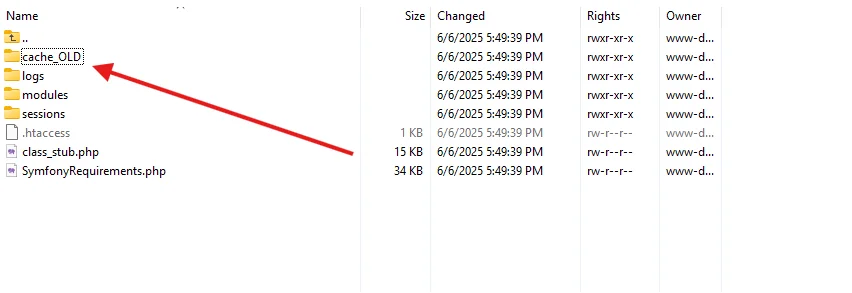
The number one reason developers think their override is broken: PrestaShop doesn’t scan /override/ on every request. It compiles a class map into /cache/class_index.php, and until that file is deleted and regenerated, your override is invisible, no matter how correct the code. Clearing the Smarty cache is not enough. Delete class_index.php manually via FTP/SSH, through Advanced Parameters > Performance in the back office, or via the Symfony console.

Figure 1: The PrestaShop override system flow and the role of /cache/class_index.php.


The Symfony Wall: Legacy Overrides Don’t Work for Modern Controllers

This legacy PHP system only works on PrestaShop’s older ObjectModel layer. From PS 1.7 onward, key back office areas, including the new Product Page and Order screens — have been rewritten in Symfony. The PHP override system does not affect these Symfony controllers. For those, use Service Decoration, wrapping or replacing a service via your module’s services.yml file. If an override has no effect even after clearing class_index.php, the controller is likely Symfony-migrated.

Conflict Resolution: When Two Modules Want the Same Class

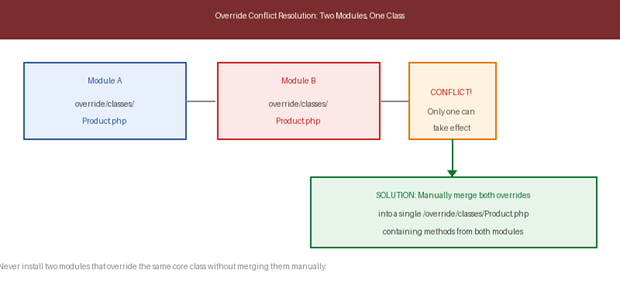
When two modules both override the same class, PrestaShop throws an error on the second installation and leaves its override inactive. The fix is manual: open both files, merge all methods into a single /override/ file that extends the Core class, then delete class_index.php. Add comments identifying which module contributed each method. This is why overrides are banned in marketplace modules, conflicts become the merchant’s problem. If building for others, use hooks.

Figure 2: How override conflicts arise when two modules target the same class, and the manual merge resolution.

About Knowband

Knowband is a trusted eCommerce plugin and extension provider with years of experience helping online merchants build faster, smarter, and more feature-rich stores. Whether you run your store on PrestaShop, OpenCart, Shopify, WooCommerce, Magento, or any other major platform, Knowband offers a wide range of ready-to-use plugins and extensions that help you enhance functionality, improve performance, and deliver a better shopping experience, without needing to build from scratch.

Why PrestaShop and OpenCart Merchants Are Choosing Knowband’s Google Shopping Integration

Getting consistent, purchase-ready traffic to your store is hard. You can spend weeks fine-tuning your social ads or pouring money into influencer campaigns, and still not see the returns you were hoping for. 

For stores built on PrestaShop or OpenCart, tapping into Google Shopping isn’t always easy. Introducing the PrestaShop Google Shopping Module and OpenCart Google Shopping Extension are built specifically to handle that connection, and from what merchants report, they do it well.

Not all website visitors are the same. Someone casually browsing is very different from someone who typed “buy waterproof hiking boots size 11” into Google. That second person is ready to buy, they just need to decide where.

Google Shopping puts your products in front of people like that. They’ve already made up their mind about what they want. Now they’re comparing prices and checking availability. That’s why Google Shopping tends to convert better than most other paid advertising options.

And because your product image, price, and store name show up before anyone even clicks, you’re only attracting people who are genuinely interested. For PrestaShop and OpenCart store owners who want to use their ad budget wisely, this kind of targeted traffic really helps.

🛍️ Also on PrestaShop?


Sync Smarter, Sell Faster: PrestaShop Google Shopping Integration Module by Knowband


Automatically sync your product catalog with Google Merchant Center, track performance with UTM parameters, and reach millions of high-intent shoppers.

Know the Google Shopping Module →

How Knowband’s eCommerce Google Shopping Module Helps E-Merchants

The Knowband PrestaShop Google Shopping Module and the Knowband OpenCart Google Shopping Plugin were both developed to solve the same core problem: listing your product catalogue into Google Merchant Centre cleanly, accurately, and without constant manual work. And that problem is bigger than it sounds.

Feed management, when done manually, is a genuine headache. As the Prices change, Stock runs out, New variants get added it gets very difficult to synchronise all the changes to Google merchant. If your feed doesn’t reflect those changes quickly, you end up with disapproved products from Google, confused shoppers clicking on listings that are out of stock, and in worse cases, policy violations that can affect your entire Merchant Centre account.

 Knowband’s Prestashop Google Shopping Integration Module solution handles all of that automatically, syncing price and inventory in real time, mapping categories correctly, and generating feeds that meet Google’s requirements without you having to manage it by hand.

Key Features of the Opencart Google Shopping Extension

  1. Google Merchant Centre Integration: This Google Shopping Integrations connect your store to Google Merchant Centre through a straightforward setup process. Since no technical knowledge or coding is required, your product data syncs reliably.
  2. Product Feed Generation: You can also generate a Google Shopping product feed in XML or CSV format. Furthermore, you can choose between real-time or scheduled updates, so your listings stay current while reducing manual work.
  3. Category & Attribute Mapping Store admins can also map your store categories to Google Product Categories and match product attributes like GTIN, MPN, brand, availability, and condition. As a result, your products get approved faster and listed more accurately.
  4. Multi-Country & Multi-Language Support You can set up separate feeds for different countries, languages, and currencies. Furthermore, this way, you can reach international audiences and run Google Shopping Ads across multiple markets with ease.

    Start Selling on Etsy from Your Prestashop Store

    Now selling on Etsy is easy with Knowband’s Prestashop Etsy Marketplace Module.


    Try the Demo

  5. Cron-Based Synchronisation Using this Knowband Prestashop Google Shopping Module, schedule automatic feed updates via cron jobs to keep pricing, stock levels, and product details consistently accurate. Furthermore, this helps avoid disapproval caused by outdated information.
  6. Product Filtering Store admins can also choose which products appear in your feed by filtering on category, price range, stock status, or specific product IDs. That way, only the right products get submitted to Google Shopping.

Final Thoughts

Google Shopping isn’t a magic solution, but it’s one of the more reliable growth channels available to eCommerce stores today, especially for merchants on PrestaShop and OpenCart who want to drive direct traffic without being tied to marketplace fees. The Knowband PrestaShop Google Shopping Module and Knowband OpenCart Google Shopping Plugin take care of the technical side of that equation: feed generation, real-time syncing, category mapping, and Merchant Centre compatibility.

From there, it’s about building on that foundation, optimising your product data, testing campaign structures, and paying attention to what the numbers are telling you. Done consistently, it’s the kind of channel that compounds. And for stores that are serious about growing on their own terms, that’s exactly what you want.


PrestaShop LLMs TXT File Generator: Unlock AI-Driven Product Discovery for Your Store

The rapid rise of AI-powered platforms has completely transformed how users search for information online. Today, customers no longer rely only on traditional search engines. Instead, they first ask questions on AI platforms like ChatGPT, Gemini, Claude, DeepSeek, and Perplexity, even for the smallest queries.

Now imagine this: What if these AI platforms start recommending your PrestaShop products directly to your customers?
Knowband has recently introduced a PrestaShop LLMs TXT Generator , which has become a must-have plugin for modern eCommerce stores.

How does this PrestaShop LLMs TXT File Generator work?

The PrestaShop LLMs TXT Generator is a useful module that creates an llms.txt file for your online shop. This structured file organises information about your products, categories, and content pages in a format that large language models can easily read and understand.

The llms.txt file works as a bridge between your store and popular AI crawlers. Furthermore, it helps AI answer engines and generative search platforms understand, access, and reference your store content accurately.

By placing the llms.txt file on your server, your store becomes compatible with modern AI search models and AI-driven product recommendation engines, ensuring better visibility across next-generation platforms.

🤖 Another AI Tool Worth Knowing


The New PrestaShop AI Chatbot Module: Simple Chat Support That Helps Customers Instantly


While LLM.txt helps AI systems understand your store, the PrestaShop AI Chatbot Module helps your customers get instant answers in real time, product search, order tracking, multilingual support, and more, powered by GPT-4o, DeepSeek, Gemini, and Claude.

Explore the PrestaShop AI Chatbot Module

Why is llms.txt Important for AI Search?

AI answer engines don’t crawl websites the same way traditional search bots do. They require structured, filtered, and permission-based content access to generate reliable responses.

The Knowband PrestaShop LLMs TXT Generator ensures that AI crawlers can:

  • Access store data in an organised manner
  • Identify the correct products and pages
  • Generate accurate AI-powered recommendations

As a result, your products can be referenced when users ask AI tools questions related to your offerings, boosting AI product discovery and brand visibility.

Creating the file comes first. Second, ensure that your robots.txt doesn’t disallow crawlers like GPTBot, PerplexityBot, Google-Extended or Anthropic-AI, and that yourstore.com/llms.txt provides a page rather than a 404 error. Third, analyze three important product pages in plain text, specifications contained in the tabs of JavaScript could remain invisible to AI crawlers. And lastly, find out products that don’t have any meta description and image, and also ensure that policy pages can be viewed without opening an accordion. In case there are any gaps, then the PrestaShop LLMs TXT File will help you create and update the file. ( Updated September 28, 2027)

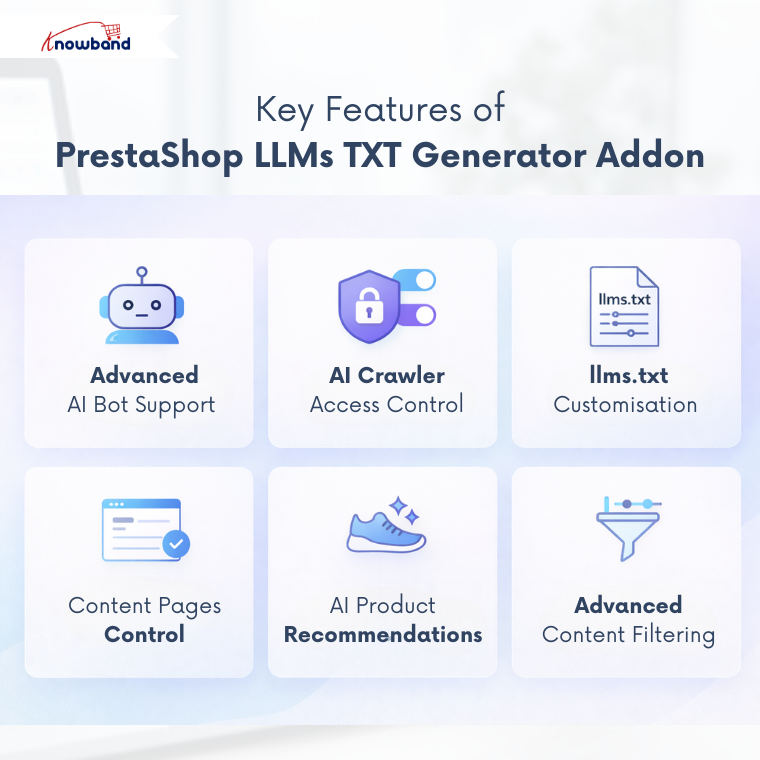
Key Features of PrestaShop LLMs TXT Generator Addon

1. Support for Advanced AI Model Bots

The module supports access for multiple advanced AI crawler bots used by modern AI platforms and answer engines.

This  Prestashop AI Recommendation Module supports bots, including:

  • GPTBot
  • DeepSeekBot
  • Anthropic AI
  • PerplexityBot
  • Google-Extended

This diversity of integration of the Prestashop product recommendation module ensures your store content is ready for ChatGPT product recommendations, AI-driven search results, and future AI models.

2. AI Crawler Access Control

Not every AI crawler should access your entire store. The Knowband module provides full control over AI bot permissions.

This will help the admins to allow or restrict specific AI crawlers and protect sensitive or irrelevant content

3. Customisation of llms.txt Files

The PrestaShop LLMs TXT Generator by Knowband offers extensive customisation options.

Admins can add or modify the store descriptions, product llms.txt content, and category-based llms.txt files and CMS page llms.txt files

Furthermore, this flexibility allows merchants to provide context-rich data to AI engines, improving the quality of AI-generated responses.

4. Access Control for Content Pages

With this module, store owners can select which pages should be included in the llms.txt file. Moreover, you can control access for all product pages, category pages and CMS pages

This ensures that AI engines only reference approved content, preventing misinformation and maintaining brand accuracy

5. Product Recommendation Compatibility

The AI recommendation addon is designed to support evolving AI search technologies and AI-based product recommendations. Moreover, by generating a structured llms.txt file with custom instructions, your store content remains synchronised with platforms like ChatGPT, Gemini, Claude and Perplexity

This helps the AI tools recommend your products more accurately to potential customers.

6. Advanced Content Filtering

The PrestaShop LLMs TXT File Generator allows admins to filter and select specific content.

You can choose the specific products or selected categories as well as CMS pages

Furthermore, this ensures full control over what data is available for AI crawler indexing, AI search visibility, and AI-driven recommendations.

Final Thoughts

The PrestaShop LLMs TXT Generator Module is not just another AI tool, as it’s a future-ready solution for stores. As AI platforms continue to evolve how users discover products, having a proper structured llms.txt file ensures your store stays relevant, visible, and competitive.

By enabling accurate AI platform access, improving product discovery, and supporting next-generation AI models, this amazing module helps your PrestaShop store tap into the new phase of AI-driven search and recommendations.

If you want your products to be found not just on search engines, but also through AI conversations, this addon is an essential investment. 

PrestaShop LLMs TXT Generator Addon: User Manual

The PrestaShop LLMs TXT Generator is a must-have plugin designed to generate the llms.txt file for your store. This file contains structured information related to the store catalogue, including products, categories, and CMS pages.

Nowadays, you see customers first ask the query on AI platforms like ChatGPT, Gemini, and many more. People have become dependent on the AI even for the smallest things. So what if ChatGPT starts recommending your products to customers? Is it amazing, right? Therefore, Knowband has designed this Prestashop LLMs TXT Generator, which helps the AI platforms to recommend your products.

The generated llms.txt file from the Knowband Prestashop llms.txt generators helps AI crawlers and AI answer engines to access store content in an organised manner. By placing this llms.txt file on the server, the store expands with modern AI search and product recommendation AI Models such as ChatGPT, DeepSeek, Gemini, Perplexity, and Claude.

Using this AI product recommendation module for PrestaShop helps improve AI product discovery, supports accurate AI-generated responses, and ensures that store content can be correctly identified and referenced when users search for product- or store-related information on AI-driven search platforms.

1.0.0 Highlighted Key Features of Prestashop LLMs TXT Generator Addon

Support for Advanced AI Model Bots

This PrestaShop module supports access for multiple advanced AI crawler bots used by modern AI answer engines and generative AI search platforms. 

These supported bots include:

  • DeepSeekBot
  • GPTBot
  • Anthropic AI
  • PerplexityBot
  • Google-Extended

Supporting these AI bots helps ensure compatibility with AI product discovery and ChatGPT product recommendations to customers.

AI Crawler Access Control

The Knowband PrestaShop LLMs TXT Generator module allows administrators to manage which AI crawlers can access store content through the llms.txt file.

Customisation of llms.TXT files

The PrestaShop LLMs TXT file generator by Knowband allows admins to add additional content to the llms.txt file.

Customisation options are available in PrestaShop LLMs TXT file generator Addon for store descriptions, products llms.txt files, category product llms.txt files, CMS llms.txt files and many more.

Access Control for Content Pages

This Knowband PrestaShop LLMs TXT Generator for AI search engines allows admins to select which content pages should be included in the llms.txt file, such as product pages, category pages and CMS pages.

This feature in LLMs TXT Generator for prestashop ensures that AI engines answer accurately and do not disclose any other content except the selected one. 

Product Recommendations Compatibility

The PrestaShop LLMs TXT Generator  Addon is designed to develop evolving AI search and AI product recommendations of the ecommerce stores. By creating a structured llms.txt file with additional content and instructions, your content remains synchronised with next-generation AI answer engines like ChatGPT and recommendation platforms.

Content Filtering

The Knowband PrestaShop LLMs TXT File Generator for products allows store admins to filter and select specific products, categories, and CMS pages in the llms.txt file.

This content filtering feature provides full control over which data you can allow to access for Prestashop AI product discovery, AI crawler indexing, and generative AI search by ChatGPT.

2.0.0 Installation Guide for Knowband PrestaShop LLMs TXT Generator Module

Step 1: Purchase and download the Knowband Prestashop LLMs TXT Generator Module.

After the completion of the purchase, you’ll receive the  kbllmstxtgenerator.zip file. 

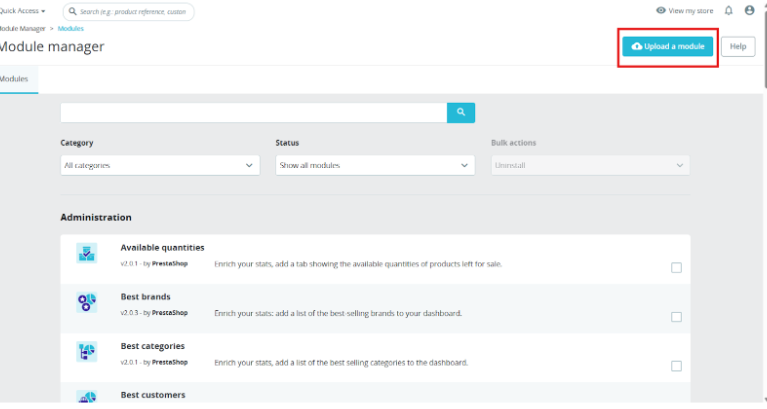
Step 2: Click on Module on your prestashop back office left menu, go to module manager, then you will see the click option. Click on the Upload.

Step 3: Upload and Install the Module. After the complete installation, you have to click on the configuration, and then you will be directed to the configuration page.

Step 4: Now you are ready to configure the LLMs.TXT module.

3.0.0 Backend/Admin Panel of Prestashop Product Recommendation by ChatGPT Module

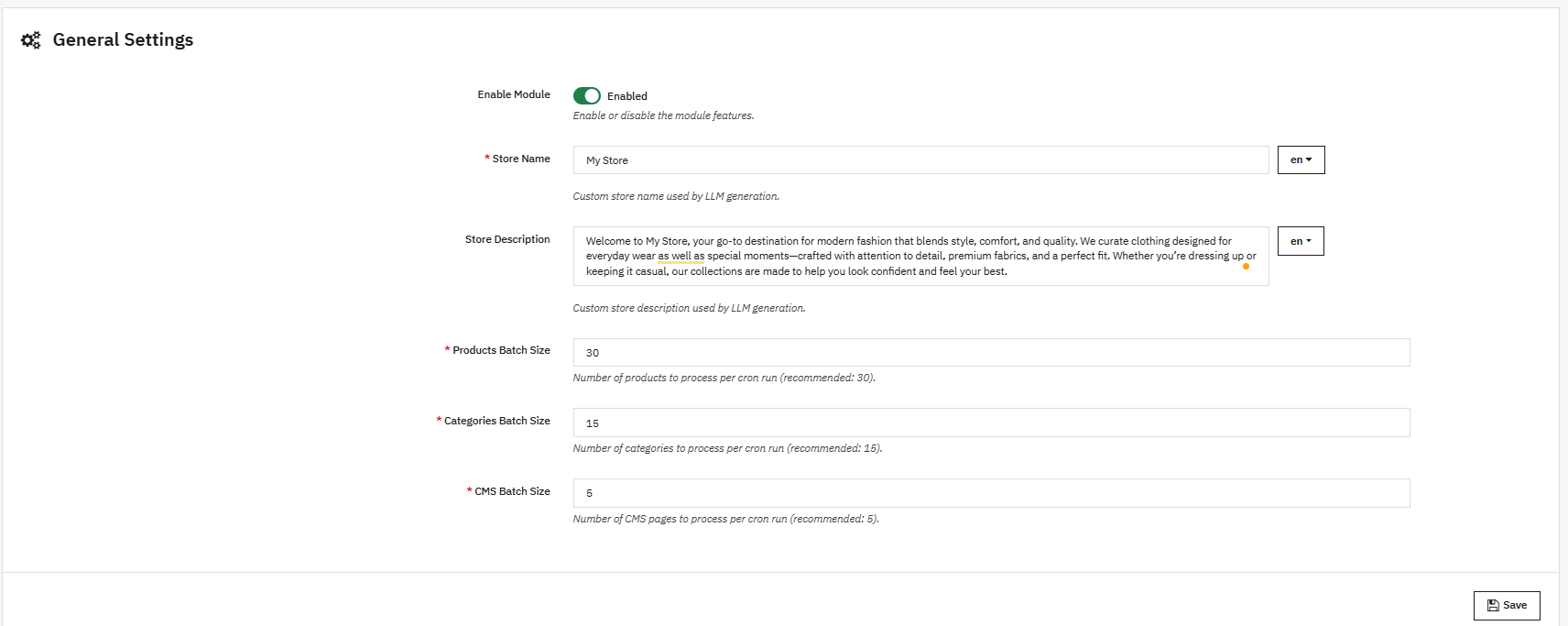
3.1 General Settings

  1. Enable/Disable Module:
    This option in the llms.txt file generator for AI is used to enable or disable the functionality of the PrestaShop LLMs.txt Generator module.
  2. Store Name:
    Store admins enter their store name in this field. This Prestashop LLMs.TXT Generator module also supports the languages that are added in the store.
  3. Store Description:
    This field is used to add the store description to the llms.txt file generated by the module. Furthermore, it helps to describe the store and its catalogue based on the provided content.
  4. Product Batch Size:
    This field in the Prestashop LLMs txt File Generator Addon allows you to define how many products are processed per batch during cron execution. By default, 30 products are processed in one batch.
  5. Category Batch Size:
    This field of category batch size allows the cron to process a specified number of categories per batch.
  6. CMS Batch Size:
    This field allows the cron to process CMS pages per batch. By default, 5 CMS pages are processed in one batch during cron execution in the module.
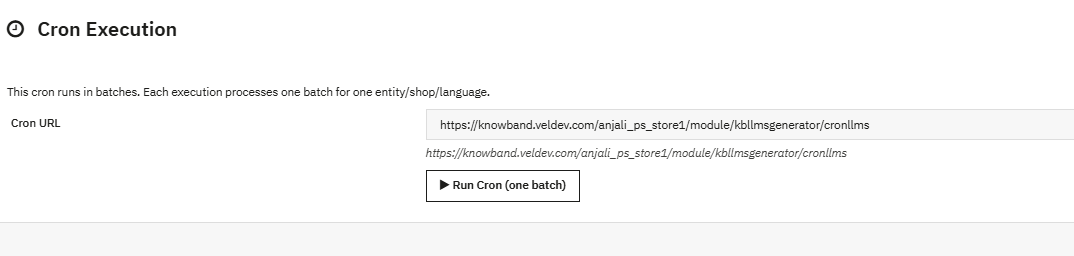
  7. Cron Execution (Batch Processing): This cron job in Prestashop LLMs TXT generator runs in batches. Each execution processes one batch only, for products, categories and CMS pages. After updating settings like general settings, content filtering and customisation of files, running the cron is necessary to reflect any changes.

3.2 Crawlers Setting

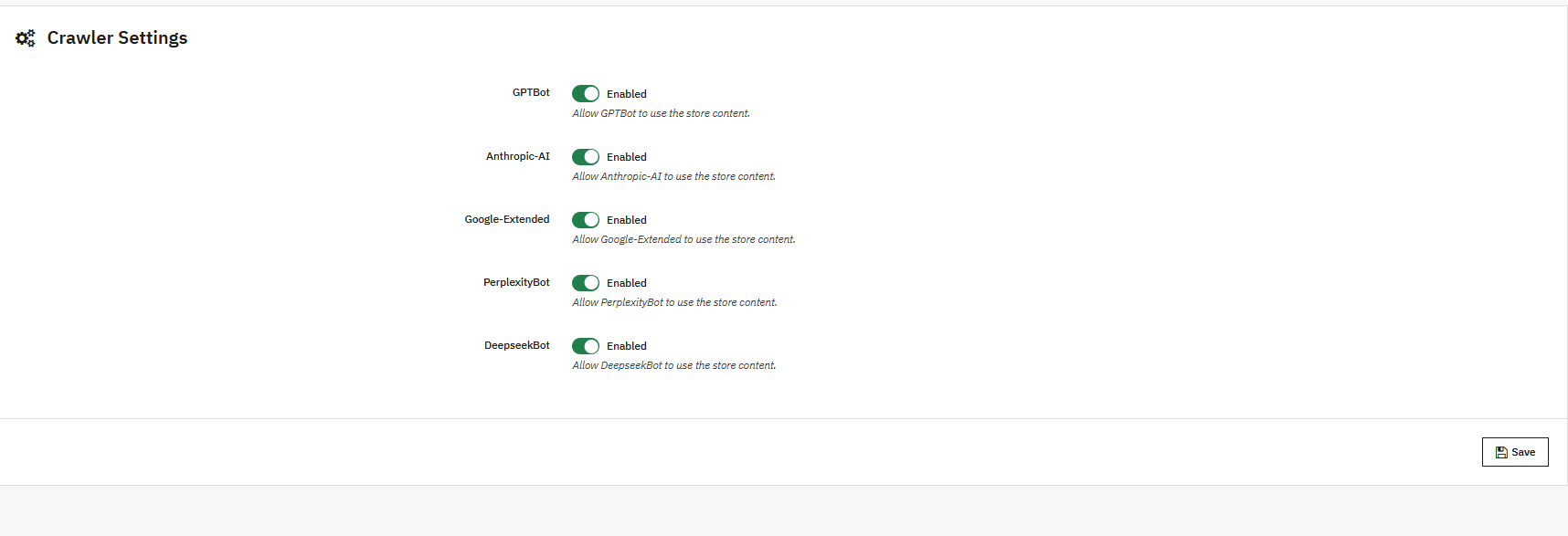
This crawler setting in Prestashop LLMS TXT Generator allows the store owners to manage the AI model’s bots like GPTbot, Google Extended Gemini Bot, DeepSeek and many more

GPTBot: AI Crawler of OpenAI ChatGPT, collects the data to train the ChatGPT AI Models. You can allow or disallow this using the 

DeepseekBot: AI crawler bot of deepseek which gathers public web data of the store to train and refine DeepSeek’s large language models

Google-Extended: This Google’s AI-specific crawler (separate from Googlebot) allows the collection of content specifically for training Google’s AI models (like Gemini),

PerplexityBot: This web crawler of perplexity AI is used to fetch up-to-date web content to generate cited answers and summaries

Anthropic-AI: Lastly, this web crawler of Anthropic is used to collect public web data to train and improve Claude AI models. You can enable or disallow all the AI Crawler bots. 

3.3 Content Filtering in Prestashop LLMs.txt Generator for AI Tools

The Content Filtering feature allows store admins to control which store content is included in the generated llms.txt file. Furthermore, this helps ensure that only relevant and intended information is processed and shared, while unnecessary or sensitive content can not be exposed.

1. Shop Context

This option in the Prestashop LLM.txt Generator allows you to select the specific shop when you have multiple stores.

If your prestashop store includes multiple shops, you can generate the llms.txt file for a single shop or apply the settings individually to each shop. LLMs TXT files will be generated for each store separately.

2. Product Details

The Product Details content filtering option allows you to control which products are included.

Moreover, store owners can select all products or select specific products for the llms.txt files for the product.

If you want to limit the llms.txt file to featured products, active products, or selected products, while excluding extra items

3. Category Details

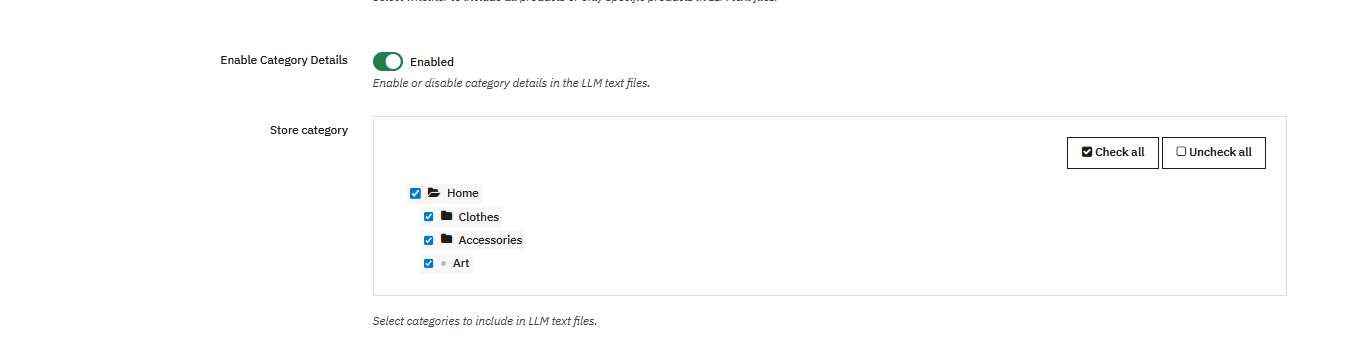
The Category content filtering options allow you to manage category-level items.

This furthermore helps maintain a clean and organised structure by including only relevant categories and excluding the inactive ones.

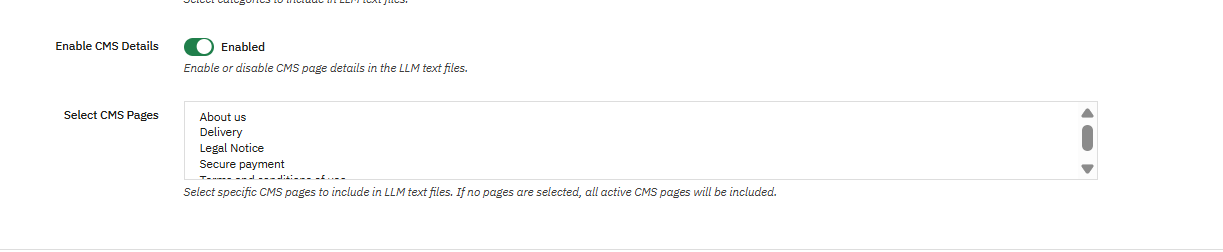
4. CMS Pages

The CMS Pages option allows you to control which CMS content should be included in cms llms.txt file. Furthermore, you can select the pages depending on your needs to avoid the exposure of other CMS pages.

Hence, this feature of Prestashop LLMs.TXT Generator is useful for excluding internal or temporary CMS pages of your store while keeping essential store information available.

4.0 Customisation of Prestashop llms.txt Generator Addon

Customization

The customisation options in the PrestaShop LLMs TXT Generator allow you to add additional content in the llms.txt files. These options help the store add category, product, and CMS data with internal notes or information so it can be clearly understood by crawler bots.

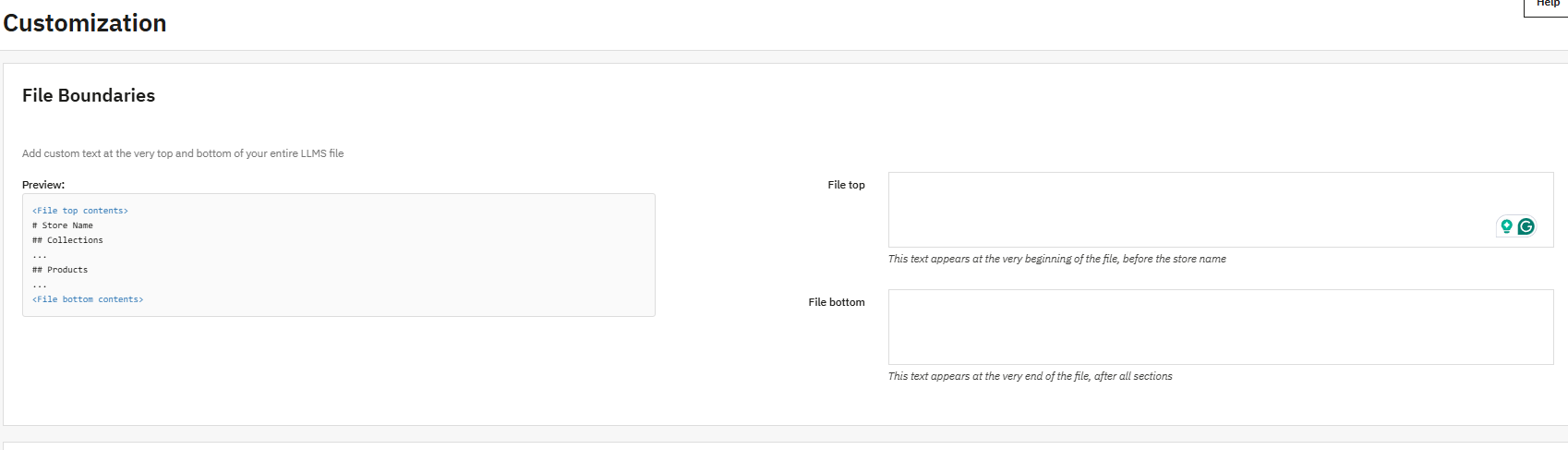
4.0.1 File Boundaries Customisations

The File Boundaries feature allows you to add custom text at specific locations, like top and bottom, in the llms.txt file. Moreover, this makes it possible to include additional notes or instructions without modifying core store data. This gives a clear idea to the bots to understand the structure of the file.

These fields are commonly used to add general instructions or notes that should be read first or last by crawlers and answer engines.

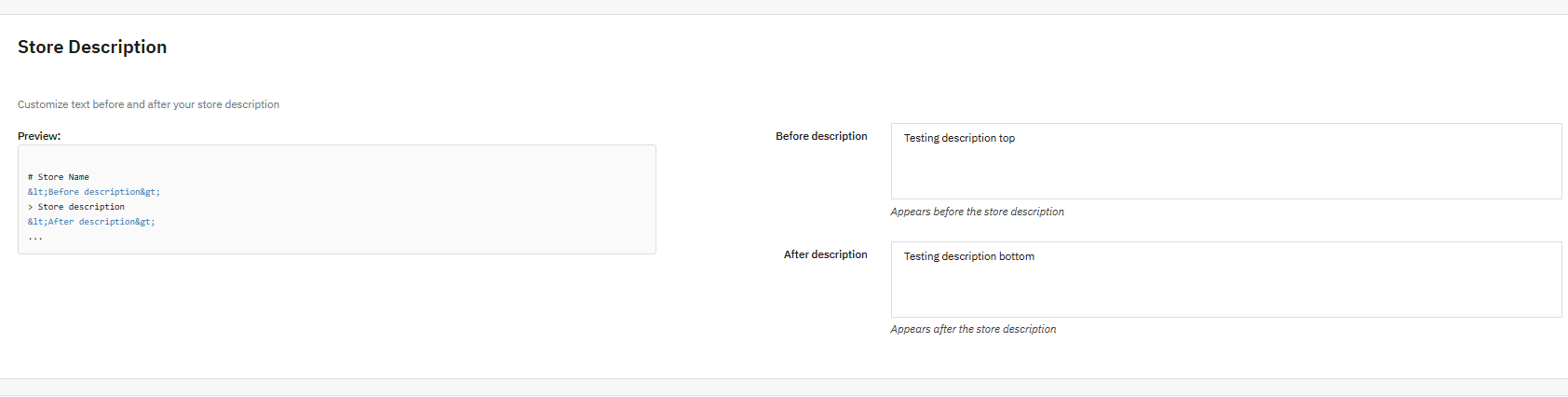
4.0.2 Store Description

Short description customisation in LLMs TXT Generator for PrestaShop allows you to customise text that shows before and after the store description in the llms.txt file.

By adding contextual information around the store description, merchants can clearly define the store’s descriptions, main catalogue, or special instructions. Furthermore, this helps generative search platforms and search engines to better understand the store when generating responses for customers.

4.0.3 Category Section Customisation

Additionally, store owners can add extra content or text before and after the categories section of the llms.txt file.

Furthermore, this is useful for explaining category structure, naming conventions, or relationships between categories. Also, clear category context improves product discovery and helps crawlers correctly interpret category-level data when indexing your PrestaShop store.

4.0.4 Product Section Customisation

The product section customisation of files allows you to insert text before and after the product details sections.

Furthermore, this can be used to add product-related content or guidelines without changing the actual product information. These additional notes allow the AI models to understand the content easily and improve the recommendations.

4.0.5 CMS Pages Section Customisation

CMS Pages section customization the store owners to add additional notes before and after the CMS Pages section in the llms.txt file.

CMS pages often contain important information such as store policies, shipping details, and FAQs. Furthermore, adding contextual text around this section helps crawlers and answer engines better understand non-product content and supports overall search engine optimisation.

Finally, as AI is evolving, your store should too. Install it on your store, and let AI models recommend to you.

Pro Tip: Keep the SEO of your product pages, category pages, and CMS pages strong to maximise visibility and performance across AI-driven search platforms.


5.0.0 Complete Tutorial of PrestaShop LLMs.txt Generator by Knowband

This complete tutorial of the PrestaShop LLMs.txt Generator module by Knowband covers all major functionalities, including general settings, cron setup, LLMs.txt file generation for catalog pages, content filtering, and file customisation. If you face any issue, kindly contact at support@knowband.com or via knowband tickets.

Valentine’s Day Marketing for PrestaShop: Boost Sales with Stickers & Videos

Valentine’s Day can be incredibly profitable for online retailers. Shoppers are actively looking for gifts, hunting for exclusive deals, and checking timings and offers to find something special. Butyour all the store owners are doing the same thing. If your promotions don’t immediately catch someone’s eye, they’ll click over to the next store without a second thought.

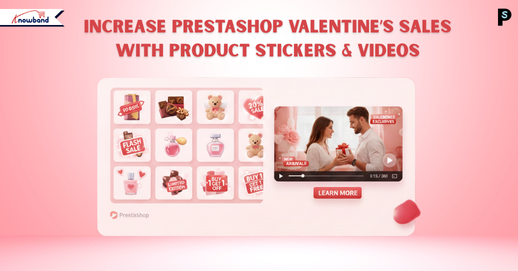
Now you can make your products impossible to ignore. We have highlighted perfect Valentine’s Day marketing for PrestaShop. This PrestaShop Product Sticker & Label Module paired with a PrestaShop Video Manager Module can completely change how people interact with your store. These modules capture attention right away, speed up purchasing decisions, and convert more window shoppers into actual buyers. If you want to know how to boost Valentine’s Day sales in PrestaShop, then this article is for you.

Visual Elements Win Every Time During Valentine’s Shopping

Nowadays, nobody’s reading detailed product descriptions during a Valentine’s sale. People are scrolling fast, scanning images, and making instant judgments about what’s worth clicking on. Valentine’s customers move even quicker because they’re buying with their hearts and usually dealing with a tight deadline.

This is exactly why visual shortcuts matter so much. When someone sees a sticker saying “Valentine Special” or “Perfect Gift,” they instantly understand the product fits what they need.

Product videos push this even further. The Knowband PrestaShop Video Manager Module allows you to display videos through floating widgets or carousel formats. Videos show products in real life. Customers see how something actually looks, moves, and functions. Furthermore, this kills any doubts, especially when buying gifts where nobody wants to risk picking something disappointing.

How the PrestaShop Product Sticker & Label Module Actually Drives Sales

A PrestaShop Product Sticker & Label Module isn’t just decorative, but it actively changes buying behaviour in specific ways.

First off, it makes Valentine’s items immediately obvious. Labels reading “Gift for Your Loved One” or “Valentine Exclusive” tie products to the holiday instantly, without customers having to think about it.

Second, these PrestaShop product labels build urgency. Time-based labels like “Ends February 14” or “Last Chance” pressure people to buy right now instead of “maybe tomorrow” (which usually means never). When shoppers think they might lose out, they move faster.

And finally, trust labels like “Best Seller” or “Customer Favourite” reassure shoppers, which is huge for gift purchases. Moreover, this Prestashop Product Stickers for Valentines allows you to include or exclude products as per your needs.

Opencart Product Sticker & Label Extension

Increase the Visibility of Products on Your Store with Knowband

Try the Demo

Why Video Content Actually Closes Sales

The PrestaShop Video Manager Module solves a massive problem in online retail, helping customers really understand what they’re getting. The best approach for this is video marketing for e-commerce. Videos show products in ways static images never could.

When someone watches a video of jewellery sparkling in different light, or sees how a gift package looks when unwrapped, it creates a real emotional response. Videos tap directly into that by making shopping feel more valuable and personal.

The floating widget and carousel of Prestashop Video Manager options keep videos without getting in the way. Shoppers can watch product demos right on category pages or product pages, even on the home pages. Furthermore, these strategies improve the user experience of PrestaShop. 

Prestashop Video Manager With Product Stickers Module

Both modules include automation features that are lifesavers during these peak sales and promotional periods. The PrestaShop Product Sticker & Label Module allowsyou build unlimited stickers and apply them using automatic rules, things like price thresholds, stock quantities, specific product categories, or particular dates.

The PrestaShop Video Manager Module works similarly for video management across your whole catalogue. Using this PrestaShop video module, you upload videos one time, assign them to products or categories, and control exactly where and how they appear using the widgets throughout your site.

Opencart VideoMate: Your Store’s Favourite Video Manager

Increase the Visibility of Products on Your Store with Knowband

Try the Demo

Smart Tactics for Getting the Best Results

So if you want to boost conversions ecommerce store, then keep sticker messages brief and clear. Don’t pile multiple labels on every product; it creates visual chaos and confuses shoppers. Furthermore, make certain stickers are legible and aren’t covering crucial product features.

With videos, shorter is better as customers want quick demos, not full-length documentaries. Focus on highlighting the product’s key benefits and showing how it delivers value or creates an emotional moment.

Wrapping It Up

Valentine’s shoppers need to spot great deals instantly, or they’re gone. Using a PrestaShop Product Sticker & Label Module alongside the PrestaShop Video Manager Module arms you with the visual punch needed to grab attention, establish trust, and turn more visitors into paying customers. You’re not rebuilding your entire website; you’re simply making your strongest offers visible exactly where they shop.

If you’re serious about maximising Valentine’s traffic this year, these prestashop plugins are some of the smartest investments you can make for your PrestaShop store.

👉Explore the Module with Our Video Guide


WooCommerce vs PrestaShop vs OpenCart vs Magento vs Shopify

Choosing the right platform is one of the most important decisions when you are starting an online store. With so many options available, it can become tiring to decide which platform best fits your business needs.  If you are looking best platform to start an online store, then you are at right place. Each platform offers different benefits and flaws in terms of usability, scalability, cost, and features. We at Knowband already manage these stores as we provide the service for these platforms. This will help you in choosing the right platform for your store.

This article provides a practical comparison of five popular e-commerce platforms, WooCommerce, PrestaShop, OpenCart, Magento, and Shopify, based on key factors such as ease of use, performance, customisation, scalability, and overall cost. You will also learn the e-commerce platform pros and cons. 

Additionally, understanding these helps your business select open source ecommerce platforms that aligns with your business goals.

Key Factors to Consider When Choosing an E-Commerce Platform

Before comparing platforms, as a store owner, you need to understand the core factors that will play a crucial role.:

  • Ease of Use: If you are technical or non-technical, you first need it to be simple to set up and manage products, your entire catalogue and orders.
  • Customisation & Flexibility: Platform should have the ability to modify design and functionality according to your business needs.
  • Performance & Speed: Additionally, there is a major factor that is how well the platform handles traffic and large catalogues
  • Scalability: Also, scalability is the factor your platform can grow with the business
  • Cost: Cost is one of the most important factors as it should be affordable not too expensive.

WooCommerce: Ideal for WordPress-Based Stores

WooCommerce is one of the most used e-commerce platforms and works as a plugin for WordPress. Furthermore, its popularity makes it unique due to its simplicity and flexibility, especially for businesses already familiar with WordPress.

Key Feature  of the WooCommerce

  • Easy to use, especially for WordPress users
  • Massive plugins 
  • Strong SEO capabilities
  • Highly recommended for content-driven stores and blogs

Limitations of WooCommerce

  • Performance can be reduced with large catalogues without optimization
  • Requires paid plugins for advanced features like wishlist 
  • Heavily dependent on hosting quality

Knowband recommends it as the best e-commerce platform for small businesses, medium-sized businesses, bloggers, and entrepreneurs looking for an easy way into online selling.

PrestaShop: Feature-Rich and International-Friendly

PrestaShop is an open-source platform designed specifically for e-commerce. This is the best e-commerce platform for startups. Moreover, it is particularly popular in Europe and offers strong built-in functionality. Furthermore, unlike wordpress it offers the basic functionalities, wishlist, abandoned cart, designs and many more.

Key Highlights of Prestashop

  • Support for multiple currencies and languages
  • Support many advanced taxes and shipping options
  • Strong back-office dashboard
  • Handles large catalogues efficiently

Limitations of the Prestashop

  • Requires moderate technical knowledge
  • Paid modules can increase costs
  • Smaller extension marketplace than WooCommerce

We recommend it to international sellers and businesses that need advanced e-commerce features without heavy reliance on plugins.

Prestashop Plugins

Explore all the plugins that will make your prestashop store more professional


Install Now

OpenCart: Lightweight and Performance-Focused

OpenCart is known for its simplicity and speed.  Additionally, it provides essential e-commerce features without unnecessary complexity. This OpenCart platform also supports built-in tools for coupons, discounts, and special prices like prestashop

Strengths of the Opencart

  • Lightweight and fast
  • Simple admin interface
  • Built-in multi-store functionality
  • Low hosting requirements

Drawback of the Opencart Platform

  • Smaller extension ecosystem
  • Limited advanced features
  • Smaller community compared to competitors

Knowband recommends it to small businesses with straightforward needs and limited budgets that prioritize performance.

Opencart Extension

Give the advanced features to your Opencart store Using Popular Extensions


Install Now

Magento: Enterprise-Level Power

Magento is what the big players use when they need a serious, robust, enterprise-grade solution. Here, Big player refers to the major enterprises and retailers that have a large volume of products through their stores. This Magento Platform is best ecommerce platform for large businesses.

Key Highlights of Magento:

  • Magento scales to handle millions of products and transactions
  • Inventory and customer management tools 
  • Customisation is easy in Magento
  • Built to handle large product catalogues 

The Downsides of Magento are:

  • Learning Magento is a bit difficult for store owners
  • Professional developers are required
  • Hosting and keeping it running will cost you high money

Magento Plugins

Let Knowband Manage Your Magento Plugins, while you only work on selling.


Contact Us Now

Shopify: Everything is handled by them

Shopify takes a totally different approach than other platforms. They handles everything for you unlike others. It’s fully hosted, which means they deal with the technical things while you focus on selling

Key Features of the Shopify

  • You can easily have a store there
  • Shopify handles the hosting, security, and performance. The store owner only focuses on selling.
  • Customer support is highly active
  • A variety of plugins on the app store when you need extra features
  • Perfect for dropshipping or selling across multiple channels (social media, in-person, etc.)

The Downsides:

  • Monthly fees that add up over time
  • Transaction fees on certain plans (unless you use Shopify Payments)
  • Less control over the backend compared to platforms you host yourself

Shopify Custom Development

Let Knowband handle your Shopify store seamlessly, so you can concentrate on scaling your store and brand.
Contact Us Now

Pricing Plans of all the Platforms: WooCommerce, Prestashop, Opencart, Magento and Shopify

Platform Initial Cost Hosting Cost Theme & Extension Cost Development & Maintenance Overall Cost Suitability
WooCommerce Free (WordPress plugin) $5–$30/month (shared to managed hosting) Free to $200+ (plugins & themes) Low to medium, increases with customization Best for small to medium businesses
PrestaShop Free (open-source) $10–$40/month $50–$500 (modules & themes) Medium, often requires developer support Suitable for growing businesses
OpenCart Free (open-source) $5–$25/month $20–$300 (extensions & themes) Low to medium, limited for complex needs Ideal for small businesses
Magento Open Source Free (software only) $50–$200+/month (cloud or dedicated hosting) $100–$1,000+ (extensions & themes) High due to complexity Best for large or fast-growing stores
Magento Commerce (Adobe) Paid license Included or enterprise-level hosting Often custom-built Very high (enterprise development) Enterprise-level businesses
Shopify Monthly subscription Included $0–$350 (themes) + paid apps Low, fully managed platform Best for beginners & fast launches


The conclusion is that there’s no magic “best platform” that works for everyone. It really comes down to what you need for your specific situation.

WooCommerce is fine when you want flexibility, and you’re already comfortable with WordPress. PrestaShop has built-in features that international sellers actually need. OpenCart keeps things simple and fast. Magento gives enterprise-level businesses the scalability they require. And Shopify just makes everything easy if you want a managed solution.

Your decision should come down factors about cost, your technical skill and your business size. Moreover, you can also switch platforms eventually as your business evolves. 

About Knowband

Knowband is a sub-company of Velocity Software Solutions Pvt. Ltd., a leading technology company specialising in e-commerce development and digital solutions. Knowband provides a wide range of ready-to-use plugins, extensions, and custom development services for popular eCommerce platforms like prestashop, WooCommerce, Opencart, Shopify and Magento.

With a strong focus on innovation and performance, Knowband helps online businesses enhance functionality, improve user experience, and increase conversions.