If you are considering turning your online business into a marketplace then this is the best time for you. A hyperlocal marketplace business is in-demand and shaping the market trend. Hyperlocal Marketplace needs to be adopted to evolve your business.
What is a marketplace and how it works for an online business? What is the concept of hyperlocal and why one should go for it? You definitely want answers to these questions. In my previous blog post, I have discussed Why Hyperlocal is a new trend after COVID 19 outbreak? There are many challenges faced by the business merchants in the transition process but there is a solution to every problem. The previous blog answers everything about hyperlocal.
In this blog post I will be focussing on hyperlocal marketplace business and why is it flourishing nowadays?
Definition
A marketplace that caters to the needs of a limited geographical area is the hyperlocal marketplace. To build up a marketplace one has to find a vital space. Setting up a marketplace is an erupting business idea.
Different business owners can register on a website or application and sell their products to the consumer in a limited geographical area. Hence, an eCommerce hyperlocal marketplace has been established. If you take a walk around your local market, you will find all the necessary and essentials available. The local marketplace will fulfill all your demands.
The concept of establishing a hyperlocal marketplace sounds fuzzy and it is gaining popularity day by day. In 2020, going hyperlocal is the last thing you will say no to. The near-me hyperlocal business sounds affordable and convenient. You can make a business model and plan it accordingly.
Some of the important factors hyperlocal marketplace is thriving are the Geo-location facility, on-time delivery, safety, and convenience.
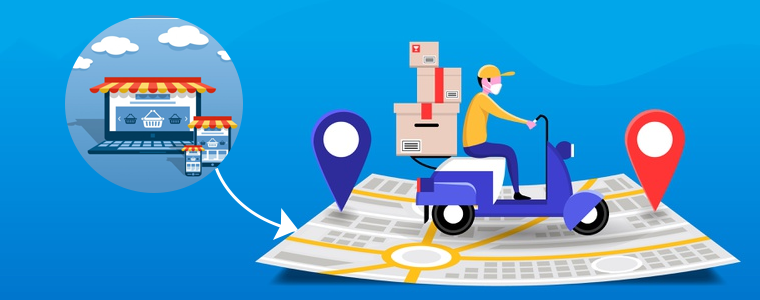
These can be considered the key factors for the hyperlocal marketplace because these businesses primarily depend upon the less delivery time and precise location. In other words, delivering a product at a location within time is the only goal for a hyperlocal marketplace business.
Major domains involved in Hyperlocal Marketplace

5 major Industries are dominating the On-demand near me hyperlocal marketplace business. The business of the marketplace is spreading and different industries are taking advantage of the hyperlocal marketplace.
Home Delivery of Consumer Goods:
Fast-moving consumer goods, also known as consumer packaged goods are the products that are always in demand and get sold quickly. Grocery, packaged goods, dairy products, medicines etc.are categorized in top hyperlocal marketplace businesses.
Amazon Grocery is one popular example of grocery delivery in India. It is gaining attention and people in urban areas are opting for it. BigBasket and Grofers are leading the grocery market in India.
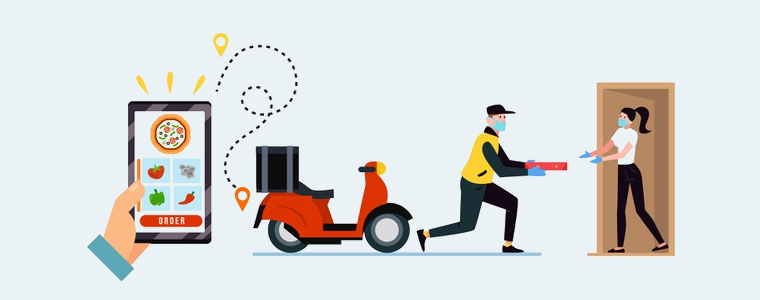
Post COVID-19, the delivery apps have become very popular and in order to avoid crowds, people are willing to take advantage of food and grocery home delivery services. Now is the golden chance for local vendors to shine in the dark.
Pre-Book the slot or make the reservations:
The transport market is driving the on-demand industry. Cab services like Ola and Uber are the dominators. They are offering food delivery, rideshare, and what not!
Other Hyperlocal Marketplace booking businesses are booking dinners, movie ticket bookings, BookMyShow– movie ticket bookings, Dine Out– Restaurant table booking, Dine Out even offers discounts and deals to the consumer. MakeMyTrip is another popular website for hotel bookings, to book flight tickets or plan a trip and many such exemplary startups are in the market which is on bloom.
Hospitality services:
On-demand services provided by local business owners are looking forward to establishing a hyperlocal marketplace. Housekeeping, beauty salons, Spa and Massage, dog care services are popular these days. Urban Clap is an example of hyperlocal marketplace on-demand services.
Appliances Repair, Electricians, Mobile Services, Technicians, Carpenters, House Cleaning or Pest Control, Packers and Movers, Plumbers are other businesses for the hyperlocal marketplace. UrbanHopperz is another app popular for on-demand delivery services.
Health Care Services:
After the pandemic, the health care industry is gaining a lot more attention than before. The health care services, nurses, baby care, Old age health care are all needed to be taken care of after COVID-19. Considering the availability of space in hospitals, the demand for home health care services is increasing.
Developing countries are unable to provide the needful facilities in hospitals so, a home caretaker or nurse is the best option one can go for. The health care industry has a huge scope in hyperlocal marketplace businesses.
Logistics:
People tend to move on to the hospitality sector. Hyperlocal on-demand near-me services are still evolving. It includes logistics or concierge, which is growing in urban areas. People are taking the help of such services for sending documents or lunch boxes.
Some of the popular startups offering on-demand concierge are Dunzo, a mobile-based concierge services provider in India, Fetchr is popular in Dubai for booking delivery services, Alfred Club is US based and it provides an ‘Alfred’ to households to take care of their weekly errands and many are there. Pidge is a startup in Delhi NCR, they are offering 60 min Pick-up and immediate delivery facility.
If you want to try your hands into on-demand delivery services, this is the right time.
Why Hyperlocal Marketplace is blooming in 2020?
We are aware of the scenario and going through a tough time because of the COVID-19 outbreak. Eventually, life is getting on track, and demand for home delivery is increasing. Hyperlocal marketplace businesses offer home delivery services in the nearby region or zones in a matter of time.
It is in trend because it connects customers with the sellers who are closer to him. It plays with the customer’s psychology for being well served. They get their product or service ordered within a couple of hours.
Satisfaction comes with hardly any effort and cost. The merchants, on the other hand, find it super easy to cater and deliver a customer who is close in geography. The merchants know their customers’ aesthetics, and can therefore play accordingly with their business models. Costs drop appreciably for both aggregator and merchants at the end, and therefore a win-win tactic for both.
How to configure this?
These days a lot of business in the Hyperlocal Marketplace is growing aggressively. Now If you are willing to start an on-demand delivery business and interested in setting up a hyperlocal marketplace business, you can take the following steps:
- Select the Industry which you want to provide your services
- Choose your Niche: For example, if you want to go for logistics then for the starter, you can deliver medicines.
- Develop a Responsive website where your leads will land
- The marketing strategy should be based on Target Audience.
- Smart Phone is the key: Develop a Mobile App.
- Build Partnerships with courier services or other hyperlocal service providers and make a hyperlocal marketplace
Note: In between COVID-19 outbreak, you must take care of security, hygiene, and safety.
If this doesn’t work for you than many tools are available which can help you with hyperlocal marketplace business idea or you can take help from the experts. But this isn’t a difficult task, with little efforts and a good plan you can allow users to take advantage of your offerings and services through Online Store Website and Mobile applications.
Final words:
The hyperlocal marketplace needs robust underlying realtime software architecture that ensures the fastest delivery possible from nearby or local sellers in the targeted regions or zones. Consumers or end-users demand for fresh and consumable products to be delivered by the earliest. The hyperlocal marketplace business can help you grow your business explicitly.