20 E-commerce Marketing Strategies for Beginners

Are you planning a start-up business or a recently established one? Then, you must be looking for some magical marketing tips that can help you expand it, uplift sales, enhance conversions, and bring new customers to your online store.

Entrepreneurs don’t have a lot of spare time to get the word out about their products and services. Also, it isn’t easy to market your products and brand but with some expert guidance and marketing strategies, you can become a marketing ninja.

It’s certainly reasonable if your company now lacks a marketing budget. Start-ups have thousand other things to put money on. These 20 simple and budget-friendly eCommerce marketing strategies for newbies have been developed to fill that void.

1.     Know your Product/Services before Marketing

The most important strategy for a marketer is to have deep knowledge about the product features and their benefits. An important sales ability is product awareness. Understanding the attributes of your goods helps you to reliably and persuasively present their benefits.

Customers flock to enthusiastic sales workers who are enthusiastic about their products and willing to share the advantages with them.

2.     Focus on What you Want them to Do

The most effective way to reach your target audience is by knowing them. The next step is to find out what is needed to drive them toward a sale once you’ve decided whom you need to meet.

This is easy for certain businesses: encouraging consumers to grab a product and purchase it at the shop. But, before reaching that stage, there may be acts that you push them towards (such as getting on a mailing list or being a follower on social media).

Content Marketing:

Content creation is the simplest and impactful way to reach out to your target audience. Words has more value when spoken at the right time and on the right platform. Make complete use of blogs, social media and try creating your brand identity.

3.     Create E-commerce Content

It is one of the best simple marketing techniques to develop yourself as an expert in your field. You are positioned as an expert by writing a series of articles for a trade publication and these can be serialized for maximum impact as blog posts.

4.     Improve Efficiency of Content

Clients are drawn by keywords. In the content on your website, they need to be placed in strategic places. Make sure to focus on the subjects that your clients are looking for.

Read: Why is content marketing effective for your marketplace website?

5.     Write Blog Posts

On a blog, you can post specials and activities scheduled. These are a perfect way to advertise in a voice of your own.

6.     Publish a Book

You are positioned as an expert in the field by writing a book and self-publishing it. These are also marketed by many business people on their websites.

Social Media Marketing:

7.     Start Facebook Page Shop
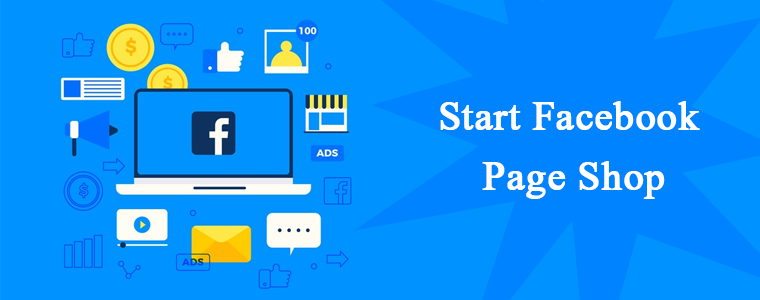
To connect with a larger customer base for E-commerce marketing, social media is the best platform and Facebook stands top in the row. You can create a Facebook page for your brand and enlist your products on Facebook Page Shop.

8.     Use Instagram Reels

Instagram has a different crowd than Facebook but some of its features can help you with marketing. Instagram reels are short videos that can be used to display products. All the possible Instagram Reel’s business marketing strategies are discussed in this article.

9.     Use hashtags on Insta and Twitter

Here is the list of best hashtags you can use this holiday season for attracting more customers and visitors to your Instagram Page.

10.   Start to tweet

Social networking is complimentary. It’s one of the best available simple marketing tactics. You can connect with your target group by posting on Twitter.

11.   Run Ads on Facebook
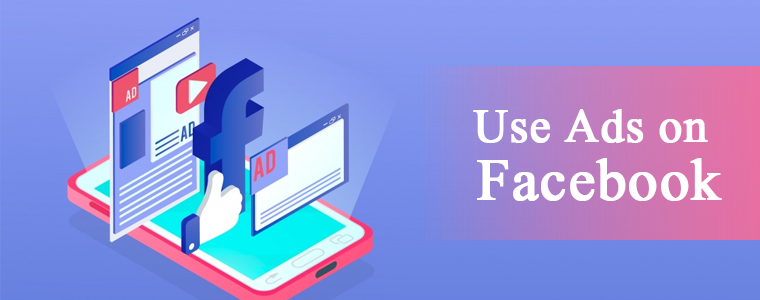
Social advertisements allow you to get out in front of a large crowd. For optimal effect, you can target these to a particular market. Social media advertisement is the best E-commerce marketing method in 2021.

Read: 6 Easy Ways to Boost your Social Media Marketing through Facebook

12.      Invest in Personalized Real-Time Marketing

Personalized marketing is the implementation of a strategy in which businesses, use collected data, analysis, and automation technologies to offer individualized content to recipients.

13.    Online Video Marketing

Did you know that every minute of over 400 hours of video gets uploaded to YouTube? It’s unbelievable. The fact is that it’s the second-largest search engine in the world.

It’s not the only video platform for marketers out there to know about, either. Plus, Facebook and Twitter social videos are becoming increasingly relevant as well.

Read: 7 Benefits of Video Marketing for your E-commerce Business

14.    Offer Newsletter Subscription

Newsletters are a fast and easy way to keep new products and services up to date on a mailing list. One of the more common templates is MailChimp.

Read: What’s new with Mailchimp AI integration: An Insight

15.     Establish an Email Campaign

In front of your target audience, putting together an email marketing plan gets you out. Your email address will be seen by everyone on your list from inside their inbox.

Read: A Definitive Guide to Effective Email Marketing in 2020

16.     Run Give-Aways

In E-commerce, a value-added way of converting guests into consumers is by giving free access to a newsletter or blog. Whether you’re online or in a brick-and-mortar shop, consumers are always drawn to free items.

17.     Pay-Per-Click and Ads
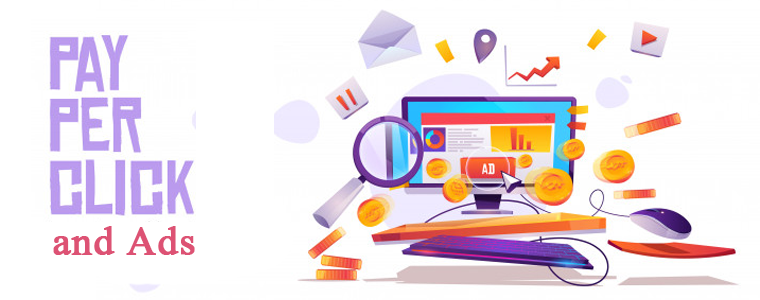
Did you ever see such commercials at the top of the search results? Those are pay-per-click advertisements.

These ads provide excellent opportunities for advertisers to sell products directly to seekers. It’s also great because it helps you to see precisely how much you invest vs. how much money your promotional activities produce.

18.     Influencer Marketing

Why talk about your goods yourself when you can promote them through trusted people? That’s the crux of influencer marketing, which includes working to bring the goods in front of their audiences of famous people within a given niche or industry.

19.   Nailing the Execution

It’s time to put it into motion once the plan is in place.

It requires:

Having the skills: You need to know how to do it once you know what to do.

Getting the best people: The secret to success is putting the right people in the right place.

Having the right instruments: To tackle a given task or problem, a professional always uses the best possible solution.

20.    Use Data to Monitor your Progress

If the effect of your E-commerce marketing efforts cannot be determined, then you might not be doing anything at all.

To achieve a particular objective, any move should always be related to specific metrics.

Wrapping up:

In this article, there are a lot of strategies to process. But, now that you’ve covered much of what you need to know as a marketing professional (both at the surface level and with links to deeper reads on loads of sub-topics), you’re more informed than ever to continue your marketing skills and increase your career level.

If you want to add something to it, let us know below.

Recommended Reads:
6 Ecommerce Marketing Strategies to Grow your Business

Millions of searches are made on Google every day, and for every single search, there are tons of results.

The competition in the online/eCommerce market is extremely high. Starting an online business is not going to be a piece of cake when the Internet is already occupied with multiple businesses focused around a particular niche.

Well, setting up an eCommerce website is not a big deal, the challenge lies in growing your business. What you offer, many online businesses are probably leading in that niche.

When people type their search query, it is highly unlikely that you would appear on the top of the search results; not even close, let alone top.

To set yourself apart and go past your competitors, you need to focus on your eCommerce marketing strategies so that your brand becomes known to the netizens.

Ecommerce Marketing Strategies

From low-cost to high-cost, you will find various types of marketing strategies that would help you in boosting your business. However, in this write-up, I have put forward 6 best eCommerce marketing strategies.

1. Search Engine Optimization

SEO is an integral part of eCommerce marketing.

No matter how well-designed your website is, its existence does not even matter if it is not SEO optimized. How would the Internet users know that your brand exists unless it appears on the search results?

This is what SEO is for- to aware Google or other search engines about your business and its offerings so that when a user performs a search and the query relates to your business, the search engine displays your website under results.

Thus, the primary thing to perform when it comes to increasing the visibility of your brand is optimizing your website for SEO.

Do keyword research. List out the keywords that you want to rank for on the search engine and place them on your web pages. Avoid keyword stuffing; it can harm the performance of your website.

Keywords are to inform the search engine what your business is based on. When the bot crawls your website and identifies a few keywords that have been put more stress upon, it will suggest your website to the users for queries around those keywords.

2. Social Media

The second in my list of eCommerce marketing strategy is social media.

Today, nothing comes close to social media when we talk about marketing an eCommerce website. Social media networks like Facebook and Instagram, which were earlier meant for entertainment purpose only, have now turned into huge marketing platforms.

Why social media?

The primary reason why you should consider social media marketing is the audience base. Facebook and Instagram have nearly 2.6 billion and 1 billion active users worldwide, respectively. With such a huge user count, 90-95% of your target audience is likely to be present on these platforms.

Secondly, they are completely free. You can go and create your brand page right now, within a few minutes. Social media gives a wide organic reach to your brand and products, and you can acquire a lot of customers through the platform.

To boost your brand awareness, you can also spend a few bucks in paid promotion by taking the help of social media ads.

Just a suggestion- Do not use social media just for promotion. Use it to nurture the relationship with your followers. Build connection, answer their queries and engage with them.

Apart from Facebook and Instagram, LinkedIn and Twitter are also amongst the targeted platforms by Brands. It’s just up to you where you want to market your products and how much time you have to manage those accounts.

3. Reach out to Influencers

Adding to the eCommerce marketing strategy is Influencer Marketing.

Influencer marketing is the current trend. It is the form of marketing where you reach out to an influencer and ask him/her to promote your brand or products. You pay them a fee and they endorse your brand.

How much an influencer charge depends on their popularity. Someone popular among the netizens and with more followers will charge comparatively high than with those less popular.

As the term suggests, Influencer marketing influences the purchasing decision of the followers since they have a liking towards the influencer.

In other words, you can say Influencer marketing is like a small version of advertisements done on a larger scale such as Television advertisements.

4. Content Marketing and Guest Post

You simply cannot overlook Content Marketing when it comes to e-commerce marketing strategy.

Create a blog for your website and start writing. When you write, make sure you are providing some kind of value to your readers. It should not sound completely promotional.

I know you want to link your products but it should not be done in a way that disturbs the content flow. Identify topics around your niche, find out what people are searching and then write a blog post that revolves around it.

In this way, you will be able to promote your product besides helping your readers in getting the answers they were looking for.

Content marketing isn’t just about blogging. You can write a guide and provide an eBook to your users, and to promote that guide, you can make use of lead magnets.

For further marketing, you can reach out to other publications and do Guest posting, which not only gives you a backlink to your website but also provides you with the opportunity to present your brand in front of a new audience.

You can find many relevant Guest posting websites on the Internet. Contact them, follow their guidelines and submit your posts.

5. Testimonials

Nothing can match the happiness level of a brand when their clients or customers leave a positive remark about them, which we call as testimonials.

The purpose of any business is to provide quality products and services to their customers/clients. And when they feel satisfied with your brand, it’s a sign of loyalty and trust in your brand which is very crucial from a Brand’s point of view.

When a client gives positive feedback, highlight that testimonial on your website, primarily on the Home page. You can also promote the testimonials on social media platforms.

Testimonials are helpful to encourage new visitors to place trust in your brand and turn them into your loyal customers.

6. Referral Marketing

Referral Marketing is one of the popular eCommerce marketing strategies.

Whenever a brand is new in the market, marketers or business owners take the help of referral marketing to popularize it and acquire new customers.

No customers would be interested in a new brand. To evoke their interest, you can launch referral programs where you reward users with some incentives or commissions whenever they refer your brand/website to other people.

When people get benefits, one refers to another and a long chain is formed. This boosts your brand awareness.

Final Thoughts

I also wanted to include email marketing in this list of eCommerce marketing strategies. But it is a very basic one, and hence I avoided explaining it in brief.

The above-mentioned six strategies have proved to be extremely useful for many online businesses. Try them out and let me know how it worked out for you.

Also, feel free to comment if you have some more points to add.