UX e personalizzazione: perché è importante per i moduli di e-commerce?

Per mantenere gli utenti coinvolti e attirare nuovi clienti, attività di e-commerce devono essere creativi con il design della loro esperienza utente (UX). Un sito web visivamente accattivante non è sufficiente. Il design UX dovrebbe avere diversi elementi critici che funzionino per fornire un viaggio utente intuitivo e senza sforzo. Inoltre, ciò consente ai visitatori di completare i propri obiettivi in ​​modo efficiente. Quando si crea un modulo, ogni aspetto, dalla sua architettura ai dettagli delle funzionalità, dovrebbe essere ottimizzato. IL ottimizzazione del modulo dovrebbe avvenire tenendo presente l’esperienza dell’utente.

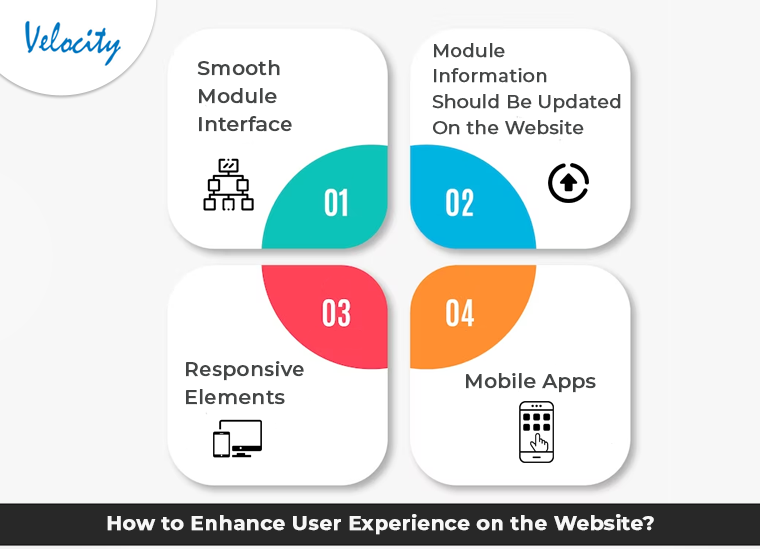
Come migliorare l’esperienza utente sul sito Web?
come-migliorare-l'esperienza-utente-sul-sito

Interfaccia del modulo liscia

La creazione di un’esperienza di navigazione senza soluzione di continuità è una componente fondamentale del Strategia dell’esperienza utente per i plug-in di e-commerce. Funzioni di navigazione complesse possono ridurre l’interesse degli utenti, portando a frequenze di rimbalzo più elevate. Pertanto, è essenziale per i proprietari di attività di e-commerce ottimizzare i propri moduli e l’interfaccia utente per una navigazione fluida.�

Le informazioni sul modulo devono essere aggiornate sul sito web

Lo sviluppo di un plug-in è solo l’inizio per stabilire una presenza online nel mercato dei moduli di e-commerce. Avere successo richiede uno sforzo continuo, come l’ottimizzazione periodica dei moduli. A parte questo, anche la SEO on-site/off-site, la creazione di link e la condivisione sui social sono importanti. È essenziale mantenere aggiornato il modulo con le funzionalità e le informazioni pertinenti. È inoltre necessario rimuovere le funzionalità che non sono più richieste.�

Elementi reattivi

Per le app o i plug-in di e-commerce, tutti gli elementi dell’interfaccia utente (UI) devono essere altamente reattivi e perfettamente funzionanti. La reattività è un aspetto critico del design UX che aiuta ad aumentare i livelli di coinvolgimento dei clienti. Inoltre, le vendite online incoraggiano i visitatori di ritorno al tuo negozio online.�

applicazioni mobili

Nel mondo di oggi, non sorprende che la maggior parte delle transazioni online avvenga su dispositivi mobili. Pertanto, l’adozione di una strategia mobile-first è fondamentale per ottenere una crescita costante dei ricavi. Inoltre, aiuta a gestire efficacemente il negozio online. Oltre a creare un’app mobile per la tua attività di e-commerce, è essenziale ottimizzare il plug-in dell’app mobile anche per tutti i tipi di dispositivi mobili. Sebbene un’app mobile sia molto importante, anche la sua interfaccia sull’amministratore, generalmente utilizzata sul desktop, dovrebbe essere semplice e interattiva.�

Vantaggi di avere una buona esperienza utente
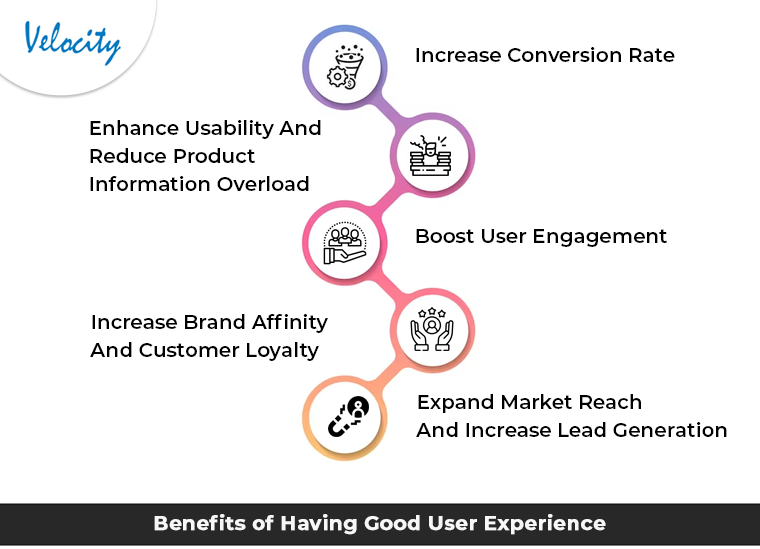
Aumenta il tasso di conversione

Per ottenere credibilità e ispirare fiducia, i tuoi plugin dovrebbero apparire professionali e affidabili. Se gli utenti non possono navigare i tuoi moduli in modo semplice o efficiente, non convertiranno. Inoltre, questo porterà a perdere credibilità nella mente degli utenti. Un’ottima esperienza utente può aumentare i tassi di conversione e aiutare a creare fiducia e credibilità. Inoltre, ciò richiede tempo e coerenza in ogni interazione dell’utente e transazione online.�

Migliora l’usabilità e riduci il sovraccarico delle informazioni sui prodotti

Troppe informazioni o troppe opzioni possono distrarre gli utenti e allontanarli dal loro obiettivo. Un design UX eseguito correttamente soddisfa le aspettative dei clienti target. Inoltre, fornisce informazioni specifiche o momenti di azione al momento giusto. Un buon design UX del modulo facilita la decisione di acquisto consentendo ai clienti di trovare facilmente ciò che stanno cercando.�

Aumenta il coinvolgimento degli utenti

Il design UX mira a creare un’esperienza utente positiva che stimoli gli utenti e influisca sulla loro esperienza. Un design semplice e pulito può stimolare la vista di un utente e catturare la sua attenzione. Questo aiuta a creare un percorso del cliente unico e distinto che separa la tua attività dalla concorrenza. Un design coerente può ottenere il coinvolgimento degli utenti e il riconoscimento del marchio e ridurre la frequenza di rimbalzo. L’inclusione di elementi interattivi, come video, pulsanti di invito all’azione e icone dei social media, può incoraggiare gli utenti a interagire con l’interfaccia del plug-in e renderli desiderosi di tornare sul tuo sito web.�

Aumenta l’affinità con il marchio e la fedeltà dei clienti

Offrire un’esperienza cliente eccezionale attraverso il tuo design UX può portare a maggiore fidelizzazione del cliente e tassi di ritenzione. Quando gli utenti si sentono compresi dal tuo marchio, è più probabile che sviluppino un’affinità con il tuo marchio. Mostrando empatia e affrontando l’intenzione, il comportamento e i problemi dell’utente, puoi umanizzare il tuo marchio, prodotto o servizio. Inoltre, questo costruisce una solida relazione con i tuoi clienti.�

Espandi la portata del mercato e aumenta la generazione di lead

Avere un sito web ottimizzato per i dispositivi mobili è fondamentale poiché più della metà del mondo possiede un dispositivo mobile e tutti utilizzano ricerche su Internet da dispositivi mobili. Nostro modulo per la creazione di app per dispositivi mobili può aiutarti a creare app mobili per la tua azienda. Gli utenti mobili si aspettano di avere sui propri dispositivi mobili la stessa esperienza che hanno su un laptop o un PC.�

Alla fine

Qui, in questo articolo, abbiamo condiviso alcuni punti su come migliorare e migliorare l’esperienza dell’utente e quali sono i vantaggi dello stesso. Se sei interessato ai nostri moduli, faccelo sapere e saremo felici di aiutarti. A parte questo, desideriamo informarti che nel caso in cui tu abbia esigenze specifiche, puoi metterti in contatto con noi. Puoi connetterti con noi all’indirizzo support@knowband.com e il nostro team tecnico ti assisterà con il sviluppo di moduli personalizzati pure. In caso di problemi o dubbi relativi al nostro modulo, ti assisteremo. Per eventuali personalizzazioni con il modulo e le sue funzionalità anche noi siamo qui per assisterti.

Six Types of eCommerce Customers and How to Satisfy Them: Pro Tips

Online shopping is increasing, and customers who are enamoured with eCommerce sites spend countless hours researching the goods they want. There are some very popular quotes which make shopping, therapy, cardio or a hobby. It makes evident just how fixated people can be. There are many different types of eCommerce customers, therefore business owners need to keep each one not just entertained but also motivated to make purchases.

Some eCommerce customers like exploring before buying and some have a focused approach with a to-buy list which makes them good customers. But, being a retailer or eCommerce store owner, you cannot rely on one type of customer. Every shopper is different and they follow a certain pattern of buying with different priorities. Being a retailer, you must have gone to a lot of stores or manufacturers before choosing the item for sale. You also have a pattern which makes you a type of customer. I’m going to talk about some distinct categories of consumers that store owners frequently deal with and offer some expert advice on how to handle various types of eCommerce customers in your business to increase conversions.

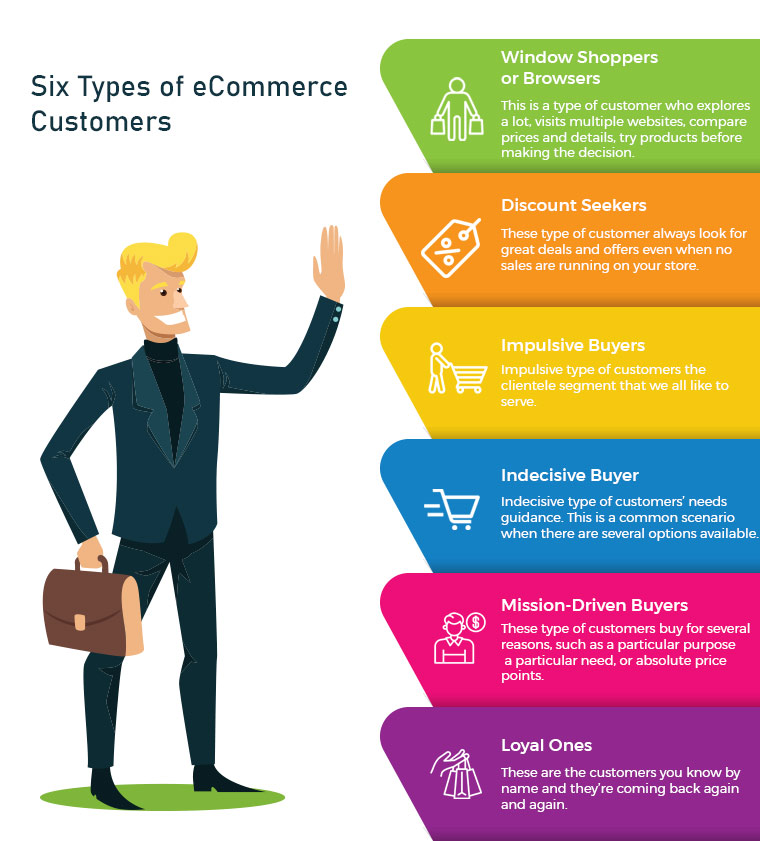
1. Window Shoppers or Browsers

The number one on the list is servers or browsers. This is a type of customer who explores a lot, visits multiple websites, compares prices and details, try products before making a decision. They add products to their cart but never intended to shop from them. Yes, there are many such buyers and you may call them a pain. Can you do something about it? Yes, I guess. There can be ways to attract such visitors and encourage them to buy products from your store.

Greet them well:

If you are a retailer, you must remember to greet them well. Even if they are not asking for any assistance you can provide them one. eCommerce store owners can add any entry or exit popup such as Better Thank you Page module to their store for greeting these types of customers.

Entry or Exit Popup:

Some of the easiest ways to engage your consumers are by the use of innovative methods. The customer’s attention must be drawn to the digital interface and manner of presentation. The gamified interface of Spin and Win Pop-up attracts shoppers to your store. This is a 3-in-one pop-up which is used as an entry pop-up, exit pop up or an email subscription pop-up.

Don’t ignore the browsers, they can become your loyal eCommerce customers if treated right.

2. Discount Seekers

These types of eCommerce Customers respond well to pushy sale tactics. They always look for great deals and offers even when no sales are running in your store. For attracting such buyers you should focus on highlighting what they will save on that particular deal.

Host Clearance or Flash Sales:

These discount seekers can give you huge sales if provided with flat discounts. Clearance sales can be a good option. The products that have been stocked in your store for months can be sold out, and customers looking for discounts will benefit from it.These sales can be a key contributor to your cash flow which will make room for the new products by removing the older ones.

Scratch Card:

You can provide your customers with Scratch Cards while having a purchase. Customers will be attracted to the alluring coupons which can save their deal a lot.

Free Shipping:

Free shipping encourages customers to buy more from your store. A fixed amount of purchase is to be made by the shopper to get free delivery.

Recommended Read: How to Win Customers with Discounts and Boost Sales? 

3. Impulsive Buyers

Impulsive types of customers are the clientele segment that we all like to serve. Nothing is more exciting than helping the impulse shopper to respond favourably to your recommendations. Impulse shoppers, also known as emotional shoppers, make unplanned purchases based on items that are currently appealing to them. Online shopping is a popular example of pulse or emotional buying. They look for products which attract them and you can do that by showing related products or by offering personalisation.

Show Related Products:

If you are dealing with an impulse buyer then make this chance an opportunity. Because they shop when they like it without giving a second thought. Show them what’s new in the store and let them feel, that they will be out of the race if they don’t own it. This can be done with modules like related products.

4. Indecisive Buyer

This is a common scenario when there are several options available. For instance, search for a floral top and the results will blow your mind. hundreds of products will start appearing in various stores. Deciding one will be difficult. Indecisive type of customers needs guidance. Ask them questions and give honest advice. A flexible return policy can also help them with their shopping.

Ask Questions:

Shop owners can help them decide what they want. Provide them with chat support or in-store assistance for choosing the right product. This effort can turn them into loyal eCommerce Customers.

Product Custom Field:

You can add a product custom field with the product description. You can add a field with related questions which can help you understand the need of the buyer. Advance Product Feld extension can be a good fit to improve UX.

Return Manager:

An indecisive customer will be encouraged if he/she knows that the product can be returned if they don’t like it. The Return Manager is a good module to add to your eCommerce store.

5. Mission-Driven Buyers

These can be called researchers or need-based customers. These customers buy for several reasons, such as a particular purpose, a particular need, or absolute price points. As difficult as it can be to please these individuals, they may still become regular customers if they are well taken care of. Provided with a good customer experience which is not available online or on other retailers stores can turn them into loyal customers.

Offer buy-online, Pick Up In-Store:

These types of buyers do not have much time to spend in window shopping or i-store shopping. They can make the purchase online and pick up the product from the store. Implement this new pick-up and drop option in your store to attract mission-driven buyers.

Cross-Selling:

Retailers can help the need-based customer with cross-selling techniques. You can place bread in related products while they are buying milk or a mobile cover if they are purchasing a mobile. The Automatic Related Product module can help you show relevant products on various pages such as the product page, the home page, the shopping cart page, etc.

Recommended Read: How to Cross-sell and Upsell?

6. Loyal Ones

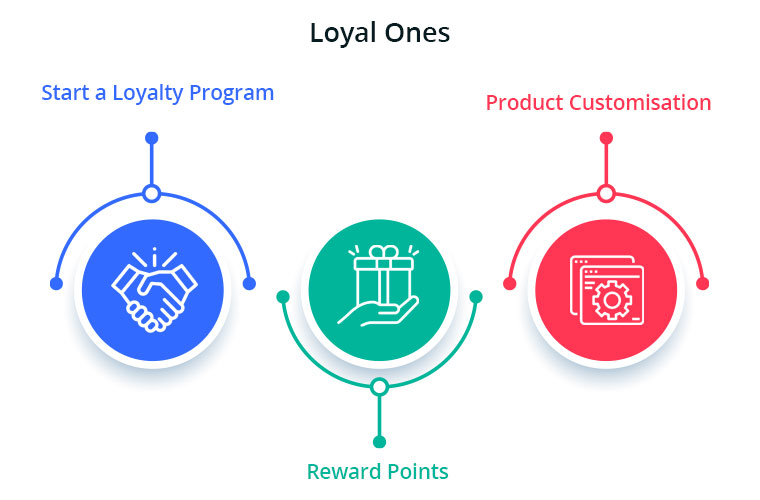
These are the customers you know by name and they’re coming back again and again. Loyal eCommerce Customers already know and enjoy your shop, so now you need to keep them happy. Offer customisation and personalised experience and never lose them to others. The best ones are difficult to find and it is your responsibility to give them your best services. You can give them reward points or loyalty points on every purchase. These types of customers are the best marketers for your store as the more they shop, the more will be the word of mouth communication.

Start a Loyalty Program:

Choose a module or plugin for your eCommerce Store to give loyalty points to your loyal ones. This will motivate these types of buyers to shop again and again from your store. During checkout, the loyalty points can be redeemed for a discount.

Reward points:

You can also give them reward points on various purchases like first purchase, on a fixed amount order, on particular products etc.  The reward points encourage the buyer to make more purchases. It helps the admin boost customer engagement and creates loyal customers.

Product Customisation:

Product customisation and personalisation can turn your sales to the next level. this is one of the most accepted trends. Help them get a personalised product of their taste. The best module for giving a customisation experience is Product Designer/Customization which can provide several choices to you and shoppers.

Recommended Read: Giving Customer Personalisation Experience can Boost Your Sales

Final Tip:

Using this understanding to help turn deals, desires, needs-based and even casual customers into loyal ones will help the business expand. At the same time, ensuring that your loyal customers have a good experience every time they visit your store would only boost your bottom-line income.