WooCommerce vs PrestaShop vs OpenCart vs Magento vs Shopify

Choosing the right platform is one of the most important decisions when you are starting an online store. With so many options available, it can become tiring to decide which platform best fits your business needs.  If you are looking best platform to start an online store, then you are at right place. Each platform offers different benefits and flaws in terms of usability, scalability, cost, and features. We at Knowband already manage these stores as we provide the service for these platforms. This will help you in choosing the right platform for your store.

This article provides a practical comparison of five popular e-commerce platforms, WooCommerce, PrestaShop, OpenCart, Magento, and Shopify, based on key factors such as ease of use, performance, customisation, scalability, and overall cost. You will also learn the e-commerce platform pros and cons. 

Additionally, understanding these helps your business select open source ecommerce platforms that aligns with your business goals.

Key Factors to Consider When Choosing an E-Commerce Platform

Before comparing platforms, as a store owner, you need to understand the core factors that will play a crucial role.:

  • Ease of Use: If you are technical or non-technical, you first need it to be simple to set up and manage products, your entire catalogue and orders.
  • Customisation & Flexibility: Platform should have the ability to modify design and functionality according to your business needs.
  • Performance & Speed: Additionally, there is a major factor that is how well the platform handles traffic and large catalogues
  • Scalability: Also, scalability is the factor your platform can grow with the business
  • Cost: Cost is one of the most important factors as it should be affordable not too expensive.

WooCommerce: Ideal for WordPress-Based Stores

WooCommerce is one of the most used e-commerce platforms and works as a plugin for WordPress. Furthermore, its popularity makes it unique due to its simplicity and flexibility, especially for businesses already familiar with WordPress.

Key Feature  of the WooCommerce

  • Easy to use, especially for WordPress users
  • Massive plugins 
  • Strong SEO capabilities
  • Highly recommended for content-driven stores and blogs

Limitations of WooCommerce

  • Performance can be reduced with large catalogues without optimization
  • Requires paid plugins for advanced features like wishlist 
  • Heavily dependent on hosting quality

Knowband recommends it as the best e-commerce platform for small businesses, medium-sized businesses, bloggers, and entrepreneurs looking for an easy way into online selling.

PrestaShop: Feature-Rich and International-Friendly

PrestaShop is an open-source platform designed specifically for e-commerce. This is the best e-commerce platform for startups. Moreover, it is particularly popular in Europe and offers strong built-in functionality. Furthermore, unlike wordpress it offers the basic functionalities, wishlist, abandoned cart, designs and many more.

Key Highlights of Prestashop

  • Support for multiple currencies and languages
  • Support many advanced taxes and shipping options
  • Strong back-office dashboard
  • Handles large catalogues efficiently

Limitations of the Prestashop

  • Requires moderate technical knowledge
  • Paid modules can increase costs
  • Smaller extension marketplace than WooCommerce

We recommend it to international sellers and businesses that need advanced e-commerce features without heavy reliance on plugins.

Prestashop Plugins

Explore all the plugins that will make your prestashop store more professional


Install Now

OpenCart: Lightweight and Performance-Focused

OpenCart is known for its simplicity and speed.  Additionally, it provides essential e-commerce features without unnecessary complexity. This OpenCart platform also supports built-in tools for coupons, discounts, and special prices like prestashop

Strengths of the Opencart

  • Lightweight and fast
  • Simple admin interface
  • Built-in multi-store functionality
  • Low hosting requirements

Drawback of the Opencart Platform

  • Smaller extension ecosystem
  • Limited advanced features
  • Smaller community compared to competitors

Knowband recommends it to small businesses with straightforward needs and limited budgets that prioritize performance.

Opencart Extension

Give the advanced features to your Opencart store Using Popular Extensions


Install Now

Magento: Enterprise-Level Power

Magento is what the big players use when they need a serious, robust, enterprise-grade solution. Here, Big player refers to the major enterprises and retailers that have a large volume of products through their stores. This Magento Platform is best ecommerce platform for large businesses.

Key Highlights of Magento:

  • Magento scales to handle millions of products and transactions
  • Inventory and customer management tools 
  • Customisation is easy in Magento
  • Built to handle large product catalogues 

The Downsides of Magento are:

  • Learning Magento is a bit difficult for store owners
  • Professional developers are required
  • Hosting and keeping it running will cost you high money

Magento Plugins

Let Knowband Manage Your Magento Plugins, while you only work on selling.


Contact Us Now

Shopify: Everything is handled by them

Shopify takes a totally different approach than other platforms. They handles everything for you unlike others. It’s fully hosted, which means they deal with the technical things while you focus on selling

Key Features of the Shopify

  • You can easily have a store there
  • Shopify handles the hosting, security, and performance. The store owner only focuses on selling.
  • Customer support is highly active
  • A variety of plugins on the app store when you need extra features
  • Perfect for dropshipping or selling across multiple channels (social media, in-person, etc.)

The Downsides:

  • Monthly fees that add up over time
  • Transaction fees on certain plans (unless you use Shopify Payments)
  • Less control over the backend compared to platforms you host yourself

Shopify Custom Development

Let Knowband handle your Shopify store seamlessly, so you can concentrate on scaling your store and brand.
Contact Us Now

Pricing Plans of all the Platforms: WooCommerce, Prestashop, Opencart, Magento and Shopify

Platform Initial Cost Hosting Cost Theme & Extension Cost Development & Maintenance Overall Cost Suitability
WooCommerce Free (WordPress plugin) $5–$30/month (shared to managed hosting) Free to $200+ (plugins & themes) Low to medium, increases with customization Best for small to medium businesses
PrestaShop Free (open-source) $10–$40/month $50–$500 (modules & themes) Medium, often requires developer support Suitable for growing businesses
OpenCart Free (open-source) $5–$25/month $20–$300 (extensions & themes) Low to medium, limited for complex needs Ideal for small businesses
Magento Open Source Free (software only) $50–$200+/month (cloud or dedicated hosting) $100–$1,000+ (extensions & themes) High due to complexity Best for large or fast-growing stores
Magento Commerce (Adobe) Paid license Included or enterprise-level hosting Often custom-built Very high (enterprise development) Enterprise-level businesses
Shopify Monthly subscription Included $0–$350 (themes) + paid apps Low, fully managed platform Best for beginners & fast launches


The conclusion is that there’s no magic “best platform” that works for everyone. It really comes down to what you need for your specific situation.

WooCommerce is fine when you want flexibility, and you’re already comfortable with WordPress. PrestaShop has built-in features that international sellers actually need. OpenCart keeps things simple and fast. Magento gives enterprise-level businesses the scalability they require. And Shopify just makes everything easy if you want a managed solution.

Your decision should come down factors about cost, your technical skill and your business size. Moreover, you can also switch platforms eventually as your business evolves. 

About Knowband

Knowband is a sub-company of Velocity Software Solutions Pvt. Ltd., a leading technology company specialising in e-commerce development and digital solutions. Knowband provides a wide range of ready-to-use plugins, extensions, and custom development services for popular eCommerce platforms like prestashop, WooCommerce, Opencart, Shopify and Magento.

With a strong focus on innovation and performance, Knowband helps online businesses enhance functionality, improve user experience, and increase conversions.

Effective Email Marketing Strategies for eCommerce Businesses!

In the world of eCommerce, staying connected with your customers is paramount. One of the most powerful tools at your disposal is email marketing.
When executed effectively, email marketing can boost sales, increase customer retention, and drive engagement. Whether you’re running your eCommerce store on platforms like OpenCart, PrestaShop, WooCommerce, or Magento 2, implementing the right email marketing strategies can make a significant difference. In this article, we’ll explore effective email marketing strategies tailored for eCommerce businesses, with a special nod to Knowband.


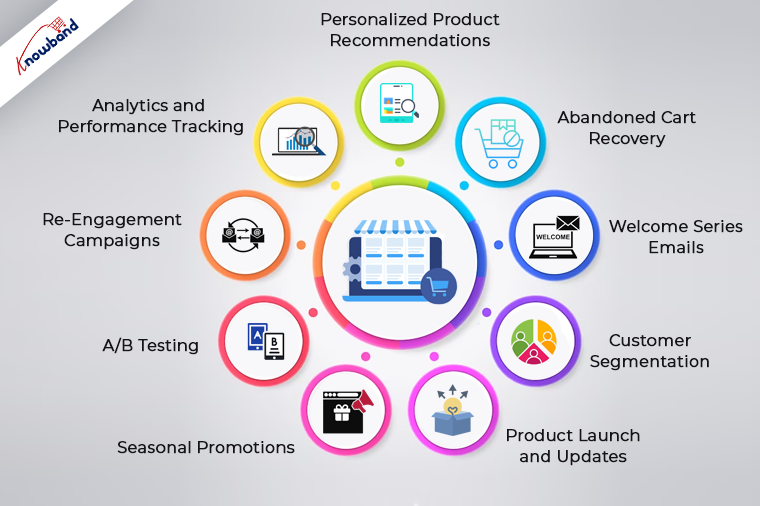
1. Personalized Product Recommendations:

Personalization is the cornerstone of successful email marketing for eCommerce. Furthermore, you can leverage customer data and behavioral insights to recommend products tailored to each recipient’s preferences.

2. Abandoned Cart Recovery:

Cart abandonment is a common challenge in eCommerce. Send automated emails to users who abandon their shopping carts, reminding them of their pending purchases. Include enticing product images and clear calls to action to encourage them to complete the checkout process. Furthermore, if you have your eCommerce shop based on OpenCart or Prestashop, you can also check Knowband’s Abandoned cart email plugins to automate your abandoned cart recovery process.

3. Welcome Series Emails:

Make a strong first impression with new customers through a welcome email series. Use these emails to introduce your brand, highlight your best-selling products, and offer exclusive discounts.

4. Customer Segmentation:

Segment your email list based on customer behavior, purchase history, and demographics. Knowband’s segmentation tools can simplify this process and ensure that your emails resonate with each group.

5. Product Launch and Updates:

Keep your customers informed about new product arrivals, restocks, and updates. Moreover, you can use email marketing to create excitement and anticipation around your offerings. Highlight unique features and benefits to entice purchases.

6. Seasonal Promotions:

As an eCommerce shop admin, you can leverage holidays and special occasions to run targeted email campaigns. Moreover, you can offer holiday-specific promotions, discounts, and gift guides. These campaigns can drive higher conversion rates and boost revenue during peak seasons.

7. A/B Testing:

Optimize your email campaigns through A/B testing. Experiment with different subject lines, email designs, and calls to action to determine what resonates best with your audience. Knowband’s email marketing tools provide A/B testing capabilities.

8. Re-Engagement Campaigns:

Identify inactive subscribers and create re-engagement campaigns to win them back. Offer exclusive incentives or personalized content to reignite their interest in your products.

9. Analytics and Performance Tracking:

Regularly analyze the performance of your email campaigns. Knowband’s email marketing tools can provide comprehensive analytics to help you refine your strategies.

Incorporating Knowband into Your Email Marketing Strategy


Knowband, a leader in eCommerce plugins and extensions, offers a range of tools to enhance your email marketing efforts on platforms like OpenCart, PrestaShop, WooCommerce, and Magento 2. With Knowband’s plugins, you can streamline personalized product recommendations, automate welcome emails, segment your audience effectively, and track campaign performance seamlessly.

In conclusion, effective email marketing is a game-changer for eCommerce businesses. It allows you to build lasting relationships with your customers, drive sales, and improve customer loyalty. By implementing these strategies and leveraging Knowband’s plugins and extensions, you can take your email marketing efforts to the next level, ensuring your eCommerce business thrives in a competitive online market.


10 Essential Features Your E-commerce Website Should Have!

In today’s highly competitive eCommerce landscape, having a well-designed and feature-rich website is essential for success. Whether you’re using OpenCart, PrestaShop, WooCommerce, Magento 2, or any other eCommerce platform. Certain features are crucial to provide a seamless shopping experience for your customers.

Following the same, in this article, we’ll explore the ten essential features your eCommerce website should have to drive sales, enhance user satisfaction, and stay ahead in the game.


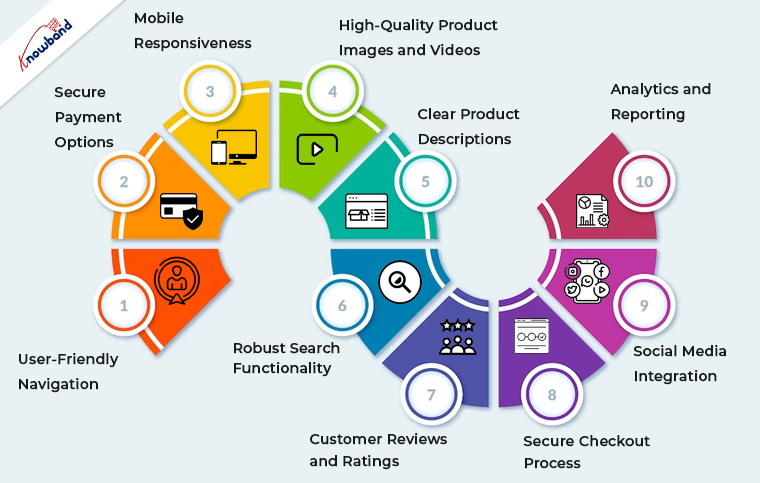
1. User-Friendly Navigation of Mobile App Builder:

Smooth and intuitive navigation is the foundation of any successful eCommerce website and Mobile App for Opencart, Woocommerce, Magento, and Prestashop. Thus, you can implement clear and logical menus, filters, and search functionality to help users find products effortlessly. Furthermore, you should always ensure that your website is responsive, catering to both desktop and mobile users.

2. Secure Payment Options:

Online shoppers demand secure payment options. The reason behind the same is that modern customers prefer security and safety while completing payments.
Thus, you can integrate reputable payment gateways, such as PayPal, Stripe, or Square, to instill trust and offer various payment methods, including credit cards, digital wallets, and bank transfers.

3. Mobile Responsiveness:

The number of mobile users is way more than the number of desktop ones. Therefore, mobile commerce is on the rise, and your website must be optimized for mobile devices.
Furthermore, a responsive design ensures that your site looks and functions seamlessly on smartphones and tablets. 

4. High-Quality Product Images and Videos:

Visual appeal is paramount in eCommerce. Use high-resolution images and, when possible, product videos to showcase your offerings from multiple angles. 

5. Clear Product Descriptions:

Accurate and detailed product descriptions are crucial for transparency and SEO. Include essential information, such as product specifications, sizes, colors, and any relevant details that aid customers in making purchase decisions.

6. Robust Search Functionality:

Search is one of the most important features of an eCommerce website. Thus, you can implement a powerful search feature with filters to help users narrow down their product choices quickly. This feature is particularly important for stores with extensive inventories.

7. Customer Reviews and Ratings:

Customer feedback builds trust. Furthermore, positive reviews can sway potential buyers, while constructive criticism helps you improve your offerings.

8. Secure Checkout Process:

Streamline the checkout process to minimize cart abandonment. Ensure a secure and hassle-free experience by integrating SSL certificates and providing multiple shipping and payment options.

9. Social Media Integration:

Leverage the power of social media by integrating sharing buttons and showcasing your social profiles. This facilitates user engagement and allows customers to share their favorite products with their networks.

10. Analytics and Reporting:

Collect and analyze data about your website’s performance and customer behavior.
Moreover, tools like Google Analytics provide insights into traffic, conversion rates, and user demographics. Thus, you can use these insights to refine your marketing strategies and improve your site continually.

Why OpenCart, PrestaShop, WooCommerce, and Magento 2?


These essential features apply to eCommerce websites built on various platforms, including OpenCart, PrestaShop, WooCommerce, and Magento 2. Here’s how they relate to each platform:

OpenCart: 

OpenCart is known for its user-friendly interface, making it easy to implement essential features like navigation, product descriptions, and secure payment options.

PrestaShop: 

PrestaShop offers robust out-of-the-box features, making it an excellent choice for responsive design, powerful search functionality, and analytics integration.

WooCommerce: 

As a WordPress plugin, WooCommerce combines seamlessly with WordPress themes, making it ideal for integrating high-quality images, videos, and social media elements.

Magento 2: 

Magento 2 is a versatile platform that excels in secure payment options, customer reviews, and ratings. Its advanced analytics and reporting capabilities are also top-notch.


Wrapping Up!

In conclusion, having these ten essential features on your eCommerce website, regardless of the platform you choose, is critical for attracting and retaining customers. Your website’s design, functionality, and security are all key factors in building trust and driving sales. Evaluate your current website against these criteria and consider implementing any missing features to create a compelling shopping experience for your customers. Remember, a well-optimized eCommerce website is a valuable asset in today’s digital marketplace.

Ensure that you regularly update and maintain your site to meet evolving customer expectations and industry trends. By doing so, you’ll be well on your way to eCommerce success, regardless of the platform you use.