What is New in PrestaShop 9.0? Full Feature & Migration Guide

Why PrestaShop?

PrestaShop is a leading open-source e-commerce platform, known for its flexibility, powerful features, and zero licensing costs. Known for its intuitive interface, multi-language/currency support, and rich ecosystem of modules and themes, it’s ideal for SMEs creating customised online stores. PrestaShop 9.0 represents a significant milestone, delivering performance upgrades and essential architectural advancements reflecting modern development standards, scalability, and long-term maintainability.

What’s New in PrestaShop 9.0?

PrestaShop 9.0 brings complete core framework modernisation—a major leap forward, redefining how developers and store owners interact with the system.

Core Architecture Changes

Full Symfony Integration: PrestaShop 9 finalises its transition to the Symfony framework, providing a modern, stable foundation for future development. Legacy classes and outdated controllers have been deprecated or replaced, making the system more maintainable and aligned with best practices.

PHP 8.1+ Support: Requires PHP 8.1 or higher, ensuring compatibility with the latest features, improved security, and faster performance.

Doctrine DBAL: The Database Abstraction Layer improves database interactions, offering better abstraction, query building, and testability—especially beneficial for large-scale customisations.

Composer-Centric Development: Composer 2.x now plays a central role in the development workflow, handling dependency management, module integration, and autoloading seamlessly.. This simplifies version control and enhances CI/CD compatibility.

Back Office & Developer Enhancements

While focusing on backend improvements, merchants and developers will notice:

  • Faster page loads and improved server response times
  • Cleaner codebase through legacy logic removal
  • Improved modularity for cleaner, standalone modules
  • Stronger test coverage for stable, secure releases

Though UI changes are minimal, these under-the-hood updates drastically enhance store stability and maintainability.

Migration Guide: From PrestaShop 8 to 9
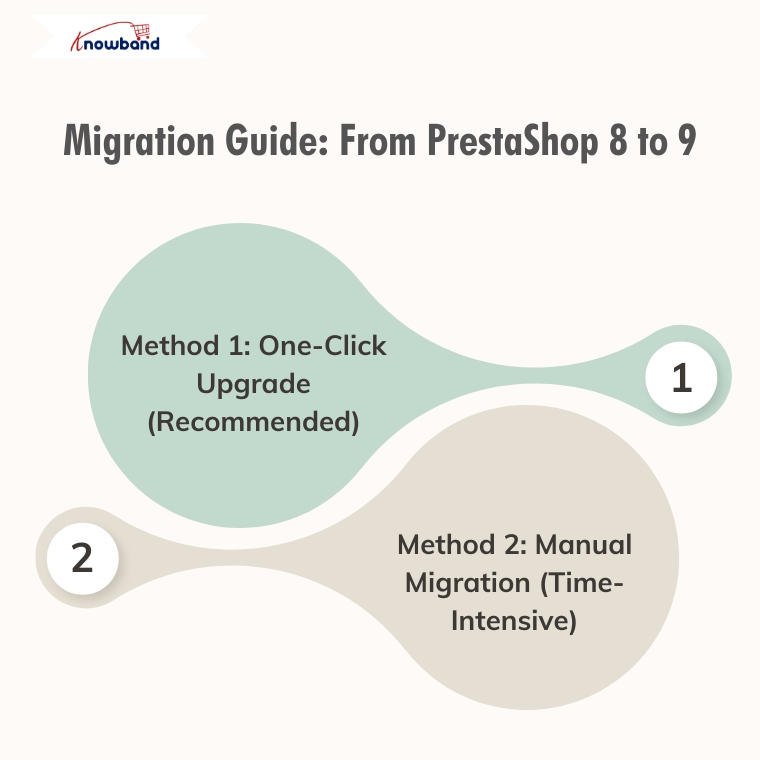
Method 1: One-Click Upgrade (Recommended)

Available Tools:

  • Official 1-Click Upgrade Module: Standard PrestaShop upgrade module handling version transitions automatically
  • MigrationPro: Third-party solution supporting migration with comprehensive data transfer
  • PrestaShop Migrator: Alternative one-click solution for seamless upgrades

Advantages:

  • Automated process with minimal manual intervention
  • Built-in data integrity checks
  • Reduced human error risk
  • Faster migration time
  • Automated backup creation

Autoupgrade Backup Process:

  1. BackupInitialization: Process start, clearing leftover temporary files
  2. BackupFiles: Complete backup of store files, themes, modules, images, and custom code
  3. BackupDatabase: Creates a complete backup of the entire database, including all tables and stored data.
  4. Let me know if you prefer a more concise or more detailed version.
  5. BackupComplete: Process finalisation with verification

Rollback Process: If the upgrade encounters issues, easily revert through the autoupgrade module’s “Rollback” section by selecting the backup archive and monitoring rollback progress.

Data Migration: Automatically handles transfer of products, categories, attributes, customer accounts, order history, CMS pages, configuration settings, images, and compatible module configurations.

Method 2: Manual Migration (Time-Intensive)

Fresh PrestaShop 9 installation followed by manual data migration.

Process Overview:

  1. Review Server Requirements: PHP 8.1+, MySQL 5.7+/MariaDB 10.3+, Composer 2.x, Apache/Nginx
  2. Complete Backup: Database, files, configuration, custom code
  3. Install PrestaShop 9.0: Fresh installation via Git and Composer
  4. Data Migration Strategy: Export from PS8 (products, customers, orders, CMS, configurations) and import to PS9 using native tools, third-party modules, or manual entry
  5. Module Compatibility Assessment: Audit existing modules, update compatible ones, identify alternatives for incompatible modules
  6. Theme Reconstruction: Rebuild themes using PS9’s updated architecture, adapt to Symfony requirements
  7. Comprehensive Testing: Front office (browsing, checkout, payments, mobile) and back office (product management, orders, reporting) functionality

Recommendation

Method 1(One-Click Upgrade) is strongly recommended for most merchants due to:

  • Significantly reduced migration time
  • Lower risk of data loss/corruption
  • Automated handling of complex data relationships
  • Built-in rollback capabilities
  • Professional support availability

Consider Method 2 (Manual Migration) only for specific customisation requirements necessitating a fresh installation or when automated tools are incompatible.

Post-Migration Checklist

Regardless of the chosen method:

  • Verify all critical store functions
  • Test payment and shipping integrations
  • Confirm SEO settings and URL structures
  • Update DNS and SSL certificates if needed
  • Monitor site performance and loading speeds
  • Train staff on interface changes

Final Thoughts

PrestaShop 9.0 sets a strong course toward improved speed, enhanced security, and a more developer-centric ecosystem. Although upgrading requires planning and effort, long-term benefits are considerable—better performance, cleaner code, enhanced scalability, and modern tooling.

If running an older version, evaluate the long-term value of moving to Prestashop 9. If unsure about the process or lacking in-house developers, consulting with a PrestaShop expert or certified partner is highly recommended.

Still deciding whether to switch?

If you’re unsure whether moving from PrestaShop 8 to 9 is the right step for your store, we invite you to check out our detailed comparison and expert insights.

Discover the key benefits, potential risks, and real-world impact of migrating — and make an informed decision for your business.

Explore the PrestaShop 8 vs 9 Comparison Guide

Should You Move from PrestaShop 8.1 to 9.0? A Complete Feature Comparison

With the release of PrestaShop 9.0, the platform is moving toward a more modern, performance-oriented, and developer-friendly future. However, as with any major update, merchants and developers are left with an important question: Is now the right time to migrate from PrestaShop 8.1?

In this blog, we’ll explore the key differences between PrestaShop 8.1 and 9.0. From performance upgrades to developer tools, we’ll cover everything you need to know to make an informed decision about your store’s future.

Symfony Framework Upgrade: From 4.4 to 6.4

To begin with, one of the most significant changes in PrestaShop 9.0 is the upgrade of the Symfony framework from version 4.4 to Symfony 6.4, the latest long-term support (LTS) release. This transition ensures better stability, security, and access to modern development tools.

Symfony 6.4 will be maintained with bug fixes through November 2026 and security patches until November 2027, ensuring long-term stability for evolving projects. By comparison, Symfony 4.4—used in PrestaShop 8.1—has already reached the end of its support life. Therefore, PrestaShop 9.0 becomes the smarter choice for long-term projects.

PHP Compatibility and Performance Enhancements

In addition, PrestaShop 9.0 introduces support for PHP 8.1, 8.2, and 8.3. This allows merchants to benefit from improved performance, better memory handling, and modern PHP features.

Unlike PrestaShop 8.1, which stopped at PHP 8.1, the new version embraces the latest PHP releases, representing a major step forward. As a result, PrestaShop 9.0 is better aligned with modern PHP standards and development practices. However, keep in mind that older hosting environments and custom code may require updates to ensure compatibility.

Modern API Platform for Headless Commerce

Furthermore, PrestaShop 9.0 brings a brand-new API system based on API Platform v3, dramatically improving how it interacts with external applications.

This makes it ideal for headless commerce architectures, mobile app integrations, and third-party services. In contrast, PrestaShop 8.1 relied on a legacy API, which lacked the flexibility and scalability modern developers expect. As a result, the new API system opens up a world of opportunities for automation and integration.

PrestaShop 9 debuts a completely reimagined Admin API, built using API Platform—a cutting-edge PHP framework known for its flexibility and power. This innovation marks a significant leap toward creating a more open, extensible, and developer-focused PrestaShop environment.

Here’s what the new Admin API offers:

  • Simplified integration with external platforms such as ERPs, CRMs, and marketing tools.
  • Automation-ready architecture that helps reduce manual store management and boosts operational efficiency.
  • RESTful structure with JSON formatting, ensuring ease of use for developers accustomed to modern API standards.
  • Future-ready modularity, allowing the system to grow and adapt with community and business demands.

It’s worth noting that the Admin API is still evolving. While the core framework is already in place, additional features and endpoints are being actively developed.

Key Hook Updates in PrestaShop 9

 PrestaShop 9 retains most of the widely used hooks from version 8 to ensure module and theme compatibility. Common front-office hooks like displayHeader, displayFooter, displayHome, and displayProductButtons remain supported. In the back office, important hooks such as displayBackOfficeHeader, displayAdminOrderMain, and displayAdminProductsExtra are still available for extending core functionality.

Alongside these, PrestaShop 9 introduces modern Symfony-based hooks like actionSymfonyResponse, actionAfterCartSave, and actionProductFormBuilderModifier. These offer a cleaner, event-driven approach to customisation and are part of the platform’s move toward a more modular, scalable structure.

Redesigned Back Office Using Symfony and Twig

Another significant improvement is the full revamp of the back office, now built with Symfony and Twig for a more modern and maintainable structure. This results in a more intuitive, mobile-friendly, and user-centred admin experience.

For store owners, the redesigned layout means easier navigation and improved productivity. For developers, the shift supports cleaner templating and reduces legacy code dependencies. On the other hand, PrestaShop 8.1 retains a more traditional interface, which may now feel outdated in comparison.

Developer-Focused Improvements

Additionally, PrestaShop 9.0 has replaced several outdated libraries used in previous versions. For example:

  • Guzzle HTTP Client → Symfony HTTP Client 
  • SwiftMailer → Symfony Mailer 

These updates result in a more secure, efficient, and future-proof module and email handling.

Moreover, the login system has been modernised. Legacy hooks have been removed, and a new actionBackOfficeLoginForm hook has been introduced, offering cleaner and more customizable authentication flows.

Transition Toward Twig Templates

Importantly, PrestaShop 9.0 also makes a bold move toward full Twig integration, gradually replacing the legacy Smarty engine. Twig is now widely used in both front and back offices, offering more readable, modular, and reusable templates.

For theme developers, this is a significant improvement. In contrast, PrestaShop 8.1’s reliance on Smarty limits flexibility and long-term maintainability.

Should You Upgrade to PrestaShop 9.0?

PrestaShop 9.0 brings major improvements—but before upgrading, make sure your store is ready to handle the change. If your themes, modules, and hosting environment are compatible—or can be easily updated—then migrating can bring notable performance and UX benefits.

Alternatively, if your current store depends heavily on legacy plugins or complex custom code, it might be wiser to wait until broader module support becomes available. Testing in a staging environment is highly recommended before committing to a full upgrade.

Migration Tips for Store Owners

Before making the switch, follow these best practices:

  • Backup your entire store, including the database and any custom files.
  • Test the upgrade in a staging environment first to avoid disrupting your live store.
  • Verify compatibility for all third-party themes and modules.
  • Monitor community feedback for bug reports and migration issues.
  • Conduct thorough testing, especially checkout, payment, and product display areas. 

Final Thoughts

PrestaShop 9.0 marks a major leap toward a modern, secure, and scalable e-commerce platform. From faster performance and updated frameworks to a cleaner developer experience, it brings meaningful benefits for merchants and developers alike.

In conclusion, while migration requires effort and planning, the long-term gains make it a worthwhile investment. Whether you’re a seasoned PrestaShop user or planning your first store, now is an excellent time to explore what version 9.0 can do for your business.

If you’re looking for a reliable solution to ensure a smooth upgrade, KnowBand offers custom module development and PrestaShop 9.0-ready extensions that can accelerate your transition. Their expert support and robust library of PrestaShop modules make them a valuable partner during major upgrades.

What’s New in PrestaShop v9.0: Is it Time to Migrate?

PrestaShop v9.0 marks a significant milestone in the evolution of this open-source e-commerce platform. Packed with new features, enhancements, and a focus on modernizing the framework, this release aims to provide store owners and developers with a more robust and future-proof solution.

But is it the right time for you to migrate?

Let’s delve into the new PrestaShop v9.0 to help you make an informed decision.

New Features in PrestaShop v9.0!

Symfony Framework Upgrade to Version 6.4:

PrestaShop has been updated to Symfony 6.4, the latest long-term support (LTS) version, ensuring improved performance, security, and access to modern development features.
This version of Symfony will receive bug fixes till November 2026 and security fixes till November 2027 making it more reliable and future-ready.
The previous version of PrestaShop i.e., v8.1 was compatible with Symfony 4.4 which was introduced in Nov 2019. This upgrade brings the platform in line with modern PHP and Symfony standards.

Enhanced PHP Compatibility:

The platform now supports PHP versions 8.1, 8.2, and 8.3, allowing store owners to leverage the latest PHP improvements for better performance, faster execution, and enhanced security. At least PHP version 8.1 is required to run PrestaShop v9.0, ensuring your store benefits from cutting-edge features and optimizations.

Introduction of a Modern API Platform:

A new, flexible API based on the API Platform version 3 framework has been introduced, facilitating seamless integration with third-party applications, headless commerce setups, and custom developments. This API overhaul ensures scalability and better support for modern e-commerce ecosystems.

Revamped Back Office Layout Using Symfony:

The back office has undergone a comprehensive redesign powered by Symfony and Twig components, offering a more responsive, intuitive, and user-friendly interface. This redesign aims to make store management more efficient and accessible, even for those new to e-commerce platforms.

Notable Changes for Developers:

guzzlehttp/guzzle Library Replaced with Symfony HTTP Client: The guzzlehttp/guzzle library has been replaced with Symfony’s native HTTP Client, providing a more streamlined and efficient way to handle HTTP requests.

swiftmailer/swiftmailer Library Replaced with Symfony Mailer: The deprecated SwiftMailer library has been replaced with Symfony Mailer, which aligns PrestaShop with modern email-sending practices and improves the overall email management system.

Back Office Login Migration to Symfony: The Back Office login process has been fully migrated to Symfony, resulting in the removal of the following admin hooks:

  • actionAdminLoginControllerBefore
  • actionAdminLoginControllerLoginBefore
  • actionAdminLoginControllerLoginAfter
  • actionAdminLoginControllerForgotBefore
  • actionAdminLoginControllerForgotAfter
  • actionAdminLoginControllerResetBefore
  • actionAdminLoginControllerResetAfter

A new hook, actionBackOfficeLoginForm, has been introduced to allow developers to customize the Admin login form.

Twig Template Improvements:

  • The transition to Twig templates in both the Back Office and Front Office allows for cleaner, reusable, and modern templating practices.
  • This transition also reduces reliance on legacy Smarty templates, ensuring compatibility with modern development standards.

Is PrestaShop v9.0 Ready for Production?

While PrestaShop v9.0 introduces numerous advancements, it’s essential to approach migration with careful planning:

  • Thorough Testing: The alpha version is available for testing, and community feedback is crucial to identify and resolve any issues before the stable release. This iterative testing process ensures a more stable and reliable final product.
  • Compatibility Checks: Store owners should verify the compatibility of their custom themes and Prestashop modules with v9.0 to ensure a smooth transition. Some outdated plugins may require updates to work with the new framework and PHP versions.
    Migration Best Practices:
  • Backup: Ensure all store data, including files and databases, are thoroughly backed up.
  • Staging Environment: Test the upgrade in a staging environment before applying changes to the live site.
  • Community and Support: The active PrestaShop community provides extensive documentation, forums, and resources to assist with the migration process. Developers and store owners can also leverage the support network for troubleshooting and guidance.

Generate and Translate the Content for Prestashop Effortlessly with AI

Read More..

SHOP NOW

Why Migrate to PrestaShop v9.0?

Upgrading to PrestaShop v9.0 offers several benefits:

  1. Future-Proofing Your Store: The adoption of Symfony 6.4 and support for the latest PHP versions ensure your store remains technically advanced and ready for future updates.
  2. Improved User Experience: A modernized back office and enhanced performance contribute to a more efficient management experience and happier customers.
  3. Enhanced Security: Integration of advanced security protocols provides peace of mind for both store owners and customers.

Conclusion!

PrestaShop v9.0 marks a significant step forward for the platform, introducing cutting-edge features and essential enhancements to meet the demands of modern e-commerce. While migrating requires careful planning, the benefits in terms of performance, security, and flexibility make it a worthwhile investment for most store owners.

It is important to note that PrestaShop v9.0 is currently in the testing phase. Store owners and developers are encouraged to explore its capabilities in a staging environment to provide feedback and prepare for the stable release. With proper preparation, you can unlock the full potential of PrestaShop v9.0 and position your store for long-term success.

So, are you ready to take the leap into the future of e-Commerce?


Why Migrate from PrestaShop1.7 to PrestaShop 8.1?

Migrating your PrestaShop 1.7 store to Prestashop 8.1 offers a lot of noticeable benefits, which include the enhanced performance of your store, improved security features, and access to the latest technologies.

The PrestaShop 8.1 brings a more efficient and secure operating environment with support for the latest PHP and MySQL versions, enhancing the site speed and responsiveness of your store.

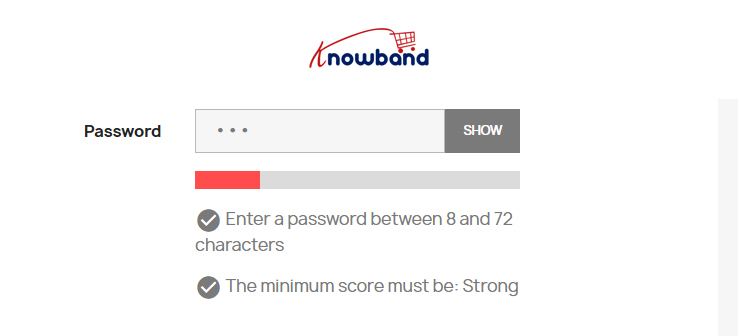
For example, the new functionalities introduced in the PrestaShop 8 and above versions such as the Password Strength Indicator which not only enhance the security of your store but also improve the user experience are notable improvements in this version.


Hence, by upgrading the store’s PrestaShop version to 8.1, you also ensure continued support from the community of PrestaShop, access to updates, and better compliance with current web standards, keeping your store competitive and well-optimized for search engines.

Migrating from PrestaShop 1.7 to PrestaShop 8.1 is highly beneficial for several reasons and some of those are mentioned below:-

  1. Updated Core Technologies: The move to PrestaShop 8.1 brings significant upgrades to essential technologies like Bootstrap and Symfony versions have been upgraded to v4.4.
  2. Support for the newer PHP versions: PrestaShop 8.1 provides the support for the latest versions of PHP ranging from 7.2.5 up to 8.1. 
  3. Enhanced Security Features: The introduction of a Password Strength Indicator is a significant enhancement in PrestaShop 8.1 which provides real-time feedback to customers creating accounts encouraging the creation of stronger and more secure passwords by showing clues for strength improvement.


Prerequisites for the Migration

1. Technical Requirements Check

  • Server Compatibility: Verify that your hosting environment meets the updated specifications required by PrestaShop 8.1, especially PHP version 7.4 or newer and MySQL version 5.6 or higher as it ensures your server can effectively handle the new software without compatibility issues.


  • Theme and Module Compatibility: Assess whether your existing themes and modules are compatible with PrestaShop 8.1. If they aren’t, you will need to either update them or look for suitable replacements to maintain the functionality and design of your store.

2. Data Backup

  • Comprehensive Backups: Rigorously back up all your website files, database entries, and configuration settings. This step is vital as it provides a safety net, allowing you to restore your store to its original state should there be any issues during the migration process.
  • Backup Validation: Test these backups in a staging environment to confirm their integrity and functionality. This validation helps ensure that you can reliably revert to the original system if needed.

3. Staging Environment Setup

  • Replicate Live Environment: A staging environment needs to be set up that replicates the live configuration as closely as possible and then uses this environment to perform the migration tests. 

Migration of Data

Export Data: 

  • Use tools like phpMyAdmin to export your database in CSV from the PrestaShop 1.7 store.
  • Go to the Database of your store and then click on the Export button present at the top of the phpMyAdmin. 
  • Please check the breadcrumbs to verify that you are exporting a Database and a table.


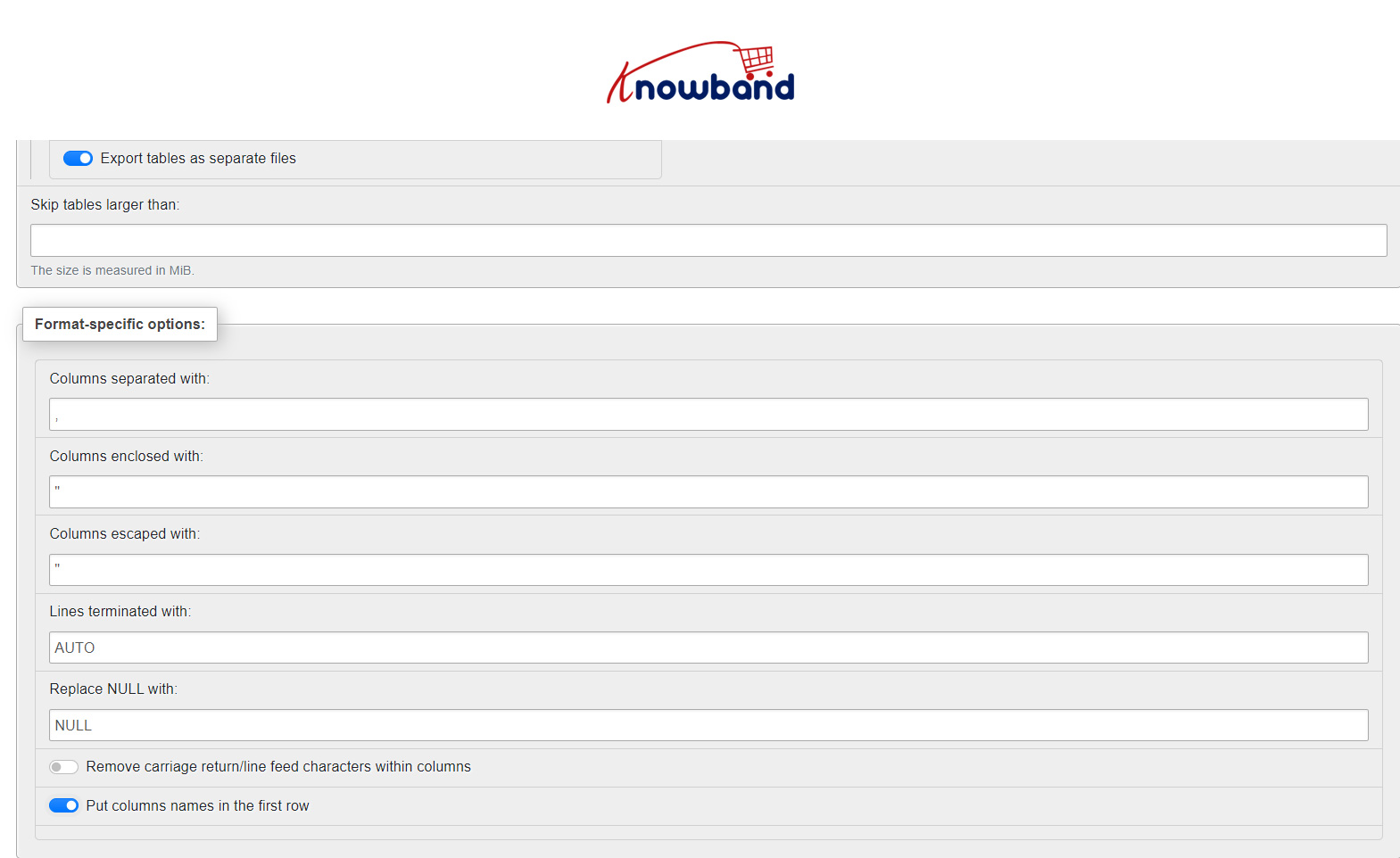
  • While exporting the data, please make sure to check the ‘Put columns names in the first row’ and ‘Export tables as separate files’. This will provide separate CSV files for each table present in your Database.


Modify and Import Data:

Depending on the changes in database structure between 1.7 and 8.1, you may need to adjust the SQL data (like altering table structures, column names, etc.) before importing it into your new PrestaShop 8.1 database. Therefore, this step can be complex and requires thorough testing.

For every change in the new structure, we have to modify our respective CSVs.

Import the Data-

  • Install the Prestashop 8.1. While installation, be aware that, you don’t need to install the Demo data as we need a clean store for the Import.
  • Now, install the languages you are using on your live store to the PS8.1 store.
  • Now, for every table on the PS8.1 store in the phpMyAdmin, please clear the data of the table first and then import the CSV for that table.
  • While importing, please make sure that the format of the file is marked as CSV and skip the import of the first line of CSV as it holds the name of the columns.
  • Document every change made to the data and the reasoning behind each modification as this documentation will be helpful for future reference and for maintaining the store.

Final Stage in the Migration: –

Furthermore, Complete testing will be required once the data is imported into the new PrestaShop 8.1 setup needs to be done to make sure that all the store’s functionalities are working as desired and at last the store can be made live to the public when there are no issues found in the testing process of the store.

Related Blog: Prestashop 8.1.1 Stability Tests: A Look into the Results 

Take a look at our bestseller module One Page Supercheckout for Prestashop and Opencart Android and iOS Mobile App Builder Plugin:

Also, watch our latest video here: