Important Alert by Knowband: Universal Analytics to be Phased Out by Google!

Google is calling on users to swiftly transition to Google Analytics 4 (GA4) to avoid losing valuable data. As the digital landscape evolves, Google has announced its plan to discontinue all Universal Analytics (UA) services and application programming interfaces (APIs) by July 1. Furthermore, this move signifies a pivotal shift towards Google Analytics 4 (GA4), marking the end of access to UA properties through both the Google Analytics interface and its APIs starting in July.

For users who have not yet embraced GA4, Google emphasizes the urgency of migrating.
The transition is not just a technical necessity but an opportunity to harness more sophisticated analytics capabilities offered by GA4. Unlike its predecessor, GA4 focuses on privacy-compliant data collection and offers a more intuitive user interface, enhanced machine learning models, and cross-platform tracking capabilities. Moreover, these features are designed to provide deeper insights into user behavior and improve the accuracy of data-driven decisions.

Why Immediate Action is Essential!

Data is one of the most important assets for an online website. For the same reason, it becomes essential to protect the same.
Delaying the migration process poses a significant risk of data loss, which could irreversibly impact the effectiveness of marketing strategies and campaign performances. Thus, to facilitate a smooth transition, Google has made available a comprehensive migration guide that outlines step-by-step instructions.

Data Preservation Techniques!

Preserving historical data is crucial. Google Analytics Help Center details several methodologies for exporting data from UA properties. For those with Universal Analytics 360 properties looking to export historical data through BigQuery, it’s imperative to begin this process immediately. Post-transition, exported data will continue to be accessible within BigQuery, ensuring continuity of data analysis and reporting.

Understanding the Changes:
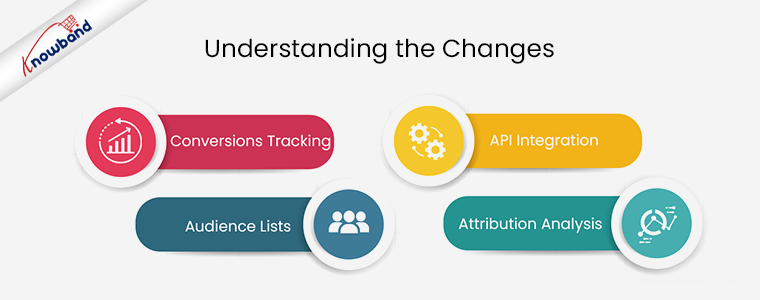
Conversions Tracking:

The discontinuation of UA will halt the tracking of new conversions. This could significantly affect the optimization of ad campaigns, particularly for those utilizing Google’s Smart Bidding strategies.

Audience Lists: 

With the closure of Universal Analytics, custom audience lists used for targeting in advertising campaigns will become unavailable, potentially diminishing campaign effectiveness. However, you can access more advanced features with GA4.  

API Integration: 

Post-UA, API requests related to Universal Analytics will not be processed. This includes data deletion requests via the User Deletion API, affecting the functionality of analytical tools like Looker Studio.

Attribution Analysis: 

The sunsetting of Attribution Projects within Google Analytics highlights the need for marketers to adapt their attribution modeling in GA4. It will ensure the continued understanding of customer touchpoints and conversion paths.

In the END!

Transitioning to GA4 is not just a mandatory shift but an opportunity to leverage advanced analytics that can drive more nuanced and effective marketing decisions. The comprehensive features of GA4, designed to meet the demands of a privacy-first digital environment, offer businesses the tools to thrive in an increasingly competitive online space.

 

How Social Media Networks are Empowering SEO!!

Search Engine Optimization and Social Media Marketing are two different aspects of marketing. Although both have their own characteristics and workflow. Yet, in the end, the goal is to define the traffic on a website. Both social media marketing and SEO are some of the most effective marketing ways that bring traffic to a website.

Even though Social Media Marketing for eCommerce and SEO is entirely different. Yet, Google’s updated SEO algorithms consider the social media presence of a brand while considering SEO rankings.

Difference Between SEO and SMM:

Social Media Marketing is a marketing strategy to promote a brand on social media platforms. For example, SMM teams work on different strategies to improve brand awareness on social platforms. Such as Instagram, Facebook, etc.

On the other hand, Search Engine Optimization is the most effective way of driving organic traffic toward a website. It includes content posting, link building, loading speed optimization, and Google’s search page update aspects.

How Social Media Optimization Impacts SEO!!

According to Google’s recent announcements, links are generated from social media platforms. As Facebook and Twitter impact Search Engine Optimization directly. For example, if you are posting relevant content on your brand’s social media pages. The chances for increased click rate and social sharing are high.

As a result, you will be ending up getting noticeable customer traffic toward your website.

Apart from it, various indirect Social Media Marketing factors impact SEO and the overall traffic of a website. Instance, social media platforms track the analytics data such as click rate, bounce rate, viewing depth, and total time spent by a user on a website. So, let’s discuss some of the indirect Social Media Optimization strategies that add significant value to Search Engine Optimization.

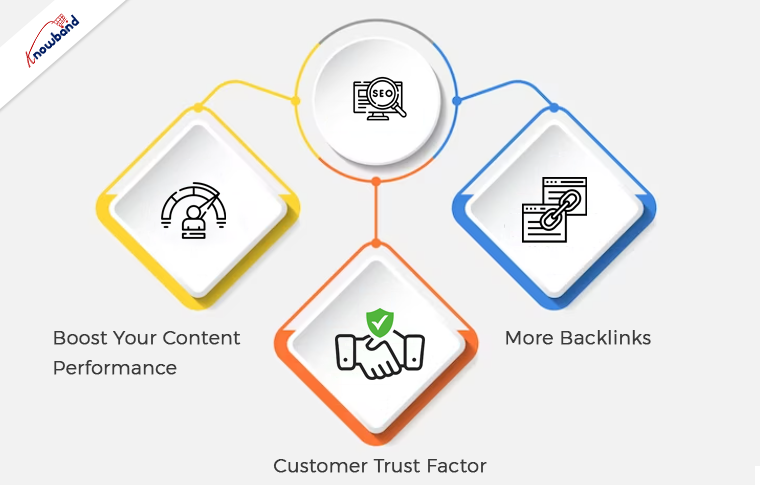
Boost Your Content Performance:

Just content creation is just not enough for a website’s growth. However, if you are just adding content on a website, and not showing the same on social media platforms.

On top of that, social platforms such as Instagram have a huge audience that is going to notice your posted content.

Thus, providing content updates to your social family can grow the organic traffic of your website. In the following method, social media marketing is going to impact your SEO indirectly.

More Backlinks:

Backlinks are the most important aspect of Search Engine Optimization. Well, the question is how it is redirected to social media marketing.

Thus, here is how. Posting your content and other updates on social platforms are going to bring traffic to your website. In case you are deploying valuable content on social platforms, then the chances are higher that you will get to your targeted audience easily. On the other hand, if you are keeping your SEO content to your website only, then it is not going to be helpful for SMM. Thus, adding regular updates on social media is one of the easiest ways to keep your customer base informed about your business activities.

Customer Trust Factor:

Having a healthy brand image on social platforms improves customer trust in a brand. How?

Consider a user hovering on the internet and somehow landing on your Prestashop website in the search of his favorite products. Now, he is a first-time visitor and does not know much about your brand. In the following case, the first thing he is going to do is check the Instagram and Facebook accounts of the website.

Furthermore, if your marketing team has done enough work for enhancing your social media presence then it is well and good. However, if you are not able to maintain a sounding social profile for your business then there are huge chances of bounce rate.

Looking for Selling on Facebook from Your PrestaShop Store?

Are you a Prestashop eCommerce shop vendor and looking to sell your products on Facebook? You can check out Knowband’s Prestashop Facebook Store Addon.

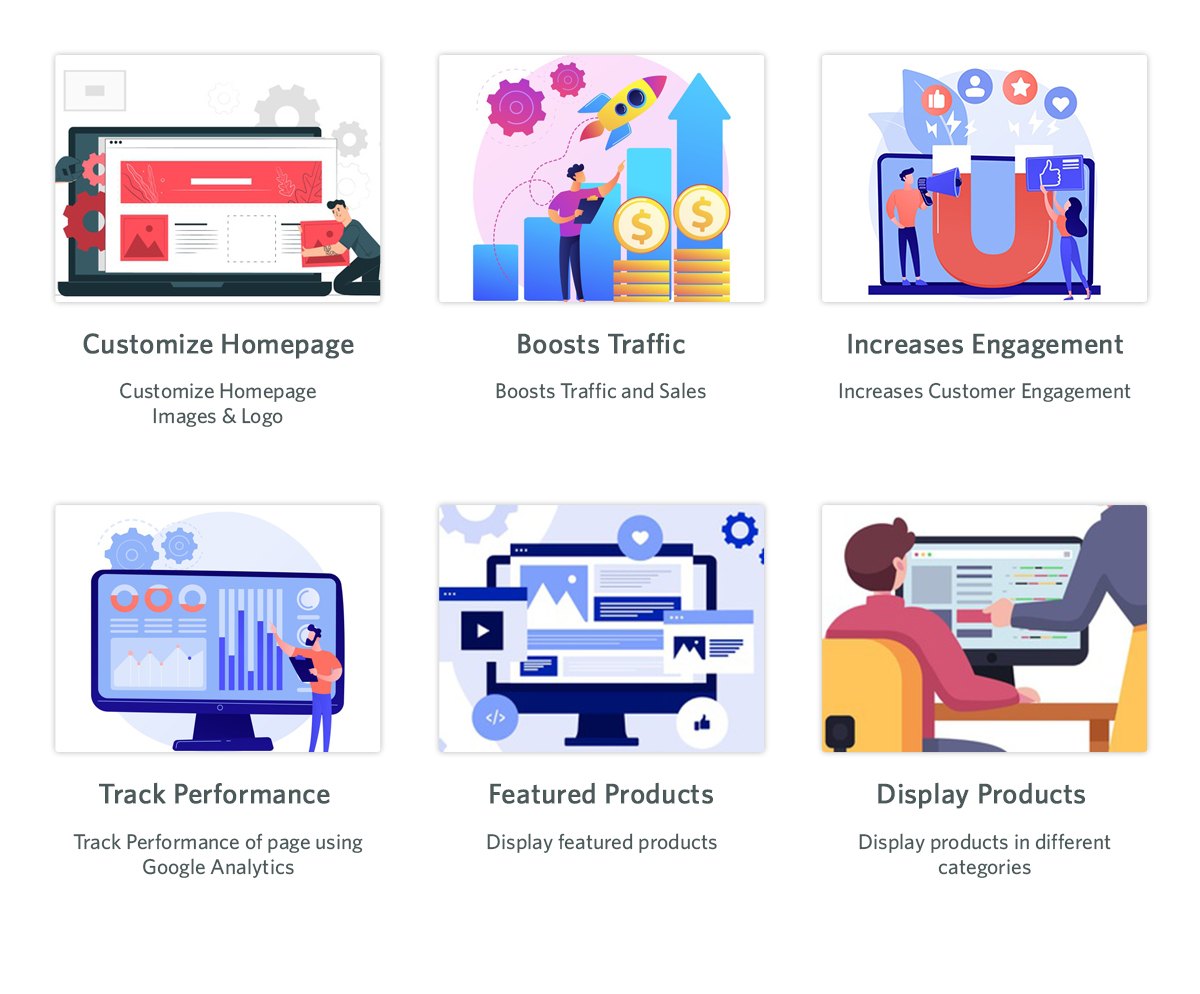
Moreover, with the help of the FB Store module, you can integrate your Facebook fan page with your Prestashop eCommerce store. On top of that, you can keep the track of other relevant information such as traffic tracking via Google Analytics, managing the UI of your Facebook store, and much more within clicks.

You can also drop us a mail at support@knowband.com for more information and other eCommerce-related queries.