
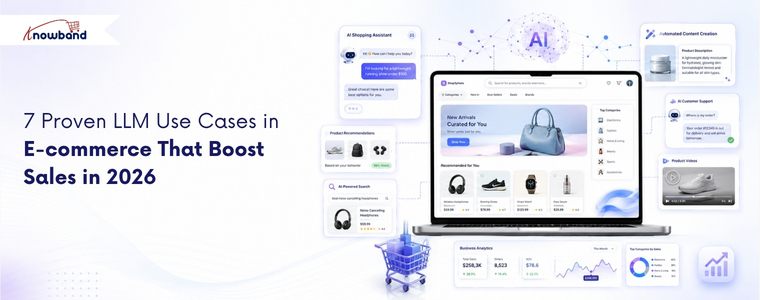
AI in e-commerce has evolved from being experimental to becoming a practical tool for daily operations and revenue generation. AI-referred traffic to US retail sites grew 393% year over year in the first quarter of 2026, and by March 2026, that AI traffic was converting 42% better than non-AI traffic, according to Adobe Analytics. Shoppers now arrive from ChatGPT, Perplexity, and Gemini already deep into their decision, and they are buying. For e-commerce merchants, the practical question is no longer whether AI belongs in the store, but which applications actually return more than they cost to set up. Some improve customers’ in-store experience directly, through faster responses and better product discovery. Others work quietly in the background, keeping the catalog visible to AI search engines or turning store data into decisions that a merchant can act on the same day. The following seven LLM use cases demonstrate how AI delivers value in e-commerce and how PrestaShop merchants can implement each one in practice.
Why LLM use cases in e-commerce shifted from experiment to revenue in 2026
Customers have started to rely on AI platforms more for their day-to-day decisions. When a customer is trying to figure out what to buy inside an AI chat, they are coming to your store with the intent to buy, which is why AI sessions are converting more than traditional channels and generating more revenue per visit.
As AI has become a bigger part of e-commerce, merchants who optimize their stores for AI visibility, AI-powered customer interactions, and faster content creation gain a competitive advantage.

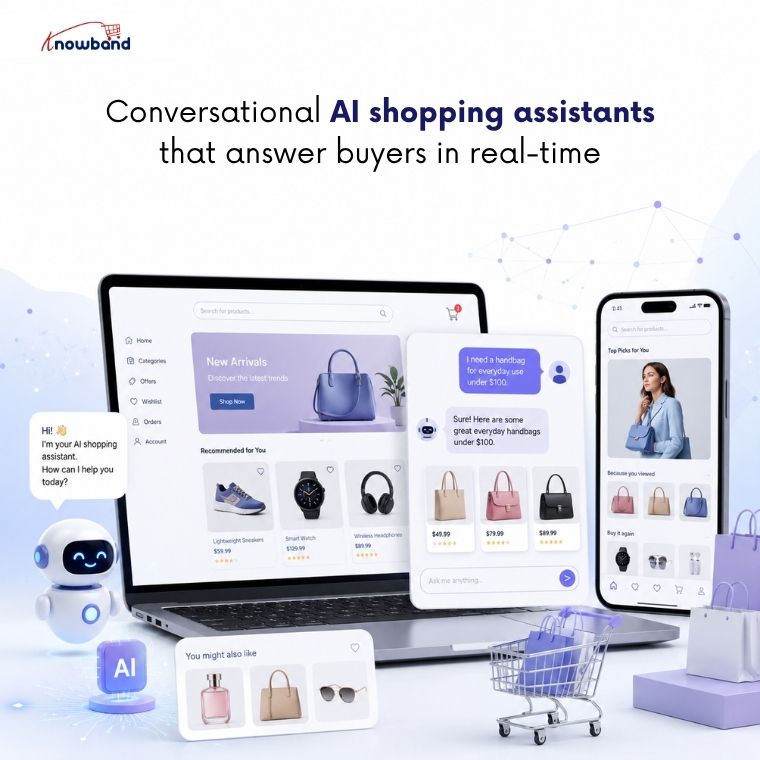


1. Conversational AI shopping assistants that answer buyers in real-time
Conversational commerce is reshaping how customers interact with online stores. Bots have evolved simple but time-consuming question answering into a sophisticated shopping companionship, guiding customers throughout their journey by being present 24/7. This shift matters for conversion because most abandoned carts are not due to price. They occur because of unanswered questions. An assistant who resolves the question while intent is still warm generates revenue.
For PrestaShop stores, a good PrestaShop AI Chatbot handles this without hiring support staff. The PrestaShop AI Chatbot provides multiple model choices to store admin: ChatGPT, Claude, Gemini, DeepSeek, and trained on your catalog and FAQs, so it answers product and order questions, and suggests relevant items accurately. Because the AI-powered chatbot fetches from live store data, its answers stay accurate as your catalog changes, and a well-configured PrestaShop AI Chatbot quietly reduces the support load that used to take up weeks.
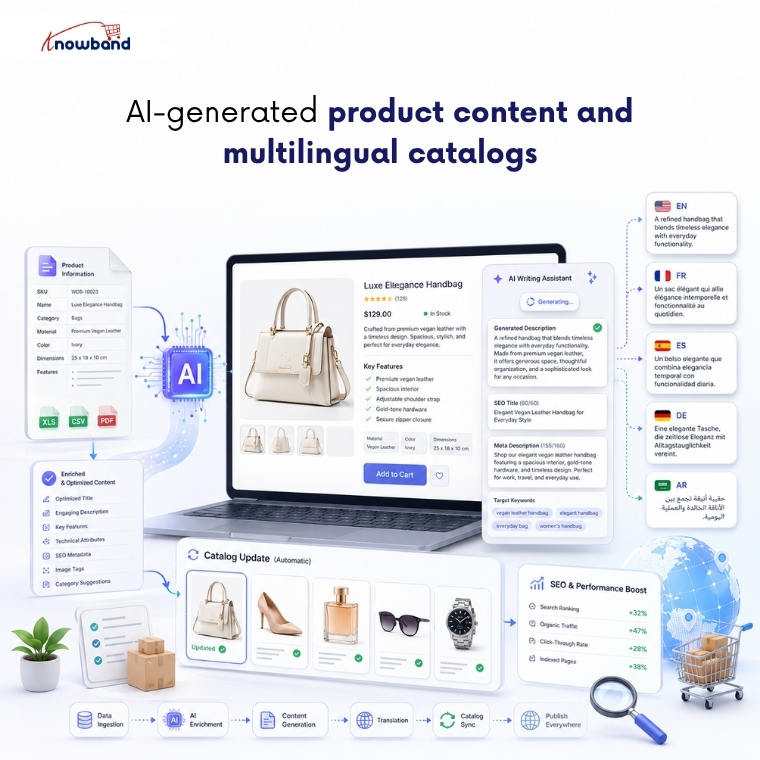
2. AI-generated product content and multilingual catalogs
Product descriptions serve as the foundation of e-commerce listings. But creating a unique product description in multiple languages for thousands of products manually is a very hectic task. At the same time, they have to be convincing enough for a human to buy, and have to be optimized enough to get crawled by Google and AI crawlers. Thin, half-written descriptions fail at both.
This is where language models genuinely earn their place. They draft descriptions, titles, and meta fields in a consistent voice across your whole catalog, then translate as well so you can sell in a new country without hiring a translator. The PrestaShop AI Content Generator and Translator bring both jobs into the back office. The module runs across several providers, Gemini, ChatGPT, Claude, and DeepSeek, writes copy and SEO meta in bulk, also translating catalog into multiple languages for international customers. For growing stores, an AI Content Generator and Translation Module makes it easy to keep product information updated while maintaining a consistent brand voice across multiple languages.
3. AI-powered review generation and authentic social proof
Reviews are one of the strongest conversion triggers. Most shoppers read them before they commit, and a product page carrying honest, specific feedback converts far better than one sitting at zero. The difficulty is rarely the value of reviews. It is gathering enough of them that customers start trusting and purchasing without a second thought.
AI can generate review-style content: star ratings, titles, and body copy written for specific products, published through the native Product Comments module. The PrestaShop AI Review Generator does exactly this, and the e-commerce AI review generation module gives merchants granular control over tone, language, rating distribution, and publishing schedule.
The module generates AI-powered review drafts on demand or according to a predefined schedule, helping merchants keep product pages active with fresh content. Administrators retain full control through configurable publishing rules, scheduled publishing, and manual approval options, ensuring only appropriate reviews appear on the storefront.
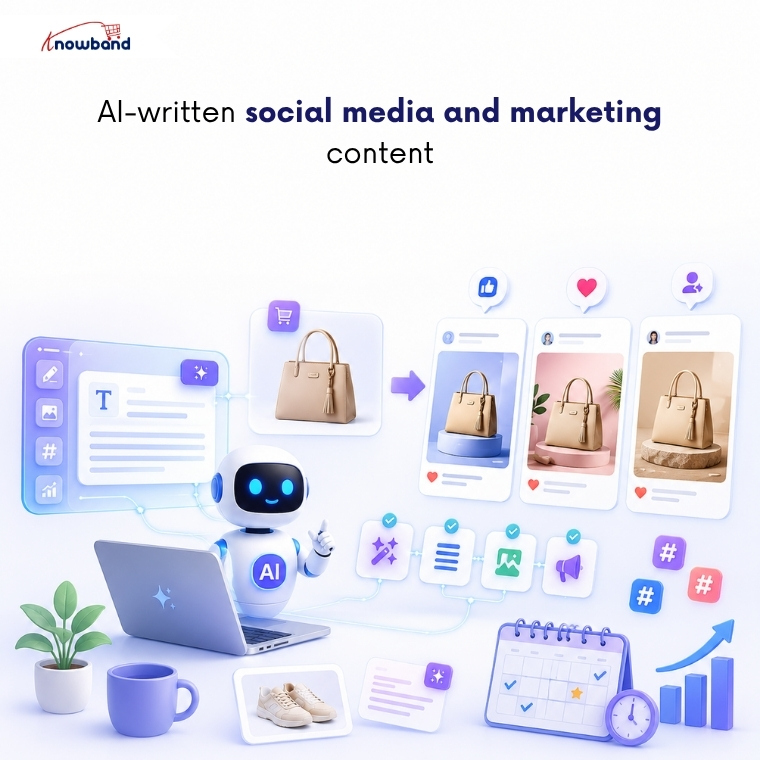
4. AI-written social media and marketing content
Keeping social channels updated with regular postings is where most small teams fall behind. Creating posts for every launch, every promotion, every seasonal push manually consumes time that merchants rarely have. Generative AI can create a week’s worth of social media content using store products, adapting the tone for each platform while keeping your publishing schedule consistent.
SocialAI Pro is the PrestaShop way into this. As a PrestaShop AI Marketing Content Generator Addon, it reads your product data and produces posts, captions, and hashtags you can line up and schedule easily. For stores that rely on social media but lack the time to create content consistently, the PrestaShop AI Marketing Content Generator Addon automatically generates accurate, on-brand posts directly from your product catalog.
5. AI-assisted product video across the storefront
Video sells because it answers what a photo cannot. Watch a product move and you grasp its size, its fit, and how it is used far quicker than any still image explains it, and that understanding turns into conversions. But creating videos for thousands of products is not only time-consuming, but it is also very expensive. AI removes that obstacle by making short product videos in less time and at less cost by using just a prompt.
VideoMate provides the perfect solution for PrestaShop store owners. Merchants looking for a Prestashop AI Video Generator usually want live product video added without the involvement of a developer. The Knowband’s PrestaShop VideoMate helps to generate videos using AI and add them to the home page, product pages, category pages, and best-seller pages from the admin panel with just a few clicks. The Prestashop AI Video Generator makes sure AI-generated product videos are actually displayed on your product pages, where they can influence purchase decisions, instead of remaining unused.
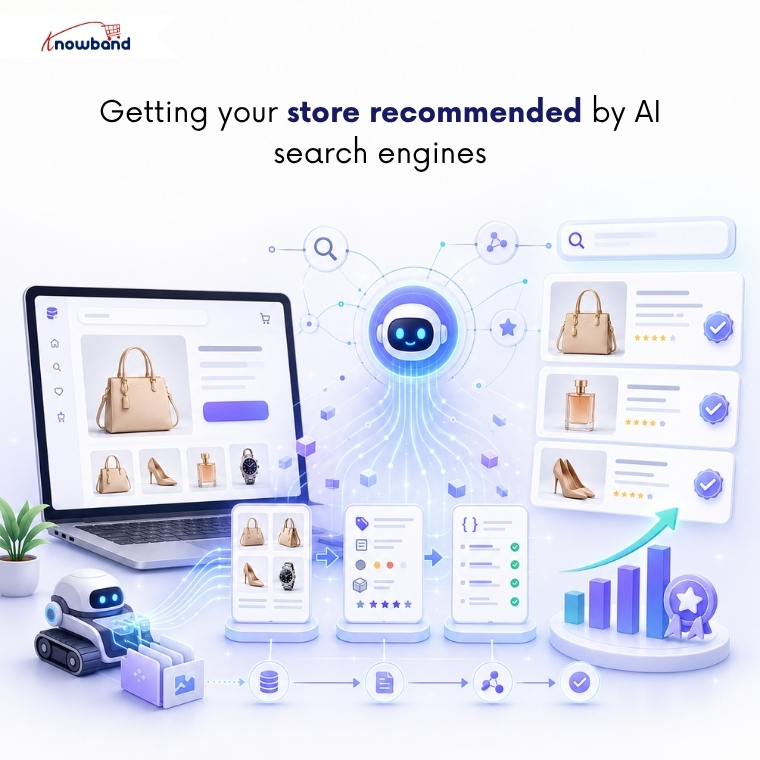
6. Getting your store recommended by AI search engines
AI assistants can only recommend a store they can read, and Adobe has found that many retail sites are not yet machine-readable enough for AI systems to interpret cleanly. If ChatGPT or Perplexity cannot parse your catalog and policies, you are invisible in the answers where high-intent shoppers now start.
An llms.txt file fixes that. It gives AI crawlers a clean, structured summary of what you sell and how you operate, in the format those models actually read.
The LLMs.txt Generator produces that file from your existing catalog. A PrestaShop llms.txt generator module lets you filter to active or featured products, include the CMS pages that answer purchase questions like shipping and returns, and toggle individual crawlers such as GPTBot, PerplexityBot, and Google-Extended. For multistore setups, a PrestaShop llms.txt add-on generates a separate file per shop, and a cron keeps each one updated as your catalog moves. Configured well, a PrestaShop llms.txt generator module is how a store starts being a source that AI engines trust.

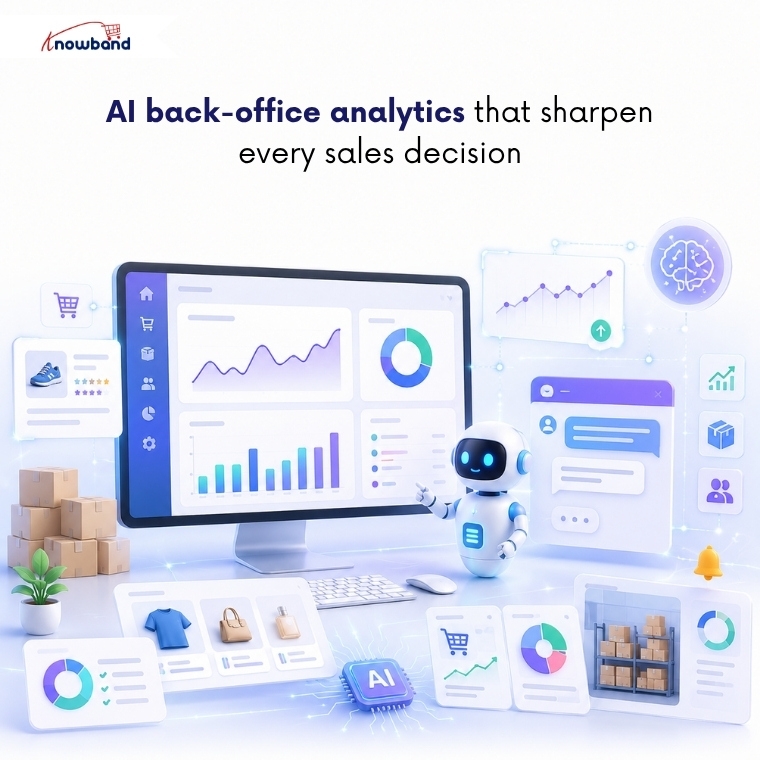
7. AI back-office analytics that sharpen every sales decision
Every restock, promotion, and retention call depends on knowing what your data says right now, and manual reporting workflow delivers that answer too slowly to act on.
Large language models reduce that gap. Admins can ask questions in plain English, get the number instantly, and uncover trends and opportunities that traditional reports often fail to reveal.
The PrestaShop Smart AI Admin Assistant puts this capability directly inside the back office. Its PrestaShop Back Office Analytics layer pairs a natural-language query interface with a full dashboard of configurable widgets covering revenue trends, best sellers, slow movers, low stock alerts, and reorder suggestions, all through read-only database access, so nothing in the store can be changed through the chat. Role-based access control means operations staff see the data relevant to their role without exposing financials or customer records across the whole team.
The difference between knowing a product is slowing down and knowing it three weeks before a stockout is the difference between a proactive decision and damage control. Strong PrestaShop Back Office Analytics is what closes that gap, not at the end of the month when the report runs, but the moment someone thinks to ask.
👉Explore the Module with Our Video Guide

Where these LLM use cases in e-commerce leave your store in 2026
The through-line across all seven is simple. AI now shapes both how customers find your store and how efficiently you run it, and the stores that treat this as a channel are advancing. You don’t need to implement every use case at once; instead, focus on the one that is closest to resolving your current goal, whether that is unanswered questions, thin content, or invisibility in AI search, and build from there.
What makes this practical for PrestaShop merchants specifically is that most of these capabilities already exist as modules that install into the admin you use every day, several of them from Knowband. Start with the use case that is costing you sales right now, and let the rest follow as the channel grows.
