
Most PrestaShop merchants think about growth in terms of traffic: more ads, better SEO, wider social reach. What the data increasingly shows is that the stores pulling ahead aren’t necessarily acquiring more customers; they’re keeping more of the ones they already have, and a branded PrestaShop Mobile App is becoming the primary tool for doing that.
The math is unambiguous. Acquiring a new customer costs five to twenty-five times more than retaining an existing one, and retained customers spend up to 67% more than first-time buyers. Brands with mobile apps see up to 50% higher repeat purchase rates compared to mobile web alone, and app users purchase approximately 33% more frequently than non-app users. For a PrestaShop store with an established customer base, a dedicated app isn’t a feature addition; it’s a structural change to how the business grows.
What a PrestaShop Mobile App Does to Customer Retention That a Website Cannot
A website, however well-optimised, is passive. Customers need to remember the URL or find it through search. A branded PrestaShop Mobile App sits on the customer’s home screen, which is a qualitatively different relationship with the brand. Over a third of consumers keep their favourite brand’s app installed on their phone as a direct signal of trust and ongoing purchase intent.
The engagement gap is equally specific. Shoppers spend roughly 201 minutes per month in shopping apps, compared with around 11 minutes on mobile shopping websites. That difference isn’t explained by any single feature; it’s the cumulative effect of faster load times, saved preferences, native navigation, and the fact that an app is a contained environment without browser distractions. For merchants whose repeat customers are currently browsing, forgetting, and returning only when retargeted, that engagement gap represents recoverable revenue at low marginal cost.
Customer lifetime value responds directly to this shift. When 60% of first-time app buyers go on to make additional purchases, the app becomes less of a channel and more of a conversion funnel for turning single-purchase customers into repeat buyers who drive the majority of any store’s revenue.
Why Push Notifications Change the Economics of Re-Engagement
Email remains the backbone of eCommerce retention for most stores, but its limits are structural; average open rates rarely exceed 20%, and inbox competition compounds every quarter. Push notifications, available only to merchants with a native app, operate differently. They appear directly on a customer’s lock screen, require no inbox to compete in, and can be triggered automatically by purchase behavior or manually from the admin panel.
The Knowband PrestaShop Mobile App Builder includes automated notifications for order confirmation, delivery status updates, and abandoned cart recovery, each configurable with custom messages and time intervals. Manual campaigns can be pushed from the back office with an image, landing page redirect, and device targeting. The practical effect is that a merchant can send a back-in-stock alert, a flash sale notification, or an abandoned cart reminder, and reach customers who are already brand-familiar, without paying for an ad placement or competing in a crowded inbox.
Brands recover up to 22% of abandoned carts through automated push notifications, a channel that simply doesn’t exist for stores operating on mobile web alone. For a PrestaShop merchant running promotions or managing seasonal inventory, that recovery mechanism shifts from optional to significant quickly.
How the App Experience Drives Cross-Selling and Average Order Value
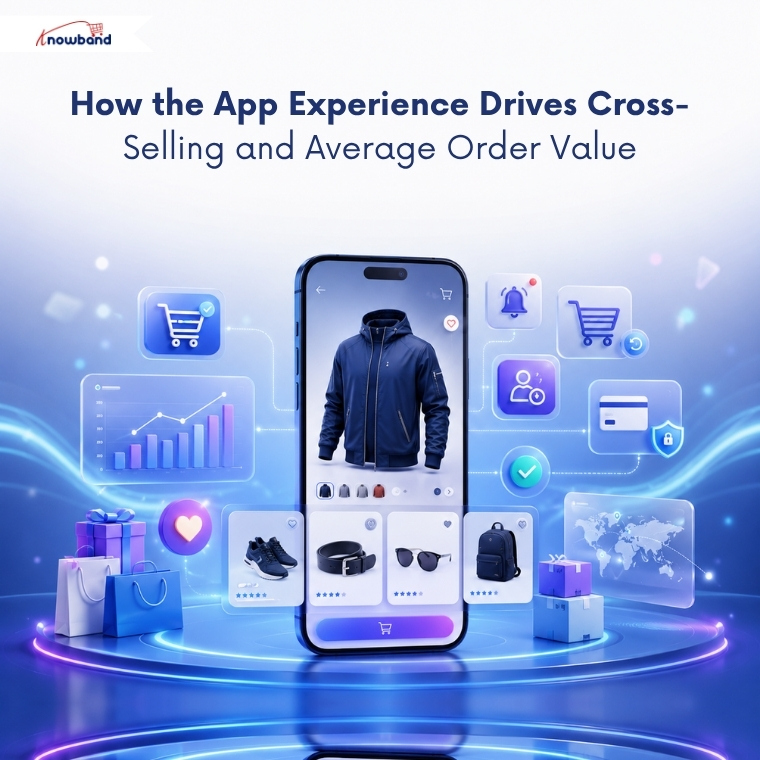
Repeat customers don’t just return more often, they buy more when they do. The app experience contributes to this directly through features that a mobile website handles inconsistently: related products on the product page, wishlist functionality that encourages return visits without requiring an immediate purchase, and a simplified checkout that removes the friction points that reduce order value on the first visit.
The PrestaShop Mobile App includes compatibility with PrestaShop’s Automatic Related Products module, bringing cross-selling directly into the app’s product pages. A customer browsing a jacket can see matching accessories without navigating away, and those related products appear in the same session where intent is already high. For stores where average order value matters as much as repeat frequency, this is a meaningful driver.
The wishlist feature compounds this over time. A customer who saves three items during one session and returns a week later for a specific purchase often converts on items they saved previously, a behavioral pattern that mobile web struggles to support because saved items depend on cookies and browser state rather than a persistent account.
The Brand Ownership Argument Most PrestaShop Merchants Haven’t Made Yet
There’s a competitive dimension to this that goes beyond retention rates. Every customer who downloads a store’s app has made a low-friction commitment to the brand; they found it, trusted it enough to install it, and allowed it to send notifications. That’s a qualitatively different customer relationship than one built through retargeting ads or search traffic, both of which disappear the moment spending stops.
A branded PrestaShop Mobile App with the store’s logo, colors, and theme deployed through Google Play and the Apple App Store gives the merchant a distribution channel they own outright. No algorithm changes, no ad auction dynamics, no platform dependency. The customer relationship exists in the app’s database, communicable directly through push notifications to a segment that opted in.
For international PrestaShop stores, the multi-currency and multi-language support built into the app extends this owned channel globally. A customer in Germany and a customer in Brazil both use the same app, see prices in their local currency, and browse in their native language without requiring separate storefronts or platform configurations.
What Building a PrestaShop Mobile App Actually Requires in 2026
The historical barrier to a branded app was development cost; custom Flutter or React Native builds ran from tens to hundreds of thousands of dollars before a single customer downloaded them. That barrier has changed for PrestaShop merchants specifically.
Knowband’s solution delivers ready-to-publish Android and iOS app files within one to two working days after a merchant shares their specifications. The app runs on Flutter with 100% synchronization to the live store, products, pricing, payment methods, shipping options, and inventory, all of which mirror the website in real time without a separate catalog to maintain.
The admin panel handles layout customization, push notification campaigns, GDPR compliance settings, and payment method configuration without requiring code access or developer involvement. For stores that have been weighing a PrestaShop Mobile App against the perceived complexity of building one, the actual setup process is considerably more straightforward than the question usually implies.
The Window for Early-Mover Advantage Is Still Open
Most PrestaShop stores have not yet deployed a branded app, which means merchants who move now face less customer-awareness competition than they will in two years. A customer who downloads a store’s app and builds a purchase habit inside it is significantly less likely to switch to a competitor, 76% of consumers who use brand apps do so more frequently when offered app-exclusive incentives, and the switching cost of an uninstall is psychologically higher than simply trying a different website.
The channel shift toward apps as the primary mobile commerce interface is already well underway in major retail categories. For PrestaShop merchants ready to stop depending entirely on paid acquisition and start building a retention-first growth model, a Mobile App for PrestaShop is the infrastructure that makes that shift possible without rebuilding anything that already works.


